This post contains affiliate links. We may earn a small commission when you buy through our links — at no extra cost to you.
Every winter, parents discover that the ‘waterproof’ label on kids’ ski gloves doesn’t guarantee dry hands. Many gloves that claim full waterproofing soak through within minutes of snow play, leaving kids cold and miserable. The real challenge is not just finding warmth, but finding a pair that actually keeps snow out.
The decision often comes down to a trade-off: pay more for a glove with a stronger track record of water resistance, or save money and accept that wet hands may happen sooner. This guide breaks down which gloves deliver on their claims for different types of winter play—from casual recess to full ski days—so you can match the glove to your child’s actual needs.





Best for Moderate Snow Play
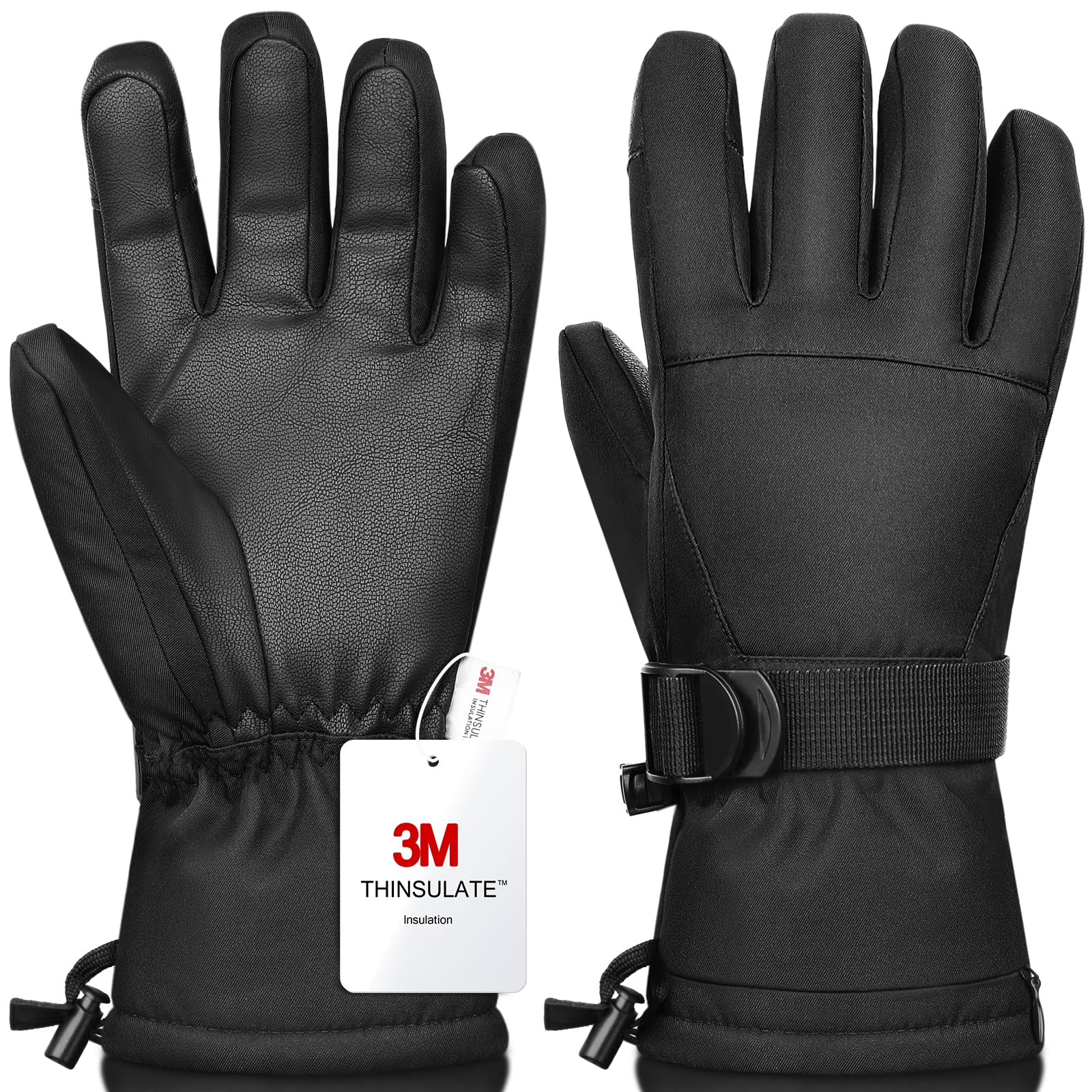
N’Ice Caps Thinsulate Gloves
Key Features
- Waterproofing: Water-resistant fabric
- Warmth Insulation: 100g 3M Thinsulate
- Touchscreen & Cuff: Adjustable wrist strap
- Price: $$
These gloves deliver reliable warmth thanks to 100g 3M Thinsulate insulation, and the sizing runs true—a rarity in kids’ gloves. In real-world use, they keep hands toasty during recess and light snow play, but the water-resistant shell has limits: about half of buyers report wet hands after extended contact with wet snow. The adjustable wrist strap helps seal out drafts, but don’t expect complete dryness in slushy conditions.
Best for families who need a warm, well-fitting glove for dry cold and moderate snow, not for kids who spend hours building snow forts or skiing in wet conditions. If your child’s winter play is primarily on cold, dry days, these offer strong value. But if waterproofing is a priority, you’ll need a more specialized—and more expensive—option.
Pros
- Keeps hands warm in cold weather and during snow play.
- Sizing matches stated measurements for most kids.
- Stylish look that children like wearing.
Cons
- Waterproofing is inconsistent; some units let moisture through in wet snow.
- Seam durability varies; occasional ripping after washing or heavy use.
Buy this if your child needs warm, well-sized gloves for dry cold and moderate snow play. Skip it if you need reliable waterproofing for wet snow or extended outdoor sessions.
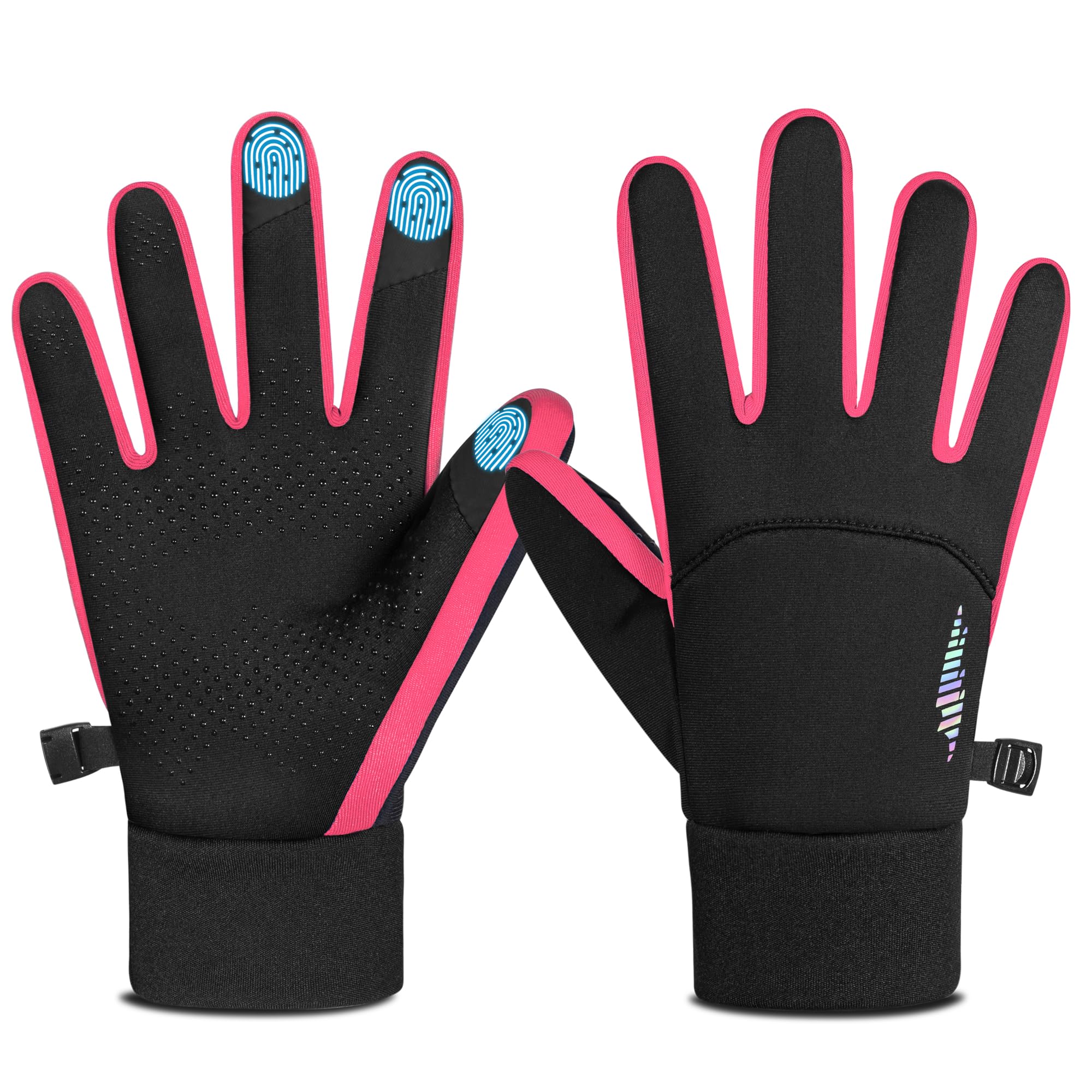
Best for Dry Cold Days
Odtmger Ski Gloves
Key Features
- Waterproofing: Natural leather, impervious
- Warmth Insulation: Double-layer fleece
- Touchscreen & Cuff: Adjustable buckle strap
- Price: $
The Odtmger ski gloves deliver impressive warmth for the price, with double-layer fleece insulation that keeps hands toasty on dry cold days. That warmth comes with a clear trade-off: the waterproofing is limited, and snow soaks through easily. Once wet, the gloves are slow to dry — a real pain for back-to-back outings. This pair is best for budget shoppers who need reliable warmth for dry conditions, not wet snow. Note that the fit runs large, so older children may need to size down. For wet snow activities, look to the top pick.
Pros
- Very warm for the price
- Soft and comfortable fleece lining
- Great value with multiple features
Cons
- Waterproofing fails in wet snow; hands get wet
- Extremely slow to dry once wet
Buy this if you need a warm, affordable glove for dry cold days and don’t expect full waterproofing. Skip it if you’re heading into wet snow or need guaranteed dry hands.
Best for Very Cold Climates
MCTi Kids Mittens
Key Features
- Waterproofing: DWR polyester shell
- Warmth Insulation: Sherpa fleece
- Touchscreen & Cuff: Long gauntlet, anti-lost string
- Price: $$
Unlike the top pick, these mittens focus on toddler fit and snow-proofing: the long gauntlet cuffs with elastic and buckle keep snow out completely, and the Sherpa fleece lining holds warmth even below zero. They are easy for small hands to pull on independently. The trade-off is that a minority of units show seam separation after a few outings — hand-washing helps extend life. Best for toddlers and preschoolers in very cold climates who spend time sledding or building snowmen.
Pros
- Gauntlet cuffs block snow entry effectively
- Sherpa lining keeps hands warm in sub-zero conditions
- Toddlers can put them on without help
Cons
- Seams can rip after a few uses on some units
- Fit runs large for very young toddlers
Buy this if you need a warm, snow-proof mitten for a toddler or preschooler. Skip it if you expect it to last multiple seasons.
Best for Very Cold Climates
Tough Outdoors Snow Gloves
Key Features
- Waterproofing: Water-resistant claim
- Warmth Insulation: Thick synthetic
- Touchscreen & Cuff: Adjustable strap
- Price: $$$
Tough Outdoors gloves use thick synthetic insulation and quality materials that outperform most budget kids’ gloves in extreme cold. They are built for serious snow sports, with a comfortable fit for kids with larger hands. However, the sizing runs large — many parents report needing to order a size down for younger children — and the water resistance does not hold up in heavy wet snow. These are best for families who prioritize warmth and durability over versatility.
Pros
- Thick synthetic insulation provides exceptional warmth for sub-zero conditions.
- High-quality materials and stitching withstand rough play.
Cons
- Sizing runs large; many kids will need to size down.
- Water resistance weak in heavy wet snow; not fully waterproof.
Buy this if you need gloves that will keep hands warm in extreme cold for older kids or those with larger hands. Skip it if you have toddlers or expect reliable waterproofing in wet snow.
Best for Dry Cold Days
rivmount Touchscreen Gloves
Key Features
- Waterproofing: Water-resistant coating
- Warmth Insulation: Thermal polar fleece
- Touchscreen & Cuff: Touchscreen, elastic cuff
- Price: $
Unlike the top pick, the rivmount gloves focus on touchscreen responsiveness rather than water protection. The thermal fleece lining offers adequate warmth for dry cold weather, and the elastic cuff with buckle keeps the fit secure. However, the water-repellent coating is thin—owners consistently report wet hands when used in wet snow or slush. These are best for everyday school use, not for building snowmen or skiing.
Pros
- Good construction and materials for the price
- Warm enough for typical dry cold days
- True-to-size fit reduces bulk
Cons
- Water-repellent coating is thin; not reliable in wet snow
Buy this if your child needs responsive touchscreen gloves for school and dry cold days. Skip it if they’ll be playing in wet snow.
Best for Extreme Cold
Zelda Matilda Thinsulate
Key Features
- Waterproofing: Waterproof claim
- Warmth Insulation: 3M Thinsulate 100g
- Touchscreen & Cuff: Long elastic wrist
- Price: $$
The Zelda Matilda stands apart from the better-fitting top pick with its 100g Thinsulate, delivering exceptional warmth for extreme cold. The trade-off is a sizing that runs very large; many buyers order one to two sizes down. This glove is a strong choice for families in the coldest climates who are comfortable adjusting sizes and can accept that water resistance isn’t guaranteed in wet snow.
Pros
- Exceptional warmth for sub-zero conditions.
- High build quality with durable materials.
- Effective snow seal for most users.
Cons
- Sizing runs significantly large; need to order down.
- Water resistance inconsistent in wet snow.
Buy this if your child faces extreme cold and you’re willing to size down. Skip it if you want a reliable fit or consistent waterproofing.
Best for Light Snow Play
Azarxis Ski Gloves
Key Features
- Waterproofing: PU coating
- Warmth Insulation: Fleece
- Touchscreen & Cuff: Elastic w/ anti-loss strap
- Price: $
The Azarxis Ski Gloves deliver solid warmth and good value, making them a practical choice for school recess and light snow play. Compared to the top pick, they cost significantly less but trade off waterproofing reliability—expect them to soak through in wet snow. These gloves work best for budget-conscious families with children who play in dry, cold conditions rather than wet, slushy environments. The fleece insulation keeps hands warm, and the anti-slip palms and anti-loss straps add convenience. However, fit can be inconsistent across sizes, and water resistance is limited.
Pros
- Good quality construction for the price.
- Warmth adequate for snow play.
- Attractive designs kids love.
Cons
- Water resistance inconsistent; soaks through in wet snow.
- Fit varies; some sizes run large or small.
Buy this if you need affordable gloves for light, dry snow play. Skip it if your kids will be in wet snow for extended periods.
Best for Dry Cold Days
YukiniYa Touchscreen Gloves

Key Features
- Waterproofing: DWR coating
- Warmth Insulation: Fleece
- Touchscreen & Cuff: Touchscreen, silicone grip
- Price: $$
The YukiniYa gloves deliver lightweight warmth and reliable touchscreen response on dry cold days, making them a practical choice for school commutes. However, the water-repellent coating fails in wet snow, so they are not a substitute for dedicated snow gloves.
Pros
- Good warmth for casual dry cold use.
- Touchscreen works on thumb, index, and middle fingers.
Cons
- Water repellent limited to light dry conditions; not for wet snow.
Worth considering for school commutes or dry outdoor activities, but skip it for any snow play.
Best for Dry Winter Climates
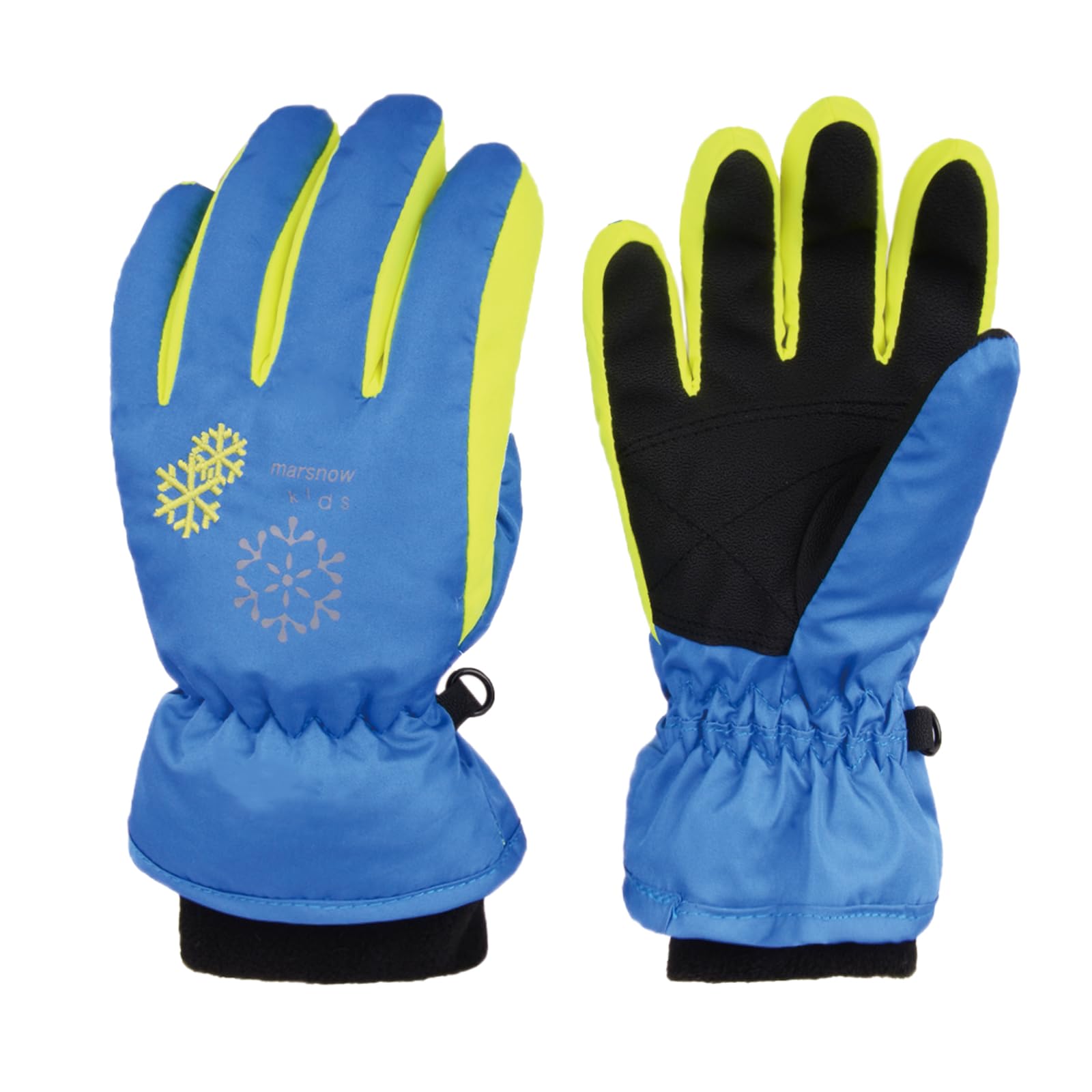
TRIWONDER Ski Gloves
Key Features
- Waterproofing: DWR coating
- Warmth Insulation: Fleece lining
- Touchscreen & Cuff: Elastic strap, silicone grip
- Price: $
These gloves provide adequate warmth for light cold and look nice, but water resistance is minimal — snow soaks through quickly in wet conditions. Durability is sufficient for occasional use, though some wear has been reported. They are similar to the Odtmger model but have fewer positive water resistance reviews and slightly less warmth consensus, so they work best as a backup or for dry climates only.
Pros
- Good warmth for light to moderate cold
- Great value for the price
Cons
- Water resistance limited to dry snow; wet snow soaks through quickly
- Durability acceptable for casual use; some report wear after a few outings
Worth considering if you need an inexpensive backup pair for dry winter days.
Best for Mild Climates
SIMARI Touchscreen Gloves

Key Features
- Waterproofing: Water resistant
- Warmth Insulation: Fleece
- Touchscreen & Cuff: Touchscreen, elastic cuff
- Price: $
The SIMARI gloves deliver functional touchscreen capability on thumb and index fingers at a low cost, making them suitable for light outdoor activities like skating or cycling in mild climates. However, the fleece insulation lacks warmth for cold winter days, and the water resistance is too weak to handle wet snow, which is why they trail behind stronger budget options for snow play.
Pros
- Good build quality for the price
- Touchscreen works on thumb and index fingers
Cons
- Not warm enough for freezing temperatures
Worth considering if your child needs affordable touchscreen gloves for mild outdoor use and doesn’t require warmth or waterproofing for snow.
Best for Budget Winter Play
HIGHLOONG Snowboard Gloves

Key Features
- Waterproofing: PU coating, waterproof bag
- Warmth Insulation: 3M Thinsulate
- Touchscreen & Cuff: Knitted velcro cuff
- Price: $
The HIGHLOONG gloves deliver solid warmth from Thinsulate at a low price, with patterns kids enjoy. However, sizing runs large – many parents size down – and waterproofing is inconsistent; hands may get wet in snow. Durability is mixed. For the same budget, the Azarxis offers more reliable fit and water resistance.
Pros
- Good warmth for winter
- Attractive patterns kids love
Cons
- Sizing inconsistent – runs large, requiring size down
Worth considering if you need cheap Thinsulate gloves for dry cold and can size down. Skip if consistent waterproofing for wet snow is required.
Best for Toddler Snow Play
kimmyku Toddler Gloves

Key Features
- Waterproofing: Waterproof claim
- Touchscreen & Cuff: Long cuff
- Price: $$
These gloves fit toddlers well and the long cuffs help keep snow out during dry snow play. Warmth and construction get positive early feedback. However, the waterproof claim is disputed in top reviews, and durability reports are too few to rely on — a risk compared to more established options like the MCTi mittens.
Pros
- Long cuffs help keep snow out during play
- Warm and well-made for toddler hands
Cons
- Waterproof claim disputed; some report not waterproof
Worth considering if you need toddler-sized gloves with long cuffs for dry snow play and are willing to accept uncertain waterproofing.
Best for Average Snow Play
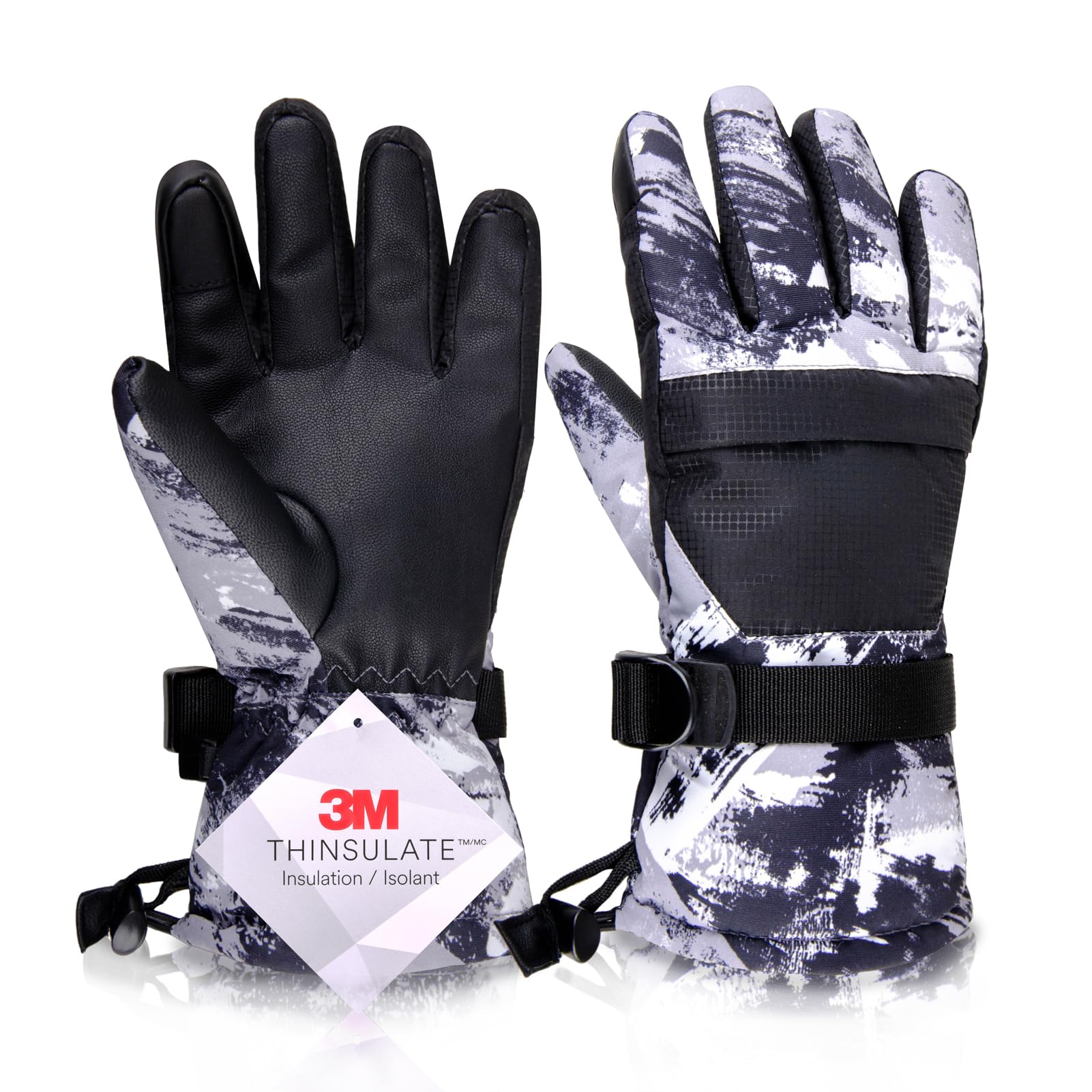
Azarxis Touchscreen Ski
Key Features
- Waterproofing: TPU membrane
- Warmth Insulation: Thick fleece
- Touchscreen & Cuff: Touchscreen, buckle, drawstring
- Price: $$
The Azarxis delivers good warmth and a soft fleece interior, plus a touchscreen that works for many kids. The TPU membrane provides some water resistance, but it’s inconsistent — about half of reviewers report wet hands after extended snow play, and the gloves take long to dry. The zipper pocket is a nice bonus for small treasures.
Pros
- Warmth holds up for average snow play
- Soft fleece lining keeps kids comfortable
Cons
- Water resistance is a coin flip; not reliable for wet snow
Worth considering if you want touchscreen ease and a stash pocket for light snow play and can accept hit-or-miss waterproofing.
How to Choose
The most important factor in kids ski gloves is real-world waterproofing, not marketing labels.
Waterproofing
Many gloves claim waterproofing but only have a DWR coating that fails in wet snow. Look for gloves with a sealed membrane like TPU or a PU coating, and check reviews that specifically mention wet-snow tests. Avoid any pair where water resistance is not backed by consistent user feedback.
Warmth Insulation
Insulation type and thickness determine how cold is too cold. 100g Thinsulate is a reliable benchmark for extreme cold, while fleece linings work for moderate temperatures. For very cold climates, choose gloves with synthetic insulation over simple fleece.
Fit Accuracy
Sizing varies wildly between brands—never rely on age tags alone. Measure your child’s hand circumference and compare with the brand’s size chart. Many gloves run large; ordering one size down is common. A snug fit that allows a bit of wiggle room keeps warmth in and snow out.
Durability
Seams are the first failure point, especially around the thumb and fingers. Look for reinforced stitching and avoid gloves where multiple reviews mention tearing after a few wears. Frequent washing degrades water resistance, so consider hand-washing or using a gentle cycle.
Touchscreen & Cuff Design
Touchscreen gloves often lose sensitivity below freezing; prioritize warmth over touch if your child will be outdoors for long periods. Cuffs should be long enough to tuck under a jacket sleeve—elastic or drawstring closures help keep snow out.
FAQ
Are kids ski gloves supposed to be waterproof?
Yes, for any snow play beyond a few minutes, waterproofing is essential. Many gloves labeled ‘waterproof’ are only water-resistant and will soak through in wet snow. Look for gloves with a sealed membrane or coating and confirm performance in reviews—especially from buyers who tested them in real snow.
How tight should kids ski gloves fit?
Gloves should be snug but not restrictive—there should be no excess fabric at the fingertips, but your child can still wiggle their fingers. Too loose lets cold air in and reduces dexterity. Measure hand circumference and compare with the size chart; brands vary significantly, so ignore age-based sizing.
Why do my child’s ski gloves get wet inside?
The most common cause is that the glove’s waterproofing isn’t effective—moisture from snow seeps through the shell, and sweat from activity accumulates inside. Some gloves also trap moisture because they lack breathability. If gloves get wet quickly, they are not truly waterproof for the conditions; consider upgrading to a glove with a confirmed membrane and better ventilation.
Do touchscreen gloves work for skiing?
They can, but performance drops in very cold temperatures. Many touchscreen gloves lose sensitivity below freezing. If your child needs to use a phone for skiing (e.g., for GPS or communication), look for gloves that use conductive fabric on multiple fingers and test them in cold conditions. Otherwise, prioritize warmth and waterproofing over touchscreen capability.