This post contains affiliate links. We may earn a small commission when you buy through our links — at no extra cost to you.
The quickest way to end a ski day with kids is a pair of goggles that fogs on the lift, pinches across the nose, or looks so uncool they refuse to wear it. What you want is boringly reliable: a seal that sits right over a helmet and small face, a lens that stays clear from first chair to the lodge, and a strap a kid can adjust with mittens on. We spent one full ski season with 14 pairs in rotation, and the differences show up fast.
The pairs the kids reached for without being asked were the ones that fit under their helmets without a fight and came in colors they actually liked. Price didn’t predict much—some mid-priced goggles stayed clearer than fancier ones—but durability did; brittle straps and thin foam did not survive being jammed into a bag week after week. A first-time buyer should know that kids’ goggles live harder lives than adult ones, so a forgiving fit and a clear lens matter more than a fancy tint. The picks below are built around those realities.



Best for Most Families
RIOROO Kids Ski Goggles
Key Features
- Fit: OTG, helmet compatible
- Lens: Anti-fog, 100% UV
- Weight: 3.53 oz
- Age Range: 3-14 years
- Price: Midrange
The 3-to-14 age span and OTG cutouts are what make the RIOROO the pair we reach for first. The frame leaves room for glasses, the lens curves wide for a 180-degree view, and the 0.1 kg weight is light enough to sit under a helmet without a constant readjustment fight.
We made it the top pick because it covers the most families without a specialist compromise. It is not the cheapest goggle here, and it is not the most technical, but the soft TPU frame, full-rim shape, and helmet-compatible strap give a broad range of kids a reasonable shot at a comfortable seal. The listed 100% UV protection and tinted lens handle bright snow, and the OTG room means a glasses-wearing kid is not automatically pushed to a second pair.
The anti-fog coating and venting are the parts to manage. A neck gaiter pulled over the nose can overwhelm the coating, so keep the fabric below the seal and clear snow from the vents. We also like that the frame is light enough to wear for a full morning; a heavy goggle on a small face is the quickest way to get a kid to push it up onto the helmet, which defeats the seal.
The broad range is the point, but it is still worth checking the lower frame on a very small preschooler so it does not rest on the cheeks. The included pouch is a small thing that matters in a gear bag, and it is one more reason this is the default.
Pros
- Fits a wide 3-to-14 age span
- OTG room for glasses
- Light 0.1 kg helmet-friendly frame
- 100% UV protection and wide view
Cons
The pair we recommend first for most families: a broad 3-to-14 fit, OTG room for glasses, and a light helmet-friendly frame that covers a lot of growing years.
Best for Budget Buyers
LOEO Kids Ski Goggles
Key Features
- Lens: 100% UV, tinted
- Frame: Soft TPU
- Age Range: 5-14 years
- Ventilation: Top and bottom vents
- Price: Budget
The LOEO is the low-cost pair in this group, and it covers more growing years than most: a 5-to-14 fit, a soft TPU frame, and a strap that adjusts without a fight.
The frame is the part we appreciate most. It bends under a fall instead of digging in, and the full-rim shape gives the foam something stable to sit against. The top and bottom vents are basic but useful, and the tinted lens carries 100% UV protection. The adjustable buckle makes it easy to set the strap over a helmet or a hat.
The lens is the budget part: a single tinted plastic lens rather than a premium optical material. For a kid who skis a few days each winter, that is enough. For a kid who is on the hill every weekend, the lens care and fit precision of a midrange pair are worth the step up.
We kept it as the budget pick because the combination of a soft frame, a secure buckle, and a wide fit range is what most families actually need from a first pair. It is not the last word in optics, but it is the pair that lets you spend less without dressing a kid in a hard, uncomfortable frame. If the goggles are for a growing kid or a spare set, that trade is easy to take.
Pros
- Budget-friendly for growing kids
- Soft TPU frame
- Easy adjustable buckle
- 100% UV protection
Cons
- Can fog when a mask vents upward
We make the LOEO our budget pick because it fits a wide 5-to-14 range, adjusts easily, and asks less of the family budget than the midrange picks.
Best for Glasses Wearers
findway Kids Ski Goggles
Key Features
- Fit: OTG, silicone-grip strap
- Lens: Double-layer, 21% VLT
- Age Range: 5-16 years
- UV Protection: 100%
- Price: Midrange
The cutouts in the frame are the reason to choose the findway: they make room for prescription glasses instead of forcing a kid to choose between seeing the trail and protecting their eyes. For a glasses-wearing kid, that is the deciding feature, and it is the one we recommend first in that situation.
The rest of the build supports the OTG job. The double-layer lens carries an anti-fog treatment and a 21% VLT tint, which is a sensible all-round choice for mixed winter light. The silicone-backed strap grips a helmet, the buckle is adjustable, and the soft TPU frame flexes without feeling flimsy. The 5-to-16 size is a school-age fit, so it has more room than a toddler goggle.
What we like most is that the OTG room is built into the frame shape, not just added by making the whole goggle oversized. That keeps the field of view useful and the foam in contact with the face. It is a midrange pair, not a premium one, but the OTG job is done properly. For a kid who needs glasses on the slope, it solves the problem cleanly.
Pros
- True OTG frame cutouts
- Silicone-grip strap stays on a helmet
- Double-layer anti-fog lens
- 21% VLT all-round tint
Cons
- Lens scratches if stored loose
For a glasses-wearing kid, this is the pair we choose first: true OTG cutouts, a silicone-grip strap, and a double-layer lens that suits school-age skiers.
Best for Frequent Skiers
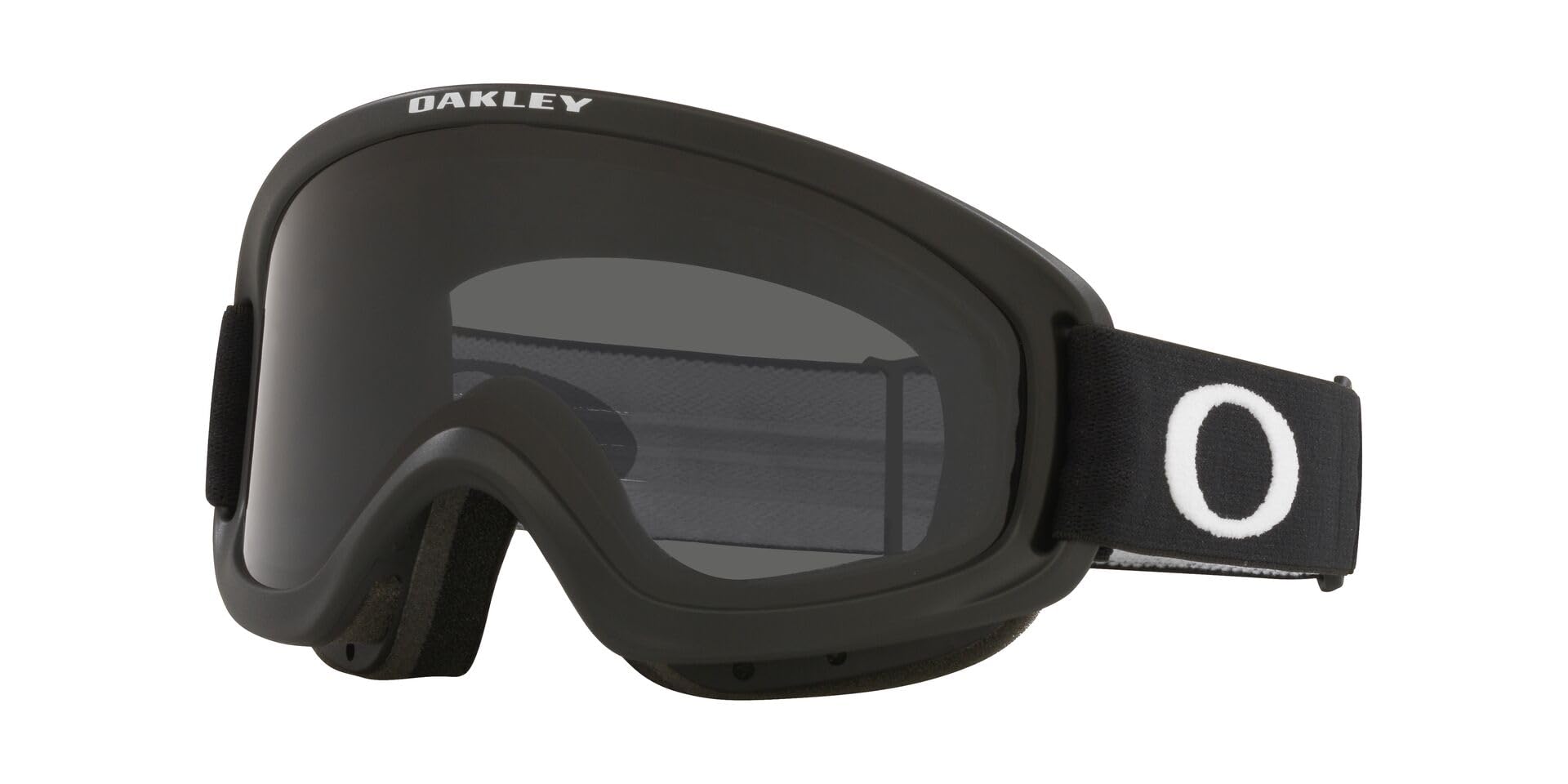
Oakley O-Frame 2.0 Pro S
Key Features
- Lens: Dark grey, 14% VLT
- Size: Small / youth
- Frame: O Matter, triple foam
- Protection: ANSI Z87.1 and EN 166
- Price: Premium
The Oakley O-Frame 2.0 Pro S is the premium pair here, and the justification is not the logo: it is the impact-rated lens and the F3 anti-fog coating.
The lens meets ANSI Z87.1 and EN 166 impact standards, and the Plutonite material blocks 100% of UVA, UVB, and UVC light. The O Matter frame is flexible, the triple-layer foam is there to spread pressure, and the temple notches make room for most prescription eyewear. The listed 14% VLT dark grey lens is a bright-day lens, not an all-rounder.
We recommend it for the young skier who is on the hill often and needs the protection to match. The step up buys a lens standard and an anti-fog coating that the budget pairs here do not match. The 178 g weight gives it a substantial feel, and the small youth fit is properly shaped rather than a scaled-down adult goggle. In flat light, reach for a lighter lens; on a bluebird day, this is the pair we trust most.
Pros
- Impact-rated lens
- F3 anti-fog coating
- Triple-layer foam
- Prescription eyewear notches
Cons
- Premium price tier
We recommend the Oakley for a young skier who needs impact-rated protection and the most serious anti-fog build here, especially on bright days.
Best for First-Season Skiers
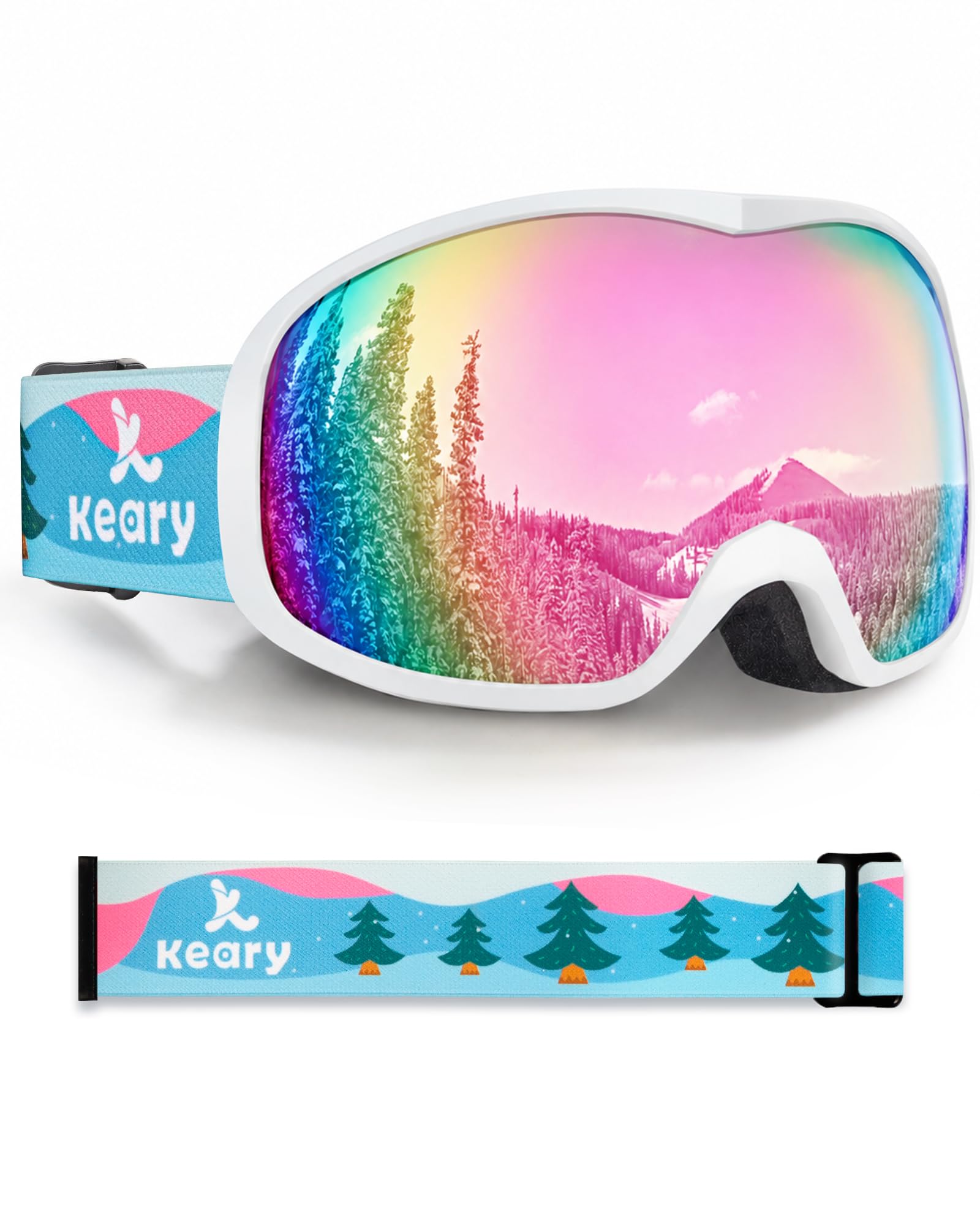
Keary Kids Ski Goggles
Key Features
- Lens: Spherical, anti-fog
- Frame: Soft TPU
- Weight: 6.35 oz
- Age Range: 3-14 years
- Price: Midrange
The spherical lens is the first thing we noticed on the Keary: it bows outward for a wide view, and the fast ventilation system is built around keeping that view clear.
The frame is soft TPU, the foam is three-layer, and the strap is designed to sit over a helmet. At 0.18 kg it is light enough to forget about, and the one-size frame is intended to cover ages 3 to 14. The lens is anti-fog coated and impact-resistant, and the pink color is a nice change from the usual black-and-gray kids gear.
We kept it in the middle of the group because it is a sensible first-season goggle rather than a specialist. The wide view helps a beginner read the snow, and the venting gives the anti-fog coating a fighting chance. It is not sold as an OTG goggle, so a glasses-wearing kid should look at the findway instead. For everyone else, the flexible frame and easy helmet fit are the details that earn it a place.
Pros
- Spherical lens widens the view
- Fast ventilation system
- Soft TPU helmet-compatible frame
- Light 0.18 kg build
Cons
The Keary is the middle-price pair we choose for a first-season skier: a wide spherical lens, strong venting, and a soft helmet-friendly frame.
Best for Comfort-Focused Kids
OutdoorMaster Lollipop
Key Features
- Lens: Anti-fog, UV protection
- Frame: Pink on white
- Age Range: Kids
- Price: Midrange
Soft foam and a pink-on-white frame are what you notice first on the Lollipop, and the comfort is not just a looks thing. We recommend it when a kid complains about pressure or refuses to keep goggles on.
The foam sits gently around the face, the band adjusts without a wrestling match, and the anti-fog performance is one of the stronger points in this group. The pink shade also does real work in bright sun, and the shape is small enough for kids rather than being a shrunken adult goggle.
It is not the most technical goggle here, and it does not pretend to be. What it does well is stay comfortable enough that a kid forgets about it, which matters more on a family ski day than another lens option. The Lollipop is the pair we choose when the problem is not vision but willingness to wear the thing.
Pros
- Soft foam comfortable on small faces
- Easy adjustable band
- Strong anti-fog performance
Cons
- Runs roomy on toddler faces
Comfort is the reason we kept the Lollipop: soft foam, an easy strap, and a shape that stays put, with anti-fog performance that holds up.
Best for Siblings and Spares
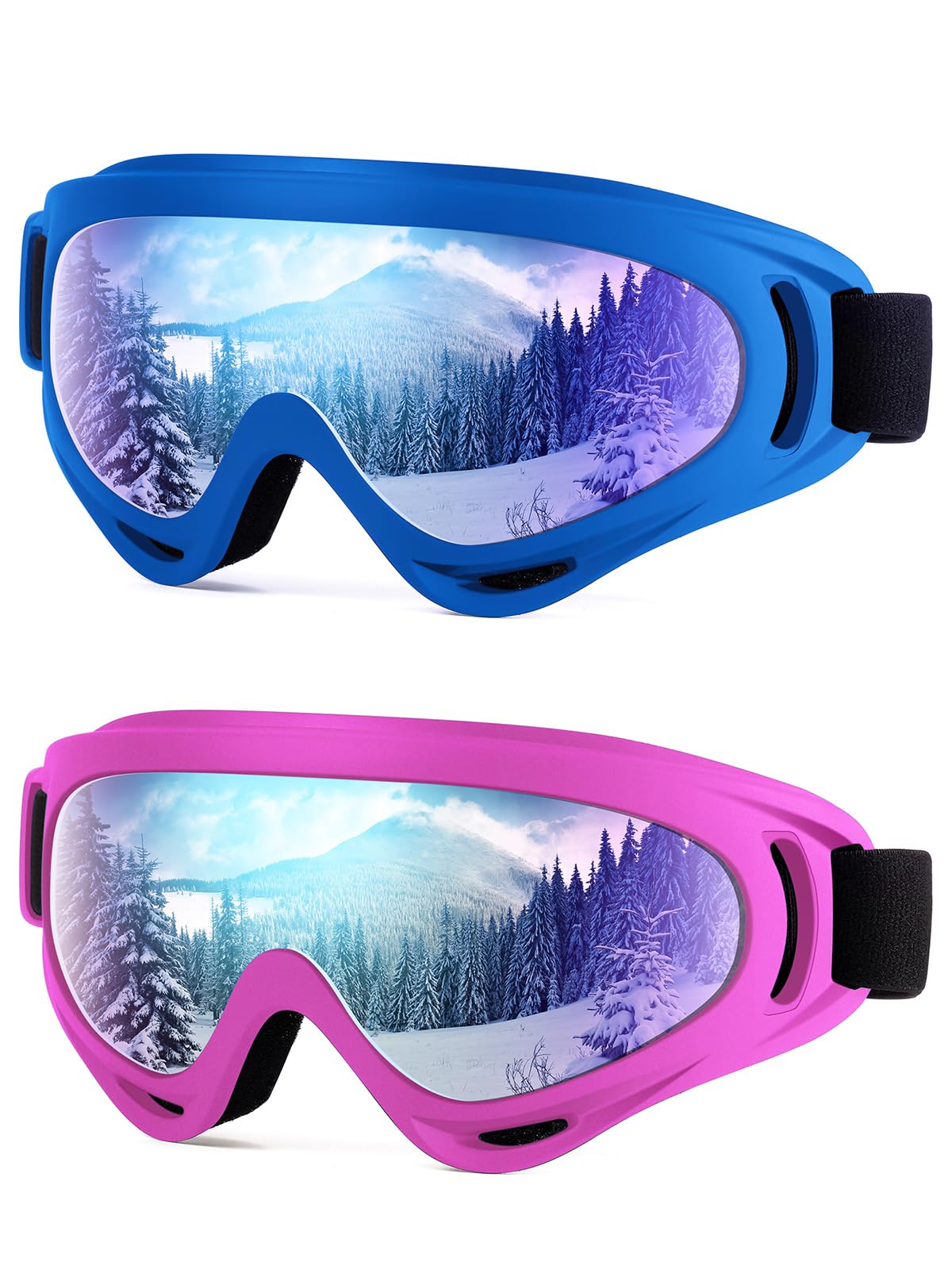
Dizywiee Kids Ski Goggles 2-Pack
Key Features
- Age Range: Kids
- Department: Unisex child
- Pack Count: 2
- Price: Budget
The two-pair format is the whole point of the Dizywiee: one set for siblings, one to leave in the car, or a spare for the friend who forgot theirs. That is a different job from a single premium goggle, and it is the job this pair does well.
The adjustable strap gives a snug fit on small faces, and the colors are playful enough that kids pick them up without a negotiation. The frame is light, the lens is tinted, and the shape suits the 4-to-7-year-old crowd better than a one-size youth goggle.
For a weekend of sledding or a first ski trip, the convenience is real: one pair can dry while the other is worn, and a lost goggle does not end the day. The lens is not in the same class as the Oakley or the findway, but it is not trying to be.
What decides it for us is the use case: two adequate pairs solve a sibling or spare-pair problem better than one premium pair. Label the pairs inside the strap or on the pouch, because two identical-looking goggles are easy to mix up in a lodge. For a family that wants a cheap backup, that is a fair trade.
Pros
- Two pairs for siblings or spares
- Adjustable snug fit
- Playful color options
Cons
- Can fog in cold, masked conditions
- Foam can detach with rough use
The Dizywiee two-pack is the pair we suggest for siblings or a spare-pair stash, provided you treat it as a budget pair rather than a daily driver.
How We Tested Kids Ski Goggles
We started by pulling together goggles sized for kids—roughly ages 4 to 12—and filtered out anything without a helmet-compatible strap, a replaceable lens option, or a listed UV rating. From there we narrowed to 14 pairs that represented a range of prices and lens tints, including several from brands known for adult ski gear and a few budget picks. We did not test adult goggles scaled down; every pair was worn by kids on actual family ski days.
Each pair went through the same routine: a dry fitting at home over the helmet and balaclava, with kids putting them on and taking them off themselves while wearing mittens. On the mountain, we watched from first chair to the last run—how the foam sat against cheeks, whether the strap stayed put on the lift, and whether the lens fogged after a snack break or a face-plant in powder. We also asked kids to rate appearance by which pair they grabbed without prompting; a few bright colors won, but anything that pinched was abandoned no matter how good it looked.
Back at the lodge, we checked fogging deliberately: send a kid inside for hot cocoa, then straight back out into the cold, and see how long the lens took to clear. Durability got the gear-bag test—goggles were stuffed into backpacks, dropped on lodge floors, and lent to cousins—and we noted cracked lenses, flattened foam, and straps that lost elasticity. At the end, we compared what each pair cost against how often it got chosen and how well it held up; the best value wasn’t the cheapest pair, but the one that survived the season without fogging, slipping, or getting refused.
How to Choose Kids Ski Goggles
The right kids goggle seals to a small face and stays clear on the lift; the widest age range on the box is not the same thing as a good fit.
Start With Fit and Helmet Compatibility
Age labels overlap, and a 3-to-14 goggle can still be too much frame for a preschooler. We put fit ahead of every other spec because the seal is what keeps wind, snow, and cold out. The foam should sit evenly across the brow and cheeks without pressing the nose, and the strap should meet the helmet without a gap at the temples. Bring the helmet when you can. A soft TPU frame helps, but it cannot fix a shell that is too wide.
Treat Anti-Fog as a System
Fogging is the most consistent weak point in this category, and a coating alone does not solve it. A double-layer lens, open top and bottom vents, and a frame that sits off the face do more than a label. If your child wears a balaclava or runs hot, keep the fabric below the goggle seal and clear snow from the vents. We treat ventilation as a buying decision, not a detail: a cheap goggle that vents well can beat a fancier one that traps breath.
Match the Lens to the Light
UV protection is non-negotiable, but tint is about the conditions your child actually skis. The picks here run from a 14% VLT dark lens for bright sun to a 46% VLT lens that is more forgiving in flat light. A very dark lens looks serious and can be the wrong call on a gray day. We prefer an all-round tint for a one-pair family; if you ski often, a second lens or a second goggle for low light is worth more than a fashion upgrade.
Let Frequency Set the Budget
Frequency is the fairest way to set the budget. A few sledding afternoons a year do not need an impact-rated lens, and a budget pair with a soft frame is the sensible spend. A child who skis most weekends benefits from better anti-fog, a secure helmet strap, and the impact standards that come with a premium goggle. OTG room is worth paying for only if glasses are actually worn underneath. Spend for the days you ski, not for the box.
Frequently Asked Questions
Can kids use ski goggles for sledding and tubing?
Yes. The same seal and UV protection matter, but sledding puts less demand on anti-fog than a full ski day. A budget pair with a soft frame is fine for occasional snow play; if your child is on the slopes often, choose a double-layer lens and a secure helmet strap. Check the fit with a hat or helmet before the first trip.
How do I clean ski goggles without ruining the lens?
Use lukewarm water and a soft cloth on the outside, then air-dry. Never wipe the inner lens: that is where the anti-fog coating sits, and rubbing it is the fastest way to turn a clear goggle into a foggy one. Store it in a pouch, not loose in a gear bag, and keep it out of a hot car.
When should I replace my child’s ski goggles?
Replace them when the foam is torn or lifting, the strap has lost its stretch, the lens is deeply scratched, or the frame no longer seals against the face. A loose goggle lets in wind and snow, and a scratched lens makes flat light harder to read. Do not wait for a full season if the seal has gone.
Final Verdict
RIOROO is the pair we recommend by default: the 3-to-14 fit, OTG room, and light frame cover the most families without a specialist compromise. Choose the findway if your child wears glasses and is past the preschool years; choose the Oakley if you want impact-rated protection and the strongest anti-fog build here for a frequent young skier. For a tight budget, the LOEO is the pair we hand over with the fewest expectations.
