This post contains affiliate links. We may earn a small commission when you buy through our links — at no extra cost to you.
The age range printed on a kids’ bike helmet is often the first thing parents check — and the most unreliable. A helmet labeled ‘ages 3–5’ may fit a 2-year-old perfectly and a 3-year-old not at all, because head circumference varies much more than age suggests. The real measure is centimeters, not years.
This guide focuses on helmets that offer genuine adjustability — dial-fit systems that tighten around the head, multiple size options, and removable padding for a custom fit. When a helmet doesn’t adjust, it either slips forward or sits loose, defeating its purpose. We’ve organized picks by actual use case: tiny toddlers, active youth, multi-sport kids, and safety-conscious families. Each recommendation prioritizes a secure, comfortable fit that stays put from the first ride to the last.


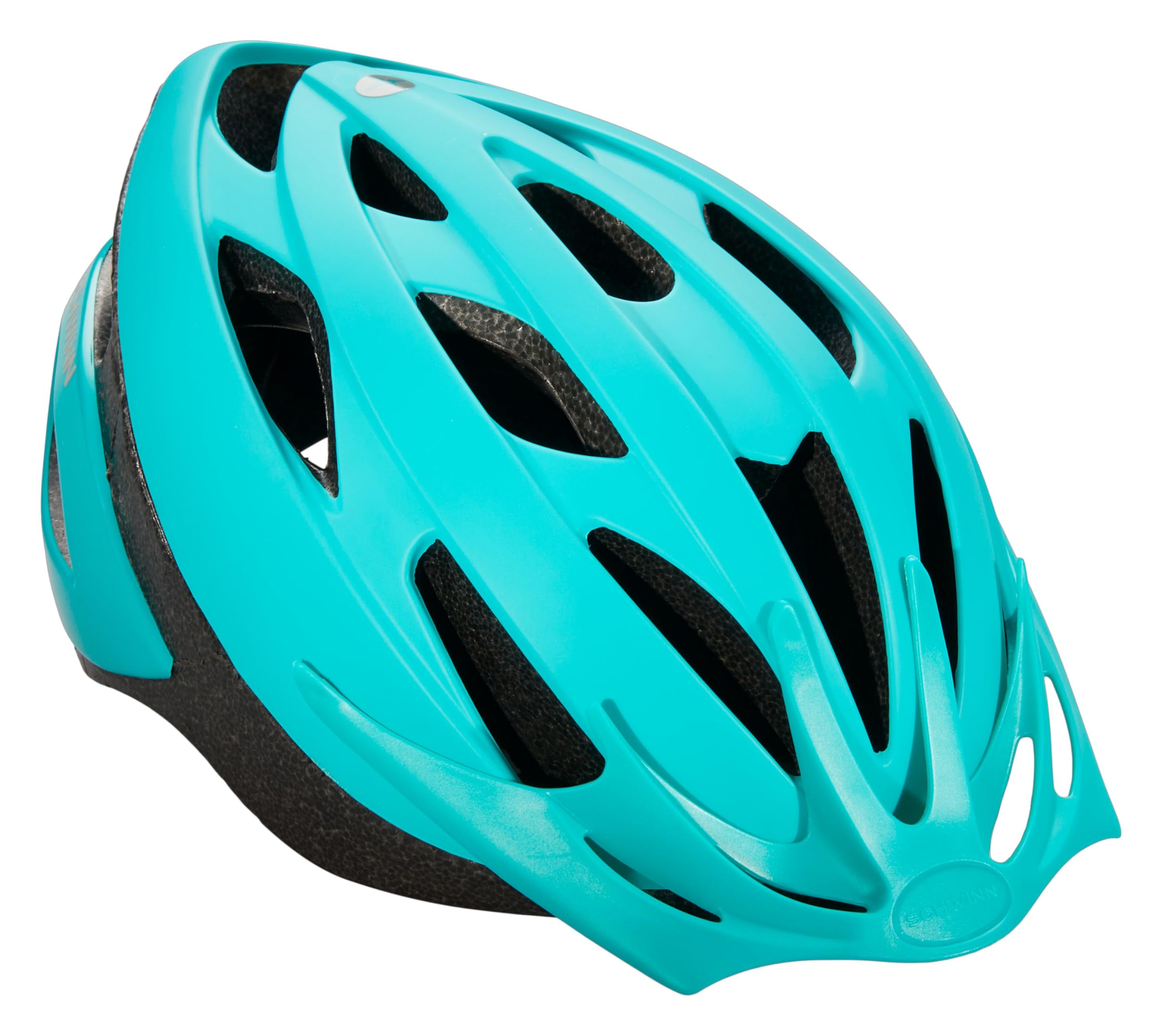


Best for Ages 2–14, Multi-Size
OUWOER Kids Multi-Size Helmet
Key Features
- Head Size (cm): 48–61 cm, 3 sizes
- Adjustment System: Dial-fit, two pad sets
- Weight: 12.8 oz (small)
- Vents: 11 vents
- Certifications: CPSC
- Price: $$
The three distinct sizes (S, M, L) combined with a dial-fit system and two thicknesses of padding cover head circumferences from 48 to 61 cm—spanning toddler to pre-teen years. The ABS shell and EPS foam provide solid impact protection for biking and scooting. A frequent limitation is the plastic adjustment dial: after months of regular use it can break. This doesn’t compromise the helmet’s one-impact safety, but it does mean the dial may need replacing before the child outgrows the helmet.
This helmet suits families who want a single purchase that adapts as a child grows. It’s less ideal for heavy daily use or for toddlers under age 2, where the smallest size (48 cm) may still be loose. The chin strap Velcro can also loosen over time, so occasional re-tightening is needed. If you prioritize long adjustability over dial longevity, this is the most practical pick in the category.
Pros
- Broad size range fits from toddler to teen with one purchase
- Solid build quality with ABS shell and EPS foam
- Easy adjustability with dial and extra padding pads
Cons
- Adjustment dial is delicate; longevity depends on careful use
- Chin strap Velcro may loosen over time
Buy this if you want one helmet that adjusts from toddler to teen and fits multiple head sizes across years of growth. Skip it if you need an ultra-lightweight helmet or if your child will use it heavily every day and abuse the dial.
Best for Toddlers 1–3
Schwinn Classic Toddler Helmet
Key Features
- Head Size (cm): 48–52 cm
- Adjustment System: Dial-fit, full padding
- Weight: 8 oz
- Vents: Multiple air vents
- Certifications: CPSC
- Price: $
Unlike the top pick that spans toddler to teen, the Schwinn focuses narrowly on the smallest riders. Its dial-fit system and 8-ounce build give a secure, barely-there feel that 1–3 year olds with average or smaller heads tolerate well. The colorful polka dot design gets high child approval, reducing helmet refusal. The trade-off is sizing: many 3-year-olds near 52 cm find it too tight, and occasional quality control issues with dial or pad detachment show up in a minority of units. Best for parents who want a lightweight, cute helmet for a young toddler with a head circumference clearly under 52 cm, and are okay with a budget price over multi-year adjustability.
Pros
- Dial-fit provides a snug, secure hold for tiny heads
- Adorable polka dot design kids willingly wear
- Lightweight 8-oz shell with good durability for toddler drops
Cons
- Runs small for the stated 1–3 age range; best under 52 cm
- Occasional detachment of dial or inner pad in a small share of units
Buy this if you have a toddler with a small-to-average head and want a lightweight, kid-approved helmet that actually fits. Skip it if your child is nearing 52 cm or you need a helmet that will adjust through several years of growth.
Best for Youth 8–14
Schwinn Thrasher Youth Helmet
Key Features
- Head Size (cm): 55–58 cm
- Adjustment System: Dial-fit, 360° padding
- Weight: 13.4 oz
- Vents: 20 vents
- Certifications: CPSC
- Price: $$
With 20 air vents and a 0.38 kg microshell, the Thrasher stays noticeably cooler than the multi-size top pick—ideal for sweaty summer rides. The 360° dial-fit adjusts precisely, and the sporty looks appeal to kids who’ve outgrown cartoon helmets. However, the fit range (55–58 cm) is narrow; it won’t work for younger siblings. A small number of buyers report the dial breaking after a few months, and it lacks MIPS, so it’s strictly for bike use, not skateboarding. Parents should measure head circumference carefully—the age label is a rough guide.
Pros
- 20 air vents keep head cool during active riding
- Dial-fit system adjusts easily and stays secure
- Sporty microshell design kids actually want to wear
Cons
- Dial mechanism may break after several months of use
- No MIPS or multi-sport certification limits use to bike riding
Buy this if your 8–14 year old needs a cool, well-ventilated bike helmet that won’t overheat them. Skip it if you want a helmet that can adjust to multiple kids over many years or needs skate certification.
Best for Multi-Sport, Budget
OutdoorMaster Multi-Sport Helmet
Key Features
- Head Size (cm): S/M/L, youth-adult
- Adjustment System: Dial and chin strap
- Weight: 13.86 oz (medium)
- Vents: 2 vents + channels
- Certifications: CPSC, ASTM (skate)
- Price: $
Compared to the top pick’s three-size coverage, the OutdoorMaster targets a narrower age range but offers a lighter, more ventilated design suitable for both biking and skateboarding. Two removable liners make cleaning easy, and the adjustable dial-fit with extra padding helps achieve a comfortable fit. However, some users note the shell feels thin for high-impact falls; it’s best for recreational use rather than extreme sports. With over 22,000 reviews, this is the most popular budget-friendly multi-sport helmet for active kids and teens.
Pros
- Comfortable and lightweight for extended wear.
- Solid build and good value for the price.
Cons
- Thin shell raises concerns for high-impact falls; better for recreational use.
- Sizing can run large or small; requires careful measurement.
Buy this if you need a lightweight, affordable multi-sport helmet for recreational bike and skate use. Skip it if you prioritize maximum impact protection or need a precise fit without trial and error.
Best for Triple Safety Cert
80SIX Triple Certified Helmet
Key Features
- Head Size (cm): 49–58 cm, 3 sizes
- Adjustment System: Chin strap, fixed pads
- Weight: 14.1 oz
- Certifications: CPSC, ASTM F1447, F1492
- Price: $
Its triple certification (CPSC, ASTM F1447, F1492) covers bike, skate, and roller skating — something no other kid’s helmet at this price achieves. Unlike the top pick’s dial-fit system, this model uses a chin strap and fixed internal pads, so fit depends on choosing the right size from the five available. That fixed-fit approach means it’s less forgiving for growing kids: the smallest size may be loose for toddlers under 4, and the largest may not accommodate older children. Best for families who want one helmet for multiple activities and are willing to measure carefully to get the fit right.
Pros
- Triple safety certification covers bike, skate, and roller skating.
- Comfortable and well-ventilated for active use.
- High-quality build with ABS shell and EPS foam.
Cons
- No dial-fit adjustment; uses chin strap and fixed padding.
- Sizing runs small; may not fit the top of the age range.
Buy this if your child needs one helmet for multiple sports and you prioritize verified safety certifications over adjustable fit.
Best for Customizable, Sticker Fun
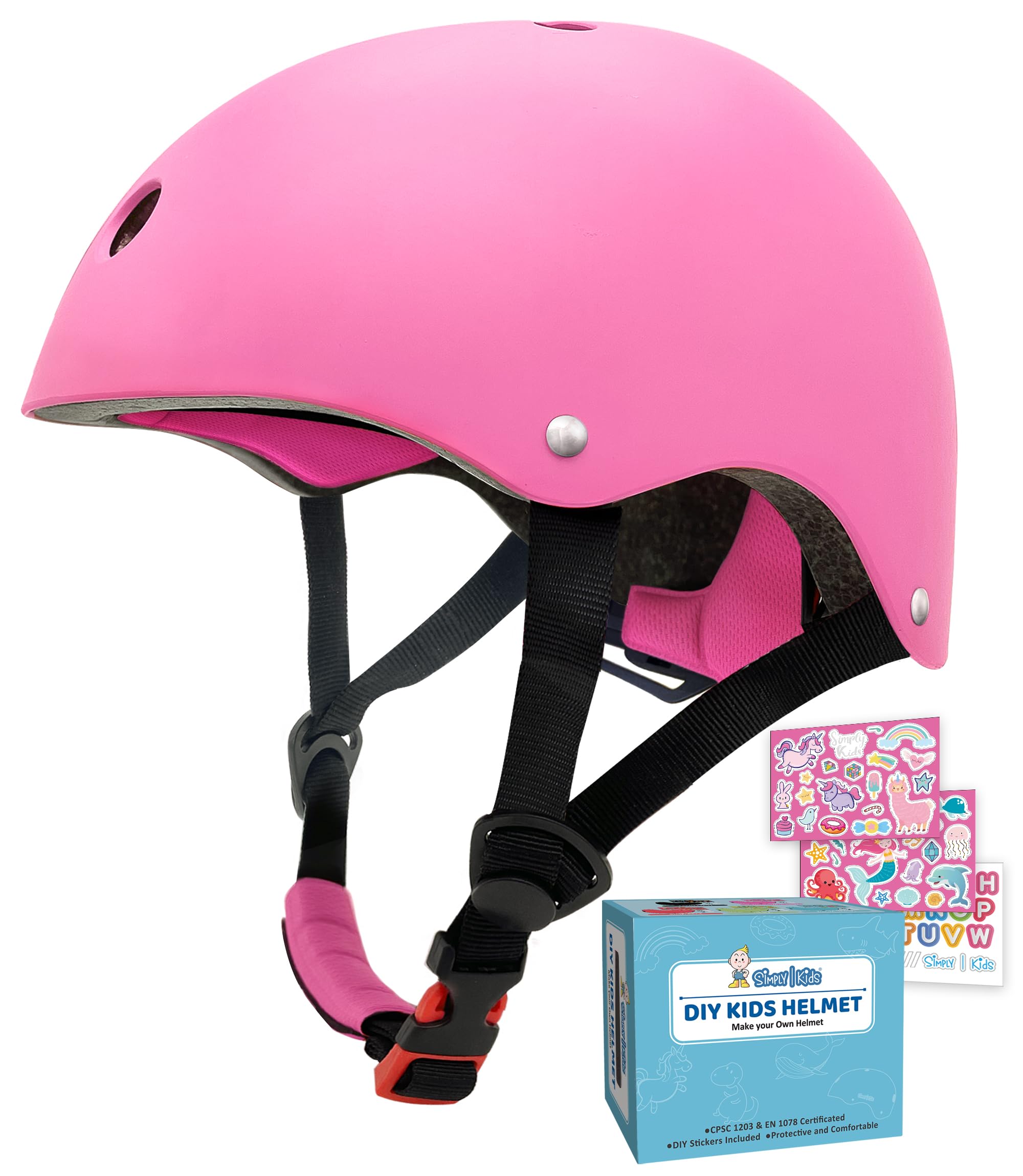
Simply Kids DIY Sticker Helmet
Key Features
- Head Size (cm): S: 48–54 cm, L: 55–58 cm
- Adjustment System: Dial-fit, adjustable strap
- Weight: 10.2 oz
- Vents: Removable padding vents
- Certifications: CPSC, ASTM F1447, EN 1078
- Price: $$
The Simply Kids helmet differentiates itself from the top pick by turning helmet-wearing into a customizing activity: a 70+ sticker pack encourages toddlers and preschoolers to participate, solving the refusal problem many parents face. It matches the top pick with its dial-fit adjustment and triple safety certifications (CPSC, ASTM, EN 1078), offering the same growth flexibility for ages 2–8. The compromise is that stickers may bubble and peel after a few weeks, though the helmet itself stays fully functional. This is best for families where getting a child to wear any helmet is the challenge; if long-term looks or a ventilated design for older kids matter more, the top pick is a better fit.
Pros
- Comes with 70+ stickers that encourage helmet use through personalization.
- Dial-fit system provides easy size adjustment for ages 2–8.
- Triple safety certifications at a mid-range price.
Cons
- Stickers may bubble and peel after a few weeks of use.
- Limited color and pattern options under the helmet design.
Buy this if your child resists wearing a helmet and you want a safe, adjustable option that turns headgear into a creative project.
Best for Spider-Man Fans
Bell Marvel Avengers Helmet

Key Features
- Head Size (cm): 50–54 cm
- Adjustment System: Elastic band, no dial
- Weight: 7.2 oz
- Vents: 8 vents
- Certifications: CPSC
- Price: $$$
This helmet’s Spider-Man design is a strong motivator for preschoolers who refuse other helmets. However, it lacks a dial-fit adjustment, sizing often runs small, and decorative spikes may crack — limiting its long-term value. Best reserved for die-hard fans who need character appeal to ride safely.
Pros
- Spider-Man design motivates reluctant toddlers to wear their helmet.
- Bell’s safety testing gives parents reassurance for everyday rides.
Cons
- No dial-fit adjustment and inconsistent sizing reduce the helmet’s usable lifespan.
Worth considering if your child is a Spider-Man enthusiast who will only wear a helmet featuring their favorite superhero.
Best for Ages 5–8, Classic
Bell Rally Child Helmet

Key Features
- Head Size (cm): 52–56 cm
- Adjustment System: Elastic band, pinch buckle
- Weight: 10.4 oz
- Certifications: CPSC
- Price: $$
This Bell Rally helmet offers a sporty low-profile look and an easy pinch-free buckle, making it simple for quick rides. However, it lacks a dial-fit adjustment—only an elastic band—and the visor is prone to breaking, limiting durability for growing kids.
Pros
- Sporty low-profile design appeals to kids.
- Easy pinch-free buckle for fast fastening.
Cons
- No circumference adjustment; elastic band may not fit all head shapes.
Worth considering if your child needs a lightweight helmet for occasional short rides and you accept fit limits.
Best for Infants 12+ Months
GLAF Baby Toddler Helmet

Key Features
- Head Size (cm): 44–56 cm, 3 sizes
- Adjustment System: Dial-fit, adjustable chin
- Weight: 8.8 oz (XS)
- Vents: 14 vents
- Certifications: CPSC
- Price: $
A rare XXS dial-fit helmet for infants. The lightweight build and simple adjustment work well for 12–24 month olds with smaller heads. But the XXS may still be too large for some 9–12 month olds, and color options are few. Best when your child’s head is already on growth track.
Pros
- Smallest dial-fit helmet fits infants as young as 12 months
- Dial-fit system and lightweight build simplify growing adjustments
Cons
- XXS size may still be too large for some 9–12 month olds
Worth considering if you have a 12–24 month old with a smaller head who needs a dial-fit helmet, and you’ve verified their head circumference against the XXS range.
Best for Budget Dial-Fit
BURSUN Multi-Sport Helmet

Key Features
- Head Size (cm): 48–54 cm
- Adjustment System: Dial-fit, adjustable straps
- Weight: 12.0 oz
- Vents: 11 vents
- Certifications: CPSC
- Price: $
The BURSUN delivers a true dial-fit at a budget price, and reviews confirm sturdy construction and good impact protection. However, quality control is inconsistent—some units arrive with cracked shells, and the single size (2–8 years) may not fit very young toddlers well. It’s a decent value for budget-conscious parents, but not a long-term investment.
Pros
- Easy dial adjustment for a custom fit after measuring head circumference.
- Sturdy build with solid impact protection at a budget-friendly price.
Cons
- Occasional cosmetic defects such as cracked shells out of box.
Worth considering if you’re a budget-conscious parent looking for a basic dial-fit helmet for a 3–6 year old and can accept potential cosmetic variances.
Best for Unicorn-Loving Toddler
MOUNTALK Unicorn Toddler Helmet

Key Features
- Adjustment System: Dial-turn ring
- Weight: 9.2 oz
- Vents: 11 vents, 6 channels
- Certifications: CPSC, ASTM F1447
- Price: $
This helmet delivers an adorable unicorn look toddlers love plus a dial-fit system that actually adjusts circumference, not just the chin strap. Dual safety certifications at this price point is rare. However, the plastic build feels less premium than some alternatives, and the XS size can still be too large for 12-month-olds—measure head circumference carefully before buying.
Pros
- Adorable unicorn design that toddlers love.
- Dual CPSC and ASTM safety certification at a low price.
Cons
- XS size may still be too large for some 12-month-olds; careful measurement needed.
Worth considering if your toddler loves unicorns and you want a certified, adjustable helmet on a budget—but measure head circumference first if buying for a 1-year-old.
Best for Lightweight, Visor
SIFVO Kids Visor Helmet

Key Features
- Head Size (cm): 50–57 cm
- Adjustment System: Dual adjustable positions
- Weight: 8.4 oz
- Vents: 15 vents
- Certifications: CPSC, CE, ASTM
- Price: $$
This helmet weighs only 239 grams with 15 vents and a visor that kids enjoy for sun protection. Some units experience buckle assembly loosening or clip detachment, and occasional chips on arrival are possible. Best for parents who value low weight and are willing to check the buckle regularly.
Pros
- Ultra-lightweight at 239g with 15 vents for airflow.
- Removable visor kids love for sun protection.
Cons
- Buckle assembly can loosen or clip detach with heavy use.
Worth considering if your child needs a lightweight helmet with a visor and you’re okay monitoring the buckle fit regularly.
Best for Novelty Unicorn
Raskullz Unicorn Helmet

Key Features
- Head Size (cm): 50–54 cm
- Adjustment System: Adjustable straps, no dial
- Certifications: CPSC, ASTM
- Price: $$$
This helmet charms with its 3D unicorn features – soft ears, horn, snout – and is CPSC/ASTM certified for safety. Kids love the look and find it comfortable. But the decorative parts are fragile (ears may break off), and the fixed sizing runs small (no dial-fit). Only for a child who adores unicorns and won’t mind a short lifespan.
Pros
- Unique 3D unicorn design with soft rubber ears and horn that kids love
- Dual CPSC and ASTM certification for bike and skate safety
Cons
- Decorative 3D accessories (ears, horn) are delicate and may detach during active play
Worth considering if your child is obsessed with unicorns and will wear it willingly despite the fragile decorations and limited adjustability.
Best for Skull Design, Skate
Mongoose Skull Youth Helmet

Key Features
- Head Size (cm): 54–58 cm
- Adjustment System: Fixed fit, internal pads
- Vents: 2 front vents, rear
- Certifications: CPSC, ASTM F1492
- Price: $$
This helmet wins on looks with a skull graphic that kids genuinely find cool, and the ABS hardshell provides solid protection for bike and skate use. But the fixed fit means no room for growth or head shape adjustments, and the shell scuffs easily. It’s a good match only if your pre-teen is done growing and prioritizes the aesthetic over long-term versatility.
Pros
- Unique skull design that kids find cool and want to wear.
- Sturdy ABS hardshell with dual CPSC and ASTM skate certification.
Cons
- Fixed fit with no adjustment dial, so head shape compatibility is a gamble.
Worth considering if your pre-teen loves the skull aesthetic, is done growing, and needs a helmet for skatepark use.
How to Choose
Measure your child’s head circumference in centimeters — age ranges printed on helmets are often misleading and lead to poor fit.
Head Size in CM
Ignore the ‘ages 3–5’ label. Use a soft tape measure around the widest part of the head, just above the eyebrows. Most helmets work within a specific centimeter range; choose one that closely matches your child’s measurement for a snug, safe fit.
Adjustment System
Dial-fit systems allow precise tightening with a twist wheel at the back. Elastic band options are less adjustable and often can’t provide a secure fit for growing kids. A dial is worth the extra few dollars for long-term use.
Weight
A lighter helmet (under 10 oz for toddlers) reduces neck strain and increases willingness to wear it. Heavier models (over 13 oz) are fine for older children but can feel cumbersome for young riders.
Ventilation
More vents (12 to 20) keep the head cool during active rides, especially in summer. But too many vents can reduce coverage; look for helmets with strategically placed channels that direct airflow without compromising protection.
Safety Certifications
CPSC certification is the legal minimum for bike helmets in the US. Multi-sport helmets with ASTM F1447 (skate) or ASTM F1492 (roller sports) are tested for harder impacts and repeated hits. For kids who skateboard or scoot, double certification adds peace of mind.
Removable Padding
Helmets with washable, removable padding stay fresher longer and accommodate sweaty summer rides. This feature is rare at budget prices but common in mid-range dial-fit models.
FAQ
How do I measure my child’s head for a bike helmet?
Use a flexible tape measure around the widest part of the head, about one inch above the eyebrows. Write down the measurement in centimeters. Compare it to the helmet’s size range, ignoring the age label. If you don’t have a tape, use a string and then measure against a ruler.
Is a multi-sport helmet as safe as a bike helmet?
Yes, if it carries CPSC bike certification. Multi-sport helmets often also meet ASTM skateboard standards, which test for multiple impacts in a single ride. For recreational biking and scootering, a multi-sport helmet is just as safe and more versatile.
Why does my kid’s helmet keep sliding forward?
That usually means the helmet is too large or the adjustment system isn’t snug enough. Check the circumference. If the dial is tightened fully and it still moves, the helmet is the wrong size. A properly fitted helmet should not shift when you push it from the back.
Do kids helmets need MIPS?
MIPS (Multi-directional Impact Protection System) reduces rotational forces during angled falls. It’s a meaningful upgrade for aggressive riders or frequent falls, but not required for casual neighborhood biking. Most affordable kids helmets do not include MIPS, and that’s fine for typical use.