This post contains affiliate links. We may earn a small commission when you buy through our links — at no extra cost to you.
Parents shopping for kids sunglasses quickly discover that most budget-friendly options look identical on paper: flexible frames, polarized lenses, UV protection. The real difference isn’t in the spec sheet — it’s whether the glasses actually fit your child’s face and hold up to everyday play. Many pairs run small, lenses scratch within weeks, or frames break after a few drops. This guide focuses on what matters: fit accuracy, durability, and lens quality, so you can pick a pair that matches your child’s age and activity level without wasting money on sunglasses that end up in the trash bin.
We’ve organized our picks by the most common use cases — from toddlers who need bendable frames to school-age athletes who need a secure strap. Whether you need a single reliable pair or a multi-pack for backups, the options here balance cost with real-world performance.



Best for Everyday Wear
COASION Kids Polarized
Key Features
- Fit & Sizing: Best ages 3-7
- Durability & Flex: Flexible TPEE frame
- Polarization & UV: Polarized, UV400
- Age Range: 3-9 years
- Accessories: Case, cloth
- Price: $$
The TPEE rubber frame bends without breaking, and the polarized lenses block UV as promised. The included cloth case keeps them scratch-free when not in use, which parents report matters more than expected. Build quality consistently feels solid — no sharp edges or cheap hinges — and the glasses hold up to drops and toddler-level handling that would snap thinner frames. The case and cleaning cloth are small touches that reduce lost-and-broken cycles for busy families.
This pair suits kids aged 3 to 7 who need reliable outdoor sunglasses for playgrounds, walks, and car rides. The fit works well for most children in that range, but some find them too small — especially at the upper end of the 3–9 label. Parents comfortable checking fit before buying will be rewarded with a durable everyday option that doesn’t require replacement every season. Not recommended for children with larger heads or extreme roughhousing that might stress the frame beyond normal play.
Pros
- Build quality that feels well-made, not cheap — no squeaks or flimsy parts.
- Flexible frames that bend without breaking during drops or toddler play.
- Includes a soft cloth case and cleaning cloth that protect the lenses between uses.
Cons
- Fit can be too small for some children, especially near the top of the 3–9 age range.
- Not suitable for children with larger heads — the frame runs small.
Buy this if you want a durable pair of everyday sunglasses for your child aged 3–7 with a protective case included. Skip it if your child has a larger head or is at the upper end of the age range where fit may be tight.
Best for Budget Toddler
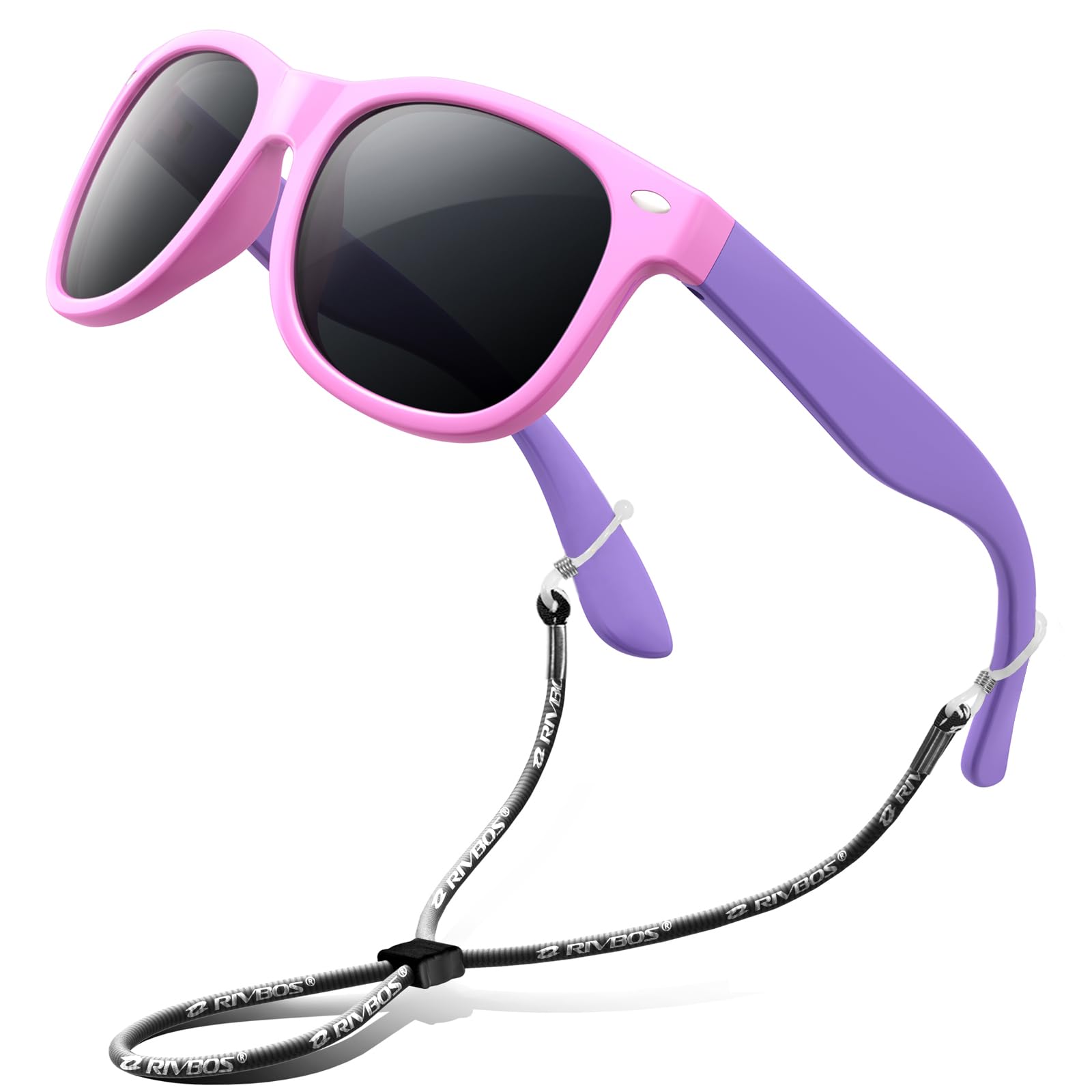
RIVBOS Kids Sunglasses
Key Features
- Fit & Sizing: Best ages 1-3
- Durability & Flex: Flexible rubber
- Polarization & UV: Polarized, UV
- Age Range: Infant-3 years
- Accessories: Strap
- Price: $
At this price point, you get polarized lenses and a strap that make these easy to keep on a toddler — but durability is hit-or-miss, with many pairs breaking after a few uses. Compared to the top pick, the RIVBOS frames are bendable and look pricier than they cost, making them a solid choice for parents who treat sunglasses as semi-disposable. Best suited for ages 1–3, especially kids who frequently lose or misplace their shades.
Pros
- Frames bend without breaking, handling rough toddler handling.
- Polarized lenses at a low price — strong value for budget shoppers.
- Looks more expensive than it is; kids find them appealing.
Cons
- Fit runs small — many report them too tight for toddlers over age 3.
- Durability varies; some pairs crack or snap after light use.
Buy this if you need a cheap, polarized pair for a toddler who loses things and you’re fine replacing them occasionally.
Best for Active Toddlers
JUSLINK Toddler Sunglasses
Key Features
- Fit & Sizing: Best ages 1-4
- Durability & Flex: Bendable frame
- Polarization & UV: Polarized, UV
- Age Range: 1-4 years
- Price: $
JUSLINK’s bendable frame survives drops and bending better than cheaper alternatives, making it the go-to for rough-and-tumble toddlers. However, fit is not universal—some toddlers find these too large, others too small, so ordering two sizes may be wise. Best suited for active toddlers aged 1–4 who need UV protection and a flexible frame that won’t snap.
Pros
- Bendable frame withstands drops and bending without breaking.
- Adorable, cartoon-free design toddlers enjoy wearing.
Cons
- Fit is inconsistent – some children find them too large, others too small.
- Durability not universal – a minority report breakage after a few uses.
Buy this if your toddler is rough on sunglasses and you need a budget-friendly, durable pair that can take abuse. Skip it if fit consistency is your top priority.
Best for Youth Sports
DUCO Kids Sports Sunglasses
Key Features
- Fit & Sizing: Best ages 8-14
- Durability & Flex: TR90 frame, tough
- Polarization & UV: Polarized, UV400
- Age Range: 8-16 years
- Accessories: Hard case, cloth, tool
- Price: $$$
Unlike budget sports sunglasses that struggle with fit and lens clarity, the DUCO’s TR90 frame delivers consistent stability under helmets and during active play. The polarized TAC lenses provide UV400 protection while the included hard case and screwdriver add value. This pair is designed for serious young athletes ages 8-16 who need eyewear that stays on through baseball, cycling, and running. It carries a premium price and is not suitable for younger children or casual wear — it’s a sports-specific tool for a focused age range.
Pros
- Stays secure under helmets and catcher gear during sports.
- Durable TR90 frame with TAC lenses resists impacts and UV damage.
- Includes hard case, cleaning cloth, and screwdriver for maintenance.
Cons
- Lens coating may peel or scratch after several months of use.
- Frame may be too small for older teens near the upper age limit.
Buy this if your active child ages 8-14 needs sports glasses that stay on under a helmet. Skip it if you need a casual pair for a younger child or want a budget option.
Best for Family Backups
TURBOPEP 3 Pack
Key Features
- Fit & Sizing: Best ages 4-10
- Durability & Flex: Flexible plastic
- Polarization & UV: Polarized, UV400
- Age Range: 3-12 years
- Accessories: 3 pairs only
- Price: $
The TURBOPEP 3 Pack delivers three polarized pairs that fit most kids ages 4–10 comfortably, with flexible plastic frames that hold up well during sports and outdoor play. Compared to cheaper multi-packs, early reviews report fewer fit inconsistencies and better lens quality, making it a smart buy for budget-conscious parents. The main trade-off is a lower review count (884) than established competitors — long-term durability is less proven, but what’s available suggests solid build and UV400 protection. Best for families who want multiple functional pairs for active kids without overspending.
Pros
- Three polarized pairs at a very competitive price point.
- Comfortable, secure fit for most kids ages 4–10.
- Sturdy build that handles everyday play and sports.
Cons
- Lower review count means long-term reliability is less established.
- Minor fit issues for very large or very small heads.
Buy this if you need multiple affordable polarized sunglasses for active kids ages 4–10 and accept a less proven long-term track record.
Best for Trendy Round
SOJOS Round Polarized
Key Features
- Fit & Sizing: Best ages 2-4
- Durability & Flex: Flexible plastic
- Polarization & UV: Polarized, UV400
- Age Range: 2-4 years
- Accessories: Pouch, cloth
- Price: $
These round frames offer a distinctive look that stands apart from typical kids sunglasses, appealing to style-conscious parents of toddlers. They provide UV400 protection and hold up reasonably well to toddler handling for the price. However, fit is the main catch: they work best for ages 2-4, but are too large for infants and too small for older toddlers. Some units also report lenses popping out. If your child is in the sweet spot, this is a charming budget option—otherwise, look to a more universally fitting design like the top pick.
Pros
- Unique round design stands out from typical kids sunglasses.
- Good build quality and UV400 protection for a budget-friendly price.
- Effective sun protection with polarized lenses.
Cons
- Fit is polarizing – best for children aged 2-4 only.
- Occasional quality variance – lenses can pop out in some units.
Buy this if you want a trendy round shape for your 2-4 year old and don’t mind a picky fit. Skip it if your child is outside that age range or has a wider face.
Best for Style Variety
Pro Acme Kids Polarized
Key Features
- Fit & Sizing: Best ages 3-8
- Durability & Flex: Flexible TPEE
- Polarization & UV: Polarized, UV
- Age Range: 3-12 years
- Price: $$
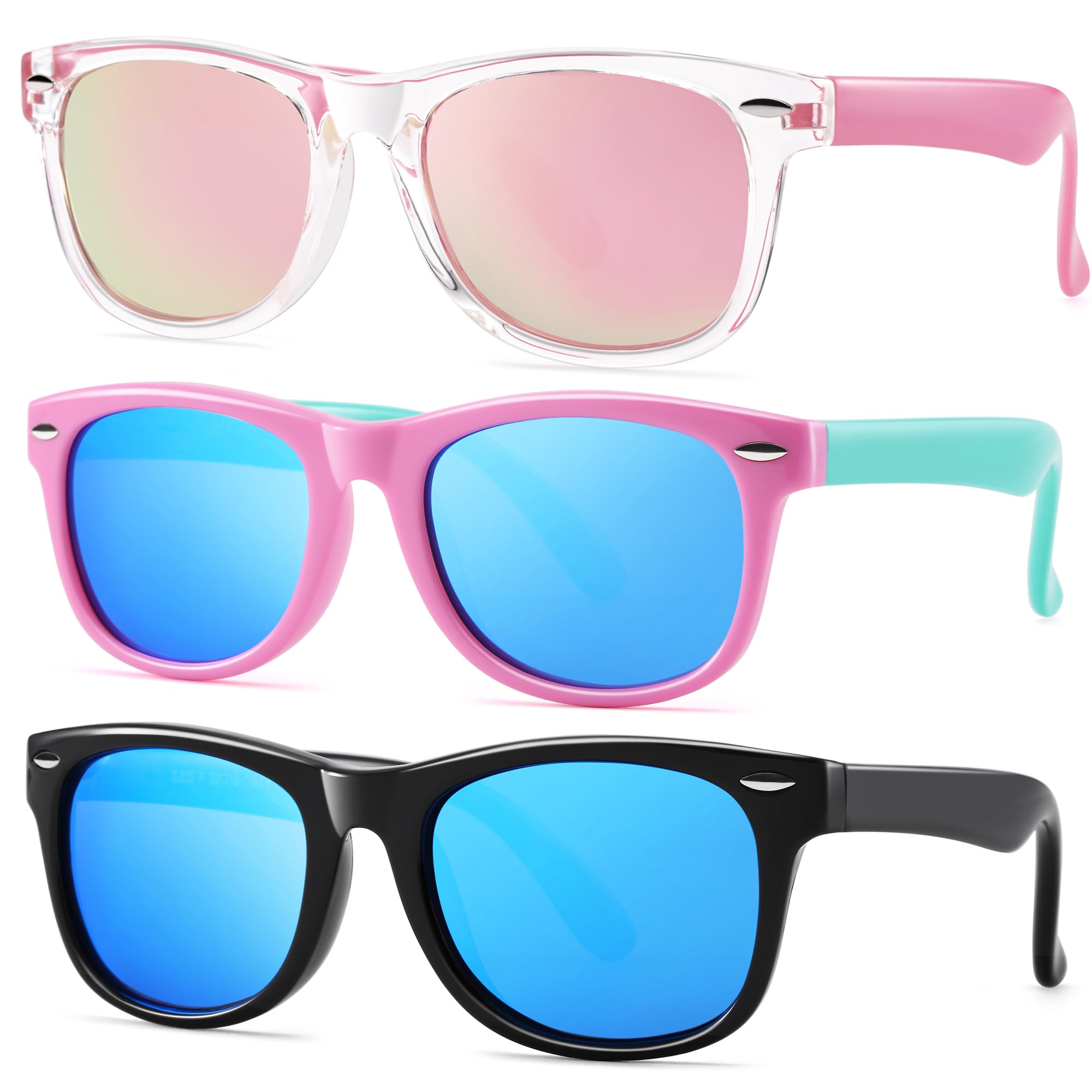
The Pro Acme stands out with a rainbow of mirrored lens colors that kids genuinely enjoy, backed by solid UV400 polarization at a fair price. Its flexible TPEE frame holds shape during active play. Where it trails is fit consistency—some frames run large or small—and durability that’s average for the category. Style-focused families willing to tweak the fit will find plenty to like.
Pros
- Wide range of mirrored lens colors kids love
- Flexible TPEE frame holds shape during play
Cons
- Fit varies between individual frames – some run large or small
Worth considering if your child prioritizes colorful mirrored lenses over perfect fit consistency and is okay with occasional adjustments.
Best for Baby Secure
JAN & JUL Baby Toddler
Key Features
- Fit & Sizing: Best ages 6mo-2yr
- Durability & Flex: Flexible rubber
- Polarization & UV: Polarized, UV400
- Age Range: 6 months-2 years
- Accessories: Removable strap
- Price: $$$
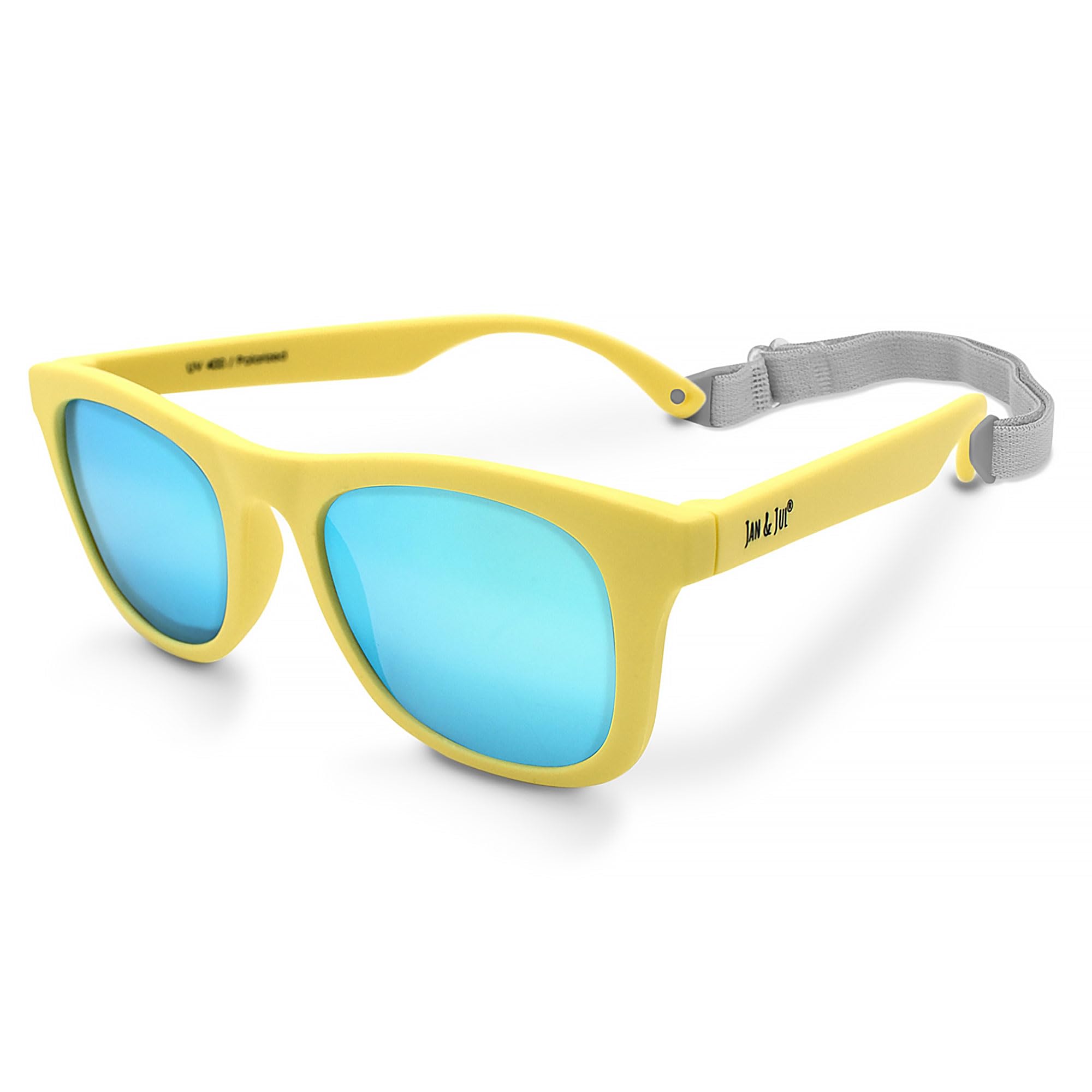
This pair delivers a snug, adjustable strap fit that stays on small faces, and the classic style appeals to parents. However, the lenses tend to scratch with normal wear, and durability reports are mixed. The premium price and shorter usable life make it a niche option for infants and young toddlers where fit and looks matter most, not for rugged daily use.
Pros
- Secure strap keeps glasses on active babies and toddlers.
- Stylish classic design that looks good on little faces.
Cons
- Lenses scratch easily – the coating wears off with normal use.
Worth considering if you have a baby or young toddler and prioritize a snug, stylish fit over long-term durability.
Best for Budget Multipack
DYLB 3 Pack Kids

Key Features
- Fit & Sizing: Best ages 3-8
- Durability & Flex: Flexible TPEE
- Polarization & UV: Polarized, UV
- Age Range: 3-8 years
- Accessories: 3 pairs
- Price: $
This three-pack offers polarized lenses and a low price point. Build quality is sufficient for casual use, and kids enjoy the colors. However, fit inconsistencies and occasional lens pop-out mean it lacks the consistency of the top multi-pack, making it best for spares or families who don’t need precise fit.
Pros
- Three polarized pairs in varied colors at a low price.
- Build quality appropriate for the cost.
Cons
- Fit inconsistencies and occasional lens pop-out reported.
Worth considering if you need multiple pairs for spares or different kids and can accept minor fit variances.
Best for Toddler Backup
FANNYGO 3 Pack

Key Features
- Fit & Sizing: Best ages 2-6
- Durability & Flex: Flexible plastic
- Polarization & UV: Polarized, UV
- Age Range: 3-10 years
- Accessories: 3 pairs
- Price: $
These bendable frames fit toddlers securely and come in three fun color combos, but durability is inconsistent: some pairs crack within days. Best reserved as spare pairs for supervised play rather than a primary daily sunglass.
Pros
- Secure fit that stays on toddlers without slipping
- Flexible frames that survive bending and drops
Cons
- Durability varies; some pairs break quickly
Worth considering if you need cheap backup pairs for daycare or pool bags and can accept occasional breakage.
Best for Sporty Budget
AODUOKE Sports Kids

Key Features
- Fit & Sizing: Best ages 6-10
- Durability & Flex: Flexible plastic
- Polarization & UV: Polarized, UV
- Age Range: 6-12 years
- Accessories: Strap
- Price: $
A sporty polarized pair with an included strap at a low price. The look appeals to kids, and UV protection is solid. However, lenses scratch more easily than dedicated sports models, and fit can be off for older children—especially those at the upper end of the age range.
Pros
- Good value with polarized lenses and a strap for active kids.
- Sporty design that kids find cool and appealing.
Cons
- Fit inconsistent; some find them too small for older children.
Worth considering if you need a budget-friendly sports sunglass with a strap for active kids ages 6-10 and can accept minor fit and scratch compromises.
Best for Premium Look
PolarSpex Toddler

Key Features
- Fit & Sizing: Best ages 3-5
- Durability & Flex: Flexible plastic
- Polarization & UV: Polarized, UV400
- Age Range: 2-8 years
- Accessories: Hard case
- Price: $$
PolarSpex delivers a stylish Ray-Ban look and includes a hard case that keeps them safe when stored. The flexible frame fits some toddlers aged 3–5 well. However, high breakage rates and inconsistent sizing make this a risky choice for daily rough play.
Pros
- Stylish design that looks like adult Ray-Bans
- Useful hard case for storage and portability
Cons
- Durability concerns under active play – occasional breakage reported
Worth considering if you prioritize style over durability for occasional, calm wear.
Best for Small Faces
AZorb Kids Polarized
Key Features
- Fit & Sizing: Best ages 3-5
- Durability & Flex: Flexible TPEE
- Polarization & UV: Polarized, UV400
- Age Range: 3-8 years
- Accessories: Drawstring bag, cloth
- Price: $
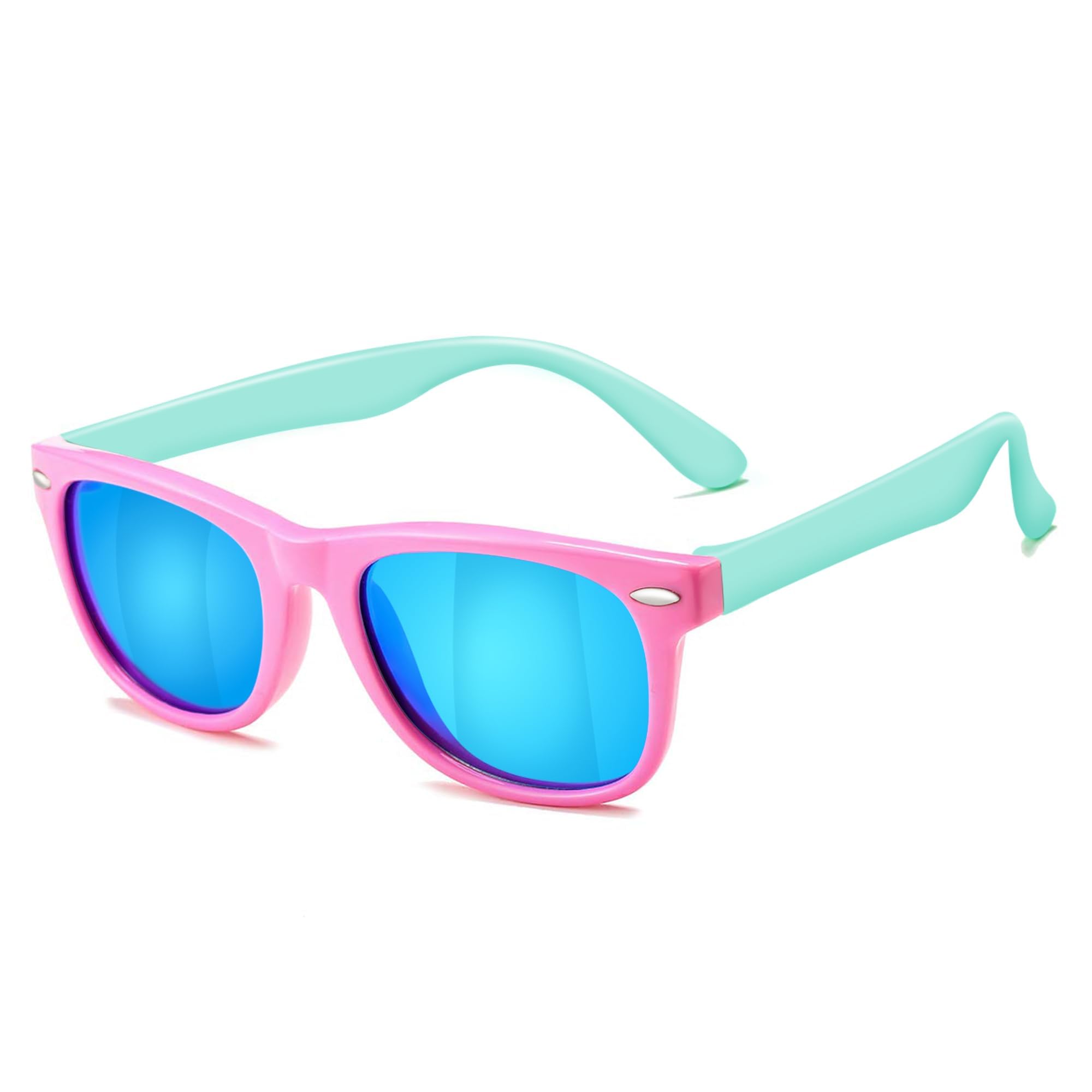
The AZorb Kids Polarized are among the smallest frames available, fitting children with very narrow faces where standard kids sunglasses are too large. The flexible TPEE arms resist bending and the build feels durable for the price. However, the lenses are notably small, reducing eye coverage – not the best choice for full sun protection, but fine for occasional wear or as a backup pair.
Pros
- Sturdy build that feels durable for the price
- Cute mini-Ray-Ban look that kids enjoy
Cons
- Small lenses limit eye coverage significantly
Worth considering if your child has an especially small face and needs a budget-friendly, flexible frame for occasional use.
Best for Style Occasions
Retro Rewind Kids

Key Features
- Fit & Sizing: Best ages 3-7
- Durability & Flex: Plastic frame
- Polarization & UV: Polarized, UV400
- Age Range: 3-12 years
- Accessories: Soft bag
- Price: $$
These sunglasses nail the retro Ray-Ban look that parents love for dress-up occasions. The fit works well for kids aged 3-7. However, the frames are prone to breakage, making them a poor choice for daily active wear or rough play. Best reserved for occasional use where style matters more than durability.
Pros
- Stylish retro design resembling adult sunglasses
- Good fit for children ages 3 to 7
Cons
- Frames break easily under normal play
- Runs small, not for kids over age 7
Worth considering if you want stylish sunglasses for occasional use like photo shoots or special events for kids aged 3-7.
How to Choose
The fit of kids sunglasses varies widely even among products listing the same age range, so always measure your child’s head or order a size up.
Fit and Sizing
Most kids sunglasses run smaller than advertised, so check reviews for actual age ranges. Look for adjustable nose pads or flexible arms that can accommodate different head shapes. A strap can help keep glasses on active toddlers, but ensure it doesn’t pull too tight.
Durability and Frame Flexibility
Flexible frames made of TPEE or rubber bend without breaking, which is essential for toddler play. However, no sub-$20 frame is indestructible — treat them as semi-disposable if your child is rough. Avoid rigid plastic frames for active kids, as they snap more easily.
Polarization and UV Protection
Polarized lenses reduce glare and are nearly standard at this price point. Always confirm UV400 certification, not just marketing claims. Cheaper lenses may scratch faster, so look for scratch-resistant coatings or hard cases to prolong life.
Age Range Appropriateness
Ignore the broad age ranges on packaging — most products fit a narrower span. A pair labeled 3-12 may only work well for 3-7. Order a size up if your child is at the upper end, and consider dedicated baby-specific models for infants under 1.
Included Accessories
Hard cases protect lenses from scratches and breakage when not in use. Straps are valuable for keeping glasses on during active play, especially for toddlers. Multi-packs offer great value for backups but often skip cases, so plan storage accordingly.
FAQ
What is the best age for kids to start wearing sunglasses?
Babies as young as 6 months should wear sunglasses outdoors, as their eyes are more sensitive to UV. Look for infant-specific models with adjustable straps and flexible frames. For toddlers, prioritize durability and a secure fit.
How do I know if kids sunglasses are polarized?
Check the product description for ‘polarized’ and look for UV400 certification. A simple test: hold the sunglasses at an angle against a reflective surface — if glare is reduced, they are polarized. Most budget options in this guide include polarization.
Why do my child’s sunglasses scratch so easily?
Low-cost lenses often use soft coatings that scratch from sand, dirt, or rough cleaning. Store them in a hard case and clean with a microfiber cloth. If scratching is frequent, consider a model with polycarbonate or TAC lenses, which are more scratch-resistant.
Are flexible frame sunglasses better for toddlers?
Yes. Flexible frames made of TPEE or rubber bend without snapping, making them safer and more durable for toddlers who drop, step on, or twist their glasses. Rigid plastic frames are more likely to break and can have sharp edges.