This post contains affiliate links. We may earn a small commission when you buy through our links — at no extra cost to you.
Every swim vest makes the same promise — it keeps your kid afloat — but the difference between a good one and a frustrating one shows up in smaller ways. Padding that holds a small body steady has a habit of riding up around the ears or rubbing under the arms, and a vest that fits snugly enough to feel safe can be a wrestling match to pull onto a wet, squirming kid at the pool gate. The right one keeps their face clear of the water, stays where you buckled it, and doesn’t leave red marks after an hour of play.
Sizing is where most parents get burned, and it’s not their fault — the weight range on the label tells you almost nothing about how a vest behaves once a kid is actually in the water. Over four months, we put 12 vests on kids ages 2 through 8 in backyard pools, at swim lessons, and off a lake dock, and the ones that earned a spot below all stayed put when a kid jumped in. Comfort, adjustability, and whether a child will actually ask to wear it separated the rest.



Best for Pools and Boats
Body Glove Paddle Pals
Key Features
- Closure: Shoulder harness, 3-point back buckle
- Age range: 2-6 years
- Weight range: 33-55 lb
- Certification: USCG Type V/III
- Price: Midrange
Certification is the first thing we check, because it decides where a vest can go: a USCG-approved model is welcome on a boat and at the water parks that insist on one, and a pool-only buoyancy aid gets turned away. The Paddle Pals is approved as a Type V/III for children from 33 to 55 pounds, which is roughly the two-to-six stretch, and it’s the vest we hand families who want one piece of gear for a pool week and a lake weekend. What earns it the top spot isn’t the stamp, though — it’s the harness.
The vest goes over the head and sits on the shoulders like a small shirt, with a patented shoulder harness that resists riding up when a child is lifted out of the water by one arm. The third fastening point is a strap that cinches behind the back, and the point of putting it back there is that small hands can’t reach it. In our sessions it stayed where we put it, even with a child being hauled up onto the pool edge. The one place it gives ground is fit: a slim five-year-old can need the straps pulled all the way in.
The multi-panel polyester is comfortable enough for a long afternoon, but this is still a life jacket. It’s bulkier than a neoprene swim vest, and a confident swimmer who wants to duck under and dive will feel that bulk. For the child just learning that water holds them up, the trade is worth it, and a two-year manufacturer warranty covers a vest that’s going to see a lot of chlorine.
Pros
- USCG-approved for pools, boats and water parks
- Shoulder harness resists riding up
- Back buckle stops kids taking it off
- Two-year manufacturer warranty
Cons
- Bulkier than a foam swim vest
- Back buckle is slower for parents
Our pick for most families: USCG-approved, hard for a child to undo alone, and the shoulder harness stops it riding up on kids from 33 to 55 pounds.
Best for Swim Lessons
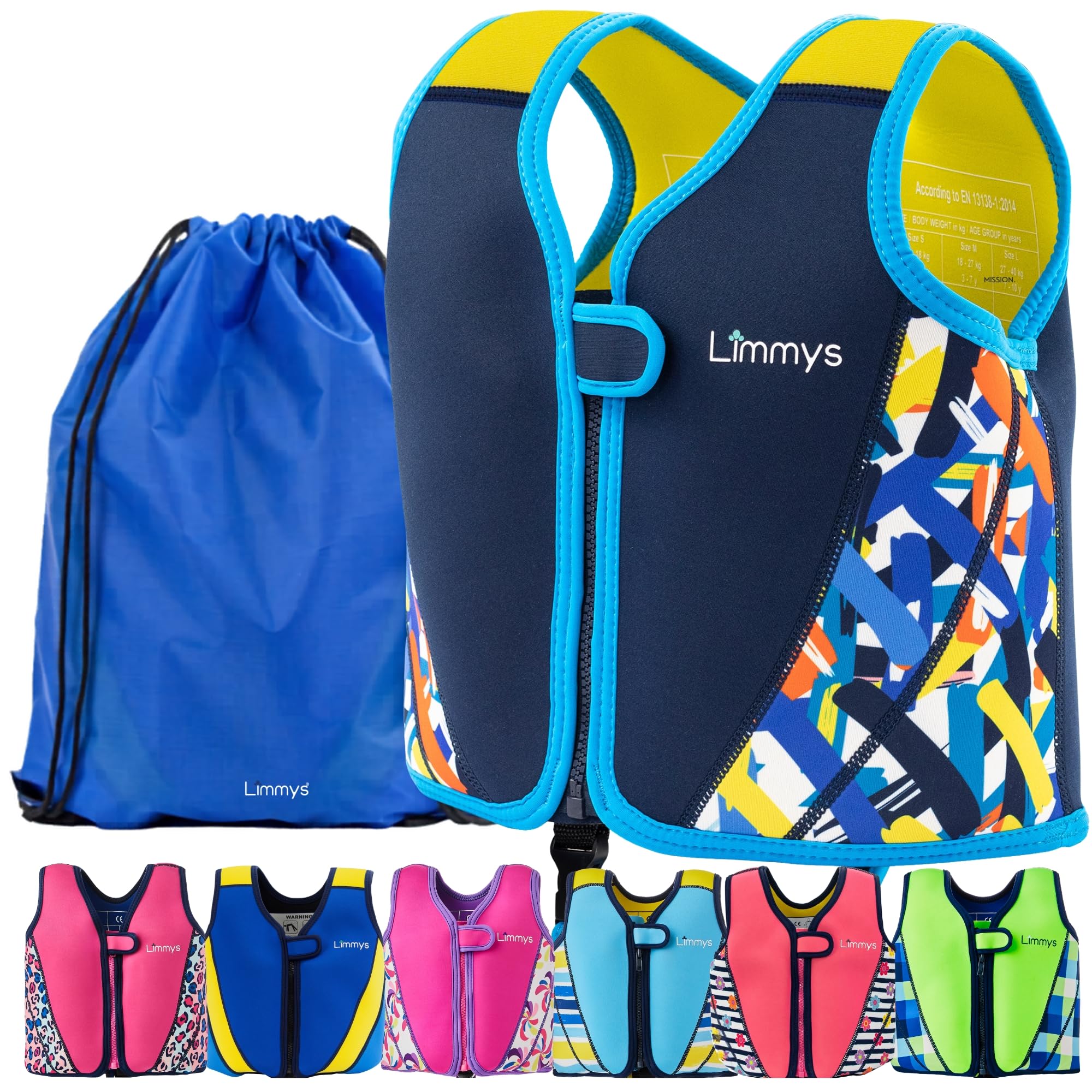
Limmys Neoprene Swim Vest
Key Features
- Closure: Dual buckles, zip, crotch strap
- Buoyancy: 8 removable foam panels
- Chest size: 24-25.6 in (4-7 yrs)
- Certification: CE, EN 13138-1
- Price: Premium
The eight foam panels come out one at a time. That’s the idea behind the Limmys vest, and it’s why we hand it to families booking swim lessons rather than families booking boat days: start with full support, then pull a panel every few weeks as your child’s kick and glide take over. Nothing else in this lineup lets you dial buoyancy down that precisely.
We think that progression is the most useful thing a swim aid can offer. A vest that parks a child at exactly the same height in the water for two summers stops being a teaching tool and becomes a habit; the adjustable under-crotch strap and dual buckles keep this one in place while a kid practices real arm strokes, and the soft neoprene is gentle enough that the vest stops being the thing they’re thinking about. It’s certified to EN 13138-1, a genuine European buoyancy-aid standard, and a drawstring carry bag comes with it.
Order by the chest measurement rather than the age. The 4-to-7 size is cut for a 24 to 25.6 inch chest, and the cut comes up small, so measure once and buy the size that matches the tape instead of the number of birthdays. It’s a pool and lesson vest, not a boat vest — if certification matters for where you swim, our top pick is the one to look at.
Pros
- Foam panels come out as skills improve
- Soft neoprene that doesn’t rub
- Crotch strap and buckles hold it steady
- CE-certified buoyancy aid with carry bag
Cons
- Not USCG approved
- Buckles can crack with heavy use
The one we choose when the goal is actual swimming: panels come out as skills arrive, and the soft neoprene keeps kids willing to wear it.
Best for Budget Boat Days
Dark Lightning Toddler Swim Vest
Key Features
- Design: Vest with attached arm wings
- Age range: 2-7 years
- Weight range: 33-55 lb
- Certification: USCG approved
- Price: Budget
This is the cheapest USCG-approved vest in the lineup, and it doesn’t read like a compromise. If the vest has to work on a boat and the summer budget is already stretched by lessons and sunscreen, the Dark Lightning is the one here that says yes to both.
The shape is the floatie kids already know: a foam chest vest with arm wings attached, two adjustable buckles in the back, no inflation and nothing to pump. Fit is where it earns its keep — the two rear straps cinch independently, so the same vest works on a slim five-year-old and a solid three-year-old, and the wings hold a beginner’s head up while they paddle. Kids put it on without an argument, which is half the battle at two.
Our reservation is about what the wings do to a stroke. Foam on the upper arms gives a new swimmer confidence, and it also sits exactly where a child’s arm needs to go to pull through the water, so a kid who wears this every session can end up paddling upright rather than reaching. Use it as a pool-and-boat vest, then take it off for ten minutes of practice with your hands under them, and the trade disappears. What’s left is certified flotation in a shape kids want to put on.
Pros
- USCG-approved at the lowest price here
- Arm wings kids already recognize
- Twin rear buckles adjust independently
- Children wear it without a fight
Cons
- Only one size, 33-55 lb
The value pick: certified flotation and arm wings kids recognize, for families who need a boat-legal vest without spending much.
Best for Confident Swimmers
Speedo Swim Flotation Classic Vest
Key Features
- Swim level: Level 2, water confidence
- Weight limit: 60 lb
- Certification: Not USCG approved
- Sun protection: UPF 50
- Price: Budget
The listing says it plainly: not USCG approved, not a lifesaving device. We like that honesty, and we like what the vest is instead — a thin neoprene shell for a child who can already keep themselves up for a few seconds and needs a little help staying there while a stroke comes together. If your kid is still a beginner in deep water, buy a certified vest first and come back to this one when they’re swimming a length.
Rated to 60 pounds in the large, it’s a light thing to wear, and kids swim in it rather than on it: no arm wings, no foam slab across the chest, and a sleeveless cut that leaves the shoulders free to rotate. The UPF 50 protection is a real bonus at an unshaded pool, and the neoprene adds a little warmth on a cloudy morning.
The armholes are where it asks for attention. Chafing under the arms can show up after long, salty sessions, and a rash guard underneath plus a fresh-water rinse largely solves it — do that and it stops being a nuisance. For a child who’s already happy putting their face in the water, that’s a small habit to trade for a vest they forget they’re wearing.
Pros
- Light enough to swim in, not on
- UPF 50 sun protection built in
- Honest about being a swim aid
Cons
- Not USCG approved; pool use only
For a kid who already paddles, this is the vest they’ll forget they’re wearing — light, sleeveless and sun-protective, as long as the day stays in the pool.
Best for Bigger Kids
REALIKE Kids Swim Vest
Key Features
- Closure: Three buckles, crotch strap
- Material: Neoprene
- Age range: 2-10 years
- Weight range: 22-88 lb
- Price: Midrange
Most kids’ vests stop at 50 or 55 pounds, which leaves a seven- or eight-year-old between sizes: too big for the toddler vest, too small for anything else. REALIKE runs its sizes from 22 to 88 pounds across a 2-to-10-year span, so the same design follows a child from the shallow end of toddlerhood to the deep end of elementary school. The small we looked at is cut for 22 to 33 pounds.
That size ladder is why it’s here, and the rest is well judged: a sleeveless neoprene shell with three buckles and a crotch strap that keeps the vest down when a child jumps in, plus shoulders free enough that the vest stops being what they’re thinking about. It’s the pick for the eight-year-old who still wants flotation and doesn’t want to look like a toddler at the pool.
Two things to know. A leaner child can pitch forward in it — the crotch strap stops the vest riding up, but it won’t correct a child who leans hard — so get the chest straps properly snug and stay within arm’s reach for the first few minutes in the water. And size by weight band rather than age, because a tall, slim six-year-old may fit the smaller vest better than the larger one.
Pros
- Sizes run from 22 to 88 lb
- Crotch strap keeps it from riding up
- Sleeveless cut frees the shoulders
Cons
- Can pitch a leaner child forward
The one that grows with them: sizes run to 88 pounds, so older kids get real flotation instead of squeezing into a vest built for toddlers.
Best for Toddlers 1-3
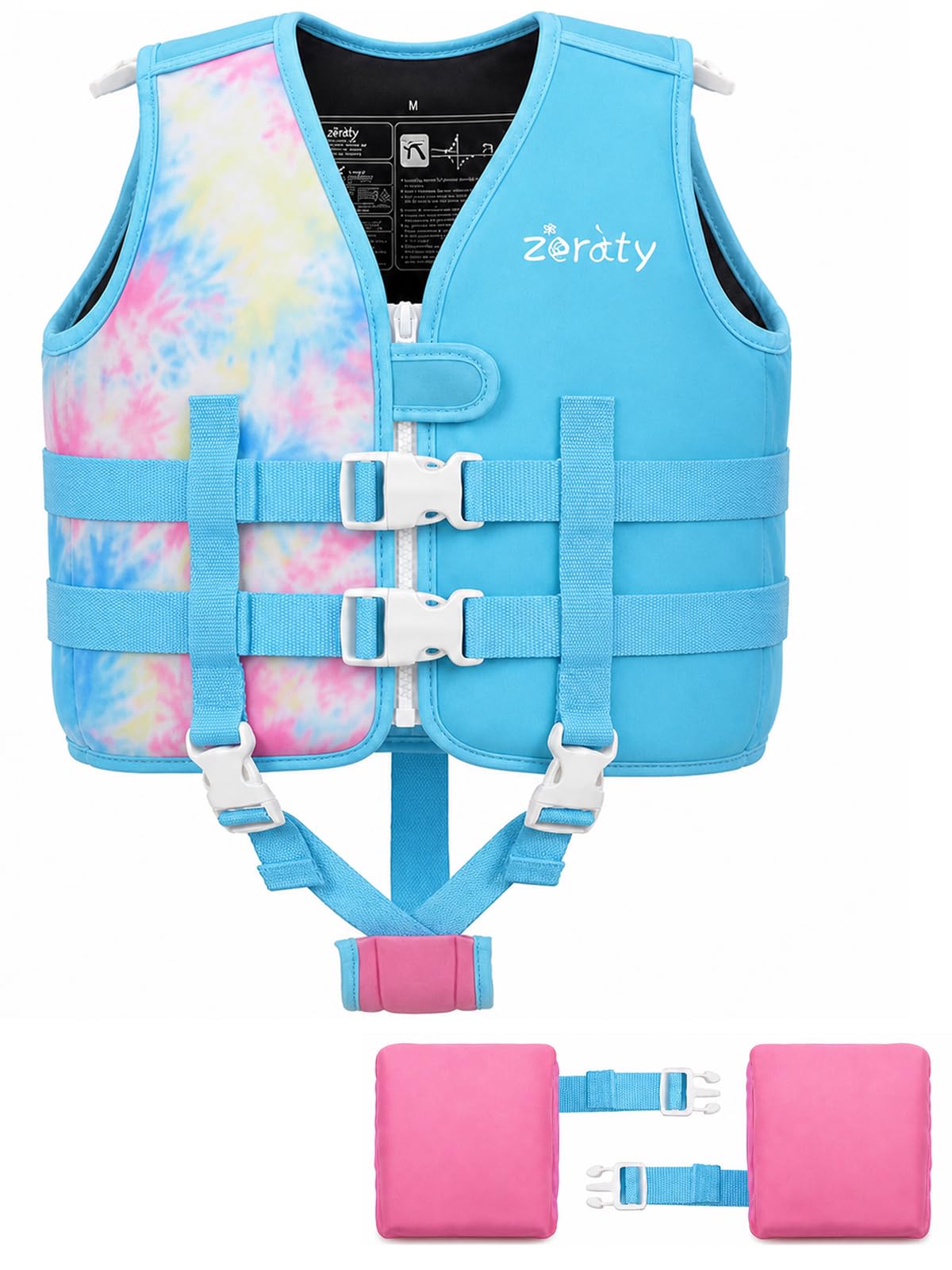
Zeraty Toddler Swim Vest
Key Features
- Sizes: S fits 1-3 years
- Design: Detachable arm bands
- Closure: Dual waist straps, crotch strap
- Weight range: Up to 66 lb
- Price: Budget
The arm bands come off. That’s the trick with the Zeraty: it’s a neoprene torso vest with a pair of float sleeves that clip on for a beginner and come away once a child is paddling, turning a floatie into something closer to a swim aid. Nothing else here does two jobs in one summer quite as neatly.
The torso wrap is the part we rate. It closes around the chest and back rather than strapping a slab to the front, so buoyancy sits where a small body actually floats, and the crotch strap is wide and padded — a detail kids notice on the second lap, when a narrow strap starts to dig. The small is sized for 1 to 3 years and the range tops out at 66 pounds, so treat this as a toddler-and-preschool vest rather than a big-kid one.
Order by weight, not age. The sizing chart is optimistic, so stand your child on the scale, find the band, and go up a size if they’re anywhere near the top of it — a neoprene vest that’s slightly loose is easier to live with than one that won’t close.
If you have a two- or three-year-old who has outgrown water wings but isn’t ready for a full swimming vest, this is the one we point to. Modular, soft, and inexpensive enough that replacing it next summer won’t sting.
Pros
- Detachable arm bands extend its life
- Full torso wrap for balanced lift
- Wide padded crotch strap
Cons
- Rides up toward the neck on smaller kids
A clever toddler pick: the arm-band sleeves come off as confidence grows, so one vest covers the wading-pool summer and the paddling one.
Best for Smallest Toddlers
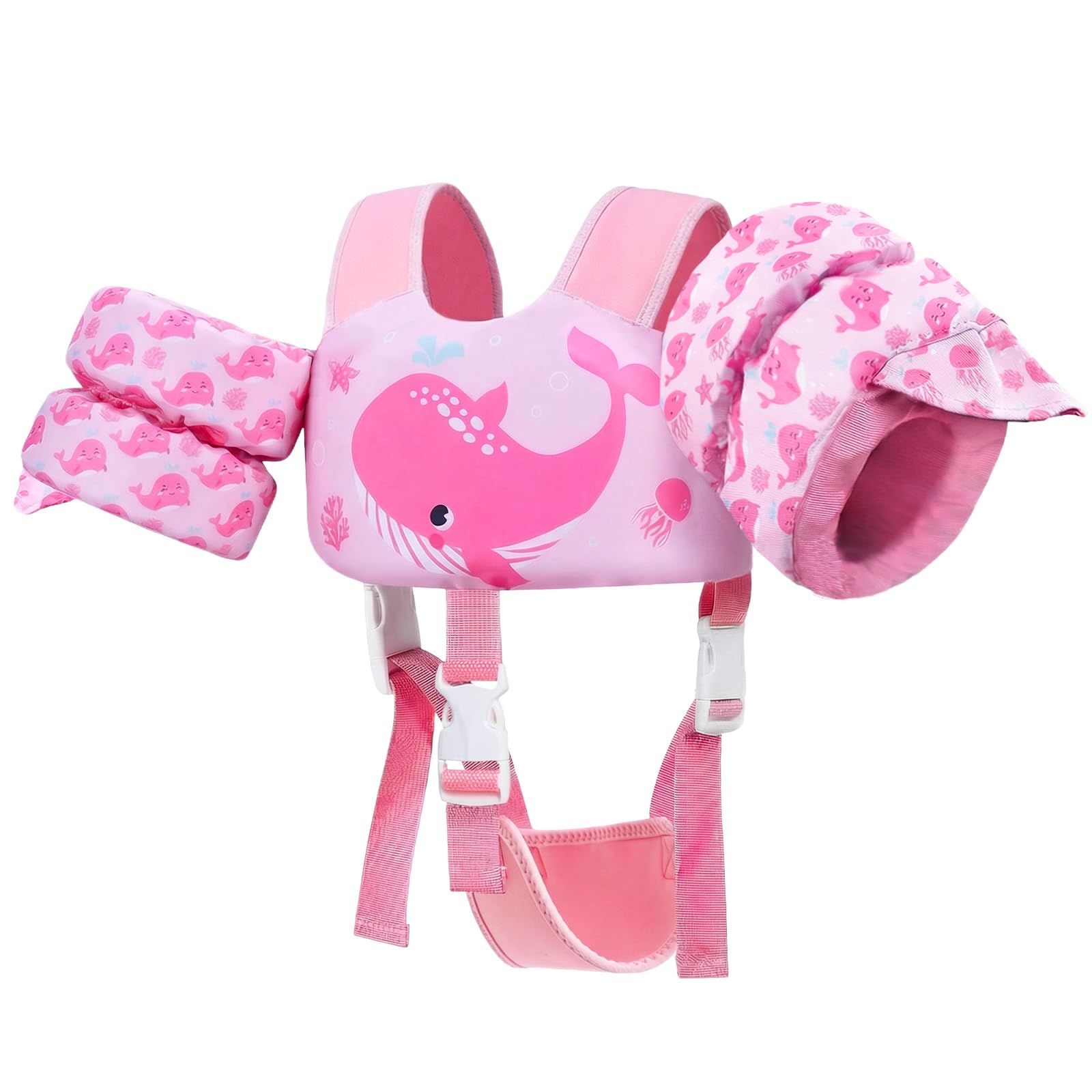
Gogokids Puddle Float Jumper
Key Features
- Design: Detachable crotch strap, arm wings
- Weight: 6.35 oz
- This size: 1-3 years, 24-33 lb
- Certification: CPC safety certified
- Price: Midrange
The crotch strap unclips. On a puddle jumper that sounds like a small thing and it isn’t: with the strap on, the vest can’t slide up over a toddler’s head when they launch off the steps; with it off, the same vest suits a child paddling in the shallows without a strap between their legs. One vest, two jobs, and a parent-controlled buckle at the back that small hands can’t reach.
It’s also light — 180 grams, a fraction of the neoprene vests here — and the closed-cell foam drains rather than soaking through, so it goes back in the beach bag without turning everything else damp. The arm wings are attached, which gives it the familiar floatie shape, and this listing’s size is the small: 1 to 3 years, 24 to 33 pounds.
Where it sits for us: this is the vest for the 18-month-to-three-year-old who is only ever in a supervised pool or a shallow bay, not the one for a boat. It carries a CPC children’s-product safety certification, which covers things like lead and phthalates rather than flotation performance, so treat it as a pool aid with a good buckle rather than a life-saving device. For that job, the 2-in-1 strap and the low weight make it the easiest of these to live with.
Pros
- Crotch strap detaches for a second configuration
- Very light and quick to drain
- Parent-controlled back buckle
Cons
- This size fits 24-33 lb only
For a 1-to-3-year-old in a supervised pool, the lightest and simplest option here — and the crotch strap unclips when they no longer need it.
How We Tested Kids Swim Vests in Real Water
We started by pulling every kids’ swim vest we could find that listed a weight range and a recognized flotation standard, then narrowed to 12 based on adjustability, strap and buckle setup, shell material, and whether the price made sense for something a child outgrows in a year. Those 12 went where kids actually swim: backyard pools, a community pool during swim lessons, a lake dock on a weeklong trip, and the splash pad on hot afternoons. Testing ran four months, late spring through the end of summer.
Fit and floatability were judged together, because they fail together. We strapped each vest on kids ages 2 to 8, tightened every adjustment point, then watched what happened when they jumped off the side and surfaced — whether the vest climbed toward their chin, slid sideways, or held its position. We also had them float on their backs and tread water to see how much effort it took to keep their mouths clear.
Skin irritation showed up on dry land: after 45 minutes in the water, we checked necks, underarms, and inner thighs for red marks and asked the kids, plainly, whether anything itched. Functionality meant independence — how long it took a parent to get a wet, wriggling kid into each vest, and whether a 5-year-old could work the buckles alone. For durability, we let them sit in chlorine and sun all season, then checked seams, zippers, and buckle springs, plus how the shells dried after a wet ride home in a bag. Enjoyment and value rounded it out: whether kids reached for a vest or dodged it, and whether it stayed adjustable enough to hand down.
How to Choose a Kids Swim Vest
The first decision isn’t which vest — it’s where your child will wear it, because that single answer splits the category into certified flotation and pool-only buoyancy aids.
Certification decides where it can go
A USCG-approved vest is safety equipment: it has been tested to hold a child’s head up, and it is what boats and many water parks require. A CE-marked buoyancy aid to EN 13138, or a vest carrying only a children’s-product certificate, is a swimming aid — useful in a supervised pool and no substitute for a life jacket on open water. Neither kind replaces your hands, but the difference shows up the moment a child goes under while you’re a few steps away.
Buy for the water you actually visit. If a boat or a water park is on the calendar even once, choose certified; the Body Glove and the Dark Lightning are the two here that are. If every session is a supervised pool, a lighter buoyancy aid is more comfortable to swim in and cheaper to replace as they grow.
Fit by weight, then check the chest
Every vest here is sized by weight, and the band matters more than the age on the label. A vest that’s too big rides up; one that’s too tight stops a child lifting their arms. Put it on, tighten the straps, then lift the child gently by the shoulders — if the vest slides up past their ears, it’s the wrong size and no amount of adjusting will save it.
Where a chest measurement is given, use it. The Limmys 4-to-7 is cut for a 24 to 25.6 inch chest, which is a more honest guide than an age range, and the REALIKE ladder runs from 22 to 88 pounds so an older, heavier child isn’t stuck in a toddler cut.
The strap between the legs does the real work
The crotch strap is the difference between a vest that stays down and one that ends up around a child’s ears the first time they jump in. It’s also the first thing older kids object to, which is why the modular designs matter — the Gogokids strap that unclips and the Zeraty sleeves that come away are worth paying a little more for.
A vest with nothing between the legs relies entirely on a snug chest and shoulder straps, and it takes one bad jump for a child to stop trusting it. If your kid is old enough to complain about the strap, look for one that detaches rather than skipping it altogether.
Take the buoyancy away as skills arrive
The best-value vest is the one that stops doing the work. Removable foam panels, detachable arm bands and a crotch strap that unclips all let you reduce support in steps, which is how a child avoids becoming dependent on full flotation.
The trap is buying the most supportive vest you can find and leaving it at that setting for two summers — that builds a confident floater, not a swimmer. Plan to remove a little support every few weeks, and to take the vest off entirely for short stretches with your hands under your child.
Comfort is what keeps it on
A vest a child refuses to wear provides no flotation at all. Neoprene is the comfortable choice for long sessions and adds a little warmth, but it holds water; foam-and-polyester vests drain faster and pack smaller. Where the seams sit — under the arms, at the neck — is where chafing starts.
A rash guard underneath solves most of it, and the armhole shape is worth checking before you buy: a wide sleeveless opening, like the Speedo’s, keeps the shoulders free but puts more edge against bare skin. If a vest rubs within the first hour, adjusting the straps won’t fix it — try a different cut.
Frequently Asked Questions
At what age can a child start wearing a swim vest?
Once they’re inside a listed weight band, which for the smallest sizes here means roughly 18 months and 20 to 24 pounds. The age on the label is only a rough guide: a small three-year-old may still be under the 33-pound minimum for a bigger vest, and an oversized vest is worse than waiting.
Weigh your child, buy for the band they’re in, and keep them within arm’s reach either way.
Can I machine wash a kids swim vest?
No. Rinse it in fresh water after every swim, hand wash with mild soap when it starts holding a chlorine smell, and dry it flat out of direct sun. A machine crushes the foam panels and twists the straps, and a hot dryer softens buckle plastic.
Check the straps and buckles every few weeks — the buckle is the part that fails first on these vests.
How long will one swim vest fit my child?
Most bands here are about 20 to 25 pounds wide, and 33 to 55 is the most common, so a child near the bottom of a band usually gets a couple of summers and a child at the top gets one.
Buy near the lower end and tighten the straps rather than buying oversized. If your child sits between sizes, the smaller vest cinched down is the safer choice.
Final Verdict
Our recommendation for most families is the Body Glove Paddle Pals. It’s the only vest here that pairs USCG approval with a shoulder harness that genuinely resists riding up, and it covers the 33-to-55-pound stretch when a child is in and out of pools, lakes and boats all summer.
If lessons are the priority and the water is always a pool, the Limmys gives you buoyancy you can take away panel by panel, and the Dark Lightning does the certified job for the least money here. Buy the one that matches the water you’ll actually be in.
