This post contains affiliate links. We may earn a small commission when you buy through our links — at no extra cost to you.
The “slow flow” nipple you carefully picked might still flood your breastfed newborn’s mouth, causing coughing, gas, and frantic feeds. That’s because many manufacturers label a nipple as slow based on a standard formula-fed pace—not the delicate, intermittent suck-pause pattern of a breastfed baby. This mismatch is the top complaint among breastfeeding parents introducing a bottle.
The key lies inside the nipple tip: valves that stay closed until baby actively suckles, versus a simple open hole that drips continuously. A true slow flow mimics the let-down at the breast, preventing the overwhelming rush that teaches a baby to chug and potentially refuse the breast later. Pairing the right flow speed with a soft, breast-shaped texture eliminates the confusion.
Start with the lowest flow available—extra slow or premie—and watch for milk leaking from your baby’s mouth or swallowing air. A nipple that requires genuine effort builds oral muscles like nursing, keeping the breastfeeding bond strong.


Best for Exclusively Breastfed Newborns
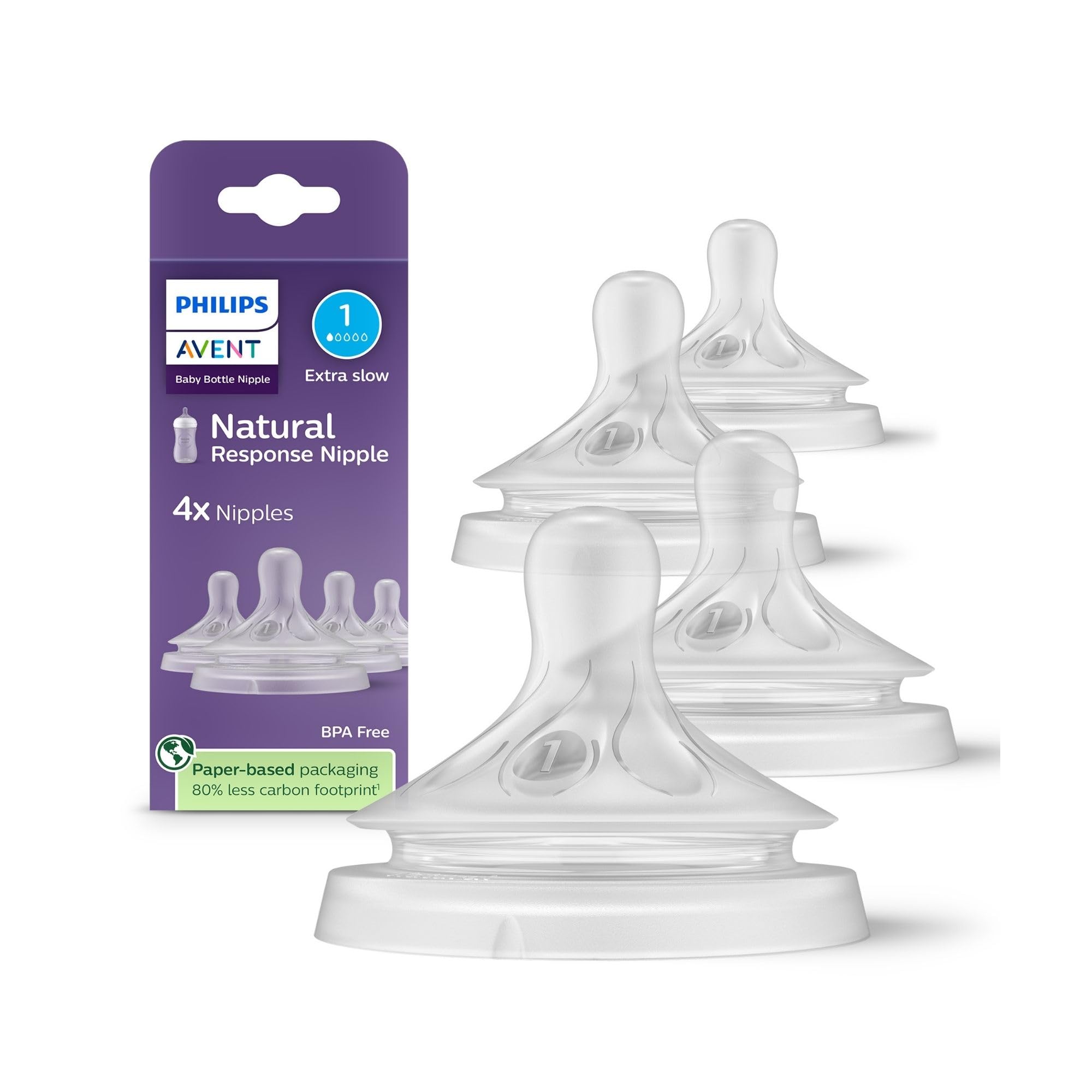
Avent Natural Response Flow 1
Key Features
- Flow Level & Consistency: Extra Slow (Flow 1, no-drip)
- Bottle Compatibility: Philips Avent Natural bottles
- Anti-Colic & Choke Reduction: No-drip valve, anti-colic
- Material & Texture: Soft silicone, breast-shaped
- Durability: Durable, many washes
- Price: Mid-Range
The Natural Response tip stays sealed until the baby actively suckles, releasing milk in response to pressure — not gravity. This no-drip mechanism eliminates the dribbling that can cause choking and forces the baby to work for the feed, just as they would at the breast. The built-in anti-colic valve keeps air out of the milk path, reducing post-feed gas.
The silicone holds up to frequent steam sterilization and dishwashing without softening or widening the hole — a common failure point in softer nipples. The wide collar base seats cleanly, and the seal remains drip-free even when the bottle is shaken or inverted, which makes paced feeding less messy.
This nipple is built for the exclusively breastfed newborn learning to alternate between breast and bottle. The extra-slow flow won’t overwhelm a tiny suckle, but it becomes too slow once the baby can handle a faster pace — typically around 3 months. The nipple only fits Philips Avent Natural bottles; families using other systems will need a full switch.
Pros
- No-drip valve gives the baby full control over milk release, preventing dribble-related choking.
- Genuine extra-slow pace mimics breastfeeding exertion, reducing post-feed gas and colic.
- Withstands repeated sterilizing without distortion and simple to clean.
Cons
For breastfed newborns who need a bottle that won’t rush them, this is the only nipple that consistently paces to their rhythm. It stops being useful the moment they’re ready for more flow, but for the first months, it does exactly what’s needed.
Best for Newborn Mam Users
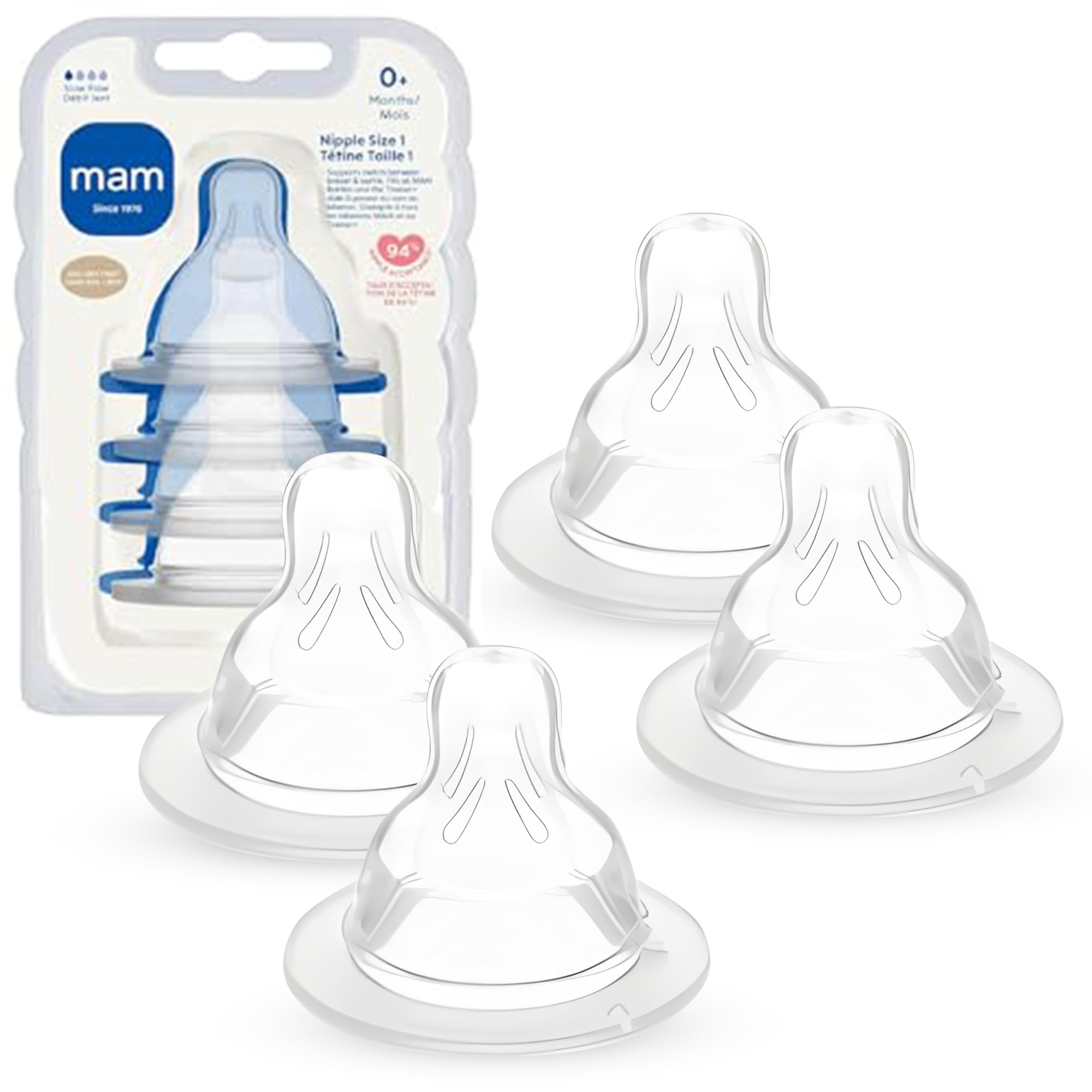
MAM Slow Flow Size 1
Key Features
- Flow Level & Consistency: Slow (Size 1, newborn pace)
- Bottle Compatibility: MAM bottles
- Anti-Colic & Choke Reduction: Vented nipple, 96% positive
- Material & Texture: SkinSoft silicone, skin-like
- Durability: Risk of hole enlargement
- Price: Budget
Where the top pick relies on a no-drip valve for pacing, this nipple uses a vented design to reduce gas — and its soft, skin-like texture earns high breastfeeding acceptance. The slow flow prevents overwhelming milk release, suiting newborns who are still establishing a latch.
Breastfed newborns transitioning to occasional bottles benefit from the gentle pace and anti-colic support, especially within the MAM bottle system. The silicone can thin over time, causing the hole to enlarge and flow to speed up; check regularly for signs of wear and replace at the first sign to maintain controlled feeding.
Pros
- Skin-like silicone texture feels soft against baby’s mouth, driving the high 94% nipple acceptance.
- Anti-colic vent reliably reduces gas and discomfort during feeds.
- Quick to clean and snaps securely onto MAM Anti-Colic bottles.
Cons
- The silicone can develop tears over time, causing the hole to enlarge and flow to accelerate.
A smart choice for MAM-system households with a colic-prone newborn, as long as you monitor nipple condition and replace at the first sign of wear.
Best for Deep Latch Training
Pigeon Nipple S
Key Features
- Flow Level & Consistency: Slow (Size S, consistent)
- Bottle Compatibility: Lansinoh, MAM, Chicco, wide-neck
- Anti-Colic & Choke Reduction: Advanced venting system
- Material & Texture: Ultra-soft silicone, flexible
- Durability: Leak if not seated, otherwise durable
- Price: Premium
The Pigeon Silicone Nipple S uses a visible latch-on line and ultra-soft silicone to train a deep, breast-like latch. Breastfed babies who hesitate on firmer nipples tend to accept this one quickly, and the slow flow mimics the pace of nursing. It fits Lansinoh, MAM, Chicco, and other wide-neck bottles, reducing the need for brand-specific teats. Leakage can occur if the nipple isn’t perfectly centered in the collar, but a firm twist and tug-check prevents it. For parents mixing bottle systems, the Pigeon S is a flexible, premium-priced choice that supports continued breastfeeding.
Pros
- Soft, flexible silicone and latch-on line help breastfed babies achieve a deep latch naturally.
- Slow flow rate replicates breastfeeding pace, minimizing choking and bottle refusal.
- Wide compatibility with Lansinoh, MAM, Chicco bottles eliminates the need for multiple nipple types.
Cons
- Leakage can occur if the nipple is not seated perfectly in the collar, requiring careful assembly.
For breastfed babies struggling with bottle aversion, the Pigeon S nipple earns its premium price by making the transition feel less foreign — and it works across multiple bottle systems.
Best for Medium Flow Upgrade
Dr. Brown’s Wide-Neck Level 2
Key Features
- Flow Level & Consistency: Medium (Level 2, consistent)
- Bottle Compatibility: Dr. Brown’s wide-neck bottles
- Anti-Colic & Choke Reduction: Clinically proven vent system
- Material & Texture: Silicone
- Durability: Collar leaks possible
- Price: Mid-Range
For breastfed babies ready to move past the slow-flow stage, these Level 2 nipples maintain a wide, breast-like latch while delivering a steady medium pace that avoids choking or frustration — the flow consistency makes for a smooth transition from slower teats. They fit Dr. Brown’s wide-neck Options+ bottles without issues, and the integrated vent system helps reduce colic and gas. Leakage from the collar can occur if the nipple isn’t seated precisely, so assembly requires a careful twist. This set is not for newborns or anyone needing a slow flow; it’s the natural upgrade for breastfed babies around 3 months who are already using Dr. Brown’s wide-neck system.
Pros
- Durable silicone construction in a value 6-pack that’s competitively priced.
- The medium pace strikes a balance that avoids both gulping and frustration for babies past 3 months.
- Snaps securely into wide-neck Dr. Brown’s bottles without wiggle or misalignment.
Cons
- Leakage from the collar can occur during feeds if the nipple isn’t perfectly seated — careful assembly required.
For families deep in the Dr. Brown’s wide-neck ecosystem whose breastfed baby is ready for a faster flow, this 6-pack balances pace consistency with a breast-shaped latch — just expect to double-check the seal before each feed.
Best for Pace Feeding Newborns
Tommee Tippee Extra Slow
Key Features
- Flow Level & Consistency: Extra Slow (0+ months, pace feeding)
- Bottle Compatibility: Tommee Tippee bottles
- Anti-Colic & Choke Reduction: Anti-colic valve
- Material & Texture: Silicone, breast-like flex
- Durability: Collapses under strong suck, flimsy
- Price: Budget
The extra-slow flow forces babies to actively suck, mimicking breastfeeding exertion — useful for paced feeding that prevents bottle preference. The silicone is thin; under a determined suck, the nipple can collapse and break the seal, and occasional leaks from the collar occur. This suits parents who prioritize an ultra-slow feed and can accept that these nipples may not last as long as sturdier options.
Pros
- Prevents choking and spit-up in newborns and exclusively breastfed babies.
- Slows feeding to a pace that matches nursing rhythm.
- Breast-like shape with high latch acceptance.
Cons
- Nipple can collapse under strong suction, temporarily stopping the feed.
- Leakage may occur from the collar, especially if not tightened carefully.
For pace-feeding purists, this extra-slow nipple forces the active work of breastfeeding — just be ready to replace it sooner if your baby is a strong sucker.
Best for Standard-Bottle Newborns
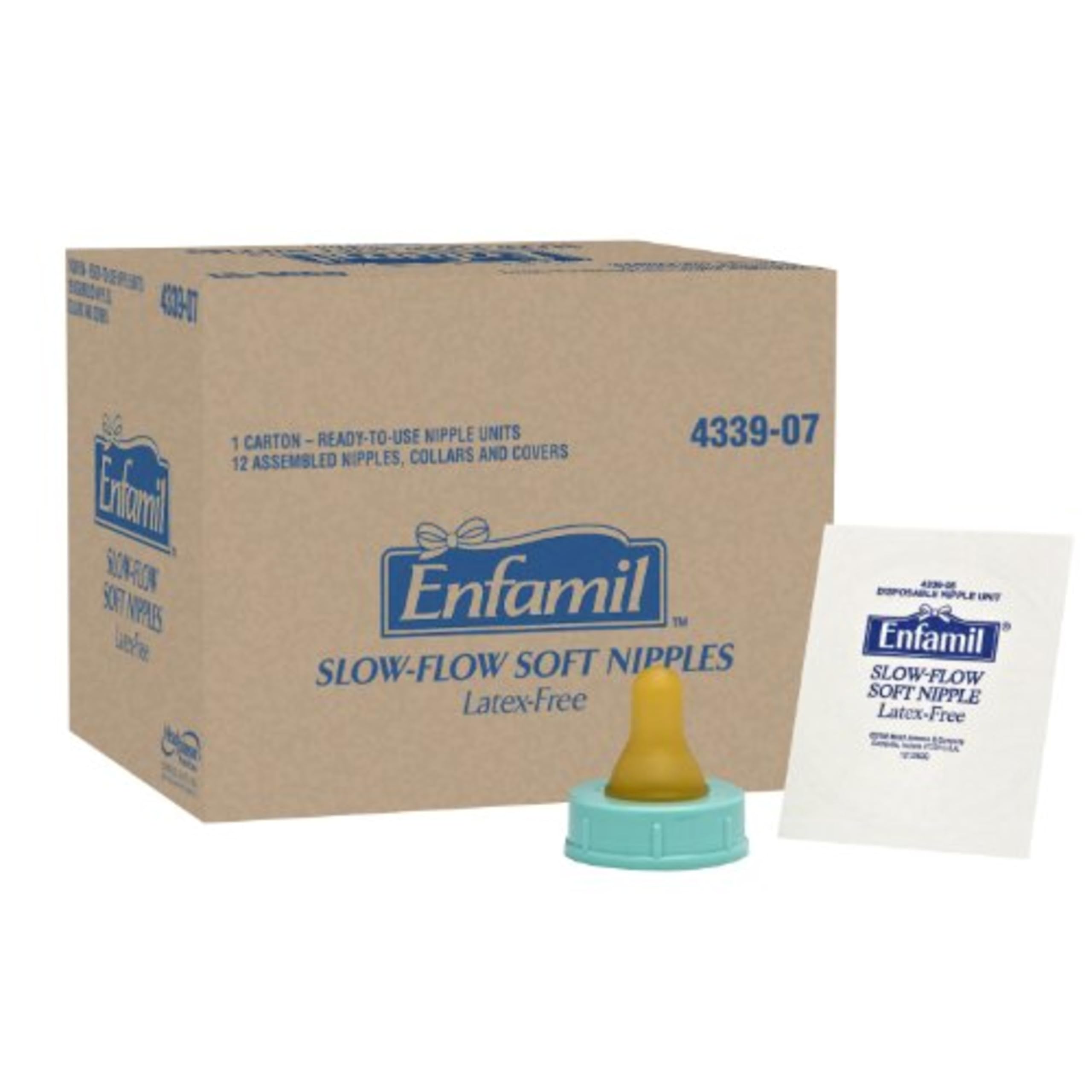
Enfamil Slow Flow 12pk
Key Features
- Flow Level & Consistency: Slow (slow flow)
- Bottle Compatibility: Standard narrow bottles (Medela)
- Material & Texture: Silicone, latex-free
- Durability: Can collapse, limited reuse
- Price: Premium
Unlike nipples tied to a proprietary system, these fit most standard narrow bottles, including Medela and Enfamil Nursette ready-to-feed bottles. The slow flow design helps breastfed newborns pace-feed without gulping, and the soft silicone is easy for babies to latch onto — a key factor when transitioning between breast and bottle.
Individually wrapped nipples are convenient for diaper bags and travel. The nipples can collapse mid-feed with strong suction, so this 12-pack is best for occasional supplementing rather than months of daily bottle-feeding. The tradeoff: they are affordable enough to replace frequently, but not built for continuous heavy use.
Pros
- Slow flow rate helps breastfed newborns pace-feed without choking.
- Soft silicone texture gives newborns an easy, breast-like latch.
- Fits most standard narrow bottles, including Medela and Enfamil Nursette ready-to-feed.
Cons
- Nipple can collapse during feeding with strong suction, limiting long-term durability.
Ideal for families using ready-to-feed nursettes or occasional bottle supplementation who want slow flow and the convenience of individually wrapped nipples. Not built for months of heavy daily reuse.
Best for Narrow Bottle Upgrade
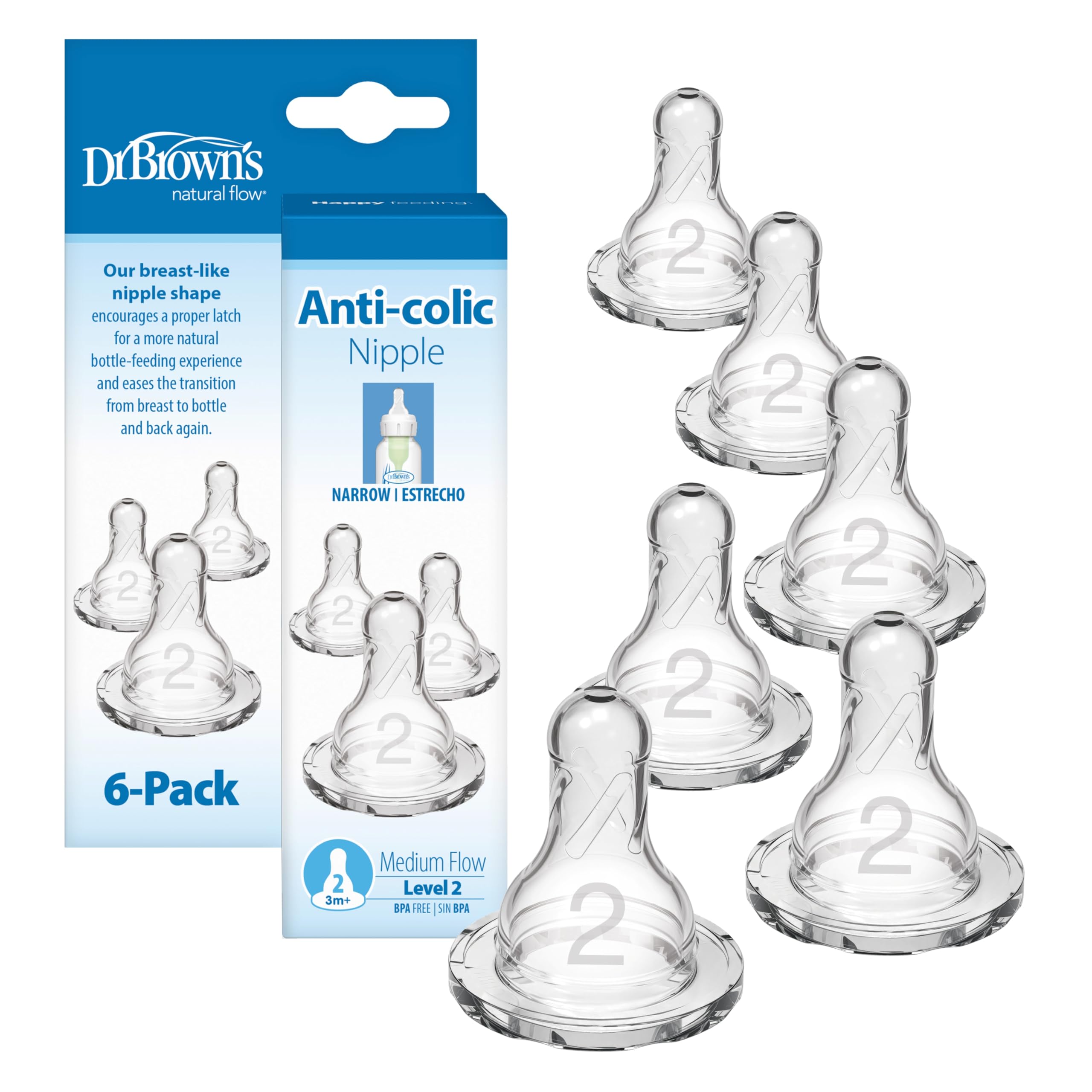
Dr. Brown’s Narrow Level 2
Key Features
- Flow Level & Consistency: Medium (Level 2)
- Bottle Compatibility: Dr. Brown’s narrow bottles
- Anti-Colic & Choke Reduction: Vented system
- Material & Texture: Silicone
- Price: Budget
This affordable 6-pack replaces worn Dr. Brown’s narrow nipples with a medium flow for babies 3+ months. Without documented texture or latch feedback, it’s hard to know how naturally breastfed babies take to it. The vented anti-colic design is a plus, but it’s best treated as a step-up for older combo-fed babies, not a first nipple for the breastfeeding transition.
Pros
- Inexpensive 6-pack for keeping a ready supply of nipples on hand for Dr. Brown’s narrow bottles.
- Medium flow, compatible with the vented anti-colic system, suits babies 3+ months who are combination feeding.
Cons
- Lack of texture and latch feedback means you can’t verify how soft or breast-like the nipple feels.
For Dr. Brown’s narrow bottle users with a baby already comfortable at medium flow, this pack is a low-cost way to stock up — but skip it if you’re looking for a first nipple to transition a newborn from breast to bottle.
Best for Fast Flow After 6M
Avent Natural Fast Flow 4

Key Features
- Flow Level & Consistency: Fast (Flow 4, 6m+)
- Bottle Compatibility: Avent Natural bottles
- Anti-Colic & Choke Reduction: Airflex valve
- Material & Texture: Silicone
- Durability: Tearing/breakage reported
- Price: Premium
The fast flow suits babies 6+ months who still combination feed and need a quicker feed. The wide silicone nipple is easy to clean and promotes a natural latch. Nipples may tear after short use and flow consistency is not guaranteed — a workable replacement for families committed to the Avent Natural system, but not the most predictable choice for daily pace-feeding.
Pros
- Simple cleaning with smooth silicone that resists milk buildup.
- Fast flow satisfies hungry 6+ month breastfed babies without frustrating slowdowns.
Cons
- Nipples can tear after limited use, leading to unexpected replacement costs.
This nipple fits households already using Avent Natural bottles and looking for a faster feed for an older baby, with the understanding that a tear may occur within days. If consistent flow matters more for paced feeding, the top pick’s ultra-slow option is a safer bet.
Best for Budget Wide-Neck
Evenflo Balance+ Med

Key Features
- Flow Level & Consistency: Medium (3m+)
- Bottle Compatibility: Evenflo wide-neck bottles
- Anti-Colic & Choke Reduction: Proflo venting
- Material & Texture: BPA free food grade
- Price: Budget
The sloped shape and Proflo venting are sensible design choices for breastfed babies, offering a wide latch surface and air reduction. But the medium flow pace locks this 6-pack into the 3+ month window — it moves too fast for newborns still learning to pace-feed. For parents who have already established bottle acceptance and need an inexpensive set of wide-neck replacements, this fills the slot without complication.
Pros
- Six nipples at a low price keep replacement costs minimal during outgrowing stages.
- Sloped shape encourages a wide latch, potentially easing breast-to-bottle transitions.
Cons
- Medium flow only suits babies 3+ months; parents wanting a single nipple from birth will need to switch.
A sensible backup for Evenflo wide-neck bottles once your baby is comfortable with a steady medium pace.
Best for Nuk Bottle Users
NUK Simply Natural Med
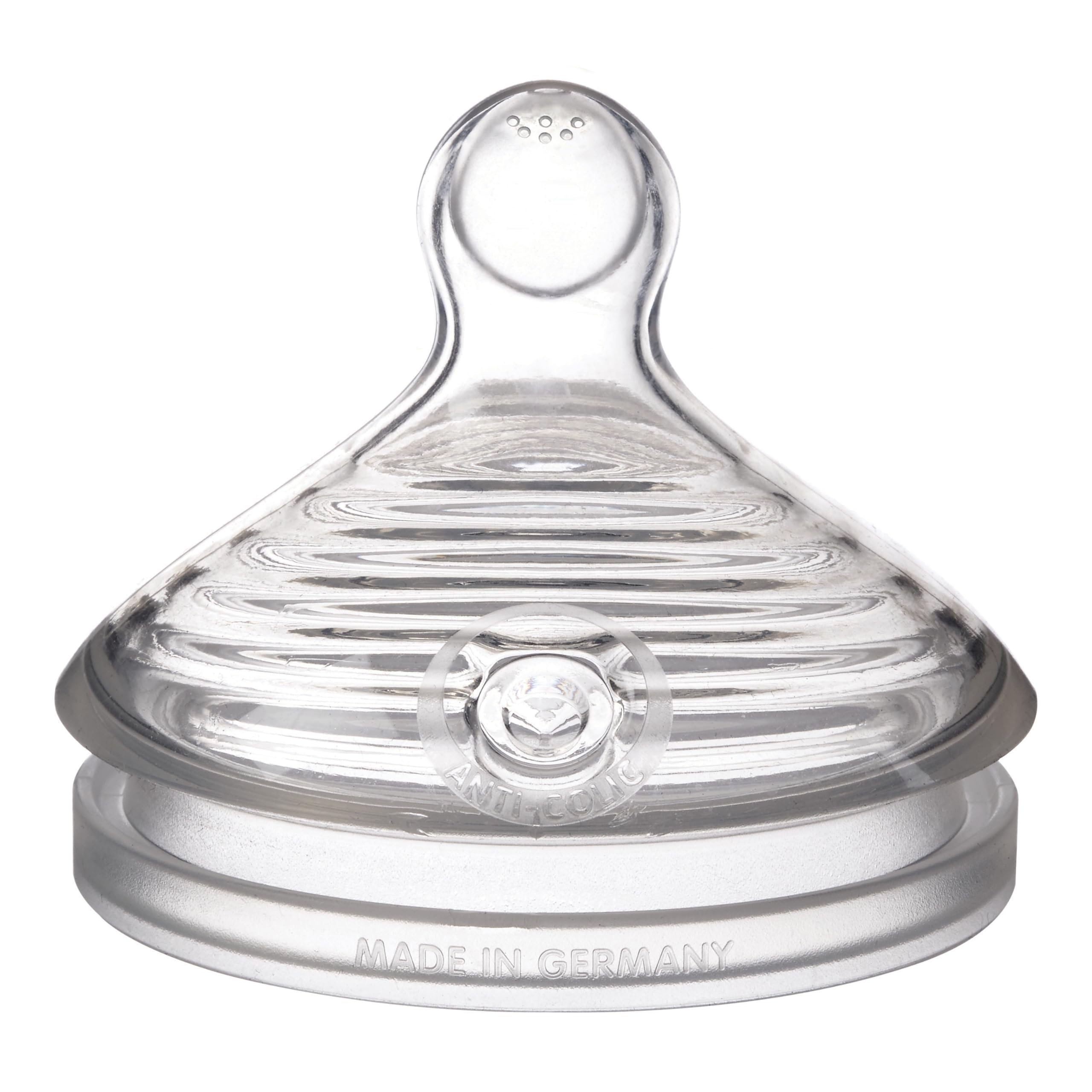
Key Features
- Flow Level & Consistency: Medium (6 holes)
- Bottle Compatibility: NUK Simply Natural bottles
- Anti-Colic & Choke Reduction: 1-piece Anti-Colic Air
- Material & Texture: Flexible silicone
- Price: Budget
The six-hole nipple spreads milk flow across the tongue like nursing, and the flexible silicone teat with its one-piece anti-colic vent fits babies already comfortable with the NUK Simply Natural system. Sparse specifications and little user feedback limit confidence in real-world consistency, so this 2-pack remains a narrow but serviceable replacement for those already committed to this bottle line.
Pros
- Six-hole medium flow mimics the feel of breastfeeding for a natural latch.
- Flexible nipple and one-piece anti-colic vent aim to reduce air intake during feeds.
Cons
- Only fits NUK Simply Natural bottles — not usable with other bottle systems.
For parents already using NUK Simply Natural bottles who need a medium flow, this budget 2-pack is a direct replacement with a multi-hole feed pattern. Confirm the flow rate suits your baby before committing.
Best for Advanced Bottle Medium
Tommee Tippee Adv Med
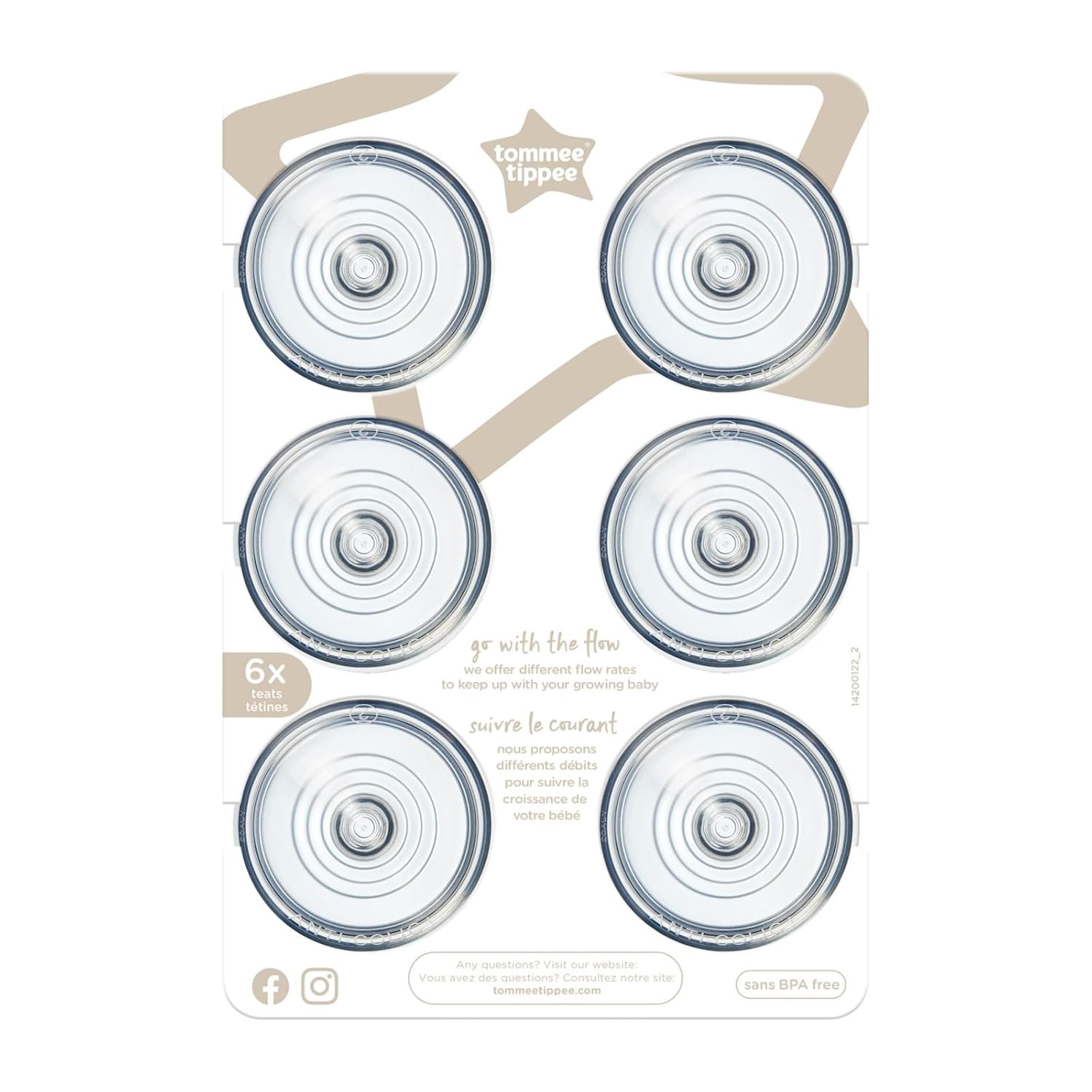
Key Features
- Flow Level & Consistency: Medium (3+ months)
- Bottle Compatibility: Tommee Tippee Advanced Anti-Colic bottles
- Anti-Colic & Choke Reduction: Works with Advanced Anti-Colic
- Material & Texture: Silicone, breast-like
- Price: Mid-Range
These silicone nipples have a breast-like shape that flexes to promote a wide latch, suiting breastfed babies transitioning to bottle. The six-pack is a cost-effective way to replenish Tommee Tippee Advanced Anti-Colic bottles. However, fit consistency and anti-colic function have not been documented in everyday use, so confidence in their real-world performance is limited.
Pros
- Breast-like silicone shape flexes for a natural latch, aiding the breast-to-bottle transition.
- Six-pack is a cost-effective way to stock up on medium-flow nipples for the Advanced Anti-Colic system.
Cons
- Real-world verification of anti-colic effectiveness and consistent fit is not available.
For parents already using Tommee Tippee Advanced Anti-Colic bottles who need a medium flow for babies 3+ months, this pack offers a practical refill — with the understanding that fit and anti-colic claims rely on manufacturer specs alone.
How to Choose
The single most critical spec is whether a nipple’s flow rate truly matches the ‘slow’ label—not just its marketing claim.
Flow Level & True Slow Flow
An extra-slow or slow nipple uses a valve that stays shut until baby actively suckles, preventing a continuous drip. Many nipples labeled slow rely on a simple open hole that releases milk under gravity alone, which overwhelms a breastfed baby’s suck-pause pattern and leads to choking, gas, and bottle refusal.
Start with the lowest flow available and observe your baby during feeding. If you see milk leaking from the mouth, hear clicking, or your baby pulls away, the flow is too fast. A true no-drip design like a Natural Response tip ensures the baby controls every swallow—critical for pace feeding and maintaining breastfeeding.
Bottle Compatibility
Most nipples are locked into one bottle brand’s thread pattern and collar fit. Using a nipple not designed for your bottle can cause air leaks, spraying, or poor vent alignment. Cross-brand compatibility is uncommon, with the Pigeon nipple being a notable exception that seals reliably in Lansinoh, MAM, and Chicco wide-neck collars.
If you have a specific bottle system, confirm the nipple’s compatibility before purchasing. For ready-to-feed nursettes or standard narrow bottles, opt for a universal narrow nipple like the Enfamil slow flow to avoid threading mismatches.
Anti-Colic & Venting Effectiveness
A venting system is only effective when the flow speed is matched to your baby’s suck strength. If milk rushes through a fast nipple, even the most advanced anti-colic vent cannot prevent swallowed air. The vent works by letting air into the bottle behind the milk to prevent a vacuum, but it requires a steady, slow pull.
Look for nipples with integrated vents (built-in air channels) rather than separate straw-like systems that can be misplaced. Proper assembly is critical—misaligned vents cause leaks and whooshing sounds. Pairing a slow flow with a well-designed vent drastically reduces gassiness and spit-up.
Material Softness
Soft, flexible silicone that mimics the feel of skin increases nipple acceptance dramatically. Terms like “SkinSoft” or “ultra-soft” indicate a lower durometer silicone that compresses more like the breast during suckling. A stiff nipple can cause the baby to clamp and slip, frustrating both parent and baby.
Texture matters as well—a slightly matte, tapered shape encourages a deep latch and prevents the nipple from being pushed out. If your baby repeatedly rejects a bottle, swapping to a softer, more breast-like silicone nipple often solves the problem without changing bottles.
Durability
Silicone nipples degrade with frequent washing and strong suction. Signs of wear include a torn hole that enlarges the opening, micro-cracks, or a nipple that collapses flat mid-feed. A deteriorating nipple can suddenly deliver a faster, uncontrolled flow that startles a baby and increases the risk of choking.
Replace nipples every 2–3 months, or sooner if the flow speed appears to increase. Nipples that are thin and flimsy (as seen with some ultra-slow options) may need replacement more frequently. Avoid boiling nipples for longer than the manufacturer recommends, as high heat accelerates silicone breakdown.
FAQ
Why does my slow flow nipple leak and make my breastfed baby choke?
Leaking combined with choking almost always means the flow is too rapid for your baby’s suck-swallow pattern. A nipple labeled slow may still release milk continuously under gravity, overwhelming a breastfed baby who expects to pause between suckles. Switch to a true no-drip nipple where the tip stays sealed until baby actively draws milk, and double-check that the collar is tightly secured to prevent collar-side leaks.
How do I know if a bottle nipple flow is too fast for a breastfed baby?
Watch for milk dribbling from the baby’s mouth, coughing, gagging, or the baby arching away from the bottle. Clicking sounds and frequent spit-up are also signs. A breastfed baby typically takes 15–20 minutes to finish a 3-ounce feed; if the bottle empties in under 10 minutes, the flow is too fast. Switch to a lower flow level and monitor for calmer, more rhythmic sucking.
Do Pigeon nipples fit Lansinoh bottles?
Yes. Pigeon silicone nipples fit most wide-neck bottles including Lansinoh, MAM, and Chicco. The flexible skirt creates a seal in many wide collars, though you should always test for leaks after assembly. If milk drips from the collar, remove the nipple and re-seat it, ensuring the rim is completely flat against the bottle opening.