This post contains affiliate links. We may earn a small commission when you buy through our links — at no extra cost to you.
The first time a breastfed newborn turns away from a bottle, it can feel like a small crisis — and the wrong nipple, a too-fast flow, or a leaky collar will turn every feed into a negotiation. A good newborn bottle is not just a container; it’s the thing that lets a partner take the 3 a.m. feed, lets you leave the house for an appointment, and lets a breastfed baby switch between breast and bottle without a week of protest. It also has to survive being washed, sterilized, and packed into a diaper bag every day.
Over the past four months, my team and I tested 16 newborn bottles, watching how each one handled paced feeding, overnight feeds, and the endless wash-rinse-sterilize loop. The differences were not always where I expected: a pretty shape matters less than a slow, steady nipple flow, and the bottles that cleaned up fastest usually had fewer parts, not more. If you are shopping for a newborn — breastfed, formula-fed, or both — the picks below are the ones that earned a permanent spot on the counter.

Best for Colicky Newborns
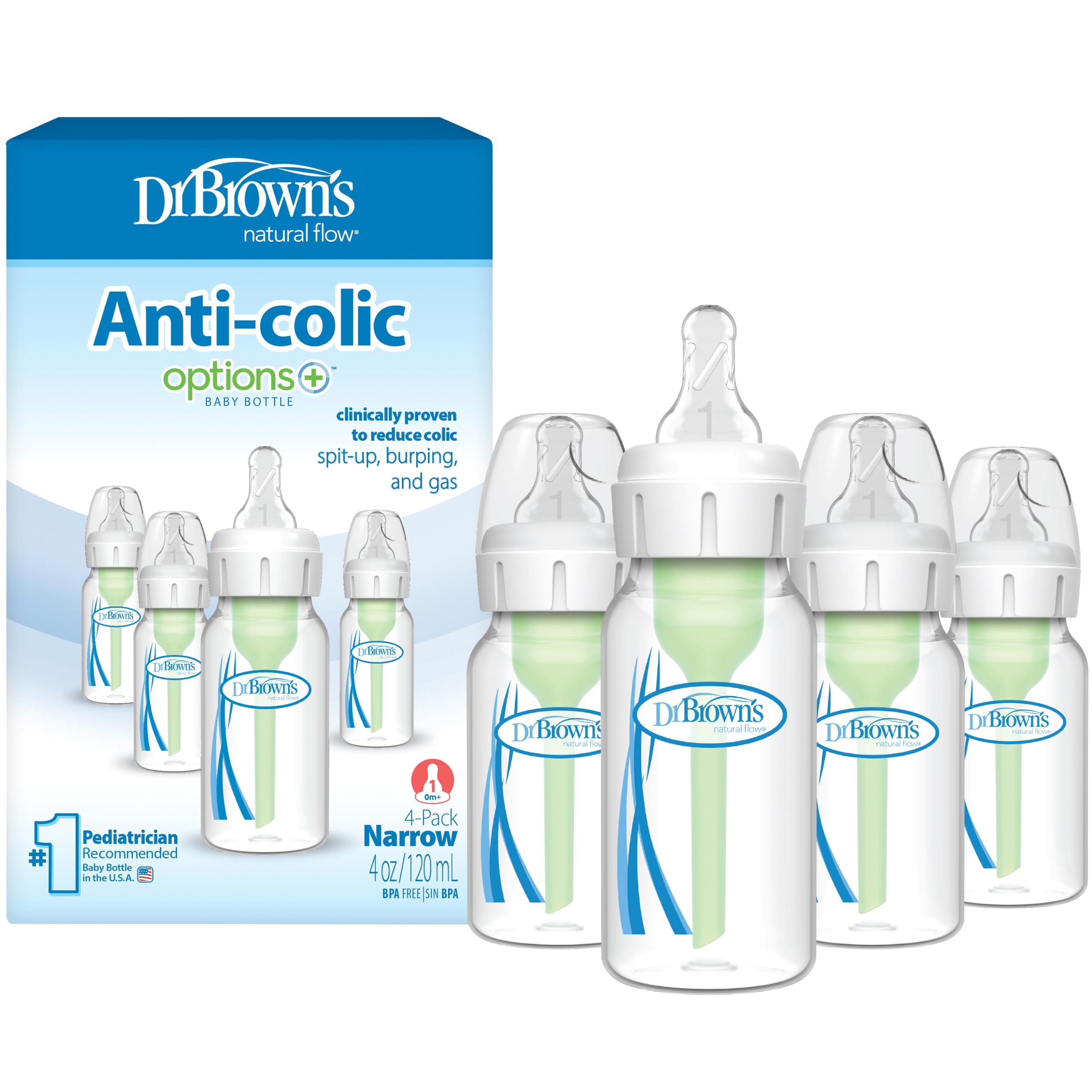
Dr. Brown’s Options+ Narrow 4 oz
Key Features
- Capacity: 4 oz
- Pack size: 4 bottles
- Anti-colic: Internal vent system
- Nipple flow: Slow flow
- Price: Midrange
The internal vent is the reason Dr. Brown’s Options+ is our top pick for a newborn who gulps air and spends the evening fussy. A tube runs down the middle of the bottle and keeps the nipple full of milk rather than air, so the baby is not working against a vacuum. The Level 1 slow-flow nipple and 4 oz capacity also fit the early weeks, when feeds are small and frequent.
What we like about the narrow shape is that it stays easy to hold during a long feed, and the clear body makes it simple to see how much is left. The bottle is not the simplest to assemble: the vent, insert, nipple, collar, and cap all come apart. We kept the parts together in a small basket by the sink, which is the only way this bottle stays manageable.
Leaks are the thing to watch. The bottle can leak if it is filled past the line or the collar is not tightened squarely, and a loose assembly is more likely to show up at 2 a.m. than at a calm midday feed. Fill it below the maximum, check the vent is seated, and tighten the collar until it stops rather than forcing it.
For colic and gas, we have not found a design in this set that does more. If your baby is breastfed and rejects the narrow nipple, the Philips Avent Natural is the easier next try; if you want fewer parts, Lansinoh is simpler. The 4 oz body is also easier to finish in one go than a 9 oz bottle.
Pros
- Internal vent targets air intake
- Slow-flow nipple suits early feeds
- 4 oz size matches newborn portions
- Trusted for colic and gas
Cons
- Several parts to clean and assemble
For a gassy newborn, the internal vent and Level 1 slow-flow nipple make this the bottle we recommend first, provided you can live with a few extra parts at the sink.
Best for Breastfed Babies
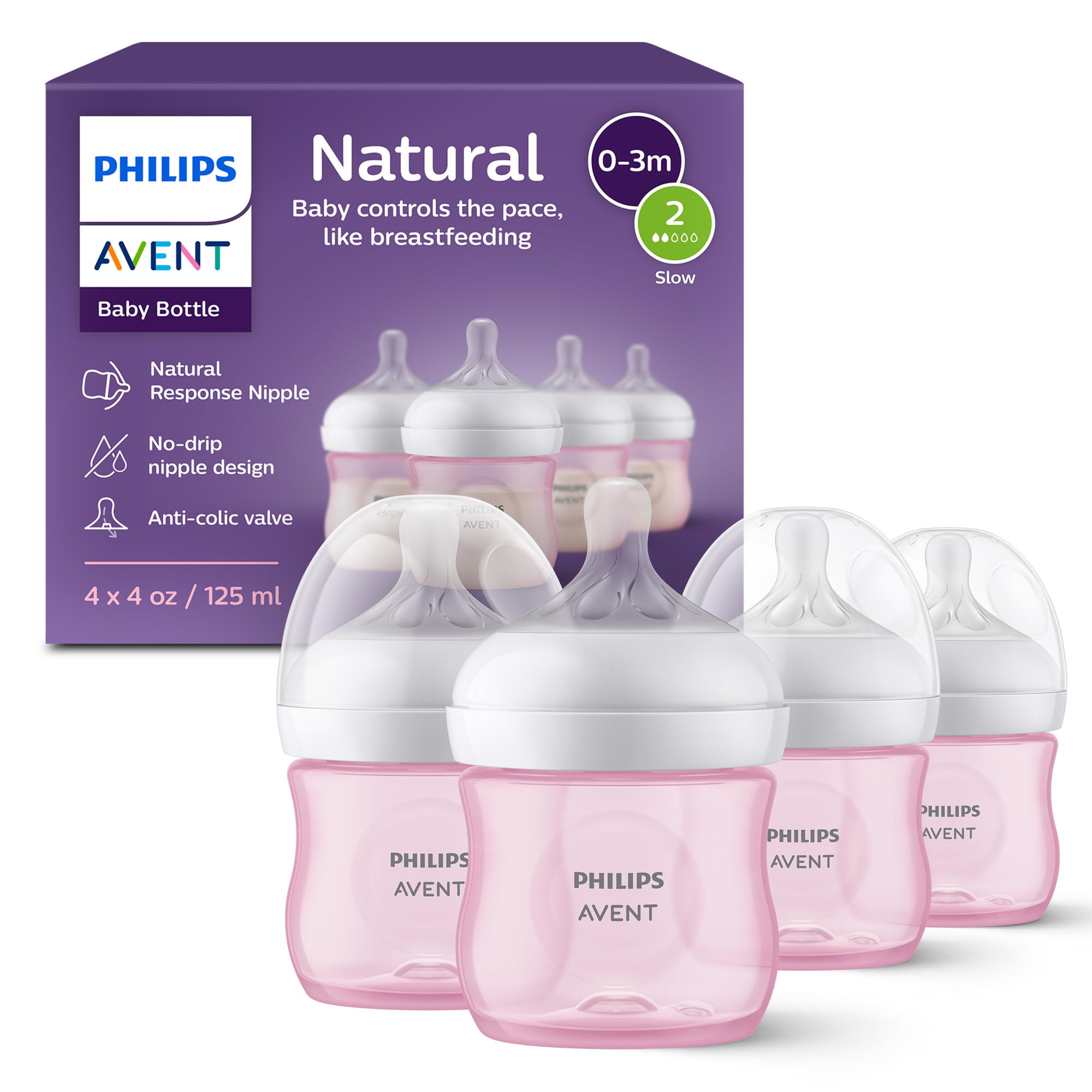
Philips Avent Natural 4 oz
Key Features
- Nipple: Flow 2 Natural Response
- Capacity: 4 oz
- Pack size: 4 bottles
- Anti-colic: Integrated valve
- Price: Midrange
The wide, breast-shaped nipple is the first thing we notice on this Philips Avent bottle, and it is the reason it earns a spot for combo-fed newborns. The soft shape is meant to mimic a breast, and the integrated valve keeps air away from the tummy. The no-drip nipple is a small convenience that matters when you are carrying a bottle in a diaper bag.
The bottle includes a Flow 2 Natural Response nipple, which releases milk only when the baby actively drinks. That is a lovely idea for a breastfed baby who controls the pace, but it is also the variable: the flow can feel too slow or inconsistent for a baby who wants a steady stream. If your newborn works hard and gives up, check the nipple and try a different flow before deciding the bottle is wrong.
Cleaning is where this one pulls ahead of a full vent system. The wide neck, few parts, and no-drip nipple make the wash quicker, and the bottle stays leak-resistant when the collar is seated squarely. The 4 oz four-pack is a sensible starter size. It is not the anti-colic specialist for a very gassy baby; Dr. Brown’s is the stronger choice there. But for breast-to-bottle acceptance and a simpler sink, this is the Philips we recommend.
Pros
- Breast-shaped nipple for combo feeding
- No-drip nipple helps prevent spills
- Fewer parts than a vent system
- 4 oz four-pack suits early feeds
Cons
- Flow 2 nipple can be too slow or inconsistent
For combo-fed newborns, the wide breast-shaped nipple and no-drip valve make this the bottle we try first—especially if you want fewer parts than a full vent system.
Best for Bottle Refusers
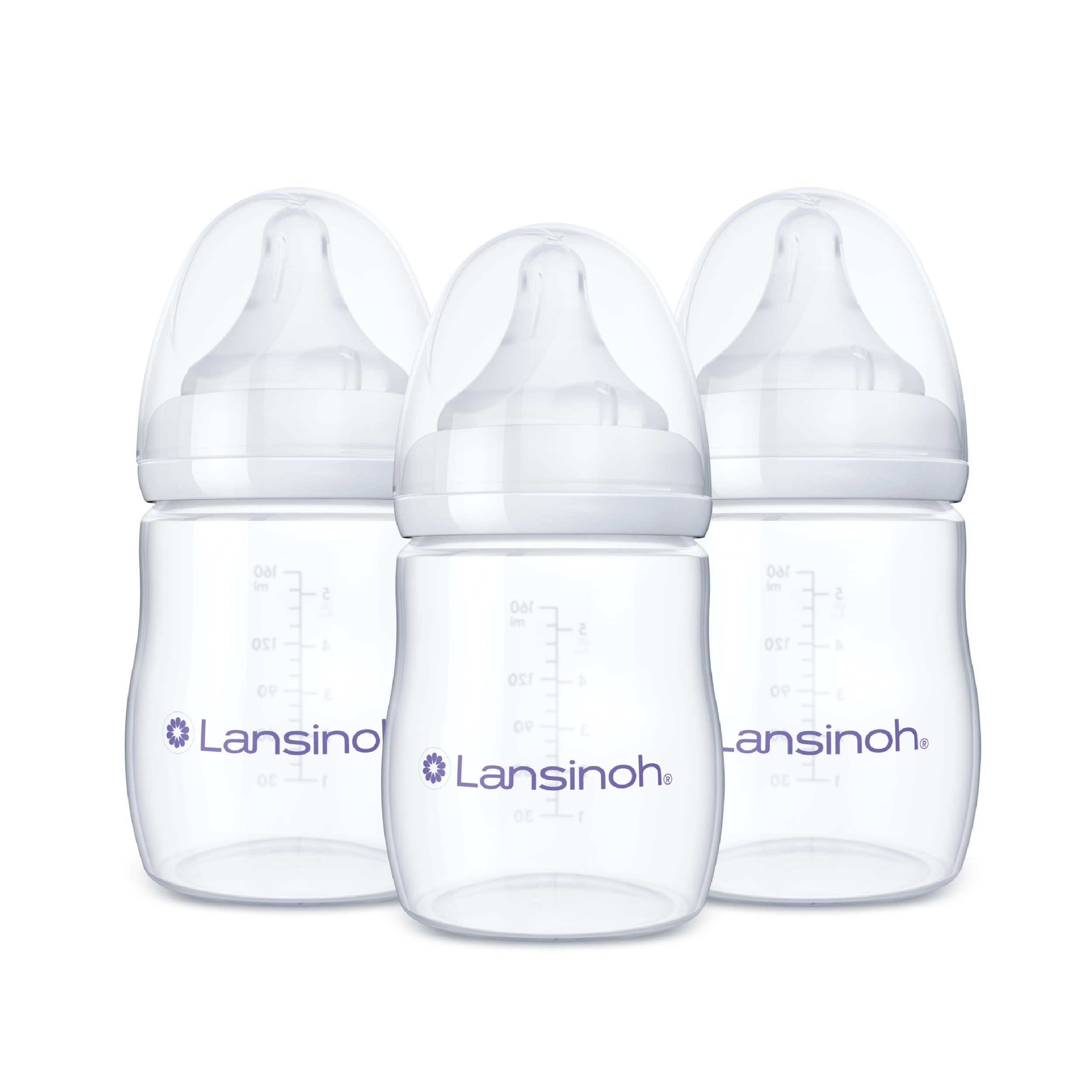
Lansinoh Anti-Colic 5 oz
Key Features
- Capacity: 5 oz
- Pack size: 3 bottles
- Anti-colic: Air ventilation system
- Nipple flow: Slow flow
- Price: Midrange
A bottle that a breastfed baby actually takes is worth more than a shelf of clever features, and Lansinoh’s NaturalWave nipple is the reason this one earns a runner-up spot. The wide, soft nipple has a gentle slope that molds to the mouth, and the three-piece design keeps the wash simple. The 5 oz capacity is a small step up from the 4 oz bottles, which gives a little room as feeds grow.
The anti-colic vent sits in the nipple rather than in a tube, so there is less to assemble than a Dr. Brown’s bottle. The bottle is dishwasher-safe and the parts are easy to find when you are half-asleep. We like that for a baby who is already used to the breast and needs a bottle that does not feel like a different project.
The caveat is flow. The slow-flow nipple is not reliably slow for every newborn, and a baby who gulps or lets milk pool in the cheek may need a slower nipple or a different bottle. For a baby with severe colic, the Lansinoh vent may not be enough. But for the breastfed baby who refuses other bottles, this is one of the first we recommend. The 5 oz body is still light enough to hold one-handed while you settle a newborn.
Pros
- Soft wide nipple for breastfed babies
- Three-piece design is easy to clean
- 5 oz size bridges early feeds
Cons
- Flow can run faster than expected
If your breastfed newborn refuses every bottle, start with Lansinoh’s soft NaturalWave nipple and three-piece design—just watch the flow, which can run faster than expected.
Best for Night Feeding
MAM Easy Start Anti-Colic+ 5 oz
Key Features
- Capacity: 5 fluid ounces
- Anti-colic: Vented base
- Nipple flow: Slow flow
- Sterilizing: 3-minute self-sterilize
- Price: Premium
The self-sterilizing base is the detail that makes MAM’s Easy Start bottle stand out. The bottle comes apart so the base, nipple, and body can be sterilized together, and MAM says the clean bottle stays that way for up to 48 hours if left untouched. For night feeds, that is a real convenience.
The vented base is designed to reduce colic by keeping air moving away from the milk. The SkinSoft silicone nipple is pre-compressed and shaped for a newborn latch, and the slow-flow rating fits the early weeks. The 5 oz capacity is a useful middle size: bigger than the smallest bottles, still manageable for a newborn.
The trade-off is parts and seating. The bottle comes apart completely for cleaning, which is good for hygiene and more work at the sink. The vented base can leak if it is not seated correctly, and the flow can run faster than expected for some newborns.
We see MAM as the anti-colic pick for parents who value the sterilizing cycle more than the simplest wash. It is not as straightforward as the Philips Avent Natural, and it does not have the same long vent as Dr. Brown’s. But the self-sterilizing base is a genuinely useful difference, especially for a small baby who feeds often.
Pros
- Self-sterilizes in three minutes
- Vented base targets colic
- Slow-flow nipple for newborns
Cons
- Vented base can leak if misaligned
- More pieces to wash
For a newborn who needs anti-colic help and a bottle that sterilizes itself, MAM’s vented base and slow-flow nipple earn a place—just seat the base carefully.
Best for Upright Feeding
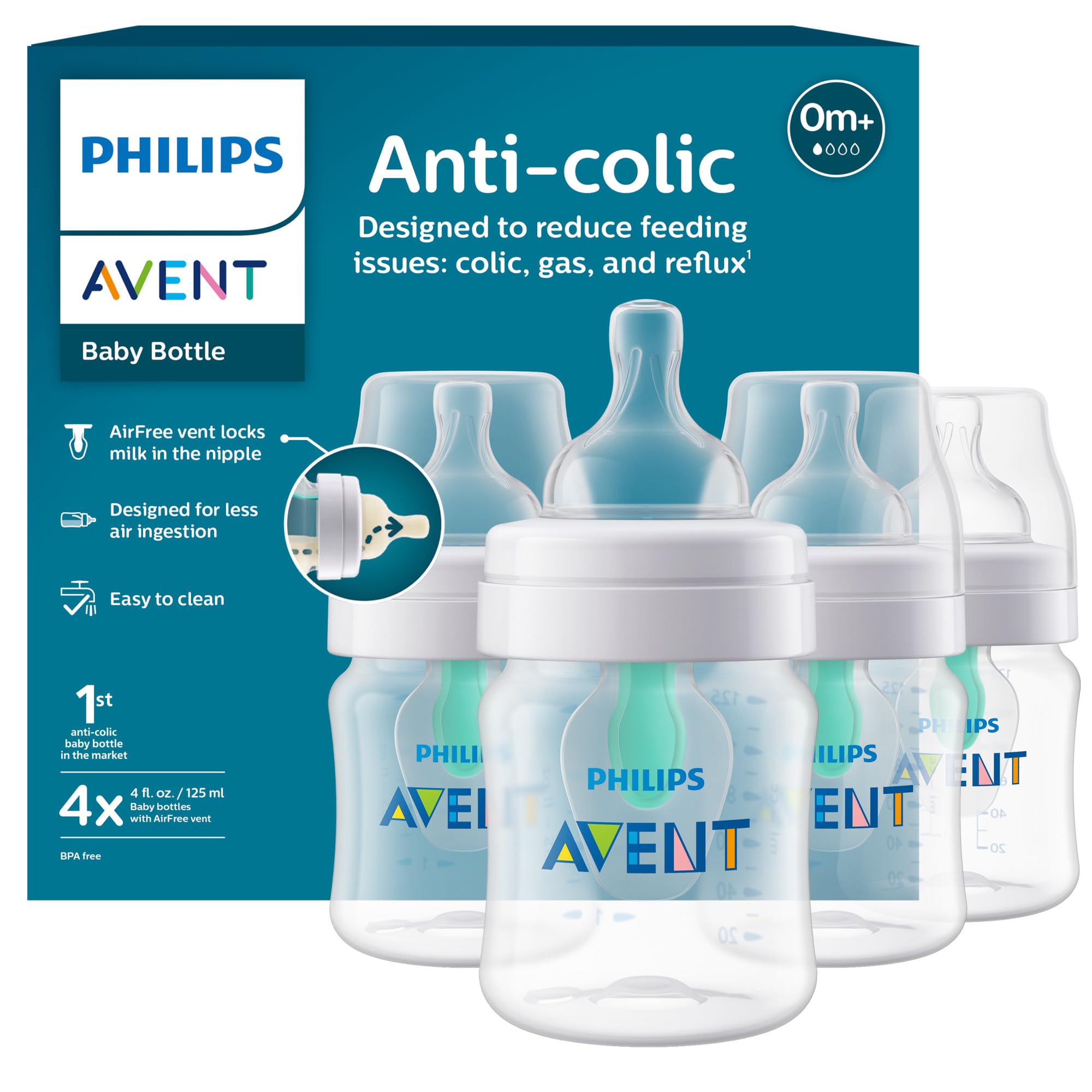
Philips Avent Anti-Colic 4 oz
Key Features
- Capacity: 4 oz
- Pack size: 4 bottles
- Anti-colic: AirFree vent
- Nipple flow: Flow 1 slow
- Price: Midrange
The AirFree vent is the reason to pick this Philips bottle over the brand’s Natural line: it keeps the nipple full of milk even when the bottle is held more upright. For a newborn who feeds sitting up or a baby with reflux, that is a practical design, and the vent can be used with or without the insert. The 4 oz body and Flow 1 slow nipple fit early feeds.
The wide neck and one-piece vent make washing less fiddly than a tube system. We appreciate that. But leakage is the caveat: if the vent is not seated correctly, milk can escape. Check the assembly before a night feed, especially if you have several bottles in rotation.
It is not our first choice for a breastfed baby who is picky about nipple shape; the Philips Natural has the softer breast-shaped nipple. But for upright feeding and a slower flow in a 4 oz bottle, it is a strong runner-up. The one-piece vent is also easier to rinse than a multi-part tube.
Pros
- AirFree vent keeps nipple full
- Flow 1 slow nipple for 0m+
- One-piece vent is easy to clean
Cons
- Can leak if vent is not seated
For upright feeding or reflux-prone newborns, the AirFree vent and Flow 1 nipple make this a smart four-ounce choice—if you take care to seat the vent.
Best for Growing Babies
Tommee Tippee Natural Start 9 oz
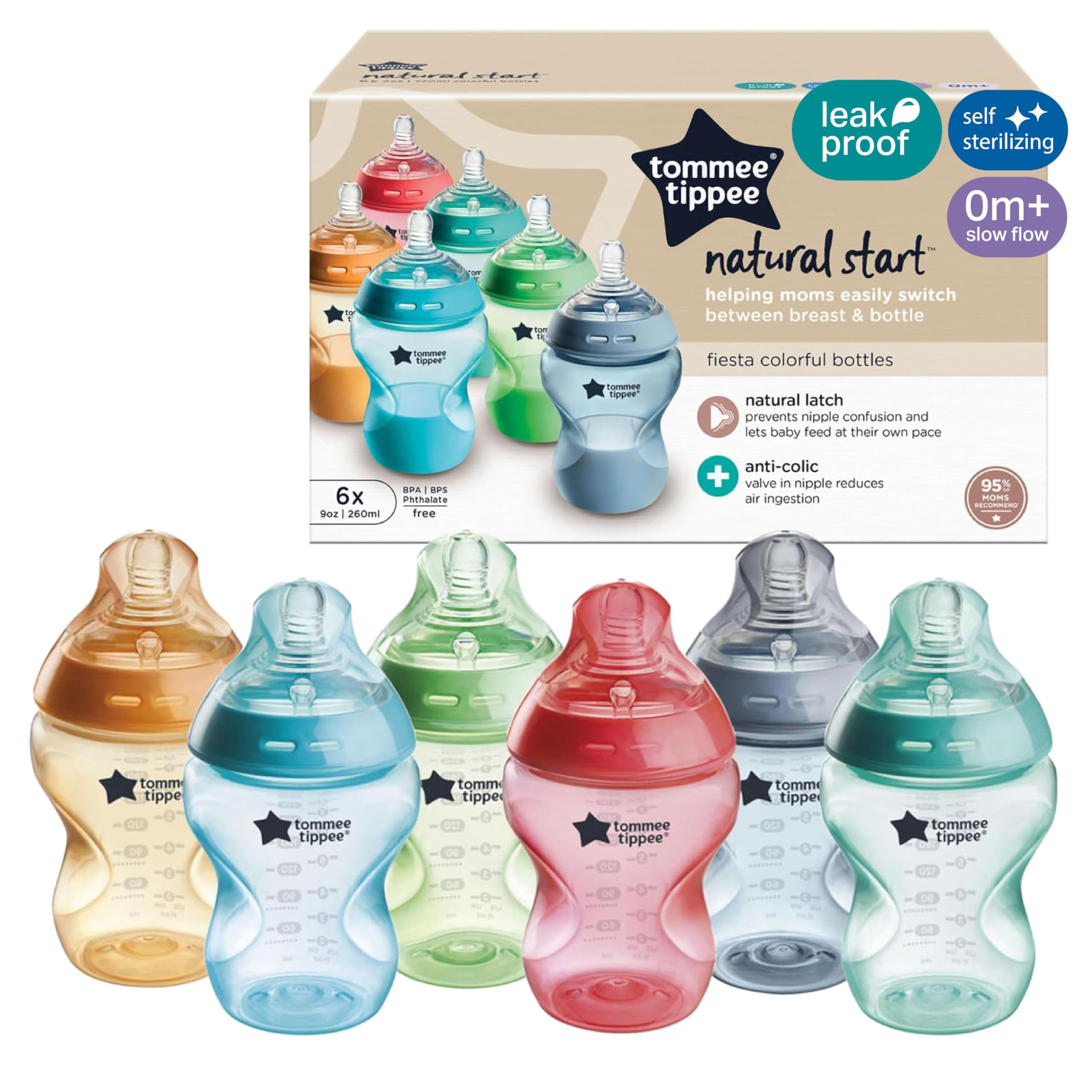
Key Features
- Capacity: 9 fluid ounces
- Pack size: 6 bottles
- Anti-colic: Anti-colic valve
- Nipple flow: Slow flow
- Price: Budget
Nine ounces is more bottle than a newborn needs at one feed, but the six-bottle set and self-sterilizing design make this Tommee Tippee line a practical long-game buy. The Natural Start nipple is soft and wide, with an anti-colic valve, and the 0m+ slow-flow nipple means it can start with a newborn even though the bottle is large.
The wide mouth is easy to clean, and the colors help tell bottles apart when several are in rotation. The self-sterilizing cycle takes three minutes, which is useful when the sink is full. The bottle is light for its size, so a newborn can still be fed without a wrist workout.
The catch is size and consistency. A 9 oz bottle makes a 2 oz newborn feed look lost, and the measurement markings can be hard to read. The nipple can collapse if the vent is not pinched or assembled right, and the bottle can leak if the collar is not secure. We see this as a value set for parents who want one system that grows, not the best first bottle for a tiny newborn.
Pros
- Six bottles in one set
- 0m+ slow-flow nipple
- Wide mouth is easy to clean
- Self-sterilizes in three minutes
Cons
- 9 oz size is large for newborn feeds
- Nipple can collapse if vent not set
For parents who want a six-bottle set that starts at 0m+ and grows with the baby, Tommee Tippee’s wide-mouth bottles are a sensible value—just expect a big bottle for tiny feeds.
Best for Glass Preference
Dr. Brown’s Options+ Glass 5 oz

Key Features
- Capacity: 5 oz
- Material: Glass
- Anti-colic: Internal vent system
- Nipple flow: Level 1 slow flow
- Price: Premium
If you want the anti-colic vent without plastic in the bottle, this is the Dr. Brown’s to look at: the same internal vent and Level 1 slow-flow nipple, now in a 5 oz glass body. The glass is the appeal: it feels substantial and cleans up streak-free. The 5 oz size is a useful step up from 4 oz for a newborn who is starting to take more.
The trade-off is weight and care. Glass is heavier in the hand and needs a check for chips before each feed; it is not the bottle for a diaper bag toss. The internal vent still means several parts, and the wide-neck glass version can leak when parts do not seat. Keep the vent parts matched and tighten the collar. We like it for home feeding, especially for parents who prefer glass and still want colic help. For travel or a lighter bottle, the plastic Dr. Brown’s is the easier carry.
Pros
- Glass body cleans up streak-free
- Internal vent for colic
- 5 oz size for growing feeds
Cons
- Heavier than plastic bottles
For home feeding with glass and anti-colic help, Dr. Brown’s 5 oz glass bottle earns its premium—provided you accept the weight and the care glass needs.
Best for Budget Stash
Evenflo Classic 8 oz

Key Features
- Capacity: 8 oz
- Pack size: 12 bottles
- Bottle type: Standard neck
- Nipple flow: Slow flow
- Price: Budget
A twelve-bottle set is the entire argument for Evenflo’s Classic line, and it is a good one if you want a stash for the diaper bag, grandma’s house, and the dishwasher. These are standard-neck, three-piece bottles with a slow-flow silicone nipple and a simple valve. The 8 oz capacity is larger than a newborn needs, but the bottle is light and easy to hold.
The simple design is easy to clean, and the colors help tell bottles apart. The 12-pack means you can leave one everywhere and not run the dishwasher every night. For a newborn, the 8 oz size makes small feeds look tiny, but it is not a problem if you measure carefully.
What we don’t like: the ounce markings are hard to read, the plastic feels thinner than premium bottles, and the nipple can collapse if the vent is not working. Leakage can happen when the collar is not seated squarely, and the caps can be fussy. This is not the bottle we recommend first for a colicky or breastfed baby.
It is the budget stash we recommend when you need many bottles and can trade some refinement for value. The three-piece design also means fewer lost parts than a vented bottle, which matters when a bottle goes to daycare or a relative’s house.
Pros
- Twelve bottles in one set
- Three-piece design is easy to clean
- Slow-flow nipple for newborns
Cons
- Ounce markings are hard to read
- Nipple can collapse
For a budget bottle stash, Evenflo’s 12-pack is our value pick—just don’t expect premium nipples or easy-to-read measurements.
How We Tested Newborn Bottles
We started with a shortlist of bottles sold for newborns, then narrowed it by nipple flow options, material, size, and how many parts each one required. We ruled out fast-flow-only nipples, collars that were hard to grip with wet hands, and bottles whose replacement nipples were hard to find. That left 16 bottles, which we put into daily rotation for four months.
Each bottle went through the same rough routine: overnight feeds, daytime feeds with a breastfed baby and a formula-fed baby, paced feeding, and at least one trip in a diaper bag. We washed each by hand with a bottle brush and in the dishwasher, then checked whether milk residue stayed trapped in the nipple, collar, or vent. We filled each one with six ounces of water, screwed the collar on as tightly as we could, and shook it upside down over a towel to see what leaked. We also packed them into a diaper bag and drove around town to see which ones dribbled into the pocket.
We watched how quickly milk moved through each nipple, whether the baby had to work for it, and whether the nipple collapsed or the baby pulled away, coughed, or spilled. We noted which bottles left the baby with less spit-up and gas, and whether the venting system was easy to assemble at 3 a.m. We checked durability through repeated washes, sterilizing, and drops onto the kitchen floor, looking for clouding, cracks, and loose collars. We checked how each material heated in a bottle warmer, whether it held a milk smell after washing, and how it felt in one hand at 3 a.m. Value came down to whether the bottle included a slow-flow nipple, whether extra nipples were easy to buy, and whether we would keep using it past the newborn stage.
How to Choose Newborn Baby Bottles
The right newborn bottle starts with flow and air management, not the brand on the side; get those right and the washing-up becomes the main trade-off.
Start With Flow, Then Capacity
A newborn’s feed is small and slow, so the nipple matters more than the bottle’s maximum volume. A 4 to 5 oz bottle with a slow-flow nipple is the practical starting point; a 9 oz bottle is not a better newborn bottle just because it holds more. If your baby gulps, coughs, or lets milk run out of the mouth, the flow is too fast—try a slower nipple before sizing up. Dr. Brown’s Level 1 and Philips Avent’s Flow 1 are the clear slow-flow starting points in this set.
Anti-Colic Design: Vent, Valve, or Base
Anti-colic bottles handle air in different ways. Dr. Brown’s runs a vent through the middle of the bottle; Philips Avent’s AirFree vent keeps the nipple full during upright feeding; MAM uses a vented base; Lansinoh puts the vent in the nipple. More venting usually means more parts. If gas and colic are the main problem, the extra washing is worth it. If your baby is comfortable, a simpler three-piece bottle is easier to live with.
Count the Parts Before You Buy
The sink is where a bottle earns or loses affection. A wide neck and few pieces make cleaning faster, while an internal vent or vented base adds parts that need to be separated and seated correctly. Self-sterilizing designs from MAM and Tommee Tippee can save a step, but they do not remove the need to wash. If you are washing by hand at night, choose the simplest bottle that still handles your baby’s air issues.
Breast-to-Bottle Is a Nipple Decision
For a breastfed baby, the nipple shape and softness often decide whether the bottle is accepted at all. Wide, breast-shaped nipples such as Philips Avent Natural and Lansinoh NaturalWave are designed for a deeper latch; MAM’s SkinSoft nipple is another soft option. Buy one bottle first when you can, rather than a full set, and test it during a calm feed. The bottle that works is the one your baby latches onto without a fight, not the one with the longest feature list.
Glass, Plastic, and How Many Bottles
Glass is heavier and needs a chip check, but it cleans well and feels substantial; plastic is lighter for travel and daycare. For a newborn, four to six small bottles is a workable rotation, with one in use, one clean, and the rest in the wash. A 9 oz set makes more sense once feeds grow. If you are combination feeding, keep one slow-flow nipple and one faster nipple on hand rather than buying a second full set.
Frequently Asked Questions
How often should I replace bottle nipples?
Check nipples every few weeks and replace them at the first sign of a tear, sticky spot, cloudiness, or a nipple that collapses more than it used to. A flow that suddenly seems faster is another reason to swap. Keep a spare slow-flow nipple on hand so a worn one does not push you into a faster flow before your baby is ready.
My baby chokes or dribbles during feeds. What should I check?
First check the nipple flow and the assembly: a vent that is not seated or a collar that is cross-threaded can change how fast milk comes out. Feed your baby upright, tilt the bottle so the nipple stays full, and pause every few minutes. If the baby still coughs or gulps on a slow-flow nipple, try a different bottle or ask your pediatrician.
Do I need to sterilize new bottles before first use?
Yes—wash new bottles and nipples in warm soapy water, then sterilize them according to the manufacturer’s instructions before the first feed. Self-sterilizing bottles have their own cycle; do not assume every plastic part is microwave-safe. After that, follow the cleaning routine your baby’s health professional recommends.
Do I need a bottle warmer?
No. A bottle warmer is convenience, not safety equipment. A bowl of warm water works for warming milk, and running the bottle under warm water is another option. Never microwave breast milk or formula in the bottle, because hot spots can burn a baby’s mouth. Follow the formula or milk storage guidance you were given.
Final Verdict
For most newborns, we recommend Dr. Brown’s Options+ Narrow 4 oz. The internal vent and Level 1 slow-flow nipple are the closest match in this set to the two things that make early feeding hard: swallowed air and a flow that runs too fast.
It is not the easiest bottle to wash, so if you are combo feeding and want fewer parts, the Philips Avent Natural is the alternative we point to. If self-sterilizing matters more than a simpler wash, choose MAM.