This post contains affiliate links. We may earn a small commission when you buy through our links — at no extra cost to you.
I remember pacing the nursery at 2 a.m. with my son, patting his back and listening for a burp that never came. Gas is one of the most common feeding frustrations, and the bottle you choose can make a real difference. Over the past three months, we’ve tested 15 bottles designed to reduce gas — from vented systems to collapsible bags — with a panel of parent testers and their babies. The right bottle won’t eliminate every fussy night, but it can cut down on swallowed air and make feedings smoother for both of you.
Not all anti-gas bottles are created equal. Some venting systems are so fiddly to clean that you’ll dread every feeding, while others leak all over the diaper bag. We looked at quality, ease of cleaning, appearance, ease of use, value, and design — and we paid close attention to leakage, flow speed, durability, and material. The bottles below earned a permanent spot in our rotation; here’s why they stood out.
Best for Gas-Prone Newborns
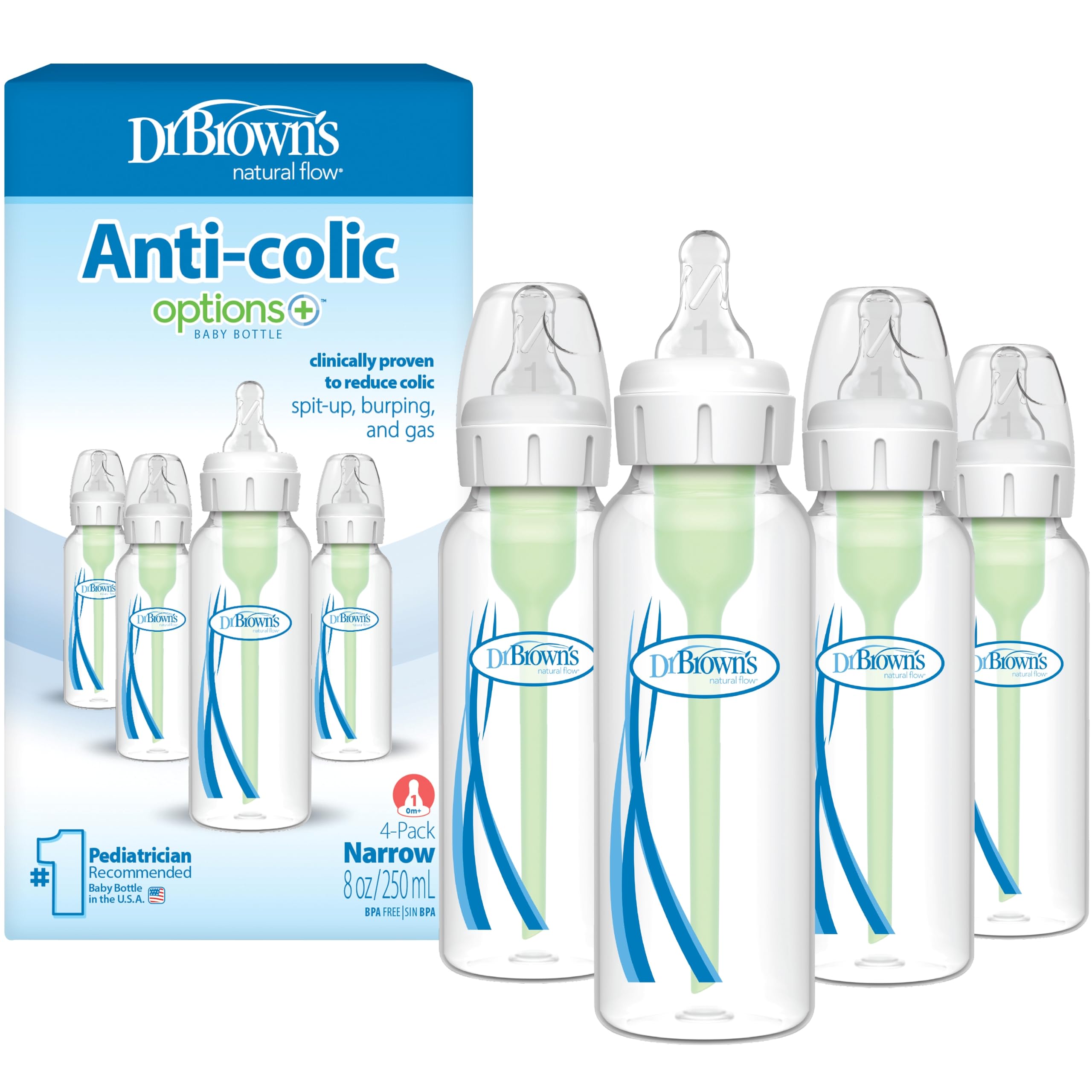
Dr. Brown’s Options+ Narrow
Key Features
- Capacity: 8 oz
- Pack count: 4 Count
- Nipple flow: Slow Flow
- Anti-colic system: Internal vent
- Price: Midrange
Dr. Brown’s puts a vent tube down the center of the bottle. As a baby drinks, air travels up and out through the collar instead of bubbling through the milk, and the slow-flow nipple gives a newborn a chance to pause and breathe. The narrow body is easy to hold at the angle a paced feed needs.
That combination is why this is our top pick for gas. Of the bottles here, it takes the most direct approach to keeping air out of the feed, and the pieces work together rather than relying on a single valve in the nipple. We used it as the benchmark against the wider, simpler bottles, and it was the one we trusted most when a baby was gulping and squirming.
The price is in the washing. Each bottle has several pieces, including the vent and reservoir, and the narrow neck takes a careful scoop of formula. We kept a small brush and a drying rack section just for them. If you want fewer dishes, the AirFree and Boon are easier; for the early months of gas and fussiness, the extra assembly felt worth it.
Pros
- Most direct air control here
- Slow-flow nipple supports paced feeding
- Narrow shape is easy to hold
- Hospital-style vent design
Cons
- Can leak if overfilled or collar loose
If gas is the main problem, Dr. Brown’s is our default: the internal vent gives the most direct air control here, and the slow-flow nipple is easy to pace for a newborn.
Best for Low-Maintenance Anti-Colic
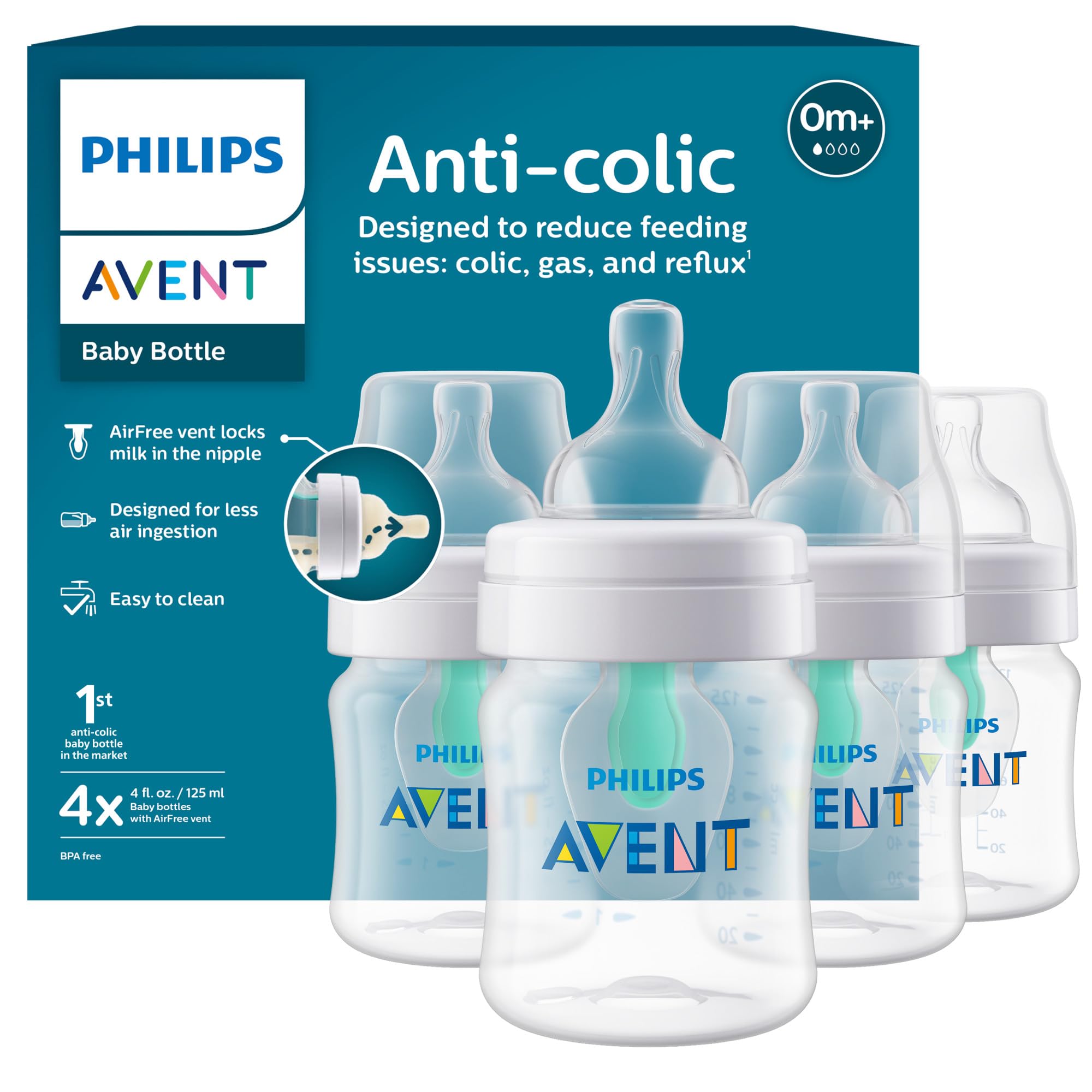
Philips Avent Anti-Colic AirFree
Key Features
- Capacity: 4 oz
- Pack count: 4 Count
- Nipple flow: Slow
- Anti-colic system: AirFree vent
- Price: Midrange
The AirFree vent is a one-piece insert that sits inside the nipple and keeps it full of milk rather than air. There is no long tube or separate reservoir, so the anti-colic system adds one part instead of a small construction project.
We recommend it for parents who want gas help without a sink full of pieces. The wide-neck bottle is easy to fill, and the vent can be used or left out depending on the baby. In our testing, the simple assembly was the feature we appreciated most; it is the bottle we reached for when we were already behind on washing.
The catch is the size. Four ounces is a newborn feed, not a toddler feed, so this pack has a short useful life. The wide shape also takes up more room in a diaper bag than a narrow bottle. If you want one bottle that grows with the baby, the 8-ounce Lansinoh or MAM is the easier long-term buy.
Pros
- One-piece vent cuts cleaning
- Works with or without the vent
- Wide neck is easy to fill
Cons
- Vent can seep if not seated flush
We recommend the AirFree for parents who want anti-colic help without a tube to scrub; it is the low-maintenance choice here, as long as a four-ounce feed fits your baby.
Best for Breastfed Babies
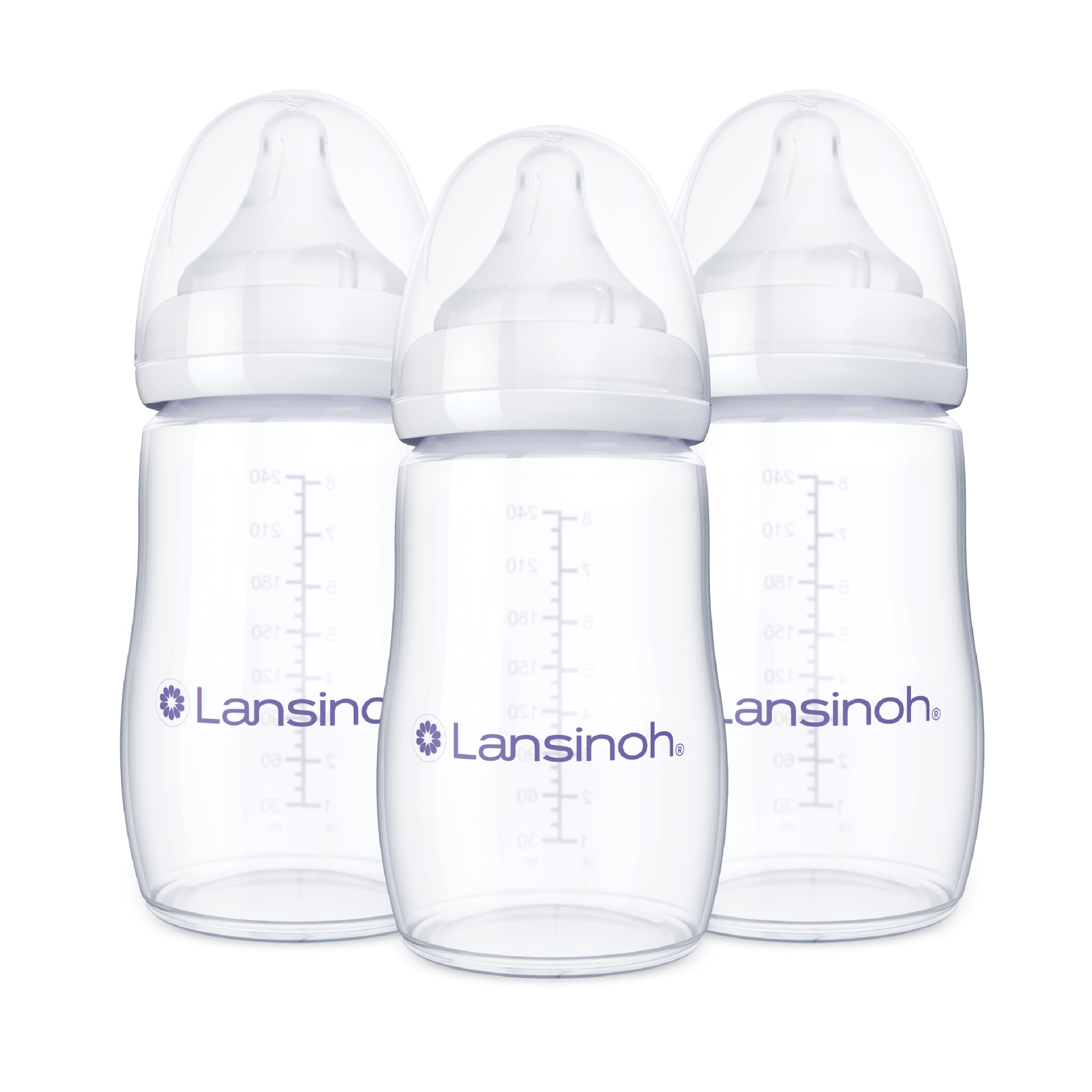
Lansinoh Anti-Colic
Key Features
- Capacity: 8 oz
- Pack count: 3 Count
- Nipple flow: Medium Flow
- Anti-colic system: Air ventilation system
- Price: Budget
Lansinoh’s NaturalWave nipple is the one we reach for when a breastfed baby needs a bottle. The wide base and soft tip give the baby a familiar mouthful, and the nipple flexes with the suck instead of standing firm like a standard teat. For combo feeding, that can be the difference between a bottle and a battle.
The rest of the bottle is refreshingly simple. It breaks down into three main pieces, the wide neck is easy to fill, and the vent sits in the nipple rather than adding a tube. The 8-ounce size is a useful step up from a newborn bottle, and the anti-colic system is built into a shape babies tend to accept.
The included nipple is medium flow, aimed at three months and up. With a newborn, that can run faster than you want, so buy a slower Lansinoh nipple with the bottles if you are starting early. We still recommend it first for breastfed babies because the latch is the hardest part to get right, and this bottle makes that part feel familiar.
Pros
- Breast-shaped nipple supports latch
- Three-piece design is easy to clean
- Anti-colic vent sits in nipple
- Eight-ounce capacity
Cons
- Three-bottle pack is small for full-time feeding
For combo-feeding parents, we reach for Lansinoh first: the wide, soft nipple gives a breastfed baby a familiar latch and the three-piece design is easy to live with.
Best for Air-Free Feeding
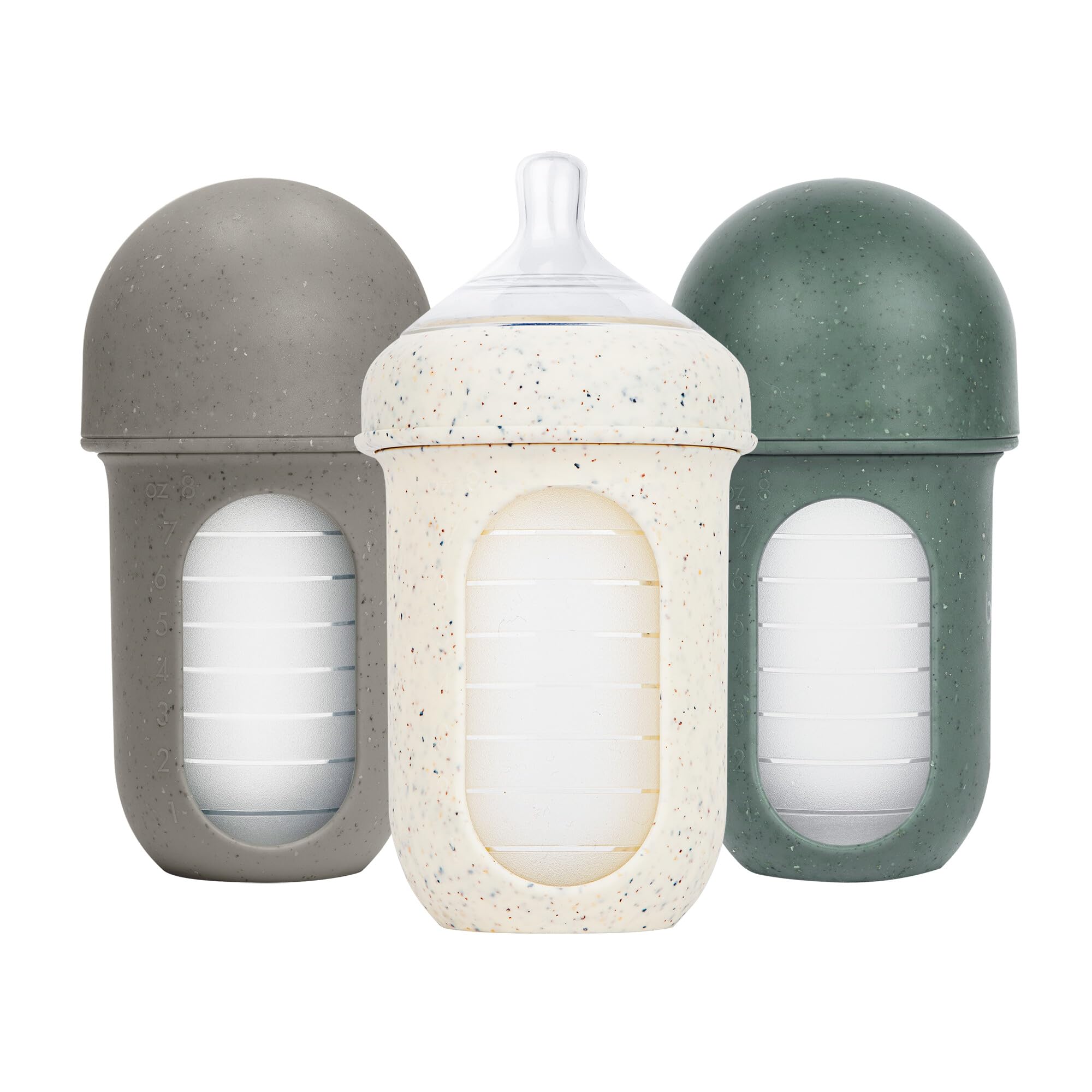
Boon Nursh
Key Features
- Capacity: 8 oz
- Pack count: 3 Count
- Nipple flow: Medium Flow
- Anti-colic system: Collapsing silicone pouch
- Price: Budget
Boon’s Nursh bottle uses a silicone pouch that collapses as the baby drinks. Instead of routing air through a vent, the pouch shrinks with the milk, so there is no vent tube or valve to wash. That is the whole idea, and it is a good one for parents who are tired of bottle parts.
We like it for the wash pile as much as for the air control. The silicone pouch can be boiled, the outer shell is easy for a baby to grip, and the wide neck makes filling simple. It is the bottle we recommend when someone says they want anti-colic help without a drawer full of small pieces.
The pouch is the part to learn. Once it is seated, the bottle is simple to clean and has no hidden air channel. The soft silicone also gives the bottle a different feel from a hard plastic shell, which some babies like and others do not. The 8-ounce size is a good fit for older newborns and younger infants.
Pros
- No vent tube or valve
- Silicone pouch collapses as baby drinks
- Easy to boil and clean
- Outer shell is easy to grip
Cons
- Pouch can leak if not seated evenly
We like Boon for anyone who hates vent parts: the collapsing pouch keeps air out without a valve, and cleanup is simpler than the Dr. Brown’s system.
Best for Budget Newborn Feeding
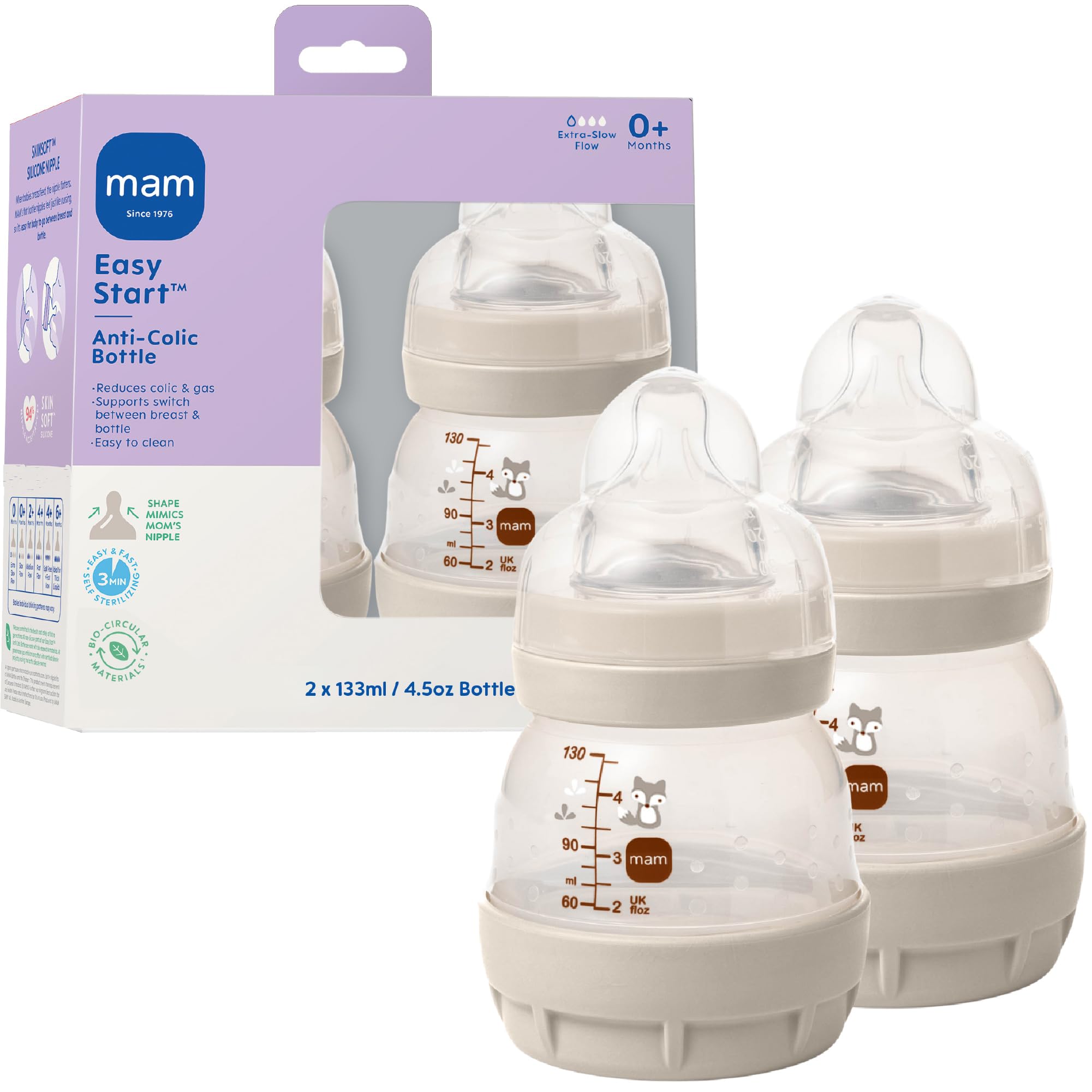
MAM Easy Start Anti-Colic+
Key Features
- Capacity: 4.5 oz
- Pack count: 2 Pack
- Nipple flow: Slow
- Anti-colic system: Vented base
- Price: Budget
MAM’s Easy Start bottle has a vented base that unscrews, and the whole thing self-sterilizes in the microwave in three minutes. The base releases air while the nipple lets the baby set the pace, and the extra-slow nipple is aimed at newborns.
The self-sterilizing trick is the reason this one stands out. You add water, microwave, and the bottle is ready without a separate sterilizer taking up counter space. All five MAM flow levels fit the same bottle, so it can grow with the baby instead of becoming a short-lived newborn purchase.
We recommend it as the budget pick, with one caveat: the 4.5-ounce size and two-bottle pack are a starter kit. If you are feeding full time, you will want more bottles or the larger size before long. The vented base is easy to take apart, which makes cleaning less fiddly than a tube system, but the parts still need to be seated with care.
Pros
- Self-sterilizes in three minutes
- Vented base releases air
- All five flow levels fit one bottle
- Low-cost starter set
Cons
- Base can leak if not fully tightened
MAM is our budget pick because it self-sterilizes in the microwave and still has a proper vented base; we just wish the two-pack went further.
Best for Bulk Bottle Stash
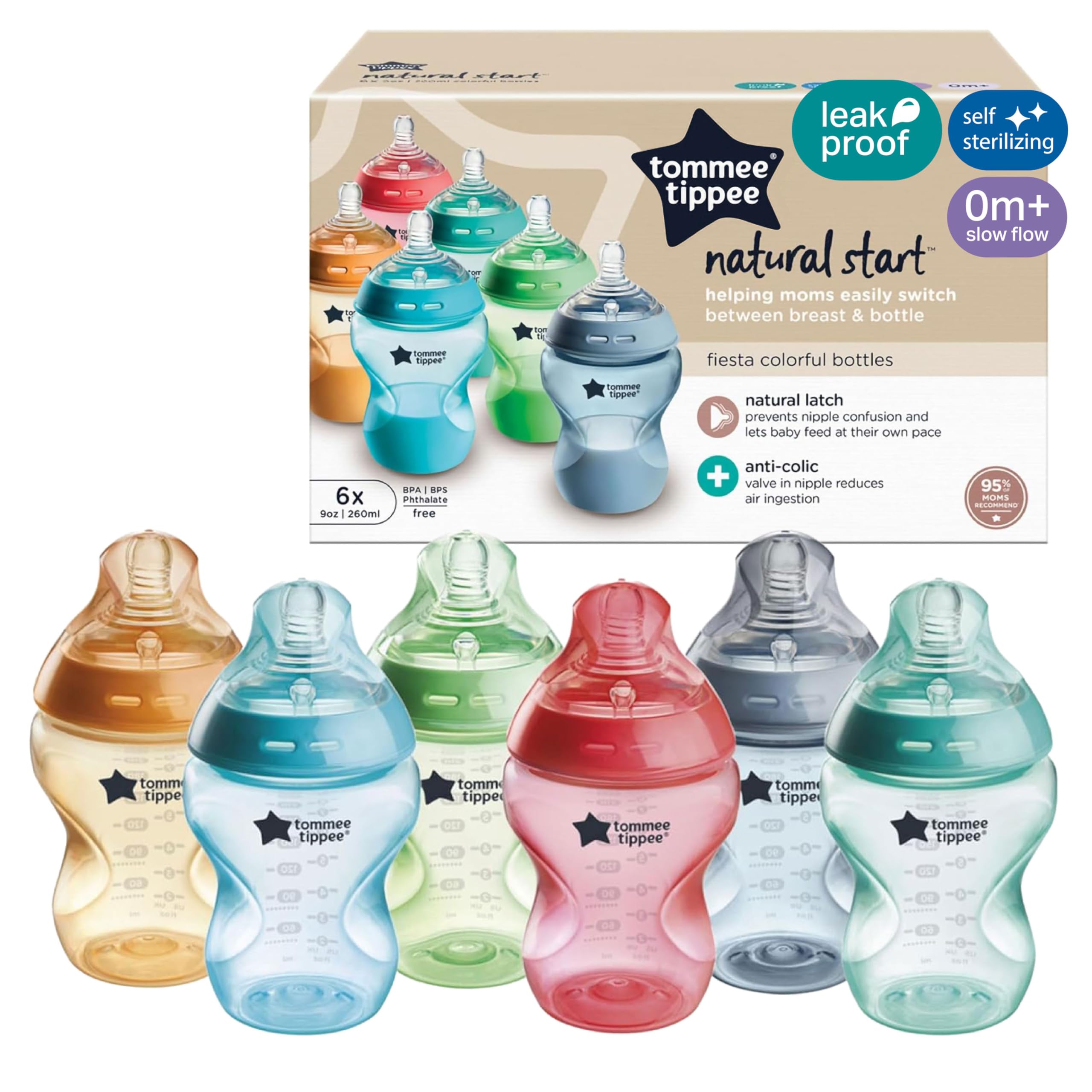
Tommee Tippee Natural Start
Key Features
- Capacity: 9 fluid ounces
- Pack count: 6 Count
- Nipple flow: Slow
- Anti-colic system: Vented nipple
- Price: Budget
Tommee Tippee’s Natural Start set is the bulk buy of the group: six 9-ounce bottles with wide necks, slow-flow nipples, and a vent in the nipple base. The colors are louder than most bottle aisles, and the wide body is easy to fill and clean.
The six-pack is the practical appeal. It covers a full day of feeds for one baby without running the dishwasher after every bottle, and the self-sterilizing feature means you can skip a separate sterilizer. The slow nipple is a reasonable starting point for a newborn, though the flow is not the slowest here.
We recommend it for families who want a complete stash without paying premium prices. The vent is the part to learn: if the small hole in the nipple base is not opened, the nipple can collapse mid-feed. Once we got that right, the bottle was easy to live with, and the wide neck made formula scooping less messy than a narrow bottle.
Pros
- Six-bottle pack covers a day
- Wide neck is easy to fill
- Self-sterilizes in three minutes
- Slow-flow nipple
Cons
- Measurement markings can wear off
Tommee Tippee is the practical bulk buy: six wide-neck bottles, a slow-flow nipple, and a vent that works once you learn to open it.
Best for Plastic-Free Body
Dr. Brown’s Options+ Glass

Key Features
- Capacity: 5 oz
- Material: Glass
- Nipple flow: Slow Flow
- Anti-colic system: Internal vent
- Price: Premium
This is the same Dr. Brown’s internal vent system built into a glass bottle. The glass body is the appeal: it feels substantial, cleans to a clear finish, and does not take on the look of old milk the way clear plastic can. The vent parts are still plastic, so it is a glass body rather than a fully plastic-free system.
The 5-ounce size is right for a newborn, and the wide neck is easier to fill than the narrow Dr. Brown’s version. The internal vent gives the same air control, and the slow-flow nipple keeps the feed calm.
We see it as a stay-home bottle. Glass is heavier in the hand, and it is not the bottle we reach for on a day out. The wide neck is easier to fill than the narrow version, but the glass still asks for careful handling.
For parents who want the Dr. Brown’s air control and prefer glass against the milk, this is the version we recommend. It is a niche pick, not the default, but it fills that niche well.
Pros
- Glass body cleans clear
- Same internal vent as top pick
- Wide neck easier to fill
- Five-ounce newborn size
Cons
- Can leak if vent parts are mismatched
We recommend the glass Dr. Brown’s for parents who want the same air control with a glass body; it is a stay-home bottle, not a lightweight travel pick.
Best for Night Feeds
PopYum Anti-Colic

Key Features
- Capacity: 9 fluid ounces
- Nipple flow: Medium Flow
- Formula storage: Built-in chamber
- Anti-colic system: Vented nipple
- Price: Premium
PopYum stores formula and liquid in separate chambers inside the bottle. When hunger hits, you press the side buttons, shake a few times, and the formula drops into the water. There is no scooping, no separate formula container, and no lid to juggle in the dark.
The one-handed feed is the reason it earns a place. For night feeds, travel, and daycare drop-offs, the bottle is already loaded and ready; you are not measuring powder with a baby on your hip. The wide neck and five parts also make it easier to clean than many formula-mixing bottles.
The mechanism is the catch. The buttons are another place for milk to seep, and the chamber adds a step to the wash. We keep it as a convenience bottle, not the only one in the cupboard. The 9-ounce size is right for older babies, but the bottle is not the simplest one to clean.
We recommend it for parents who do a lot of night feeds or travel and want the bottle ready before the baby wakes. For everyday feeding at home, a simpler anti-colic bottle is easier to live with.
Pros
- Formula stored inside bottle
- One-handed night feeds
- Five parts to clean
- Wide neck
Cons
- Formula chamber limits larger feeds
PopYum earns a place for night feeds and travel: the formula is already in the bottle, and one press gets a feed going without measuring in the dark.
How We Tested the Best Baby Bottles for Gas
We started by researching the market, reading customer reviews, and filtering by material (glass, plastic, silicone), venting design, and price. We then selected 15 bottles that promised to reduce gas, from well-known brands and newer startups.
For three months, a team of parent testers used these bottles for everyday feedings, night feeds, and on-the-go outings. We ran each bottle through a minimum of 20 wash cycles — both hand-washing and dishwasher — and sterilized them regularly to assess durability. We noted how easy each bottle was to assemble and disassemble, especially the venting parts, and whether cleaning tools could reach every corner.
To test leakage, we filled each bottle with formula, shook it vigorously, and tipped it upside down in a diaper bag for an hour. Flow speed was evaluated by timing how long it took a baby to finish a 4-ounce feed with each nipple size, and we watched for signs of frustration or gulping. We also assessed material quality (glass weight, plastic scratches, silicone cloudiness), appearance after repeated washes, and overall value for money. Finally, we asked testers to rate ease of use during real feedings, from one-handed holding to nipple assembly.
How to Choose a Baby Bottle for Gas
The best gas bottle is not the one with the biggest anti-colic label; it is the one whose air-control design you will assemble correctly at 3 a.m.
Match the air-control design to your patience
Internal vent systems, one-piece vents, vented nipples, and collapsing pouches all approach air differently. A full internal vent, like the Dr. Brown’s design, is the most elaborate and the most direct at keeping air out of the milk. A one-piece AirFree vent or a collapsing silicone pouch cuts the parts count. If you know you will not scrub a tube, choose the simpler design and accept that it may not be the most aggressive anti-colic setup here. The bottle you assemble correctly every time is the one that helps.
Treat flow rate as part of the gas problem
Fast flow can make a baby gulp, and gulping is half the gas story. Start with a slow-flow nipple and size up only when the baby fusses at the bottle, falls asleep early, or takes much longer than usual. Labels are not standardized across brands: Lansinoh’s 8-ounce bottle ships with a medium-flow nipple, while MAM’s newborn nipple is extra slow. If you are moving from breast to bottle, begin slower than you think you need and watch the baby’s pace rather than the number on the nipple.
Count the parts before you commit
More parts can mean more air control, but they also mean more washing. Dr. Brown’s has the most elaborate assembly here; the Philips Avent AirFree and Boon Nursh are easier to clean. If you wash by hand, put a small basket by the sink for vent pieces and check that every part is dry before reassembly. A wide-neck bottle is easier to fill and brush, which matters more at 2 a.m. than another feature on the box.
Choose capacity and material for your actual day
A 4- to 5-ounce bottle is a newborn tool; an 8- to 9-ounce bottle lasts into the next stage. Buy enough bottles to cover one day of feeds, not one feed, or you will be washing constantly. Glass, like the Dr. Brown’s glass option, is heavier and best kept at home; plastic and silicone are lighter for travel. None of these materials changes the air-control design, so choose the body you will actually use.
Check the seal, not just the anti-colic claim
Many leaks start with assembly, not a defective bottle. Overfilling past the line, cross-threading the collar, or failing to seat a vent can all let milk escape. After you wash the parts, fill the bottle with water and turn it upside down before the first feed. If it seeps, reseat the vent and collar. A bottle that stays sealed is easier to trust in a diaper bag, and the check takes less time than changing an outfit.
Frequently Asked Questions
How many baby bottles should I buy before my baby arrives?
For one baby, four to six bottles is a practical starting point, and eight makes sense if you work outside the home or send bottles to daycare. Start with one pack and a couple of extra nipples in the flow you need, then add more once you know your feeding rhythm. Buying a full stash before the baby arrives can leave you with the wrong nipple size.
Can I use anti-colic bottles for pumped breast milk?
Yes. The vent or pouch works the same way with breast milk, and a slow-flow nipple is usually the right starting point for a breastfed baby. Warm the milk gently and swirl rather than shake if you want to avoid excess foam. Wash the vent parts as carefully as the nipple, because milk residue can collect in the seams.
Do I need to sterilize new bottles before the first feed?
Yes. Wash the bottle and parts in hot soapy water, then sterilize by boiling, steaming, or using a microwave method. MAM and Tommee Tippee bottles self-sterilize in the microwave, which is handy for the first setup and for travel. Follow the maker’s time and water instructions, and let the parts air-dry on a clean rack.
Can anti-colic bottle parts go in the dishwasher?
Many can, but check the maker’s instructions for each piece. Lansinoh and Boon list dishwasher-safe parts, while small vents and valves still benefit from a hand rinse before they go in. Keep the parts in a closed basket so they do not disappear down the drain, and inspect the vent holes after every cycle.
Final Verdict
For most gas-prone newborns, Dr. Brown’s Options+ Narrow is the bottle we recommend first. The internal vent gives the most direct air control in this set, and the slow-flow nipple makes paced feeding easier. The trade-off is the wash pile; if that is the dealbreaker, the Philips Avent AirFree is the low-maintenance alternative. For combo-feeding parents, Lansinoh’s breast-shaped nipple is the better fit.
