This post contains affiliate links. We may earn a small commission when you buy through our links — at no extra cost to you.
Many parents discover that a bottle labeled ‘anti‑colic’ can still leak from the collar, dribble formula when shaken, or flood a newborn with a flow that’s nowhere near ‘slow.’ The parts that promise gas relief often turn into an evening chore of scrubbing tiny vents and drying crevices—and if moisture lingers, mold follows. Even highly‑rated models frustrate with caps that seize shut or bases that loosen mid‑feed.
This guide cuts through the noise by focusing on the specific designs that actually keep milk inside, pace feedings to your baby’s ability, and clean up in seconds—not minutes. You’ll find bottles that use vented bases to swallow air before it reaches tiny stomachs, collapsible pouches that shrink as baby drinks, and nipples that release only when your baby sucks. Instead of picking by brand name alone, you’ll match a feeding system to your real tolerance for daily bottle duty and your little one’s unique latch.


Best for Preemies, Severe Colic
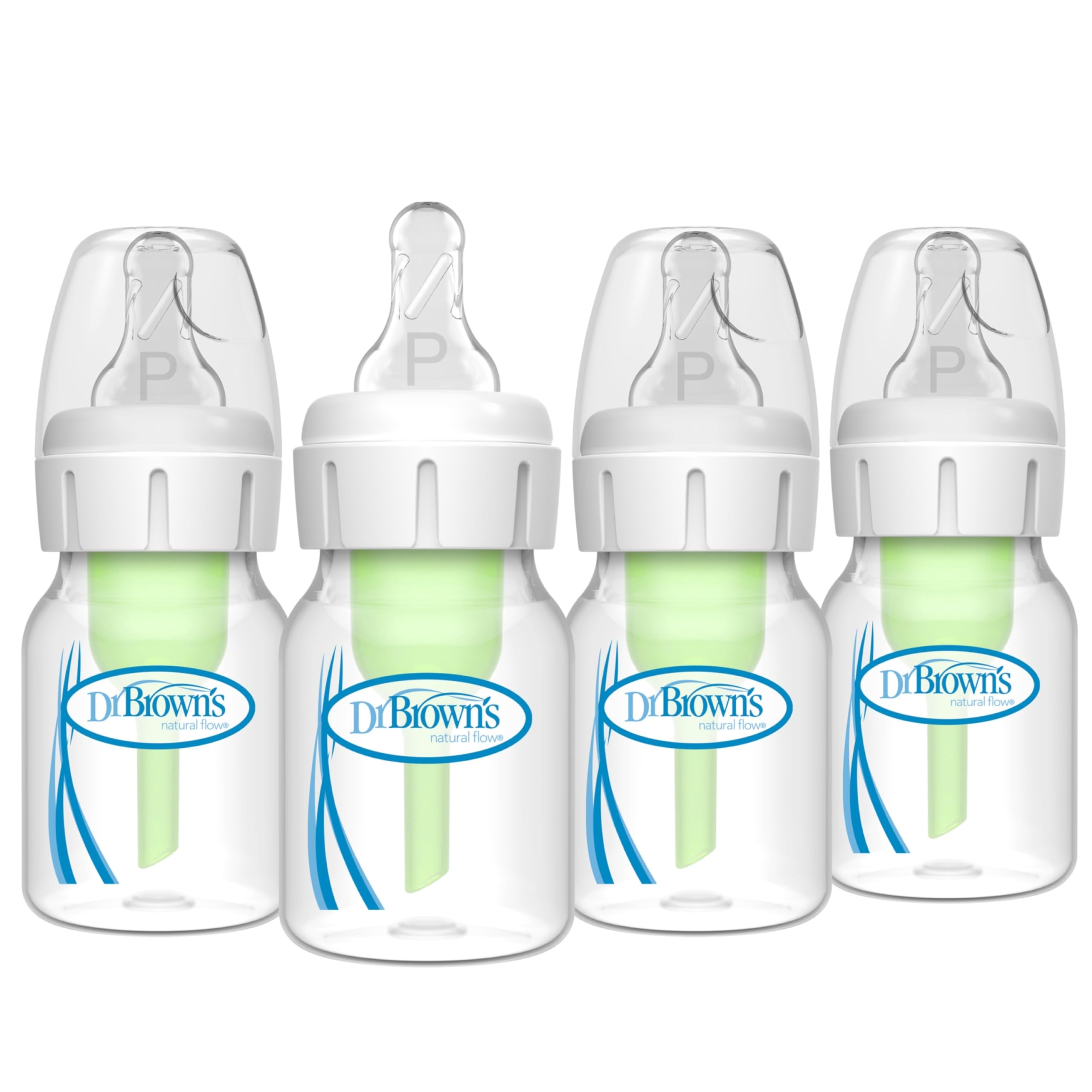
Dr. Brown’s Options+ Preemie
Key Features
- Anti-Colic Mechanism: Internal vent system (tube & valve)
- Ease of Cleaning: Multiple parts (vent, tube, valve)
- Nipple Flow: Preemie (extra slow)
- Leak-Proof Design: Screw cap, internal vent
- Capacity Options: 2 oz
- Price: Budget
Where even the top pick’s slowest flow proves too fast, the Options+ Preemie steps in. The nipple’s barely-there pace lets preemies and newborns with weak suck feed without choking, and the internal vent system dramatically cuts gas—a relief reported across thousands of reviews. However, that precision demands patience. The vent, tube, and valve need daily disassembly and thorough cleaning, and the 2oz bottle is quickly outgrown. Leaks are common if filled above the MAX line or if the vent parts aren’t aligned. This is a specialist for fragile feeders; parents seeking a simpler, long-term bottle will find this too high-maintenance.
Pros
- Anti-colic vent drastically reduces gas, spit-up, and burping.
- Preemie flow nipple offers the slowest feed for premature or medically fragile babies.
- Budget-friendly cost for a specialized anti-colic feeding tool.
Cons
- Leaks are common if bottle is overfilled or vent parts misaligned.
- Time-consuming to clean due to multiple small vent parts.
Buy this if your preemie or newborn struggles with standard slow-flow nipples and gas, and you’re willing to disassemble the vent daily for proven relief. Skip it if you want a quick-clean, full-sized bottle or your baby already drinks more than 2 oz per feed.
Best for Bottle Refusers
Comotomo 8oz Double Pack
Key Features
- Anti-Colic Mechanism: Dual anti-colic vents
- Ease of Cleaning: 3 pieces, wide mouth
- Nipple Flow: Medium
- Leak-Proof Design: Screw cap, silicone insert
- Capacity Options: 8 oz
- Price: Mid‑Range
This soft silicone bottle draws on its skin-like texture and minimal three-piece design to coax reluctant breastfed babies into accepting a bottle. Unlike the lactation consultant-endorsed option’s focus on latch depth, the Comotomo uses a pliable body that flexes like a breast, while the wide nipple reduces confusion. Molded from food-grade silicone, it stays odor-free and cleans up faster than bottles with internal vent assemblies. Alignment is critical: the lid and silicone insert must sit perfectly flat, and shaking formula inside often forces milk past the seal. The cap can also become rigid when wet, making removal a struggle. These trade-offs are tolerable for parents who prioritize material purity and simple washing, but anyone relying on a leak-free, shake-and-go bottle will find it frustrating.
Pros
- Skin-soft silicone mimics breast feel, often the only bottle a breastfed baby accepts.
- Wide mouth and just three pieces make hand-washing quick and thorough.
- Food-grade silicone resists odors and flavors, keeping milk tasting fresh.
Cons
- Alignment-sensitive lid and silicone insert can lead to leaks, particularly when shaking formula inside.
- The cap can become very stiff to twist off with wet hands, sometimes requiring significant force.
Buy this if you need a bottle for a breastfed baby who rejects others and you prioritize easy cleaning over anti-colic venting. Skip it if you mix formula by shaking the bottle or need a leak-proof, no-fuss cap.
Best for Mixed Feeding
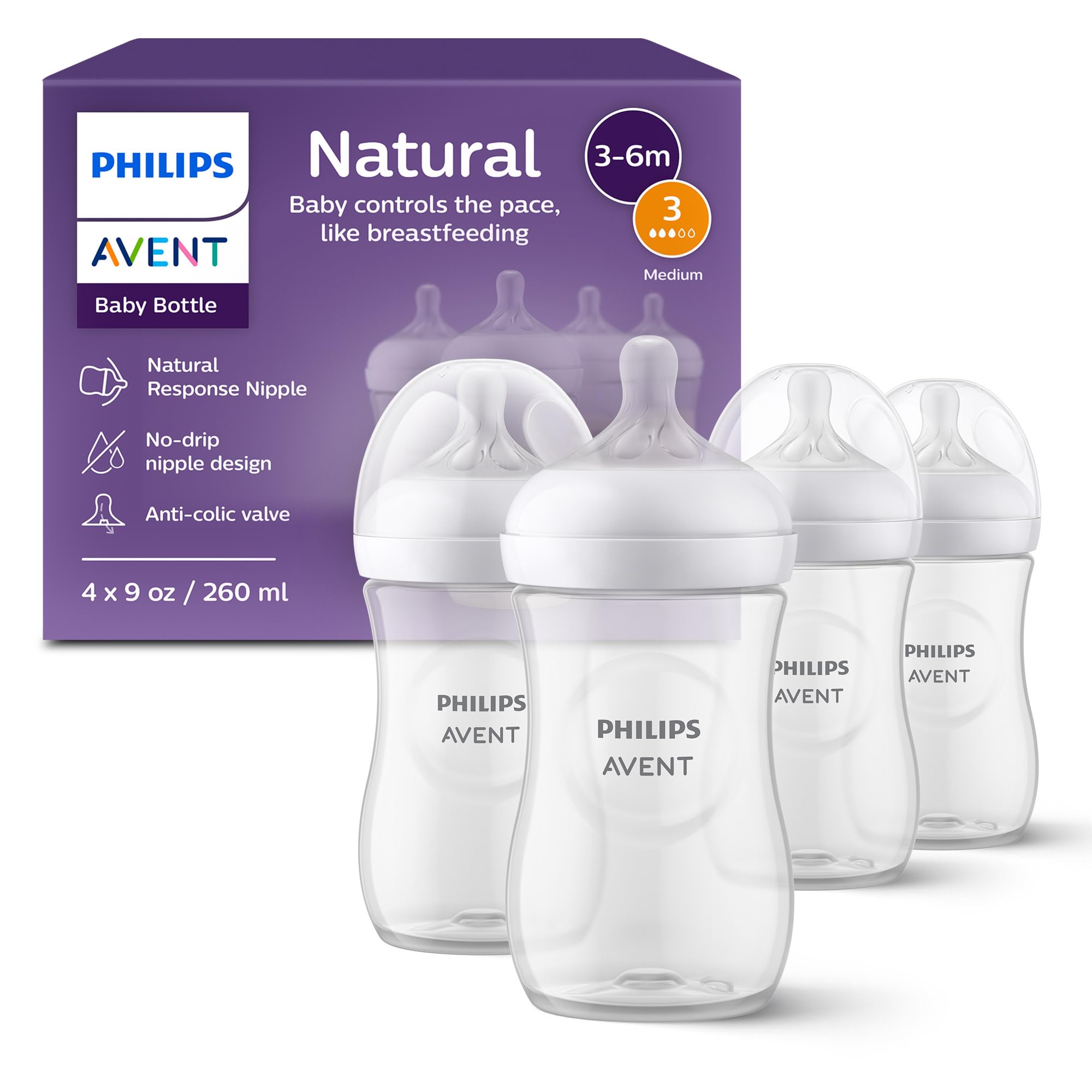
Avent Natural 9oz 4pk
Key Features
- Anti-Colic Mechanism: Built-in anti-colic valve
- Ease of Cleaning: Few parts, wide neck
- Nipple Flow: Flow 3 (medium)
- Leak-Proof Design: Screw cap with valve
- Capacity Options: 9 oz
- Price: Mid‑Range
The Natural Response nipple only flows when baby actively sucks, which pairs with a no-drip valve to prevent spills in diaper bags. Compared to the top pick’s self-sterilizing anti-colic system, this bottle prioritizes breastfeeding mimicry over colic complexity. The 9oz capacity covers growing appetites, and the wide-neck design makes cleaning simple. However, Flow 3 can be frustratingly slow for faster eaters, and some babies give up before finishing. Best for parents blending breast and bottle who value a low-waste, pace-feeding design and don’t mind a slower feed.
Pros
- Leak-proof when closed correctly — no lost milk in diaper bags.
- Nipple releases milk only on active suck, easing breast-to-bottle transitions.
Cons
- Flow 3 can be too slow for faster eaters, causing frustration during feeds.
Buy this if you want a breast-like, no-drip bottle for pace-feeding and don’t mind a slower flow. Skip it if your baby demands a fast feed or you want anti-colic convenience with self-sterilization.
Best for Breastfed Babies
Lansinoh Anti-Colic 5oz 3pk
Key Features
- Anti-Colic Mechanism: Air ventilation system
- Ease of Cleaning: 4 parts, wide neck
- Nipple Flow: Slow (Size S)
- Leak-Proof Design: Screw collar
- Capacity Options: 5 oz
- Price: Budget
The triangular NaturalWave nipple sets this bottle apart from silicone-body alternatives that focus on skin-like feel; here the latch itself mimics breastfeeding. With only four parts and a wide neck, cleaning is straightforward, and the anti-colic vent is built into the nipple base. The slow-flow nipple can overwhelm some fresh newborns, and collar leaks occur if the nipple isn’t seated precisely, so assembly demands attention. Best for breastfed babies who latch well but need a familiar nipple shape for caregiver feeds, this 3-pack is budget-friendly and lightweight.
Pros
- NaturalWave nipple mirrors breast shape, earning trust from lactation consultants.
- Triangular nipple promotes a deep latch, with many babies accepting it on the first try.
- Only four parts and a wide neck make cleaning quick and thorough.
Cons
- The ‘slow’ flow can still overwhelm some fresh newborns during feeds.
- Collar leaks occur if the nipple isn’t aligned precisely during assembly.
Buy this if your breastfed baby struggles with standard round nipples and needs a triangular shape for a deep latch. Skip it if you prioritize a guaranteed ultra-slow flow or a completely leak-proof seal.
Best for Easy Cleaning
Boon Nursh 8oz Silicone

Key Features
- Anti-Colic Mechanism: Collapsible silicone pouch
- Ease of Cleaning: Flippable pouch, no scrub
- Nipple Flow: Medium
- Leak-Proof Design: Screw cap, silicone pouch
- Capacity Options: 8 oz
- Price: Premium
The flippable silicone pouch makes cleaning genuinely simple, and the collapsing design means less swallowed air. But the pouch must be seated perfectly flat to avoid leaks, and the medium-flow nipple is too fast for many newborns—requiring a separate slow nipple.
Pros
- Flippable pouch cleans in seconds with no brush needed.
- Collapsing pouch reduces air swallowed, easing hiccups and gas.
Cons
- Leak chances rise if silicone pouch isn’t aligned perfectly flat.
Worth considering if you prioritize fast cleaning and reduced air intake and are willing to triple-check the pouch alignment, or plan to buy a slow-flow nipple for newborns.
Best for Glass Purity
Avent Glass 4oz 4pk

Key Features
- Anti-Colic Mechanism: Built-in anti-colic valve
- Ease of Cleaning: Glass, wide neck
- Nipple Flow: Slow (Flow 2)
- Leak-Proof Design: Screw cap
- Capacity Options: 4 oz
- Price: Premium
The borosilicate glass stays crystal clear and never holds odors, making sterilization effortless. Many parents report milk seeping from the cap, and the heavy glass cracks easily if dropped on tile. Those committed to a plastic-free feeding environment will value the purity, but frequent leaks and fragility limit daily convenience.
Pros
- Premium borosilicate glass resists heat, stains, and odors with zero plastic contact.
- Glass stays scratch-free and crystal clear even after repeated sterilizing.
Cons
- Leaks from the cap are common, even when carefully tightened.
- Heavy glass body can crack from short drops onto hard floors.
Worth considering if you’re committed to glass feeding for health reasons and are prepared to handle bottles gently, accept occasional leaks, and keep a silicone sleeve on hand.
How to Choose
A bottle’s real-world worth hinges less on anti-colic marketing than on two things: whether it stays sealed when you shake or tip it, and whether you’ll dread cleaning it at 3 a.m.
Anti-Colic Mechanism Effectiveness
Not all anti-colic designs work the same way. Internal vent tubes force air out of the milk path, while vented bases prevent ingestion without complex parts. Look for systems that maintain a steady vacuum without requiring your baby to break suction, as fewer swallowed bubbles mean less gas and post‑feed fussiness.
Ease of Cleaning and Number of Parts
More pieces usually mean better colic relief, but they also create more crevices for formula residue and mold if not fully dried. A three‑piece bottle washes in seconds; a six‑piece vent system demands nightly disassembly. Ask yourself whether you’ll realistically have the time to fully dismantle, rinse, and air‑dry a multi‑part vent after every single feed, especially during sleep‑deprived nights.
Nipple Flow Speed Consistency
Flow labels are wildly inconsistent across brands. A ‘slow’ nipple on one bottle may choke a newborn, while another brand’s slow flow barely drips. Test any new nipple with room‑temperature water—it should release steady droplets, not a continuous stream. If your baby gags, coughs, or takes longer than 20 minutes to finish a feed, the flow is almost certainly mismatched.
Leak-Proof Reliability
Most leaks happen because a vent insert is slightly off or a collar isn’t perfectly tightened. Bottles with fewer sealing surfaces and clear tactile clicks for closure are far less fiddly in the dark. Prioritize designs where the vent mechanism is self‑contained and doesn’t rely on exact fill levels or a specific angle to stay sealed.
Capacity and Size Options
Formula-fed babies quickly move from small 2–4 oz feeds to 6–9 oz. Buying a single large‑capacity bottle system from the start saves repurchasing later, though some newborns do better with a dedicated tiny bottle for the first weeks. Consider whether you want one set that lasts through the first year or are okay swapping sizes as your baby grows.
FAQ
Why does my Dr. Brown’s bottle leak even when I don’t overfill?
The leak usually happens when milk enters the internal vent tube from shaking or tipping, blocking the air pathway and forcing liquid out the collar. Make sure the white vent piece is fully seated and keep formula below the MAX line. Instead of shaking with the vent installed, swirl the bottle. This prevents liquid from backing up into the airway.
Which bottle is easiest to clean for formula feeding?
The Comotomo, with only three wide‑mouth parts, and the Boon Nursh, whose silicone pouch flips inside‑out, clean in under a minute with no brush needed. Glass bottles like the Philips Avent Glass also wash quickly and never scratch. In general, any bottle that breaks down into fewer than four pieces and has no narrow vents will save you serious scrubbing time.
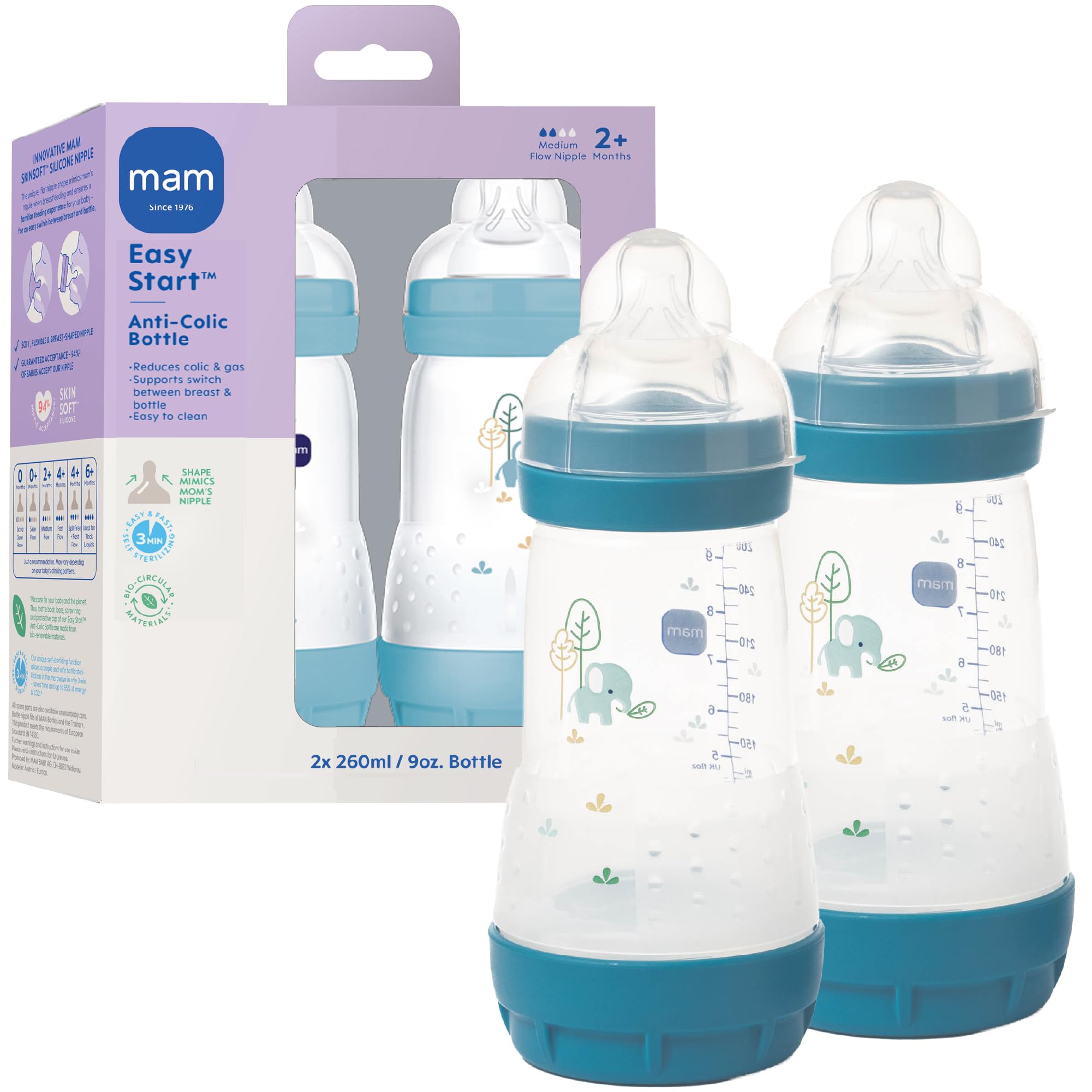
Is the MAM self-sterilizing bottle safe for formula?
Yes. Disassemble the bottle, place the parts in the sterilizing tray, add water, and microwave for three minutes. After cooling, the parts are sterile and ready for formula. This eliminates the need for a separate sterilizer and works with both powdered and ready‑to‑feed formula. Only caveat: parts must be fully dry before assembly to prevent mold in the silicone base.
Do Comotomo bottles leak when you shake formula?
They can, if the silicone insert isn’t lying completely flat inside the cap or the lid isn’t tightened evenly. The soft body makes it easy to misalign the insert during assembly. Press the insert down firmly, then screw the cap on while holding the bottle upright. Many parents find that swirling—not shaking—almost eliminates pressure‑driven leaks.