This post contains affiliate links. We may earn a small commission when you buy through our links — at no extra cost to you.
Every parent quickly learns that no baby bottle handles everything well. The most effective anti-colic systems use internal vents that require careful assembly and extra cleaning, while simpler designs often struggle with flow or leak control. This guide cuts through that trade-off by matching bottles to your baby’s feeding needs—whether you need proven gas relief or a hassle-free transition from breastfeeding. The key is recognizing that a bottle that works for one infant may frustrate another, so we focus on which features matter most for your situation.
If colic and spit-up are your main concern, vented systems deliver results but demand more cleaning. For breastfed babies, nipple shape and flow precision take priority over anti-colic complexity. The real decision is whether you want the strongest gas reduction or a bottle that won’t leak in the diaper bag.
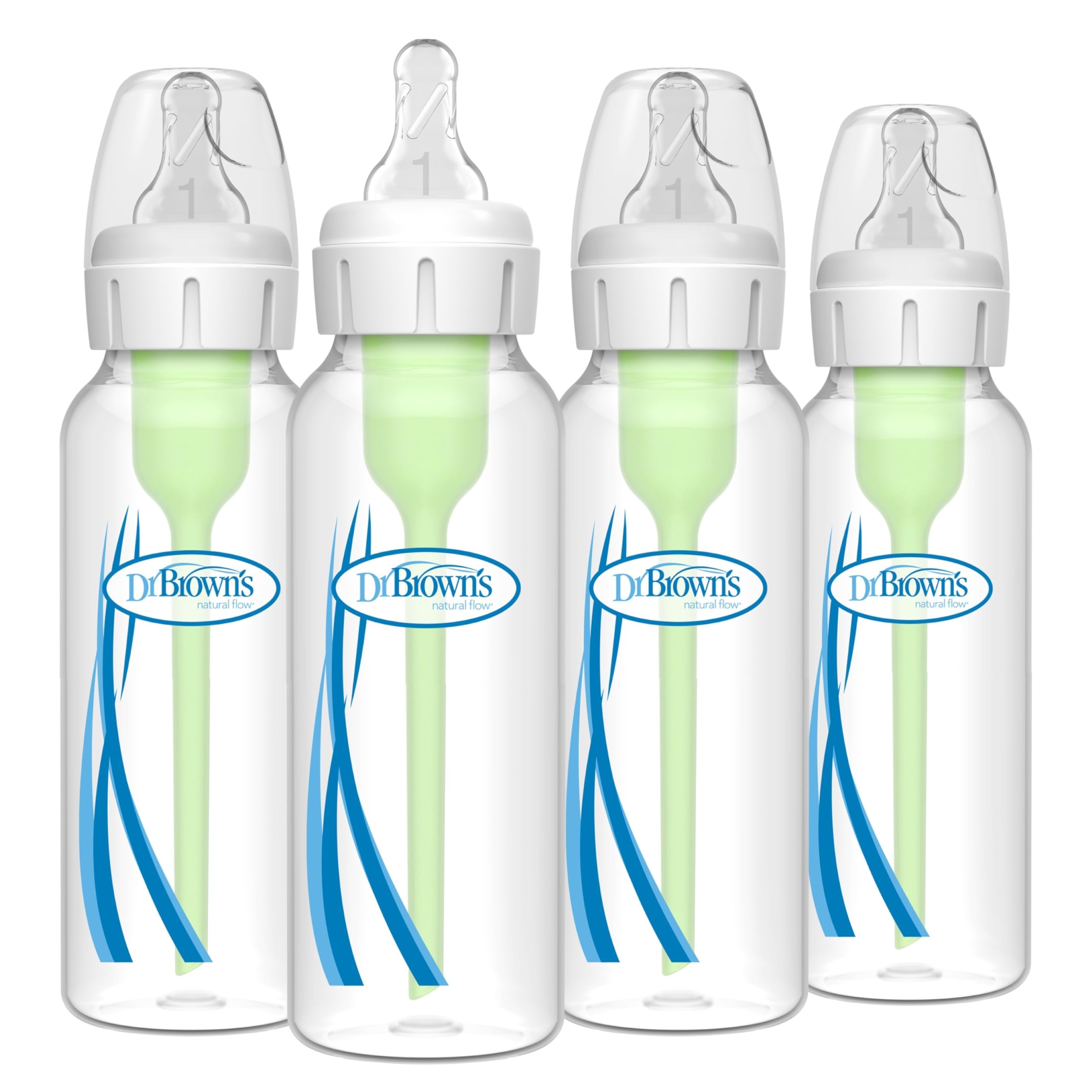


Best for Colic Relief
Dr. Brown’s Options+ 8oz
Key Features
- Anti-Colic System: Internal vent system
- Parts to Clean: Many small parts
- Nipple Flow: Slow flow L1
- Leak Resistance: Frequent leaks
- Material: BPA-free plastic
- Price: $
Dr. Brown’s Options+ consistently outperforms other anti-colic bottles in reducing gas and spit-up, based on its internal vent system that eliminates vacuum buildup and air swallowing. Parents report fewer fussy feedings and less burping compared to bottles without vents. The Level 1 slow flow nipple matches newborns’ natural sucking rhythm, and the breast-like shape eases transitions for breastfed babies — though the Philips Avent Natural offers a slightly deeper latch if that’s a priority.
The main trade-off is the cleaning routine: the vent, tube, and valve add extra parts that must be washed thoroughly and dried to prevent mold. Leaks are common when the bottle is filled above the max line or assembled incorrectly, making it less ideal for travel or daycare. For parents willing to manage the extra steps, this bottle delivers consistent anti-colic performance at a budget-friendly price.
Pros
- Reduces gas and spit-up based on widespread parent reports
- Breast-like nipple shape helps avoid nipple confusion
- Steady flow rate without gulping or vacuum buildup
Cons
- Leaks if filled near max line or assembled incorrectly
- Many small parts to clean thoroughly to avoid mold
Buy this if you need a budget-friendly, highly effective anti-colic bottle and are willing to manage extra cleaning steps. Skip it if you prioritize leak-proof convenience for travel or daycare over gas reduction.
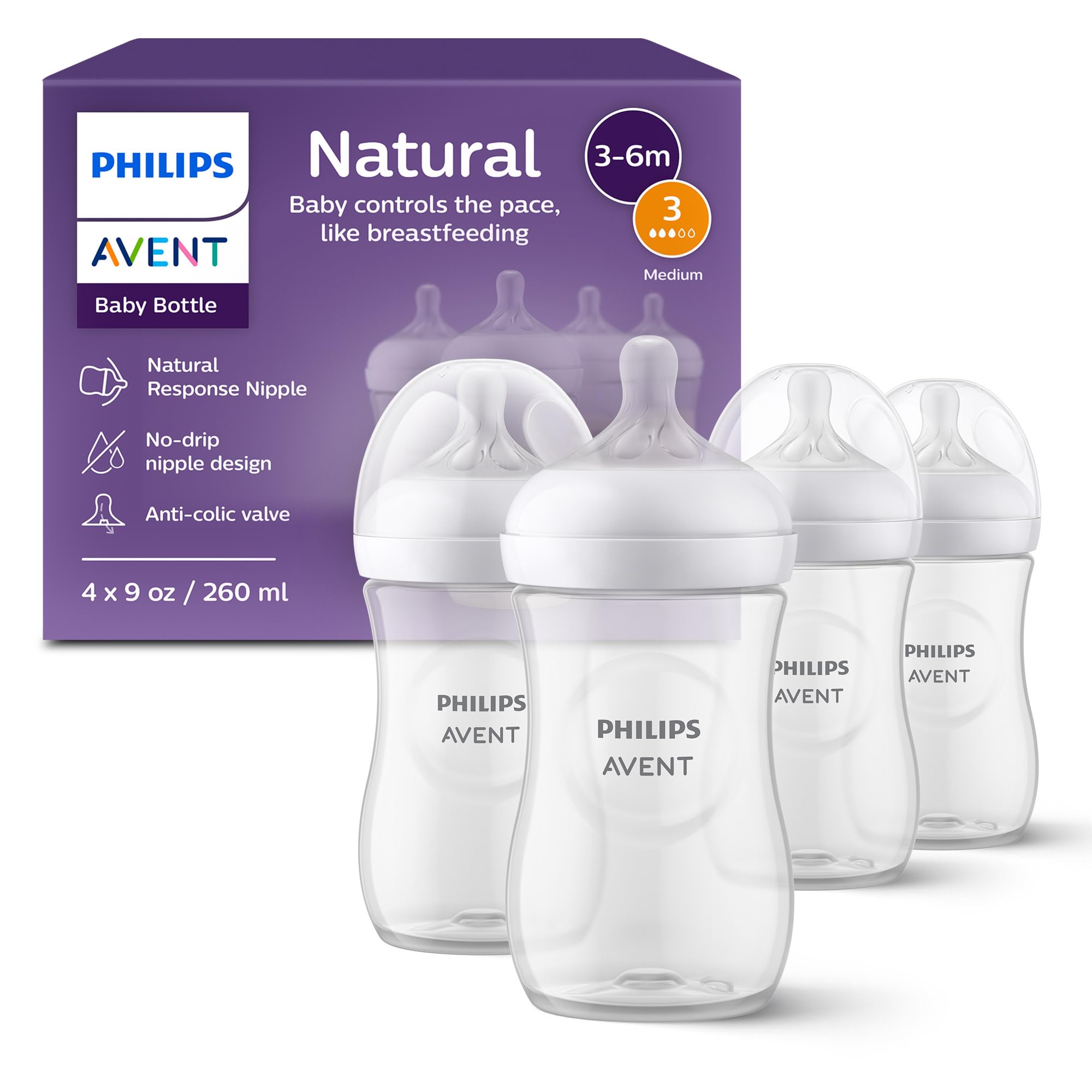
Best for Breastfeeding
Philips Avent Natural 9oz
Key Features
- Anti-Colic System: Built-in valve
- Parts to Clean: Few parts, wide neck
- Nipple Flow: Medium flow 3
- Leak Resistance: Rare leaks
- Material: BPA-free plastic
- Price: $$
Unlike the top pick’s complex vent system, the Philips Avent Natural focuses on a breast-like feeding experience: the nipple responds only to active sucking, reducing flow when baby pauses. Leak reports are rare, and the wide neck makes cleaning simple. However, the slower, responsive flow frustrates some babies who prefer a steady stream; parents may need to experiment with higher flow nipples if baby gets impatient. Best suited for breastfed babies making the switch, but less ideal for infants who already chug through a bottle quickly.
Pros
- Rarely leaks during feeding or shaking.
- Few parts and wide neck make scrubbing easy.
- Mimics breastfeeding rhythm for smoother transition.
Cons
- Flow can be too slow or inconsistent for some babies.
Buy this if your baby is moving from breast to bottle and you prioritize leak-proof performance. Skip it if your baby already feeds quickly or gets frustrated with a slower, responsive flow.
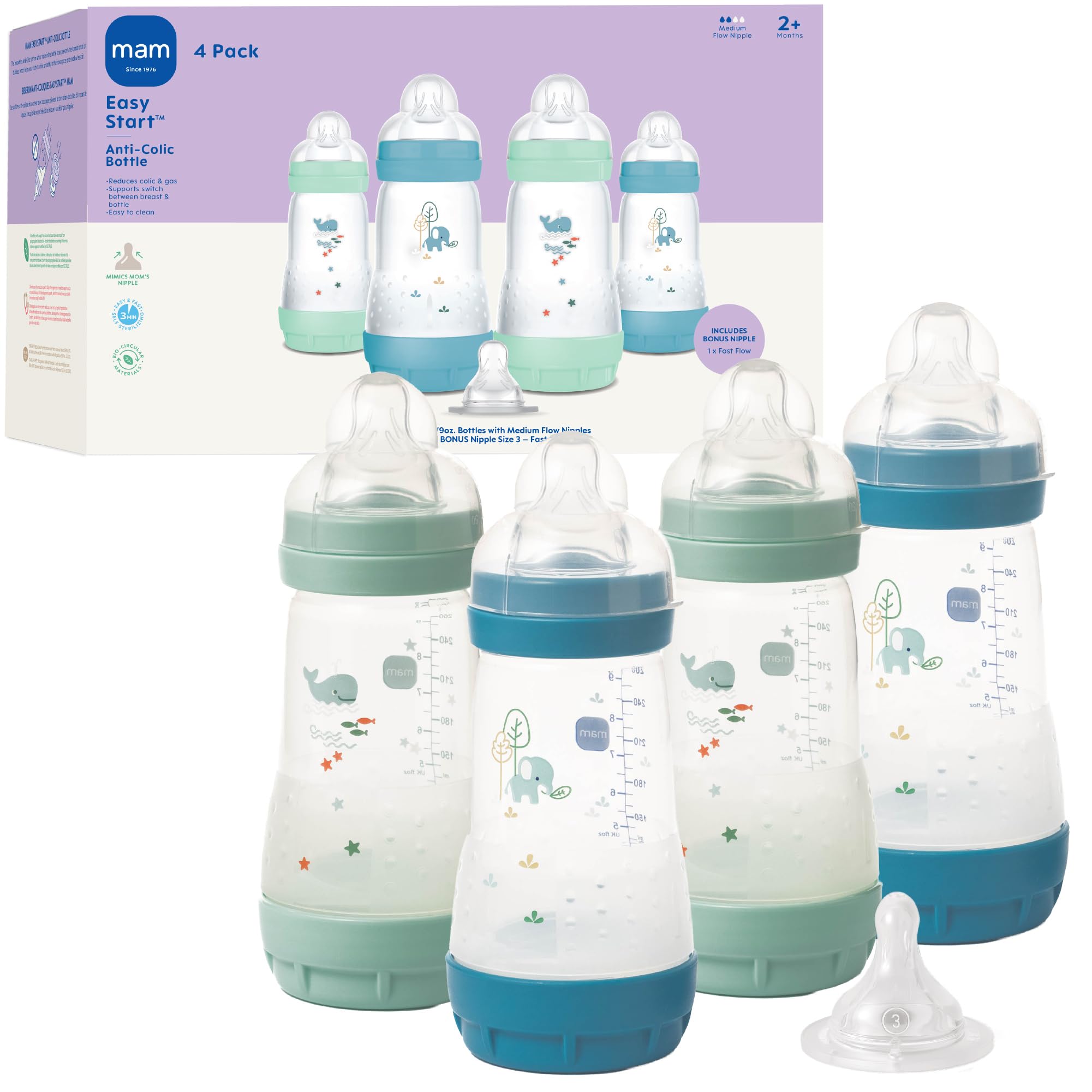
Best for Self-Sterilizing
MAM Easy Start 9oz
Key Features
- Anti-Colic System: Dual vented base
- Parts to Clean: Wide neck, separate bottom
- Nipple Flow: Medium flow
- Leak Resistance: Depends on assembly
- Material: BPA/BPS-free plastic
- Price: $$
The MAM Easy Start’s microwave self-sterilizing feature cuts cleaning time to three minutes — a clear advantage over the top pick’s more complex vent system. The dual vent base is clinically supported to reduce colic, and the wide-neck design with a separate bottom makes disassembly straightforward. However, this bottle is sensitive to assembly: leaks occur regularly if the bottom vent piece isn’t perfectly seated, and some nipples develop cracks after repeated sterilization. This bottle suits parents who prioritize quick, portable sterilization for daycare or travel and are willing to double-check assembly each time.
Pros
- Microwave self-sterilizing in 3 minutes simplifies on-the-go cleaning.
- Clinically supported anti-colic system reduces gas symptoms for many babies.
- Fully disassembles for thorough cleaning with wide neck and separate bottom.
Cons
- Leaks can occur if the bottom vent piece isn’t perfectly sealed.
- Nipples may crack after repeated microwave sterilization cycles.
Buy this if you need quick, portable sterilization for travel or daycare and want effective anti-colic support. Skip it if you dislike precise assembly to prevent leaks.
Best for Soft Silicone
Comotomo 8oz Double
Key Features
- Anti-Colic System: Dual vents
- Parts to Clean: 3 parts
- Nipple Flow: Medium flow
- Leak Resistance: Frequent leaks
- Material: Silicone
- Price: $$
Unlike the anti-colic-focused top pick, the Comotomo wins over breastfed babies with its soft, squeezable silicone that feels familiar to nursing. The wide-neck design and only three parts make cleaning quick, no tubes or vents to scrub. This bottle is ideal for babies who reject hard plastic nipples and for parents who wash bottles multiple times daily. However, the cap must be aligned perfectly to avoid leaks — a common frustration — and the cap can be tough to remove when wet, making it less reliable for outings or rushed feedings.
Pros
- Soft silicone texture helps breastfed babies transition easily.
- Only three parts – simple to wash by hand or dishwasher.
- Nipple confusion is rare, even for picky babies.
Cons
- Leaks if the cap isn’t aligned perfectly – common frustration.
- Cap can be very hard to remove, especially when wet.
Buy this if you need a soft, baby-friendly bottle for daytime use and are willing to double-check the cap seal. Skip it if you need reliable leak-proof performance for outings.
Best for Latch Support
Lansinoh Anti-Colic 8oz
Key Features
- Anti-Colic System: Air ventilation system
- Parts to Clean: 3 parts
- Nipple Flow: Medium flow
- Leak Resistance: Some leaks
- Material: BPA-free plastic
- Price: $
The Lansinoh Anti-Colic bottle stands out with its NaturalWave nipple that encourages a deep latch—a key advantage for breastfed babies. Unlike leak-proof competitors, this bottle requires careful assembly to avoid occasional leaks. The medium flow is often too fast for newborns, causing gagging if used without a slower nipple. Its popularity among lactation consultants reflects its ability to reduce nipple confusion, making it a strong runner-up to the top pick. This bottle is best for parents who prioritize latch support and easy three-part cleaning over newborn flow control and travel leak-proofing.
Pros
- NaturalWave nipple promotes a deep latch for breastfeeding babies.
- Effortless breast-to-bottle transition.
- Three simple parts for easy cleaning.
Cons
- Medium flow may cause gagging in some newborns.
- Occasional leaks when bottle is not assembled tightly.
Buy this if your baby needs a deep-latch nipple and you want a bottle that cleans quickly. Skip it if you need a slow flow for a newborn or require leak-proof bottles for travel.
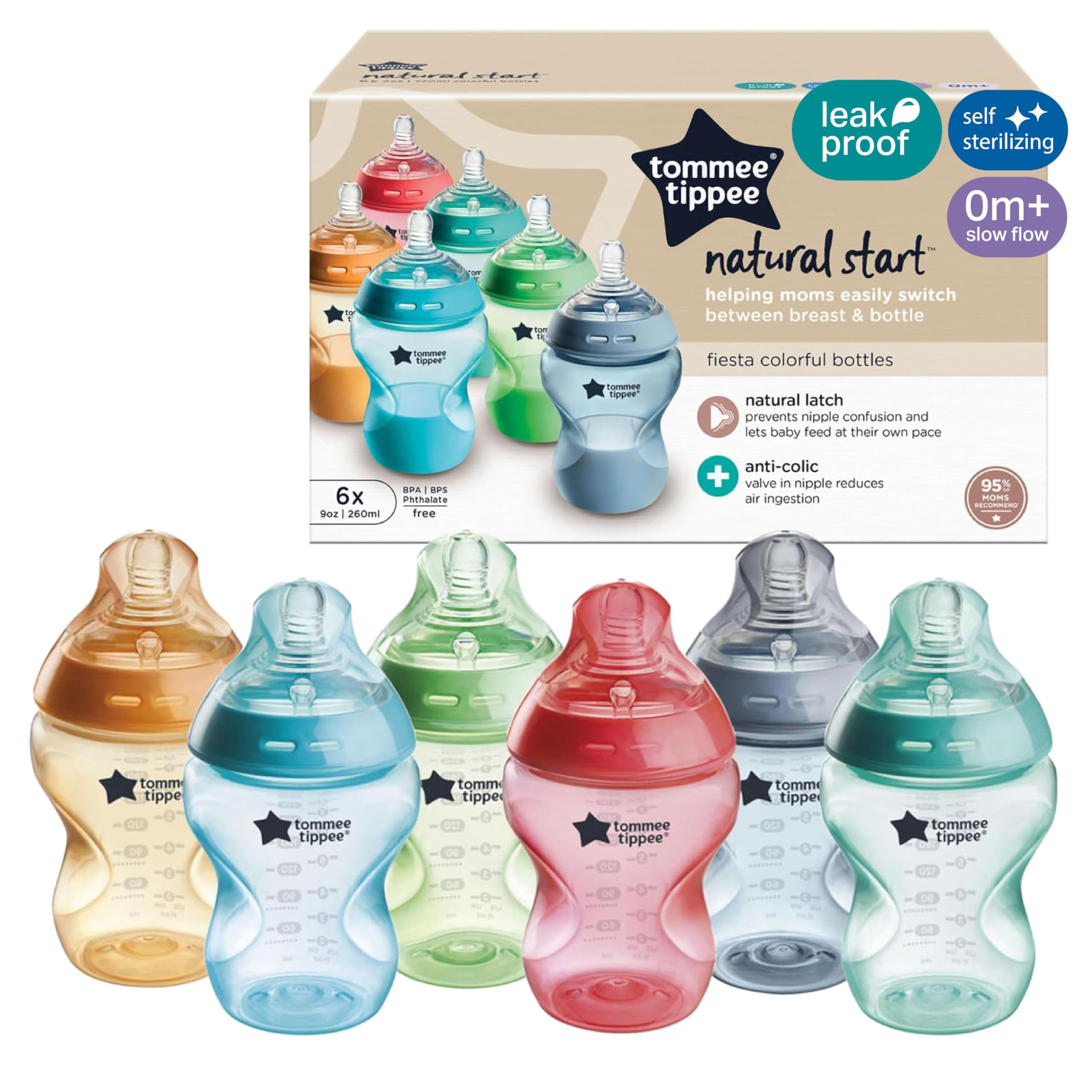
Best for Budget Pack
Tommee Tippee Natural 9oz
Key Features
- Anti-Colic System: Anti-colic valve
- Parts to Clean: Few parts, wide neck
- Nipple Flow: Slow flow
- Leak Resistance: Common leaks
- Material: BPA/BPS-free plastic
- Price: $
The Tommee Tippee Natural Start delivers the lowest per-bottle cost in this roundup, making it a practical choice for families needing a large set or daycare rotation. Colorful lids let caregivers spot each baby’s bottle at a glance. However, compared to more premium options, you trade reliability: leaks from the nipple ring are common, and the silicone nipples can collapse or lose their shape over time, with measurement markings fading. This set works best for parents who prioritize budget and organization over durability and leak-free performance.
Pros
- Six bottles at the lowest per-bottle cost save money for large households or daycare.
- Colorful lids make it easy to identify each baby’s bottle in daycare settings.
Cons
- Occasional leaks from the nipple ring during use.
- Nipples may collapse and measurement markings fade over time.
Buy this if you need a budget-friendly multi-pack for daycare and don’t mind replacing nipples over time.
Best for Anti-Colic Simpler
Philips Avent Anti-Colic 9oz

Key Features
- Anti-Colic System: AirFree vent
- Parts to Clean: Few parts
- Nipple Flow: Medium flow 2
- Leak Resistance: Rare leaks
- Material: BPA-free plastic
- Price: $$
The Philips Avent Anti-Colic bottle uses an AirFree vent that keeps the nipple full of milk, reducing air intake without the cleaning hassle of tube systems. It’s easy to clean and durable. However, the Flow 2 nipple may be slow for some babies, and the bottle lacks the natural nipple flow control that makes the Natural model better for breastfeeding transitions—key reasons it doesn’t top our list.
Pros
- AirFree vent reduces colic and gas effectively
- Easy to clean and assemble with few parts
Cons
- Flow 2 nipple may be too slow for some babies
Worth considering if you want a simple vent system and already own Philips Avent accessories, but your baby may need a faster flow.
Best for Air-Free Silicone
Boon Nursh 8oz Silicone

Key Features
- Anti-Colic System: Collapsing pouch
- Parts to Clean: 3 parts
- Nipple Flow: Medium flow
- Leak Resistance: Depends on assembly
- Material: Silicone
- Price: $$
The Boon Nursh uses a collapsing silicone pouch to remove air from milk, reducing gas without vents. The pouch rinses clean easily and babies grip the textured shell well. However, leaks occur frequently if the insert isn’t perfectly seated under the ring, making assembly precision essential. This design innovation is notable, but the leak issue prevents it from being a top contender.
Pros
- Collapsing pouch design virtually eliminates air swallowing without vents
- Silicone pouch rinses clean with no crevices for easy cleaning
Cons
- Leaks if silicone insert is not perfectly seated under the ring
Worth considering if you want an air-free silicone bottle and are willing to double-check assembly to avoid leaks.
How to Choose
The most important insight: the best baby bottle depends on whether your baby has colic or is breastfed, because no single design excels at both.
Anti-Colic System
Look for vents that separate air from milk. Internal vent systems (like those with tubes) are most effective but add cleaning time. Simpler vents built into the nipple or base work well for mild gas but may not resolve severe colic. Clinical studies support tube-style designs for reducing spit-up.
Cleaning Ease
Fewer parts mean quicker cleaning. Bottles with three pieces (nipple, ring, body) are fastest to wash and less likely to trap mold. Designs with separate vents, tubes, or bottom pieces require thorough brushing and drying. If you use a dishwasher, check that all parts are top-rack safe.
Nipple Flow and Shape
Flow rates vary widely even at the same labeled speed. Always start with a slow-flow nipple for newborns, regardless of brand. Nipple shape matters for breastfed babies: wider, softer nipples that mimic the breast often ease transition. Watch your baby’s cues—gulping or coughing means the flow is too fast.
Leak Resistance
Leaks are the top complaint across all brands. They usually result from overfilling past the max line, overtightening the cap, or misaligning vent pieces. Test each bottle by shaking over the sink before first use. Bottles with fewer parts and simple seals tend to leak less, but no design is completely leak-proof.
Material Quality
Most bottles are BPA-free plastic or silicone. Plastic is lightweight and shatterproof but can scratch and retain odors. Silicone is softer, more natural-feeling, and heat-resistant, but it may warp over time. Both are safe; choose based on baby’s preference for texture and your cleaning routine.
FAQ
Why do my Dr. Brown’s bottles leak even when I fill below the max line?
Leaks usually come from the vent tube not being fully seated or the nipple ring being too loose. Ensure the vent tube clicks into the bottom of the bottle and the nipple ring is tightened evenly. Also check that the collar is not cross-threaded. If leaks persist, try replacing the vent tube—they can wear out after several months.
Which baby bottle is easiest to clean for daycare use?
Bottles with three pieces—nipple, ring, and body—are easiest to clean. The Philips Avent Natural and Lansinoh models are top choices because they have wide openings and no hidden crevices. Avoid bottles with internal vent tubes or separate bottom pieces if you need quick, thorough cleaning between feedings.
Can I use Philips Avent bottles with a Spectra breast pump?
Yes, most Philips Avent bottles are compatible with Spectra pumps using the standard wide-neck adapter. Many parents pump directly into Avent bottles to reduce transfers. Check your pump model specifications, but the Natural and Anti-Colic lines generally fit Spectra flanges without extra adapters.
How do I stop my baby from choking on fast-flow bottle nipples?
Switch to a slower-flow nipple—most brands offer a preemie or level 1 slow flow. Pace feeding also helps: hold the bottle nearly horizontal so milk doesn’t flow by gravity, and take breaks every 20-30 seconds. If your baby still chokes, try a bottle with a natural response nipple that only releases milk when the baby actively sucks.