This post contains affiliate links. We may earn a small commission when you buy through our links — at no extra cost to you.
Many parents discover that spoons marketed as self-feeding tools fail where it counts—the bowl is too shallow, the handle too ungainly for small hands, or the anti-choke guard restricts how much food stays on the spoon while hitting your baby’s nose. The real difference-maker isn’t a flashy safety feature; it’s how confidently your baby can scoop and bring food to their mouth. This guide zeros in on spoons where grip, bowl depth, and material actually work together—helping your little one master self-feeding sooner with less frustration. From first purees to early solids, the right spoon can dramatically shorten the messy learning curve. These selections prioritize geometries that babies grasp naturally, softness that protects tender gums, and materials that stand up to daily dishwasher cycles. Whether you’re starting baby-led weaning at six months or transitioning a toddler to metal utensils, the right pick helps your child gain confidence at the table—and keep more food in their belly rather than on the floor.


Best for Parent-Led Feeding
Dr. Brown’s Soft-Tip Spoons
Key Features
- Material: Plastic, soft-tip
- Handle Design: Long handle, wide base
- Bowl Size & Depth: Standard
- Dishwasher Safe?: Yes
- Age Suitability: 4m+
- Price: Budget
Compared to the top pick, which is built for early self-feeders, Dr. Brown’s Soft-Tip Spoons are a parent-led feeding tool through and through. The ultra-soft tip cushions teething gums during spoon-feeding, and the long handle makes scooping the last bits from jars simple. Six spoons for a budget-friendly price is hard to beat for families prepping multiple meals or daycare bags; they’re dishwasher safe and stand up to daily use. The trade-off: that same long handle prevents little hands from practicing self-feeding, and the handle-heavy design means the spoon often tips out of shallow bowls. If you need a puree spoon for your baby that you control, this set hits the mark.
Pros
- Ultra-soft silicone tip is gentle on sore gums during feeding.
- Long handle reaches easily into baby food jars for the last spoonful.
- Budget-friendly 6-pack provides great value for daycare or travel.
Cons
- Handle-heavy design makes spoons tip out of shallow bowls.
- Long handle isn’t suited for babies learning to self-feed.
Buy this if you’re spoon-feeding purees and want a budget-friendly pack of ultra-soft spoons. Skip it if you need utensils that help your baby self-feed.
Best for Bendable Multi-Use
NETANY Bendable Spoons
Key Features
- Material: 100% silicone
- Handle Design: Bendable, stays in position
- Bowl Size & Depth: Standard
- Dishwasher Safe?: Yes (hand-wash rec.)
- Age Suitability: 6m+
- Price: Mid-Range
Where the top pick eliminates difficult wrist rotation with a flat pre-spoon, the NETANY set keeps the traditional bowl shape but adds a handle that bends and stays at your chosen angle. That adjustability lets parents or babies set the spoon for easier scooping without losing the familiar spoon feel. All six spoons are made of plush silicone that won’t irritate gums, and they resist stains through multiple uses. The catch: the material can develop a faint soapy aftertaste or a white film when washed in the dishwasher. Hand-washing or an occasional boil-dry sidesteps it. This makes them a practical choice for families who want a bendable rotation set and don’t mind that small manual step.
Pros
- Bendable handle stays put at chosen angle for less mess.
- Soft silicone tip soothes gums, no chewing resistance.
- Six pack minimizes washing; silicone resists stains.
Cons
- Dishwasher cycle can leave a soapy aftertaste or film.
Buy this if you want a six-pack of bendable spoons that stay angled for easier scooping and you’re fine with occasional hand-washing. Skip it if your household runs everything through the dishwasher and a soapy aftertaste would be a dealbreaker.
Best for Teething & Self-Feeding
Olababy Training Spoon
Key Features
- Material: 100% silicone
- Handle Design: Ribbed grip, flexible
- Bowl Size & Depth: Leaf-shaped, wide
- Dishwasher Safe?: Yes
- Age Suitability: 6m+
- Price: Premium
Unlike the NumNum GOOtensils’ flat pre-spoon that removes scooping entirely, the Olababy spoon leans into plush silicone softness that doubles as a teether. The leaf-shaped tip and ribbed texture are exceptionally gentle on gums, which reviewers confirm soothes chewing babies during meals. However, that same wide, flexible head can be awkward for very tiny mouths—some parents wished it were narrower for side-entry. You also get only two spoons for a premium price, making it less practical for families who need a full rotation. It’s the go-to if you prioritize teething relief over sheer scooping ease.
Pros
- Plush silicone tip eases teething pain while self-feeding.
- Ribbed handle boosts grip for early self-feeders.
- Leaf shape helps babies scoop food without wrist rotation.
Cons
- Spoon head width can be too large for very small mouths.
- Only two spoons per pack at a premium cost.
Buy this if your teething baby chews spoons and you value gum-soothing softness above all. Skip it if you need a larger set for daily rotation or have a newborn with a narrow mouth.
Best for Travel & On-The-Go
Moonkie Silicone Spoons
Key Features
- Material: 100% silicone
- Handle Design: Bendable, two sizes
- Bowl Size & Depth: Two sizes (small/large)
- Dishwasher Safe?: Yes
- Age Suitability: 6m+
- Price: Mid-Range
Unlike the flat pre-spoon design that eliminates scooping in the top pick, this set gives babies two traditional spoon sizes that work from first purees to chunkier bites. The included case slides into a diaper bag and keeps spoons clean, which is why parents who eat out frequently favor it. The trade-off is that these require the wrist rotation early self-feeders struggle with. The case latch can be finicky—it’s wise to ensure it’s fully clicked shut before tossing it in a bag. For families who travel more than they worry about that initial scooping hurdle, this set delivers practical value.
Pros
- Two sizes grow with baby from first purees to chunkier bites.
- Convenient travel case keeps spoons clean on the go.
- Soft but firm enough to stir without being floppy.
Cons
- Case latch can be finicky; may pop open if not fully clicked.
Buy this if you frequently feed on the go and want spoons that grow with your child. Skip it if the travel case is unnecessary or you prefer metal utensils.
Best for Anti-Choke Starter
UpwardBaby Anti-Choke

Key Features
- Material: Silicone
- Handle Design: Anti-choke barrier, textured
- Bowl Size & Depth: Small, shallow
- Dishwasher Safe?: Yes
- Age Suitability: 6-9 months
- Price: Mid-Range
The built-in barrier calms choking anxiety during early self-feeding, and the textured tips double as a teether. The spoon bowl is purposefully tiny, holding very little food, which makes it frustrating for babies past 9 months. The guard can also bump the nose if a parent does the feeding.
Pros
- Barrier limits deep insertion, easing choking worries during early BLW.
- Silicone textured tips massage sore gums while self-feeding.
Cons
- Tiny bowl holds very little, limiting use beyond 9 months.
Worth considering if you’re starting BLW with a 6-month-old and want an extra safety net that soothes gums, accepting you’ll need a larger spoon soon.
Best for Stylish Transition
VITEVER Toddler Utensils

Key Features
- Material: Stainless steel/silicone
- Handle Design: Non-slip silicone, guard
- Bowl Size & Depth: Standard metal spoon
- Dishwasher Safe?: Yes (dry immediately)
- Age Suitability: 18m+
- Price: Mid-Range
With a sleek, adult-inspired look and easy-grip silicone handles, these utensils appeal to older toddlers eager for “real” silverware. A built-in safety guard limits over-insertion. However, the metal can develop rust if not dried promptly, and the firm spoon is less forgiving than silicone for beginner self-feeders.
Pros
- Modern, adult-like design that toddlers love.
- Easy-grip silicone handle stays put in small hands.
Cons
- Can develop rust spots if left wet; hand-drying recommended.
Worth considering if you want stylish metal utensils for a toddler who has graduated from silicone, and you’re willing to towel-dry after washing.
Best for Safe Transition
WeeSprout Toddler Utensils
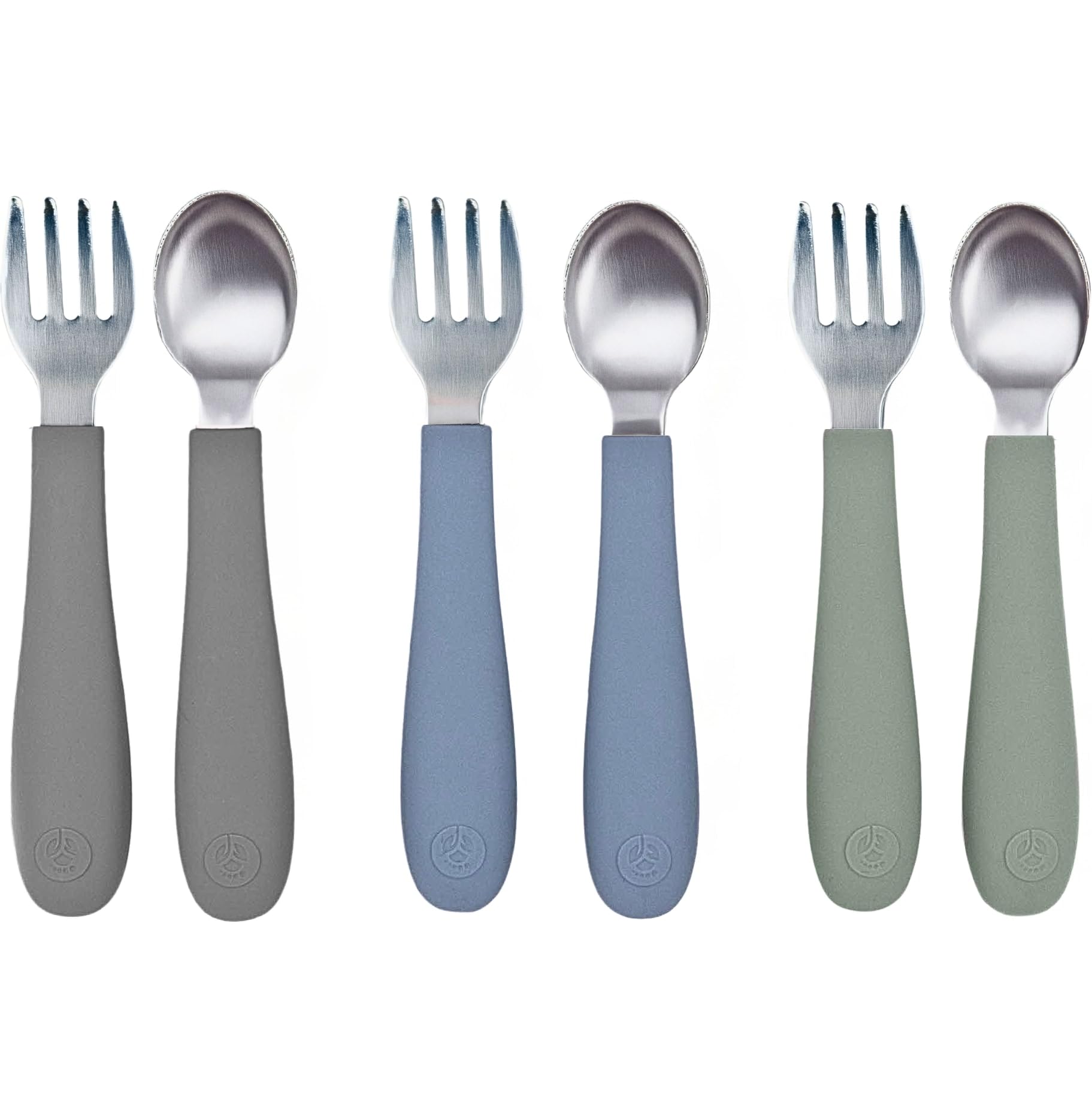
Key Features
- Material: Stainless steel/silicone
- Handle Design: Thick silicone grips
- Bowl Size & Depth: Standard metal spoon
- Dishwasher Safe?: Yes
- Age Suitability: 12-24 months
- Price: Mid-Range
Thick silicone handles and rounded fork tines deliver safety for toddlers moving past silicone spoons. The non-slip grip holds fast in messy hands, and the stainless steel survives the dishwasher repeatedly. The fork’s bluntness won’t spear meat or raw vegetables—expect to pre-cut firmer foods. It’s a high-quality transitional set with a clear use-case boundary.
Pros
- Silicone handles stay grippy even when wet or messy.
- Stainless steel heads withstand repeated dishwasher cycles without rust or wear.
Cons
- Blunt fork tines make spearing firm foods difficult.
Worth considering if you’re introducing metal utensils to a 12-24 month old and value safety above piercing power—best for soft and pre-cut foods. Skip it if your child regularly eats whole pieces of meat or crunchy raw vegetables.
Best for Flexible Feeding
WeeSprout First Step
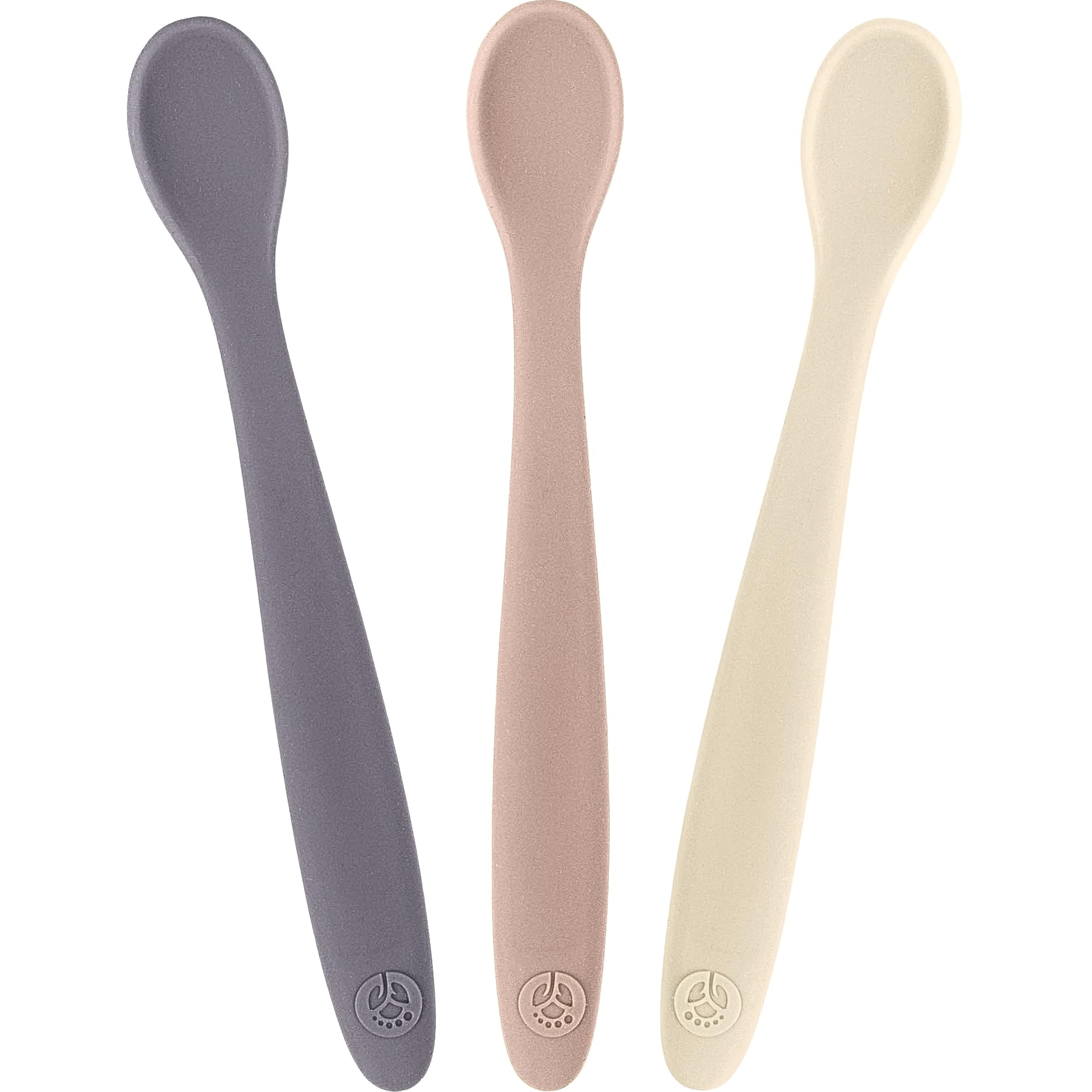
Key Features
- Material: Silicone
- Handle Design: Bendable long handle
- Bowl Size & Depth: Standard soft tip
- Dishwasher Safe?: Yes
- Age Suitability: 4m+
- Price: Mid-Range
The bendable handle and travel case make these spoons handy for assisted feeding. The soft silicone tip is gentle, and the three spoons ensure you always have a clean one. But the long handle can be tricky for young self-feeders — better suited once baby has some hand-mouth coordination rather than as a first spoon.
Pros
- Bendable handle adjusts to any angle for comfortable assisted feeding.
- Soft silicone tip is gentle on gums and durable through daily use.
Cons
- Long handle can be tricky for young babies to maneuver independently.
Worth considering if you primarily spoon-feed your baby or need a travel-ready set for an older self-feeder. Skip it for a first self-feeding spoon when baby is just learning to hold utensils.
Best for Budget Metal Start
PandaEar Toddler Utensils

Key Features
- Material: Stainless steel/silicone
- Handle Design: Silicone, anti-choke guard
- Bowl Size & Depth: Standard metal spoon
- Dishwasher Safe?: Yes
- Age Suitability: 12m+
- Price: Budget
The choke guard and rounded edges offer reassurance when toddlers first use metal utensils, and the textured silicone handles are easy for small hands to grip. Stainless steel heads manage yogurt and soft pasta well. The silicone handle can separate from the metal after months of use, keeping this a short-term starter rather than a long-lasting set.
Pros
- Choke guard prevents the utensil from going too deep.
- Easy for toddlers to grip independently.
Cons
- Silicone handle may detach from the metal after extended use.
Worth considering if you want a budget-friendly first metal utensil set with a choke guard and can accept that it is a short-term solution, not a multi-year investment.
Best for Temp Safety
Dr. Brown’s TempCheck

Key Features
- Material: Silicone tip, plastic
- Handle Design: Long, color-change sensor
- Bowl Size & Depth: Soft silicone tip
- Dishwasher Safe?: Yes
- Age Suitability: 4m+
- Price: Budget
The color-change tip helps new parents avoid overheated bites, turning white above 105°F. The silicone tip is soft, and the long handle simplifies spoon-feeding from jars. Just know the temperature sensor may fade or discolor over many wash cycles, and the handle isn’t suited for babies learning to self-feed.
Pros
- Color-change tip signals when food exceeds 105°F, reducing mouth-burn risk.
- Soft silicone tip is gentle on baby’s gums.
Cons
- Color-change layer can fade or stain over time, especially with dishwasher use.
- Long handle isn’t designed for self-feeding; best for parent-led spoon-feeding.
Worth considering if you’re spoon-feeding purees to a young infant and want a quick temp check, but skip if you need a spoon that lasts through self-feeding or dishwasher-heavy use.
Best for Choke Guard Design
Munchkin Scoop Trainer

Key Features
- Material: Silicone
- Handle Design: Wide, choke guard/rest
- Bowl Size & Depth: Wide, deep
- Dishwasher Safe?: Yes
- Age Suitability: 6m+
- Price: Premium
The Munchkin Scoop Trainer’s choke guard keeps the spoon off the table and reduces choking risk; the soft silicone soothes gums. However, clear silicone permanently stains from orange/red foods, and the wide bowl sometimes gags small mouths. Combined with a premium price, this makes the set feel short-lived.
Pros
- Choke guard elevates spoon off table and adds a safety barrier during teething.
- Soft, flexible silicone tip massages sore gums and is gentle on new teeth.
Cons
- Clear silicone is prone to permanent discoloration from orange and red purees.
Worth considering for parents who prioritize a choke guard above all else and don’t mind eventual discoloration from common baby foods.
How to Choose
The difference between a spoon that your baby can use independently and one that ends up on the floor often comes down to handle thickness and bowl depth—not flashy anti-choke marketing.
Material
Silicone spoons are softer and gentler on gums, ideal for teething babies and first self-feeding attempts. Stainless steel with silicone handles offer durability for toddlers but can be too hard for sensitive gums and require immediate drying to prevent rust. Choose based on your child’s age and sensitivity.
Handle Design
For self-feeding, look for short, chunky handles that fit small hands, with textures or bumps for grip. Anti-choke guards can add safety but may restrict how much food stays on the spoon or hit the baby’s nose when parent-fed. Handle length matters most: too long makes it hard for babies to maneuver.
Bowl Size & Depth
A shallow bowl helps early self-feeders because food stays in place as they bring the spoon to their mouth, reducing frustration. Too deep and baby will struggle to scoop; too wide can cause gagging. For purees, a slight lip is fine, but for solid foods, a deeper, narrower bowl works better.
Dishwasher Safety
Most silicone spoons are labeled dishwasher-safe, but some develop a soapy aftertaste or discoloration after repeated cycles. Stainless steel utensils may rust if not dried right away. Hand-washing can extend the life of spoons significantly, especially those with crevices that trap food.
Age Suitability
Infant spoons (4-6 months) focus on softness and parent-feeding. At 6-12 months, self-feeding spoons need ergonomic grips and shallow bowls. For toddlers 12+ months, metal utensils with safety guards help transition to independent eating without sharp tines.
FAQ
Why do baby silicone spoons stain even after washing?
Silicone is porous and can absorb pigments from foods like carrots and tomato sauce. The staining doesn’t affect safety, but it’s hard to remove. Soaking in a solution of baking soda or sunlight can help, but some spoons, especially clear silicone, stain permanently. If appearance matters, choose darker colors.
How do I choose between silicone and stainless steel spoons for self-feeding?
Silicone spoons are soft and forgiving for gums, making them the go-to for babies under 12 months learning to self-feed. Stainless steel spoons with silicone grips are more durable and better for toddlers who have developed better oral control, but the metal can hurt if chewed aggressively. Match to your child’s age and gum sensitivity.
Is a choke guard really necessary on self-feeding baby spoons?
A choke guard can prevent a spoon from going too deep into the mouth, reducing gagging for some babies, but it often limits how much food the spoon holds and can bump the nose during parent feeding. Many successful self-feeding spoons skip the guard and focus on bowl depth and handle length to naturally limit deep insertion. It’s a feature, not a must-have.
Why does my baby gag when using a self-feeding spoon?
Gagging often occurs when the spoon bowl is too wide or too deep for your baby’s mouth, or when the spoon is inserted too far. A spoon with a narrow, shallow bowl and a built-in barrier like sensory bumps can help control how much goes in. It’s usually a sign to try a smaller or differently shaped spoon head.
How do I prevent my baby’s silicone spoons from tasting like soap?
Silicone can absorb strong-tasting detergents during dishwasher cycles, leaving a soapy residue. Hand-washing with mild, unscented soap and thorough rinsing usually prevents the issue. If your spoons already taste off, boiling them for a few minutes can remove the flavor. For brands prone to this, sticking to hand-washing is safest.