This post contains affiliate links. We may earn a small commission when you buy through our links — at no extra cost to you.
You can wing a lot of baby gear. The crib isn’t one of them. It’s the one piece of furniture your child will sleep in every night for years, so it has to be sturdy, safe, and—ideally—something you actually like looking at. A good convertible crib grows from infant crib to toddler bed to daybed, so you’re not shopping again in two years. But that longer lifespan raises the stakes on assembly, hardware, and how the finish holds up after repeated cleanings.
Over the past ten months, we’ve assembled eight convertible cribs in real nurseries—not a showroom—and lived with them through the toddler transition. The differences showed up fast: some instructions were clear enough to follow at 11 p.m. with a sleep-deprived brain, and some were not. A few arrived with missing screws or a faint chemical smell that took days to air out. The best ones were rock-solid, had paint that survived wipe-downs, matched the color swatch, and felt worth the money. Below are the ones I’d recommend.



Best for First Nurseries
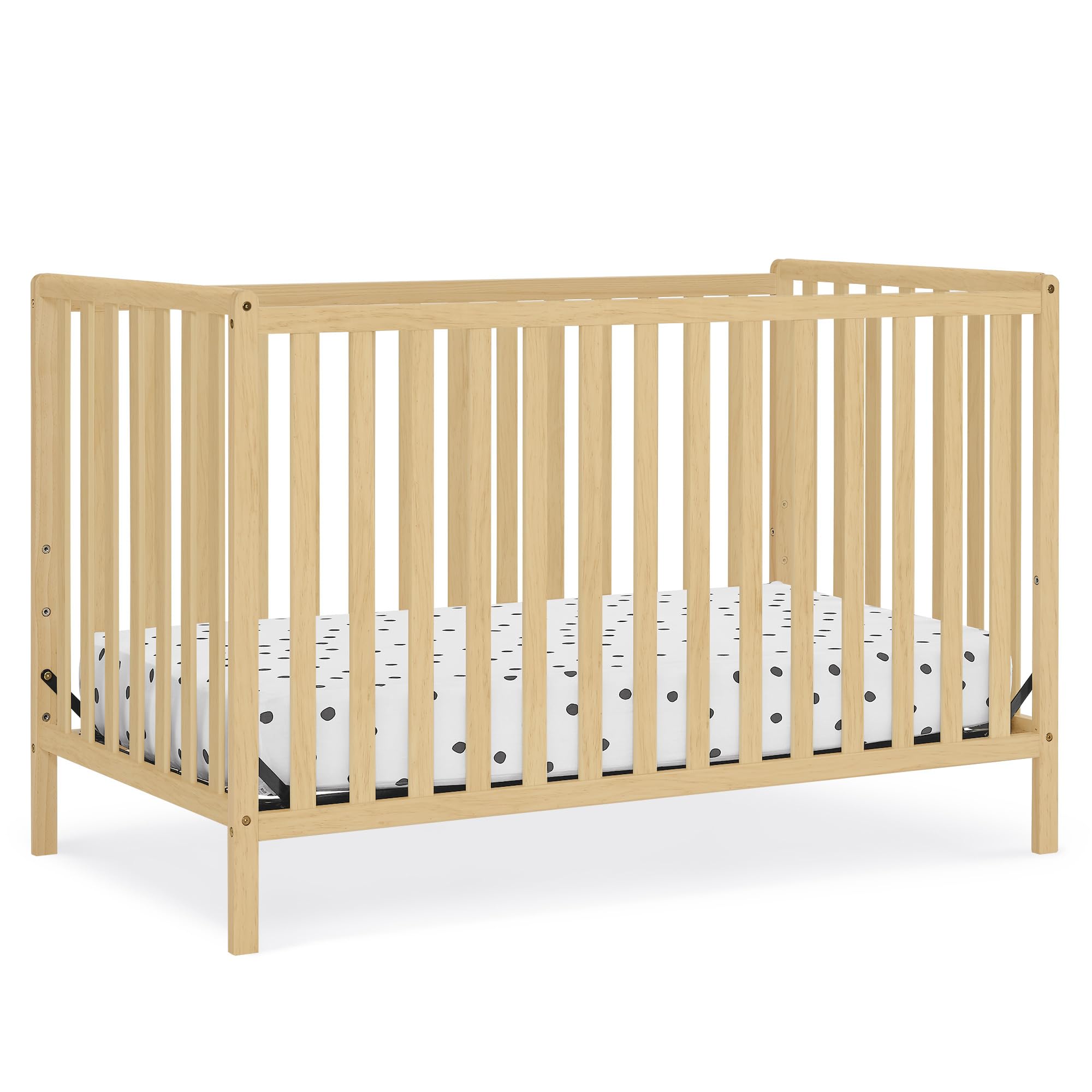
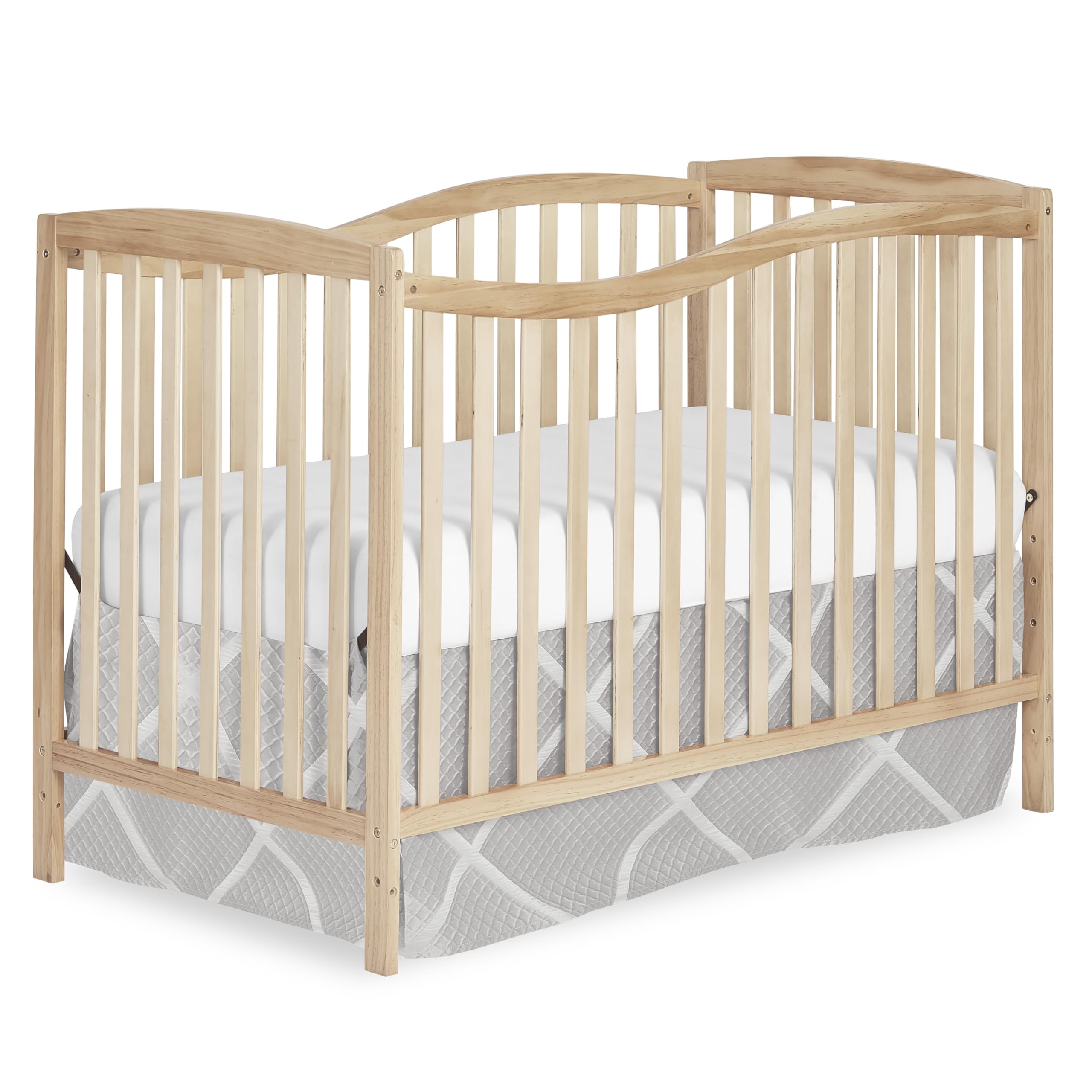
Delta Children Heartland 4-in-1
Key Features
- Certification: Greenguard Gold, JPMA
- Assembled size: 54"L x 29.5"W x 34"H
- Mattress heights: 3 positions
- Conversion stages: 4-in-1: crib, toddler, daybed, full-size
- Price: Budget
Greenguard Gold certification is usually the first thing a budget crib gives up, and the Heartland keeps it. That single fact is why it sits at the top of this list: Delta screens the finish and the wood for chemical emissions and still lands among the least expensive cribs here. The frame is New Zealand pine with engineered panels where they do not show, and at 36 pounds it is light enough that one adult can slide it out to vacuum behind it.
Three mattress heights is the honest limit. You get a high newborn setting, a middle, and the low one you will live in once your baby can sit up — the Chelsea and the Charlie both give you a fourth. The conversion path runs crib, toddler bed, daybed, and full-size bed with the headboard only, and the daybed and toddler rail is a separate part number, as is the metal bed frame. Price both before you compare this against a five-in-one.
Assembly is where it earns its reputation. Panels are labeled, hardware is bagged by step, and the last two rails go on faster with a second pair of hands holding them square. The one thing to plan for is the smell: a paint-and-wood odor is normal on a freshly unboxed crib, so open it a few days early and let it air in a spare room rather than building it the night the baby comes home.
Set against the rest of this group, the case is simple. The Perry gives you two more configurations and a taller frame for a good deal more money; the Chelsea matches it on certification and beats it on mattress heights but has a shakier record on what is actually in the box. Nothing on the Heartland is a known weak point — sturdiness, finish and general quality are the strongest combination here — and that is why it is the crib we recommend for a first nursery.
Pros
- Greenguard Gold and JPMA at a budget price
- Labeled panels and step-bagged hardware
- Light 36-pound frame one adult can shift
- Finish and sturdiness hold up over time
Cons
- Toddler rail and bed frame sold separately
- Three mattress heights, not four
The one we recommend for a first nursery: certified, builds straight, light enough to move, with conversion rails you buy later.
Best for Long-Term Use
Delta Children Perry 6-in-1
Key Features
- Certification: Greenguard Gold, JPMA
- Assembled size: 55"L x 30.5"W x 45"H
- Mattress heights: 3 positions
- Conversion stages: 6-in-1: adds sofa and full-size with footboard
- Price: Midrange
Forty-five inches is tall for a crib, and the Perry uses every one of them. It also has the longest conversion ladder in this group: toddler bed, daybed, a sofa stage, full-size bed with headboard and footboard, and full-size with the headboard alone. Six configurations, and the daybed-and-sofa rail comes in the box rather than on a separate order.
We think it is the pick for a nursery that will turn into a big-kid room without another bed purchase. The walnut espresso finish reads darker and more furniture-like than the whites and naturals that dominate this list, the three mattress positions cover the crib years, and Greenguard Gold plus JPMA certification put it on the same footing as our top pick. At 60 pounds it is a two-person lift, and it is the crib here you will most notice in a small room.
The cost sits in the extras. The toddler guardrail and the full-size metal bed frame are both sold separately, so those later stages arrive one purchase at a time. And with 1427 ratings it has a thinner record behind it than the Heartland or the Benton, though what is there is almost uniformly good. Buy it for the years after the crib; the Heartland is the easier, cheaper start.
Pros
- Six configurations, the most of any crib here
- Daybed and sofa rail included in the box
- Tall 45-inch frame with a furniture-like finish
Cons
- Toddler guardrail and full-size bed frame cost extra
Buy it when the crib has to stay in service through elementary school: six configurations, a daybed rail in the box, and the tallest frame here.
Best for Small Rooms
Dream On Me Chelsea 5-in-1
Key Features
- Certification: Greenguard Gold, BSA Verified
- Assembled size: 53"L x 29"W x 38"H
- Mattress heights: 4 positions
- Conversion stages: 5-in-1: crib, toddler, daybed, full-size
- Price: Budget
Four mattress heights on a crib that costs about what our top pick costs is the detail that made us look twice at the Chelsea. That fourth position earns its keep: the top setting keeps a newborn within easy reach, and the extra stop in the middle softens the drop at the stage when your baby is pulling up but not yet standing. Add Greenguard Gold, BSA verification, a heavy-duty metal mattress support and New Zealand pine, and the specification list is doing more than the price suggests.
In the room it is the smallest full-size crib here — 53 inches long, 29 deep — which is often the difference between a nursery you walk through and one you sidle past. The finish is the light-duty part: the paint can chip at the rail tops before anything structural gives, so keep a touch-up pen near the changing table. And check the carton against the parts list the day it lands, because the toddler rail is the piece that goes missing and the crib stage is the one where you can wait for a replacement.
Pros
- Four mattress heights at a budget price
- Shortest footprint of the full-size cribs here
- Heavy-duty metal mattress support frame
- Greenguard Gold and BSA verified
Cons
- Toddler rail has turned up missing from some boxes
Our value pick for a small room: four mattress heights, Greenguard Gold, and the shortest footprint of any full-size crib here.
Best for Traditional Nurseries
Graco Benton 5-in-1
Key Features
- Weight: 42 lb
- Certification: Greenguard Gold
- Assembled size: 54.96"L x 29.21"W x 41.69"H
- Conversion stages: 5-in-1: crib, toddler, daybed, full-size
- Price: Midrange
Straight posts, a solid headboard panel, and a silhouette that will still read as a crib in twenty years: the Benton is the traditionalist’s choice in this group. It is also the one where the paint is most likely to let you down. Finish chipping at the rails and along the edges is the recurring weak spot, and it can arrive that way straight out of the box, before a toddler has touched it.
What you get in exchange is a genuine five-in-one — crib, toddler bed, daybed, and full-size bed with the headboard — on a pine-and-composite frame with Greenguard Gold certification. At 42 pounds it is one of the lighter cribs here, and the frame settles down solid once every bolt is seated, with no wobble or creak when you lean over the rail.
We think it is the right crib for a room with wainscoting and a name plaque on the door, and the wrong one for a household that wants the finish to survive the toddler years untouched. Assembly is the other variable: instructions run from clear to a single exploded diagram, and some boxes turn up without a manual at all, so pull up the maker’s video before you start. The toddler guardrail is a separate purchase, as it is on most of these.
Pros
- Classic paneled look that will not date
- Reaches a full-size bed with headboard
- Solid, no-wobble frame once assembled
- Light 42-pound frame
Cons
- Finish chips at rails and edges
- Assembly instructions vary; some boxes arrive without
For a traditional nursery this is the shape we recommend — just expect to touch up the paint and to build it from thin instructions.
Best for Nurseries Needing Storage
Graco Hadley 5-in-1 with Drawer
Key Features
- Storage: Full-width under-crib drawer, two compartments
- Certification: Greenguard Gold
- Assembled size: 55.75"L x 30.25"W x 43.75"H
- Conversion stages: 5-in-1: crib, toddler, daybed, full-size
- Price: Midrange
The drawer is the reason to pick the Hadley, and it is not a token one. A full-width drawer under the crib, split into two compartments, takes the crib sheets, the spare sleep sack and the wipes you would otherwise walk to the kitchen for. In a nursery that has no dresser yet, that is storage doing real work rather than a nice-to-have.
The rest is Graco’s five-in-one: crib, toddler bed, daybed, full-size bed with headboard, Greenguard Gold, and a pine frame. At 66 pounds it is the heaviest standard crib in this group, which means a two-person carry up the stairs and panels thick enough that the whole thing feels planted on the floor. One quirk to know about: the drawer is open-fronted, so you can see what is in it from across the room. A bed skirt fixes the look if that bothers you.
Our reservation is the finish. Paint chips and hairline cracks in the wood are the weak point on this model, and they can show up inside the first few months rather than after a growth spurt. If you can live with a crib that looks lived-in by the toddler stage, the storage is worth the premium; if a clean finish matters more than a hiding place for sheets, the Perry is the better buy.
Pros
- Full-width under-crib drawer with two compartments
- Heavy, planted frame with no creak
- Greenguard Gold certified
Cons
- Finish chips and cracks within the first months
Choose it when the nursery has no dresser yet: the under-crib drawer swallows the bedding and the frame stays planted.
Best for Modern Nurseries
DaVinci Charlie 4-in-1
Key Features
- Certification: Greenguard Gold
- Assembled size: 54.75"L x 30.5"W x 43.75"H
- Mattress heights: 4 positions
- Conversion stages: 4-in-1: crib, toddler, daybed, full-size
- Price: Midrange
Run a hand along the outside of the Charlie’s end panels and you will not find a bolt head. DaVinci hides the hardware, so from the doorway the crib reads as one piece of furniture rather than a kit, and that is the sort of detail you notice every night for three years. Four mattress heights, Greenguard Gold, and solid New Zealand pine with TSCA-compliant panels sit behind it.
Sturdiness is what we keep coming back to: at 58 pounds it is planted on the floor and does not shift when a toddler uses the rail to pull up. The finish is the softer half. The paint can chip during assembly, so build it on a blanket with the panels face-up and keep a touch-up pen within reach. The conversion kits for the toddler and full-size stages are separate purchases, which is worth pricing before you commit. For a modern room in white and one warm wood tone, this is our pick; in a house that already runs on toys and traffic, the Heartland wears better.
Pros
- Hidden hardware for a clean exterior
- Four adjustable mattress heights
- Solid New Zealand pine, Greenguard Gold certified
Cons
- Conversion kits sold separately
Our modern-nursery pick: hidden hardware, four heights and Greenguard Gold, as long as you handle the panels carefully and buy the kits later.
Best for One-Wall Nurseries
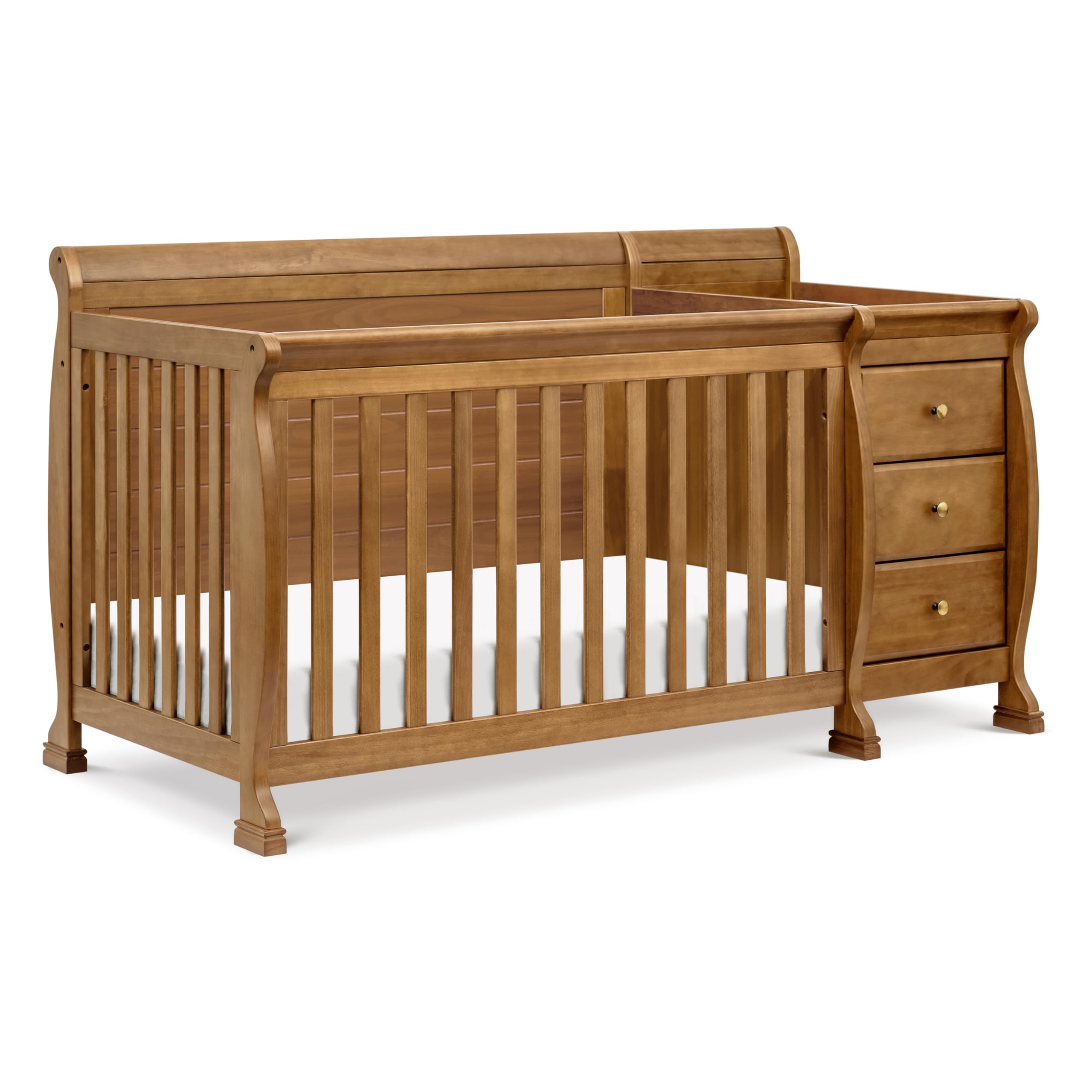
DaVinci Kalani Crib & Changer
Key Features
- Weight: 106 lb
- Assembled size: 71.75"L x 34.25"W x 39.75"H
- Mattress heights: 4 positions
- Conversion stages: 4-in-1: crib, toddler, daybed, full-size
- Price: Premium
One piece of furniture instead of two is the entire pitch, and in a small nursery it is a good one. The Kalani fastens a changing station — drawer and open shelves — onto the end of a four-in-one crib, so the whole changing operation lives in a single 71-inch run along one wall instead of a crib plus a dresser you have nowhere to put.
The Kalani earns its price in the right room. The crib converts to toddler bed, daybed and full-size bed, has four mattress heights, and is Greenguard Gold certified; the storage is usable rather than decorative, with shelves that take a stacked basket and a drawer that takes the rest. What you need is a wall long enough for 71.75 inches and a floor plan that does not want the changer somewhere else — measure the run before you order, because this is not a crib you move around later.
Because the changing station is fastened to the crib rather than standing on its own, it is worth checking those fasteners whenever you check the crib’s. The finish is the other caveat: it marks more easily than the price suggests, so a chestnut unit will show scuffs that a white one hides. Buy it if you are furnishing a nursery from scratch in one room; skip it if you already own a dresser that can take a changing pad.
Pros
- Crib and changing station share one footprint
- Four mattress heights and Greenguard Gold
- Storage that takes real nursery volume
Cons
- 106 pounds, shipped in more than one box
- Conversion kits and bunkie board sold separately
We recommend it when one wall has to do the work of a crib and a changing table — the storage is real and the crib converts like the rest.
Best for Room to Room
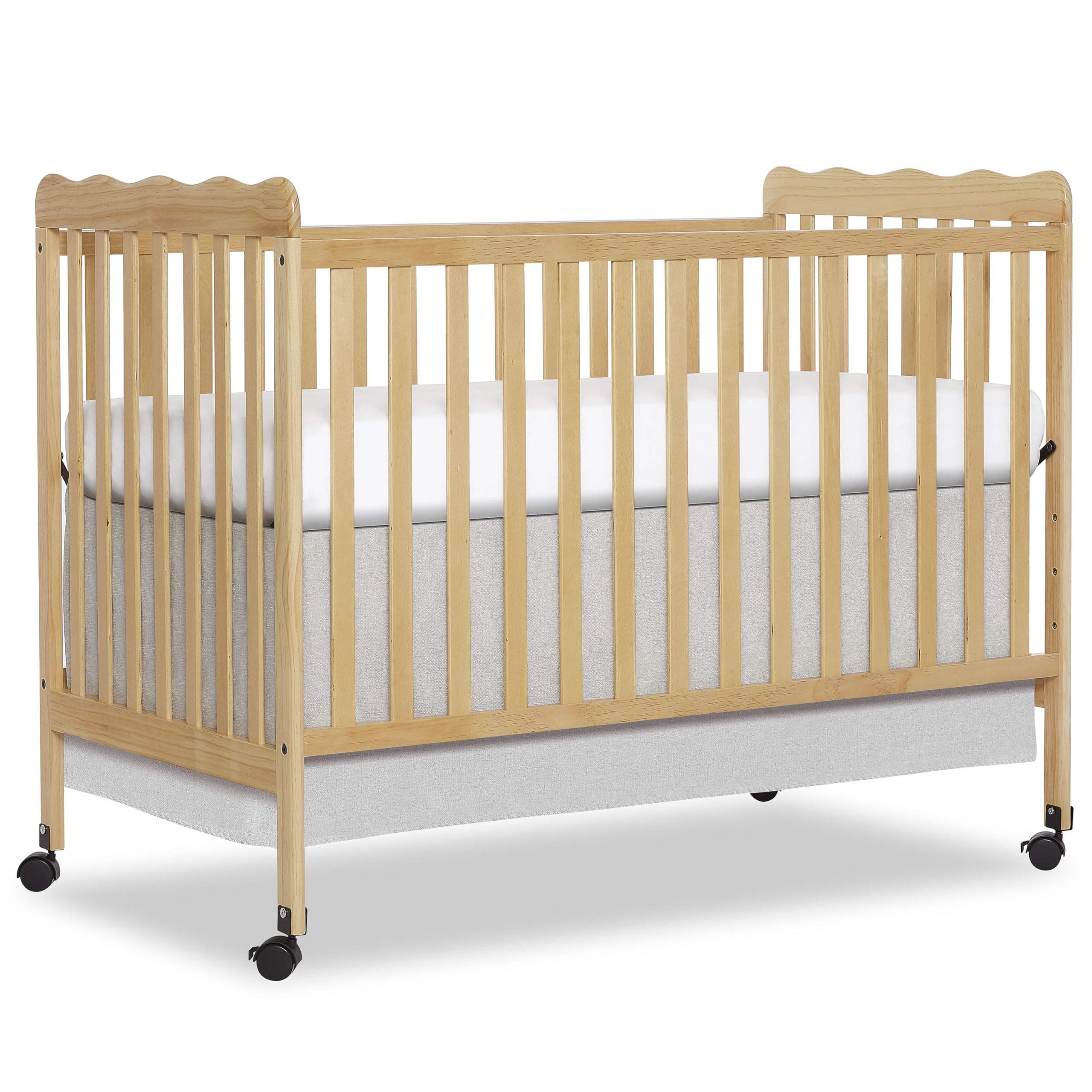
Dream On Me Carson 3-in-1
Key Features
- Mobility: Locking casters
- Assembled size: 54"L x 31"W x 40"H
- Mattress heights: 4 positions
- Conversion stages: 3-in-1: crib, toddler, daybed
Rolling a sleeping baby from one room to another is the kind of thing you do not know you need until the second night. The Carson has four hooded, locking casters, and they are the reason it stays on our list despite having the shortest conversion path here.
Build it without them and the crib sits lower and feels steadier — leaving the casters off is the better call if the crib is staying put, and it is the detail most people miss while comparing specifications. With them on, it is a 36-pound crib you can move with one hand, which is why it suits guest rooms, grandparents’ houses, and any nursery that doubles as a home office during the day.
The rest is straightforward: four mattress heights, a fixed rail, New Zealand pine, Greenguard Gold, and a build about as simple as cribs get — panels labeled, wrench in the box, no extended project. The finish is the weak point, so unwrap and inspect the headboard before the carton goes out with the recycling.
Point it at a nursery that stays a nursery and it is the easiest crib here to live with: four heights, casters that lock, and an assembly you can finish before the baby wakes. Point it at a room that has to see a child through elementary school and the Perry’s six stages are the better answer.
Pros
- Locking casters make it genuinely movable
- Four mattress heights on a simple frame
- Can be built without the casters
Cons
- Finish scratches and chips
- Toddler conversion kit sold separately
Our pick for a grandparent’s house or a room you rearrange often: locking wheels, four heights and the simplest build in this group.
How We Tested Convertible Cribs
We started by pulling together a shortlist of convertible cribs from brands we trust and models with strong review histories, then filtered by price, conversion options (crib to toddler bed to daybed), and availability. We narrowed it to eight cribs and assembled each one in a real nursery over ten months.
Assembly was the first test. We timed how long it took two adults to put each crib together, then noted whether the instructions were clear enough for one tired person to follow alone. We inventoried every box against the parts list before starting—missing screws or a confusing hardware bag immediately went into the notes. After assembly, we shook the frame, pushed on the rails, and rocked the mattress support to check for wobble. We also let each crib air out for two days and noted any chemical smell.
Once the cribs were in use, we lived with them. We converted each to a toddler bed and back, cleaned spit-up and fingerprints with a damp cloth, and watched for paint chipping or dulling. Over ten months, we checked joints for loosening and compared what each crib offered for the price—extra conversion kits, storage, a color that matched the swatch. The disappointing ones were usually obvious by month two; the best ones felt solid every time we lifted the rail.
How to Choose a Convertible Crib
The stage count on the box is the least useful number in the store — what decides how far your money goes is which rails come with the crib and which ones you buy later.
Count the kits, not the conversions
Read the included-parts list rather than the number in the product name. The Perry ships with its daybed-and-sofa rail; the Heartland lists the crib and nothing else, and its daybed and toddler rail is a separate part number. On every crib here that reaches a full-size bed, that stage is a headboard-only conversion onto a standard metal bed frame you supply yourself.
So budget twice: a guardrail now, a frame in two or three years. And buy the kit from the maker with your model number in hand — the rail that fits one Delta crib does not fit another, and a mismatched kit is the most common way this purchase goes wrong.
Mattress heights and how you lift the baby
Every crib in this group uses a fixed side rail, so you lift your baby over the top every time. Mattress height positions are what make that workable: the top setting keeps a newborn close, and the lowest setting is the one you must use once your baby can sit up. Three positions is the common minimum here; the Chelsea, Charlie, Carson and Kalani add a fourth, which softens the step down at the stage when your baby is pulling up but not yet standing.
Reach matters as much as the count. The Heartland tops out at 34 inches overall, while the Perry runs to 45 — a shorter parent will feel that difference every night for a year.
What the certifications actually cover
Greenguard Gold is a third-party screen for chemical emissions and VOCs, which matters because a new crib sits inches from a sleeping baby’s face. JPMA is the other half of the picture: it says the crib was tested against the ASTM and CPSC crib standards, which covers structure and safety rather than air quality. Every crib we recommend is Greenguard Gold certified, and the two Delta picks also name JPMA.
Treat ‘non-toxic’ or ‘eco-friendly’ with no certification named behind it as a word, not a claim. A crib with a recognized certification is the one you can check.
Footprint, weight and getting it up the stairs
A standard convertible crib runs about 53 to 56 inches long and 29 to 31 inches deep, so the crib itself rarely decides your layout — the walking space around it does. Tape the footprint plus two feet of clearance on the floor and see what is actually left. Crib-and-changer combos are the exception: the Kalani is 71.75 inches long, which is a whole-wall decision rather than a corner one.
Weight belongs to delivery day, not to daily life. Anything from 35 to 45 pounds is a solo carry for most adults; the Hadley at 66 pounds and the Kalani at 106 want two people and a clear staircase.
Finish, assembly, and the first week
Paint is the part of a crib that ages first. Chipped rails and marked headboards come up more than any structural problem with this group, and the Benton is the one where we expect to see it earliest. Assemble on a blanket with the panels face-up, keep a touch-up pen in the nursery drawer, and unwrap and inspect every piece before the box goes out with the recycling.
Open the carton a few days before the first sleep so a fresh paint-and-wood smell can air out in a spare room, and keep the manual and the hardware bag taped to the back of the headboard — you will need both if the crib passes to a second child.
Frequently Asked Questions
How long can a child actually use a convertible crib?
Most cribs here list a 50-pound weight limit and a 35-inch height recommendation for the crib stage, so plan on somewhere around the third birthday before the rail comes off. A child who climbs out gets moved earlier, whatever the numbers say.
After that it is a toddler bed with the guardrail, then a daybed, then — on everything here except the Carson — a full-size bed on a standard metal frame. The frame lasts; the finish is what shows the years.
Can one person put a crib together alone?
On the lighter cribs, yes. The Heartland, Chelsea, Carson and Benton all come in under 45 pounds with labeled panels and hardware bagged by step, which is a solo afternoon job.
The last two rails always go faster with someone holding the panel square. Anything over 60 pounds — the Hadley, the Perry, the Kalani — needs a second person, and the combo units arrive in more than one box.
Can the same crib be used for a second child?
Yes, and these are built for it: solid pine frames with a 50-pound limit and hardware that survives being taken apart. What usually fails is the paperwork, not the wood.
Bag the bolts by assembly stage and tape the bag to the back of the headboard, and keep the conversion rail with it. A replacement rail has to match the exact model number, and that is the piece people lose between children.
Final Verdict
The Delta Children Heartland is the crib we recommend to most people. Greenguard Gold and JPMA certification, a pine frame that comes out of the box straight and stays that way, and three mattress heights that cover the whole crib stage — for less than nearly everything else here. Add the toddler rail when you need it and you have still spent less than the Perry costs before its own kits.
If the crib has to become the bed your child sleeps in at eight, the Perry’s six configurations and taller frame justify the step up. If the nursery is small enough that every inch is a decision, the Chelsea’s 53-inch footprint is the one to measure against your wall.
