This post contains affiliate links. We may earn a small commission when you buy through our links — at no extra cost to you.
Every anti-colic bottle promises less gas, but the reality is a trade-off: the most effective vent systems require meticulous assembly and multiple parts to clean. Simpler designs cut cleaning time but often deliver milder colic relief. The right choice depends on whether you prioritise maximum symptom reduction or daily convenience.
This guide cuts through the marketing to show exactly what each vent design does differently — and what that means for your time and your baby’s comfort. You’ll see which bottles deliver on their claims without turning feeding into a chore, and where to compromise if you’re short on patience for small parts.



Best for Colicky Newborns
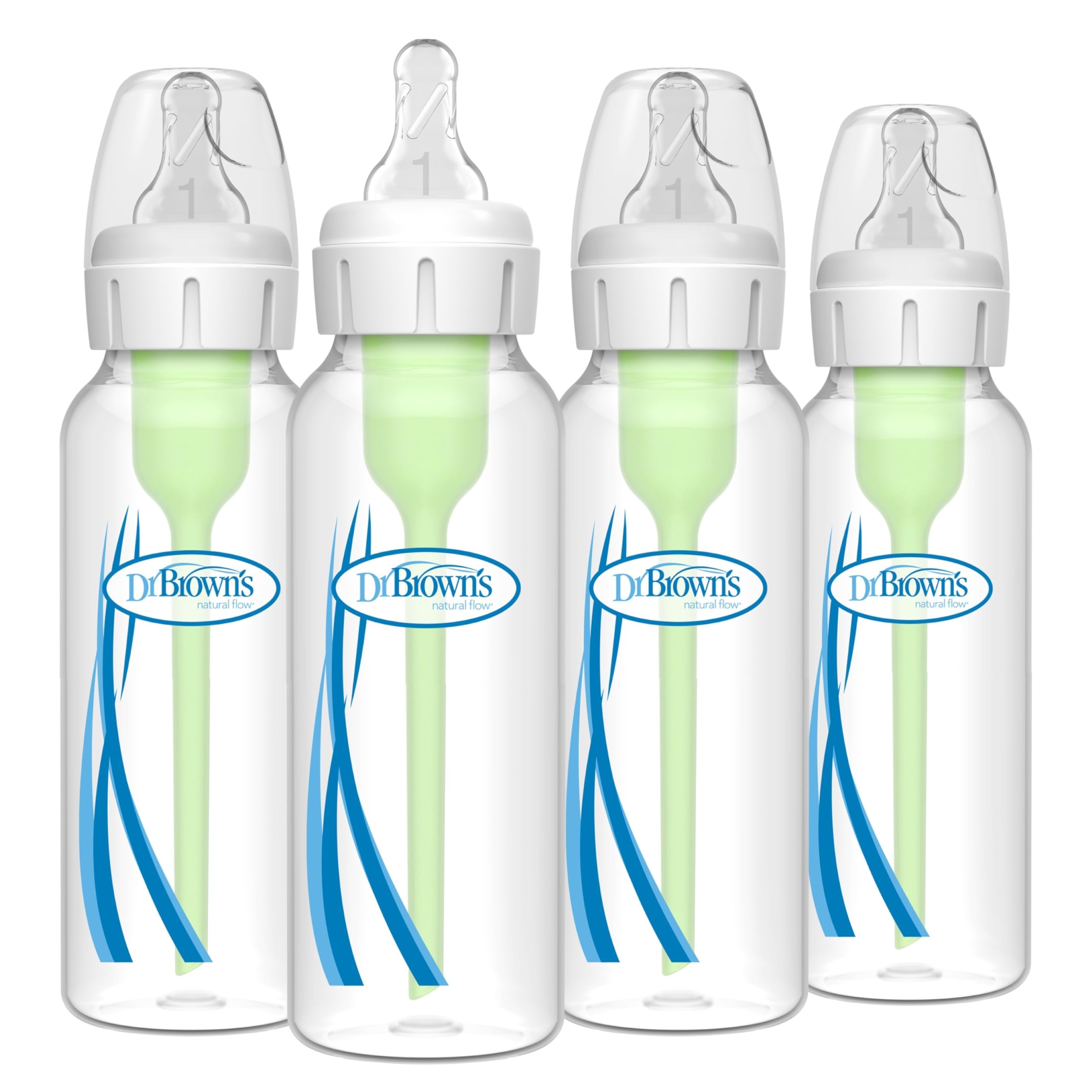
Dr. Brown’s Narrow 8oz 4-Pack
Key Features
- Anti-Colic System: Internal vent system
- Parts Count: 5 pieces
- Nipple Flow: Slow (Level 1)
- Material: BPA-free plastic
- Leak Resistance: Low (user error)
- Price: Mid-Range
The internal vent system actively prevents air from mixing with milk, reducing colic symptoms and mimicking the flow of breastfeeding. At level 1 slow flow, newborns feed without gulping air. The vent can be removed for older babies, extending the bottle’s lifespan – a design detail many parents appreciate.
This bottle suits families who prioritize maximum colic relief over convenience. However, the 5-piece assembly requires thorough cleaning, and leaks may happen if the bottle is overfilled or assembled too quickly. It’s not ideal for on-the-go parents who need a quick-prep bottle.
Pros
- Clinically backed anti-colic system reduces gas and fussiness.
- Flow rate stays steady and vacuum-free, similar to breastfeeding.
- Removable vent extends usability as baby grows.
Cons
- Five pieces per bottle require disassembly and cleaning after each use.
- Leaks can occur if the vent isn’t seated correctly or bottle is overfilled.
Buy this if your newborn has colic or gas and you’re ready to invest extra cleaning time for effective relief. Skip it if you need a simple, quick-prep bottle for on-the-go feeding.
Best for Breastfeeding Transition
Comotomo 8oz 2-Pack
Key Features
- Anti-Colic System: Dual vent in nipple
- Parts Count: 3 pieces
- Nipple Flow: Medium (0-6 mo)
- Material: Silicone + plastic
- Leak Resistance: Low (assembly)
- Price: Mid-Range
Compared to the top pick’s 5-part vent system, the Comotomo’s 3-part design and wide neck make cleaning notably faster. The soft silicone body helps breastfed babies latch easily, but the default medium flow can be too fast for newborns — plan to buy slow-flow nipples separately. Assembly precision is key; a slightly loose collar can cause occasional leaking. This bottle suits parents who value straightforward cleaning and a breast-like feel over the most aggressive colic reduction.
Pros
- Wide neck and 3-part design make cleaning faster and more thorough.
- Soft silicone nipple helps breastfed babies latch naturally.
Cons
- Leaking can occur if the collar is not assembled perfectly.
- Default medium flow may cause choking in very young newborns; consider slower nipples.
Buy this if you want the easiest-to-clean bottle that breastfed babies accept immediately, and you’re willing to adjust flow for newborns.
Best for Budget-Conscious Parents
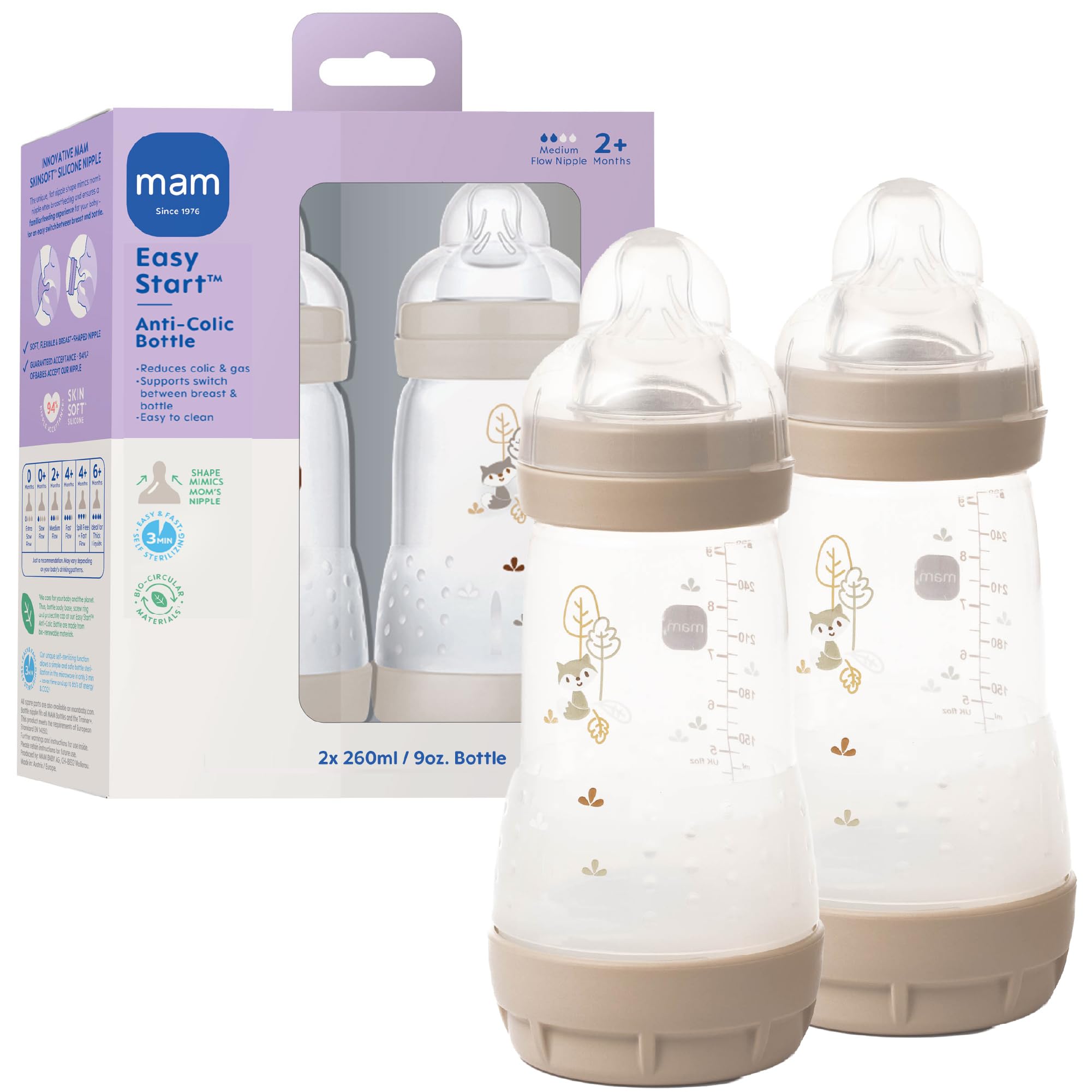
MAM Easy Start 9oz 2-Pack
Key Features
- Anti-Colic System: Dual vented base
- Parts Count: 4 pieces
- Nipple Flow: Medium (default)
- Material: Bio-circular plastic
- Leak Resistance: Low (tightness)
- Price: Budget
The MAM’s key advantage is its microwave self-sterilization (3 minutes) and dual-vented base that reduces colic. However, unlike simpler three-part bottles, this one has four parts that must be aligned precisely—especially the bottom vent—to avoid leaks. The default medium flow works well for babies 2+ months but is too fast for newborns, requiring a separate slower nipple purchase. It’s best for budget-conscious parents who prioritize quick sterilization and proven colic relief, and are willing to check assembly each time.
Pros
- Microwave self-sterilization in 3 minutes saves time and hassle.
- Dual-vented base clinically shown to reduce colic in 80% of babies.
- Easy to clean and reassemble with only four parts.
Cons
- Leaks if bottom vent or screw ring is not tightened precisely.
- Medium flow default is too fast for newborns; slower nipples must be bought separately.
Buy this if you want a budget-friendly bottle that self-sterilizes and reduces colic, and you don’t mind precise assembly and buying separate slow-flow nipples for newborns.
Best for Breastfed Babies
Lansinoh 8oz 3-Pack
Key Features
- Anti-Colic System: Air ventilation nipple
- Parts Count: 3 pieces
- Nipple Flow: Medium
- Material: BPA-free plastic
- Leak Resistance: Low (some units)
- Price: Mid-Range
The Lansinoh’s triangular nipple encourages a deep latch similar to breastfeeding, making it a strong choice for nursing moms returning to work. The medium flow rate can overwhelm newborns (buy slow flow nipples separately), and some units may leak if assembly isn’t precise. This bottle suits parents who prioritize a breast-like feel and easy cleanup over maximum colic reduction.
Pros
- Lactation consultant recommended; breastfed babies take to it easily
- Minimal parts make cleaning simple
Cons
- Medium flow is too fast for newborns; requires separate slow flow nipple
- Occasional leakage if not assembled with care
Buy this if you want a breastfeeding-friendly bottle with a deep latch and easy cleaning. Skip it if your newborn needs a slow flow or you can’t tolerate any leaks.
Best for Upright Feeding
Philips Avent AirFree 9oz 4-Pack
Key Features
- Anti-Colic System: AirFree vent
- Parts Count: 4 pieces
- Nipple Flow: Flow 2 (medium)
- Material: BPA-free plastic
- Leak Resistance: Medium (vent alignment)
- Price: Mid-Range
The Philips Avent AirFree uses a vent that keeps the nipple full even when feeding upright — a meaningful difference from bottles that require angled feeding to avoid air intake. This also lowers ear infection risk for prone babies. The trade-off vs. collapsible pouch designs: assembly precision matters. The default Flow 2 nipple is medium-paced; newborns needing a slower flow will require separate Flow 1 nipples. Occasional leaks occur if the vent isn’t snapped in fully. Best for parents who want a simple 4-piece bottle that supports upright feeding without extra parts or a steep learning curve.
Pros
- AirFree vent significantly reduces air intake and colic symptoms.
- Few parts and dishwasher-safe construction make cleaning simple.
- Designed for upright feeding, lowering ear infection risk.
Cons
- Medium flow (Flow 2) may be too fast for newborns; slower nipples sold separately.
- Occasional leaking if the vent is not inserted correctly.
Buy this if you want to feed your baby upright and reduce ear infection risk with a simple, gas-reducing vent. Skip it if your newborn needs an extra-slow flow or you prefer a bottle with a traditional angled design.
Best for Air-Free Feeding
Boon Nursh 8oz Silicone
Key Features
- Anti-Colic System: Collapsible silicone pouch
- Parts Count: 3 pieces
- Nipple Flow: Medium
- Material: Silicone + plastic shell
- Leak Resistance: Low (pouch seating)
- Price: Mid-Range
Unlike the top pick’s internal vent system, the Boon Nursh uses a collapsing silicone pouch that simply doesn’t let air mix with the milk — a design that makes cleaning a breeze (97% of mentions praise the easy rinse) and gives older babies a wide, easy-to-grip bottle. The trade-off is assembly precision: if the pouch rim isn’t seated perfectly, the bottle leaks (46% positive mention rate for leaks points to a real minority issue). The medium flow nipple is too fast for most newborns, so you’ll need to buy a preemie nipple separately for younger infants.
Pros
- Collapsible pouch prevents air ingestion, significantly reducing gas
- Silicone interior rinses clean with minimal effort
- Wide, textured silicone body gives babies an independent grip
Cons
- Leaks if the silicone pouch rim is not perfectly aligned in the shell
- Default medium flow is too fast for newborns; slow flow nipple not included
Buy this if you prioritize zero-plastic milk contact and easy cleaning, and your baby is old enough for a medium flow. Skip it if you need a newborn-ready bottle or prefer a leak-proof design with less assembly fuss.
Best for Avoiding Plastic
Dr. Brown’s Glass 4oz 2-Pack
Key Features
- Anti-Colic System: Internal vent system
- Parts Count: 5 pieces
- Nipple Flow: Slow (Level 1)
- Material: Borosilicate glass
- Leak Resistance: Low (same as plastic)
- Price: Budget
The glass material eliminates concerns about microplastics while retaining the same internal vent system that makes Dr. Brown’s narrow bottles effective for reducing colic. The 4-ounce size suits newborns, and the borosilicate glass stands up to temperature changes. However, the glass is heavier than plastic, and breakage is possible if dropped (though rare). As with the plastic version, leaking can occur if the assembly isn’t precise. This bottle is best for parents who prioritize glass over plastic and need a small, slow-flow option for a newborn.
Pros
- Glass material eliminates microplastic concerns in baby feeding.
- Internal vent system reduces colic symptoms effectively.
Cons
- Leaking can occur if the vent and nipple are not assembled precisely.
- Heavier than plastic; glass can break if dropped (though rare).
Buy this if you want a glass bottle with anti-colic benefits for a newborn. Skip it if you need a lightweight bottle or worry about breakage.
Best for Budget 6-Pack
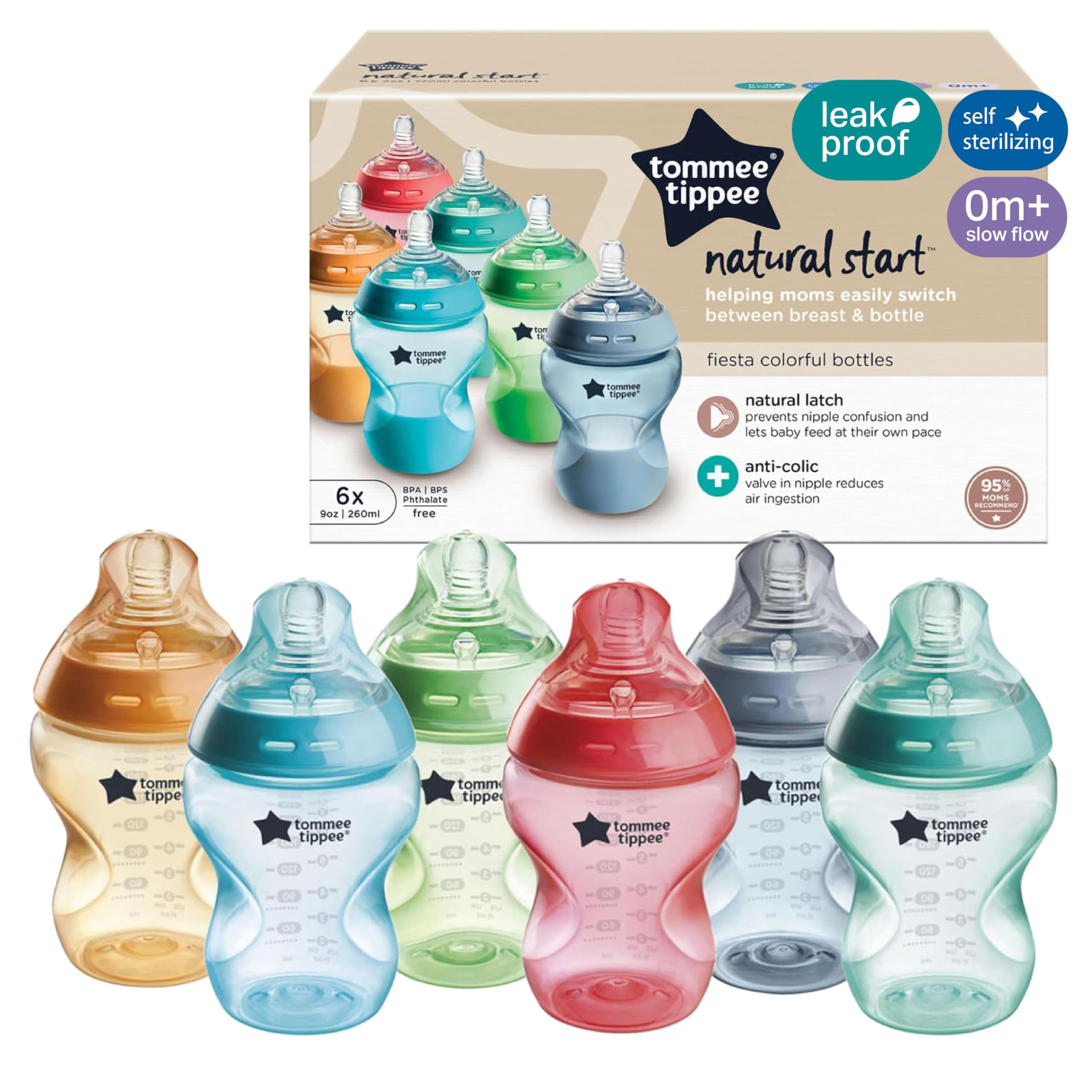
Tommee Tippee Natural Start 6-Pack
Key Features
- Anti-Colic System: Nipple vent system
- Parts Count: 3 pieces
- Nipple Flow: Slow
- Material: BPA-free plastic
- Leak Resistance: Low (assembly)
- Price: Mid-Range
This set delivers a low per-bottle cost and bottles that clean easily. However, the nipple can collapse during feeding and bottles may leak if the ring isn’t tightened exactly. Those issues prevent it from being a higher recommendation.
Pros
- Six bottles at a budget-friendly per-unit price.
- Wide mouth makes bottle cleaning quick and thorough.
Cons
- Nipple may collapse during feeding and bottles can leak if assembly is off.
Worth considering if you need an affordable, color-coded set for daycare or multiple caregivers and can accept occasional nipple collapse and leakage.
How to Choose
The anti-colic system’s complexity directly determines both colic reduction performance and daily cleaning effort.
Anti-Colic Mechanism Type
Internal vent systems (like Dr. Brown’s) physically separate air from milk, offering the strongest clinical data but adding parts. Vented nipples or bases (MAM, Comotomo) simplify cleaning but may be less effective for severe colic. Collapsible pouches (Boon) eliminate air entirely with minimal parts, though assembly precision matters.
Number of Parts to Clean
Fewer parts mean faster washing and less chance of misassembly. Bottles with 3 pieces (Comotomo, Lansinoh, Boon) are easiest; 5-piece systems (Dr. Brown’s) require thorough scrubbing of vents and straws. Consider how many bottles you’ll sterilise daily before choosing.
Nipple Flow Speed
Newborns need a true slow flow to avoid choking. Many bottles ship with medium flow nipples that are too fast for babies under 2 months. Check if slow flow nipples are sold separately or included – this can add cost and delay.
Material
Plastic is lightweight and shatterproof but raises microplastic concerns. Glass (borosilicate) is inert and heat-resistant but heavier and breakable. Silicone offers a middle ground – soft, durable, and easy to clean – but may wear faster. Match material to your baby’s age and your handling habits.
Leak Resistance
Nearly all anti-colic bottles leak if not assembled perfectly. Vents, inserts, and rings must be aligned and tightened. Bottles with fewer parts or self-aligning designs (some MAM, Philips Avent) are more forgiving. A simple water test before first use saves frustration.
FAQ
Why do anti-colic baby bottles leak?
Leaks usually come from incomplete assembly – vents not fully seated, rings not tightened enough, or bottles overfilled past the vent line. Some designs are more forgiving than others: bottles with fewer parts (Comotomo, Boon) leak less often, while multi-part systems (Dr. Brown’s) demand precise alignment. Run a water test before first use to identify assembly errors.
How to stop Dr. Brown’s bottles from leaking?
Ensure the vent insert is pushed fully into the nipple sleeve until it clicks, then screw the ring on until it stops – no tighter. Fill no higher than the internal vent line (about 8 oz mark). If leaking persists, check that the straw is not bent or missing. These steps resolve the vast majority of leakage complaints.
Are silicone baby bottles better than plastic for colic?
Silicone bottles (Comotomo, Boon) use different venting mechanisms that are often easier to clean, but they don’t inherently reduce colic more than plastic. The material matters for safety and feel, not gas reduction. For colic, the vent design is far more important than the bottle material.
Which bottle is best for a breastfed baby with gas?
Bottles with a wide, soft nipple that encourages a deep latch (Lansinoh, Comotomo) are best for breastfed babies because they mimic the breast. For gas, choose a bottle with a gentle vent that doesn’t require excessive suction – the dual vent system in Comotomo or the AirFree vent in Philips Avent work well. Avoid complex internal vents that can confuse a breastfeeding baby’s latch.