This post contains affiliate links. We may earn a small commission when you buy through our links — at no extra cost to you.
Every parent knows the morning shoe scramble, but the real test starts after the front door closes. The right pair gets a child through a school day, a playground session, and the walk home without a blister, a complaint, or a strap that gave up in the sandbox. We’ve tested 12 pairs over the past six months, and the ones that work solve the daily friction: growing room, a closure small hands can manage, and a look that survives scuffs.
The first thing I learned is that a shoe can feel roomy in the store and still pinch by pickup, so fit and size matter more than the label. We watched each pair handle wide and narrow feet, half sizes, Velcro that stays closed through recess, colors that hide playground dirt, and seams that hold up after weeks of use. Comfort, quality, ease of use, and value all varied, but the best pairs had enough structure to run in and enough room to grow. The picks below earned a place by the door.



Best for Everyday School Wear
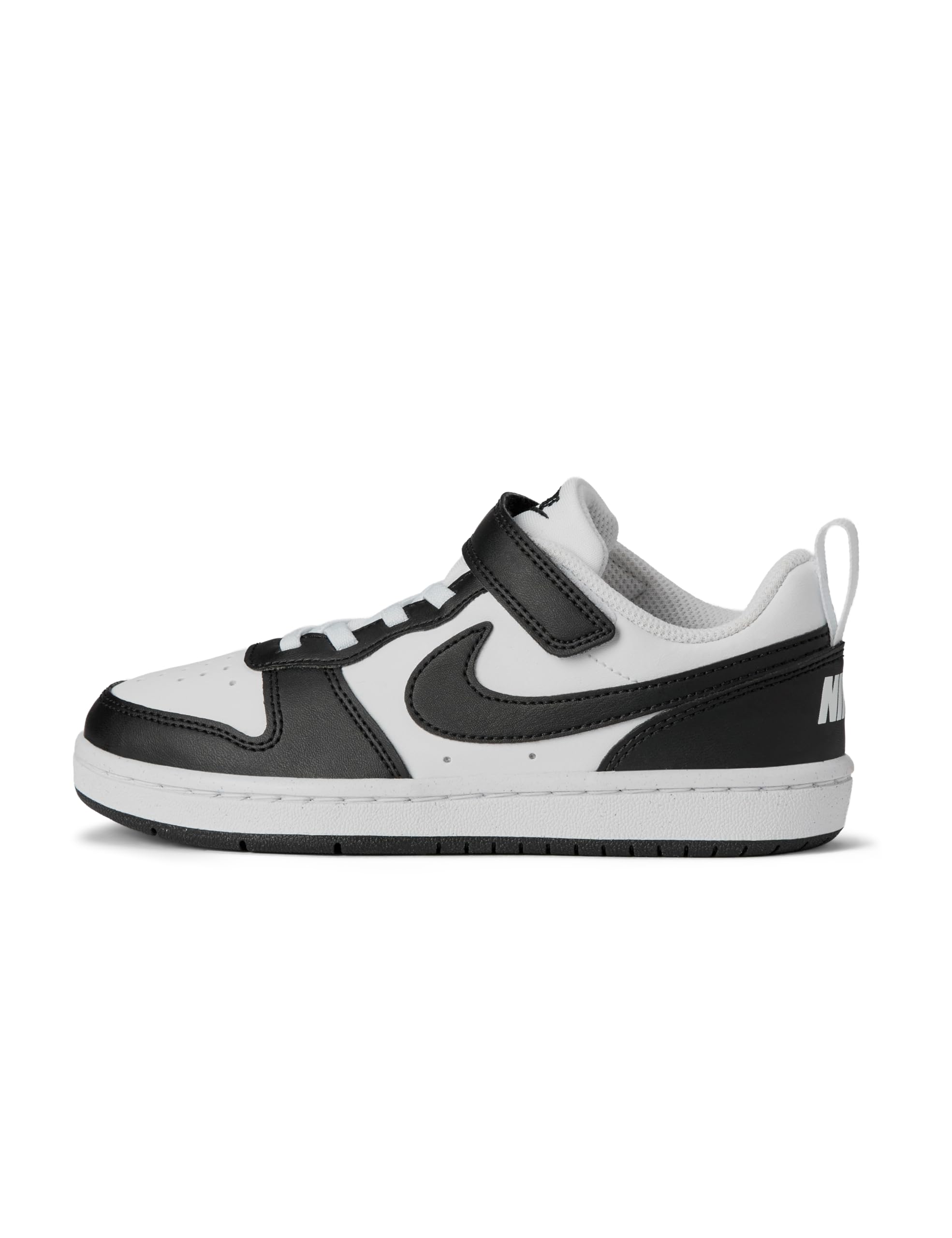
Nike Court Borough Low Recraft
Key Features
- Style: Low-top court sneaker
- Closure: Hook-and-loop strap
- Upper care: Wipe clean
- Price: Premium
Two jobs decide whether a kids’ shoe earns its place in the hallway: it has to go on without a fight at 7:40 in the morning, and it has to still be intact in June. The Court Borough Low handles both. One hook-and-loop strap crosses the instep, and the upper wipes down with a damp cloth in about the time it takes to find a second sock.
Of everything here, this is the pair we recommend to most families. It has the steadiest fit of the everyday shoes in this set, it holds up to school-year wear, and the low court profile looks tidy enough for a uniform without reading as a toddler shoe. The glossy finish on the swoosh is a small thing, but it’s the sort of detail a first-grader notices and likes.
The size is the one thing to get right. Most kids land on their usual size, but a meaningful share of pairs go back for a half size smaller, so measure the foot standing up, leave a thumb’s width at the toe, and know the return window before you order. Because there are no laces, there’s nothing to retie or relace as the fit settles over a term.
It’s the most expensive pair in this roundup, and that’s the honest case against it. What you’re paying for is a shoe that stays in the rotation instead of becoming the pair nobody reaches for. If the budget is tighter, or the kid is still in preschool, the Skechers Play Scene does the same job for less.
Pros
- Strap fastens in one motion
- Wipes clean with a damp cloth
- Holds up to daily playground wear
Cons
We recommend it to most families: the strap goes on in one pull, the upper wipes clean, and it survives daily recess.
Best for Preschool Independence
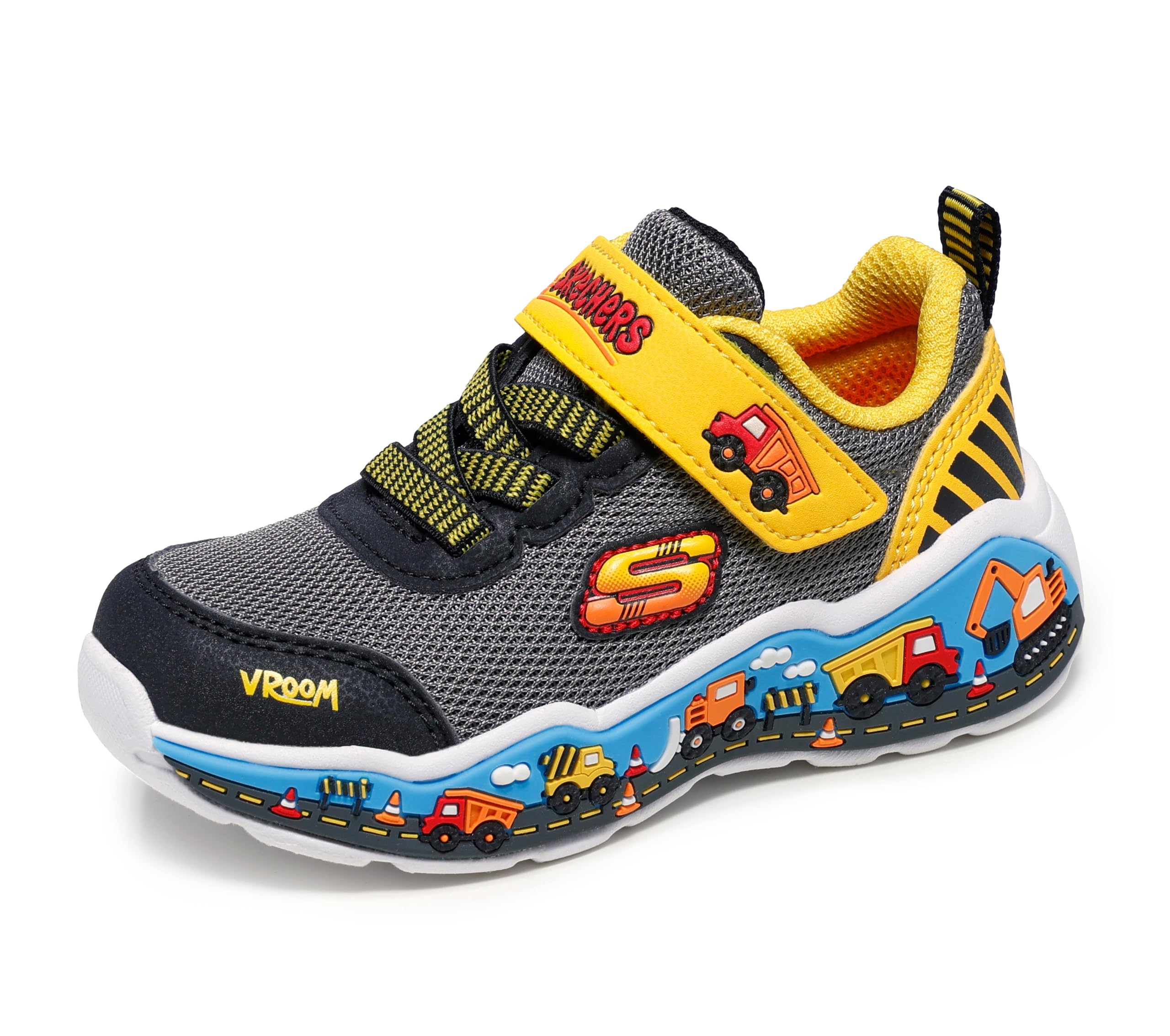
Skechers Play Scene
Key Features
- Upper: Vehicle graphics
- Closure: Hook-and-loop strap
- Department: Boys
- Price: Budget
A digger on one shoe and a dump truck on the other sounds like decoration, but it solves a real problem. A three-year-old has a reason to care which foot is which, and that’s the difference between a shoe they put on themselves and one you’re still kneeling over at the door. Underneath the print is a genuinely easy shoe: one wide strap, a roomy toe, and enough give in the collar that a toddler can push in without help.
It’s also the best value in this group. It’s one of the cheapest pairs here, and the wear is the most convincing of the lower-priced shoes, with daily preschool use going months without falling apart. The fit gets singled out for wide feet without rubbing, which not every toddler sneaker manages, and the soft step suits kids who are still learning to run.
Where it stops is sport. The sole is light and flexible rather than grippy and structured, which is exactly right for a three-year-old and wrong for a seven-year-old playing basketball. Buy it for the years when getting shoes on is still a negotiation, and hand it down or pass it on when that phase ends.
Pros
- A three-year-old can put them on alone
- Roomy enough for wide toddler feet
- Holds up to daily preschool wear
- One of the cheapest pairs here
Cons
- Vehicle graphics date quickly past preschool
Our pick for the preschool years: one strap, room for wide feet, and a price that makes buying two sizes a year bearable.
Best for Comfortable Daily Wear
Puma ST Runner Hook and Loop
Key Features
- Style: Retro runner
- Sizing: Runs small and narrow
- Closure: Hook-and-loop strap
- Department: Unisex child
- Price: Midrange
The ST Runner runs small and it runs narrow, and that’s the first thing to know. Order at least a half size up from the measured size, and if your kid has wide or chunky feet, this is the wrong shape — the Skechers Play Scene or the STQ will fit better. The strap also doesn’t reach as far around a fuller foot as it needs to, which is worth checking before you commit.
Get past the sizing and there’s a lot to like. The retro-runner shape looks sharper than most velcro sneakers, the footbed is soft enough that kids walk and run in them without complaint, and the single strap makes them a one-pull shoe for a two- or three-year-old. It’s one of the few pairs here that reads as a proper sneaker rather than a toddler shoe with a logo on it.
Its case rests on comfort and looks rather than longevity. For a preschooler who mostly needs something soft to run around in, that trade is fine. For a seven-year-old wearing one pair to school every day for nine months, the harder-wearing Nike or Under Armour is the safer buy, and we say so rather than pretend otherwise.
Pros
- Soft underfoot for all-day wear
- Retro look that reads as a real sneaker
- One-pull hook-and-loop strap
Cons
- Outsole can peel with heavy daily wear
A soft, good-looking everyday velcro sneaker we recommend for average-width feet, provided you order a half size up from the measured size.
Best for Laceless School Days
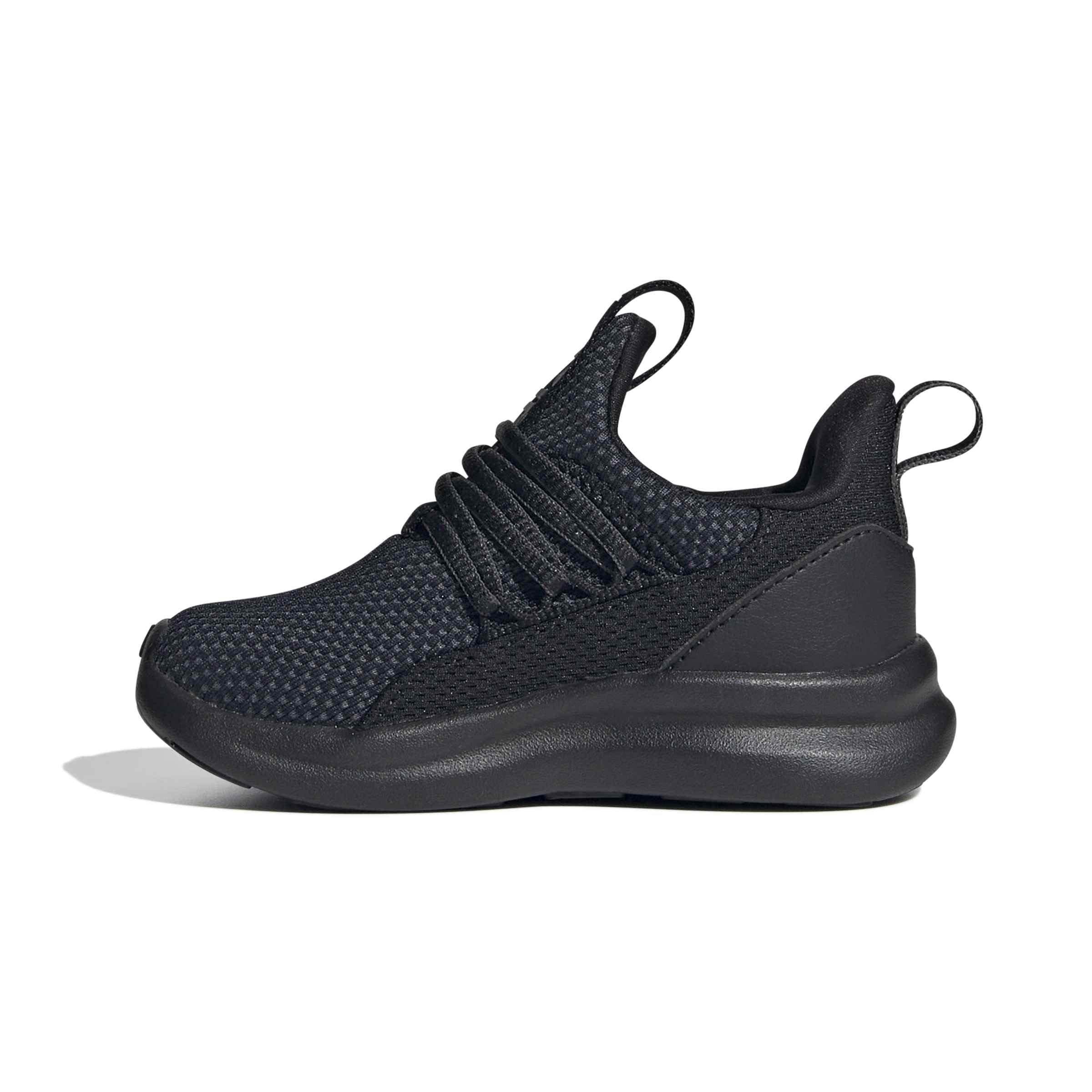
adidas Lite Racer Adapt 7.0
Key Features
- Style: Running-inspired
- Closure: Elastic laces, slip-on
- Department: Unisex child
- Price: Midrange
There’s an awkward stretch between outgrowing velcro and learning to tie laces, and it usually gets solved with a shoe that looks babyish to the kid wearing it. The Lite Racer Adapt doesn’t. The elastic laces and stretchy collar do the work of a slip-on, but from arm’s length it reads like a normal lace-up, which matters more to a six-year-old than anything printed on the box.
This is the laceless pair we point to for that stage. The collar opens wide enough to step into, the canvas top is roomy across the toes for wider feet, and there’s nothing to retie in the middle of a school day. For a kid who finds laces genuinely hard, or a household with no time for them at 7:40, it removes an argument rather than just a lace.
Two things to know before ordering. Colors can run brighter and hotter than the listing photos suggest, so check a real swatch if the shade matters to your kid. And this is a school shoe rather than a sports shoe: fine for the playground, not the first pick for a real PE session.
Pros
- No laces to tie or trip over
- Looks like a regular lace-up
- Roomy across the toes
Cons
- Durability varies; some pairs fail within months
- Colors can differ from the listing photos
The pair we point to when a child has outgrown velcro but cannot tie laces yet, and still wants to look like everyone else.
Best for Pe and Recess
Under Armour Lockdown 7
Key Features
- Sizes: Grade school
- Category: Basketball sneaker
- Department: Unisex child
- Price: Midrange
Some kids need one shoe that covers gym class, recess basketball, and the walk home from school, and that is a different brief from a fashion sneaker. The Lockdown 7 is built for it: a supportive upper, a sole with enough grip that a kid isn’t sliding around on a gym floor, and a shape that stays put through a game instead of rolling underfoot.
Durability is where it separates itself from the rest of this group. It has the strongest wear picture here, with daily school use stretching to six months and beyond, rain and mud included, and it still looks presentable. That’s the quality that matters when a child is wearing one pair for everything.
We keep it in the roundup for the older end of the range. Grade-school sizing, a look that isn’t babyish, and comfort that holds through a full day rather than just a game. It’s a heavier, more structured shoe than a canvas sneaker, which is the whole point if your kid plays sport and the drawback if they want something to kick off at the door.
Pros
- Grippy sole for gym floors
- Strongest durability in this group
- Comfortable through a full school day
Cons
- Narrow through the midfoot
We trust it for gym class and daily school wear alike; it is the toughest build here, sized for grade-school feet.
Best for Wide, New-Walker Feet
STQ KIDS Wide Toe Box
Key Features
- Sole: Flexible, minimal
- Toe box: Wide
- Age range: Toddler
- Price: Budget
Almost every kids’ shoe narrows toward the toe. This one doesn’t, and that single difference is why we kept it. A wide toe box lets toes spread the way they do when a child walks barefoot, and the thin, flexible sole lets a new walker feel the ground instead of being propped up on a slab of foam.
That isn’t just a philosophy, it’s a fit solution. The extra width leaves room for a very chunky foot or a brace without going up a size, which is hard to find at any price, and it slides on without a fight. It’s also the least expensive pair here, which matters for a shoe a two-year-old will outgrow within a season.
The sizing runs true and the shoe is light enough that kids forget they’re wearing it. It isn’t the pair for a seven-year-old’s school year — that’s the Nike or the Under Armour — but for a first pair, or a foot that never fit anything else, this is the one we reach for.
Pros
- Wide toe box for chunky feet
- Flexible sole for new walkers
- Least expensive pair here
- Easy for toddlers to pull on
Cons
- Thin sole offers little underfoot protection
We pick it for wide, chunky, and new-walking feet, and nothing here shapes those better for the money.
Best for Second School Pair
Vans Atwood

Key Features
- Style: Low-top
- Weight: Lightweight
- Department: Boys
- Price: Midrange
The Atwood is the plainest shoe here, and that’s meant as praise. It’s the classic low-top canvas shape, it goes with a uniform or a pair of shorts, and it goes on far more easily than it looks — kids pull them on and go, which is more than you can say for most shoes with this profile.
Canvas is why it survives a school year. It takes a machine wash without losing shape or color, which most of the mesh shoes in this group can’t claim, and it dries overnight if you pull the insole out. For a shoe that comes home muddy three days out of five, that’s worth more than any technical feature.
Where it gives up ground to the Nike is structure and support. It’s the simpler shoe, and it’s priced that way. That’s fine for a kid who wants to look like everyone else in the corridor and doesn’t need a structured court shoe; it’s the wrong pick if you’re buying one pair to do everything, sport included.
So it’s a second pair, and a good one: the spare in the bag, the pair that lives at grandma’s, the one you buy a size up in August and stop thinking about. For that job it’s the easiest recommendation on this list.
Pros
- Goes on easily for its shape
- Survives a machine wash
- Light enough for small feet
Cons
- Sizing is inconsistent between pairs
A good second pair we like for its plain looks and washable canvas, though it is not the one to buy if you need a single shoe for everything.
Best for Style-Minded Kids
Converse Chuck Taylor Low Top

Key Features
- Style: Low top
- Sizing: Runs large
- Collection: Chuck Taylor All Star
- Price: Budget
Chucks are the one pair here that kids ask for by name. The low-top All Star has been in school corridors for decades, it goes with pretty much everything, and the color range is genuinely good — the red and navy are the sharpest of the options and hide scuffs better than the pale ones.
They’re also tougher than they look. The canvas and rubber take playground abuse, they clean up easily, and they hold their shape through a full year of wear in a way a soft mesh trainer doesn’t. Comfort is fine for a normal school day; this isn’t a cushioned running shoe, and a kid doing a lot of sport will want something else for PE.
The catch is getting them on. The opening is snug and the laces are real laces, so on a two-year-old who won’t sit still they’re a two-person job every morning. Older kids who can tie, or who are learning and want to practice, have no such problem.
That’s the shape of the recommendation: a style pick rather than the default everyday pair. If your kid is old enough to tie and has asked for them, buy them and they’ll wear them with everything. If you’re dressing a toddler for daycare, the velcro shoes at the top of this list will save you ten minutes a day.
Pros
- Holds up to playground abuse
- Classic shape that suits most outfits
- Easy to clean
Cons
- Runs large; order a size down
We treat it as a style pick: buy the Chucks for a kid old enough to tie who wants the look, not as a toddler’s everyday shoe.
How We Tested Kids’ Shoes
I built the shortlist by reading customer reviews and comparing size charts, available widths, closure types, and materials, then narrowed it to 12 pairs that covered everyday sneakers, playground-ready styles, and a few dressier options. We spent six months rotating them through school drop-offs, recess, weekend errands, and muddy walks home. I wanted pairs that could handle the way kids actually move—sprinting, squatting, scuffing toes—not just a tidy walk around the block.
Fit and size got checked at the end of the day, when feet are a little wider: I pressed at the toe, watched for heel slip, and noted whether the widest part of the foot felt pinched. Kids put each pair on and took them off without help, so I could see whether the opening was generous enough for a squirmy foot and whether the Velcro was easy for small hands to line up. I also watched the straps during play, since a closure that pops open at recess is worse than one that takes an extra second. After a full day, I checked for red marks and asked whether they wanted to wear them again.
After each wear, I looked at scuffed toes, loose seams, sole flex, and whether colors faded or cleaned up. I compared that wear after six months with what each pair cost, including whether it looked likely to survive a growth spurt or a younger sibling. The top pairs kept their shape, stayed comfortable, and were still the ones kids reached for without a fight.
How to Choose Kids’ Shoes
Fit causes more exchanges in this category than anything else, and the pairs that survive a school year tend to be the ones with a fastening a child can work alone and a toe that isn’t the first thing to give.
Measure the Foot, Then Ignore the Label
Kids’ sizing is not standardized across brands, and it isn’t always consistent within one. Measure both feet with the child standing, late in the day when feet are at their largest, and size to the longer one. You want roughly a thumb’s width between the longest toe and the end of the insole: less and the shoe is already too small, much more and the heel slips and the shoe flexes in the wrong place.
In this group the same labeled size fit differently from brand to brand, so treat the number as a starting point. Check the return window before you order, and don’t cut the tags off until the kid has walked around the kitchen in them.
Let the Fastening Match the Kid
Hook-and-loop straps are the right answer until a child can dress themselves reliably, which for most lands somewhere around five or six. Between velcro and laces there’s a useful middle: elastic-lace slip-ons like the adidas Lite Racer Adapt look like a lace-up but go on in one push, and they suit a kid who is self-conscious about still needing help.
Real laces are worth teaching once a child is motivated to learn. What we prioritize is independence, because a teacher supervising thirty kids at recess is not retying anyone’s shoes.
Know Where They Wear Out
Kids’ shoes fail in three places: the toe bumper, the bond between upper and sole at the flex point, and the heel lining. Look at how the toe is put together before you look at anything else on the shoe, and check the inside heel for a lining that has already gone thin.
Mesh uppers are light and breathe well but scuff through faster than canvas or smooth synthetic. If your kid drags their feet, a smooth wipe-clean upper hides the damage longer than a print or a knit.
Flex, Weight, and Toe Box
A toddler needs a flexible sole and room at the toe. A heavier seven-year-old needs cushioning, structure, and grip. Buying the toddler formula for a school-age kid is the mistake to avoid here: a thin, minimal sole is lovely for a first walker and miserable on gravel or in a PE class.
Wide toe boxes are worth seeking out if your child has chunky feet or has been squeezing into narrow shoes; the STQ is the clearest example in this group. For everyone else, a standard court sneaker with a bit of flex at the ball of the foot is the safer default.
Frequently Asked Questions
How many pairs of shoes does a school-age kid actually need?
Two: one everyday pair worn most days, and one spare for when the first is soaked, lost, or left at a friend’s house. A single well-fitting pair is the goal, but the spare is what stops you buying shoes in a panic on a school night.
Rotating two pairs also gives each one a day to dry out, which is the single easiest way to make a cheap shoe last longer than it has any right to.
Can I put kids’ sneakers in the washing machine?
For canvas and mesh, usually yes, and it’s often faster than scrubbing. Pull the insoles out, brush off dried mud, wash on a cold gentle cycle, and put the shoes in a pillowcase or a mesh wash bag first.
Never tumble dry. Heat warps the sole and shrinks the upper, and a shrunken shoe is a dead shoe. Stuff them with newspaper and let them air dry overnight. Skip the machine entirely for leather.
Is it worth spending more on kids’ shoes?
Only up to a point. At the top of the range you’re mostly paying for branding and styling, and a shoe a child outgrows in a season rarely repays that. Put the money into fit and a fastening your kid can manage instead.
A cheaper velcro sneaker that fits properly beats an expensive lace-up that doesn’t. When two pairs cost about the same, take the one with the tougher toe.
Final Verdict
Buy the Nike Court Borough Low Recraft for most kids. It’s the pair here with the least to go wrong: a strap that goes on in one pull, an upper that wipes clean, and a build that holds up to recess. It costs more than the rest of this group, and it’s the one we see the fewest reasons to replace before the kid outgrows it.
If laces are the sticking point, the adidas Lite Racer Adapt goes on without them and still looks like a proper sneaker. If the feet are wide, or the kid is still a toddler, the STQ and the Skechers Play Scene cost less and fit better. Start there and the rest is detail.
