This post contains affiliate links. We may earn a small commission when you buy through our links — at no extra cost to you.
The first time I bought shoes for my wide-footed kid, I did the reasonable thing: ordered the pair marked wide, waited a week, then spent ten minutes on the living room floor trying to get a foot into it. The shoe was wide in name only — broad sole, but an upper with no give across the instep, which is exactly where a chunky toddler foot needs room. Width isn’t one number, and a roomy toe box means nothing if the strap won’t close over the top of the foot.
I’ve gotten pickier since, and my team has too. Over the past six months we’ve put a dozen pairs through real wear — preschool drop-off, playground gravel, the endless on-and-off at the front door — weighing fit and comfort against whether they survived stomping through puddles. A wide width from one brand can measure like a medium from another. Velcro earns its place here for a reason: it lets a toddler close the shoe themselves and lets you fine-tune the fit over a high instep. The picks below are the ones that made the morning routine easier.

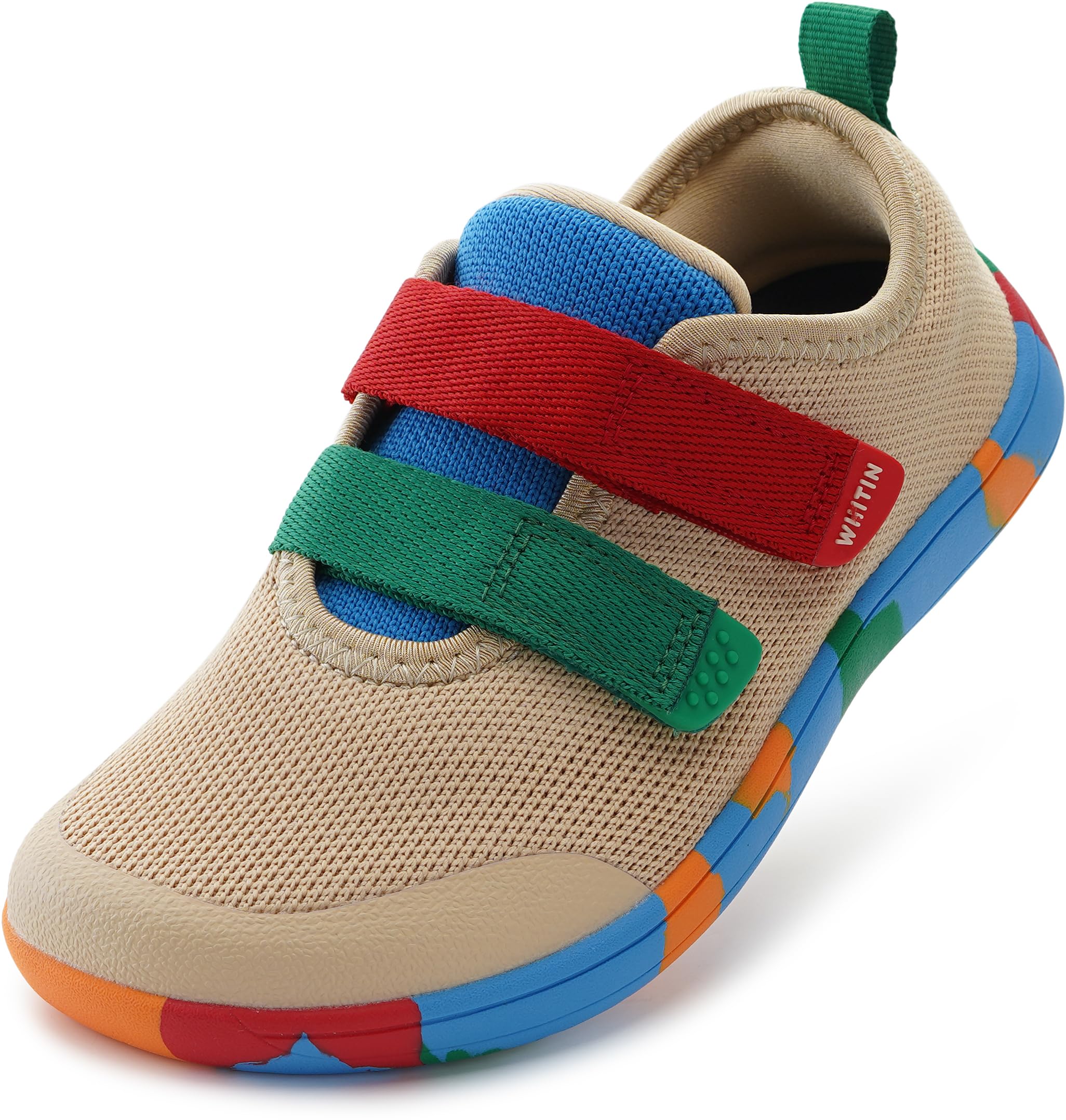

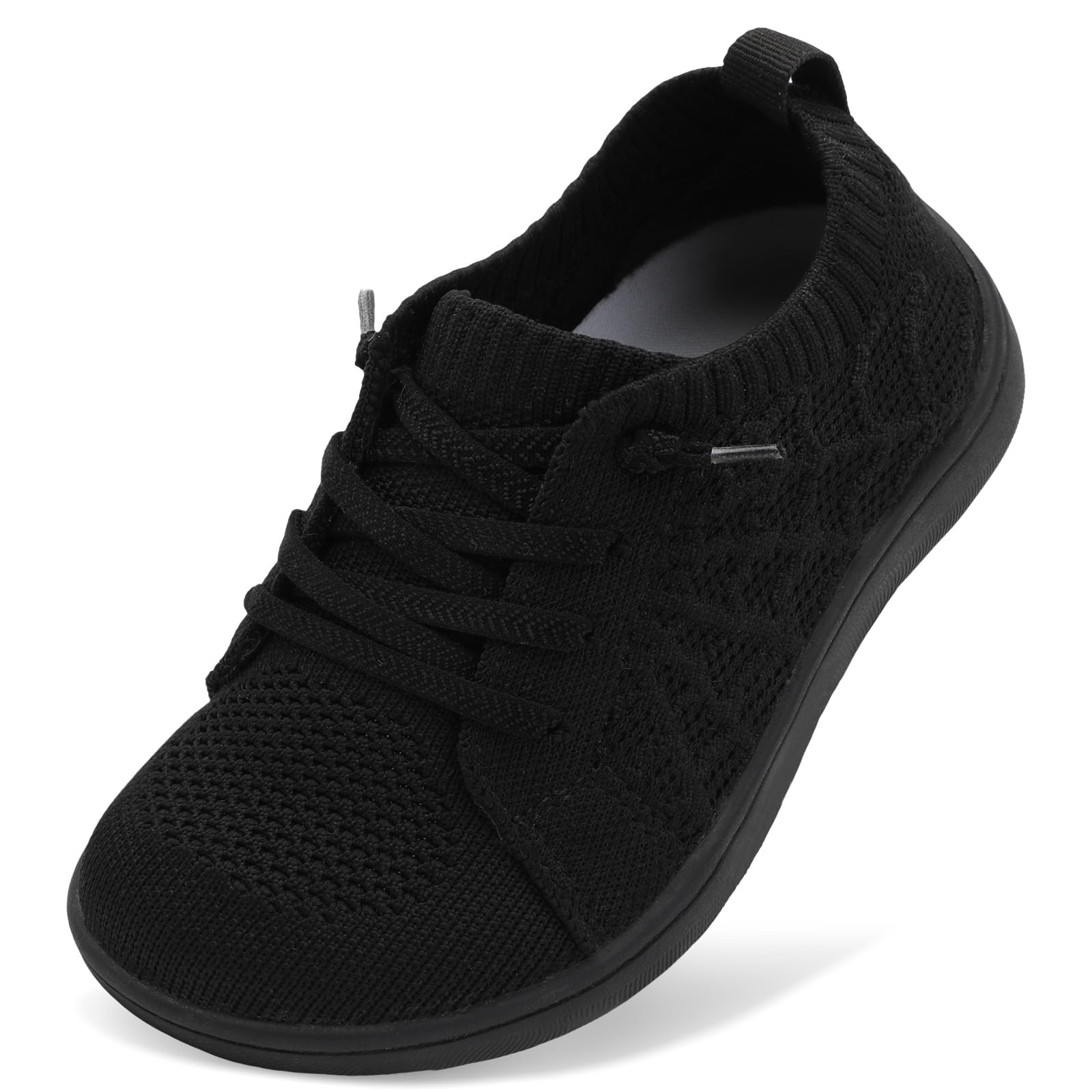
Best for Wide Toddler Feet
STQ KIDS Wide Toe Box Sneakers
Key Features
- Sole: Flexible, non-slip
- Closure: Hook-and-loop strap
- Toe box: Wide, foot-shaped
- Age range: Toddler
- Price: Midrange
A wriggling foot, a shoe that has to go on now, someone already halfway out the door — that’s the moment we judge a toddler shoe by, and this pair passes it. The collar opens wide enough to drop a foot into, the strap lands where a thumb can find it, and the whole thing is fastened before the protest starts. It’s the reason this became the pair we recommend by default to anyone shopping for a wide-footed toddler.
The room up front is what actually earns the recommendation. There’s real width across the ball of the foot and a toe box that stays broad instead of tapering to a point, so toes sit splayed and flat rather than stacked on each other. The sole bends easily under a thumb without collapsing into a rag, which is the balance we want in a first or second pair: enough ground feel for a new walker, enough underfoot that a stretch of pavement doesn’t stop them.
Sizing runs true to a measured foot, and that matters more with a wide shoe than a narrow one. Buy long and the flex point slides forward of the ball, so the shoe folds under the arch with every step. Order the length that matches the foot and let the width do its work.
For a toddler in their first few years of walking, this is the pair we hand over without a second thought. If the wearer is older and needs something that reads as a school shoe, the WHITIN W8K6 is the better call; if you want the most barefoot feel in this group, the W8K2 is worth the step up.
Pros
- Wide toe box that lets toes splay flat
- Easy to pull onto a squirming toddler
- Flexible sole without feeling flimsy
- Runs true to size for a measured foot
Cons
- Strap can fall short on the widest feet
Our default for wide-footed toddlers: a genuinely roomy toe box that flexes with the foot, plus a strap you can fasten one-handed while the other hand keeps the kid still.
Best for Extra-Wide Feet
WHITIN Wide Barefoot Shoes W8K2
Key Features
- Design: Barefoot
- Closure: Hook-and-loop
- Toe box: Wide, foot-shaped
- Age range: Toddler to little kid
- Price: Premium
Barefoot shoes have a look problem. Plenty of wide, flexible kids’ shoes announce themselves as therapeutic — bulbous, orthopedic, hard to pair with anything already in the drawer. The W8K2 mostly sidesteps that. It reads as an ordinary low-top sneaker, and the width shows up in the footprint rather than in the styling.
That’s a large part of why we like it for kids old enough to have opinions about their own shoes. The toe box is genuinely broad — broad enough that children with average-width feet still end up with spare room — and the sole has more substance than a true minimalist slab, so pavement, gravel and a full day at nursery aren’t felt straight through the shoe. When the top pick’s sportier shape gets rejected, this is the pair we switch to.
The trade-off sits underfoot. It’s a denser, more built-up shoe than the JOINFREE pair, and if what you want is maximum ground feel, that one is flatter and softer. What you get in return is a shoe that handles a scoot to school without transmitting every pebble on the way.
Pros
- Wide toe box on a normal-looking sneaker
- More sole protection than thin barefoot shoes
- Easy for kids to put on themselves
Cons
- Sole can wear through with daily wear
- Hook-and-loop can peel when pulled hard
We recommend it to anyone who wants barefoot width without the orthopedic look — a broad toe box and a sole with enough underfoot for pavement, at the top of this group’s price range.
Best for School Wear
WHITIN Kid Barefoot School Shoes
Key Features
- Design: Barefoot
- Closure: Hook-and-loop
- Toe box: Wide, low-profile
- Age range: Kid
- Price: Premium
School shoes are where wide feet usually lose. The options that pass a dress code tend to be stiff, narrow and built around looks, so a kid with a broad forefoot spends the year in something that pinches. The W8K6 is the one here that solves it: a plain, low-profile sneaker that reads as school-appropriate and still has a genuinely foot-shaped toe box.
It’s cut for older kids than everything else on this list, and the details follow from that. The profile is lower and more restrained, the upper is light enough that it doesn’t drag at the ankle over a full day, and the strap is something a six-year-old can manage without an adult crouching down beside them. We were also struck that the flexibility survived the move up in size — the sole still bends, which is far from a given once kids’ shoes get bigger and stiffer.
Sizing is the one thing to get right. The fit is less forgiving than the toddler WHITIN’s, so measure the foot rather than reordering last year’s number, and keep the return window open until the first pair has been worn around the house for an afternoon.
Pros
- Wide toe box in a school-appropriate shape
- Still flexible in bigger kid sizes
- Light enough for all-day wear
Cons
- Hook-and-loop straps wear out first
The pick we make when the wearer is past toddler sizes and the shoe has to pass at school: wide where it counts, low-profile enough for a dress code, and flexible in a category that usually isn’t.
Best for First Pairs
JOINFREE Wide Barefoot Sneakers
Key Features
- Drop: Zero drop
- Closure: Slip-on
- Toe box: Wide
- Age range: Toddler
- Price: Budget
It’s easy to dismiss this pair as the budget entry. It’s the least expensive shoe here, the upper is a soft stretchy knit, and the whole thing looks more like a sock with a sole attached than a sneaker. Then a three-year-old pulls them on without help and is out the door before you’ve found the other one.
What’s underneath is more interesting than the position on the list suggests. Wide toe box, zero drop, a sole that folds in half — the shaping is the same barefoot idea the expensive pairs use, just executed in cheaper materials. The upper breathes well enough for a warm afternoon and washes clean, and there are no laces to tie, which is rather the point.
The limit is the closure. The drawstring can be pulled in but it can’t really be tied snug, so these fit like a slip-on and stay on like one — fine on most feet, less secure on a narrow heel. For a household buying two or three sizes a year, that trade is easy to make, and it’s the pair we suggest buying in duplicate so one can live by the front door.
Pros
- Cheapest proper wide toe box in this set
- Toddlers can put them on unaided
- Breathes well and washes clean
Cons
- Drawstring can’t be tied snug
- Heel can slide on narrow feet
We keep coming back to this one as the pair to buy in two sizes and stop worrying about: wide, flat, washable and easy for a toddler to put on alone.
Best for Quick Errands
LeIsfIt Wide Toe Box Slip-Ons

Key Features
- Upper: Breathable fabric
- Closure: Slip-on
- Toe box: Wide
- Age range: Toddler
- Price: Budget
The first question with any laceless shoe is whether it stays on, and the answer here is mostly. The stretchy upper hugs the instep, the toe box is genuinely roomy, and for most kids they hold through an afternoon of ordinary play. The heel is the weak point: on a narrow foot these can be stepped out of, and a toddler in a mood will test exactly that.
What we appreciate is how much they hand back to the child. Kids pull them on themselves, they’re light enough not to drag at the ankle, and they look neater than their place in this list suggests — tidy enough for a birthday party, plain enough that a scuff doesn’t ruin the week. The fabric upper breathes and washes, which counts for a lot in summer.
The catch is the pairing. A wide forefoot on a narrow heel is the exact shape this design struggles with, because there’s nothing behind the ankle to take up slack. If that describes your kid, the STQ’s strap gives you an adjustment this shoe simply doesn’t have.
Pros
- Roomy toe box with a soft, stretchy upper
- Easy for kids to manage alone
- Looks sharper than the price suggests
Cons
- Can be stepped out of on a narrow heel
We like these for the child who is forever taking shoes off and putting them back on — light, tidy and easy, though on a narrow heel expect to chase one across the floor.
How We Tested Wide-Width Kids Shoes
We started with research, which turned out to be the hard part. Most brands don’t publish actual internal measurements, so we pulled width charts and size guides wherever we could find them, then filtered for shoes sold in wide or extra-wide, built with a Velcro closure, cut with an opening that clears a high instep, and priced so that outgrowing them in four months doesn’t sting. That left us with 12 pairs.
Each pair went home with a family on our team for six months of ordinary life. Once a month we traced the kids’ feet on paper and laid the tracing inside the shoe to see where the toes landed and how much room was left at the ball. We timed how long a 3-year-old took to get each pair on without help, and we looked at how much Velcro strap was left over once the shoe was closed — some ran out of adjustment on the loosest setting, which is usually the tell that a wide shoe isn’t really wide.
Comfort got judged mostly by the wearers. We noted which pairs came off in the car seat, which left red marks across the instep, and which ones got asked for by name on preschool mornings. After each playground day we checked the toe bumper for scuffs, the seams at the flex point, and whether the outsole was starting to peel, then washed the machine-washable pairs twice and looked at whether they held their shape and color. Toddlers are hard on shoes, so anything that looked beaten up by week three didn’t make the list.
How to Choose Kids Shoes for Wide Feet
A shoe doesn’t get wide by being bigger — it gets wide by being shaped like an actual foot, and that distinction decides almost every choice below.
Width Is a Shape, Not a Size
The most common mistake with a wide-footed child is sizing up. An extra half size buys length, not width, and it pushes the shoe’s flex point forward of the ball of the foot, so the shoe folds in the wrong place with every step. What you want instead is a foot-shaped outline: broad across the ball, fairly straight along the outer edge, and a toe box that stays wide toward the tip rather than tapering to a point.
The check takes five seconds once the shoe is on. Run a thumb across the upper over the widest part of the foot — if you can see the outline of the pinky toe pressing against the material, it’s still too narrow, whatever the size chart says.
How Much Sole Do They Actually Need
Barefoot and minimalist shoes use a thin, flexible sole with no height difference from heel to toe, which lets a new walker’s foot work on its own and keeps the toes spreading. That’s ideal indoors, on grass, and for the first year of walking. On pavement, in a classroom all day, or on a wood-chip playground, some kids do better with a little more underfoot.
The WHITIN W8K2 sits at the more protective end of this group, while the JOINFREE pair is flatter and softer. Neither approach is wrong — match the sole to where the shoes will spend most of their hours, not to a philosophy.
Closure Decides How Independent They Are
Hook-and-loop is not a compromise. For a two- or three-year-old it’s the difference between a shoe they can put on themselves and one they have to wait for you to wrestle on, and that plays out every single morning. The test is simple: with the foot in the shoe, the strap should reach comfortably past the middle of its landing zone rather than perching on the last sliver of it.
Slip-ons are faster still but they’re a retention gamble. A narrow heel can slide out mid-run, and a determined toddler can step straight out of one — worth knowing before you buy a laceless pair for a child whose foot is wide up front and slim at the back.
Materials, Washing and How Long They Last
Most kids’ shoes are outgrown before they wear out, which changes how much sense it makes to spend up. Toddlers often get a few months from a size; school-age kids get longer, and that’s where sole wear and strap failure actually show up — worth weighing if the wearer is past the toddler range.
Look for an upper that survives a wash. Cold water, gentle cycle, straps fastened, air dried away from direct heat. Skip the dryer: heat shrinks uppers and softens the adhesives, and a warped sole can’t be rescued.
Frequently Asked Questions
How do I know if my child needs wide shoes?
Start with the shoes they’re wearing now. If the upper bulges over the edge of the sole, or there’s a crease pressed into the material above the pinky toe, they’re too narrow. For a direct check, have your child stand on a sheet of paper, trace the outline, and measure across the widest part of the foot — then compare that number to the width in the brand’s size chart instead of guessing from age.
Do wide toe box shoes run true to size?
These pairs follow standard kids’ sizing closely enough that the number isn’t usually the problem — the measurement is. Feet swell through the day, so measure in the late afternoon with the child standing, leave about a half inch of growing room at the toe, and work from the brand’s centimeter chart. If you land between sizes with a very wide foot, take the larger one.
Can I machine wash kids’ sneakers?
Most soft-upper pairs handle it. Fasten the straps, use cold water on a gentle cycle, and put the shoes in a mesh bag or pillowcase if the drum is otherwise empty. Never use the dryer — heat shrinks uppers and softens the glue, and a warped sole stays warped. Stuff them with a towel and air dry away from direct sun.
Final Verdict
The STQ wide toe box sneaker is the pair we point most families to first. It’s genuinely broad across the toes, flexible without being floppy, and easy enough to get on that leaving the house doesn’t turn into a fight every time.
Step up to the WHITIN W8K2 if you want a more finished-looking shoe with a bit more sole underneath, or to the W8K6 if the wearer is past toddler sizes and needs something that passes at school. And if you’re buying two sizes a year and would rather not think hard about it, the JOINFREE pair is where we start.
