This post contains affiliate links. We may earn a small commission when you buy through our links — at no extra cost to you.
The first swim lesson of the season tends to end the same way: a kid on the pool edge, tugging at a strap, insisting water is getting in. Goggles that leak, fog up, or need an adult to adjust them turn a fun half hour into a negotiation. A pair that actually works is one your kid forgets they’re wearing, and we’ve spent four months with 16 pairs finding the ones that get there — the ones that sealed without pinching.
Here’s what nobody tells you before you buy your first pair: a good seal isn’t about cranking the strap tighter. Kids’ faces are flatter and narrower across the nose than adults’, so an adult-shaped frame sits on the cheekbone and leaks no matter what you do. The pairs my testers reached for weren’t the fanciest — they were the ones a five-year-old could put on by herself and the ones that didn’t leave marks after 45 minutes. The picks below survived lessons, splash pads, and the bottom of a wet swim bag.


Best for Young Swimmers
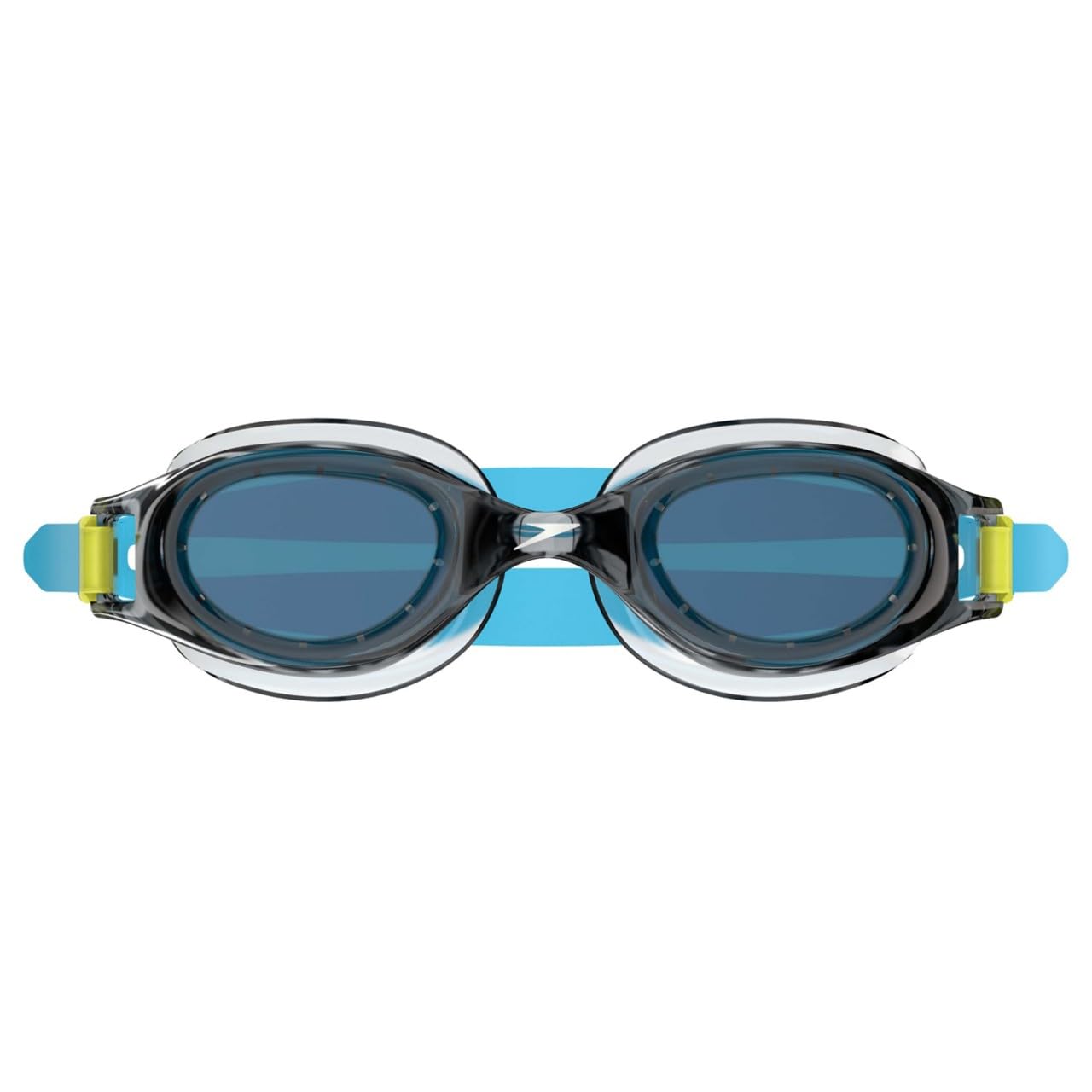
Speedo Skoogles
Key Features
- Fit: G.O. FIT middle eye
- Lens: Anti-fog, UV protection
- Weight: 2.1 oz
- Age range: 3 to 8 years
- Price: Budget
The Skoogles put a soft silicone gasket inside the eye socket rather than pressing a hard rim against the face, and that is the detail that makes them work for small children. Speedo calls the shape its G.O. FIT middle-eye fit; the design leaves less of a constricting feeling around the eyes. We think that is why this is the pair we recommend first for ages 3 to 8: the seal feels secure without a fight.
The adjustment is the other reason we keep coming back to this pair. The strap ends are easy to pull, and a child can take up slack without an adult threading a tiny buckle. The clear lens has anti-fog and UV protection, which covers indoor lessons and bright pool decks. Treat the anti-fog coating gently: rinse after swimming, air-dry, and do not wipe the inside of the lens.
The 5-inch temple-to-temple width is a useful clue. It is a genuinely small frame, not a scaled-down adult goggle, and that is why it seals so well on a 4-year-old. It also means the Skoogles stop being the right choice once a child is ready for a bigger 6-12 frame. For the preschool-to-early-primary years, this is the pair we hand over first.
Pros
- Soft gasket seals on small faces
- Easy for a child to tighten
- Anti-fog and UV protection
- Low-cost backup option
Cons
- Strap hardware can break with rough handling
We recommend the Skoogles as the default for ages 3 to 8: the soft frame seals well on small faces, the strap is easy for a child to tighten, and a spare pair is easy to justify.
Best for Learn-To-Swim Kids
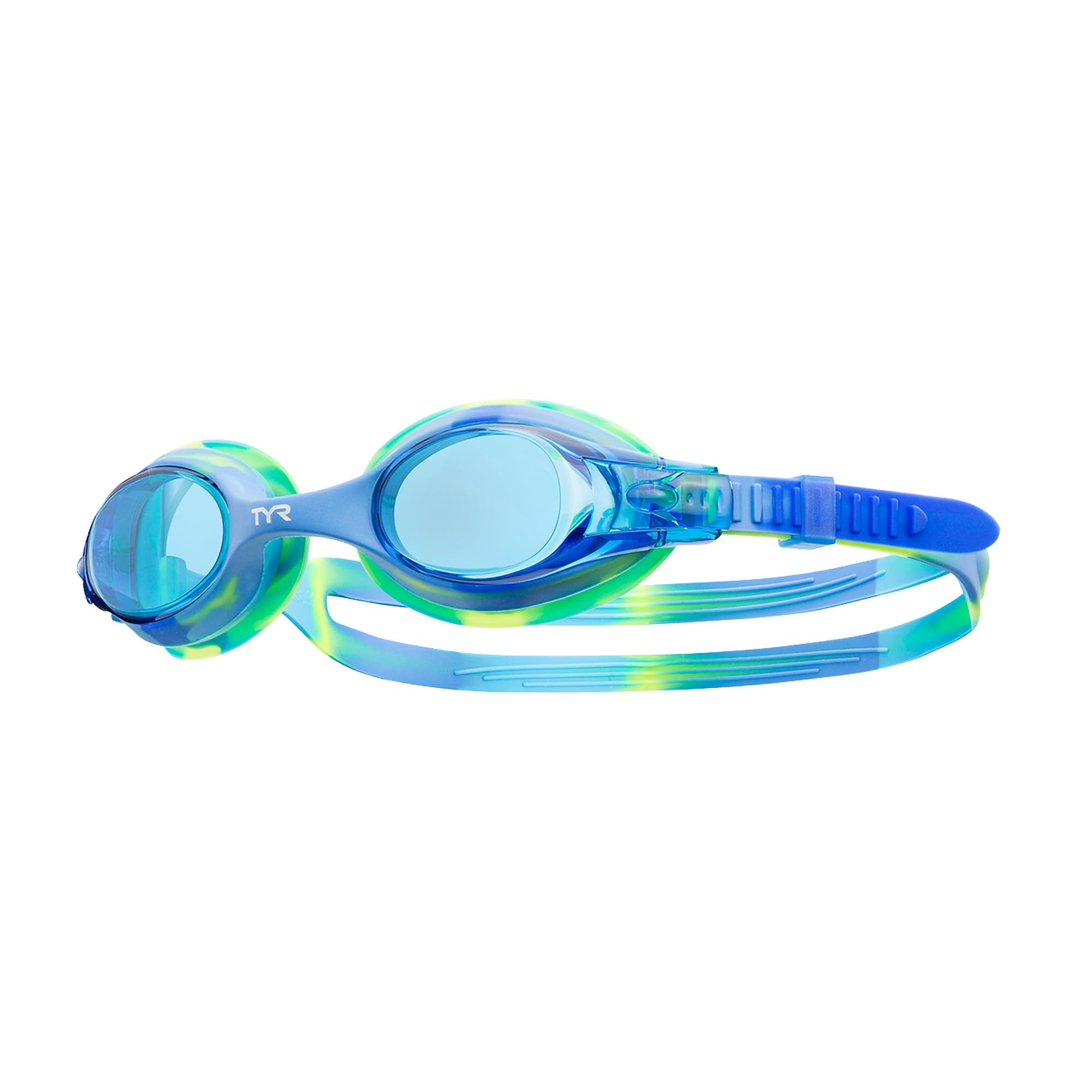
TYR Swimple
Key Features
- Fit: Adjustable
- Design: Beginner swim goggles
- Back strap: Split
- Price: Budget
A split strap that forms an oval around the back of the head is a small design choice with an outsized effect at the pool: it gives a child a clear place to grab and pull. The TYR Swimple is built around that simplicity, with a two-band back and a soft frame that sits close to the face.
We rate it near the top of this set for beginners because it makes the dressing part easier. A 9-year-old can adjust the bands independently, and the split back sits around a hair bun instead of fighting it. The seal is secure for lessons, and the comfort is the kind that disappears once the child is swimming. For a first pair of real goggles, that combination matters more than a wide lens.
The simple frame does not offer the peripheral coverage of the OMID, so this is not the pair we choose for open-water or glare-heavy days. It is the pair we choose when the goal is a child putting goggles on without help and leaving them alone. The split back strap is the detail that earns that role.
Pros
- Split back strap eases independent on/off
- Secure seal for lessons
- Comfortable for repeat wear
- Easy for young swimmers to adjust
Cons
We recommend the Swimple for beginners who dress themselves: the split back strap makes it easy to put on, and the seal holds for lessons without a fight.
Best for School-Age Swimmers
Speedo Hydrospex
Key Features
- Lens: Anti-fog, UV protection
- Frame: Silicone
- Weight: 1.4 oz
- Age range: 6 to 12 years
- Price: Midrange
The Hydrospex is the pair we point to once a child has outgrown the preschool frame: the 6-12 size gives more coverage without adding a lot of bulk. The silicone frame is soft around the eyes, and the shape stays put during swimming. It is a school-age goggle, not a scaled-up toddler pair.
The seal is the strongest part of the case for us. It keeps water out without needing to be cranked tight, and the clear lens has anti-fog and UV protection. The strap adjusts easily, and the frame has enough room for a 9- or 10-year-old without feeling like a spare adult goggle.
The outer rim is soft enough for a full lesson, and the low-profile shape does not feel bulky on a 9-year-old. We also like the clear lens for indoor pools, where tinted goggles can make the deck feel darker than it needs to. It is a goggle for swimming, not for fashion, and that suits us.
For a school-age swimmer who is in the water several times a week, this is the pair we recommend. It seals comfortably through lessons and lane time, and the 6-12 frame has room to grow. If your child is still in preschool sizing, stay with the Skoogles; once they are ready for a bigger frame, this is the natural step up.
Pros
- Roomy 6-12 fit
- Soft silicone frame
- Leak-resistant seal for lessons
- Anti-fog and UV protection
Cons
- Costs more than beginner picks
- Nose bridge can crack with rough handling
For school-age swimmers, the Hydrospex is our pick: it seals comfortably through lessons and lane time, and the 6-12 frame has room to grow.
Best for Sunny Outdoor Swims
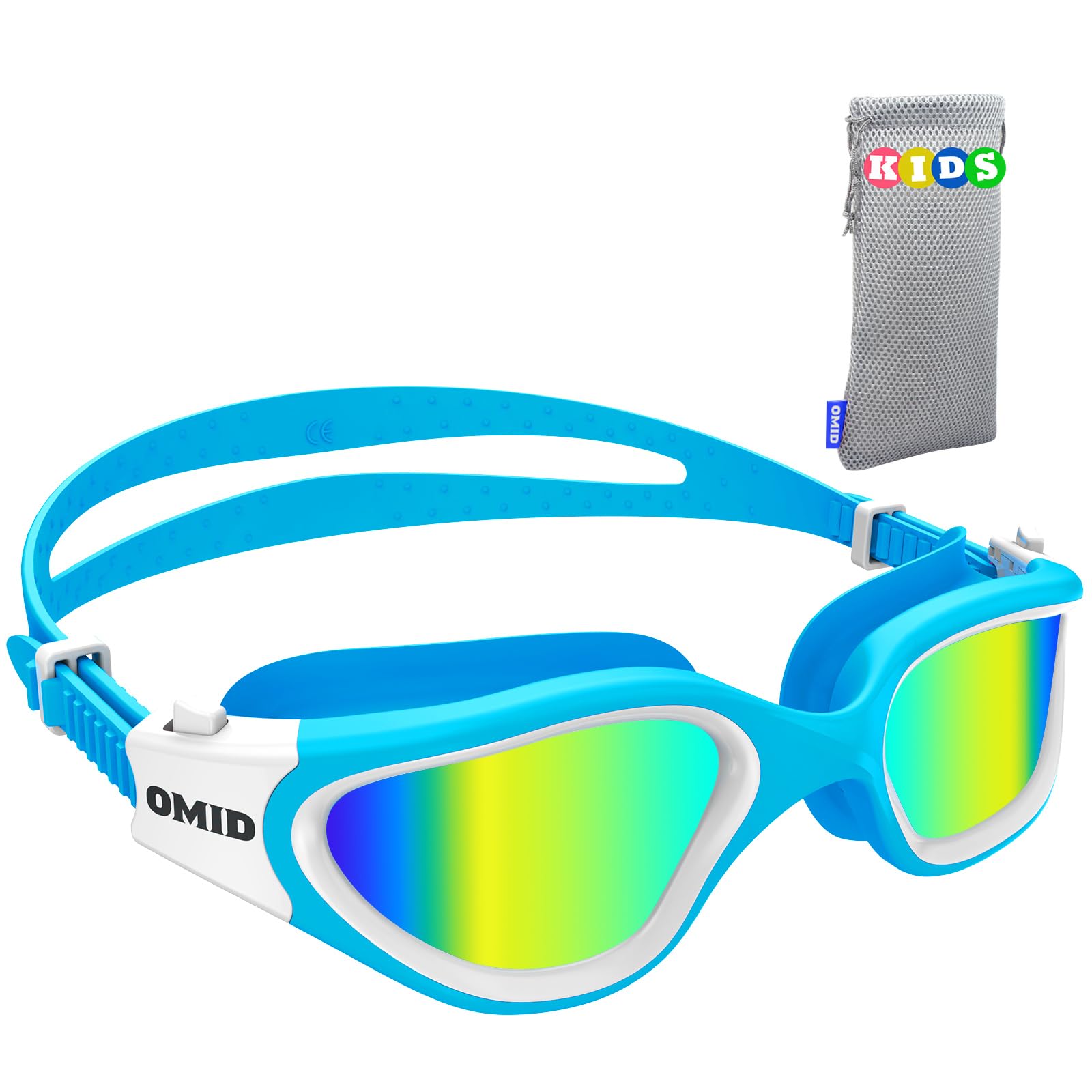
OMID P2mini
Key Features
- Lens: Polarized, anti-fog
- View: 180° wide view
- Weight: 2.08 oz
- Age range: 6 to 14 years
- Price: Premium
The P2mini is the pair we choose when the swim is outdoors and the sun is in a child’s eyes. The polarized, mirrored lens cuts glare from water and pool deck, and the curved shape gives a 180-degree view that feels wider than the beginner goggles here. We like that for beach days and bright outdoor pools, where squinting ruins the fun.
The fit is the other strong point. The double strap stays put, the soft gaskets do not dig in, and the 6-14 frame has enough adjustability for a growing child. We were also impressed by the wide view: a child can see the pool wall and the instructor without turning their head as much.
The band is the part to watch under heavy use, so store these loosely and check the strap anchors before a session. Otherwise, the P2mini is a strong choice for outdoor swimming. It is the pair we choose when glare is the problem, not when a child needs the simplest indoor goggle.
Pros
- Polarized lenses cut outdoor glare
- 180° wide view
- Comfortable double-strap fit
- UV protection for bright days
Cons
- Highest price in this group
We recommend the P2mini for bright outdoor swimming: polarized lenses and a wide view make glare-heavy pool and beach days easier on young eyes.
Best for Fog-Free Lessons
Zeligerstar Kids
Key Features
- Lens: Anti-fog, UV protection
- Size: One size
- Weight: 4.96 oz
- Age range: 6 to 14 years
- Price: Midrange
Fog is the quiet reason a child stops wearing goggles: the lens clouds, the view goes soft, and the goggles end up on the pool deck. The Zeligerstar pair is built around anti-fog clarity, with a clear lens, UV protection, and a soft silicone frame. It is aimed at ages 6 to 14, which puts it in the older-kid section of this group.
We rate it near the top of this set for clarity. The anti-fog treatment is one of the more convincing ones here, and the lens stays clear enough for lessons and pool play. The seal is comfortable, the side buttons let a child tighten or loosen without help, and the frame does not leave deep pressure marks. That combination is why it earns a runner-up spot.
The included case is a small thing we appreciate, because it keeps the lens away from the bottom of a swim bag. For a child who is old enough for a 6-14 goggle and hates fog, this is the pair we point to.
Pros
- Strong anti-fog clarity
- Comfortable leak-resistant seal
- Easy side-button adjustment
- Protective case included
Cons
- One-size fit can miss some face shapes
For older kids who complain about fog, the Zeligerstar is our pick: it keeps a clear view and a comfortable seal through lessons and pool play.
Best for Small-Face Value
ZABERT K20

Key Features
- Lens: Anti-fog, 100% UV protection
- Included: Travel bag
- Age range: 3 to 10 years
- Price: Budget
The K20 is the pair we keep as a budget-friendly option for small faces. It is aimed at ages 3 to 10, with an anti-fog and UV-protection lens, an adjustable frame, and a travel bag that makes it easy to keep the lenses from scratching. That is a useful package for a child who is rough on gear or still losing things.
We like it because it does the basic job without fuss. The strap adjusts easily, the seal works for small faces, and the frame does not feel bulky. For a preschooler or an early primary-school swimmer, it is a sensible second pair to keep in the car or swim bag. The value is in having a competent goggle without treating it like an heirloom.
The travel bag is the detail we appreciate most, because it solves the scratched-lens problem that plagues loose goggles in a bag. As a spare, it is an easy pair to say yes to.
Pros
- Small-face fit for ages 3-10
- Easy strap adjustment
- Anti-fog and UV lens
- Travel bag included
Cons
- Nose bridge and strap are durability weak points
The K20 is our budget pick for preschoolers and small faces: it seals well without fuss, and the travel bag helps it survive the swim bag.
Best for Family Backup Pairs
COOLOO Kids

Key Features
- Fit: Adjustable
- Closure: Rear clip
- Age range: 4 to 16 years
- Pack count: 2 pairs
- Price: Budget
Two pairs in one pack is the reason the COOLOO set earns a place. We like it for families who need a backup without buying twice, and the rear clip makes the goggles easier to put on and take off than a traditional two-strap design. For a child who is learning to manage gear, that clip is the feature that matters.
The fit is adjustable, the seal works for small to medium faces, and the frame is light enough to forget about during pool play. We found the rear clip especially useful for hair, because it opens wide and avoids pulling a ponytail through a tight strap. It is a practical pair for siblings sharing a swim bag.
The second pair is the practical answer: keep one in the swim bag and one at home, and the set takes the panic out of a lost pair. That is the role it fills best: a family-value pick for pool bags, not a goggle to nurse through multiple seasons.
Pros
- Two pairs in one pack
- Rear clip makes on/off easy
- Adjustable fit for young kids
- Useful family backup value
Cons
- Straps and clips can break under rough play
- Fit runs small for older teens
We recommend the COOLOO set for families who want a spare: the rear clip is easy for kids to manage, and the two-pack takes the sting out of a lost pair.
How We Tested Kids’ Swim Goggles in Real Pools
We started by gathering every pair we could find that was genuinely sized for children, then narrowed the field by reading specs on lens shape, nose bridge width, strap material, and clasp type. Anything built on an adult frame, or with a strap that had to be knotted to stay put, was cut before we ever got wet. That left 16 pairs, handed to families with kids ages 3 to 11 for four months.
Most of the testing happened where goggles actually live: twice-weekly swim lessons, backyard pool afternoons, the splash pad, and one long weekend at a lake. For the leak question, kids did ten bobs underwater in a row while a parent watched, and we checked afterward for water inside the lens and for red rings pressed into the skin. We also asked every kid the same question — did these squeeze? — because a pair that seals but hurts gets abandoned by week two.
Independence mattered as much as the seal. We timed a six-year-old putting each pair on and taking it off alone, and watched whether the strap slipped during a 20-minute swim or loosened after a few tugs. Anti-fog was judged by whether the lenses clouded over during continuous swimming, and by what happened after a kid wiped them with a finger. Durability got the least gentle treatment: goggles rode home in swim bags stuffed with wet towels, sat in hot cars, and got yanked on by siblings, and we checked for cracked lenses and stretched-out straps along the way.
How to Choose Kids Swim Goggles
Fit and seal come first; anti-fog, tint, and price only matter after the goggles stay on your child’s face.
Start with the face, not the age range
An age range is a starting point, not a guarantee. A 4-year-old with a narrow face may need the smallest frame here, while a 7-year-old with a broader face can wear a 6-12 goggle comfortably. Look for a soft silicone gasket that sits around the eye socket, not a hard rim pressing on the brow. The Speedo Skoogles use a middle-eye fit for smaller faces; the Hydrospex is roomier for school-age children.
Try the goggles on dry before a swim. The child should blink, look up and down, and report no pinching. If the seal only holds when the strap is cranked tight, the frame is wrong for that face. You want a seal that holds with moderate tension.
Match the strap to how much help your child needs
A traditional two-strap goggle gives fine adjustment, but it can be fiddly for a child to put on alone. A split back strap, like the TYR Swimple, gives small hands a clear place to pull. A rear clip, like the COOLOO set, is faster still: the child clips first and adjusts after. The trade-off is that clips and buckles add parts that can break, so check them before each swim.
Have your child put the goggles on before you commit to a pair. If they can seat the strap without help, that independence is worth more than a slightly wider lens. If they need an adult every time, a split back or rear clip is the practical choice.
Treat anti-fog and lens tint as wear items
Anti-fog coatings help, but they are not permanent. Rinse the goggles after swimming, air-dry them, and avoid wiping the inside of the lens; that is where the coating lives. A clear lens is the better default for indoor lessons and cloudy days because it keeps eye contact easy. A polarized or mirrored lens, like the OMID P2mini, cuts glare for outdoor pools and beach swims, but it is darker and less useful indoors.
If your child complains about fog, start with care rather than a new pair. A scratched lens is a different problem: replace it, because no coating will fix a cloudy surface.
Plan for breakage and buy the spare
Kids goggles live in swim bags, get stepped on, and get pulled over wet hair. Straps, nose bridges, and clips are the parts that fail first. A two-pack like the COOLOO set gives you a spare without a second shopping trip. A travel bag, like the one with the ZABERT K20, helps protect the lens from scratches. Keep goggles out of a hot car; heat can warp the frame and seal.
Before each swim, check the strap anchors and nose bridge. If a lens is scratched or the seal no longer holds, replace the pair rather than sending a child into a lesson with a goggle that leaks.
Frequently Asked Questions
Are kids swim goggles safe for toddlers?
Yes, once a toddler will tolerate them, but there is no universal starting age. Choose a soft-frame pair with a small gasket, try it for a few minutes in the bath, and take it off if it leaves deep marks or the child fights it. Goggles are not lifesaving devices, so keep hands-on supervision in and around the water.
Can my child wear goggles during swim lessons?
Most programs allow them, but check with the instructor first. Clear lenses are the safer default for indoor lessons because they keep eye contact easy, and a split back strap or rear clip helps a child manage the goggles alone. Pack a spare pair if your child is rough on gear or prone to losing things.
How do I keep goggle straps from pulling hair?
Wet the hair and seat the strap above the ears rather than across them. A split back strap or soft silicone band gives a ponytail more room, and a rear clip opens wider than a traditional two-strap design. Avoid twisting the strap when pulling it over a bun, and check that it is not pinching before your child gets in the water.
Final Verdict
For most families with a 3- to 8-year-old, the Speedo Skoogles are the pair we recommend first: the soft small-face seal, easy adjustment, and low replacement cost make them the simplest default for lessons and pool play. If your child dresses themselves, the TYR Swimple’s split back strap is the better independence pick. Once a child is 6 or older and swimming laps, move to the Speedo Hydrospex for more coverage and comfort.
