This post contains affiliate links. We may earn a small commission when you buy through our links — at no extra cost to you.
A wearable breast pump is supposed to buy back time—the chance to pump during a meeting, on a commute, or while folding onesies instead of sitting tethered to a wall. The trade-off is trusting a small, battery-powered motor to empty you as well as a full-size pump, which is why the wrong one can leave you checking the flange and wondering where the milk is. Over seven months, we tested eight wearable pumps where they’re meant to go—under a work blouse, in a moving car, on the couch at 2 a.m.—to see which ones actually gave that time back.
The models that won me over weren’t the loudest or the flashiest; they were the ones I could slip into a bra without rearranging my outfit, that stayed quiet during a call, and that still had charge when I pulled them from a tote hours later. A heating feature on a few made early-morning letdown easier—more than a gimmick. If you’re replacing a pump that quit too soon or buying your first, these picks earned their keep.
Best for Everyday Pumping
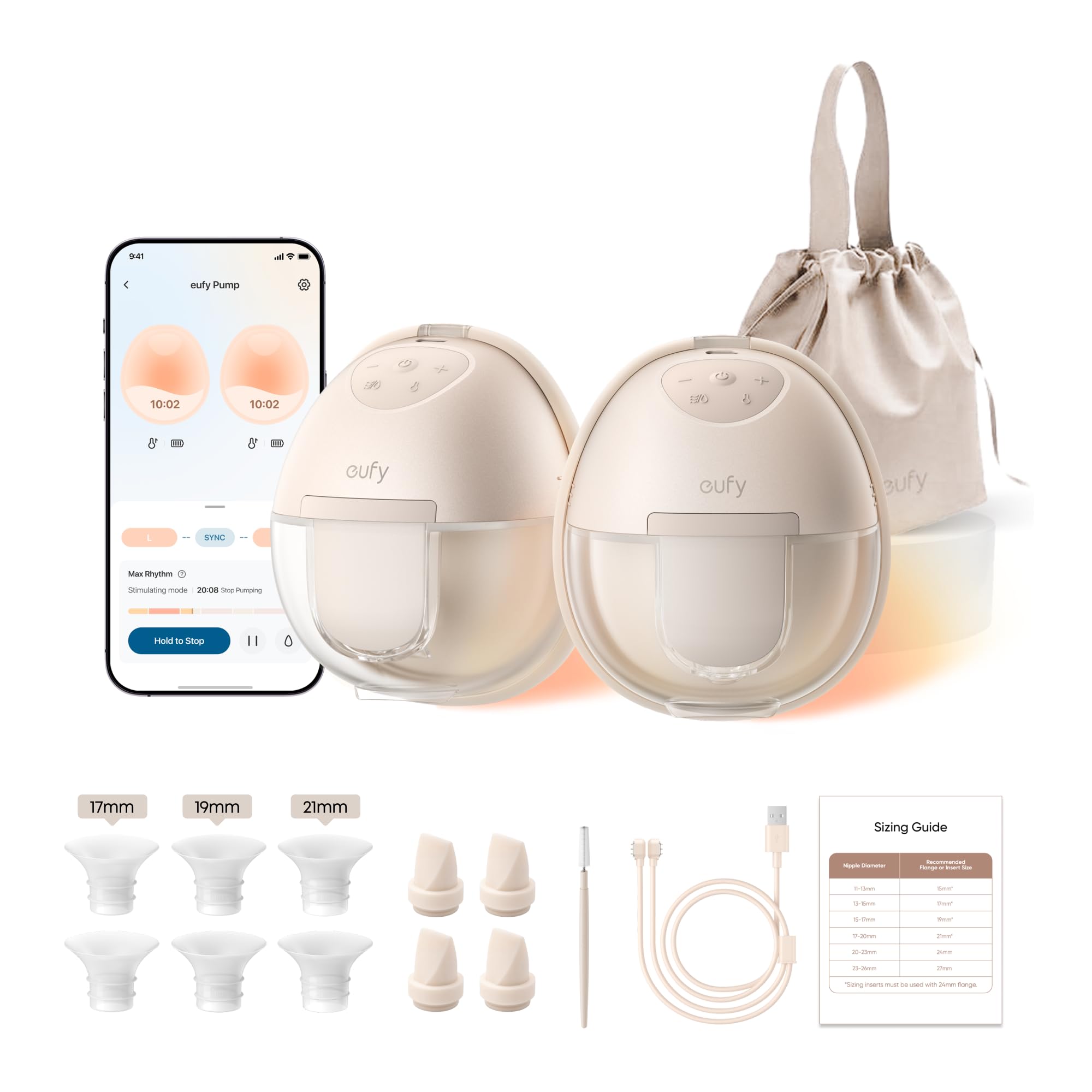
eufy S1
Key Features
- Noise: 46 dB
- Suction: Up to 300 mmHg
- Flange sizes: 17–24 mm
- Flange warmth: HeatFlow, all-around
- Price: Midrange
Warmth is the feature we did not expect to care about, and now it is the reason we reach for this one first. The HeatFlow flange spreads heat around the whole contact area rather than one hot spot, so partway into a session you stop bracing against the pull and start letting down. That is worth more to us than another notch of suction.
Not that suction is short. It tops out at 300 mmHg across four presets, and we spent most sessions in the middle of the range — past a certain point more pull stops being useful and starts being sore. The flange set decided it for us: 17 to 24 mm in the box covers most sizes, so there is no hunting for inserts before the first session.
At a quoted 46 dB it is quiet enough to pump through a video call without muting, though a shared office is a stretch. The app handles session control and the rhythm presets, and we set one and left it alone, which is the highest compliment an app setting gets at three in the morning.
The travel setup is where it thins out. The S1 Pro exists to add a charging case, and without one the S1 means packing a cable and finding a socket. On a nightstand that never matters. In a hotel it does.
Pros
- All-around flange warmth
- 17–24 mm flanges included
- 300 mmHg with usable presets
Cons
- Replacement parts are a recurring cost
We recommend the eufy S1 as the default: the warmed flange makes a session easier to sit through, the included 17 to 24 mm flanges fit most people, and nothing else here balances warmth and fit this well.
Best for Discreet In-Bra Use
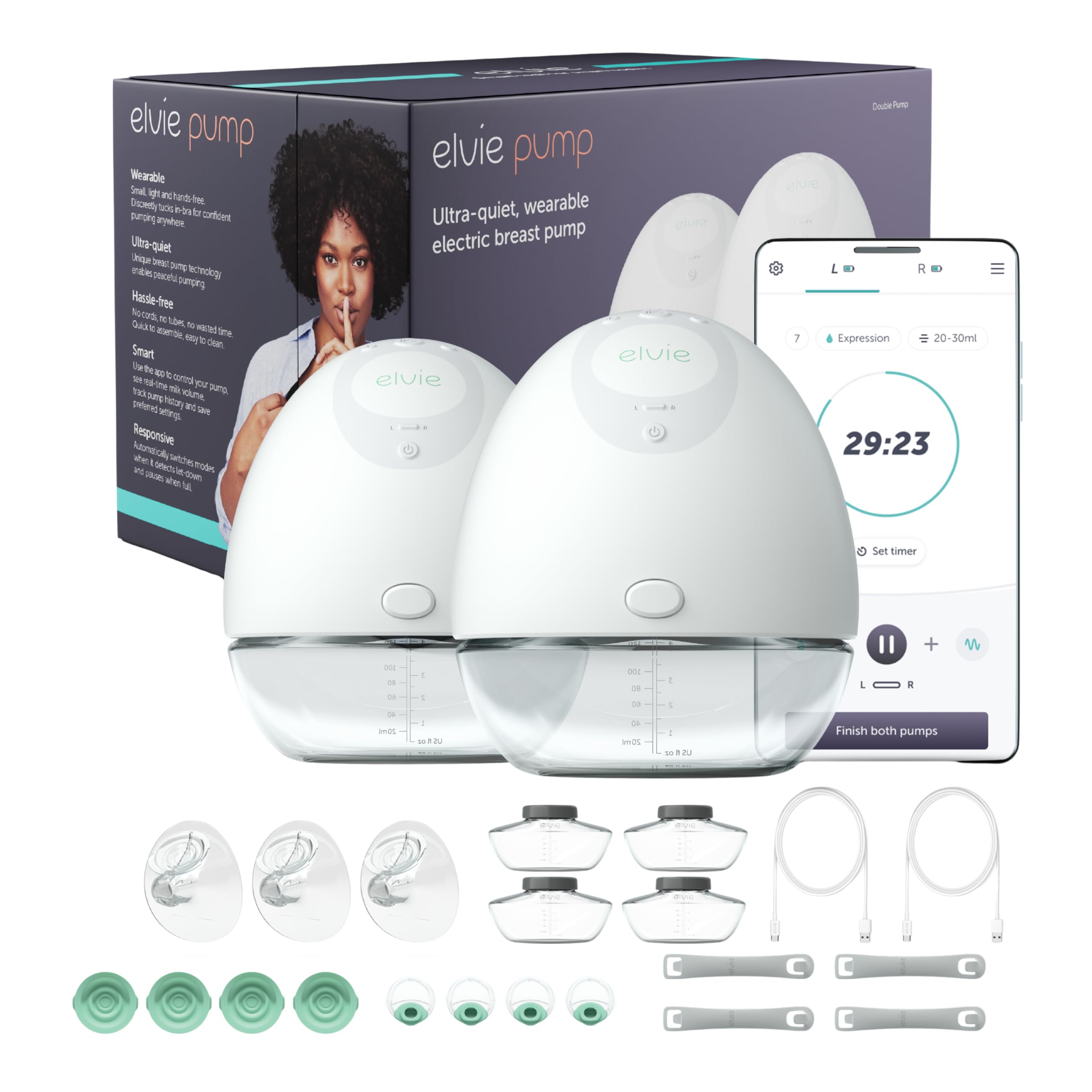
Elvie Pump
Key Features
- Weight: 14.8 oz
- Settings: Four personalized
- App control: Yes, with live volume
- In-bra size: 2.68 x 4.33 x 5.04 in
- Price: Premium
By its own listed dimensions the Elvie is the slimmest pump in this set: 2.68 by 4.33 by 5.04 inches, a shade under fifteen ounces, with nothing clipped to a waistband and no tubing to tuck out of sight. Under a loose shirt it is a shape rather than a pump.
What we think you are paying for is the software underneath. Infrared sensors read how much milk is in each bottle and the pump moves itself from stimulation to expression when let-down arrives, so a session becomes something that happens to you rather than something you operate with two hands.
The quietness is real. Elvie uses tiny Piezo discs oscillating at 21,000 times a second instead of a conventional motor, and on a call nobody on the other end knew. Four personalized settings sit there if you want them; we left it in auto and let the sensors work.
The detail we kept using long after the novelty wore off is the volume history — seeing what each side actually produced, without eyeballing a bottle by the fridge light, changes how you plan a day. That log is the part of the app that has nothing to do with looking discreet.
Pros
- Smallest in-bra footprint here
- Sensors switch modes on their own
- Live milk volume in the app
Cons
- No heated flange
- Priciest pump in this set
If discretion is the whole point, the Elvie is the one we point to: it is the smallest in-bra pump here, the app shows milk volume as it collects, and it charges a premium for both.
Best for Travel and Weekends
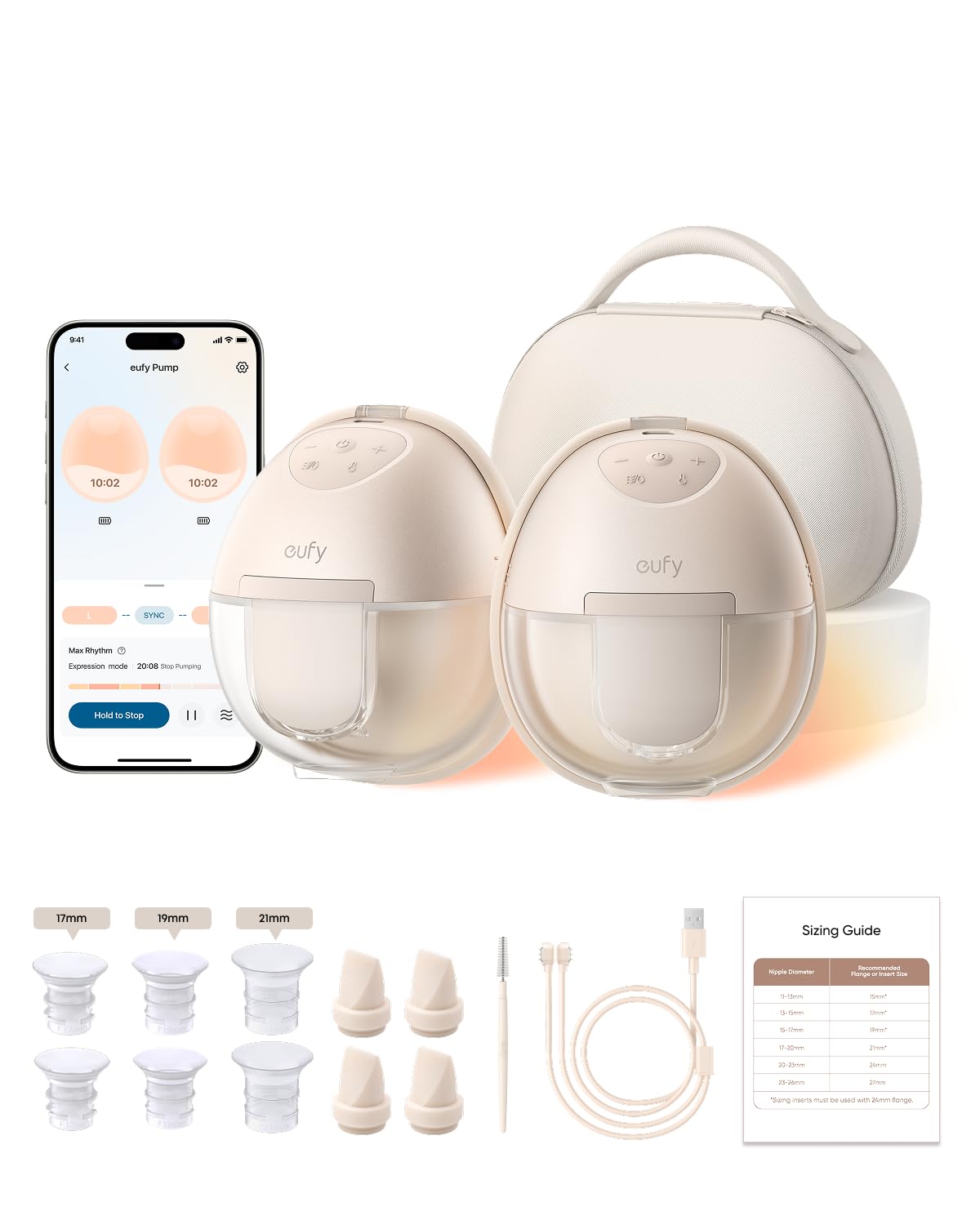
eufy S1 Pro
Key Features
- Weight: 9.12 oz
- Suction: Up to 300 mmHg
- Flange sizes: 17–24 mm
- Charging case: Up to five days of power
- Price: Premium
The S1 Pro is our top pick with a charging case added, and the case is not a gimmick: it is the difference between a pump you charge every night and one that comes out of a bag ready on the third day of a trip.
Everything we liked about the S1 travels with it — the all-around warming flange, the 300 mmHg ceiling with four presets, the 17 to 24 mm flange set, the 46 dB motor. The Pro’s cups are listed at 9.12 ounces, and the case holds what eufy quotes as up to five days of power.
So the question is not whether it pumps well, it is whether your week includes enough hours away from a socket to need it. Ours does, which is why the Pro earns a place rather than reading as a duplicate listing. The case does not solve the sink problem, though: the cups still come apart and need washing, and hotels are bad at that.
Pros
- Charging case rated for days
- Same warmth and suction as our top pick
- 17–24 mm flange range included
Cons
- You pay a premium for the case alone
We point to the S1 Pro when pumping happens away from a socket: it is our top pick with a charging case that runs for days, and the case is the only thing you pay extra for.
Best for All-Day Wear
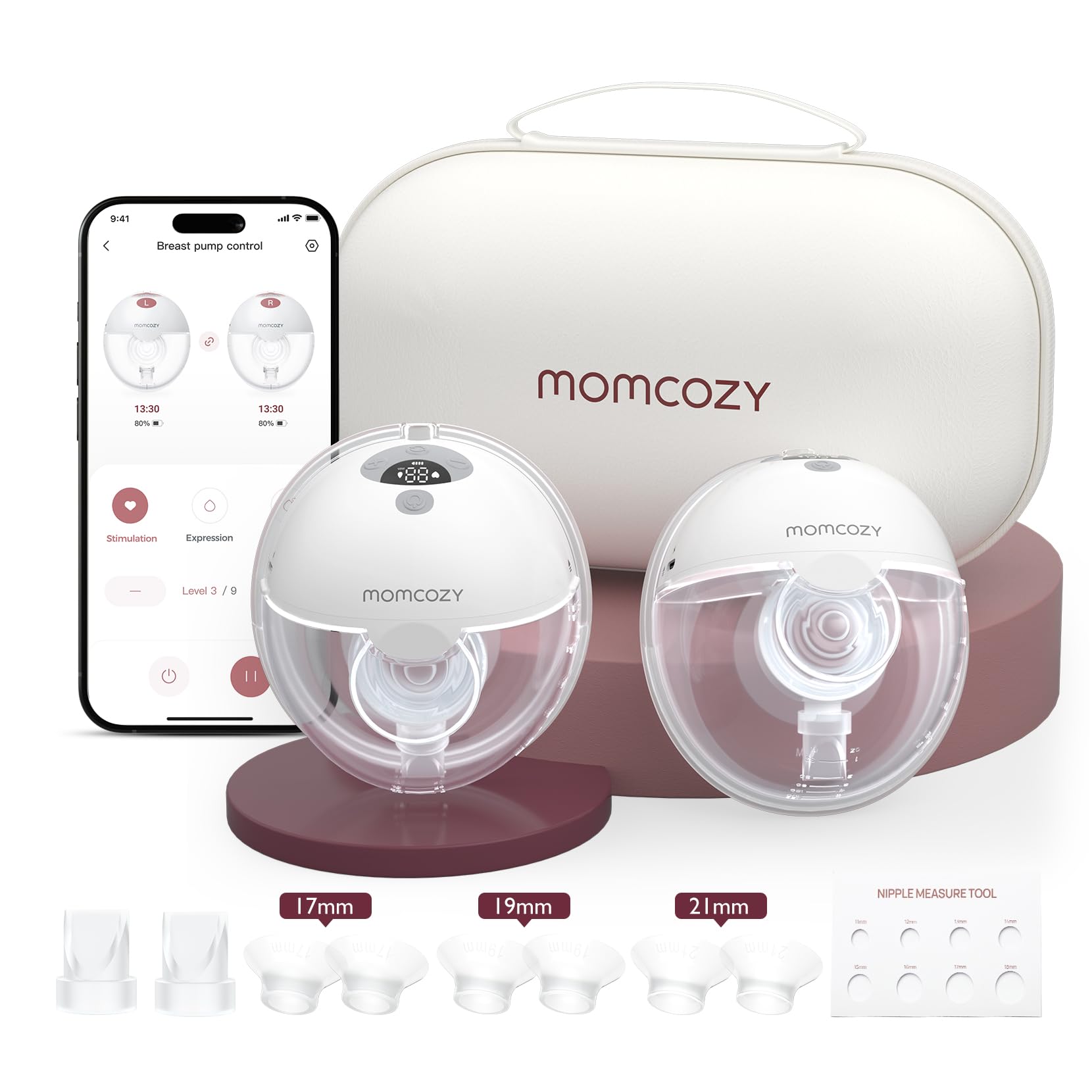
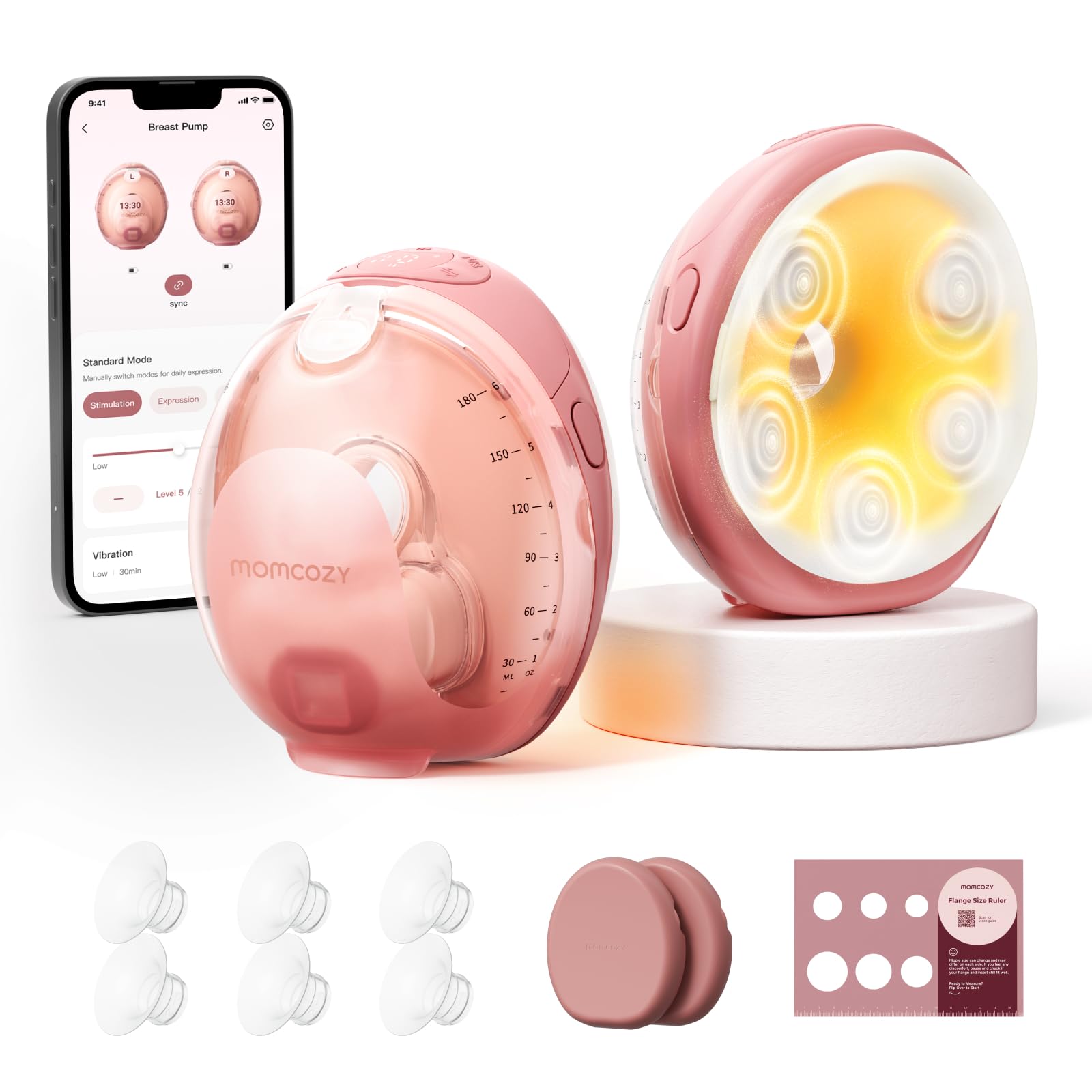
Momcozy M5 Smart
Key Features
- Modes: 3 modes
- Weight: 8.18 oz
- App control: Yes
- Flange sizes: 17, 19, 21, 24 mm
- Price: Midrange
232 g is the number that matters here. It is light enough that an ordinary nursing bra holds a cup in place without a second thought, and light enough that we stopped noticing it a few minutes into a session — which is the entire promise of the category, delivered without much fuss.
The suction structure is what we ended up appreciating more than the weight. Momcozy calls it Baby Mouth, and the pull-and-release rhythm is gentler than the steady drag of a basic pump, which is the difference between a session you tolerate and one you can repeat twice a day without wincing. Four flanges — 17, 19, 21 and 24 mm — cover most fits without ordering inserts.
The app is competent rather than essential; we set the level on the cup itself and rarely opened it. What we noticed instead is how little the M5 asks of a bag — it drops into a tote pocket beside the wipes and comes out ready, with no case to remember and no cable to hunt for.
Pros
- Lightest pump in this set at 232 g
- Four flange sizes included
- Gentle pull-and-release suction
Cons
- Only three modes, the fewest here
- No published battery runtime
For anyone who wants to forget the pump is there, we hand over the M5: 232 g, four flange sizes, and a softer suction rhythm than the budget pumps manage.
Best for Comfort-First Sessions
Momcozy Wellness 1
Key Features
- Suction: 0–295 mmHg
- App control: 4 modes, 12 levels
- Cup capacity: 180 ml / 6 oz
- Flange warmth: 99–106 °F, 3 levels
- Price: Premium
The flange heats to somewhere between 99 and 106 °F in three steps, and the difference between that and a cold cup is the difference between a session you get through and one you stop dreading. Warmth around the whole flange, not a single hot patch, is the entire pitch, and it is a good one.
Behind it sits a five-zone circular massage, Momcozy’s SoftPuls pull-and-release rhythm, four modes and twelve suction levels up to 295 mmHg, all reachable from the app. The transparent top is the detail we did not expect to use: it lets you check the seal and the flow without unclipping anything, and it caught a poor latch before it turned into a sore session.
Where it earns its place is comfort, and that is a particular buyer: the one whose let-down stalls, or whose nipples are done by Thursday. What we are least sure about is how the battery behaves after a year of daily use across this family of pumps, so register the warranty on day one and keep the packaging until you know.
Pros
- Warmed flange with five-zone massage
- Twelve levels via a usable app
- Clear top makes alignment easy
Cons
- 6 oz cups can need a mid-session empty
We reach for the Wellness 1 during tender weeks and stalled let-downs: warmed flange, circular massage, twelve app levels — the most comfort-focused pump in this set.
Best for First Wearable
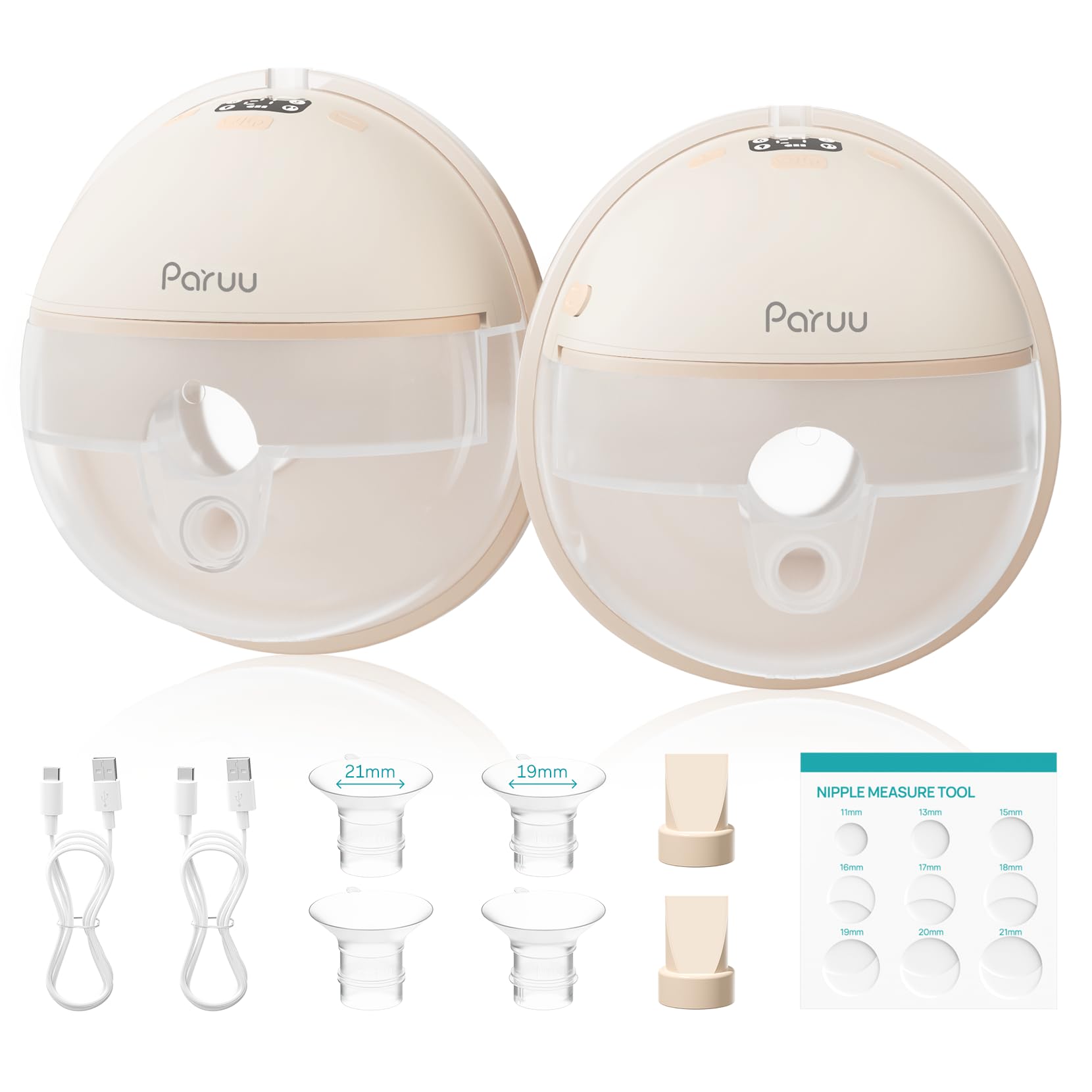
Paruu P16
Key Features
- Weight: 8.47 oz
- Suction: 49.5–309 mmHg
- Parts to wash: 4
- Flange inserts: 19, 21, 24 mm
- Price: Budget
Four modes, twelve levels and a 309 mmHg ceiling for roughly the price of a decent pumping bra — the P16 does not read like a budget pump on paper. That ceiling is the highest in this set, which is a strange thing to be able to say about the least expensive pump we recommend.
It holds up where it counts. The pull is strong and adjustable enough to find a setting that suits, the flange inserts at 19, 21 and 24 mm cover the common sizes, and the cup comes apart into four washing pieces with no fiddly membrane to line up at midnight. The price stopped registering within a week.
What you give up is the trimmings. The controls sit on the cup, with an LED screen showing mode, level and time, and the whole package is plainer than the premium picks — no warmed flange, no case, no phone involved. Plainer is not worse; it is just less to go wrong.
Pros
- 309 mmHg, the highest ceiling here
- Only four parts to wash
- Three inserts and a measuring card
Cons
- Needs charging every few sessions
- Motor is more audible than the premium picks
We made the P16 our budget pick because it gets the fundamentals right — the strongest suction here and four parts to wash — for a fraction of what the premium pumps cost.
Best for Larger Flange Sizes
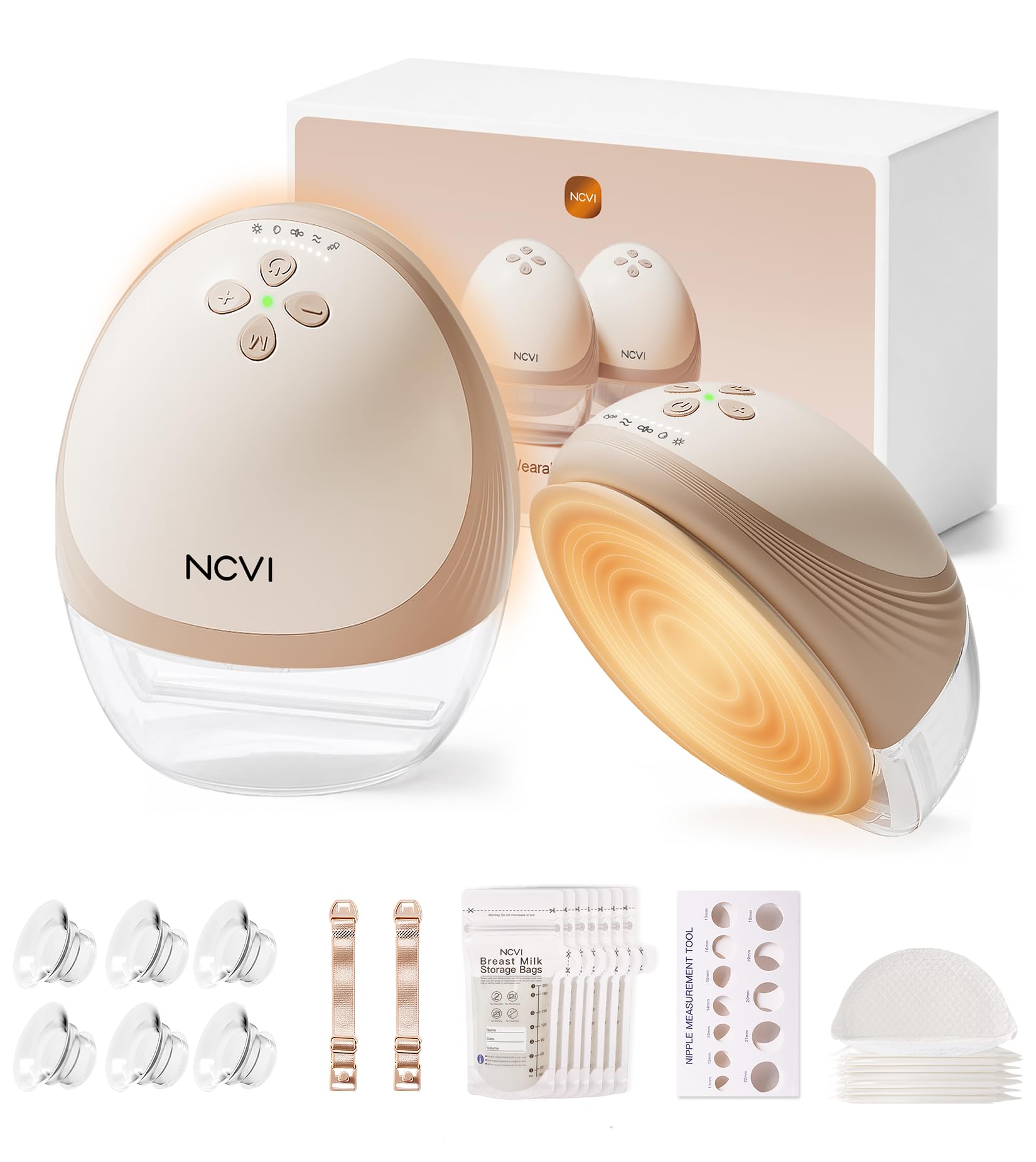
NCVI AM8161
Key Features
- Battery: Up to 180 minutes
- Suction: Up to 300 mmHg
- Flange sizes: 19, 21, 24, 28 mm
- Flange warmth: 360° heated
- Price: Budget
28 mm is the number that makes this pump worth writing about. Standard shields stop at 24 mm, and if that is too small for you the choice in this category collapses fast; the AM8161 ships with 19, 21, 24 and 28 mm options, and it is the only pump here whose listed sizes go past 24.
The rest of the spec sheet is competitive at twice the money. Suction runs to 300 mmHg, the flange warms all the way around rather than at a single point, and the 2,000 mAh battery is rated for up to 180 minutes — around eight sessions — with the motor quoted under 42 dB.
Wear parts are sold separately, so a tired valve or a stretched flange does not mean replacing a pump that still works. That matters more on a cheaper pump than an expensive one, because it is usually the silicone that gives out first while the motor keeps going.
If your measurement lands on one of those four sizes, this is the pump we point to first when standard shields have left you sore — the warmth, the 28 mm option and eight sessions of battery cover more ground than anything else at this price. Land between sizes, though, and order an insert with it rather than making a 24 mm shield work.
Pros
- 28 mm shield option, unique in this set
- Warms around the whole flange
- Up to 180 minutes per charge
Cons
We point to the AM8161 first if standard shields leave you sore: the 28 mm size, all-around warmth and an eight-session battery make it the most accommodating pump at the budget end.
How We Chose and Tested Wearable Breast Pumps
We built the shortlist from wearable pumps that keep surfacing in parenting forums, registry lists, and conversations with lactation consultants, then narrowed it by battery specs, flange sizes, and price. I tested eight pumps over seven months, using each for a full workday, a commute, a weekend trip, and the 2 a.m. feed. For every pump, I logged output against my regular double electric, timed assembly and positioning, and wore it under normal clothes to see whether it bulged or shifted when I bent over.
Comfort and suction got the same scrutiny: I cycled through every level to find where suction turned uncomfortable or ineffective, checked whether flange edges dug in after twenty minutes, and noted how completely each pump emptied me. Battery life was measured from full charge to shutdown during a real session, and I kept a decibel meter app open during letdown to see whether a pump would be audible on a call. For models with a heating feature, I used it during early-morning pumps and noted whether it helped letdown or just added a step.
After each wash, I checked for milk sneaking into tubing, cracks at the flange, and valves that had started to soften. We also weighed what came in the box—spare parts, a carry case, a charging case—against the price, since replacement valves add up. By the end, I re-ran the same workday and overnight sessions to see whether suction and battery life held up, and whether I’d still trust each pump in a diaper bag without a backup.
How to Choose a Wearable Breast Pump
Start with your flange size and the number of parts you will be washing twice a day; the motor’s marketing matters far less than either.
Fit first, and flange sizes are the tell
An in-bra pump lives or dies by the seal around your nipple, and the seal is a millimeter question. Measure before you order — the tunnel wants to be a couple of millimeters wider than your nipple, not sized to the widest part of the breast. Take the measurement on a normal day rather than a engorged one, and write the number down.
Then check what ships in the box. A set covering 17 to 24 mm means most people stop looking; sets that top out at 24 mm leave anyone larger hunting for a 28 mm shield, which only a few pumps here list. Buying a pump and a separate shield in the wrong week is how a good return window gets wasted.
Read the suction number as a ceiling
300 mmHg is worth comparing, but it is the most the motor can pull, not a measure of how much milk it removes. What separates a comfortable pump from a punishing one is how many usable steps sit below that ceiling, and whether the first mode imitates a let-down rhythm instead of pulling flat out from the first second.
Twelve levels you can walk up slowly beat a big number with three settings. And if a session hurts, the flange is the usual culprit rather than the level; turning suction down treats the symptom, not the fit.
Discretion is bulk, noise and the bra underneath
Every pump here sits inside a bra, so what separates them is what shows at your desk. A cup 2.4 inches thick reads differently under a shirt than a handful, and capacity tends to split around 180 ml a side, which is roughly one feed for a younger baby.
Sound matters too: a quoted 42 dB disappears in a shared office, while 46 dB is fine on a call but audible in a quiet room. The bra does half the work, as well — a soft bralette lets the cup drift and break the seal, which is exactly when a pump starts to feel weak.
Warmth, apps and the extras worth paying for
A heated flange is the premium feature we now consider worth the money: all-around warmth rather than one hot spot is what makes a session easier to sit through, and it is the difference we noticed fastest. If your let-down stalls or you are sore by the end of the week, it earns its cost faster than any app.
App control is convenience rather than necessity — good for tracking volumes across a day, less useful at three in the morning when you want one button. A charging case only justifies itself if you regularly pump away from home.
Battery life, and how you will charge it
Runtime claims here run from about three hours to eight sessions per charge, and the pumps that publish a figure are easier to plan around than the ones that do not. Treat every claim as a best case measured on a low setting and a fresh battery.
Think about the shape of your day instead. A pump that charges in a case suits long stretches away from home; one that charges by cable wants a routine, usually overnight next to the bed. A ten-minute top-up before you leave buys you a session you did not plan for.
Frequently Asked Questions
Do I still need a regular double pump?
For most people, yes. A wearable is the pump for the commute, the desk and the ten minutes before a call; a plug-in double pump still does the heavy lifting and holds up better to exclusive pumping, where output matters across six or seven sessions a day.
Buy the wearable as an addition rather than a replacement, and keep a manual pump in the diaper bag for the day the battery does not cooperate.
How often do wearable pump parts need replacing?
Sooner than the pump, and the valves go first. Silicone duckbill valves soften with washing and steam, and once they stop snapping shut the suction drops while the motor still sounds perfectly fine.
Keep a spare set from the first week, swap the valves the moment output falls, and replace a flange when the tunnel looks cloudy, stretched or scratched.
Can I pump while driving or leaning over the crib?
Sitting upright, yes — a straight-backed commute is one of the better places for a session. Leaning forward is where it goes wrong: the cups sit open at the top, so tipping spills milk toward the motor and breaks the seal.
If you need to lift the baby mid-session, stop the pump and set both cups down first. It is a five-second habit that saves a motor.
Final Verdict
Buy the eufy S1. The warmed flange makes the part of a session you dread easier to sit through, the 17 to 24 mm flange set fits most people without a second order, and it is the one pump here that gets warmth, fit and quiet right without moving to the top of the price range.
If your pumping happens away from a socket more often than at a desk, the S1 Pro’s charging case is worth the step up. If the budget is tight, the Paruu P16 is the one we hand over: less polish, but the pump underneath does the job.