This post contains affiliate links. We may earn a small commission when you buy through our links — at no extra cost to you.
Many parents quickly discover that breast pump performance varies widely — suction strength can be inconsistent, battery life may fall short of claims, and small rubber parts wear out faster than expected. The challenge isn’t that one pump is universally better; it’s that the right pump depends entirely on how often you pump, where you pump, and whether you’re nursing or exclusively pumping.
This guide focuses on matching each pump to its intended use case: manual collectors for passive letdown catching during nursing, traditional hand pumps for occasional travel backup, electric pumps for daily primary use, and wearable models for hands-free mobility. By understanding these categories and their real-world trade-offs, you can avoid the common regrets of buying a pump that doesn’t fit your routine.


Best for Exclusive Pumpers
Spectra S1 Plus Electric
Key Features
- Pump Type: Electric double pump
- Suction & Adjustability: Adjustable cycle/vacuum
- Portability & Battery: Rechargeable battery, corded
- Price: $$$
The S1 Plus runs for days on a single charge, making it one of the few traditional electric pumps you can actually carry room to room without hunting for an outlet. Its 45 dB motor passes as background noise, so pumping in a shared office or next to a sleeping baby doesn’t disturb anyone. The adjustable suction and cycle settings empty breasts faster than most hospital-grade pumps, cutting total pumping time each session. While the vast majority of owners report years of trouble‑free use, a small number of units have needed motor replacement after several months.
This pump fits exclusive pumpers who want to move around the house or pack the pump for a workday. The rechargeable battery and lightweight body (under 3 lbs) mean you aren’t tied to a nursing chair. The occasional motor reliability issue is a real but uncommon risk—most users never encounter it. It’s not ideal for shoppers on a tight budget or anyone who pumps only once or twice a week, as the premium price makes sense only with regular use.
Pros
- Rechargeable battery lasts multiple days, freeing you from outlet dependency.
- Quiet 45 dB motor lets you pump in shared spaces without drawing attention.
- Adjustable suction and cycle settings empty breasts efficiently, reducing pumping time.
Cons
- Occasional motor failure after several months of use, though most units remain functional for years.
Buy this if you need a portable, quiet electric pump for exclusive or daily pumping. Skip it if you pump only occasionally or want the lowest upfront cost.
Best for Nursing Moms
Haakaa Manual Breast Pump
Key Features
- Pump Type: Manual silicone collector
- Suction & Adjustability: Passive, not adjustable
- Portability & Battery: Compact, no battery
- Ease of Cleaning: One-piece design
- Flange Sizes: Universal fit
- Price: $
Unlike electric pumps, this silicone collector works passively: you squeeze the bulb, attach it to the opposite breast during nursing, and it captures the letdown that would otherwise soak a pad. The single-piece construction is food-grade silicone, easy to rinse and sanitize. It builds a small stash without motor noise or cords. However, suction strength varies—it may loosen as it fills or cause discomfort for some users. Best as a backup for nursing moms who want to catch extra milk on the side, not for those relying on a pump for exclusive feeding.
Pros
- Simple squeeze-and-attach operation catches letdown effortlessly.
- Food-grade silicone cleans in seconds with no small parts.
- Effective for building a milk stash from passive letdown collection.
Cons
- Suction weakens as the collector fills; some users find it uncomfortable.
Buy this if you’re a nursing mom who wants an effortless, low-cost way to catch letdown and grow a small stash. Skip it if you need a primary pump with consistent, adjustable suction for exclusive pumping.
Best for Budget-Conscious Moms
NCVI Electric Breast Pump 8782
Key Features
- Pump Type: Electric double pump (rechargeable)
- Suction & Adjustability: 4 modes, 9 levels
- Portability & Battery: 2200mAh, USB-C
- Flange Sizes: Multiple sizes included
- Price: $
The NCVI 8782 delivers features often found in pumps costing three times as much: quiet operation, multiple modes and levels, and USB-C recharging. However, the battery life falls short of advertised claims — expect to recharge after two sessions — and suction may feel weaker over months of regular use. For moms who pump occasionally or need a reliable backup for work or travel, this budget-friendly option offers impressive functionality without the premium price tag. It’s best suited for light duty rather than as a primary pump for exclusive pumping.
Pros
- Exceptional value — features comparable to premium pumps at a fraction of the cost.
- Very quiet operation, making it discreet for pumping at work or overnight.
- Intuitive controls and simple assembly right out of the box.
Cons
- Battery life is shorter than advertised; may require charging after two pumping sessions.
- Suction strength can diminish over time, especially for frequent users.
Buy this if you need an affordable, quiet electric pump for occasional use or as a travel backup.
Best for Moms Seeking Hands-Free
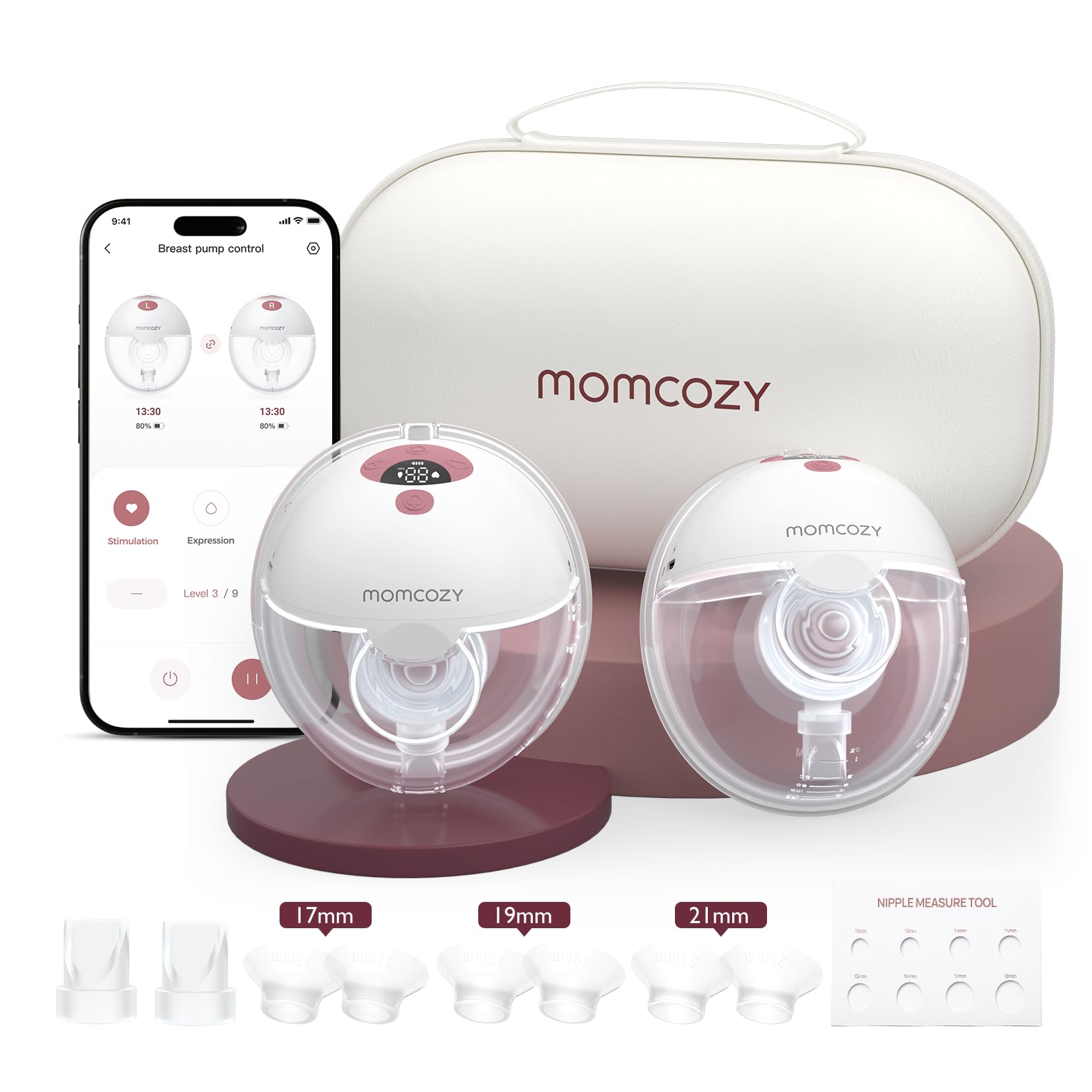
Momcozy M5 Wearable Pump
Key Features
- Pump Type: Wearable electric double pump
- Suction & Adjustability: 3 modes, 9 levels
- Portability & Battery: Rechargeable, all-day battery
- Flange Sizes: 17/19/21/24mm inserts
- Price: $$$
The Momcozy M5 delivers hands-free pumping with app-controlled suction tracking and a battery that lasts multiple sessions, making it a strong alternative to the Spectra S1 for moms who need mobility. However, it is noticeably louder than traditional pumps and can leak if the flange size isn’t correct or assembly is imperfect — a common trade-off with wearable designs. It outperforms budget wearables like the Paruu in battery life and app features, but those looking for quiet pumping in public or a foolproof seal may prefer a corded pump. Best for multitasking moms who prioritize freedom over discretion.
Pros
- Fits inside bra for hands-free pumping – lets you move around and multitask during sessions.
- Long battery life easily lasts through a full day of pumping sessions.
- Comfortable fit with multiple flange size inserts to reduce discomfort.
Cons
- May leak if flange size isn’t correct or assembly isn’t perfect – careful sizing helps.
- Noticeable motor noise that may be distracting in quiet settings.
Buy this if you need hands-free freedom and long battery life for pumping on the go. Skip it if you require silent operation or a leak-proof seal.
Best for Nursing Moms
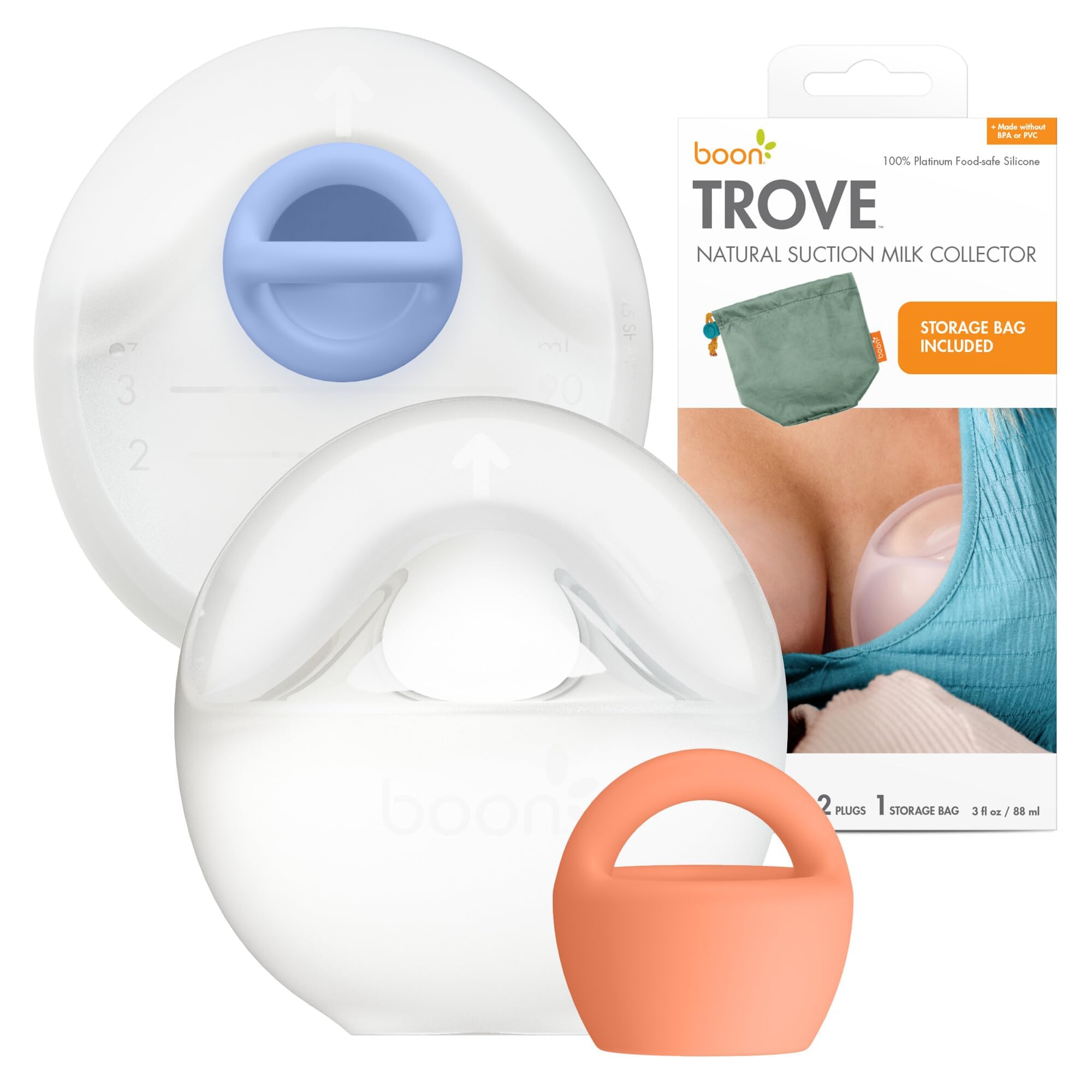
Boon Trove Silicone Manual
Key Features
- Pump Type: Manual silicone collector (wearable)
- Suction & Adjustability: Passive suction
- Portability & Battery: Hands-free, bra-fit
- Ease of Cleaning: Dishwasher safe
- Flange Sizes: One size
- Price: $$
This silicone collector fits inside a nursing bra for hands-free letdown catching, with a soft, secure seal that stays put while you move. The main trade-off: suction is gentler than the most popular passive collector, so some users collect less milk. It’s best for nursing moms who want to discreetly capture letdown while feeding or multitasking, but not as a primary pump for low supply.
Pros
- Fits securely inside nursing bra for hands-free use.
- Soft silicone feels comfortable against skin and is easy to clean.
- Effectively collects letdown milk, helping build a stash.
Cons
- Suction may be gentler than the leading passive collector, resulting in less milk for some users.
Buy this if you want a comfortable, hands-free way to catch letdown while nursing or on the go.
Best for Moms Wanting a Portable
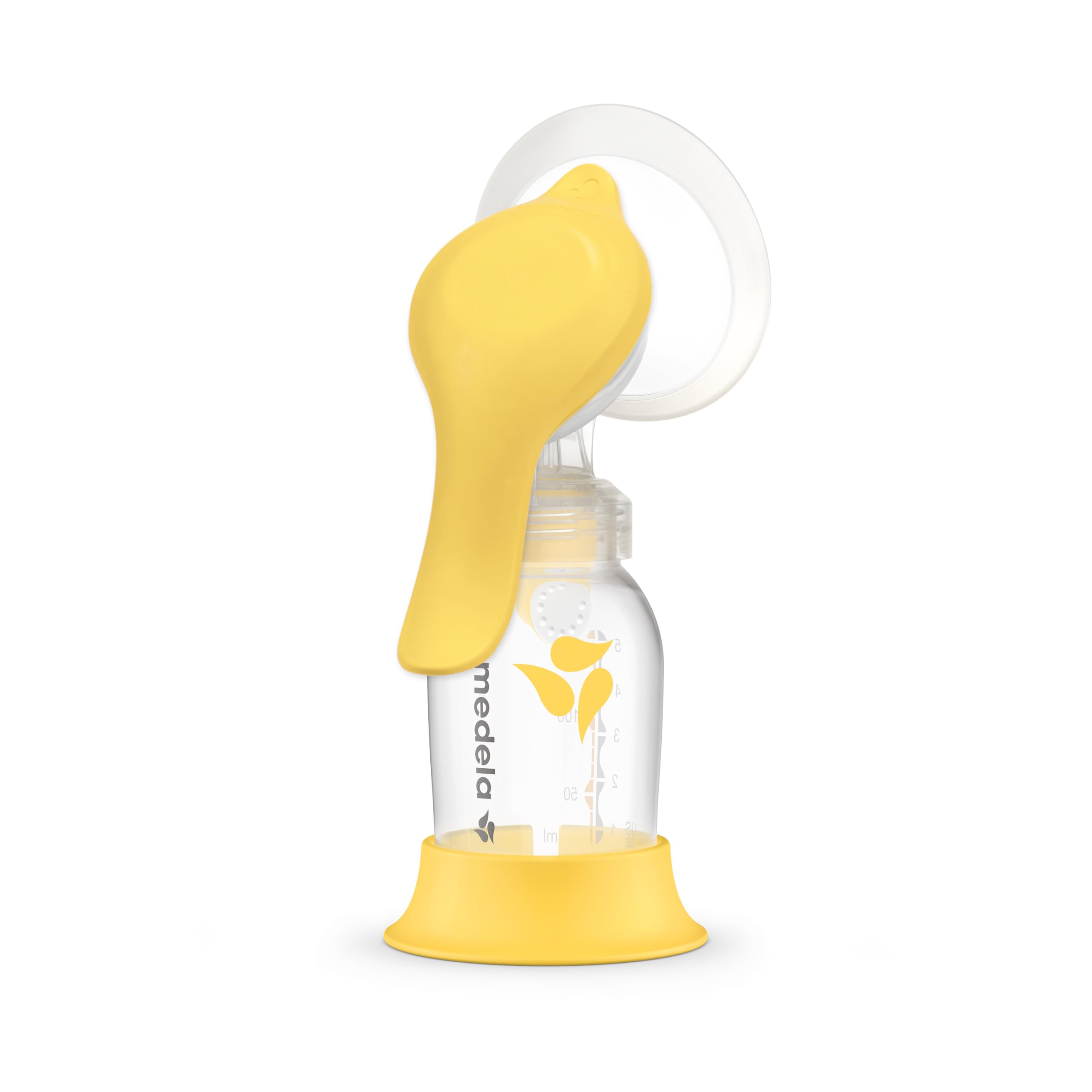
Medela Harmony Manual Pump
Key Features
- Pump Type: Manual hand pump
- Suction & Adjustability: 2-Phase Expression
- Portability & Battery: Lightweight, portable
- Ease of Cleaning: Few parts
- Price: $$
The Medela Harmony borrows the same 2-Phase Expression technology found in Medela’s electric pumps, giving it an edge over simpler manual designs – many users report it pulls milk as well as their electric pump. The compact build and few parts make it quick to assemble and clean, which matters when you’re pumping away from home or need a lightweight backup. Compared to manual pumps with more flange size options, the Harmony offers less adjustability and its suction can fade over time; some units have O-ring or handle failures. This pump fits the parent who already owns an electric pump and wants a portable second option, not someone who needs a heavy-duty daily manual workhorse.
Pros
- Small, lightweight size fits in a diaper bag for on-the-go pumping.
- Few parts to wash – quick turnaround between sessions.
- Gets more milk than expected in less time for a manual pump.
Cons
- Suction may weaken or disappear over time in some units.
- O-ring and handle durability issues reported in a notable share of units.
Buy this if you need a portable manual pump for occasional use or as a backup to an electric pump. Skip it if you require consistent strong suction for heavy daily pumping.
Best for Home/desk Use
Spectra S2 Plus Electric

Key Features
- Pump Type: Electric double pump (corded)
- Suction & Adjustability: Adjustable cycle/vacuum
- Portability & Battery: Plug-in only
- Price: $$$
The Spectra S2 Plus delivers the same strong, adjustable suction and quiet operation as its battery-powered sibling, making it a cost-effective choice for stationary pumping. Reviewers consistently report better output and less discomfort than pricier competitors like Medela. The trade-off is the cord: you lose portability, and a minority of units experience motor issues within the first few months. For moms who pump mostly at a desk or near an outlet, this is a smart way to save money without sacrificing performance.
Pros
- Outperforms Medela and hospital-grade pumps in milk output.
- Ultra-quiet motor makes late-night pumping discreet.
Cons
- Must be plugged into an outlet – not portable for on-the-go use.
- Motor reliability varies; a minority of pumps develop issues early.
Worth considering if you pump primarily at home or a desk and want top-tier performance without paying for battery portability.
Best for Backup Pump
Lansinoh Manual Breast Pump

Key Features
- Pump Type: Manual hand pump
- Suction & Adjustability: Two-phase pumping
- Portability & Battery: Lightweight, fits in diaper bag
- Ease of Cleaning: Few parts
- Flange Sizes: 25mm & 30.5mm
- Price: $$
Includes two flange sizes and an ergonomic handle for a comfortable fit. Works well for moms with good milk supply needing a backup or travel pump. Suction can be weak for low-supply moms, so it’s not ideal for exclusive manual pumping. A capable option next to the more recognized Medela Harmony.
Pros
- Comfortable flanges with two size options reduce nipple pain
- Lightweight and fits in a diaper bag for pumping on the go
Cons
- Suction can be weak, making it less effective for low-supply moms
Worth considering if you have a good milk supply and need a lightweight, comfortable manual pump for backup or travel.
Best for Budget Hands-Free
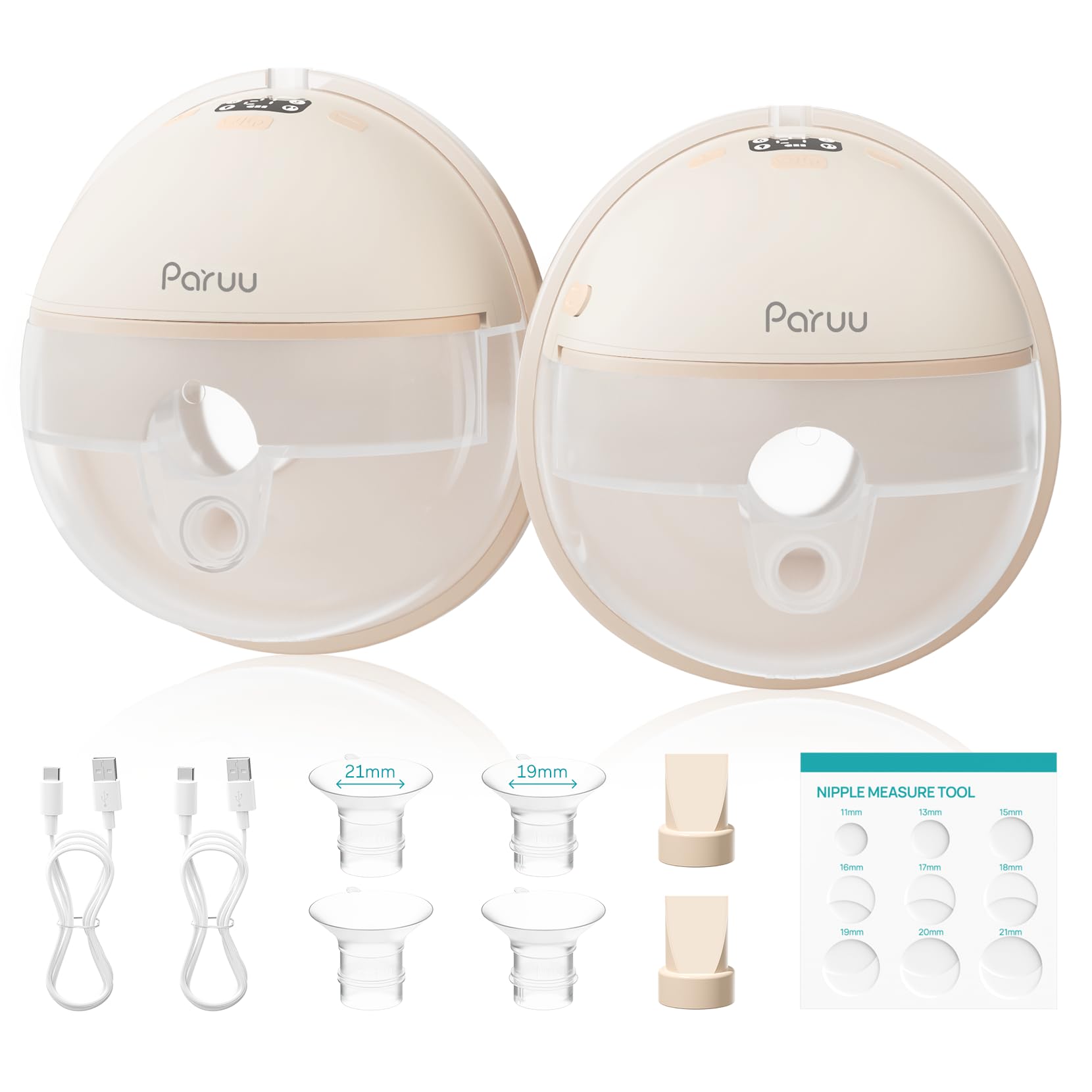
Paruu P16 Wearable Pump
Key Features
- Pump Type: Wearable electric double pump
- Suction & Adjustability: 4 modes, 12 levels, 309mmHg
- Portability & Battery: Rechargeable (2-3 sessions)
- Flange Sizes: 19/21/24mm inserts
- Price: $
The Paruu P16 offers strong suction and easy setup at a budget-friendly price, making it a solid backup or travel pump. However, its short battery life (2-3 sessions per charge) and noticeable noise mean it’s not suited for all-day use or quiet settings.
Pros
- Budget-friendly wearable pump that saves money over competitors.
- Simple to set up and use anywhere without cords.
Cons
- Battery life is short, lasting only 2-3 sessions per charge.
Worth considering if you need a budget-friendly wearable for occasional pumping or as a backup pump.
Medela Symphony Breast Pump Kit
Medela Symphony Breast Pump Kit

This kit bundles genuine Medela tubing, shields, valves, and bottles for use with the Symphony pump. Parts fit precisely and the system works as intended. The rubber valves and membranes may wear over time, so expect occasional replacements. This is strictly an accessory kit – you must already have access to a Medela Symphony pump.
Pros
- Genuine Medela parts ensure consistent fit and function.
- Works flawlessly with Medela Symphony pump – no fit issues.
Cons
- Valves and membranes are delicate and may tear with regular use.
Worth considering if you have access to a Medela Symphony pump and need a complete set of accessories at a lower cost than buying separately.
How to Choose
The most important buying decision is matching the pump type to your pumping style — a passive collector for nursing, a manual for occasional use, or an electric for exclusive pumping.
Pump Type
Decide between manual, electric, and wearable based on your routine. Manual pumps are best for occasional use or backup. Electric pumps handle daily primary pumping efficiently. Wearable models offer hands-free mobility but often trade off battery life and suction strength.
Suction Strength and Adjustability
Adjustable suction levels let you find a comfortable yet effective setting. Some pumps offer gentle suction for sensitive breasts, while others provide stronger vacuum for faster expression. Fixed-suction collectors like silicone pumps rely on passive letdown and cannot be adjusted.
Portability and Battery Life
If you pump on the go, a rechargeable battery is essential. Non-rechargeable models limit you to outlets, which can be inconvenient at work or while traveling. Battery life varies widely — budget wearables may last only two sessions, while premium models can last a full day.
Ease of Cleaning
Pumps with fewer parts are easier to clean, especially for daily use. Silicone collectors are the simplest, often one piece. Wearable pumps and electric models with multiple valves and membranes require more thorough cleaning and parts replacement over time.
Flange Size Options
Incorrect flange size is a common cause of pain and poor output. Measure your nipple diameter before buying. Look for pumps that offer multiple size options or include inserts to fit different anatomies.
FAQ
Can a manual breast pump replace an electric pump?
Manual pumps are not designed for exclusive pumping. They require hand effort and produce inconsistent suction over time. For occasional use or as a backup, they work well, but for daily pumping, an electric pump is more efficient and less tiring.
How do I get better suction with a silicone breast pump?
Ensure a tight seal by centering the pump on the nipple and pressing out air. Some users find that flipping the pump inside out and squeezing before attaching improves suction. Also, check that the pump is not overfilled, as that can cause loss of suction.
How long does a wearable breast pump battery last?
Battery life varies by model. Budget wearables often last only 2-3 sessions per charge, while premium models like the Momcozy M5 can last a full day. Check the mAh rating or user reviews for real-world battery performance.
Why does my breast pump hurt and how to fix it?
Pain is usually caused by using the wrong flange size. Measure your nipple diameter and switch to a properly sized flange. Also, ensure the suction level is not too high. Many pumps offer lower settings that are gentler while still effective.