This post contains affiliate links. We may earn a small commission when you buy through our links — at no extra cost to you.
The term ‘hospital grade’ gets thrown around on breast pumps that range from $60 to $500, yet the actual suction power and motor longevity vary wildly. Many parents discover too late that a budget-friendly claim doesn’t keep up with triple-digit daily use, while premium wearables can stop working after a month.
The most reliable pumps share a few traits: closed-system design, consistent motor output, and—for those pumping at work—a rechargeable battery that lasts multiple sessions. The real choice comes down to how you pump: if you’re tied to an outlet, a corded model saves money; if you need to move between rooms or offices, the battery premium is worth it. This guide highlights the pumps that actually deliver on the hospital-grade promise, so you can focus on feeding your baby instead of troubleshooting your equipment.


Best for Exclusive Pumpers
Spectra S1 Plus Portable
Key Features
- Portability: Battery/Corded
- Closed System: Yes
- Noise (dB): 45 dB
- Price: Premium
The Spectra S1 Plus combines a rechargeable battery with suction strong enough for frequent, exclusive pumping. Owners report sessions that finish faster than with many competitors, thanks to the efficient milk removal, while the quiet motor (45 dB) means you can pump without waking a sleeping baby or partner. The battery holds charge for multiple sessions, making it genuinely portable for work, errands, or travel.
This pump suits moms who pump as their primary feeding method and need freedom from an outlet. The closed system with backflow protector keeps milk from entering the tubing. A small number of units have experienced motor failure after months of heavy use, so keep your warranty information accessible.
Pros
- Long-running rechargeable battery for pumping sessions away from an outlet
- Quiet operation that won’t disturb sleeping baby or partner
- Effective suction shortens pumping time while increasing output
Cons
- Occasional motor failure after months of use in a minority of units
Buy this if you pump exclusively and need a portable, quiet, hospital-grade pump with a rechargeable battery. Skip it if you pump only occasionally and can save money with the corded Spectra S2.
Best for Stationary Pumping
Spectra S2 Plus Electric
Key Features
- Portability: Corded
- Closed System: Yes
- Noise (dB): 45 dB
- Price: Mid-Range
The S2 Plus costs less than the top-pick S1 yet delivers the same hospital-grade suction and whisper-quiet operation, plus a two‑brightness nightlight. The trade‑off is a corded design—you’re tethered to an outlet. A minority of users report suction inconsistency or early motor failure, but for home or office pumping where portability isn’t needed, this is the more budget‑friendly option.
Pros
- Identical suction performance to higher‑priced hospital pumps, at a lower cost.
- Extremely quiet during use; comfortable for nighttime sessions.
- Built‑in nightlight with two brightness settings aids late‑night pumping.
Cons
- Corded only – no battery for moving around the house or office.
- Occasional suction inconsistency or motor failure reported in a minority of units.
Buy this if you want an affordable, quiet stationary pump with a nightlight for home or office use. Skip it if you need battery‑powered portability for pumping on the go.
Best for Backup or Travel
NCVI Electric Pump 8782
Key Features
- Portability: Rechargeable
- Closed System: Anti-backflow
- Noise (dB): 40 dB
- Price: Budget
The NCVI 8782 delivers an ultra-budget price with quiet, portable operation and easy cleaning — a strong value for the cost. However, suction is often inconsistent, and battery life frequently falls short of advertised, with many users needing to charge after each session. These limitations make it unsuitable as a primary pump. Best suited as a backup or travel pump for budget-conscious moms who already have a reliable main pump. Despite these trade-offs, it outperforms many similarly priced options for occasional use.
Pros
- Budget-friendly price with multiple pumping modes and levels.
- Quiet operation and compact size for discreet pumping on the go.
- Easy to assemble and clean — non-electrical parts are dishwasher safe.
Cons
- Inconsistent suction strength — many users find it weak for effective pumping.
- Battery life often lasts only one to two sessions despite advertised claims.
Buy this if you need an affordable backup pump for occasional use. Skip it if you require consistent suction and long battery life for frequent pumping.
Best for Hands-Free Freedom
Willow 360 Wearable
The Willow 360 delivers on its promise of truly leak-proof pumping in any position, thanks to the patented latch. This design freedom is unmatched among hospital-grade wearables – you can recline or lie down without spillage. The app control adds convenience. However, this luxury comes with notable trade-offs. Reports of pumps failing within the first month and air bubbles in milk bags causing waste and inaccurate volume readings are recurring themes. For the premium price, these reliability concerns are hard to ignore. This wearable is best suited for tech-savvy moms who prioritize freedom and are willing to troubleshoot occasional issues, but it’s not the set-and-forget solution the price suggests.
Pros
- True leak-proof pumping in any position, even lying down.
- Hands-free operation with app control for on-the-go use.
Cons
- High cost with occasional pump failures reported within weeks of use.
- Milk bags trap air, causing waste and inaccurate full readings.
Buy this if you value absolute freedom to pump in any position and don’t mind troubleshooting. Skip it if you need proven durability or are on a strict budget.
Best for Affordable Wearable
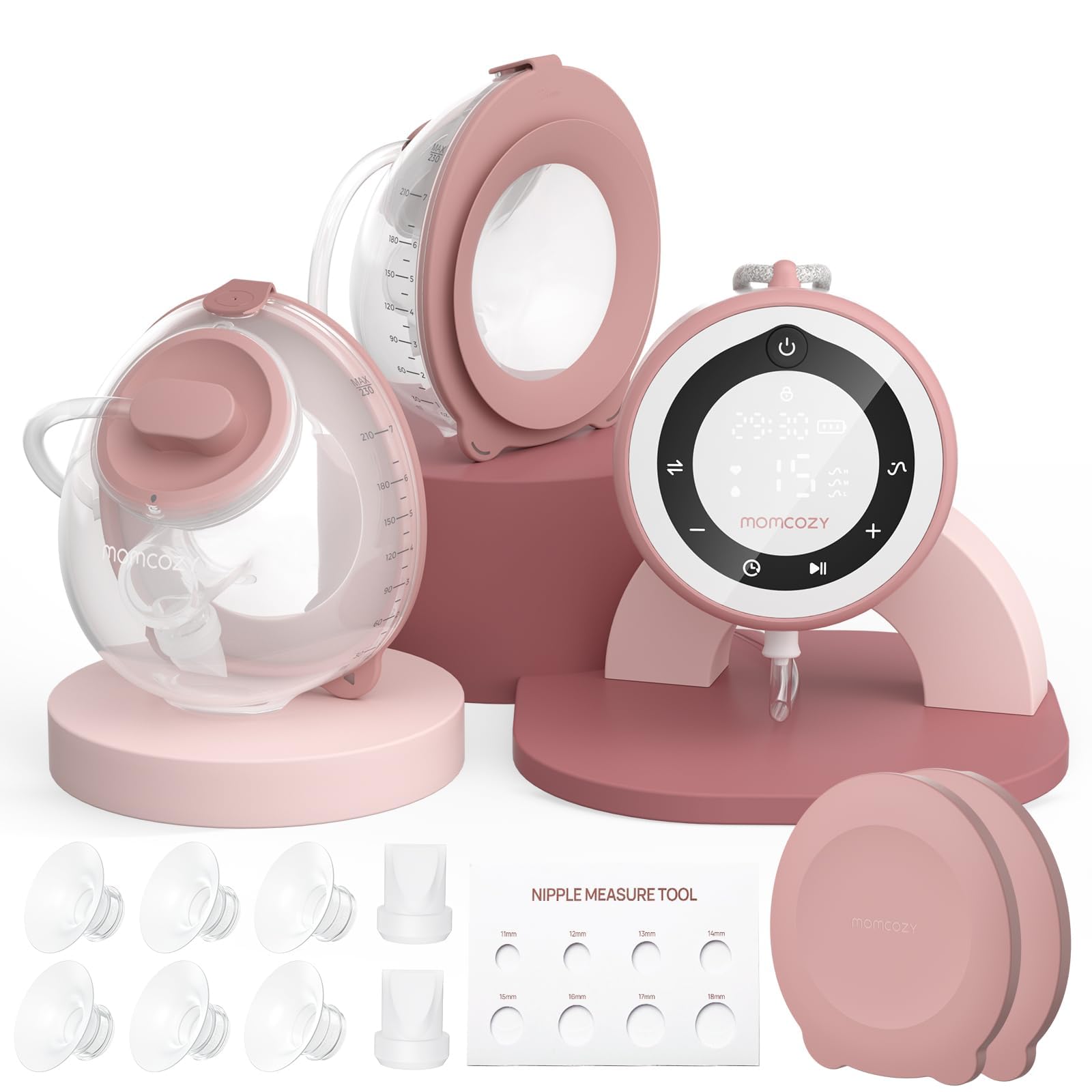
Momcozy V1 Pro Wearable
The Momcozy V1 Pro delivers wearable freedom at roughly half the price of premium options like the Willow 360, with 15 suction levels, three rhythms, and a battery rated for up to eight sessions. The 120g cups fit discreetly under clothing, and several users report adequate output for occasional pumping. The trade-off is uneven quality control: pumps have failed within days, and one side may produce significantly weaker suction. This is best suited for moms who want a budget-friendly hands-free option and are comfortable with the possibility of needing a replacement.
Pros
- Comfortable, lightweight cups that fit discreetly under clothing
- 15 adjustable suction levels and 3 pumping rhythms for customization
- Long battery life supports up to 8 pumping sessions per charge
Cons
- Quality control varies; some units stop working within days of purchase
- Suction strength may be uneven between left and right cups
Buy this if you want an affordable wearable pump with adjustable settings and are okay with potential quality control issues. Skip it if you need guaranteed reliability or plan to pump exclusively.
Medela Symphony Kit
Medela Symphony Kit

This kit includes everything needed to use a Medela Symphony rental pump: flanges, tubes, valves, and bottles. Compatibility is flawless, and the price is far lower than buying these parts individually through a hospital. The catch: it requires the Symphony pump itself—this is not a complete breast pump. If you already have access to a Symphony at work or a rental, it’s a budget-friendly way to get the right parts. However, the rubber membranes and valves wear out quicker than ideal, so plan on replacing them periodically.
Pros
- Genuine compatibility with Medela Symphony pump
- Complete kit at a budget-friendly price compared to hospital pricing
Cons
- Rubber membranes and valves wear out quickly and may need frequent replacement
Worth considering if you have access to a Medela Symphony pump and need an affordable, complete parts kit to use with it.
How to Choose
‘Hospital-grade’ is a marketing term, not a certified standard—so focus on motor longevity and closed-system design rather than the label.
Motor and Suction Strength
Motor performance is the core of any pump. Look for a pump with consistent suction across sessions, not just high numbers. Many budget models lose pressure over time, so prioritize brands with a track record of motor reliability.
Portability
If you pump outside the home, a rechargeable battery is essential. Corded models are fine for a dedicated pumping station and cost less. Check that the battery holds charge for at least two full sessions to avoid mid-day dead pumps.
Closed System
A closed system prevents milk from entering the tubing, reducing mold risk and motor damage. Most closed-system pumps are easier to maintain and last longer than open designs. They are worth the extra cost for exclusive pumpers.
Noise Level
Noise matters when pumping in shared spaces or near a sleeping baby. Pumps below 50 dB are generally considered quiet. The quietest models run around 40–45 dB, which won’t disturb most infants.
Warranty and Reliability
Motors can fail within months, so check the warranty length and review patterns for early failures. A one-year warranty is standard; longer coverage often indicates better build quality. Read recent reviews to see if failures become common after six months.
FAQ
How long do hospital grade breast pumps usually last?
With daily use, most hospital-grade motors maintain strong suction for 6–12 months before signs of wear appear. Closed-system pumps with replaceable valves can extend that lifespan. After a year, many users report reduced suction or motor noise, so plan for eventual replacement.
Are wearable breast pumps as effective as hospital grade pumps?
Most wearables offer comparable suction levels but often have less consistent output over time due to compact motors. They work well for occasional pumping but may not match the volume of a full-size hospital-grade pump for exclusive use. For primary pumping, a traditional electric with a strong motor is more reliable.
What is the difference between Spectra S1 and S2 breast pumps?
The S1 includes a rechargeable battery for portable pumping, while the S2 is corded-only. Both deliver identical suction strength, noise level (45dB), and closed-system design. The S1 costs about $48 more, which is worth it if you pump outside the home.
Can I use a hospital grade pump as my only pump for exclusive pumping?
Yes, as long as it maintains consistent suction and you keep spare parts like valves and membranes on hand. The Spectra S1 and S2 are both well-suited for exclusive pumping due to their strong motors and closed-system hygiene. Avoid budget or wearable pumps as primary if you pump more than 4–5 times a day.