This post contains affiliate links. We may earn a small commission when you buy through our links — at no extra cost to you.
Kids’ multivitamins have a built-in trade-off: the ones kids will happily chew are often the ones closest to candy, and the worthy, earnest formulas can taste like chalk. That’s the worry I start with every time I open a new bottle—will my kid actually take this, and is it worth the sugar coating? Over the past four months, my family and I have tested 12 kids’ multivitamins at breakfast, after school, and on rushed weekend mornings, paying attention to taste, texture, and whether anyone asked for more without being bribed.
A vitamin only works if it gets taken, so I care less about a long ingredient list than whether a 4-year-old can chew it without gagging and whether a 7-year-old will finish it without a negotiation. I also read labels closely—added sugar, serving size, third-party seals, and the actual forms of vitamins—because a pretty bottle can hide a mediocre formula. Value matters too: price per serving only counts if the bottle doesn’t end up half-full and forgotten. The picks below are the ones that passed the breakfast-table test.



Best for Everyday Daily Use
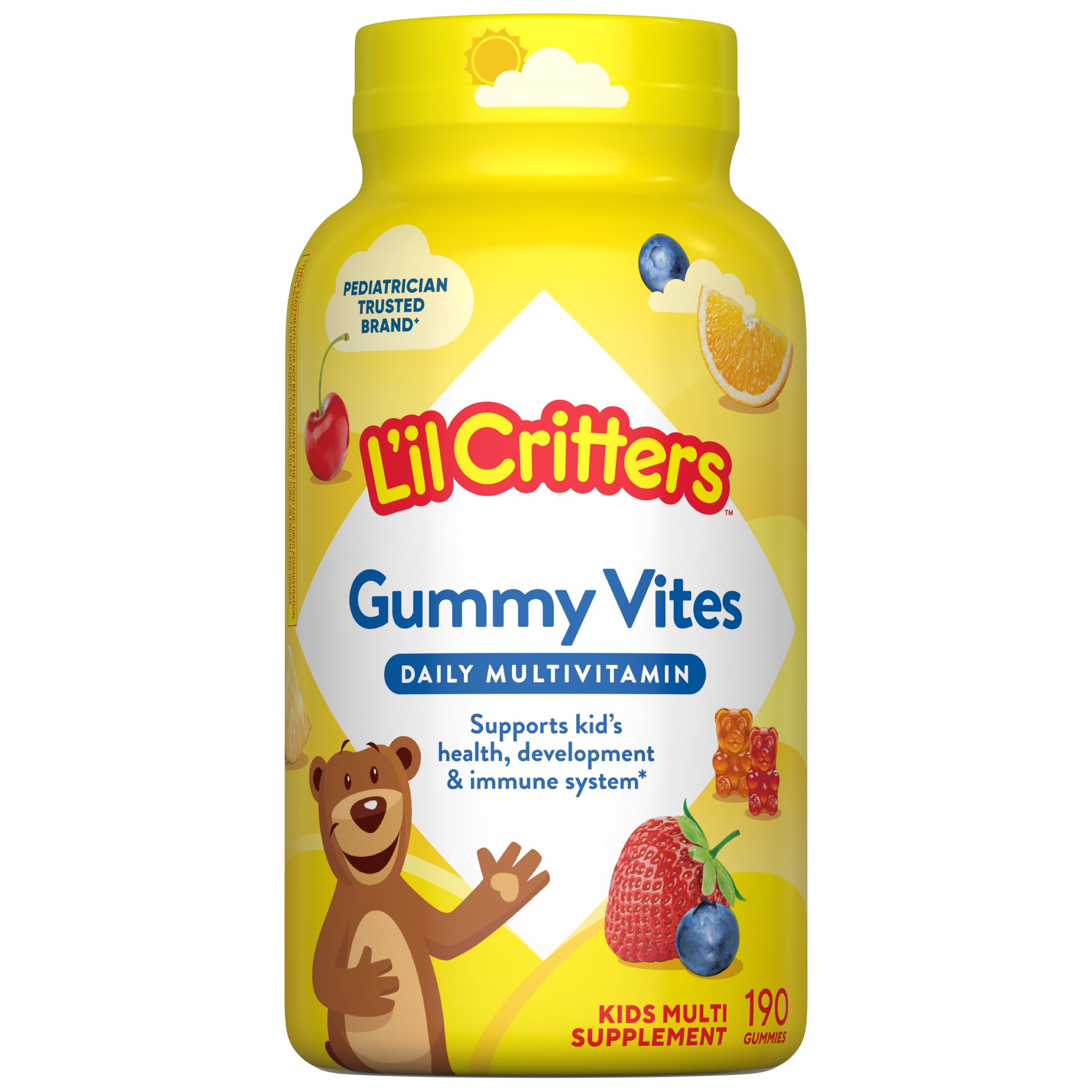
Lil Critters Gummy Vites
Key Features
- Count: 190 gummies
- Flavors: Cherry, strawberry, orange, pineapple, blueberry
- Free from: Synthetic dyes, high-fructose corn syrup, gluten, dairy
- Nutrients: 11 vitamins and minerals
- Price: Budget
Eleven vitamins and minerals, no synthetic dyes, no high-fructose corn syrup and no artificial sweeteners — that combination is why this is the bottle we point most families to first. Plenty of kids’ gummies get the taste right and the label wrong, or the reverse. Lil Critters manages both, with vitamin C and D, vitamin A and vitamin E on the panel and a gummy bear that reads as a treat rather than a supplement. That balance is the whole argument for the top spot.
Flavor is where it wins its arguments. Cherry, strawberry, orange, pineapple and blueberry all live in the same bottle, so a child who tires of one can be steered toward another, and the chew is soft enough for a small mouth without collapsing into paste. What we watched for over the course of a bottle was texture drift: they stay soft, but they start clumping at the bottom once the seal is broken. Shake before you tip one out.
Heat is the other thing to plan around. A bottle that has sat in a hot delivery truck can arrive fused into one piece, so order when someone is home, open it the day it lands, and keep it somewhere cooler than the top of the fridge. Softness splits kids too — most take to it, a few find it firm — so buy a first bottle before you commit to a two-pack.
Pros
- No synthetic dyes, high-fructose corn syrup or artificial sweeteners
- Five flavors in one bottle
- 11 vitamins and minerals, including A, C, D and E
- Low cost per gummy for a daily habit
Cons
- Gummies clump once the bottle has been open a while
- Can arrive melted after hot-weather shipping
We recommend it first for most families: a clean-label gummy in five flavors, at a price that makes taking one every day feel routine.
Best for Budget-Minded Families
Amazon Basics Kids’ Multivitamin Gummies
Key Features
- Base: Soft pectin-based vegetarian gummy
- Count: 380 gummies (two 190-count bottles)
- Flavors: Cherry, strawberry, orange
- Free from: Wheat, dairy, soy, egg, gluten
- Price: Budget
Two bottles, 380 gummies and the lowest cost per gummy of anything on this page — that is the whole pitch, and for a household where the bottle empties fast it is a good one. Both bottles hold the same cherry, strawberry and orange mix, and the base is pectin rather than gelatin, so vegetarian families don’t have to hunt for a special version.
It is the pick to hand to a family with three kids and a grocery budget, not the one to choose for a single careful four-year-old, and the reason is the sugar. These are coated, and the coating is much of why they disappear so easily. If you are trying to keep added sugar off the breakfast table, that is the trade you are making for the price.
Chew and texture hold up well — soft, not rubbery, closer to an old-fashioned orange slice than to a vitamin — and the gluten-free, wheat-free, dairy-free, soy-free formula means fewer labels to read before you buy. Store them cool. The bottle carries its own warning about heat and sunlight, and a pectin gummy that spends an afternoon in a hot mailbox does not forgive you.
Pros
- Lowest cost per gummy in this group
- Soft pectin gummy that is easy to chew
- Free of wheat, dairy, soy, egg and gluten
- Two full bottles per purchase
Cons
- Sugar-coated gummies add sugar to the daily routine
- 380 gummies is a long commitment if a child refuses them
This is our value pick: the lowest cost per gummy here, though the sugar coating is the price you pay for a gummy kids finish.
Best for Tummy Troubles
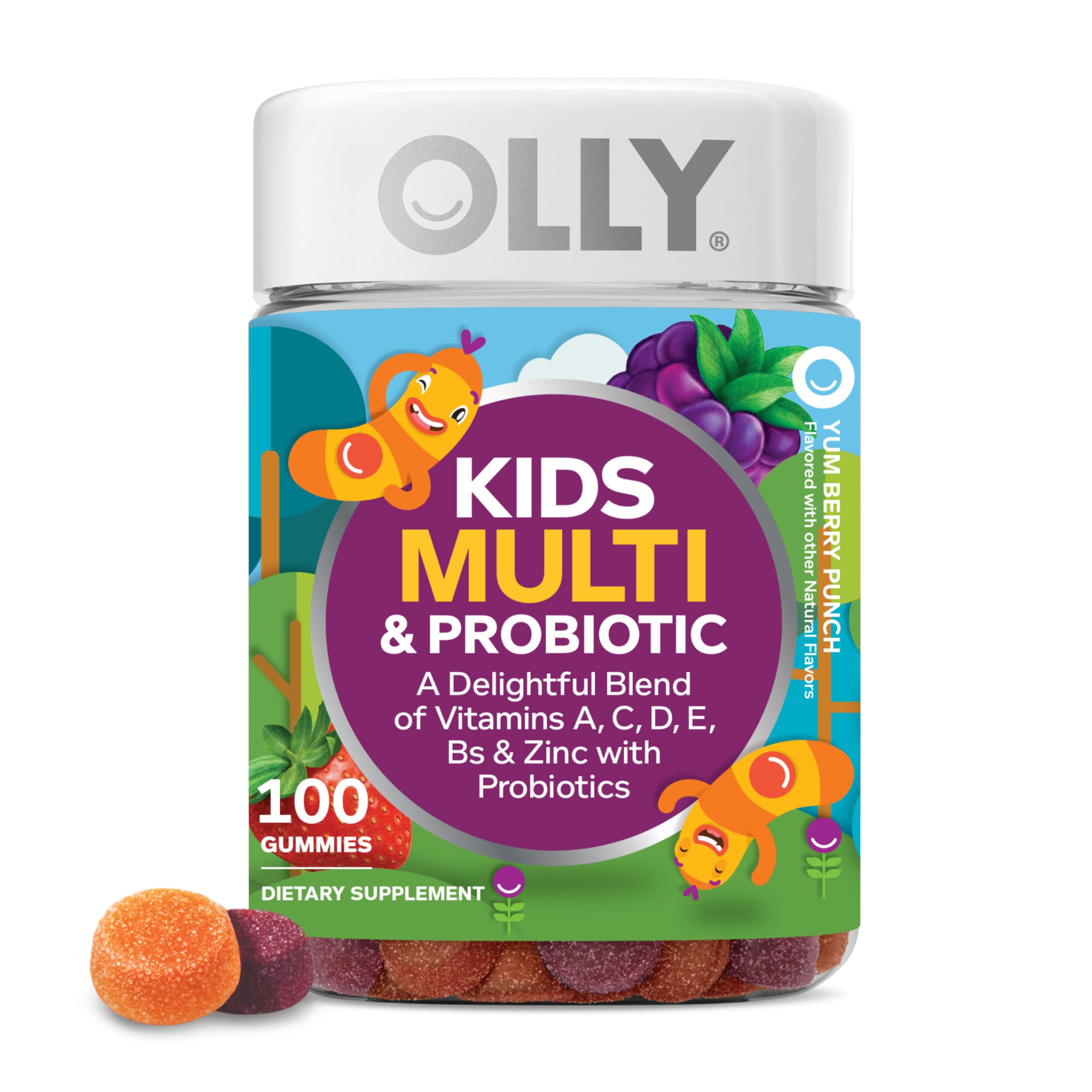
OLLY Kids Multivitamin + Probiotic
Key Features
- Form: Multivitamin plus probiotic gummy
- Count: 100 gummies
- Shipping: Cold pack May through September
- Price: Midrange
A multivitamin and a probiotic in one gummy is a genuinely useful idea: one thing to remember at breakfast instead of two, and no separate powder to stir into yogurt. OLLY pairs its daily multi with probiotics aimed at digestive support, in a soft chewy gummy rather than a hard shell.
For a child who complains about tummy aches, or who already takes a probiotic separately, that is worth real money and real shelf space. The detail we appreciated most was the shipping: the bottle comes with a cold pack from May through September, which is the sort of thing you only notice after a melted bottle has ruined a morning. It is also the only gummy in this group that folds a probiotic in rather than asking you to buy one alongside.
The catch is the chew. This is a firmer, stickier gummy than the Lil Critters and the Amazon Basics, and the children who turn their noses up at it tend to be decided about it. If yours is texture-sensitive, buy the small bottle first. And cold pack or not, don’t let the parcel sit on a porch in July.
Pros
- Multivitamin and probiotic in a single gummy
- Cold-pack shipping through the warm months
- Digestive support in a form kids accept
Cons
- Firmer, stickier chew than the softest gummies here
- Can still soften or fuse if left in heat
We recommend it for children with touchy stomachs: one gummy covers the multivitamin and everyday digestive support, if they accept a firmer chew.
Best for Sugar-Free Chewable
Culturelle Kids Multi + Probiotic Chewable
Key Features
- Ages: 3 and up
- Diet: Sugar-free, non-GMO, gluten-free, vegan
- Count: 90 chewable tablets
- Probiotic: 5 billion CFU Lactobacillus rhamnosus GG
- Price: Premium
It isn’t a gummy, and that is the point. Culturelle’s kids’ chewable is a small fruit-punch tablet, sugar-free, carrying 11 vitamins and minerals alongside 5 billion CFU of Lactobacillus rhamnosus GG — a named strain rather than a vague promise of live cultures.
For a child who has aged out of gummies, or who has been chewing the same sticky bear since preschool and is bored of it, a tablet that tastes like candy is a small upgrade. It is also the pick for a household cutting sugar: nothing sweetens this one, and the chew is crisp — closer to a sweet tart than a gummy — so it doesn’t end up welded to a molar.
What gives us pause is the price, the highest of any bottle here, and the way a new probiotic can land on a small stomach. Tummy aches after the first few doses are the thing to watch for, so start on a quiet day at home rather than a school morning. For most families the sugar-free formula and the strain-specific dose justify the premium, and because it is a tablet, there is nothing to fuse together in an August parcel.
Pros
- Sugar-free chewable with no sticky gummy texture
- 5 billion CFU of Lactobacillus rhamnosus GG
- 11 vitamins and minerals in one tablet
- Fruit punch flavor kids accept
Cons
- Highest bottle price in this group
- Must be chewed, so gummy refusers may still balk
We like it best for kids who have outgrown gummies: a sugar-free fruit-punch tablet with a studied probiotic strain, at the highest price here.
Best for Organic First Bottle
Mama Bear Organic Kids Multivitamin
Key Features
- Diet: Organic, non-GMO, vegan, gluten-free
- Count: 60 gummies
- Supply: 1 month
- Serving: 2 gummies daily for ages 2 and up
- Price: Budget
Sixty gummies, two a day, ages two and up: this is a one-month bottle, and that sizing is the smartest thing about it. Organic, non-GMO, vegan and gluten-free, in berry, cherry and orange with no artificial dyes, it is the low-risk way to find out whether a toddler will take a vitamin before you commit to a bottle that lasts half a year.
Organic-first shoppers should start here rather than at the big bottles. The gummy is soft and small enough for a two-year-old to manage, the flavor is liked rather than merely tolerated, and the ingredient list is short enough to read out loud without a chemistry primer. It is also the smallest commitment in the group, which matters more than it sounds when you are guessing at a picky eater’s preferences.
Two gummies a day is the trade. That halves the bottle life, which means a reorder every month, and a child who only likes one of the three flavors will work through the rest unevenly. Chew runs firmer than the softest gummies here, so a toddler still learning to manage a gummy may take longer with it. None of that is a reason to skip it — treat the sixty as the trial it is.
Pros
- Organic, non-GMO, vegan and gluten-free
- One-month bottle makes a trial cheap
- Soft gummy small enough for toddlers
Cons
- Two-a-day serving means monthly reordering
We point organic-first families here: a dye-free, vegan gummy in a one-month bottle that makes trying it low-risk.
Best for Sugar-Free Gummy
MaryRuth’s Kids Multivitamin Gummies
Key Features
- Ages: 4 and up
- Diet: Sugar-free, vegan, non-GMO, gluten-free
- Supply: 2 months
- Flavors: Strawberry, papaya, super punch
- Price: Premium
Sugar-free is rare in this category, and this is the only gummy here that manages it without falling back on a candy shell. The base is pectin rather than gelatin, so it is vegan, and the flavors run strawberry, papaya and super punch — an odd trio on paper that goes down better than it sounds.
Ages four and up, with two months in the bottle, so the higher price buys time as well as a cleaner label. Vitamin A, vitamin C, zinc and the B vitamins all appear on the panel, and there is no gelatin, no gluten, no dairy and no nuts to work around. For a household already cutting sugar at breakfast, that combination is hard to match anywhere else on this page.
The texture is where we hesitate. Sugar-free gummies lean on sugar alcohols to hold their shape, and this one has turned up both pleasantly soft and hard enough that a four-year-old hands it back. That variance, not the price, is what keeps it behind the top pick — a child who gets a bad bottle first may never try a second. Buy one, check the chew, then commit.
Pros
- Sugar-free gummy with no candy coating
- Vegan, non-GMO and free of gelatin, dairy, nuts and gluten
- Two-month supply per bottle
Cons
- Texture swings between soft and hard from bottle to bottle
- Premium price against the other gummies here
We recommend it when sugar is the dealbreaker: the only sugar-free gummy here, with a texture that varies enough to buy one bottle first.
Best for Simple Soft Gummy
Centrum Kids Multivitamin Gummies

Key Features
- Diet: Gelatin-free, gluten-free, vegetarian
- Count: 150 gummies
- Flavors: Tropical fruit
- Nutrients: 11 essential nutrients
- Price: Midrange
Small, round and soft, this is the gummy that gave us the least trouble. No bear shapes, no worms, nothing to negotiate over — just a tropical-fruit disc that chews easily, isn’t sticky in the hand, and goes down without a production.
There is nothing headline-grabbing on the label, and that is fine: 11 essential nutrients, vitamins C and E, B vitamins for everyday energy, no high-fructose corn syrup, no synthetic dyes, no artificial flavors or sweeteners, gelatin-free and vegetarian. It is an unshowy, well-built panel. What keeps it out of the top tier is simply that the picks above it do something more distinctive — an organic recipe, a probiotic, a sugar-free formula.
Where it earns its place is as the plain, dependable option: a gummy that doesn’t taste medicinal, doesn’t dye anything, and doesn’t ask your child to enjoy an unusual flavor. If yours is the suspicious type who rejects anything that looks new, a small round gummy is a decent bet. Tropical fruit is the only flavor in the bottle, though, so a child who wants variety will notice by week two.
Pros
- Small, soft gummy that is easy to chew
- No synthetic dyes, high-fructose corn syrup or artificial flavors
- Gelatin-free and vegetarian
Cons
- One flavor only — tropical fruit, no variety
We suggest it for the cautious kid: a small, soft, unshowy gummy that is easy to chew and free of synthetic dyes.
Best for Nutrient Breadth
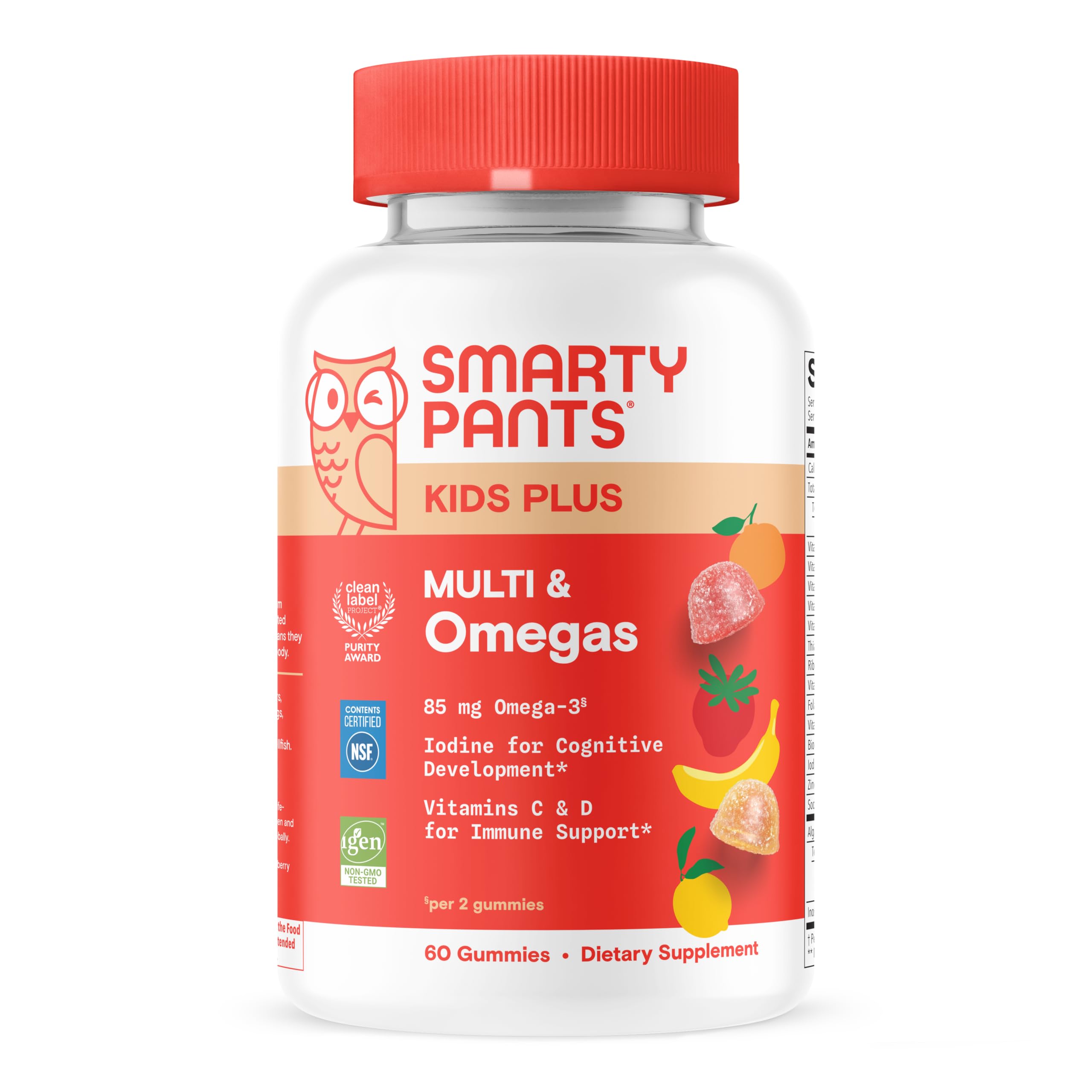
SmartyPants Kids Multivitamin Gummies
Key Features
- Count: 60 gummies
- Flavors: Lemon, orange, strawberry banana
- Nutrients: 16 nutrients including omega-3 and zinc
- Recognition: Clean Label Project Purity Award
- Price: Midrange
Sixteen nutrients — including omega-3 and zinc — in bioavailable forms, with no synthetic colors or artificial flavors: on paper this is the most ambitious gummy in the group, and it carries the Clean Label Project Purity Award, a third-party check that is rare in the kids’ vitamin aisle. We wanted to like it more than we did.
The problems are the ones you can taste. These are sweet, sweet enough to read as candy, which is either the reason your child takes them or the reason you put the bottle back on the shelf. Chew is inconsistent: some bottles are soft and pleasant, others arrive hard, or clumped into a block at the bottom of the jar. At this price, we expect fewer surprises.
Still, if nutrient breadth is the priority — a child who eats no fish, say, and you would rather fold the omega-3 in than add a separate supplement — this is the one to consider. The bottle is small, and the texture makes it a buy-one-first product rather than a subscribe-and-save one. Sweet-toothed kids will not complain about the taste; their parents might.
Pros
- 16 nutrients including omega-3 and zinc
- Bioavailable nutrient forms
- Clean Label Project Purity Award
Cons
- Texture varies — soft in some bottles, hard or clumped in others
- Sweet, candy-like finish some parents will dislike
We recommend it when nutrient breadth matters most: 16 nutrients including omega-3, in a sweet gummy with inconsistent texture.
Best for Iron and Calcium
Flintstones Complete Chewable

Key Features
- Ages: 2 and up
- Count: 180 tablets
- Flavors: Cherry, grape, orange
- Nutrients: 17 nutrients including iron and calcium
- Price: Midrange
Iron and calcium, together, on a label for kids aged two and up — that is the fact that makes this bottle worth knowing about. None of the gummies in this group list both, and for a child whose clinician has asked about iron, that single line outweighs every flavor argument on this page.
Seventeen nutrients, eight character shapes and three flavors, which on paper makes it the most complete panel here. In the mouth it is more divisive. The tablets are sour and faintly bitter, and the children who like them like them a lot while others hand them straight back. You are buying mineral coverage here, not a treat, and the price of admission is a flavor some kids won’t accept.
Two things to check before you commit. Read the panel on the bottle in your hand rather than trusting a listing you saw last year — the dye list and the gluten statement are the details that move. And since taste is the hurdle, don’t buy two bottles at once: this is a one-bottle experiment until your child has chewed a whole tablet without complaint and asked for another.
Pros
- Carries both iron and calcium
- 17 nutrients in one tablet
- Character shapes and three flavors
Cons
- Taste splits kids — sour and faintly bitter
- Dye list and gluten statement are worth confirming on the bottle
We recommend it for one reason above all: iron and calcium on the same label, which no gummy here offers.
How We Tested the Kids’ Multivitamins
We started by reading ingredient panels and filtering for age-appropriate dosing, clear serving sizes, third-party seals, and a price per serving that made sense for a daily habit. Then we tested 12 multivitamins over four months, offering each at the same weekday breakfast and again on weekend mornings when the routine was looser.
Each morning I handed one over without a smoothie chaser and watched: Did they chew it happily, grimace, or leave it on the plate? I noted texture—chalky, gritty, gluey, or too chewy—and whether the sugar coating dissolved fast or left a film. A few gummies went into a warm car for an afternoon; the ones that melted into a single blob got marked down.
After breakfast, I asked whether anything tasted funny or sat heavy, and kept an eye out for stomach complaints, so digestibility was part of the daily check rather than an afterthought. Effectiveness is harder to prove in four months, so I focused on whether the label delivered meaningful amounts of key nutrients and whether my kids actually took the vitamin consistently. Value came down to price per serving divided by servings actually eaten—a rejected bottle is not a bargain.
How to Choose a Kids Multivitamin
The best kids multivitamin is the one your child takes every day without a negotiation, which makes taste and texture a buying criterion rather than an afterthought.
Start with the form your child will actually take
A gummy that gets eaten beats a tablet that doesn’t, so settle the form first. Gummies suit the two-to-six years, when swallowing is still a skill and a chewy vitamin reads as a treat. Tablets like the Culturelle chewable earn their place from age three up, especially for a child who has lost interest in gummies or a household cutting sugar.
The trap is assuming a gummy is automatically easier. A gummy that is too firm gets refused just as quickly as a bitter tablet, so treat chew as seriously as flavor when you read the label.
Read the panel, not the front of the bottle
Count the nutrients, then read which ones. Eleven is common in this group; SmartyPants lists 16 and the Flintstones chewable lists 17. More isn’t automatically better — a longer list can mean a bigger tablet — so what matters is whether the panel covers what your child’s diet misses.
Iron and calcium are the usual gaps in a gummy and the reason some families end up with a chewable instead. If a clinician has flagged a specific nutrient, match that line on the label before you weigh anything else.
Sugar, dyes and the rest of the label
Gummies are candy-adjacent by design, and sugar is how most of them get taken. Sugar-free options exist — the MaryRuth’s gummy and the Culturelle tablet — but sugar alcohols change the texture, and a sugar-free gummy that arrives rock-hard is worse than a sweet one that gets chewed.
Past sugar, the claims worth reading are the absence ones: no synthetic dyes, no high-fructose corn syrup, no artificial sweeteners. Those three are what separate a clean everyday gummy from a candy with a vitamin panel attached.
Do the bottle math
Serving size decides how long a bottle lasts, and it varies more than the counts suggest. Mama Bear’s 60 gummies are two a day, so that bottle is a month; a 380-count two-pack is a long commitment and a poor first purchase if your child turns out to hate the flavor.
Work out cost per daily dose rather than cost per bottle. That is where the big packs pull ahead — and where a small organic bottle that looks expensive can turn out to be the cheaper way to run a trial.
Plan for heat
Every gummy here can arrive fused into one lump after a hot delivery. Some ship with cold packs in summer and some don’t, and none of them enjoy a porch in July. Order when someone will be home to bring the box inside, open it the day it arrives, and store the bottle somewhere cooler than the top of the fridge.
If a bottle does arrive melted, that is a shipping problem rather than a formula problem — but check the seal before you tip out a dose, and request a replacement while the order is still fresh in your account.
Frequently Asked Questions
Does my child actually need a multivitamin?
Most children who eat a varied diet get what they need from food, so a multivitamin is a gap-filler rather than a requirement. It earns its place with picky eaters, children on restricted diets, and kids who live on white food for weeks at a time.
The practical test: write down everything your child ate over three days, then look for dairy, fortified cereal and oily fish. If those barely appear, a daily multi is a reasonable safety net; if they do, spend the money elsewhere.
What age can a child start a gummy multivitamin?
The label decides, and the picks here start at different ages: two and up for Mama Bear Organic and the Flintstones chewable, three and up for the Culturelle tablet, four and up for MaryRuth’s. Under two, ask your pediatrician before starting anything.
Read the serving line as carefully as the age line. The two don’t always move together, and the bottle’s count only tells you how long it lasts once you know the daily dose.
Can a kids multivitamin replace a separate probiotic?
Only partly. A combination product gives everyday digestive support alongside the vitamins, which is convenient if your child has occasional tummy complaints. If a clinician has recommended a particular strain at a particular dose, a combo won’t necessarily match it.
Compare the CFU number and the strain name on both labels before you swap one for the other. Culturelle states 5 billion CFU of Lactobacillus rhamnosus GG, which is the kind of specificity worth matching.
What if my child wants more than the label serving?
Follow the serving on the bottle and treat the rest as off-limits. These are made to taste like fruit snacks, and a bottle left within reach is a bottle a child will work through.
Keep it on a high shelf and hand out the dose yourself. If a child does eat a large handful, call your poison control center with the bottle in hand — the label carries the nutrient amounts they will ask about.
Final Verdict
The Lil Critters Gummy Vites is the bottle to buy for most families: 11 vitamins and minerals, no synthetic dyes or high-fructose corn syrup, five flavors children finish, and a price that survives a daily habit. Plan for a cool delivery day, and expect to shake the bottle once it has been open a while.
If sugar is the thing you are cutting, the Culturelle chewable is the cleaner answer, and for a child whose clinician mentioned iron, the Flintstones chewable is the only pick here that carries iron and calcium together.
