This post contains affiliate links. We may earn a small commission when you buy through our links — at no extra cost to you.
It’s 9:40 on a school night, the lights have been dim for twenty minutes, and my kid is still doing somersaults down the hallway. That’s usually the hour families start looking at melatonin — not because anyone wants a supplement in the bedtime routine, but because the wind-down isn’t working and everyone in the house needs sleep. The tricky part is that kids’ melatonin isn’t cough syrup with a dosing cup: it comes as gummies, liquids, and chewables, doses swing from half a milligram to five and up, and independent testing has repeatedly found bottles delivering more — or far less — than the label promises.
Over four months we put 14 options through real bedtimes — the bath-and-homework sprint, the night after a late practice — and logged how quickly kids settled, how they slept, and how they seemed at breakfast. Taste and texture eliminated several: a gummy that’s gritty or a liquid with a chalky finish doesn’t get taken twice. We also weighed cost per serving and whether a nightly gummy became something kids asked for on easy nights. The picks below are the ones that held up.



Best for Everyday Sleep Support
Natrol Kids Melatonin Gummies
Key Features
- Age: 4 years and up
- Form: Pectin gummy
- Supply: 140 gummies
- Melatonin per gummy: 1 mg
- Price: Midrange
The case for Natrol’s kids gummies starts with the dose: one gummy is 1 mg, so there is no half-gummy guesswork and no two-piece serving to remember. That single-gummy format is why this is our default. The 140-count bottle lasts through a long stretch of school nights, and the pectin base is less sticky than a gelatin gummy, which matters when you are handing one over in the dark.
The ingredient list is unusually clean for the category: gelatin-free, non-GMO, and free of artificial flavors, sweeteners, and synthetic dyes. We also appreciate the child-resistant bottle, because melatonin gummies look like candy and should not be left within reach. The raspberry flavor is the kind most kids accept without a negotiation, and the 1 mg dose is simple enough to follow the label rather than improvise.
For a household that has settled on 1 mg, this is the bottle we keep coming back to because it is consistent, easy to explain to a babysitter, and does not turn bedtime into a measuring exercise. The pectin texture also avoids the sticky film that some gummies leave behind, which is a small thing until you are cleaning up after a tired kid. It is the one we hand over when we do not want to think about the dose again.
Pros
- Single 1 mg gummy is easy to keep consistent
- 140-count bottle lasts through a long routine
- Pectin base is less sticky than gelatin
- No artificial flavors, sweeteners, or synthetic dyes
Cons
- No 0.5 mg step for smaller doses
Our default kids melatonin: one 1 mg gummy, a 140-count bottle, and a clean ingredient list make it the simplest first bottle to buy.
Best for Kids Avoiding Tablets
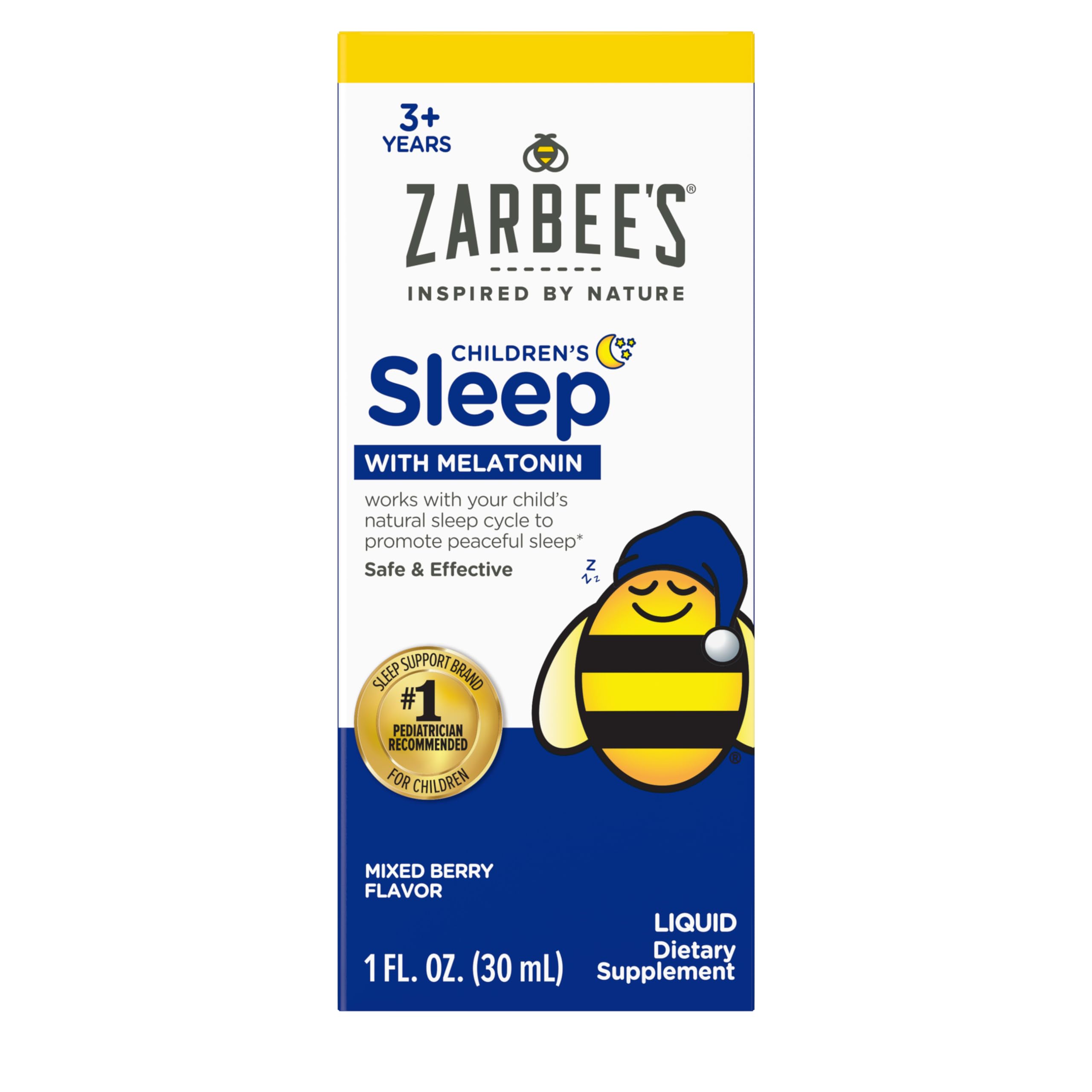
Zarbee’s Kids Melatonin Liquid
Key Features
- Age: 3 years and up
- Form: Liquid
- Size: 1 fl oz
- Melatonin per serving: 1 mg
- Price: Budget
A liquid earns its place when chewing is the barrier. Zarbee’s kids melatonin is labeled for ages 3 and up, delivers 1 mg per serving, and comes in a 1 fl oz bottle with a mixed berry flavor. That makes it the pick for a preschooler who refuses gummies or a child who has trouble with tablets, not necessarily for a family that already has a gummy routine that works.
We like the simple dose: 1 mg per serving is easy to match to the label, and the liquid format lets you deliver it without a chewable texture negotiation. The formula is drug-free and free of alcohol, artificial flavors, dyes, and gluten. The catch is the taste. Berry liquids can read as syrupy or perfume-like to a picky child, and this one has a sticky quality that can end up on the spoon or the pajamas. Have a familiar drink ready, and do not expect the flavor to be the selling point.
The bottle is small, so it is a trial size as much as a supply. If your child takes it easily, the low upfront commitment is a plus; if they do not, you have not bought a year’s worth of gummies. That is the trade: less volume, but a lower-risk way to find out whether liquid works for your kid.
Pros
- Liquid works for kids who will not chew
- Simple 1 mg serving
- Free of alcohol, artificial flavors, dyes, and gluten
- Small bottle lowers the trial commitment
Cons
- Small bottle runs out quickly
Choose Zarbee’s liquid when chewing is the barrier; the 1 mg dose and age 3+ label make it a practical starter if your child tolerates the berry flavor.
Best for Tablet Takers
Zarbee’s Kids Melatonin Chewables
Key Features
- Age: 3 years and up
- Form: Chewable tablet
- Supply: 50 tablets
- Melatonin per tablet: 1 mg
- Price: Midrange
Zarbee’s chewable tablets are the pick for the child who has moved past gummies but is not ready to swallow a pill. The label starts at age 3, the dose is 1 mg per tablet, and the natural grape flavor is the kind of thing most kids accept without a fight. We like that the tablet is a single, consistent unit: no sticky gummy, no liquid measuring, no half-dose math.
The 50-count bottle is a reasonable size for occasional use, and the formula is free of drugs, alcohol, gluten, artificial sweeteners, and flavors. What keeps this from being our top pick is tolerability: stomach aches and headaches can occur, so it is worth starting when you can keep an eye on how your child responds. That is not a reason to avoid it for every child, but it is a reason to pay attention the first few times.
If your child already takes chewables well, this is a clean, simple option with a flavor that does not taste medicinal. If they are gummy-only, the texture is different enough that you may want to try a smaller format first. The grape tablet is also easy to explain to a grandparent or sitter, which is more useful than it sounds on a school night.
Pros
- Age 3+ tablet for kids who reject gummies
- Single 1 mg tablet is easy to dose
- Grape flavor is easy to accept
- No artificial sweeteners or flavors
Cons
- Only one flavor option
A good chewable tablet for kids 3 and up who reject gummies, with a simple 1 mg dose and a grape flavor that does not taste medicinal.
Best for Sugar-Free Routines
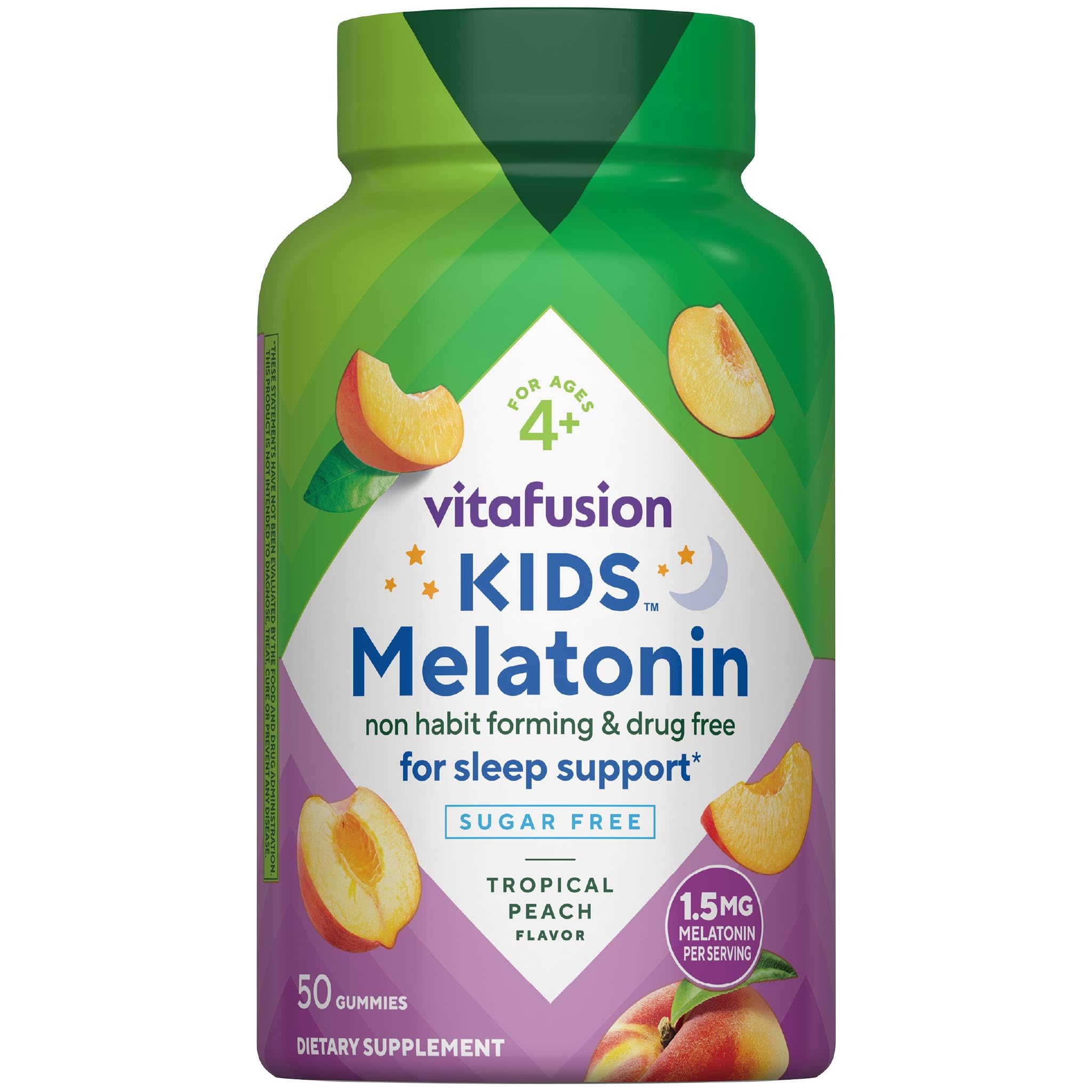
Vitafusion Kids Melatonin Gummy
Key Features
- Age: 4 years and up
- Form: Sugar-free gummy
- Supply: 50 gummies
- Melatonin per gummy: 1.5 mg
- Price: Midrange
Sugar-free is the reason to look at Vitafusion’s kids gummy. One tropical peach gummy carries 1.5 mg of melatonin, and the formula skips gluten, high-fructose corn syrup, dairy, and synthetic FD&C dyes. That combination is rare enough in this group to earn it a runner-up spot, especially for a family that wants to avoid a sugary bedtime treat.
We appreciate that it is a single gummy, because there is no two-piece serving to remember. The peach flavor is a nice change from berry and grape, and the sugar-free formula does not leave the syrupy aftertaste that some sweet gummies do. The trade-off is the dose: 1.5 mg is higher than the 1 mg standard. If your child does well on 1 mg, this is not the bottle to start with; if you have already settled on a slightly higher dose and want it sugar-free, it makes more sense.
This is a niche pick, but a useful one. Families who are already managing sugar intake will appreciate that the gummy does not add another sweet, and the single-gummy routine is easy to keep consistent. It earns its place for that specific job.
Pros
- Sugar-free formula
- Single gummy serving
- No synthetic dyes or high-fructose corn syrup
- Peach flavor is a change from berry
Cons
- 1.5 mg gummy cannot be split accurately
The sugar-free pick for families who have settled on a 1.5 mg dose; the single peach gummy is simple, but it is not a 1 mg starting point.
Best for Flexible Low Doses
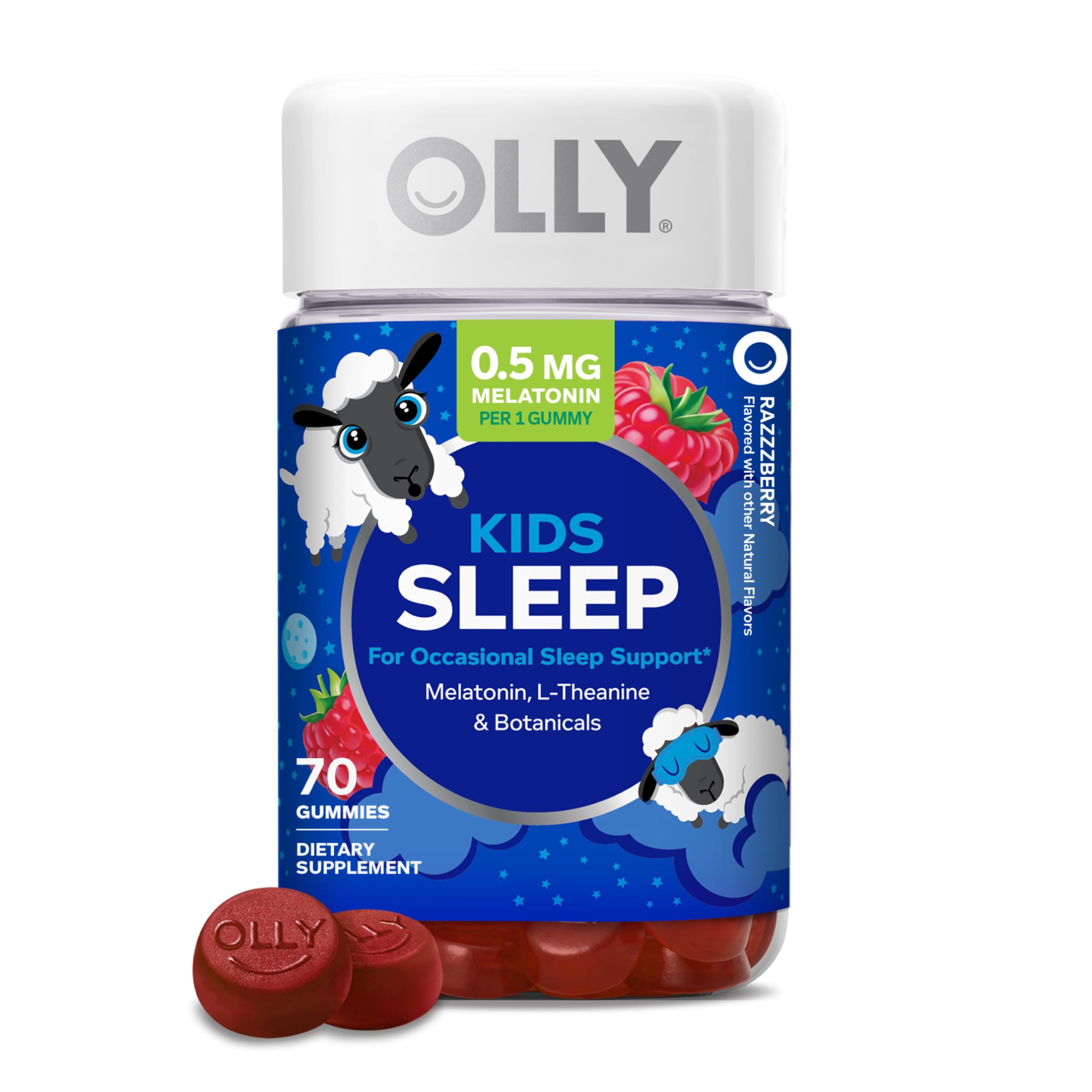
OLLY Kids Sleep Gummies
Key Features
- Form: Gummy with L-theanine
- Supply: 70 gummies
- Certification: NSF certified
- Melatonin per serving: 1 mg (2 gummies)
- Price: Premium
OLLY’s kids sleep gummies are built around a 0.5 mg dose per gummy, which means one gummy is a half-milligram and two make the standard 1 mg serving. That is the flexibility the top pick does not offer. We like having that step: you can follow the label for a 1 mg serving or use one gummy when a smaller dose is what you and your pediatrician have settled on.
The formula adds L-theanine to the melatonin, and the bottle carries an NSF certified claim. In a category where labels can be vague, that certification is a meaningful check. The raspberry flavor is kid-friendly, and the gummies are gluten-free with no synthetic colors. It is a thoughtful package for a family that wants a lower starting point.
For a child who needs a lower dose or a family that wants a third-party certification, OLLY is the runner-up we point to first. The 70-count bottle is a decent supply, though it goes faster if you use two gummies per night. It is not the simplest bottle for a 1 mg routine, but it is the one that gives you room to move.
Pros
- 0.5 mg per gummy allows a smaller step
- NSF certified
- L-theanine added
- Raspberry flavor is kid-friendly
Cons
- Texture can be hard or clumped
The best low-dose option here: 0.5 mg per gummy, NSF certified, and easy to use as a one- or two-gummy serving.
Best for Botanical Blend Fans
Pure Zzzs Kidz Melatonin
Key Features
- Form: Gummy with botanicals
- Flavor: Berry
- Supply: 72 gummies
- Melatonin per gummy: 0.5 mg
- Price: Premium
Pure Zzzs is the botanical option: 0.5 mg of melatonin per gummy, 1 mg per two-gummy serving, plus chamomile and lavender. The two-gummy serving is the point. It gives you a lower step than a single 1 mg gummy, and it turns bedtime into a small ritual rather than a single handoff.
We like the ingredient profile on paper: drug-free, gluten-free, lactose-free, gelatin-free, and colored with natural sources. The chamomile and lavender are not a reason to expect a sedative effect; they are a gentle add-on, and the melatonin is doing the main work. If you want a simple one-ingredient approach, the top pick is cleaner.
The flavor is the hurdle. Berry gummies can taste medicinal or overly sweet, and this one has a polarizing reputation for being refused by kids who are picky about texture and aftertaste. That is worth knowing before you buy a 72-count bottle. If your child already likes berry gummies, it is less of a risk.
Where this one earns its place is the lower-dose, two-gummy routine for a child who likes a botanical blend and does not need the smallest possible bottle. It is not the default, but it is a reasonable alternative when the ritual matters as much as the dose.
Pros
- 0.5 mg per gummy allows a lower step
- Chamomile and lavender blend
- 72-count bottle
- No gelatin, gluten, lactose, or synthetic colors
Cons
A solid lower-dose gummy with a botanical blend, though the berry flavor is the hurdle to clear before you commit to the bottle.
Best for Calming Extra
Natrol Kids Sleep+ Calm

Key Features
- Age: 4 years and up
- Form: Gummy with L-theanine
- Supply: 60 gummies
- Melatonin per gummy: 1 mg
- Price: Premium
Natrol’s Sleep+ Calm is the same 1 mg gummy idea as our top pick, with L-theanine added and a 60-count bottle instead of 140. The serving is one or two gummies, so the bottle can stretch if your child stays at one. That flexibility is useful, but it also means the label leaves room for a 2 mg serving if you use two.
We like the pectin base and the clean ingredient list: vegetarian, gelatin-free, non-GMO, and free of artificial flavors, sweeteners, and synthetic dyes. The strawberry flavor is pleasant, and the L-theanine is a sensible add-on for a calming routine, though it is not a substitute for the sleep habits around it. If you want the same brand without the added ingredient, the 140-count top pick is the simpler buy.
As an also-consider, it makes sense for a family that wants L-theanine in a 1 mg gummy and is willing to trade some texture consistency for it. The 60-count bottle is easy to stash, and the one-or-two serving gives you a little room to adjust. It is not the bottle we reach for first, but it has a clear job.
Pros
- L-theanine added
- One- or two-gummy serving
- Clean ingredient list
- Strawberry flavor
Cons
- Texture can be hard
A good choice if you want L-theanine in a 1 mg gummy; just check the serving and expect some texture variation.
Best for Bulk Budget
Carlyle Kids Melatonin Tablets

Key Features
- Form: Chewable tablet
- Flavor: Fruit
- Supply: 120 tablets
- Melatonin per tablet: 1 mg
- Price: Budget
Carlyle’s kids melatonin is the bulk-tablet play: 120 chewable 1 mg tablets in a fruit flavor. The appeal is straightforward. If your child takes a tablet without drama, this bottle lasts a long time and costs less per tablet than most of the gummies here.
We like the small tablet size and the simple 1 mg dose. The formula is free of gluten, wheat, milk, lactose, and soy, and it is non-GMO. For a child who finds gummies too sticky or too much like candy, a chewable tablet can be a better routine.
The age guidance is the practical catch: it is not stated, so check the bottle before buying for a preschooler. That is not a problem for a school-age child, but it matters if you are buying for a 3-year-old.
This is an also-consider, not a default. It makes sense for a tablet-taking kid and a family that wants a large bottle; if you are unsure about the format, start with the Zarbee’s grape tablet instead.
Pros
- Bulk 120-tablet bottle
- Simple 1 mg chewable dose
- Free of gluten, wheat, milk, lactose, and soy
- Chewable tablet format
Cons
- Fruit flavor can taste chalky
A bulk bottle for tablet-taking kids, with a simple 1 mg dose; the fruit flavor and missing age guidance decide whether it fits.
How We Chose and Tested Kids’ Melatonin
I started by pulling every melatonin product marketed for kids at the major retailers — gummies, liquids, chewables, and a few dissolvable tablets — and reading the fine print on each one. Anything that wouldn’t state the melatonin dose per serving was cut, and so was anything dosed at adult levels with a kid-friendly label slapped on it. We prioritized products with third-party verification and had a pediatric sleep specialist review the final labels against the low starting dose clinicians generally recommend for children.
Fourteen products went home with parent testers on our team, whose kids ranged from preschoolers to tweens, and stayed in rotation for four months. Testing happened in the actual bedtime routine: the 8 p.m. bath-and-homework sprint, the night after a late soccer practice, a sleepover, a hotel room on vacation, and the 9:45 standoff when a kid is wired and a parent is finished.
Each family logged how long it took a kid to get drowsy after lights out, how often they woke, and what they were like at breakfast. Taste and texture got the bluntest test — did the kid take it without a chaser, was a gummy gritty or sticky enough to warrant a toothbrush afterward, did a liquid leave a film in the cup — and we wrote down stomach aches, headaches, vivid dreams, and next-morning grogginess, retiring any product that caused them. To get at habit-forming appeal, testers noted whether kids started asking for a gummy on nights they didn’t need one, and how many nights a week families actually reached for it. For value, I divided the cost by the number of servings the package truly delivered.
How to Choose Kids Melatonin
The right bottle is the one your child will take at the dose you have actually decided on, not the one with the biggest count.
Start with the dose step, not the flavor
Kids melatonin is not one-size. The common serving here is 1 mg, but the gummy in the bottle may be 1 mg, 0.5 mg, or 1.5 mg, so read the label as a serving and as a single piece. A 0.5 mg gummy gives you a smaller step and lets two gummies make a 1 mg serving; a single 1.5 mg gummy does not split cleanly. We prioritize a form that matches the dose you and your pediatrician have settled on, because cutting a gummy is guesswork.
Match the form to the child
A gummy is not the only option. Chewable tablets suit a child who has moved past gummies, liquid helps a child who will not chew, and fast-dissolve tablets can work for a child who refuses both. Check the stated age minimum before anything else: the products here range from age 3 and up to age 4 and up, and some do not state one clearly. The best form is the one your child takes without a nightly negotiation.
Taste and texture are buying criteria
A supplement only helps if it gets taken. Gummies can arrive hard, sticky, or clumped, and chewable tablets can taste chalky; those are reasons to choose a smaller bottle first if your child is picky. Sugar-free, dye-free, and gelatin-free formulas are worth paying attention to if those are your priorities, but they do not guarantee a better bedtime. We look for a flavor and texture your child already accepts rather than assuming a new one will win them over.
Treat safety and routine as part of the product
Melatonin is a sleep aid, not a fix for a bedtime routine that has gone sideways. Follow the labeled age and serving, keep the bottle in its child-resistant packaging and out of reach, and ask a pediatrician before use if your child has health conditions or takes other medications. Give it before the target bedtime, keep the lights low, and do not add a second dose because the first one did not seem to work.
Frequently Asked Questions
How long before bed should kids take melatonin?
The labels on these products generally point to about 30 minutes before the target bedtime, though some kids respond in 20 to 45 minutes. Give it at a consistent time and dim the lights. If bedtime is still a struggle after that window, talk to a pediatrician rather than guessing at a different schedule.
Can kids take melatonin every night?
Many of these products are labeled non-habit forming, but that is not the same as a green light for indefinite nightly use. We treat melatonin as a short-term bridge for travel, schedule shifts, or a rough patch, not a permanent substitute for sleep habits. If your child needs it most nights for weeks, get clinical advice before continuing.
Can melatonin help with jet lag and travel?
It can be part of a travel plan because it works with the body clock, but timing matters more than the brand. Give it at the target bedtime in the new time zone, keep the routine familiar, and follow the product’s age and serving label. For a long trip or a child on other medications, check with a pediatrician before you rely on it.
Final Verdict
Natrol’s 1 mg kids gummies are our default because the single-gummy dose, 140-count bottle, and clean ingredient list make the routine simple. If your child will not chew, start with Zarbee’s liquid; if you want a 0.5 mg step, OLLY is the better fit. The sugar-free Vitafusion gummy is the pick once you have settled on a 1.5 mg dose, not as a first bottle.
