This post contains affiliate links. We may earn a small commission when you buy through our links — at no extra cost to you.
A swaddle has one job, and it happens at 3 a.m.: keep a sleeping baby contained until morning. The trouble is that the two main styles trade one comfort for another. Hook-and-loop sacks are close to escape-proof, but the rip of the tape can undo twenty minutes of hard-won drowsiness. A muslin square is breathable, soft, and lovely in photos, and it also asks for a fold you’ll be relearning in the dark. What a good swaddle actually buys you is a contained startle reflex — the difference between a two-hour stretch and a five-hour one.
My team and I spent the past three months wrapping, Velcroing, and re-wrapping 16 blankets around babies who kick, arch, and generally treat bedtime as a sport. Those weeks made one thing clear: price tells you almost nothing, and fabric weight matters more than the print. One note before you scroll — most newborns outgrow the smallest size in about six weeks, so check the range on a multi-pack before you commit. The picks below are the ones we’d hand to a friend.


Best for Daily Swaddling
Konssy Muslin Swaddle 3-Pack
Key Features
- Set: 3 blankets
- Care: Machine wash
- Size: 47" x 47"
- Fabric: 100% cotton muslin
- Price: Midrange
Forty-seven inches is a lot of fabric, and it is the reason this set is our top pick. A first-time wrapper gets two full turns and a tuck with room left over, and the extra square forgives a crooked first fold at two in the morning in a way the 30-inch receiving blankets here never do. Size is the specification most parents skip past, and it is the one that decides whether a swaddle is still closed at dawn.
The fabric is 100% cotton muslin: breathable, quick to dry, and softer every time it goes through the machine. Three blankets per set is the right number — one on the baby, one in the laundry, one in the diaper bag. The weave has almost no give, which we count as a virtue: once the wrap is snug it stays snug through an arch and a straighten.
Against the rest of this list, Konssy sits mid-pack on price with the largest square. Momcozy’s bamboo blend drapes cooler in a warm room, aden + anais has the prints worth paying for, and LYRICHOM trims the square to bring the cost down. None of them beats this set on the combination that matters most: enough fabric to work with, and three of them.
The size also earns its keep after the swaddling stage. A 47-inch muslin drapes over a stroller, goes down for tummy time, and covers a nursing session better than the smaller squares here. That is the quiet argument for buying generously — the blanket keeps a place in the bag long after the wraps stop.
Pros
- 47-inch square leaves room for two turns
- Muslin softens with every wash
- Three blankets keep a clean one in reach
- Breathable cotton for year-round use
Cons
- Little warmth on its own in a cool room
We made the Konssy set our default because 47 inches of muslin gives a first-time wrapper room to work, and three blankets keep one clean.
Best for Warm Rooms
Momcozy Muslin Swaddle 4-Pack
Key Features
- Set: 4 blankets
- Size: 47" x 47"
- Fabric: 70% bamboo viscose, 30% cotton
- Certification: OEKO-TEX certified
- Price: Midrange
Momcozy’s four-pack is the set we reach for when the nursery runs warm. The fabric is 70% viscose from bamboo and 30% cotton, woven thin and airy, and it lies cooler against the skin than the plain cotton muslin here. For a summer due date, or a baby who fusses at the heat, that difference is the whole point.
It is also the only flat muslin set here with an OEKO-TEX certification, which is the detail that settles the choice for a cautious parent. Four blankets is one more than our top pick gives you, on the same 47-inch square. The hand feel is what divides people: this blend is smoother and a little slicker than classic muslin, and not everyone finds it as soft against a newborn’s cheek.
Where it gives ground to our top pick is predictability — you know what cotton muslin will feel like, and this blend is a small gamble. Where it wins is airflow and the fourth blanket. In a warm house that trade goes our way, and the certification makes it an easy one to defend.
Pros
- Bamboo-cotton blend sleeps cool
- OEKO-TEX certified fabric
- Four 47-inch blankets per set
- Generous size for wrapping past the newborn stage
Cons
- Hand feel splits buyers; not as soft as classic muslin
- Costs more per set than our top pick
Our pick for a warm nursery: airy bamboo-blend muslin, OEKO-TEX certified, four to a pack, though the hand feel is not classic muslin.
Best for Prints and Gifting
aden + anais Muslin 4-Pack
Key Features
- Set: 4 blankets
- Care: Machine wash
- Size: 44" x 44"
- Fabric: 100% cotton muslin
- Price: Premium
This is the most expensive flat muslin set on the list, and the case for it is not about the job — it is about how the blankets look doing it. The Sage Woodland prints are the sharpest here, the colors hold through washing, and the cotton muslin softens until the set feels broken in.
Whether that premium is worth paying depends on what you want from a swaddle. If the blankets are going in going-home photos, being handed down, or given as a gift, we think the extra buys real pleasure and a set that keeps its looks. If they are purely a sleep tool, our top pick does the same work on a bigger square for less, and Momcozy breathes better in a hot room.
At 44 inches it is also a touch smaller than the 47-inch sets, a difference you feel on the first fold and stop noticing by the third. And if you only wanted something to wrap a baby in, this set will feel like money spent on looks. That is a fair criticism, and it is also the reason we point people here when the nursery has to look good in photographs.
Pros
- Prints that stay sharp through washing
- Softens with every wash
- Four blankets per set
- Breathable cotton muslin
Cons
- The priciest flat muslin set here
- Smaller square than the top two picks
Buy the aden + anais set for the prints and the way the muslin softens; we think the premium is worth it only if the blankets will be seen.
Best for Budget Muslin
LYRICHOM Muslin Swaddle 3-Pack
Key Features
- Set: 3 blankets
- Care: Machine wash
- Size: 38" x 40"
- Fabric: Cotton muslin
- Price: Budget
Thirty-eight by forty inches is smaller than the big muslin sets here, and that is the trade for the price. There is still enough fabric for two turns on a newborn, and it lies flat rather than bunching at the shoulder, which is the part that makes a beginner’s wrap look worse than it is.
What you get is honest: three cotton muslin blankets, soft out of the bag, breathable enough for a summer nursery, and machine washable. The prints are gentle rather than bold and the colors hold. Ours came out of the dryer ready to use, with no trimming or ironing.
This is the set we hand to a parent who is not sure flat blankets will suit them, or who wants a spare stack for the diaper bag and the grandparents’ house. It does most of what the expensive sets do, for a good deal less, and it never asks to be handled carefully.
Pros
- Budget price for three muslin blankets
- Soft, breathable cotton muslin
- Machine washable and easy to care for
- Gentle prints and colors that hold
Cons
- Runs out of fabric sooner than a 47-inch square
The budget muslin set we hand to anyone unsure about flat blankets — breathable, soft, three to a pack, with a smaller square to work with.
Best for No-Wrap Swaddling
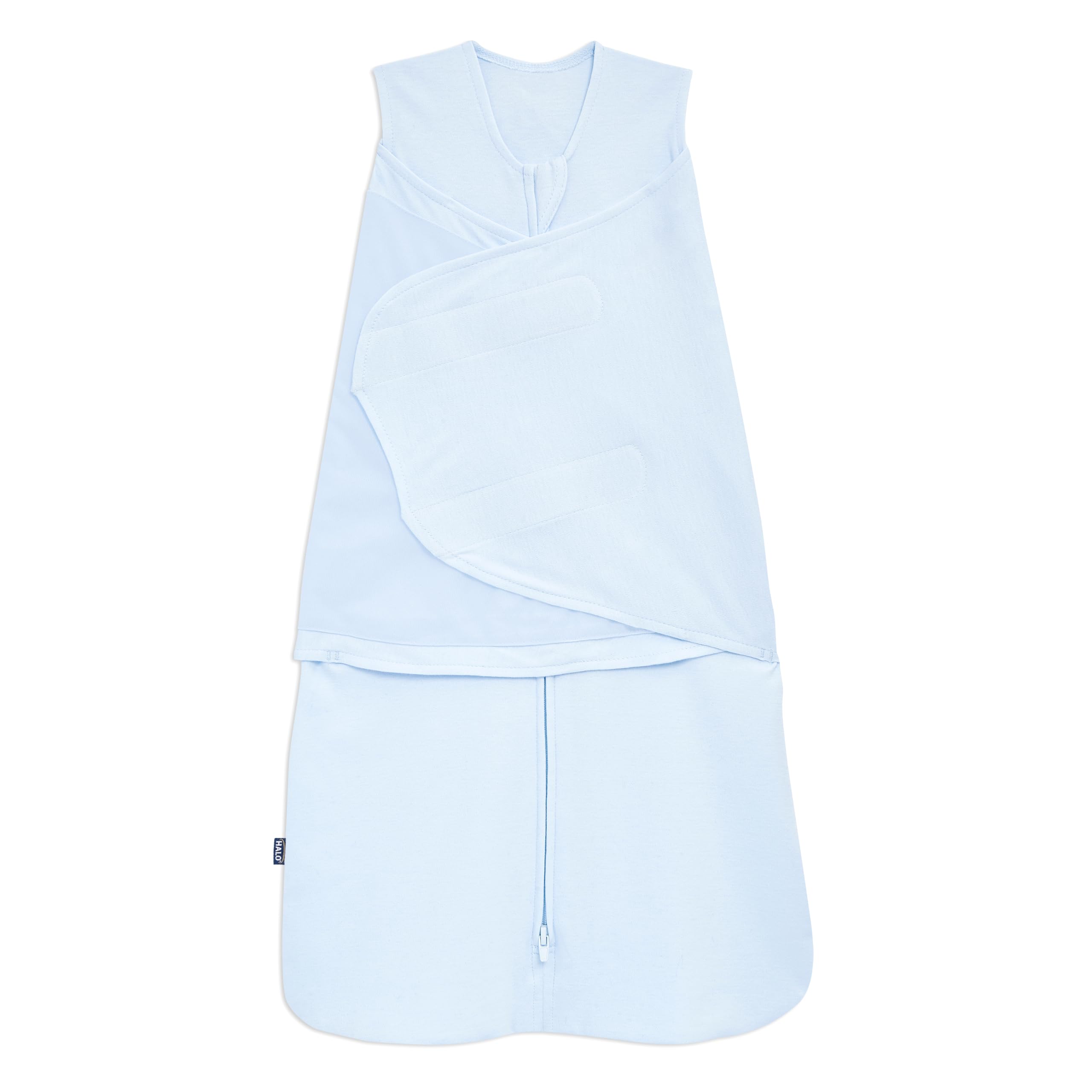
HALO SleepSack Swaddle
Key Features
- Fabric: 100% cotton
- Warmth: 1.5 TOG
- Fastening: Velcro with zip
- Size range: 6-12 lbs
- Price: Premium
If you cannot get a flat blanket to stay closed, this sack does the wrapping for you. Two velcro flaps cross the chest, a zip runs up the front, and the arm sections can be set three ways: both arms in, hands up by the face, or one or both arms out. The bottom zip is the part we came back to — open it, change a diaper, close it, and the wrap is still exactly where you left it.
The two things it exists to do, it does well. Babies sleep in it, and it takes no skill to put on at four in the morning. It is a 1.5 TOG cotton sack rated for rooms around 68 to 75°F, which makes it a cool-weather layer rather than a summer one, and the newborn size runs from 6 to 12 pounds.
Fit is where the trouble shows up. On a small newborn the sack can be baggy, and a long baby can run out of length before the weight range says so. The velcro is loud enough to make you wince during a transfer, and after months of washing the hooks can start to lose their bite. Go by your baby’s weight, not the age on the box.
For a parent whose baby busts out of every blanket, or who is too tired to fold straight, none of that outweighs the alternative. It is the one swaddle here you can fasten in the dark.
Pros
- No wrapping skill needed
- Three arm positions for the transition
- 1.5 TOG rating for cooler rooms
- Bottom zip for night changes
Cons
- Baggy on a small newborn
- Velcro is loud and weakens with washing
This is the swaddle we point tired parents to: no folding, three arm positions, and a bottom zip that leaves the wrap intact.
Best for Wearable Backup
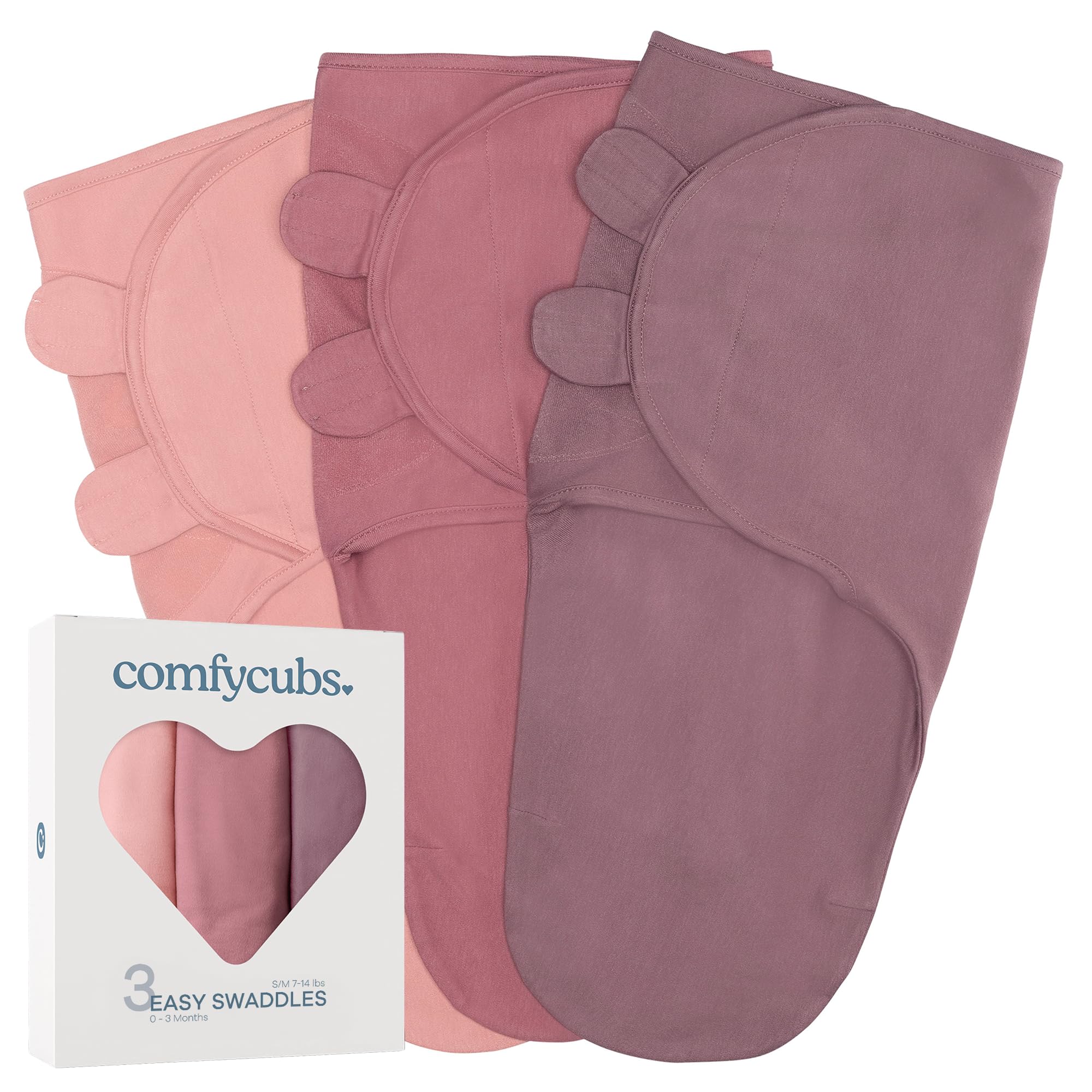
Comfy Cubs Easy Swaddle
Key Features
- Set: 3 swaddles
- Fabric: 100% cotton
- Fastening: Hook-and-loop tabs
- Size range: 0-3 months
- Price: Midrange
Three velcro swaddles in one pack is the pitch, and for a lot of parents it is the right one. The cotton has some stretch, the hook-and-loop tabs run across the front, and the 0-3 month sizing covers the stretch where babies are swaddled most nights.
We keep this pack in the backup slot and it earns the place: on a baby who fits, the wrap stays closed all night and the cotton is soft enough against bare skin. It is also the least expensive way here to find out whether your baby tolerates a wearable before you spend more on one. The catch is fit — the same size reads roomy on a small newborn and short in the leg on a long baby, and the velcro panels do not always line up squarely.
Buy it as a three-pack for a baby past the smallest newborn sizes, or as a low-cost trial of the whole wearable idea. The stretch helps, and so does having two more in the drawer when one is in the wash.
Pros
- Three swaddles per pack
- Stretchy cotton holds a wriggler
- Soft enough for bare skin
- Cheapest way here to try a wearable
Cons
- Roomy at first on small newborns
- Velcro panels can be hard to line up
We keep this three-pack as a wearable backup: stretchy cotton, strong velcro, and a fit that runs roomy on the smallest newborns.
Best for Everyday Cloths
Luvable Friends Flannel 7-Pack

Key Features
- Set: 7 blankets
- Care: Machine wash
- Size: 30" x 30"
- Fabric: Cotton blend flannel
- Price: Budget
Thirty inches square is enough blanket for a newborn and not much beyond, which is the first thing to understand about this pack. These are receiving blankets and they behave like it: fine for the first weeks and for smaller babies, then short of the fabric you need for a secure wrap once your baby starts to stretch out. As your only swaddle, they stop cooperating well before the wearable sizes do.
As a stack of everyday cloths they are hard to beat. Seven flannel blankets in one pack, soft against the face, machine washable, and cheap enough to leave one in the car, one at grandma’s and one under the changing mat. We used them for burping, for stroller shade and for the floor during tummy time far more often than for swaddling.
What they do, they do for very little money, and they keep working long after the swaddling stage is over — which is more than you can say for the wraps that only do one job.
Pros
- Seven blankets in one pack
- Soft flannel that stays soft
- Cheap enough to keep everywhere
- Useful as burp cloths and covers
Cons
- Thin enough to see light through
- Seams can fray after washing
We buy these as a stack of everyday cloths rather than a main swaddle, because 30 inches stops wrapping a baby before long.
Best for Photos and Gifts
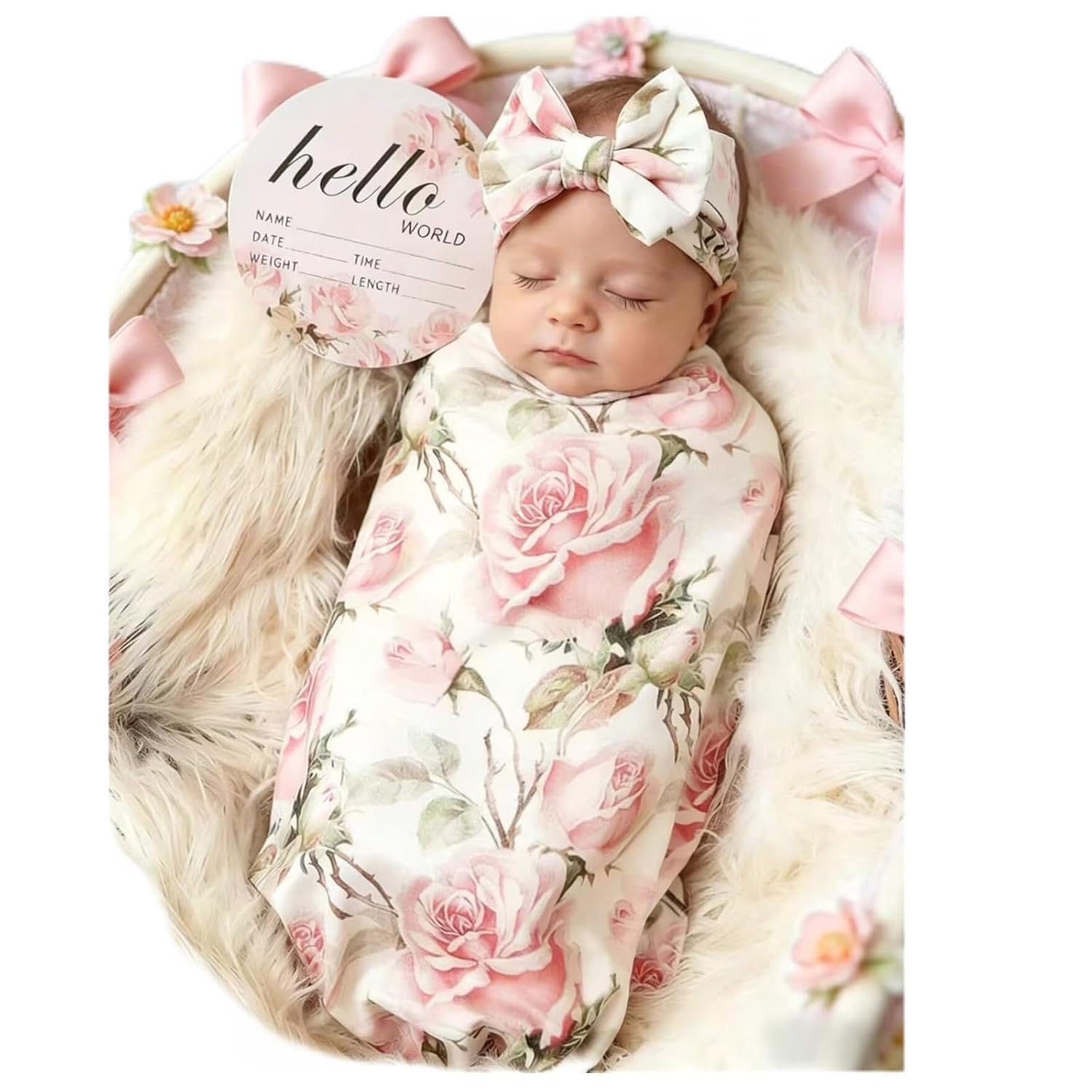
Galabloomer Headband Set
Key Features
- Set: Blanket and headband
- Care: Hand wash only
- Size: 31.5" x 31.5"
- Fabric: 95% polyester, 5% elastane
- Price: Budget
The headband and the Hello World card tell you what this set is for. A floral knit blanket in vintage tones, a matching bow and a card for the announcement photo — it is a going-home accessory as much as a blanket, and the presentation is why it sells.
It is better than that sounds. The knit is 95% polyester with 5% elastane, so it stretches around a newborn instead of fighting him, and the give makes a snug wrap easier than a stiff muslin square for someone who has never swaddled. We found it soft, light and genuinely usable for a summer baby, with the caveat that soft and light is all it is.
Two practical costs come with it. Hand washing a baby blanket is a real commitment in a house with a newborn, and the knit is thin enough that some parents find it flimsier in person than in the photos. Buy it for the pictures and the first few weeks; keep a muslin set for the nightly work.
Pros
- Headband and card for photos
- Stretchy knit is easy to wrap
- Soft and light for summer
- Inexpensive gift set
Cons
- Hand wash only
- Thin knit, best for warm rooms
The set we bring out for going-home photos: stretchy, soft, complete with a headband, and hand washing is the price of admission.
How We Tested the Best Swaddling Blankets
We started by pulling every swaddle with a real track record — muslin squares, hook-and-loop sacks, zip-up pods — and cut anything with a narrow size range, a scratchy-sounding fabric blend, or a price that seemed to buy packaging rather than material. That left 16 blankets, which we used for three months through actual bedtimes rather than a test bench: overnight sleep, 2 a.m. diaper changes, the wind-down after a bath, stroller naps, and the bottom of the diaper bag.
Swaddling, fit, and sleep quality got judged in the dark. We wrapped a fussy, arm-swinging baby one-handed with the lights low and timed how long it took, then checked twenty minutes later to see whether an arm had worked free. We noted where the hook-and-loop tabs landed on each baby’s chest and whether they were stiff enough to wake a sleeping child or soft enough to fail at their only job. Sleep quality we logged plainly: how long each stretch ran before the startle reflex kicked in.
Durability and material showed up in the laundry. Every blanket went through repeated wash-and-dry cycles, and we measured the panels before and after to catch shrinkage, checked the seams for pilling, and noted whether the tape still gripped after ten washes. We held each one up to a lamp to judge thickness and breathability, and handled it cold out of the dryer to see whether the softness survived. Appearance was the simplest axis — which ones still looked presentable after a month of near-constant rotation — and value came down to whether the price bought a wider size range or just a nicer box.
How to Choose a Swaddling Blanket
The blanket that works is the one big enough to wrap, cool enough for the room, and easy enough to handle at 3 a.m. — everything else is pattern.
Size decides how long you can swaddle
Nothing else on the label matters as much as the square. A 30-inch receiving blanket wraps a newborn and then gives up; the 47-inch sets here still have fabric to tuck at three months, and one of them keeps working as a stroller cover and tummy-time mat. If you plan to swaddle past the first weeks, buy at least one set at 44 to 47 inches and treat the smaller blankets as cloths for everything else.
Stretch is the partial exception. A 31- or 32-inch knit with a little elastane pulls snug around a newborn in a way a stiff cotton square of the same size will not, though it will not stretch to cover a bigger baby for long.
Match the fabric to the room, not the calendar
Muslin is the default for good reason: it breathes, dries fast, and softens with every wash, which is why it handles a warm nursery and a mild night with a bodysuit underneath. Flannel is warmer per layer but usually thinner and smaller, and the plush knits are for the stroller rather than the crib.
For a wearable, look for a TOG rating. The HALO sack here is 1.5 TOG, built for rooms around 68 to 75°F; a summer nursery wants something lighter. Whichever you pick, the fabric should be thin enough to lie flat and snug rather than bunch at the shoulder.
Flat wrap or velcro swaddle?
A flat muslin is the most useful thing you can buy: it swaddles, shades a stroller, covers a nursing session, and wipes up a spill. What it demands is technique, and a baby who straightens his legs can work loose. A velcro or zip wearable removes the skill entirely and stays put all night, which matters when you are re-wrapping a sleeping baby before dawn.
The trade is sizing. Wearables are sold by weight range, and a 6-to-12-pound sack is baggy on a small newborn while a long baby can outgrow the length before the weight limit says so. Check the pound range against your baby, not the age on the box. Plenty of parents end up with both — flats for the day and the diaper bag, a wearable for nights.
Care and fasteners outlive the fabric
Muslin and cotton flannel go through the machine and come out softer than they went in, which is why a set that feels stiff on day one is not a problem. A hand-wash-only knit is a different commitment: it sits in the sink while you reach for something else. Know that before you fall for a photo set.
Fasteners age faster than fabric. Velcro collects lint, loses grip over months, and is loud enough to wake a baby who has just gone down — press the tabs closed before every wash, and expect the hooks to soften eventually.
Frequently Asked Questions
How do I stop my baby from breaking out of a swaddle?
Put the arms down at the sides rather than folded across the chest, keep the fabric snug over the shoulders, and tuck the tail well under the back. If your baby still works free, the fabric is probably too small or too slippery. Step up to a bigger square or a velcro wearable, which resists the arch-and-straighten move far better than a flat blanket does.
When should we stop swaddling with the arms in?
As soon as your baby starts trying to roll, leave the arms out — a baby who can roll while tightly wrapped may end up face down. That is the point to move to a wearable with an arms-out setting, like the HALO SleepSack, rather than buying a larger swaddle. Keep the crib free of loose blankets at every stage.
How many swaddling blankets do you actually need?
Three flat blankets is the working number: one on the baby, one in the wash, one in the bag. Add a wearable if you want a night that does not depend on your folding. If you are buying a seven-pack of small flannel blankets, count them as burp cloths and stroller cloths too — you will use them long after the swaddling stage ends.
Final Verdict
Buy the Konssy three-pack and you have the blanket most parents need: a square big enough to wrap a growing baby, breathable enough for a warm room, and three of them so laundry never decides bedtime.
If your baby fights every flat wrap, put the money into the HALO SleepSack instead — the velcro and zip do the work, and the arms-out setting carries you into the rolling stage. For a summer due date on a tight budget, LYRICHOM’s smaller muslin squares are the sensible second set.
