This post contains affiliate links. We may earn a small commission when you buy through our links — at no extra cost to you.
A newborn’s sleep is less about the crib and more about the wrap. A good swaddle calms the startle reflex that jolts babies awake, and it does it without riding up over the face or coming loose at 2 a.m. The wrong one — scratchy, too thick, or fussy to fasten — turns every nap into a reset. What you’re really buying is a longer stretch of sleep for everyone in the house, plus a diaper change that doesn’t require a full rewrap.
I’ve wrapped my own kids in muslin, Velcro, and zip-up sacks, and over the past three months my team and I tested 14 swaddles through night feedings, naps, blowouts, and laundry. Differences come down to fit around the shoulders, how the closure holds up after a dozen washes, and whether the fabric breathes. One thing first-time buyers don’t realize: the size range on the label matters less than where the fabric sits on your baby’s neck. The picks below are the ones we kept reaching for at 3 a.m., and they earned it on softness, durability, and value.



Best for Fighting the Wrap
Love To Dream Swaddle Up
Key Features
- Warmth: 1.0 TOG
- Closure: Two-way zipper
- Size range: Newborn, 5–8.5 lbs
- Swaddle style: Arms-up zip sack
- Price: Premium
Newborns who fight a swaddle are almost always fighting the arms-down part, and the Swaddle Up sidesteps it entirely: the arms sit up beside the face, close enough to suck on, while the body stays wrapped. Of everything here, this is the design that gives the startle reflex somewhere to go instead of pinning it down.
It goes on in one move. A single two-way zip runs from neck to foot, with no hook-and-loop tabs to line up in a dark room and nothing to re-tuck when a baby squirms. On the nights we were half asleep, that zip was the difference between a calm re-settle and a fully awake baby. The 1.0 TOG cotton is a moderate layer for a room that isn’t especially hot or cold, and the knit has enough stretch to feel snug without pinning the hips.
Sizing is the part to get right. The newborn size covers 5 to 8.5 pounds and the cut is deliberately close through the middle, so a baby near the top of that band can be ready to move up before the scale says so. Weigh the baby and check the chart rather than going by age, and resist buying the next size up to grow into — a loose swaddle defeats the point.
What earns it the top spot for us is how much of the night it removes: no re-swaddling, no blanket to re-tuck, no Velcro tearing open next to a sleeping face. The one habit worth forming is buying a second before the first is in the wash, because the newborn size is measured in weeks, not months.
Pros
- Arms-up position calms hands-to-face sleepers
- Two-way zip, no Velcro noise or laundry cling
- Weight-based sizing removes the age guesswork
- Stays in place through the night
Cons
- Newborn size stops at 8.5 pounds
- Snug across the middle for bigger newborns
Our pick for most newborns: the arms-up position calms babies who fight a tight wrap, and one zip beats Velcro in the middle of the night.
Best for Adjustable Arms-In
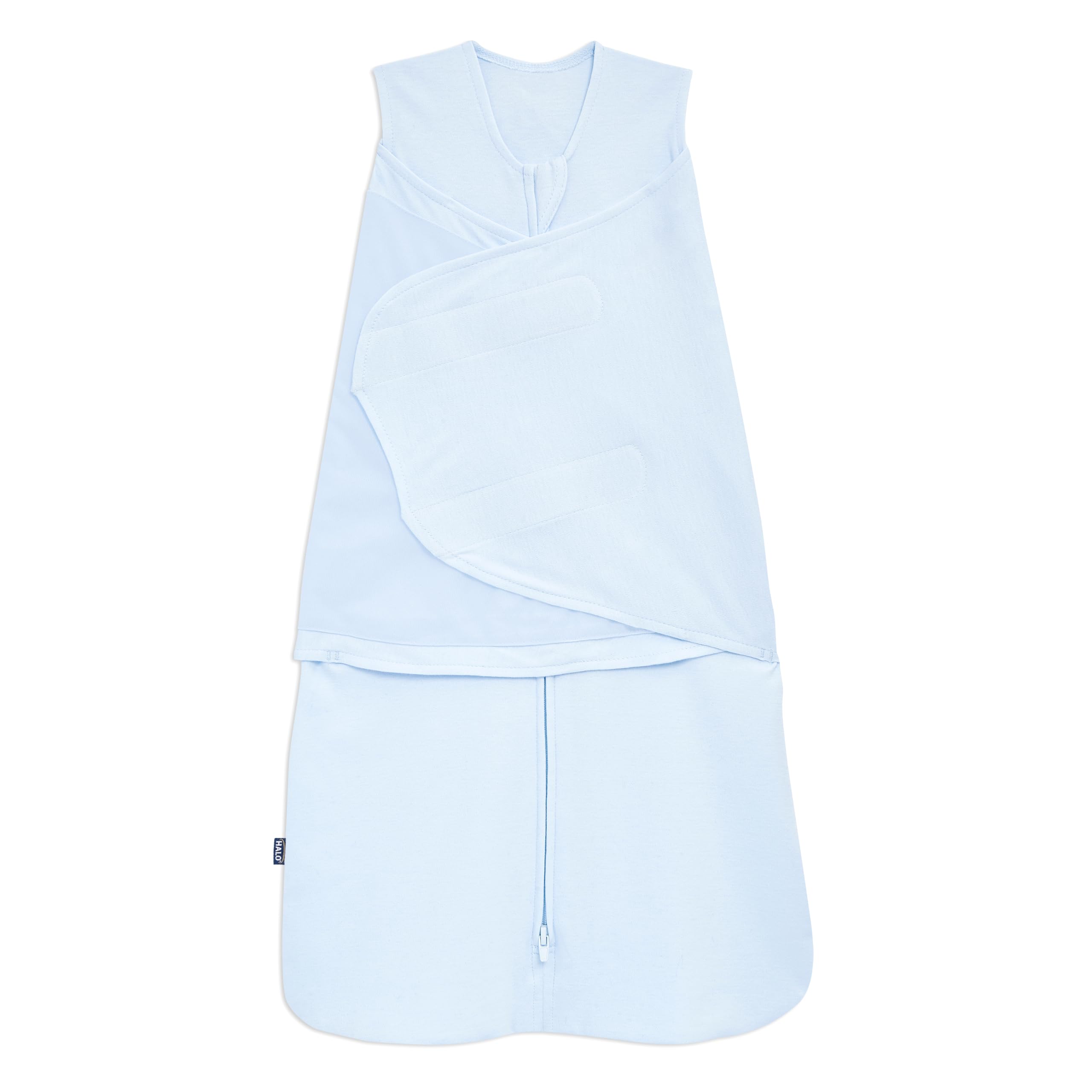
HALO SleepSack Swaddle
Key Features
- Warmth: 1.5 TOG (68–75°F)
- Closure: Zipper with hook-and-loop wings
- Size range: Newborn, 6–12 lbs
- Swaddle style: Arms-in wings, three positions
- Price: Premium
The HALO is the swaddle that changes as your baby does. The wings wrap arms-in for the startle reflex, tuck the hands up toward the face for a baby who wants to self-soothe, or come off the arms entirely once rolling starts. Very few newborn products are worth keeping past one stage; this one is.
Underneath is a zip sack with hook-and-loop wings over the top, and the wings run long enough to wrap a wriggler firmly. The catch is the fastener itself. Hook-and-loop is loud enough to make a sleeping baby flinch, and unless you close the tabs before the wash, it will find and grab everything else in the drum. The 1.5 TOG cotton suits a nursery around 68 to 75 degrees, and the cut runs generous — a small newborn can swim in the 6 to 12 pound size for the first week.
For a baby who sleeps with arms pinned, this is the better buy of the two leading sacks here: more adjustment, a roomier cut for bigger newborns, and a way to keep using it after the swaddle stage. We keep it as the recommendation for parents who want one product to see them through the whole transition.
Pros
- Three arm positions as the baby grows
- Long wings wrap a strong kicker firmly
- 1.5 TOG suits 68 to 75 degree rooms
Cons
- Loud Velcro that grabs laundry
- Seam stitching is a weak point
The most adaptable swaddle here: three arm positions in one sack, so it follows a baby from the startle reflex toward rolling.
Best for Warm Rooms
aden + anais Muslin 4-Pack
Key Features
- Care: Machine wash
- Pack: 4 blankets
- Material: 100% cotton muslin
- Blanket size: 44" x 44"
- Price: Premium
The reason these blankets work is easy to miss in the photos: they are 44 inches square. That handful of extra inches over a standard receiving blanket is what lets a beginner get a secure wrap with fabric left over to tuck, which is why this is the muslin pack we recommend.
The muslin itself is the other half of the story. It is a loose, breathable cotton weave, so a baby wrapped in it in a warm room doesn’t cook, and it softens with each wash — muslin is one of the few baby fabrics that improves rather than pills. Four to a pack covers a rotation: one on the baby, one in the wash, one in the diaper bag, one spare.
Where these fall short is technique and thickness. A blanket swaddle takes a couple of weeks to get reliably snug, and a determined kicker can work a corner loose in a way a zip never will. On a cold night this is a layer rather than a whole answer. Neither is a reason to skip them; they are the most versatile thing on this list, and still in use long after the swaddle stage ends.
Pros
- 44-inch square leaves room for a secure wrap
- Breathable muslin that softens with washing
- Four blankets, machine washable
Cons
- Takes practice to keep a wriggler wrapped
- Too thin to be the only layer in a cold room
The muslin blankets we recommend: 44-inch squares big enough for a secure wrap, breathable enough for a warm room, four to a pack.
Best for Budget Backup
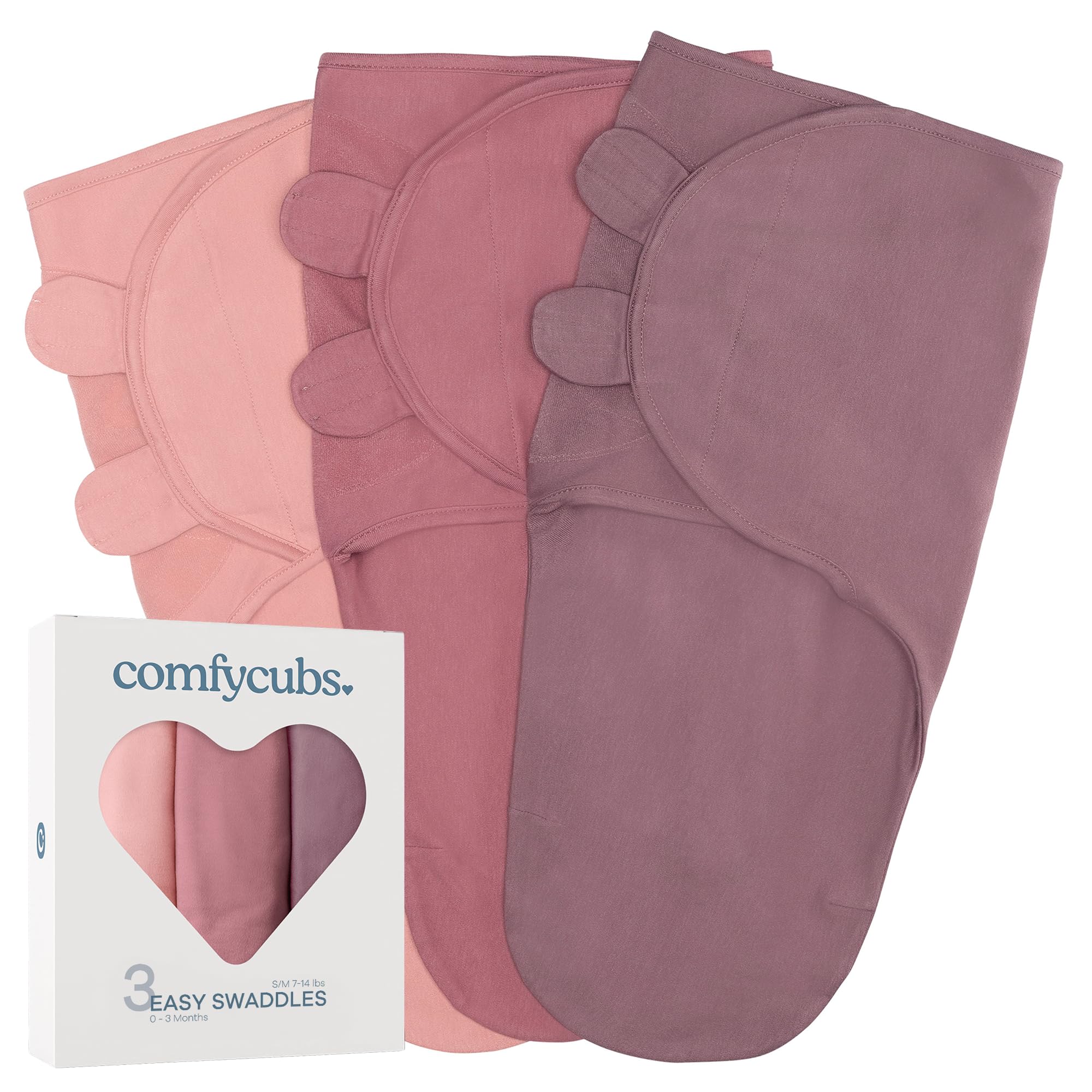
Comfy Cubs Easy Swaddle
Key Features
- Pack: 3 swaddles
- Material: 100% cotton
- Size range: 0–3 months (small)
- Swaddle style: Hook-and-loop wing wrap
- Price: Midrange
Three swaddles for about what one zippered sack costs is the pitch, and it’s a good one for a product that gets spit up on twice a day. The Comfy Cubs is a cotton wing wrap with hook-and-loop tabs, sized for 0 to 3 months.
The wrap is straightforward: lay the baby on the open swaddle, bring one wing across, then the other, and press. The tabs are strong enough that a baby who has been escaping blanket wraps stays put, and the cotton is light and breathable rather than fleecy — good for a house that sits around 70 degrees.
Fit is where these are least consistent. The label covers 0 to 3 months, but the cut runs big on a small newborn, and the leg area is narrow enough that a chunky baby will feel it before the chest does. Line the tabs up carefully in the middle; a wrap that closes crooked sits unevenly all night.
As a three-pack of backups — one in the crib, one in the wash, one at grandma’s — this is the value pick on the list, and it’s the pack we hand to parents who don’t yet know what their baby likes. It isn’t the softest or the most adjustable here; it’s the one that makes three attempts affordable.
Pros
- Three swaddles in one pack
- Strong tabs hold an escape artist
- Light cotton that suits a warm house
Cons
- Runs big on small newborns, narrow through the legs
The value pick: three cotton Velcro swaddles that hold a strong kicker, bought as backups for every room and bag.
Best for Hot Nurseries
KeaBabies Soothe Swaddle
Key Features
- Pack: 3 swaddles
- Warmth: 0.5 TOG (73–81°F)
- Hip rating: IHDI hip-healthy
- Size range: 0–3 months
- Price: Midrange
Most newborn swaddles are built for a room at ordinary temperature; the KeaBabies three-pack is built for a warm one. The 0.5 TOG rating covers roughly 73 to 81 degrees, and the fabric is a light organic cotton knit that doesn’t trap heat. It is also certified hip-healthy by the International Hip Dysplasia Institute, which matters more in a swaddle than in most baby gear, because a tight wrap is exactly where hip position gets compromised.
This is the pack we point to for summer babies and for anyone whose nursery runs hot: three swaddles, light enough to actually use in July, with tabs quick enough to close on a baby who is already half asleep. Nothing here is overbuilt, and for a product with a three-month lifespan that is the right call.
Two things to know. The tabs grip well at first, but the hold softens after enough washes, and the wrap doesn’t get as tight as a towel-style swaddle — a strong wriggler may work an arm free. If you need maximum containment, a firmer adjustable wrap serves better; this one trades that for heat and hip room.
Pros
- 0.5 TOG for rooms around 73 to 81 degrees
- Certified hip-healthy by the IHDI
- Three light organic cotton swaddles
Cons
- Tab grip softens with repeated washing
- Looser wrap than a firm Velcro swaddle
The three-pack for a warm nursery: 0.5 TOG, hip-healthy, and light enough to use in July without an overheated baby.
Best for First Muslin
LYRICHOM Muslin 3-Pack

Key Features
- Care: Machine wash
- Pack: 3 blankets
- Material: Cotton muslin
- Blanket size: 38" x 40"
- Price: Budget
If you want to find out whether your baby likes a blanket swaddle before spending much on one, this is the pack we point you to: three muslin squares, 38 by 40 inches, in prints that don’t announce a gender. It’s the cheapest route to real muslin on this list, and it does the job.
Muslin earns its reputation in warm weather. The weave is thin enough to breathe, so a wrapped baby doesn’t overheat, and it’s absorbent enough that the same blanket becomes a burp cloth at 2 p.m. and a stroller shade at 4. These go through the machine and come out softer than they went in, which is more than you can say for most inexpensive baby textiles.
The catch is size and weight. A 38-inch square is fine for a newborn and tight by two or three months, and the fabric is thinner than the premium muslin here — comfortable, but not something to rely on as a baby’s only layer in a cool room. Buy them as your everyday wrap and burp supply rather than as the one swaddle you keep forever.
Pros
- Three 38 by 40 inch muslin squares
- Breathable and softer after washing
- Cheap enough to keep one in every bag
Cons
- Smaller wrap than a 44-inch blanket
- Thinner than premium muslin
The budget muslin pick: three large squares that swaddle a newborn and then keep working as burp cloths and stroller covers.
Best for Everyday Burping
Gerber Flannel 5-Pack

Key Features
- Care: Machine wash and dry
- Pack: 5 blankets
- Material: 100% cotton flannel
- Blanket size: 30" x 30"
- Price: Budget
These are the blankets that end up everywhere: under a burp, over a car seat, on the floor for tummy time, folded in the diaper bag. Five cotton flannel squares in the house is not a swaddling strategy, it’s a supply — and for the daily mess a newborn generates, they’re the ones we kept reaching for.
The flannel is soft and gets softer in the wash, the prints are cheerful without being loud, and at 30 inches square they fold down small enough to live in a diaper bag permanently. Throw them in the machine and the dryer with everything else; nothing here needs special handling.
What they aren’t is a secure overnight swaddle. Thirty inches is on the small side for wrapping — a strong kicker can work a foot free — and the fabric is light rather than warm. Buy them for the hundred small jobs, and buy a proper swaddle for the sleep.
Pros
- Five flannel blankets in one pack
- Soft cotton that washes and dries with everything
- Folds small enough for a diaper bag
Cons
- 30-inch square is small for a secure swaddle
- Light flannel, not a warm layer
The everyday workhorses: five flannel squares for burping, tummy time and the stroller, at a price that makes a full supply easy.
Best for Photos and Gifts
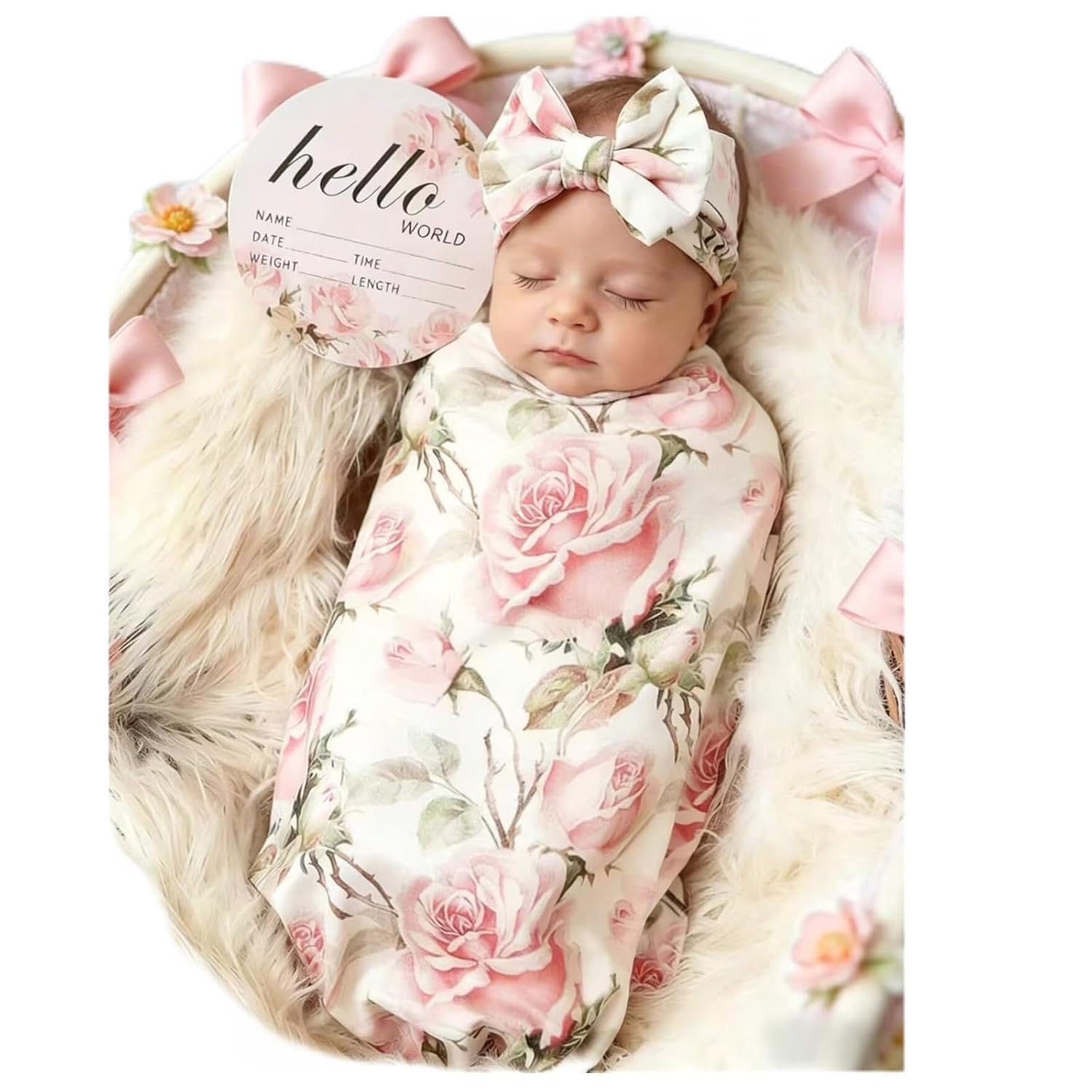
Galabloomer Receiving Set
Key Features
- Care: Hand wash only
- Material: Polyester and elastane knit
- Blanket size: 31.5" x 31.5"
- Price: Budget
This is a going-home set rather than a sleep system: a 31.5-inch stretchy knit blanket, a matching bow headband and a little card, bought for the picture and for the gift table. The knit is soft with real stretch, and the floral print photographs better than any of the plain wraps here. Hand wash only tells you what kind of item it is.
As a wrap for a small, not especially wriggly newborn it does work — the fabric is light enough for summer and the stretch helps a beginner get something snug. But 31.5 inches runs out fast, and a baby who kicks will be out of it before the headband has been worn twice. We’d keep the bow for the photo — outside the crib, not in it — and count this as the set you’re glad you have for the announcement rather than the one that gets you through the night.
Pros
- Stretchy knit prints that photograph well
- Blanket, headband and card in one set
- Light enough for a summer newborn
Cons
- Hand wash only
- 31.5 inches is small for a full swaddle
The set to buy for the going-home photo: soft, stretchy, and inexpensive enough to give as a gift, though hand washing gets old.
How We Tested 14 Newborn Swaddles
We started by pulling every swaddle that showed up in new-parent forums, registry lists, and the sleep-deprived group chats of people on my team, then filtered by material (muslin, cotton, bamboo blends), closure type (Velcro, zipper, snaps, tie), size range, and price. We ended up with 14 — enough to cover cheap muslin blankets and pricier zip-up sacks without pretending we’d tested the entire market.
For three months, those 14 swaddles lived in our nurseries, not on a lab bench. We used them for overnight sleep, naps, middle-of-the-night diaper changes, and the inevitable 4 a.m. blowout. Each one went through repeated wash-and-dry cycles, because durability matters more than the first impression. We noted whether the Velcro still gripped after ten washes, whether zippers snagged, and whether the fabric pilled or shrank.
Fit was the hardest thing to judge, so we watched how each swaddle sat on babies from 7 to 14 pounds: whether the neckline gaped, whether the arm pockets let little hands escape, and whether the size range actually matched the weight on the label. We also tracked thickness (or TOG, where listed) against room temperature, rated softness by hand and against a cheek, and compared how easy each was to swaddle a squirming baby solo at 2 a.m. Value came down to price per use over the newborn stage — some of the cheapest options held up better than the expensive ones. Appearance was the last thing we judged, but we did note which ones looked less like a hospital bandage in photos.
How to Choose a Newborn Swaddle
The swaddle that works is the one still wrapped at 3 a.m., and getting there comes down to three things: how your baby likes their hands, the weight range on the label, and how much fabric you want to manage in the dark.
Start with where your baby’s hands want to be
Some newborns settle the moment their arms are pinned; others fight a tight wrap until their hands reach their face. Watch your baby for a night or two before buying. Arms-down babies do well in an adjustable wrap like the HALO or a large muslin square, while hands-to-face babies tend to calm faster in an arms-up sack — the Love To Dream is the one we point to there. Getting this single thing right does more for your nights than any other choice on the page, because a baby whose hands are where they want them stops fighting the wrap.
Size by weight, not by the age on the box
0 to 3 months is a marketing range, not a fit guarantee. The swaddles here publish weight bands — 5 to 8.5 pounds on the Love To Dream newborn, 6 to 12 on the HALO — and those numbers are the ones to check before ordering. A wrap that’s too small can’t close safely across the chest; one that’s too big lets a wriggler slide up inside it. Weigh the baby at the next appointment, note the number, and move up the moment the fabric pulls across the shoulders rather than waiting for the calendar.
Velcro, zipper or a knotted blanket
Fastening decides how the middle of the night goes. Hook-and-loop tabs are adjustable and quick, which is why most of the sacks here use them, but they are loud next to a sleeping face. Zips are quiet and impossible to fasten wrong, at the cost of a fixed fit — between sizes, there is nothing to tighten. A blanket is the most flexible and the least forgiving: it takes practice, and a determined kicker can work a corner loose. Choose for your patience at 3 a.m., not for how it looks folded on the shelf.
Match the fabric to the room
TOG ratings are the shorthand worth learning: 0.5 for a nursery around 73 to 81 degrees, 1.0 for ordinary indoor temperatures, 1.5 for a cooler room near 68 to 75. Then dress the baby underneath for that same room — a diaper or a thin cotton bodysuit, not both plus another layer. The trap is layering a warm swaddle over a fleece sleeper because the calendar says January; the thermometer in the nursery is the better guide, and muslin is the fabric that forgives a warm night.
Buy two or three, and plan the exit
A newborn swaddle meets a lot of spit-up, and one in the wash means one in use — two is the minimum, three is comfortable, which is why the multipacks here earn their place. Plan the end at the same time you plan the beginning: swaddling stops at the first sign of rolling, and an adjustable swaddle with an arms-out setting makes those last weeks easier than starting over with something new.
Frequently Asked Questions
When should you stop swaddling?
At the first sign of rolling over, which for most babies arrives between two and three months. A baby who can roll while wrapped can end up face down, so the swaddle comes off that day. If your baby is fighting the wrap before then, try one arm out for a week — an adjustable swaddle with an arms-out setting makes that step easier than going cold turkey.
Can a newborn sleep swaddled from the first night?
Yes. A swaddle replaces the loose blankets that shouldn’t be in a crib, and it is safe from the first night as long as the baby is on their back on a firm, flat surface. Check that the wrap is snug across the chest with room at the hips, and check the room temperature against the TOG rating before you add another layer.
What is the difference between a swaddle and a sleep sack?
A swaddle wraps the arms in; a sleep sack is a sleeveless wearable blanket that leaves them free. Newborns usually want the wrap for the startle reflex, and most move to a sack once they start rolling. The two overlap more than the labels suggest — the HALO is a swaddle sack whose wings can come off the arms as the baby grows.
Final Verdict
Start with the Love To Dream Swaddle Up. It solves the problem that ruins swaddling for the most newborns — hands that won’t stay put — and the single zip makes it the easiest thing here to use at 3 a.m.
If your baby settles with arms pinned, the HALO’s three-way wrap gives you more adjustment and a longer runway as they grow. And if the nursery runs warm, the aden + anais muslin four-pack is the blanket you’ll still be using at six months.
