This post contains affiliate links. We may earn a small commission when you buy through our links — at no extra cost to you.
A sleep sack is supposed to solve the 2 a.m. problem: your baby is warm, safe, and not tangled in a loose blanket, so everyone can sleep. The wrong one creates new problems—a zipper that catches a chin, fabric that stiffens after two washes, or a neckline that’s too roomy. I learned that with my own daughter, who treated every sleep sack like an escape room until we found one that stayed put and kept her comfortable.
Over the past six months, my team and I put 12 sleep sacks through night after night of use, plus naps, diaper changes, and repeat laundry cycles, paying attention to softness after washing, zipper snags, Velcro grip, and warmth without overheating. Fit and size mattered just as much—a sack too roomy at the neck or too short in the body can wake a baby faster than a wet diaper. The ones that made the cut kept babies comfortable, helped them settle, held up to repeated washing, and felt worth the money. We’ve sorted them below by what they do best.

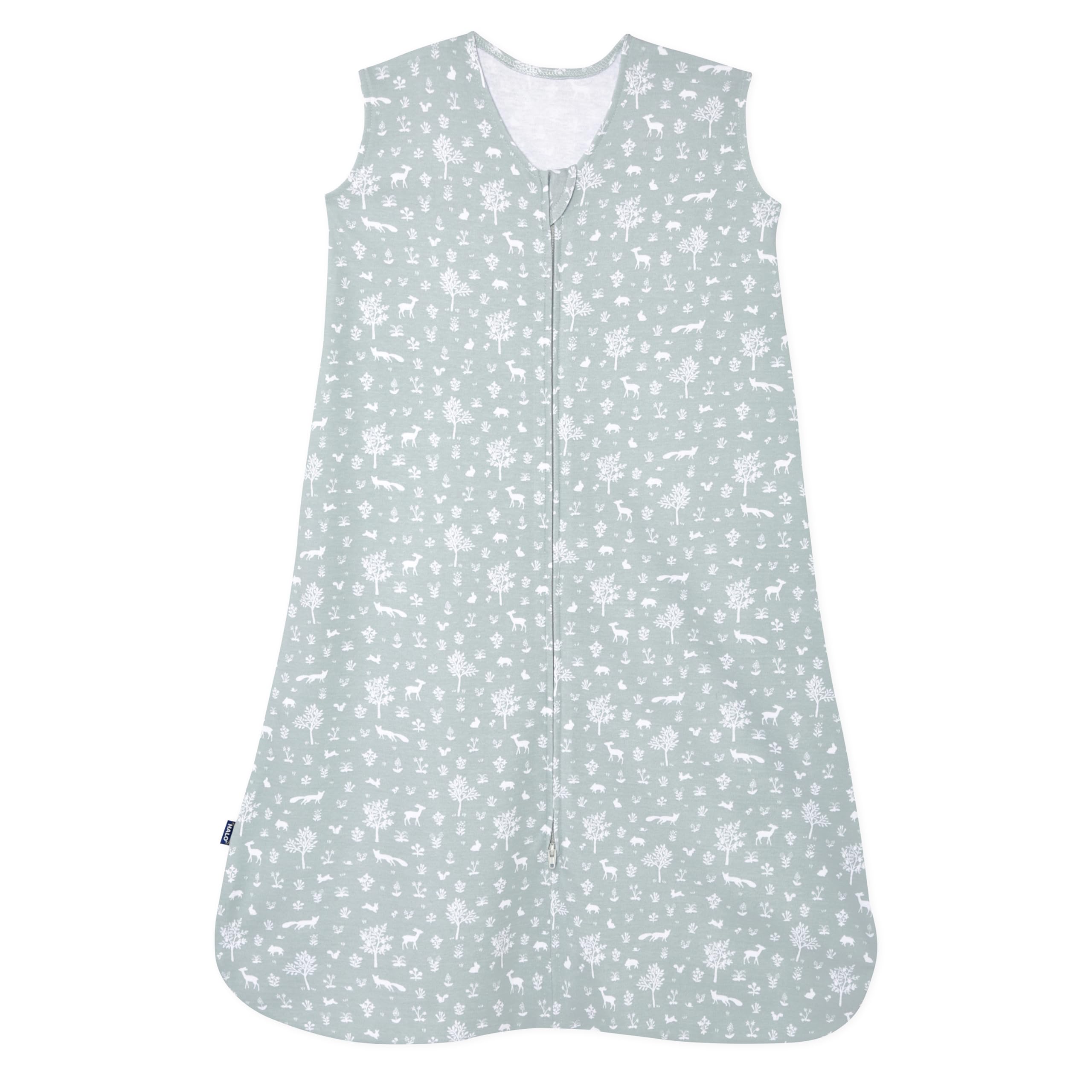


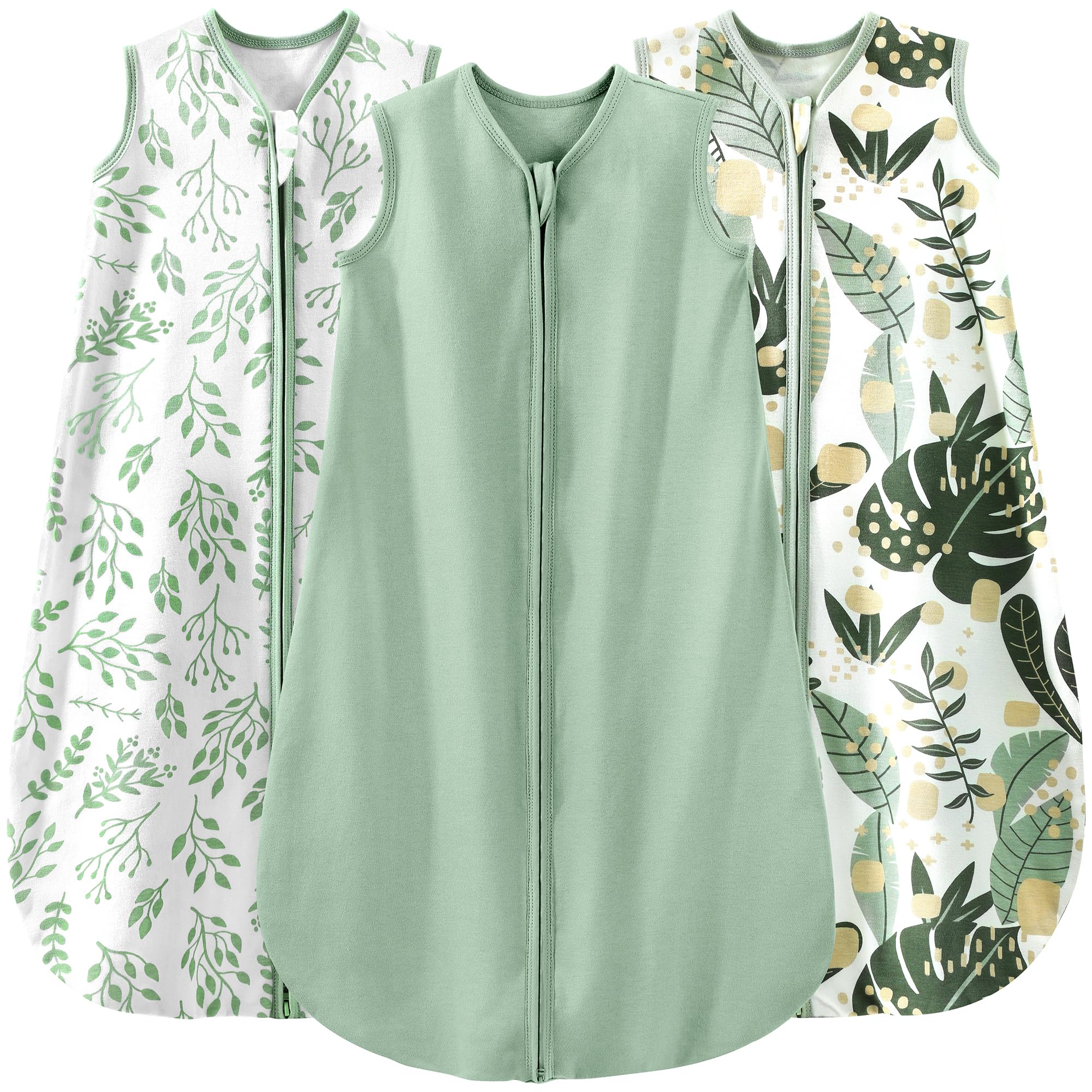
Best for Everyday Default
Burt’s Bees Wearable Blanket
Key Features
- Fit: Roomy through the legs
- Fabric: Organic cotton
- TOG options: 0.5 or 1.5 TOG
- Price: Midrange
Two warmth weights in one line is why this is the sack we point most parents toward first. The 0.5 TOG version is a single light layer for a warm nursery and the shoulder months; the 1.5 TOG version is the same organic cotton in a heavier knit for a cool room. That one choice does more for you than any single feature elsewhere on this page, because it means the sack you bought in June still has a job in November.
The cotton is the part we kept coming back to. It comes out of the wash soft rather than stiff, which is not a given at this price, and it breathes enough that a baby in a light bodysuit does not wake up clammy. The leg room is generous too, so kickers and knee-tuckers both have somewhere to go, and the neckline sits close enough to stay put through a night of rolling.
Against the rest of the group it is middle of the road on price and ahead of most of it on fabric. It is not as buttery as the bamboo sacks and it does not have the Woolino’s one-size-for-two-years trick, but it suits the widest range of babies and bedrooms without asking you to commit to either camp.
If your nursery sits at a normal room temperature and you want to buy once, start with the 0.5 TOG and size by weight rather than the age printed on the label. Add the 1.5 later if your heating runs cool — the two are cut the same, so you are choosing a weight, not relearning a fit.
Pros
- Two warmth weights in one line
- Stays soft after repeated washing
- Roomy leg room for kickers
Cons
- Runs large for the labelled age
- Zipper can stick or give out
The two-weight line makes this the easiest first sleep sack to buy: soft organic cotton, roomy legs, and the option to go warmer later without changing the fit.
Best for Warm Rooms
HALO SleepSack 0.5 TOG
Key Features
- Fabric: 100% cotton
- Zipper: Bottom-opening for changes
- TOG rating: 0.5 TOG
- Price: Midrange
When the nursery is the warmest room in the house, this is the sack we reach for. At 0.5 TOG it is one thin layer of cotton, so a baby in a short-sleeve bodysuit sleeps without going sweaty, and it stays useful from midsummer through the first weeks of heating season.
The appeal is how little there is to get wrong: one layer, one zip, no wings or snaps to negotiate in the dark. We found the zip easy to work one-handed, and because the sack goes on the same way every single night it becomes a cue as much as a garment — babies learn that the sack means sleep, which is worth more than any extra feature here.
Roomy through the body, it suits long babies and leaves space for a heavier sleeper underneath when the weather turns, which stretches one 0.5 TOG sack across more of the year than the rating suggests. The trade is that it is plain: no bamboo, no merino, no clever conversion. In a warm room, plain is the point.
Pros
- Thin 0.5 TOG layer for warm rooms
- One-handed zip in a dim room
- Doubles as a bedtime cue
Cons
- Neck opening can gape on smaller babies
- Zipper can stick or split from the bottom
For warm rooms and summer we reach for this one: a single light cotton layer, nothing to adjust, and enough room to layer underneath when the nights cool.
Best for All-Season Buy
Woolino Ultimate Sleep Sack
Key Features
- Care: Machine wash
- Fabric: Merino wool lining, organic cotton outer
- Seasons: All four seasons
- Size range: 2–24 months, one size
- Price: Premium
One sack, two months to two years, no TOG to match against the thermostat. That is the pitch, and it holds up: the Woolino is a universal-size bag with a merino wool lining and an organic cotton shell, and it is the only sack here you can buy once and then stop thinking about.
Merino is the reason it works in both directions. The wool holds warmth on a cold night and breathes when the room is mild, so the same sack covers a February night and an April one. In practice that means fewer middle-of-the-night checks and no drawer full of different weights waiting for the right week to be useful.
We think it is worth the money for a specific family: one that would otherwise buy two or three sacks in ascending sizes over the first year. Set against that, it is not the extravagance the price makes it look, and the build is dense enough that handing it down to a second child is a reasonable expectation rather than a hopeful one.
The side zipper is the detail we ended up appreciating most. Nothing metal sits under the chin, and a toddler who chews on everything has nothing to chew. It takes a night or two to relearn the change routine if you are coming from a front zip, but after that it is quicker in the dark.
Pros
- One size covers two months to two years
- Merino regulates temperature year-round
- Side zip keeps hardware off the chin
- Washes and holds its softness
Cons
- Premium price is the main objection
- Universal fit is roomy on a newborn
Buy this one if you want a single sack for two years across every season; the merino lining does the work three cotton sacks otherwise would.
Best for Swaddle Transition
Love to Dream Transition Bag
Key Features
- Size: Medium, 13–19 lb
- Design: Zip-off wings for one arm out
- Fabric: 93% cotton
- TOG rating: 1.0 TOG
- Price: Premium
The zip-off wings are the whole idea. Each sleeve is a separate panel that zips away, so you can free one arm while the other stays wrapped — the usual route through the swaddle transition — and then take the second off when your baby is ready. Nothing else in this group does that with a zip rather than a strip of velcro.
With the wings on it is a proper swaddle: close across the chest, with the arms-up position that suits babies who fight a conventional wrap. The zip runs both ways, so a night change does not mean unswaddling anyone. Take both wings off and you are left with a sleeveless 1.0 TOG sack that keeps working for months afterward, which is the part that makes the price easier to take.
The chest is the fit to watch. It is deliberately close through the torso — that is what makes it feel swaddled — and a baby at the top of the weight band will feel it, so size by weight and check the armholes before you commit. The care label also asks for lay-flat drying, which is a genuine inconvenience in a house with one machine and a baby who has just spat up.
For the fortnight when you are taking an arm out, this is the calmest version of that transition we have handled. It costs more than a plain sack and the drying is a nuisance, but the alternative is a cold-turkey jump to arms-out on a night when nobody has slept.
Pros
- Zip-off wings free one arm at a time
- Keeps working as an arms-out sack
- Two-way zip for night changes
Cons
- Close fit across the chest
- Needs lay-flat drying
The least disruptive way through the swaddle transition: free one arm at a time with the zip-off wings, then keep using it as a 1.0 TOG sack.
Best for Laundry Rotation
Yoofoss Sleep Sack 3-Pack
Key Features
- Size: 0–6 months
- Fabric: Organic cotton
- Pack size: 3 sacks
- TOG rating: 0.5 TOG
- Price: Midrange
Count the nights before you count the features. A sack that gets spat on at 2 a.m. needs a spare in the drawer and one in the wash, so three is not a sales gimmick — it is roughly the number that gets you through a week without an emergency cycle.
What arrives is plainer than the premium sacks and perfectly good: 0.5 TOG organic cotton, a two-way zip with a guard behind it so nothing rubs under the chin, and a softness closer to a well-worn T-shirt than to hotel bedding. The zip opens from the bottom, which is the whole difference between a two-minute change and a fully awake baby.
For the first six months this is the best value in the guide. The fabric, the zip and the cut are all good enough that you never feel like you are using the cheap ones, and having three means one can live at daycare and one can live in the car. The one thing we noticed is a little shrinkage in a warm wash — it stretches back out once it is on, but wash cool if you want to keep the length.
Pros
- Three sacks in one purchase
- Two-way zip with a chin guard
- Breathable 0.5 TOG cotton
Cons
- Cut runs large on newborns
The practical choice for the first six months: three light organic cotton sacks with two-way zips, so a 2 a.m. change never turns into a laundry run.
Best for Premium Softness
KYTE BABY Sleep Bag

Key Features
- Fabric: Bamboo rayon with spandex
- Zipper: Dual zipper
- TOG rating: 1.0 TOG
- Price: Premium
Bamboo rayon has a hand-feel cotton cannot match, and this is the plushest version in the group — closer to a worn-in jersey than to a sheet. If your baby fusses at every texture, start here.
The 1.0 TOG weight sits in the middle of the range and covers most heated nurseries, and the cut is more fitted around the neck than the cotton sacks here. We like that more than we expected to: there is less loose fabric near the face, and the sack stays where you put it through a night of rolling.
The fabric is the reason to buy it and the reason to be careful with it. Pale colours show every stain and bamboo holds onto them, so treat spills before they set and wash it more gently than you would a cotton sack. It is also the one in this guide where running a thumb along the shoulder seams before the first wash is worth the thirty seconds.
At the top of the price range, it is a sack for a family that has already decided the fabric matters — and for the right baby it does, because a baby who sleeps better in something soft is worth more than the difference. For everyone else, the BubblePanda gets most of the way there.
Pros
- Buttery bamboo rayon
- Fitted neck stays put
- 1.0 TOG suits most heated rooms
Cons
- Seams and zip can fail early
The softest fabric in this guide and a more fitted neck than the cotton sacks — the splurge to make if your baby is fussy about texture.
Best for Budget Bamboo
BubblePanda Bamboo Sleep Sack

Key Features
- Size: 6–12 months
- Fabric: 97% bamboo rayon, 3% spandex
- Zipper: Two-way
- TOG rating: 1.0 TOG
- Price: Midrange
Take the premium bamboo sack, change the label, and knock a good chunk off the price: that is the pitch, and the fabric mostly delivers. The 97% bamboo rayon blend feels close to identical in the hand — soft, slightly cool, with enough stretch to make dressing a wriggling baby easy.
Where it actually wins is the wash. Bamboo at this price usually pills first, and this one comes out of the machine smooth after months of daycare cycles. We think it is the better buy of the two bamboo sacks if the sack is going to be washed twice a week, which it will be.
The zip is the gamble. It is a two-way zip that makes night changes easy right up until it does not, and this is the part of the sack you cannot work around. Sizing runs true with plenty of length for tall toddlers, and the colours hold up. Pack it for daycare, where losing a sack hurts less.
Pros
- Bamboo softness well below the premium price
- Washes without pilling
- Plenty of length for tall toddlers
Cons
- Zip can fail within a few months
A close match for the premium bamboo sack at a fraction of the cost, and the one to put through daycare laundry without worrying.
Best for Newborns
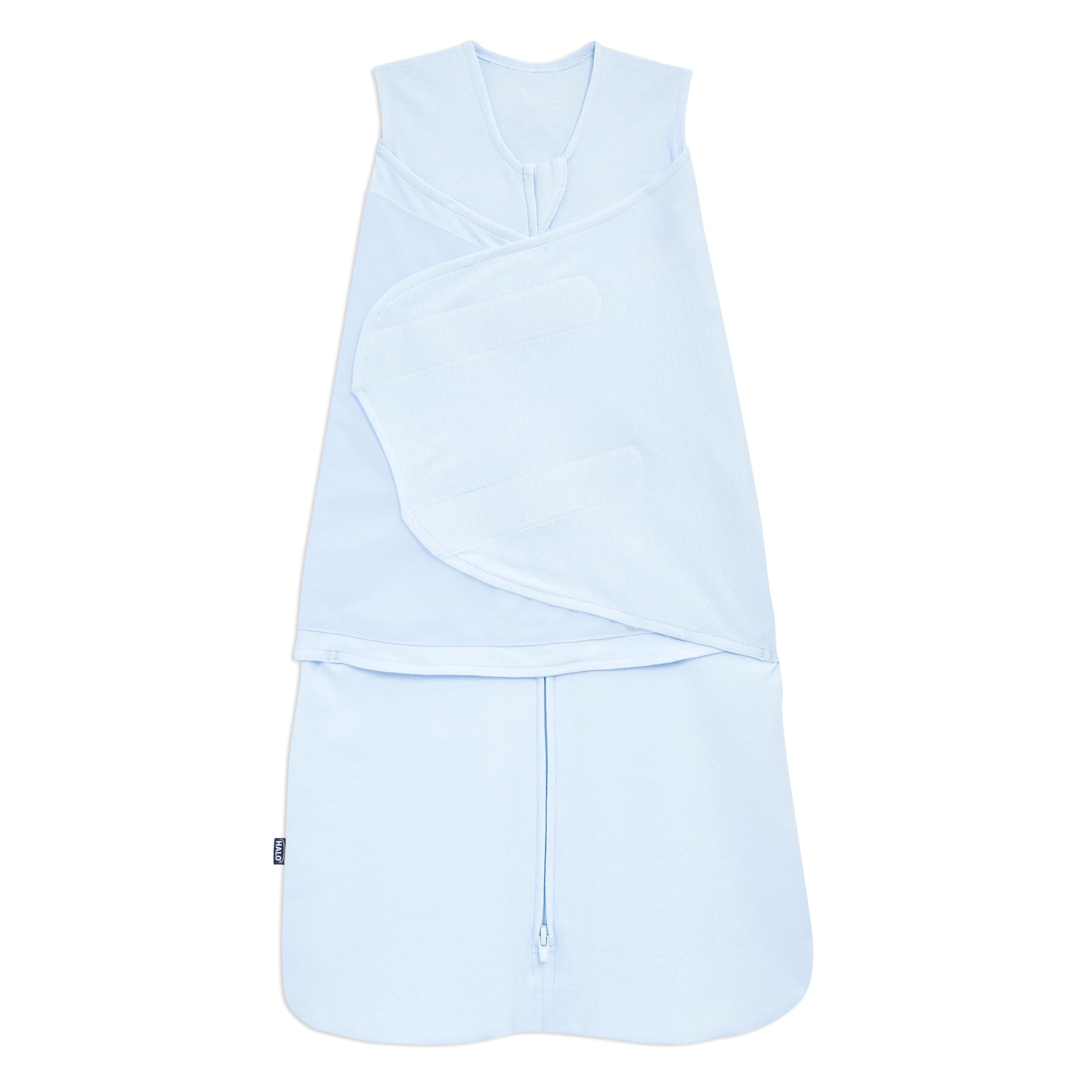
HALO SleepSack Swaddle
Key Features
- Size: Newborn, 6–12 lb
- Fabric: 100% cotton
- TOG rating: 1.5 TOG
- Swaddle modes: Arms in, one out, both out
- Room temperature: 68–75°F
- Price: Midrange
The velcro is loud — peeling it open beside a sleeping baby is the worst part of the night — and it is the component that gives out first after a few dozen washes. What you get in exchange is a swaddle you can adjust in the dark, one-handed, without re-wrapping anything.
The adjustability is the reason it earns a place. The wings wrap both arms in, leave one arm out with a hand-to-face position, or open completely for arms-out — three configurations in one garment, which is the path a newborn takes over the first three months. The bottom zip means a diaper change does not disturb the wrap at all.
The 1.5 TOG weight is rated for 68–75°F, which covers most heated nurseries, and the hip-healthy cut leaves the legs free to splay rather than binding them together. It is also genuinely easy to get a squirmy baby into, which is not a small thing at 3 a.m.
For the first three months we think this is the most forgiving swaddle here, and the three configurations mean you are not shopping for a second product the week your baby starts to roll. Buy it before the baby arrives; by the time you are sure you need it, you are already halfway through the size.
Pros
- Three arm positions in one garment
- Bottom zip for diaper changes
- 1.5 TOG rated for 68–75°F
Cons
- Size window is only 6–12 lb
A newborn swaddle that adapts from arms-in to arms-out in one garment, so the transition does not require a second purchase.
How We Tested the Best Baby Sleep Sacks
We built the shortlist by researching sleep sacks with clear TOG ratings and safety certifications, then filtering by fabric, size range, zipper style, and price. We landed on 12 models that cover what parents actually buy, from cotton muslin to quilted cotton to fleece. For six months, real babies wore each sack for overnight sleep and naps, and we washed each one at least a dozen times.
Testing happened in the nursery, not on a lab bench: middle-of-the-night diaper changes in dim light, wrestling sacks on and off wriggling babies, and the occasional blowout that required an immediate wash. We checked fit at the neck, arms, and legs, watching for gaps, twisting, and how much growing room each size left. We zipped and unzipped every zipper dozens of times, looking for snags, chin guards, and whether the zipper stayed flat after washing, and on Velcro models we noted whether the closures snagged fabric or lost grip.
Warmth was judged by nursery temperature, the feel of the baby’s chest and back, and signs of overheating. We compared softness out of the package and after repeated washes, checking for pilling, stretched seams, and thinning. We also logged wakings, how easily babies settled, and whether they seemed comfortable in the sack, then asked whether each one’s construction justified its price.
How to Choose a Baby Sleep Sack
Two decisions do almost all the work here: how warm the nursery is, and what weight band your baby is in right now — get those right and the fabric is a preference, not a gamble.
Match the TOG to the room, not the calendar
TOG is a warmth rating, and it is the number to shop by. A 0.5 TOG sack is a single thin layer for warm rooms and summer, 1.0 TOG sits in the middle, and 1.5 TOG is a cooler-room sack — HALO rates its 1.5 TOG swaddle for 68–75°F, which is roughly where most heated nurseries sit.
The trap is buying a heavy sack and then a fleece sleeper to go under it. That combination is how babies overheat, and it is far more common than underdressing. Pick the sack for the room and keep what goes underneath light. If you would rather not think about the thermostat again, a merino sack like the Woolino is designed to cover the whole range on its own.
Buy by weight band, and check the neckline
Almost every sack here is sized by weight, and most of them run large for the age printed on the label. Buying a size up to grow into is the mistake we see most: the body being roomy is fine, but a sack that is too big gaps at the neck, and loose fabric near the face is the one thing to reject outright.
Put it on and check two places before you cut the tags off. The neck should sit close against the collarbone without pressing, and the armholes should not let a shoulder slide through. If your baby is between bands, take the smaller one — a sack that fits now is safer and easier to sleep in than one saved for next season.
The zipper decides how the next two years go
Zips are the most common failure point in this category, and the difference between a good one and a bad one shows up at 3 a.m., not on the product page. Look for a two-way zip or a bottom-opening zip so you can change a diaper without undressing a sleeping baby, and a guard or cover at the top so metal never sits under the chin.
This is also the one part you cannot repair. A zip that sticks, splits or loses teeth ends the sack no matter how good the cotton is, so it is worth paying attention to before you buy rather than after. The multi-packs and the premium sacks here all live or die on the same component.
Fabric, washing and shrinkage
Cotton is the default for a reason: breathable, forgiving in the wash, and it survives a warm cycle better than anything else. Bamboo rayon is softer and stretches, which makes dressing easier, but it is harder on itself — it holds stains, strains at the seams, and wants gentler washing. Merino regulates temperature best and costs the most.
Whichever you choose, expect a little shrinkage in cotton after the first warm wash, and wash cool if keeping the length matters. A sack that has shortened by a couple of inches has effectively moved down a size band, which is worth remembering before you tumble dry anything with a bamboo or cotton label.
How many sacks you actually need
Two is the working minimum — one on, one in the wash — and three is what gets you through a week of spit-up without an emergency cycle. That arithmetic is why a multi-pack like the Yoofoss makes sense for the first six months, and why one sack that covers two years and every season can work out cheaper than three cheap ones in ascending sizes.
Think about where the sacks live, too. A daycare sack, a crib sack and a spare in the diaper bag is a different purchase from two in rotation at home. Count the washes you are already doing before you decide which camp you fall into.
Frequently Asked Questions
What should my baby wear under a sleep sack?
One light layer. A short-sleeve bodysuit under a 0.5 TOG sack in a warm room, or a long-sleeve cotton sleeper under a 1.0 to 1.5 TOG sack in a cooler one. Skip the fleece entirely — a heavy sleeper under a heavy sack is the usual route to an overheated baby.
If you are unsure, feel the back of your baby’s neck. Warm and dry is right; hot or sweaty means the sack, the layer under it, or both are too much for that room.
When should we stop swaddling?
At the first sign of rolling, not at a particular age. Once a baby can turn, arms-in wrapping stops being safe, and the change tends to arrive sooner than parents expect.
Make it gradual: one arm out for a few nights, then both. A sack with removable wings, like the Love to Dream, or a three-way swaddle like the HALO lets you do that in the same garment instead of buying something new mid-transition.
Can a toddler walk in a sleep sack?
Shuffle, yes; walk briskly, no. Sleeveless sacks with plenty of leg room let a cruising toddler get around a crib, but the fabric drags and bare feet on hardwood slip.
Treat the sack as cot wear rather than something to wander the house in, and put it on at the end of the bedtime routine so the walking is already done.
Final Verdict
If you want one sack to start with, buy the Burt’s Bees in 0.5 TOG and size it by weight rather than the age on the label. It is the softest cotton at its price here, the legs are roomy enough for a kicker, and the second warmth weight is there when the weather turns without forcing you to relearn the fit.
If you would rather buy once and stop thinking about TOG, the Woolino earns its premium over two years and every season. And if the budget is tight or the laundry never stops, the Yoofoss three-pack covers the first six months for the price of one premium sack — that is the decision, and any of the three will get a baby through the night.