This post contains affiliate links. We may earn a small commission when you buy through our links — at no extra cost to you.
The first genuinely cold night is usually when parents find out their baby’s sleep sack is a summer one. I’ve stood over a crib at 3 a.m. feeling cold hands and a sack bunched up under a chin, thermostat reading 65. A winter sleep sack is what closes that gap — warmth through the night with no loose blanket to kick off — but the thickness on the hanger tells you almost nothing. The TOG rating does, and a sack that runs too warm will wake a baby just as reliably as one that runs cold.
Over four months, my team and I put 12 winter sleep sacks through real nights, and the field narrowed fast. Softness mattered, obviously, and so did warmth that doesn’t turn a baby into a burrito. But the zipper decided more of these than anything else — a tab that snags at 2 a.m. can sour you on an otherwise lovely sack. The ones that survived the rotation are below.


Best for Cold Winter Nurseries
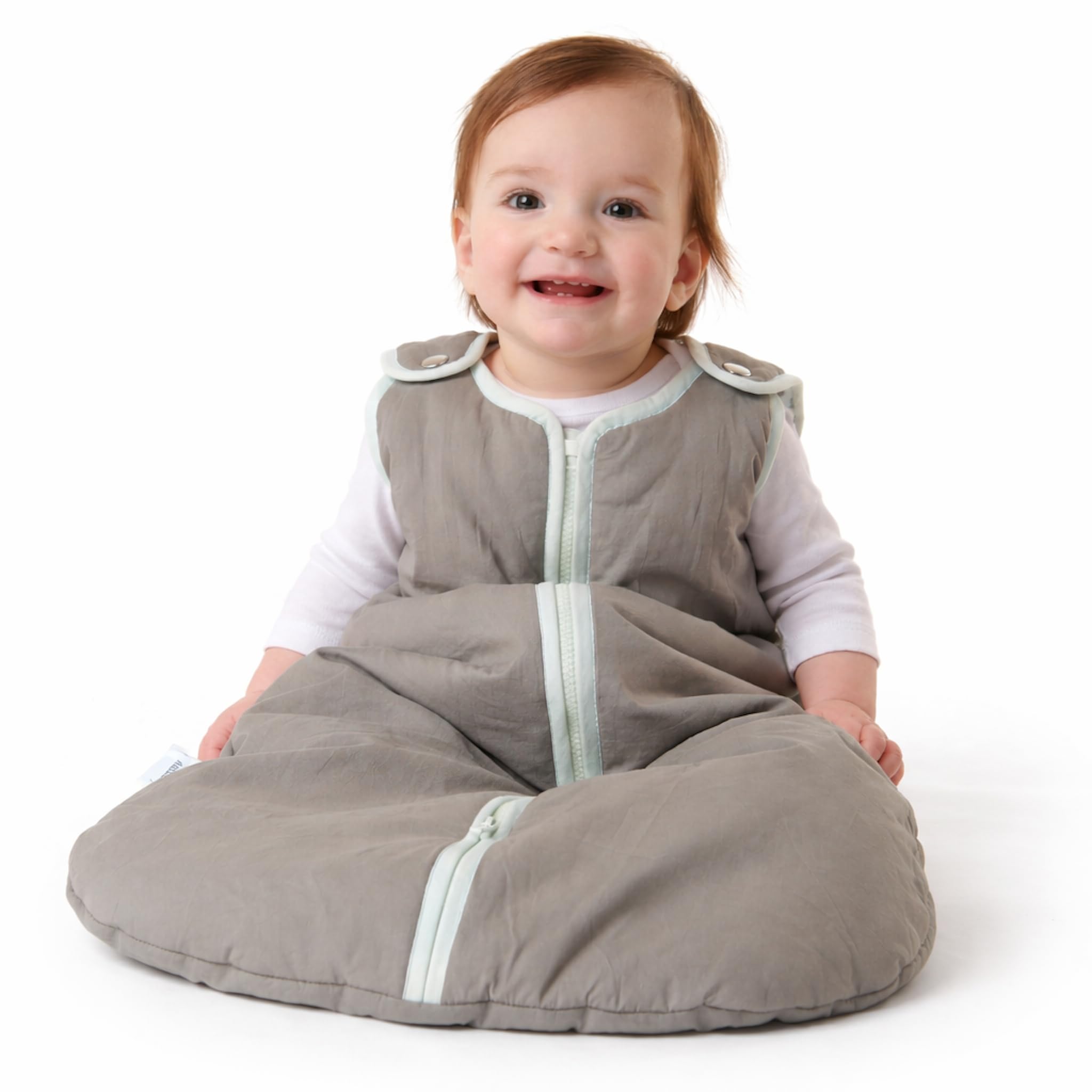
baby deedee Sleep Nest 2.5 TOG
Key Features
- Weight: 1.08 lb
- Closure: Center zip, shoulder snaps
- Warmth rating: 2.5 TOG
- Price: Midrange
A nursery that slides into the low 60s by morning is the whole reason to own one of these, and the Sleep Nest is the sack we reach for first when the forecast turns. It is rated 2.5 TOG and it feels like it: quilted, puffy, closer to a duvet than a sheet. The part that matters is the balance — a baby comes out of it warm through the torso rather than damp at the neck, which is the failure that makes parents abandon a heavy sack midwinter.
The design is unfussy in a way that suits a job done half-asleep. It is sleeveless, so arms vent heat, and the shoulder snaps open wide enough to slide a sleeping baby in without a wrestling match. Quilting this thick could easily turn a baby into a radiator, and it does not, which is the single thing we care about most in a winter bag.
Night changes are handled by a heavyweight zip down the center and snaps at the shoulders, so you can open the top, get at the diaper, and close it again without undressing anyone. The body is roomy through the legs for kickers and rollers, and it came through regular washing in our rotation still soft rather than stiff, which is more than we can say for cheaper quilted sacks.
Where it sits in this group is straightforward. There are cheaper 2.5 TOG sacks here and two premium ones that cost far more; the Sleep Nest is the middle of that range behaving like it belongs at the top. Above about 70 °F in the nursery it is more sack than you need — that is the point where a lighter bag and a thin footie do the same job with less heat.
Pros
- Quilted 2.5 TOG warmth for genuinely cold rooms
- Shoulder snaps and a center zip for easy night changes
- Roomy through the legs with growing room
Cons
- Costs more than the budget 2.5 TOG sacks
Our default winter sack: 2.5 TOG of quilted warmth that keeps a cold nursery comfortable, for well under what the premium picks cost.
Best for Year-Round Use
Woolino Ultimate Sleep Sack
Key Features
- Lining: 100% merino wool
- Warmth: 4-season, no TOG rating
- Size range: 2–24 months, one size
- Outer fabric: GOTS organic cotton
- Price: Premium
One sack that fits from two months to two years is the claim that sells the Woolino, and it is the reason we point parents who are tired of rebuying toward it. The construction is the story: 100% Australian merino lining against the skin, a GOTS-certified organic cotton outer, and no TOG number anywhere, because merino is meant to regulate rather than hit a fixed warmth target.
In the hand it is noticeably thinner than the quilted 2.5 TOG sacks here, and that is the judgement call you are making. In a room in the low 60s you will want a long-sleeve footie underneath, where the Sleep Nest or the Mosebears does more of the warming on its own. What the wool buys you is range: this is the one sack in the group we were comfortable using in a mild September and again in February, and one size absorbed a growth spurt that would have cost us a whole replacement elsewhere.
It machine-washes, which matters more than the wool marketing suggests, and the side zip keeps the hardware off a baby’s chin once you have the two pulls figured out. The hurdle is cost: this is the priciest sack on the page, and whether it earns that depends on whether you get two winters and a second child out of it. If you want maximum warmth per dollar for this winter alone, a quilted 2.5 TOG bag gives you more loft for a lot less.
Pros
- One size covers 2 to 24 months of growth
- Merino lining regulates temperature year-round
- Machine washable with side-zip access
Cons
- Highest price in this group
- No TOG rating to compare with quilted sacks
Buy it if you want one temperature-regulating sack to last from two months to two years; its thinner loft suits milder rooms better than a deep-freeze nursery.
Best for Budget Cold Rooms
Mosebears 2.5 TOG Winter Sack
Key Features
- Length: 80 cm shoulder to hem
- Closure: Two-way zipper
- Room range: Below 70 °F
- Warmth rating: 2.5 TOG
- Price: Budget
The listing puts a number on the thing most winter sacks leave vague: 2.5 TOG, built for room temperatures below 70 °F. That specificity is why it earns the budget slot here. It is genuinely thick — a cotton shell over polyester fill, stitched in a quilted pattern — and it keeps that warmth without turning the sack into a coat. The 18–24 month size runs 80 cm shoulder to hem, so you can run a tape over a sleeping baby before ordering instead of guessing at the age label.
Two details do the practical work. The two-way zip opens from the bottom, so a diaper change happens with the chest still covered, and a fabric flap keeps the pull off the chin. Sleevelessness does the rest, letting arms dump heat so a bag this thick can still be used in a room around 68 °F without a sweaty baby at midnight.
Generous is the word for the cut. Leg room is plentiful for kickers, a long baby gets a second season out of a size, and it dries faster than its bulk suggests. The flip side is that a small or slight baby swims in it, so size down if your baby is on the lower percentiles. What we keep coming back to is the arithmetic: nothing else here delivers this much loft for so little.
Pros
- 2.5 TOG warmth for cold rooms at a budget price
- Two-way zip with a chin flap for night changes
- Soft quilting that dries faster than its bulk suggests
Cons
- Runs large; small babies swim in it
The budget winter sack to beat: real 2.5 TOG loft, a two-way zip for night changes, and a price that leaves room for a spare.
Best for Soft, Long Fit
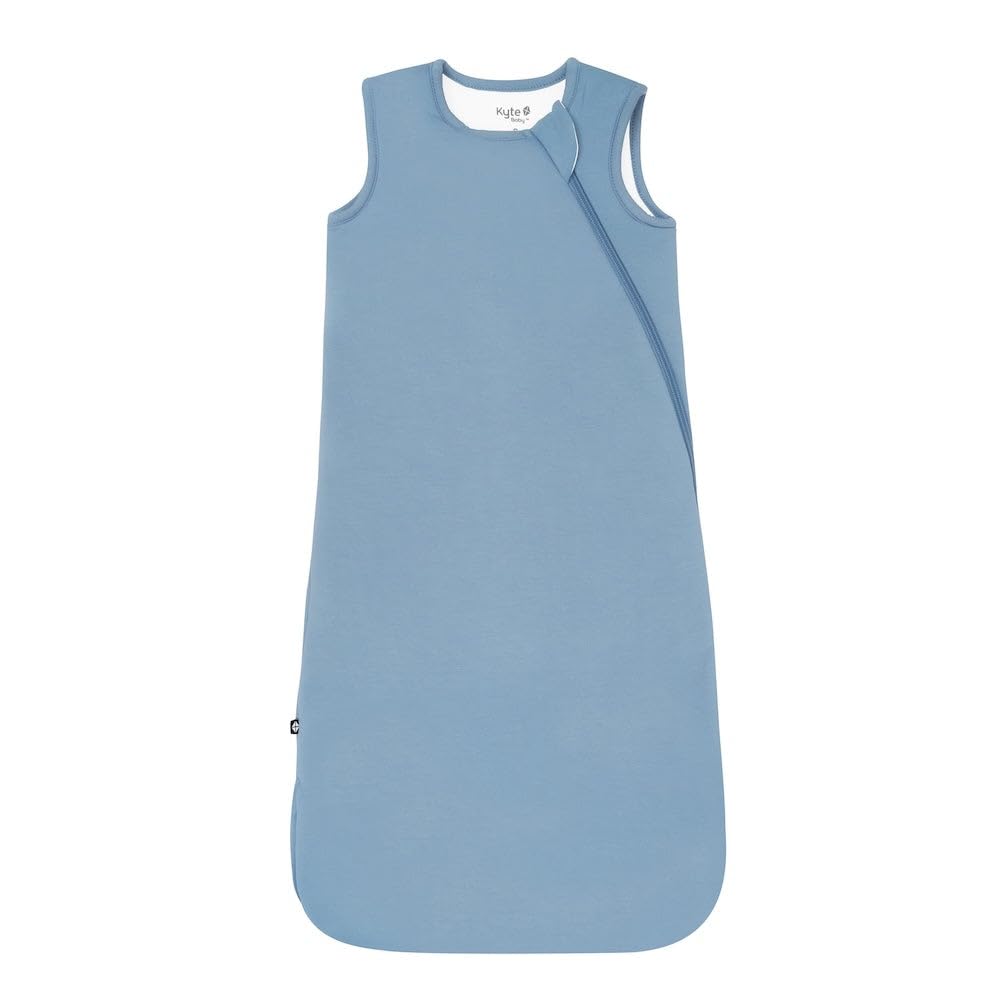
Kyte Baby 2.5 TOG Sleep Bag
Key Features
- Fabric: Rayon from bamboo
- Closure: Dual zipper
- Warmth rating: 2.5 TOG
- Price: Premium
Rayon made from bamboo is why people stretch to Kyte, and against the skin it is the softest thing in this group — plush and silky, nothing like the crisper cotton of a budget quilted sack. It is still a 2.5 TOG bag built for winter, but the warmth arrives with a drape that settles around a baby instead of sitting on top of them. If you have a baby who fusses at anything stiff against the arms, this is the one to try.
The cut is the second argument, and for some parents the deciding one. These run long, which matters when your baby is high on the height chart: ankles and shoulders stay covered months after a standard size has started riding up. Warmth without overheating holds up too, and this is the sack we kept reaching for on nights when the room hovered around 68 °F and a heavier quilted bag felt like overkill. The price is the price — it is the second most expensive sack here, and the inner seams are the weak point. They can come apart after months of heavy washing, so wash gently and keep it out of a hot dryer. If durability matters more to you than feel, the Sleep Nest costs less and takes more abuse.
Pros
- Softest fabric against the skin in this group
- Extra length suits tall babies and lasts longer
- 2.5 TOG warmth without bulk or clamminess
Cons
- Inner seams can give way with heavy washing
- Second-highest price in this group
The pick for tall babies and parents who care about feel: bamboo softness and extra length in a sack that still handles real winter.
Best for Quilted Backup Sack
Yoofoss 2.5 TOG Quilted Sack

Key Features
- Size: Medium, 6–12 months
- Closure: Double zipper
- Warmth rating: 2.5 TOG
- Shell and fill: Cotton shell, polyester fill
- Price: Budget
Quilted, rated 2.5 TOG, and priced with the entry-level sacks, the Yoofoss is the obvious candidate for the second sack you keep in the wash rotation rather than the heirloom one. The quilting is stitched in channels, which holds the fill where it was put instead of letting it bunch at the corners after a few washes, and the cotton shell is soft enough that a baby in a thin footie does not complain about it.
Warmth is not where this one compromises. It runs as thick as sacks costing noticeably more, and it does the job in a cold room without a fight — one of our testers’ babies slept through in a room that had dropped into the low 60s. The double zip is the other thing we appreciated: opening from the bottom keeps the chest covered during a diaper change. The zipper itself is where the low price shows. The pulls are the part that can come away, so zip it gently and check the slider before it goes in the machine.
The bigger thing to plan around is length. Cotton quilting at this price can shrink in the wash, so cold water and a line instead of the dryer will keep the size you paid for, and if your baby is between sizes, order up rather than down. Do that and you have a warm winter sack for very little; ignore it and you will be buying the next size up in February.
Pros
- Thick 2.5 TOG quilting at the lowest price here
- Double zip keeps the chest covered during changes
- Soft, skin-friendly cotton shell
Cons
- Zipper pulls can come away with use
A genuinely warm winter sack for very little money — size up and wash it cold, and it earns its place as the second one in the drawer.
What Four Months of Overnight Testing Looked Like
We started with roughly 30 sleep sacks sold in sizes from newborn to 24 months, then filtered hard. No stated TOG rating, no thanks. A neck opening that gaped on the smallest size, no thanks. Anything priced like an heirloom when a baby will outgrow it in a single season, also out. Twelve made the cut.
Each of those 12 went home with a tester for four months, from the first cool nights of fall into real winter, in nurseries held around 65 to 68 degrees. They were used for every overnight and most naps, changed in the dark more often than anyone would like, and washed once a week whether they needed it or not.
Rather than trust the labels, we felt the back of the neck and chest at the 2 a.m. feed and noted whether a baby woke sweaty or chilled. We watched how each sack sat at the shoulders when a baby rolled, sat up, or pulled to standing, and whether the neck gaped or the hem rode up around the ankles. Middle-of-the-night changes got timed, with notes on zippers that snagged fabric, split from the bottom, or needed two hands and a flashlight. After about 16 washes apiece we checked seams, cuffs, and zipper tape for pilling, shrinkage, and stretch, then asked each tester the real question: would you buy this again at full price?
How to Choose a Winter Sleep Sack
The number on the label matters far less than the temperature of the room you will actually use it in, so pick for your nursery first and then get the length right.
Match the sack to your nursery, not the calendar
A 2.5 TOG sack is built for rooms below roughly 70 °F, and that is the figure to shop against. Leave a thermometer in the nursery for a week, note the overnight low, and buy for that number rather than for the word winter on the box. In a genuinely cold house a quilted 2.5 TOG bag does the whole job on its own; the Mosebears states its target room temperature outright, which we wish more listings did.
If your house swings from mild to freezing across the year, a merino four-season sack like the Woolino regulates instead of chasing a fixed rating, and one size can cover two winters. The catch is that it does that regulation with a thinner loft, so you layer underneath it.
Layers underneath are where winter sacks go wrong
Most parents overshoot here. The sack already carries the insulation, so a fleece sleepsuit underneath turns a warm baby into a sweaty one, and a sweaty baby wakes up about as often as a cold one. A thin long-sleeve footie is enough for most cold nurseries; in a room in the high 60s, a short-sleeve bodysuit often does.
Every sack here is sleeveless on purpose, because arms are where a baby dumps heat. Check the back of the neck rather than the hands: cool hands are normal, a hot damp neck means one layer too many.
Fit is measured in length, and quilting shrinks
Sleep sacks are outgrown by length long before the weight range runs out, which makes the shoulder-to-hem measurement the most useful number on a listing — the Mosebears, for one, states 80 cm for its 18–24 month size. Measure your baby from shoulder to heel, add about a hand’s width for kicking room, and buy for the child you have now rather than the one you hope to have in spring.
Quilted cotton can also shrink, so wash cold, skip the dryer, and size up when you are between sizes. That single habit is the difference between a sack lasting a season and one that stops fitting in February.
Zips and snaps decide how your 3 a.m. goes
You will open this sack in the dark more often than you expect, and the closure is the one feature we happily pay extra for. A two-way zip opens from the bottom, so a diaper change happens with the chest still covered and nobody fully awake. A center zip with wide shoulder snaps is the next best thing, and it is what the top pick uses: the snaps slide a sleeping baby in far more easily than an over-the-head sack.
Side zips, as on the Woolino, keep the hardware away from the chin but take a little practice to work one-handed.
Sleeveless, snug, and nothing loose
A winter sack replaces the blanket, so the neckline has to do the safety work. It should sit close enough that the sack cannot ride up over the chin, with room for about two fingers and no more. Nothing else goes in the crib with it — no quilt, no pillow, no extra blanket on top.
Sleeveless is not a cost saving, it is the design: bare arms vent heat and make overheating much harder in a bag this thick. If your baby runs hot even in a cold room, that is a reason to go thinner, not to add layers.
Frequently Asked Questions
How many winter sleep sacks do I need?
Two in the size you are using is the practical number: one on the baby, one clean or drying. Quilted cotton takes its time on a line, and a leaky night can take a sack out of action at 2 a.m. with no spare. A second sack also lets you live with a size for a week before you commit to buying a third.
Will a sleep sack stop my baby waking at night?
Only if the waking is from cold, which is a likelier cause in winter than most parents assume. Feel the back of the neck and the chest when your baby wakes: cool skin means the room or the layers underneath are wrong, and a warmer sack or a heavier footie is worth a try. A warm, dry neck means temperature is not the problem, and a thicker sack will not fix it.
When do we stop using a sleep sack?
When the shoulders no longer stay covered, when the neckline can pull up over the chin, or when your toddler can unzip it and climb out of the crib. Once a child is walking, check the length too, since a sack that trails on the floor is a trip hazard. Until then a well-fitted sleeveless sack remains the safer choice over a loose blanket.
Final Verdict
For most cold nurseries, the baby deedee Sleep Nest is the sack we point people toward: enough real loft for a room in the low 60s, a closure that works in the dark, and a mid-range price that does not make buying a second one painful.
Spend up on the Woolino if your house swings through the seasons or you want one sack to cover two winters of growth, since it is the only pick here that replaces three sizes. On a tight budget, the Mosebears delivers genuine 2.5 TOG warmth for less — just size down for a small baby — and the Yoofoss makes a sensible spare for the wash rotation.
