This post contains affiliate links. We may earn a small commission when you buy through our links — at no extra cost to you.
A sleep sack that fails on night three—zipper stuck, velcro shredding in the wash, or a neck gap so wide you worry about safety—is the hidden reality behind many plush-looking nursery items. Even sacks with hospital endorsements can unravel because zippers lack reinforcement or TOG ratings don’t match actual room temperatures. Parents quickly discover that a broken zipper at 3 a.m. means wrestling a crying baby into a backup sleeper, turning a simple design into a nightly gamble.
The sleep sacks that hold up share specific traits: reinforced zippers that resist mid-night jams, fabrics that actually breathe or insulate for your nursery conditions, and designs that grow with your baby without baggy fits. Choosing a sack here means matching your room’s temperature and your baby’s stage—not hoping the latest fabric blend magically solves everything.


Best for All-Season, Long-Term
Woolino 4-Season Sack
Key Features
- TOG Rating: Temperature-regulating
- Material: Merino Wool, Organic Cotton
- Zipper Type: Two-way, snaps
- Swaddle vs. Wearable Blanket: Wearable blanket
- Size Range & Longevity: Universal 2m–2y
- Price: Luxury
Merino wool actively regulates body temperature by wicking moisture and releasing excess heat, making one sack work for nursery temperatures from 65°F to 75°F. The fabric feels soft against skin without wool’s typical itch, and the two-way zipper with snap cover eases diaper changes while preventing scratches. A single size fits from 2 months to 2 years, eliminating multiple sack purchases. Babies settle faster and wake less, a direct result of staying in a stable microclimate instead of cycling between sweaty and chilled.
This sack targets families who value long-term simplicity and natural fibers over buying many size- and season-specific pieces. The organic cotton outer and merino lining hold up through regular machine washing. The main boundary: if your nursery often falls below 65°F, add a long-sleeved onesie underneath, because the sack won’t insulate like a high-TOG fleece. The premium price reflects a one-time investment that replaces several smaller buys, but it still won’t suit tight budgets. For anyone wanting a single, breathable sack that grows with their child, it’s a sensible upgrade.
Pros
- Durable merino and cotton construction lasts from infancy through toddlerhood, replacing multiple sacks.
- Temperature-regulating wool prevents overheating and chills across a wide range of room temperatures.
- Ultra-soft, non-itchy merino wool keeps babies comfortable all night.
Cons
- May need extra layering in colder rooms below 65°F to maintain warmth.
- Premium price point is a barrier for budget-conscious families.
Buy this if you want a single sleep sack that adapts from infancy to toddlerhood across all seasons and you’re willing to pay upfront for long-term simplicity. Skip it if your budget is tight or your nursery lacks heat and regularly dips below 65°F without compensating layers.
Best for Hot Sleepers
HALO Cotton SleepSack
Key Features
- TOG Rating: 0.5
- Material: 100% Cotton
- Zipper Type: Bottom-opening, single
- Swaddle vs. Wearable Blanket: Wearable blanket
- Size Range & Longevity: NB–XL (18-24m)
- Price: Mid-Range
The 0.5 TOG cotton fabric is airy and quick to dry, preventing the sweaty back common with fleece sacks. The sack’s generous width allows babies to move their hips and legs freely, earning the Hip-Healthy certification from the International Hip Dysplasia Institute. For parents in warm rooms or summer climates, this breathability replaces the need for a loose blanket. The single bottom zipper, however, means that midnight diaper changes require reaching under the sack to unzip from the bottom, which can feel awkward compared to two-way systems. Families who prioritize easy access might prefer a sack with a dual zipper, but those willing to accept this trade-off get a cool, durable layer that transitions toddlers away from the swaddle stage.
Pros
- Lightweight cotton breathes well, preventing sweaty backs and overheating in warm weather.
- Roomy sack design with Hip-Healthy certification supports natural hip development.
- High-quality cotton holds up to frequent washing without losing softness.
Cons
- Single bottom zipper complicates overnight diaper changes compared to two-way designs.
- Zipper may stick or separate after extended use.
Buy this if your baby has outgrown swaddles and you need a breathable, hip-healthy sack for warm rooms. Skip it if you want a two-way zipper for overnight diaper changes or a higher TOG for chilly nurseries.
Best for Frequent Laundry
Yoofoss 3-Pack Sack
Key Features
- TOG Rating: 0.5
- Material: Organic Cotton
- Zipper Type: Two-way
- Swaddle vs. Wearable Blanket: Wearable blanket
- Size Range & Longevity: S–XL (0-24m)
- Price: Budget
Compared to the top pick’s all-season merino wool, this 3-pack focuses on budget-friendly convenience for parents who run laundry cycles often or want a spare. The 0.5 TOG organic cotton is ideal for rooms above 72°F or layered over pajamas, but leaves babies chilly in cooler nurseries. Sizing can be inconsistent — some parents find the neck opening too high or the sack runs short — so measuring your baby against the size chart is essential. Best for warm-climate families, eco-conscious shoppers, or anyone building a rotation without spending for a single temperature-regulating sack.
Pros
- Organic cotton holds up well, staying soft through countless washes.
- Two-way zipper makes late-night diaper swaps quick and quiet.
- A 3-pack at this price delivers unmatched value for frequent rotation.
Cons
- Sizing can vary; some sacks run short or have a snug neck opening.
- The 0.5 TOG fabric feels too thin for rooms below 72°F.
Buy this if you need multiple breathable sacks for warm-weather or layered sleep and want organic cotton on a budget. Skip it if your nursery stays below 72°F and you need a single, all-season solution.
Best for Transition Stage
SwaddleDesigns Trans. Sack
Key Features
- TOG Rating: 0.5
- Material: Cotton
- Zipper Type: Two-way
- Swaddle vs. Wearable Blanket: Transitional sack
- Size Range & Longevity: Medium (14-21 lbs)
- Price: Budget
This sack zeroes in on a specific window: when a baby has outgrown the startle reflex but still needs the security of a swaddle. The arms-up half-sleeves with mitten cuffs allow self-soothing while providing partial containment, making the transition smoother than a full drop to a sleeveless sack. The 0.5 TOG cotton is breathable and soft, ideal for warmer rooms or layering. The two-way zipper eases nighttime changes, though some note the zipper can bulge and not lie flat, and the neck opening may be snug for some builds. This is a cost-effective bridge, not a newborn swaddle, and works best for infants 14–21 lbs who are already used to some arm freedom but still startle.
Pros
- Smooths the move from swaddle by letting arms stay up while containing startle reflex.
- Soft 100% cotton with a double zipper keeps it comfortable and diaper changes quick.
Cons
- Zipper can bulge and not lie flat, occasionally causing a lump against the baby’s back.
- Fit may be snug at the back of the neck for some babies, requiring careful sizing.
Buy this if you need an affordable, breathable step between swaddle and full freedom for a 14–21 lb baby who still startles. Skip it if you want a sack that works from infancy through toddlerhood or need a completely flat-laying zipper.
Best for Self-Soothing Arms
Swaddle UP
Key Features
- TOG Rating: 1.0
- Material: Cotton/Elastane
- Zipper Type: Two-way, no velcro
- Swaddle vs. Wearable Blanket: Arms-up swaddle
- Size Range & Longevity: Small (8-13 lbs)
- Price: Mid-Range
Where the top pick uses merino wool for all-season sizing, the Swaddle UP pursues a narrower mission: arms-up positioning that lets newborns self-soothe with hands near the face, while a two-way zipper eliminates the noise and hassle of velcro. The stretch cotton-elastane fabric is soft and breathable, and the zipper makes middle-of-the-night diaper changes quicker. The trade-off is a deliberately snug silhouette that can feel too tight around the midsection and neck for chubby or sensitive-skinned babies, occasionally causing red marks. A minority of infants still startle awake despite the arms-up design, so it isn’t a guaranteed startle-breaker. It works best for lean newborns who naturally seek their hands, and for parents transitioning away from traditional swaddles. If your baby has a thicker torso or sensitive neck, the fit is likely to be uncomfortable.
Pros
- Helps newborns self-soothe and sleep longer by keeping arms up near face.
- Soft, breathable cotton-elastane fabric with comfortable stretch.
- Two-way zipper simplifies diaper changes; no velcro to snag or wake baby.
Cons
- Tight fit around midsection and neck can cause discomfort or red marks on chubby babies.
- Not all babies stay soothed; startle reflex can still break through for some sleepers.
Buy this if your newborn prefers hands near face for self-soothing and you want a simple, velcro-free swaddle. Skip it if your baby has a thick torso or sensitive neck, or if you need adjustable tightness.
Best for Soft Organic
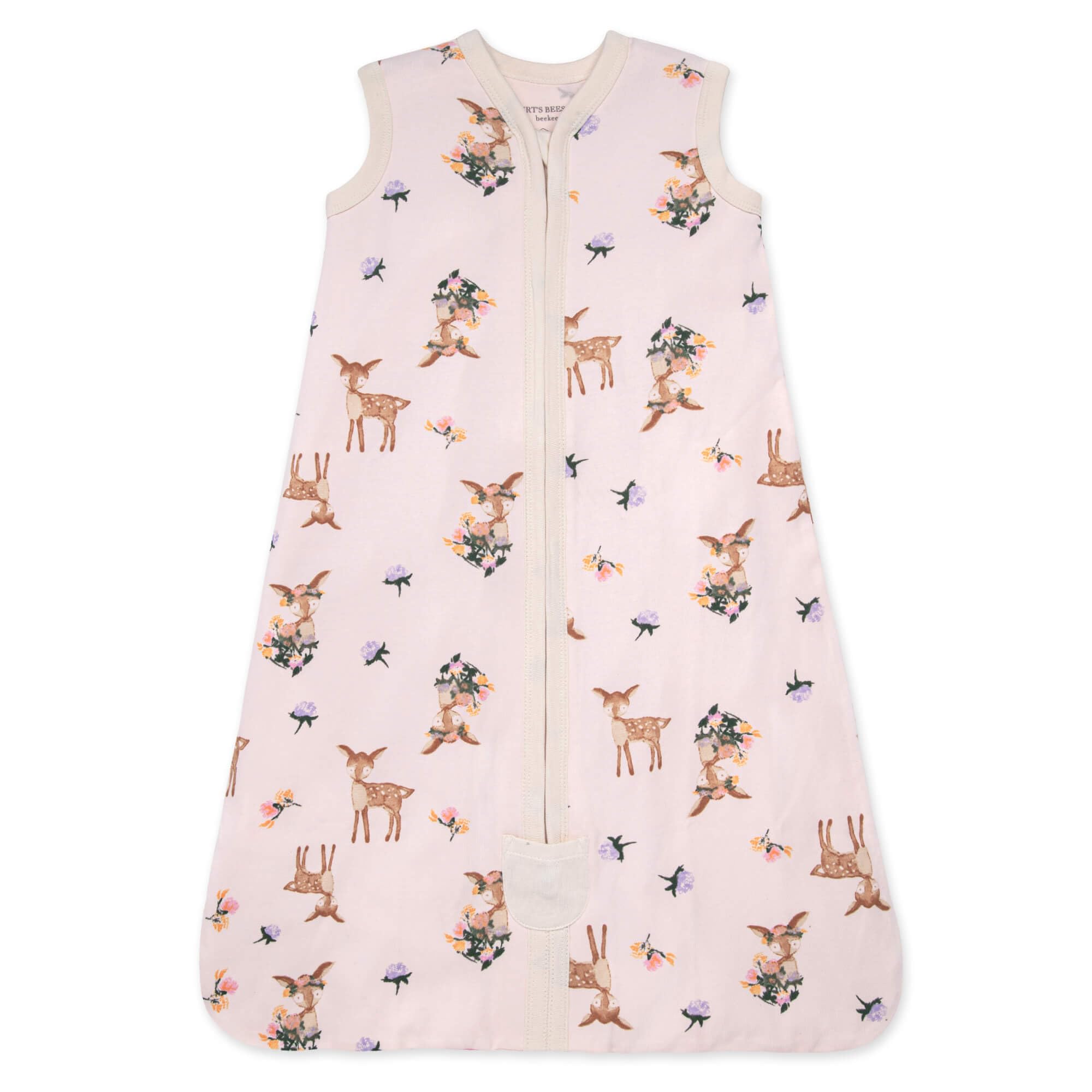
Burt’s Bees Sleep Sack
Key Features
- TOG Rating: 1.5
- Material: Organic Cotton
- Zipper Type: Top-to-bottom
- Swaddle vs. Wearable Blanket: Wearable blanket
- Size Range & Longevity: Multiple, up to 24m
- Price: Budget
The organic cotton is notably soft and holds up through washing. It keeps babies cozy in moderate rooms without overheating. The trade-off: its top-to-bottom zipper can snag or separate, making daily use risky. Sizing runs large, so the neck fit isn’t snug for smaller infants.
Pros
- Incredibly soft, even after repeated washes.
- Provides cozy warmth without causing overheating.
Cons
- Zipper is delicate; prone to snagging or separating with frequent handling.
Worth considering if ultra-soft organic cotton matters more than zipper durability and you need a moderate-warmth spare sack.
Best for Plush Cozy
Hudson Plush Sack

Key Features
- TOG Rating: ~2.5
- Material: Polyester Plush
- Zipper Type: One-way
- Swaddle vs. Wearable Blanket: Wearable blanket
- Size Range & Longevity: 0-6m (others)
- Price: Budget
This sack’s super-soft plush and approximate 2.5 TOG warmth deliver cozy comfort on cold nights. It’s surprisingly affordable for the plush feel, but the zipper is prone to sticking or breaking after limited use. That inconsistency means it’s best as a spare or occasional-use sack rather than a daily solution.
Pros
- Ultra-soft plush texture that babies find soothing.
- Warm enough for cold nurseries without being heavy.
Cons
- Zipper can stick or break after limited use.
Worth considering if you need a soft, toasty spare sack for cold nights and can tolerate a temperamental zipper.
Best for Luxurious Softness
KYTE BABY Bamboo Sack

Key Features
- TOG Rating: 1.0
- Material: Bamboo Rayon
- Zipper Type: Dual zipper
- Swaddle vs. Wearable Blanket: Wearable blanket
- Size Range & Longevity: Various sizes
- Price: Premium
The Kyte Baby sack’s bamboo rayon feels like silk against the skin, making it a joy for contact naps and newborns with eczema. However, the same delicate fabric that creates that luxury tears easily, with many parents reporting holes within weeks of regular use. This fragility, paired with a premium price, turns it into a short-term indulgence rather than a durable daily essential.
Pros
- Buttery soft, luxurious feel that’s gentle on sensitive skin.
- Lightweight warmth ideal for moderate room temperatures.
Cons
- Delicate rayon fabric is prone to holes and seam tears with active use.
Worth considering if you seek the softest possible fabric for a non-mobile baby and are willing to replace it after a few months.
How to Choose
The most important feature in a sleep sack isn’t the fabric softness or brand name—it’s the zipper: a broken zipper can make the sack unusable overnight, so prioritize reinforced two-way zippers with snap covers.
TOG Rating
TOG ratings indicate the sack’s insulating ability. A 0.5 TOG is best for rooms above 75°F, 1.0–2.5 for 68–75°F, and 3.0 for below 68°F. Choose based on your nursery’s actual temperature, not just the season, because a heated winter room might still need a lighter weight.
Material
Cotton is breathable and easy to wash, ideal for warm sleepers. Fleece and plush deliver extra warmth but can overheat a hot-natured baby. Merino wool regulates temperature across a wide range, keeping baby comfortable in both cool and warm rooms without trapping sweat.
Zipper Type
Two-way zippers that open from the bottom allow diaper changes without fully undressing the baby. Avoid cheap single zippers that pry apart easily; look for reinforced stitching and snap covers that prevent the zipper from scratching the chin or coming undone.
Swaddle vs. Wearable Blanket
Swaddles with velcro or zip designs contain the startle reflex for newborns up to about 3 months, but must be discontinued once baby shows signs of rolling. Wearable blankets allow arms free and are safe for rolling babies. Transition sacks with arms-up sleeves bridge the gap.
Size Range & Longevity
Some sacks only fit a narrow weight range, requiring multiple purchases as baby grows. Others, like universal-size sacks, adjust from 2 months to 2 years, saving money. Always check the manufacturer fit guidelines carefully; a sack that’s too large can ride up over the face.
FAQ
What TOG sleep sack should I use for my baby’s room temperature?
Match the TOG rating to your nursery’s overnight temperature. Use 0.5 TOG for rooms above 75°F, 1.0–2.5 for 68–75°F, and 3.0 for rooms below 68°F. A room thermometer placed near the crib is more reliable than guessing by season, because central heating can make a winter nursery warmer than a summer one. When in doubt, err on the lighter side—it’s safer to add a layer underneath than to risk overheating.
Why does my baby’s sleep sack zipper keep breaking?
Most zipper failures stem from cheap construction or snagging on fabric. Look for sacks with reinforced two-way zippers and a snap cover at the top to prevent the zipper from pulling apart under tension. Avoid tugging the zipper forcefully over thick diaper areas; instead, unfasten the bottom and open from the top carefully. If a sack’s zipper jams or separates within the first few weeks, replace it—no amount of DIY fixing will make it reliable through night wakings.
How do I transition my baby from a swaddle to a sleep sack?
Transition once your baby shows signs of rolling, typically around 3–4 months. A transitional sack with arms-up half-sleeves lets the baby still feel contained while freeing the arms for rolling. Start with one arm out for a few nights, then both arms out in a regular sleep sack. Rushing the transition can lead to startling, but delaying it once rolling starts creates a safety hazard—so use a transitional sack to bridge the gap.
Are arms-up swaddles safer than traditional swaddles for rolling babies?
No; any swaddle is unsafe once a baby can roll, regardless of arm position. Arms-up designs are meant to soothe the startle reflex in newborns, not to make rolling safer. Once rolling starts, you must stop swaddling entirely and switch to a sleeveless wearable blanket. So the arms-up style is a comfort choice for young infants, not a rolling safety feature.
How can I prevent velcro on swaddles from losing grip after washing?
Wash swaddles inside out and fasten the velcro tabs onto their laundry strip before washing to reduce lint buildup and snagging. Avoid fabric softeners, which coat the hooks. If grip fades after several months, the swaddle has reached its usable life; worn velcro that fails to stay closed can let a baby break free and create a safety risk. Frayed velcro isn’t worth the gamble—replace the swaddle.