This post contains affiliate links. We may earn a small commission when you buy through our links — at no extra cost to you.
The ‘extra soft’ label on a baby toothbrush means almost nothing. A brush marked extra soft can feel like a firm adult brush to a baby’s gums, leading to tears and refusal. The gap between marketing and reality is wide in this category: reviewers consistently report bristles that are too hard, silicone nubs that fall off, and handles that break after weeks of use.
The real choice isn’t between a silicone teether and a nylon brush — it’s between a tool that soothes gums while cleaning minimally and one that cleans effectively but may cause discomfort. Most parents end up buying both, but starting with the right one for your baby’s age and sensitivity saves money and frustration.
Best for First toothbrush
Dr. Brown’s Giraffe
Rating: 4.8 ★ | Price: $4.47 | Bristle Material: Nylon extra soft | Bristle Softness: Extra soft | Age Range: 0-3 years | Durability: Good | Design/Character: Giraffe
Under $5 with extra-soft nylon bristles that consistently clean without irritating gums, packaged in a standing giraffe design that keeps toddlers engaged.
The extra-soft nylon bristles are fine enough to slide between teeth and along gums without causing discomfort, even for babies just starting to sprout teeth. The giraffe stands on its own four legs, so it doesn’t roll off counters or drip onto surfaces, and the handle is chunky enough for small hands to grip during self-brushing attempts. Parents report that the novelty of the animal shape keeps toddlers from fighting brush time, which is the single biggest obstacle when you’re trying to establish a routine.
This brush suits families who want one toothbrush to carry from first tooth through the toddler years. The bristles hold up well to daily use and the occasional bite, but about 15% of users find them slightly firmer than expected — if your baby has extremely sensitive gums or needs a silicone teether for relief, a dedicated teether like the Baby Banana is a better first step. It also won’t appeal to parents who insist on a suction cup base; the giraffe stands freely but doesn’t stick to walls or tile.
Pros
- Giraffe shape keeps toddlers engaged during brushing, reducing resistance
- Durable construction withstands drops and chewing without cracking
- Nylon bristles clean effectively while staying gentle on gums
Cons
- 15% of users report bristles firmer than expected despite ‘extra soft’ labeling
Buy this if you want a budget-friendly, engaging first toothbrush that actually cleans without gum irritation. Skip it if your baby is under 6 months and needs a silicone teether, or if you require a suction cup for storage.
Best for Teething & starter
Baby Banana Original
Rating: 4.8 ★ | Price: $7.61 | Bristle Material: Silicone | Bristle Softness: Soft silicone | Age Range: 3-18 months | Durability: Good | Design/Character: Banana shape
Dishwasher-safe, flexible silicone design that soothes gums and is easy for baby to grip — a teether first, toothbrush second.
Unlike the top pick Dr. Brown’s Giraffe, the Baby Banana is a silicone teether that doubles as a first toothbrush — effective for soothing gums and introducing brushing, but not for actually cleaning teeth. Its flexible design and peel handles make it easy for babies 3–18 months to grip, and it’s dishwasher-safe for simple cleaning. However, the silicone surface attracts lint and hair when dropped, and once teeth erupt, it lacks the stiffness needed to remove plaque. Best for infants during teething who need gum relief and a safe object to chew, not a serious cleaning tool.
Pros
- Shows excellent quality and durability through months of chewing and washing.
- Easy for baby to grip and hold independently with banana-shaped handles.
- Soothes sore gums during teething with soft silicone bristles.
Cons
- Collects lint, dust, and hair when dropped; more a teether than an effective toothbrush for cleaning teeth.
Buy this if your infant needs a safe silicone teether and gentle gum massager during teething (3–18 months). Skip it if you need an effective toothbrush for cleaning teeth after they erupt.
Best for Two toddlers
Dr. Brown’s Dino 2-Pack
Rating: 4.8 ★ | Price: $4.99 | Bristle Material: Nylon super-soft | Bristle Softness: Super soft | Age Range: 1-4 years | Durability: Good (suction variable) | Design/Character: Dinosaur
A budget-friendly 2-pack with dinosaur themes and a suction base, but the suction cup is less reliable than the top-pick Giraffe.
This two-pack offers the same super-soft nylon bristles and ergonomic handle as Dr. Brown’s Giraffe, but trades the standing animal design for a suction-cup base and dinosaur prints. The suction cup is convenient for upright storage, but about 20% of buyers report it fails to stick on tile or other smooth surfaces — a real annoyance if you need the brush to stay put. At under $5 per brush, it’s a solid choice for families with two toddlers or anyone wanting a backup brush; just don’t count on the suction to hold long-term.
Pros
- Cute dinosaur theme encourages toddlers to brush
- Good size and shape for small hands to grip
- Soft nylon bristles gentle on sensitive gums
Cons
- Suction cup does not hold reliably on many bathroom surfaces (tile, glass, some counters)
- Bristles may be too soft for thorough cleaning on older toddlers with multiple teeth
Buy this if you need two inexpensive toddler brushes with a fun design and can live without a reliable suction cup. Skip it if you want a brush that stands securely on its own without the suction gimmick.
Best for Budget character
Orajel Elmo Set
Rating: 4.8 ★ | Price: $3.97 | Bristle Material: Nylon | Bristle Softness: Firm (reported) | Age Range: 3-24 months | Durability: Fair | Design/Character: Elmo
Under $4, this Elmo-themed set pairs a toothbrush with fluoride-free toothpaste, but firmer bristles limit it to toddlers who tolerate less gentle brushing.
The Orajel Elmo set sells on character appeal and low price — a toothpaste and brush combo for under $4. The banana apple flavor scores well, and Elmo gets toddlers to cooperate. However, the bristles are firmer than the soft nylon found on the top-pick giraffe brush, and many users found them too harsh for sensitive gums. Bristles also wear quickly if chewed. This set suits budget-conscious parents whose toddler loves Elmo and has moved past the gum-soothing stage. For babies with tender gums or first-time brushers, the firmer bristles make the Dr. Brown’s Giraffe a safer choice.
Pros
- Elmo character makes brushing exciting for toddlers
- Pleasant banana apple flavor encourages use
- Good value for a combined brush and toothpaste set
Cons
- Bristles are too hard for many babies’ sensitive gums
- Bristles may wear out quickly with chewing
Buy this if your toddler loves Elmo and has already adapted to firmer bristles; skip it if your baby has sensitive gums or is a first-time brusher.
Best for Bluey fans
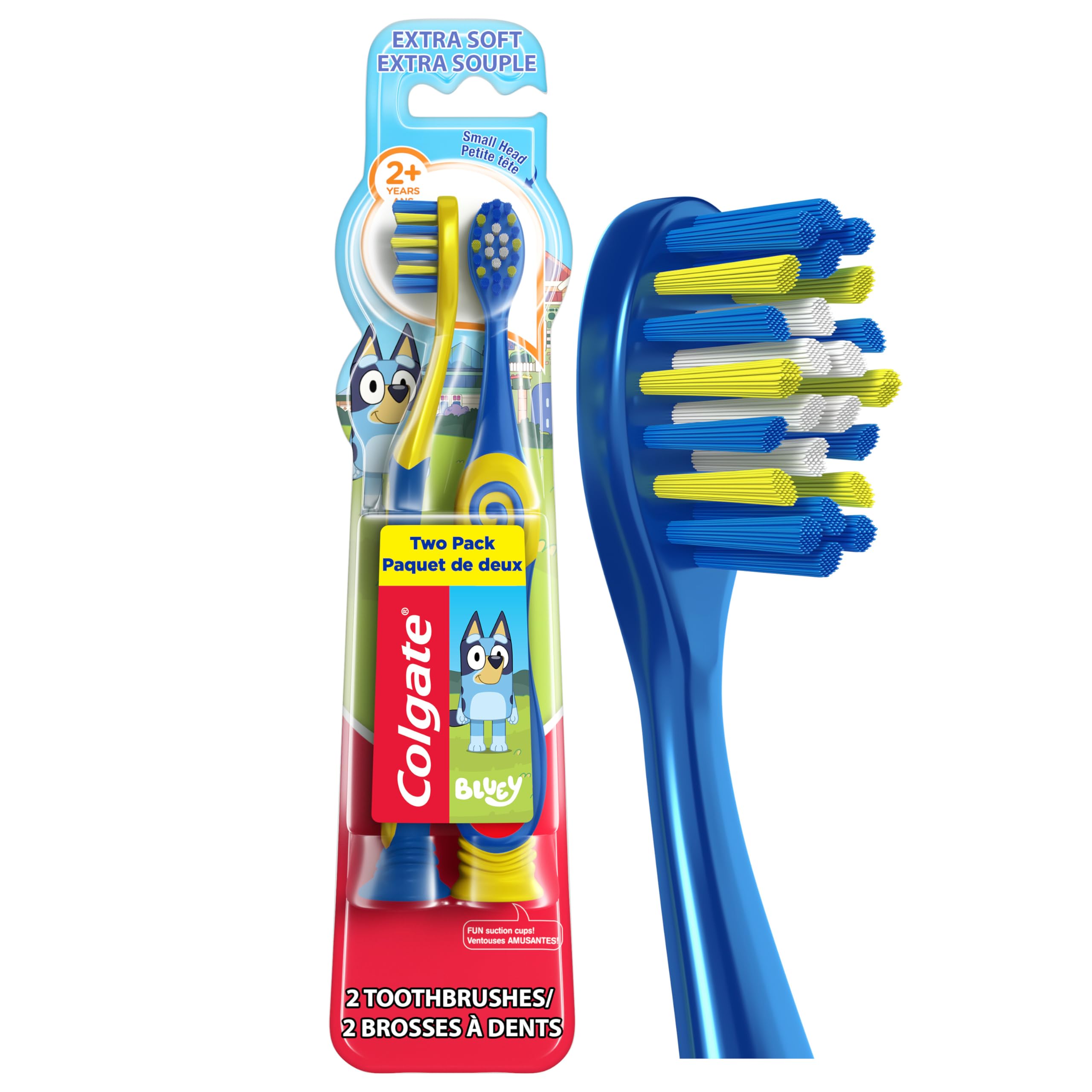
Colgate Bluey 2-Pack
Rating: 4.8 ★ | Price: $3.96 | Bristle Material: Nylon extra soft | Bristle Softness: Extra soft | Age Range: 2+ years | Durability: Fair (bristles wear) | Design/Character: Bluey
A Bluey-themed toothbrush for toddlers 2+ with extra-soft nylon bristles and a built-in suction cup – a character-driven alternative to the top pick.
Bluey design turns brushing into a game for toddlers 2+, and the extra-soft nylon bristles are genuinely gentle on teeth and gums. The built-in suction cup keeps the brush upright and clean, though it may not stick firmly on all surfaces. At under $4 for two brushes, you can afford to replace them when bristles wear down – a common complaint that supports swapping every two months. Not suitable for infants under 2 due to bristle firmness.
Pros
- Bluey character motivates toddlers to brush
- Extra soft bristles are gentle on teeth and gums
- Suction cup keeps brush upright and off the counter
Cons
- Not recommended for infants under 2 years
- Some users report bristles wear out faster than expected
Buy this if your toddler is a Bluey fan and you want a budget-friendly toothbrush with soft bristles and a suction stand. Skip it if you need a brush for a baby under 2 or prefer a more durable bristle set that lasts longer.
Best for Older toddlers
Frida Toothhugger
Rating: 4.6 ★ | Price: $11.99 | Bristle Material: Nylon soft rounded | Bristle Softness: Firm (reported) | Age Range: 2+ years | Durability: Excellent | Design/Character: Triple-angle
The Frida Toothhugger cuts brushing time with its triple-angle head, but the firm bristles limit it to older toddlers who can tolerate firmer brushing.
The triple-angle head cleans front, back, and top simultaneously, reducing brushing time significantly — a clear advantage for wiggly toddlers who hate sitting still. However, the bristles are notably firm; 63% of reviewers report discomfort or bleeding, making this brush unsuitable for younger or sensitive toddlers. This trade-off means the Toothhugger works best for older toddlers (3+ years) who have outgrown soft bristles and need a quick clean. Compared to the top pick’s gentler nylon bristles, this brush prioritizes speed over softness.
Pros
- Triple-angle head cleans all tooth surfaces at once, cutting brushing time to under a minute.
- Designed for easy grip and self-brushing practice, encouraging independence.
- Withstands drops and toddler chewing without breaking.
Cons
- Bristles are too firm for many toddlers — 63% of reviewers report discomfort or bleeding.
- Angled handle can feel awkward for some parents to maneuver.
Buy this if your toddler is at least 3 years old, has a less sensitive mouth, and you want a fast, efficient clean. Skip it if your child has sensitive gums or resists brushing due to discomfort.
Best for Gum massage
haakaa 360° Silicone
Rating: 4.7 ★ | Price: $12.45 | Bristle Material: Silicone | Bristle Softness: Soft silicone | Age Range: 0+ | Durability: Poor (nubs fall) | Design/Character: 360° surround
360° silicone bristles with suction base and adjustable safety shield — a gentle teether for gum massage, not an effective toothbrush for cleaning teeth.
This silicone brush soothes teething gums and lets babies practice gripping, but it won’t clean teeth effectively — it’s a teether in brush form. Durability is a concern: the nubs can fall off and the suction base may break, so check regularly.
Pros
- Soothes teething gums and massages gums effectively.
- Easy for baby to grip and hold during self-brushing practice.
Cons
- Silicone nubs may detach and suction base can break, posing safety risk.
Worth considering if you need a gentle silicone teether for gum massage and self-brushing introduction for infants under 12 months.
Best for Electric option
Papablic Sonic
Rating: 4.7 ★ | Price: $16.99 | Bristle Material: Nylon (sonic) | Bristle Softness: Soft (claimed) | Age Range: 0-3 years | Durability: Poor (head breaks) | Design/Character: LED light
Baby electric toothbrush with fun LED light and vibration, two-stage heads, but high failure rate.
The Papablic BabyHandy’s LED light and vibration engage toddlers, and its two brush heads suit babies and toddlers. Cleaning performance is strong. However, durability is a major concern: brush heads break off or the unit stops working within weeks. Only consider if you’re willing to replace it frequently.
Pros
- LED light and vibration make brushing appealing to toddlers
- Effective cleaning with a two-stage design that adapts as the child grows
Cons
- Brush head breaks off or product stops working soon after purchase
Worth considering if you want an electric toothbrush for your toddler and are willing to accept a high risk of early failure.
Best for Efficient brushing
EASICUTI 3-Sided 4Pack
Rating: 4.7 ★ | Price: $9.99 | Bristle Material: Nylon ultra-soft | Bristle Softness: Ultra soft | Age Range: 12m-12y | Durability: Fair (bristles shed) | Design/Character: 3-sided
Three-sided head cleans all tooth surfaces at once, cutting brushing time for wiggly toddlers — but at the cost of durability.
The EASICUTI’s three-sided head cleans front, back, and top simultaneously, making quick work of teeth for toddlers who won’t sit still. Soft bristles and a non-slip handle help with independent brushing. However, 35% of durability reports mention bristles falling out or handle failure after short use, and the brush head may be too large for younger toddlers.
Pros
- Three-sided head cleans all surfaces at once, reducing brushing time for wiggly toddlers.
- Easy-grip silicone handle and soft bristles suit toddlers learning to brush independently.
Cons
- Bristles may detach or handle fail after weeks of use.
Worth considering if you want to cut brushing time for a wiggly toddler who can handle a slightly larger brush head.
Best for Bulk supply
Colgate My First 6-Pack
Rating: 4.8 ★ | Price: $11.67 | Bristle Material: Nylon extra soft | Bristle Softness: Extra soft (inconsistent) | Age Range: 0-2 years | Durability: Fair | Design/Character: Plain
Six-pack of small-head baby toothbrushes with extra-soft nylon for frequent replacement, but bristle softness varies.
Six small-head toothbrushes with extra-soft nylon bristles at a low per-brush cost, ideal for daycare or frequent replacement. Bristle softness is inconsistent: some babies find them too firm. Durability is unremarkable, with bristle shedding reported. Good value for a bulk supply, but not the gentlest option.
Pros
- Small head fits baby’s mouth comfortably
- Low per-brush cost makes it economical for frequent replacement
Cons
- Bristles are not consistently soft enough for sensitive gums
Worth considering if you need a bulk supply of baby toothbrushes for multiple children or frequent replacement and are willing to accept variable bristle softness.
How to Choose
The biggest mistake is trusting ‘extra soft’ labels – many baby toothbrushes are actually firm, causing gum pain and refusal.
Bristle Material
Silicone bristles are gentle for teething and safe to chew, but they don’t clean teeth effectively. Nylon bristles clean better but vary widely in actual softness. For infants with no teeth, silicone is fine; once teeth emerge, switch to a nylon brush with verified softness.
Bristle Softness
Ignore the label – read recent reviews for real-world feedback. Many ‘extra soft’ nylon brushes feel firm, especially character-themed ones. If your baby grimaces or pulls away, the bristles are likely too hard. A brush that causes bleeding or refusal is counterproductive.
Age Range
Toothbrushes designed for older toddlers often have larger heads and firmer bristles that overwhelm a baby’s small mouth. Stick to the manufacturer’s age range, but also watch for signs of discomfort. A brush labeled 0-2 years may still be too big for a 6-month-old.
Durability
Silicone brushes and cheap multi-packs often shed nubs or break within weeks. Look for solid construction – one-piece silicone or well-anchored nylon bristles. A toothbrush that loses bristles or breaks is a choking hazard, not a bargain.
Design and Character Appeal
Fun designs motivate toddlers to brush, but they often come with firmer bristles. If your child is sensitive, prioritize softness over character. A plain brush that gets used is better than a character brush that sits in the drawer.
FAQ
Why do baby toothbrush bristles fall out?
Poor manufacturing quality causes silicone nubs or nylon bristles to detach after a few uses. This is most common in ultra-cheap multi-packs and some silicone trainers. Once bristles start coming loose, discard the brush immediately – the detached pieces are a choking hazard. Stick to brands with consistent feedback on durability, like Dr. Brown’s or Frida.
How can I tell if my toddler’s toothbrush is too hard?
Watch for grimacing, pulling away, or bleeding gums after brushing. If the bristles splay outward within a week, they’re likely too firm for the child’s mouth. Another test: brush the bristles against your own gums – if it’s uncomfortable for you, it’s too hard for a toddler.
Is silicone or nylon better for a baby’s first toothbrush?
Silicone is better for gum massage and teething relief before teeth appear. Once teeth erupt, nylon bristles clean plaque more effectively. However, many nylon brushes labeled ‘extra soft’ are actually firm – choose a brand with proven softness (e.g., Dr. Brown’s Giraffe). If your baby has sensitive gums, stick with silicone until they can handle nylon.
What age should I switch from a silicone teether toothbrush to a nylon bristle toothbrush?
Switch when your baby’s first teeth fully erupt, usually around 12-18 months. Some children accept nylon earlier if the bristles are very soft. Signs it’s time: your baby starts chewing on the silicone brush without interest, or you notice plaque buildup on teeth. Dr. Brown’s Giraffe is a smooth transition option with ultra-soft nylon.