This post contains affiliate links. We may earn a small commission when you buy through our links — at no extra cost to you.
Many parents quickly discover that giving a newborn vitamin D isn’t as simple as it sounds. The real challenge isn’t the dosage—almost all infant drops provide 400 IU—but the delivery. Some bottles require holding upside down for several seconds, others come with syringes that sometimes go missing, and a few have a sweet taste that some babies reject outright. These small daily frustrations can derail a simple routine.
The key is matching the drop format to your baby’s temperament and your patience level. This guide focuses on the most popular drops, each with a distinct trade-off between convenience, cost per dose, and ingredient purity. Whether you need a tasteless single drop, a budget-friendly syringe option, or an organic certified formula, you’ll find the right fit without the trial and error.


Best for Simple Daily Drops
Ddrops Baby 400 IU
Key Features
- Dosing Method: Single drop (Eurodropper)
- Taste: Tasteless, odorless
- Ingredient Purity: Free of allergens, additives
- Cost Per Dose: ~$0.18 per dose
- Ease of Dispensing: Slow to form drop
- Price: Mid-Range
Ddrops Baby 400 IU delivers a single drop containing the recommended 400 IU of vitamin D3, with no wheat, gluten, soy, corn, sugar, milk, or peanut. Parents report that babies accept the tasteless, odorless drop without resistance. The Eurodropper requires holding the bottle vertically, and the drop can take several seconds to form — a minor patience test compared to faster dispensers.
This formula is built for breastfeeding mothers wanting a simple daily routine and parents of infants sensitive to additives. Pediatricians commonly recommend it. If you prefer syringe-precise measurement or cannot tolerate a slow drop, a traditional dropper or syringe-based option may suit you better.
Pros
- Extremely easy to administer – just one drop
- High-quality, pure ingredients with no additives
- Tasteless and odorless; babies accept it easily
Cons
- Drop is slow to form; some users struggle to get a single drop quickly
Buy this if you want the simplest vitamin D routine for your baby with the purest ingredients. Skip it if you need fast, syringe-like dispensing or precise measurement.
Best for Budget-Conscious Parents
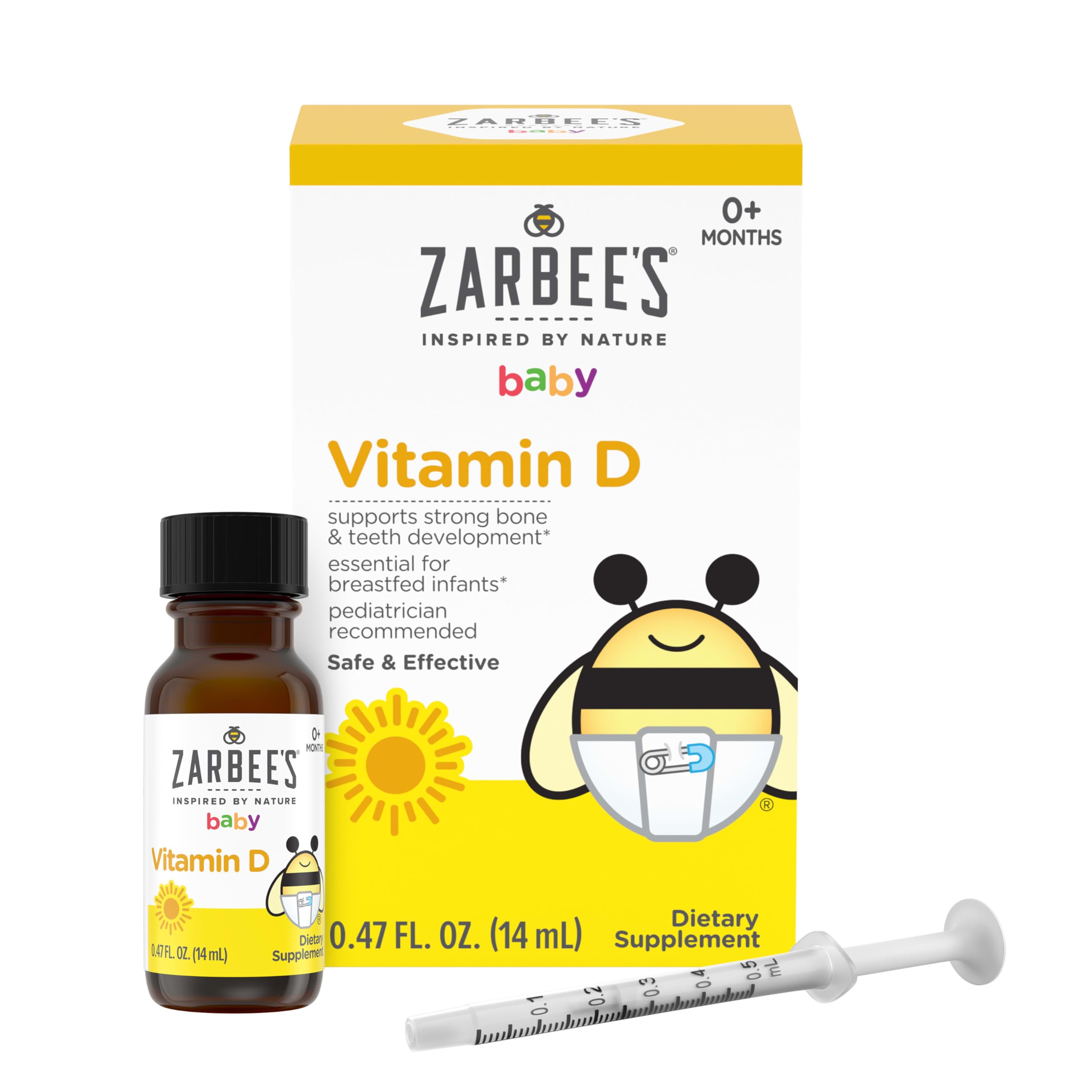
Zarbee’s Baby Vitamin D
Key Features
- Dosing Method: Syringe (0.25 ml)
- Taste: Tasteless, odorless
- Ingredient Purity: Clean, no artificial flavors
- Cost Per Dose: ~$0.16 per dose
- Ease of Dispensing: Syringe can be messy
- Price: Budget
Zarbee’s delivers 400 IU of vitamin D3 via syringe at a budget-friendly price. Developed by a pediatrician, its clean, tasteless formula is suited for newborns. The trade-off: the syringe occasionally goes missing or feels cumbersome to clean, and the 0.25ml dose is larger than a single drop. Best for parents who value ingredient purity and low cost over one-drop simplicity.
Pros
- Clean ingredient list – no drugs, alcohol, artificial flavors, or dyes.
- Tasteless and odorless formula that most babies accept.
Cons
- Syringe is occasionally missing from the package, requiring an immediate check.
- 0.25ml dose is larger than a single drop; some parents find it messy and excessive.
Buy this if you want the lowest-cost vitamin D with clean ingredients and are comfortable with syringe-based dosing. Skip it if you prefer the simplicity of a single-drop supplement.
Best for Organic Seekers
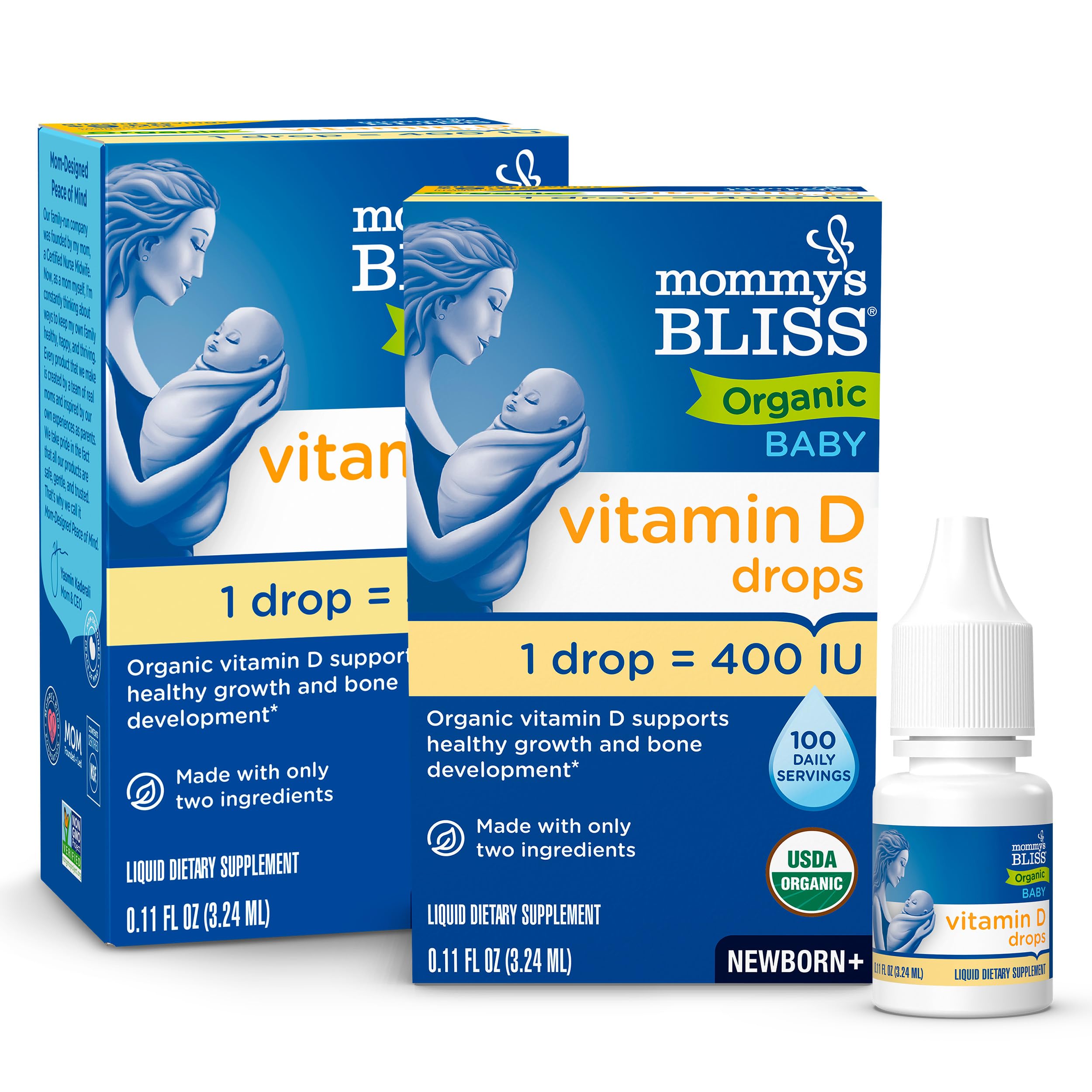
Mommy’s Bliss Organic D3
Key Features
- Dosing Method: Single drop (squeeze bottle)
- Taste: No taste reported
- Ingredient Purity: USDA Organic, non-GMO
- Cost Per Dose: ~$0.11 per dose
- Ease of Dispensing: Squeeze bottle tricky
- Price: Premium
Mommy’s Bliss Organic D3 is the only infant drop in this roundup with both USDA Organic and NSF certification, and it’s free from the top eight allergens – a clear win for purity-focused parents. Where the top pick excels in one-drop simplicity, this two-pack offers organic assurance at a premium price, though the squeeze bottle design can make that single drop tricky to deliver. Best suited for caregivers who prioritize certified ingredients and are willing to master the squeeze technique.
Pros
- One drop per day mixes easily into bottle or breastmilk.
- Organic certification and allergen-free formula give peace of mind.
- Gentle on stomach, suitable for breastfed newborns.
Cons
- Squeeze bottle makes it difficult to dispense a single drop consistently.
Buy this if your top priority is organic certification and you’re comfortable with a squeeze bottle. Skip it if you want the fastest one-drop dispensing.
Best for Value Seekers
Carlson Baby’s D3 Drops
Key Features
- Dosing Method: Single drop (vertical dropper)
- Taste: Tasteless, odorless
- Ingredient Purity: Vegetarian, no artificial colors
- Cost Per Dose: ~$0.04 per dose
- Ease of Dispensing: Very slow to form drop
- Price: Mid-Range
365 drops per bottle – a full year’s supply – makes this the lowest cost per dose option in this category. Unlike the top pick, the drop takes several seconds to form, which can try the patience of hurried parents. However, the liquid is completely tasteless and odorless, so babies don’t notice it at all. This product suits caregivers who want the best long-term value and are willing to wait a few seconds each day for the drop to dispense.
Pros
- Single daily drop simplifies infant vitamin D supplementation.
- Completely tasteless and odorless; baby never detects it.
- One bottle provides a full year of daily doses at the best cost per dose.
Cons
- Drop takes several seconds to form and dispense – requires patience from the caregiver.
Buy this if you want the lowest cost per dose and are willing to wait a few seconds for the drop to form.
Best for Dropper Users
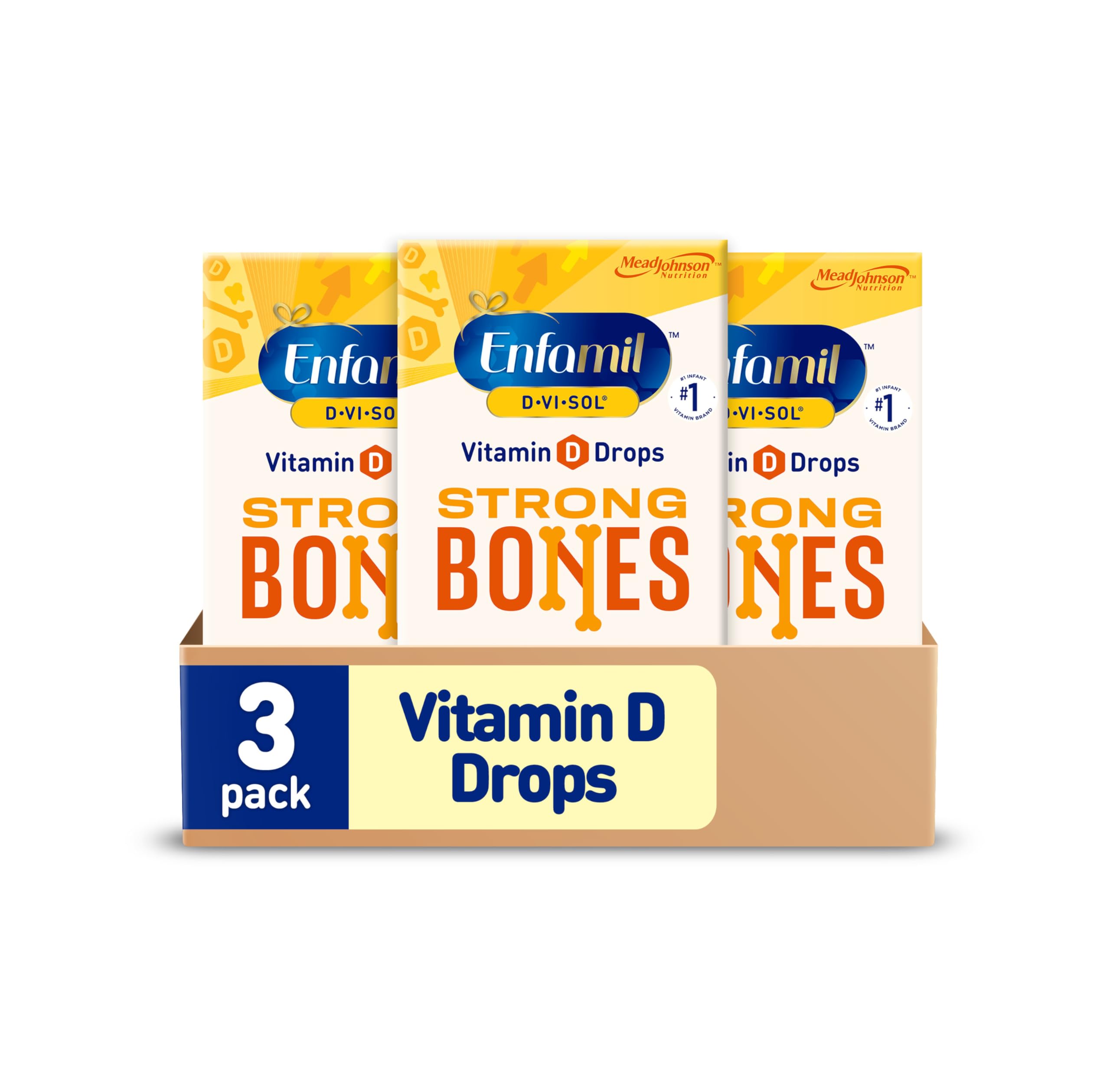
Enfamil D-Vi-Sol Drops
Key Features
- Dosing Method: Dropper (1 ml dose)
- Taste: Sweet, polarizing
- Ingredient Purity: Free from artificial colors/gluten
- Cost Per Dose: ~$0.19 per dose
- Ease of Dispensing: Easy dropper, dose size large
- Price: Premium
Enfamil’s dropper design makes it simple to mix the 1 ml dose into a bottle of formula or breastmilk, a clear advantage for parents already using Enfamil products. Compared to one-drop alternatives like the top pick, this requires a larger volume and carries a noticeable sweetness that divides baby reactions. This supplement works for newborns and is pediatrician-recommended, but the flavor profile is polarizing — some infants accept it readily, others reject it. Best suited for families who don’t mind the extra liquid and are willing to risk a taste preference mismatch, especially if they can mask the drops in milk or formula.
Pros
- Supports bone health and vitamin D levels in infants
- Suitable for newborns and breastfed babies; pediatrician recommended
- Easy to administer with dropper; can be mixed directly into a bottle
Cons
- Taste is polarizing – many babies find it too sweet or unpleasant
Buy this if you want a recognized brand with a dropper for mixing into formula or breastmilk and don’t mind a 1 ml dose. Skip it if your baby is sensitive to sweet flavors or you prefer a tasteless single-drop option.
How to Choose
Almost all infant vitamin D drops provide 400 IU per dose, so the real choice comes down to delivery method, taste, and certifications.
Dosing Method
Single-drop bottles require holding the bottle upside down for several seconds – patience is key. Syringe-based options offer precise measurement but can be messy and require cleaning. Choose based on your tolerance for manual effort.
Taste
Some drops are truly tasteless, while others have a sweet flavor that polarizes babies. If your baby is picky, stick with tasteless options. You can taste-test a drop yourself to confirm.
Ingredient Purity
Organic certification ensures no synthetic pesticides or GMOs, but comes at a premium. Many non-organic options also offer clean, allergen-free formulas. Decide if organic is worth the extra cost.
Cost Per Dose
Prices range from about $0.04 to $0.19 per dose. The biggest savings come from buying a year-supply bottle like Carlson. However, the cheapest option may require more patience during dispensing.
Ease of Dispensing
The most common frustration is difficulty getting a single drop out quickly. Some bottles have slow-dispensing droppers, while others have squeeze bottles that release too much. If you value speed, look for a syringe or a well-reviewed dropper.
FAQ
How do you get one drop out of Ddrops vitamin D bottle?
Hold the bottle vertically upside down and wait for the drop to form slowly. Tapping the bottle may help. If it still won’t dispense, ensure the opening is clear.
Do baby vitamin D drops have a taste?
Most drops are tasteless, but Enfamil has a sweet flavor that some babies dislike. Ddrops and Carlson are truly tasteless. If your baby is sensitive, choose a tasteless formula.
What is the difference between Ddrops and Zarbee’s vitamin D for infants?
Ddrops uses a single-drop Eurodropper, while Zarbee’s uses a syringe for a 0.25ml dose. Ddrops is simpler and has a pure ingredient list, while Zarbee’s costs less upfront but has reported syringe issues. Choose based on whether you prioritize one-drop convenience or budget.
Are organic vitamin D drops for babies worth the extra money?
Organic drops like Mommy’s Bliss cost more but guarantee no synthetic pesticides or GMOs. If your baby has allergies or you prioritize organic food, the peace of mind may be worth the premium. For most babies, non-organic clean drops work just as well.