This post contains affiliate links. We may earn a small commission when you buy through our links — at no extra cost to you.
Raising a baby while also nurturing an older child’s curiosity is a delicate balance. Science kits promise a screen-free learning experience, but many deliver messy, half-baked activities that demand your full attention when you’re already stretched thin. Even worse, some produce results so disappointing that the lesson becomes frustration, not discovery.
The best kits for your family are the ones where each experiment works reliably and teaches a clear concept, without requiring a pantry full of extra supplies or adult troubleshooting for an hour. They keep kids engaged while you tend to the baby, and their durable components outlast one-time gimmicks. This guide prioritizes substance over marketing hype, so you can choose a kit that sparks genuine curiosity and fits into your busy household.




Best for Electronics Learners
Snap Circuits Jr. SC-100
Key Features
- Number of Experiments: 100+ projects
- Age Range & Supervision: 8+ (adult help younger)
- Science Discipline: Electronics
- Included vs. Extra Materials: 30+ modules, 4 AA batteries needed
- Durability & Reusability: Snap-together reusable
- Price: Mid-Range
The snap-together modules connect without tools, letting kids build circuits that light up, spin, and generate sound in seconds. Every project is presented with clear, picture-based instructions that require no reading, so even newly independent readers can follow along. The components are sturdy, snapping together securely and resisting wear through repeated use — a kit that can easily survive multiple children. The projects progress logically from simple light and motor circuits to more complex logic, building genuine understanding of how electricity flows.
This kit is purpose-built for children 8 and older who gravitate toward electronics and how things work. It is strictly an electronics exploration tool — families hoping for a broad science kit with chemistry or biology experiments will find it too narrow. The screen-free, hands-on nature holds attention for hours, and the durable components make it worth handing down. Just be ready with 4 AA batteries, since they aren’t included.
Pros
- Hands-on circuit building teaches engineering basics
- Durable snap-together components withstand years of use
- Keeps kids occupied for hours with open-ended exploration
Cons
For an electronics introduction that outlasts most toys and teaches real engineering concepts without a screen, the SC-100 is a standout.
Best for Life Cycle Lessons
Butterfly Garden Kit
Key Features
- Number of Experiments: 3-week lifecycle project
- Age Range & Supervision: 4+ (adult setup)
- Science Discipline: Biology
- Included vs. Extra Materials: Habitat + voucher, caterpillars extra fee
- Durability & Reusability: Reusable mesh habitat
- Price: Mid-Range
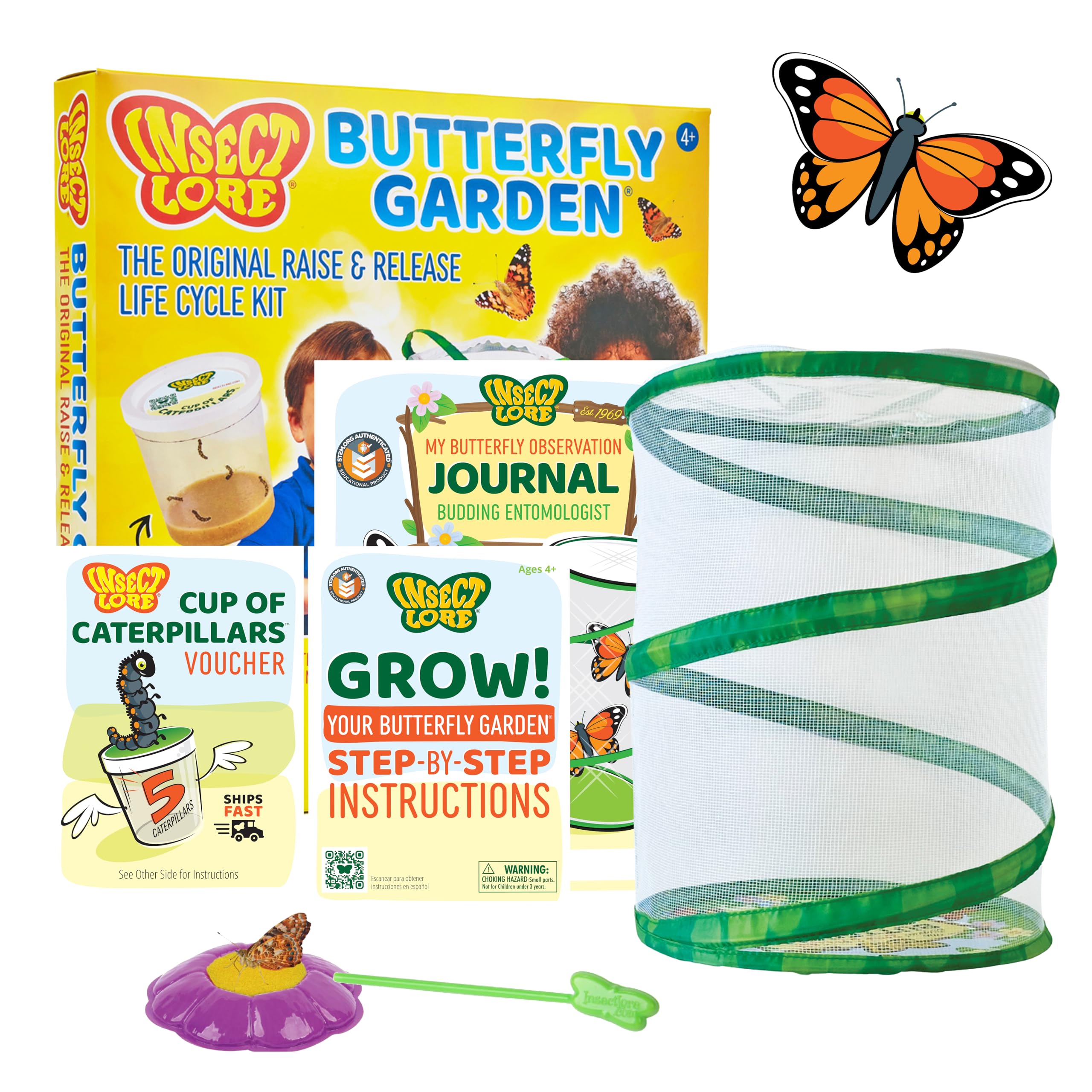
Raising painted lady butterflies from caterpillars teaches metamorphosis through direct observation — a different kind of STEM education than circuit-building kits. The mesh habitat is reusable, and the 3-week project is designed for children 4 and up.
The kit does not contain live caterpillars; you redeem a voucher and pay a separate shipping fee. That makes this a planned activity for families who can order at the right time of year, not a last-minute gift. The payoff is a memorable science experience many children recall years later.
Pros
- Watching caterpillars transform into butterflies is an unforgettable live science lesson.
- Teaches the life cycle in a hands-on way that reinforces biology concepts for young kids.
- The mesh habitat is reusable, allowing the project to be repeated in future seasons.
Cons
- Caterpillars are not included; the voucher system requires a separate $8.95 shipping fee, raising the real cost and delaying the start.
For families who can plan ahead and accept the total cost, this live butterfly project delivers a rare educational moment that sticks.
Best for Broad Science Sampler
NG Earth Science Kit
Key Features
- Number of Experiments: 15+ major experiments
- Age Range & Supervision: 8+ (adult for plaster)
- Science Discipline: Geology, Chemistry, Physics
- Included vs. Extra Materials: Most materials, some household items
- Durability & Reusability: One-time use, varied activities
- Price: Mid-Range
This kit packs a volcano build, crystal growing, gemstone excavation, and tornado tube into a single box — a broad sampler covering geology, chemistry, and physics. Families who want a multi-subject science experience without buying separate kits will appreciate the variety. The plaster mold for the volcano needs several days to fully dry before the eruption, so patience is essential. Additional household items like baking soda are required for some activities, but not supplied, so a pantry check before starting avoids frustration.
Pros
- Covers multiple science disciplines — geology, chemistry, and physics — in one box.
- Keeps kids engaged for days with diverse activities.
- Learning guide is detailed and educational, great for homeschooling.
Cons
- Some experiments require common household items not included — a last-minute pantry scavenger hunt.
A broad-horizons kit for families who can plan ahead and don’t mind a little extra prep work.
Best for Young Gardeners
Grow ‘N Glow Terrarium
Key Features
- Number of Experiments: Single terrarium, 2 growths
- Age Range & Supervision: 6+ (minimal adult help)
- Science Discipline: Botany
- Included vs. Extra Materials: All included: seeds, soil, jar
- Durability & Reusability: Reusable jar, one-time seeds
- Price: Budget
This kit swaps circuit boards for potting soil, channeling a young child’s curiosity into a simple gardening craft. Kids decorate the jar with glow stickers and figurines, then plant chia and wheatgrass seeds that, when they sprout, create a tiny luminous ecosystem in just a few days. The seeds can be inconsistent — some batches never germinate, turning excitement into a lesson about nature’s unpredictability. That makes it a better fit for families who can shrug off a dud and try again, rather than those expecting a guaranteed green thumb victory.
Pros
- Assembly is quick and frustration-free — kids can set it up with minimal adult help.
- Glow-in-the-dark stickers and miniature figurines let kids personalize their mini garden.
- The simple daily watering routine builds responsibility and an early understanding of plant life.
Cons
- Seed viability varies; it’s possible for the entire kit to yield no sprouts, which can be disappointing.
At under $10, the terrarium is a low-stakes introduction to gardening that feels magical when seeds cooperate — just have a backup activity ready in case germination doesn’t take.
Best for Tinkerers & Builders
Smartivity Airplane Kit
Key Features
- Number of Experiments: 1 hydraulic launcher build
- Age Range & Supervision: 6-14 (adult help)
- Science Discipline: Hydraulics, Engineering
- Included vs. Extra Materials: All wooden parts, need paper
- Durability & Reusability: MDF wood, reusable mechanism
- Price: Premium
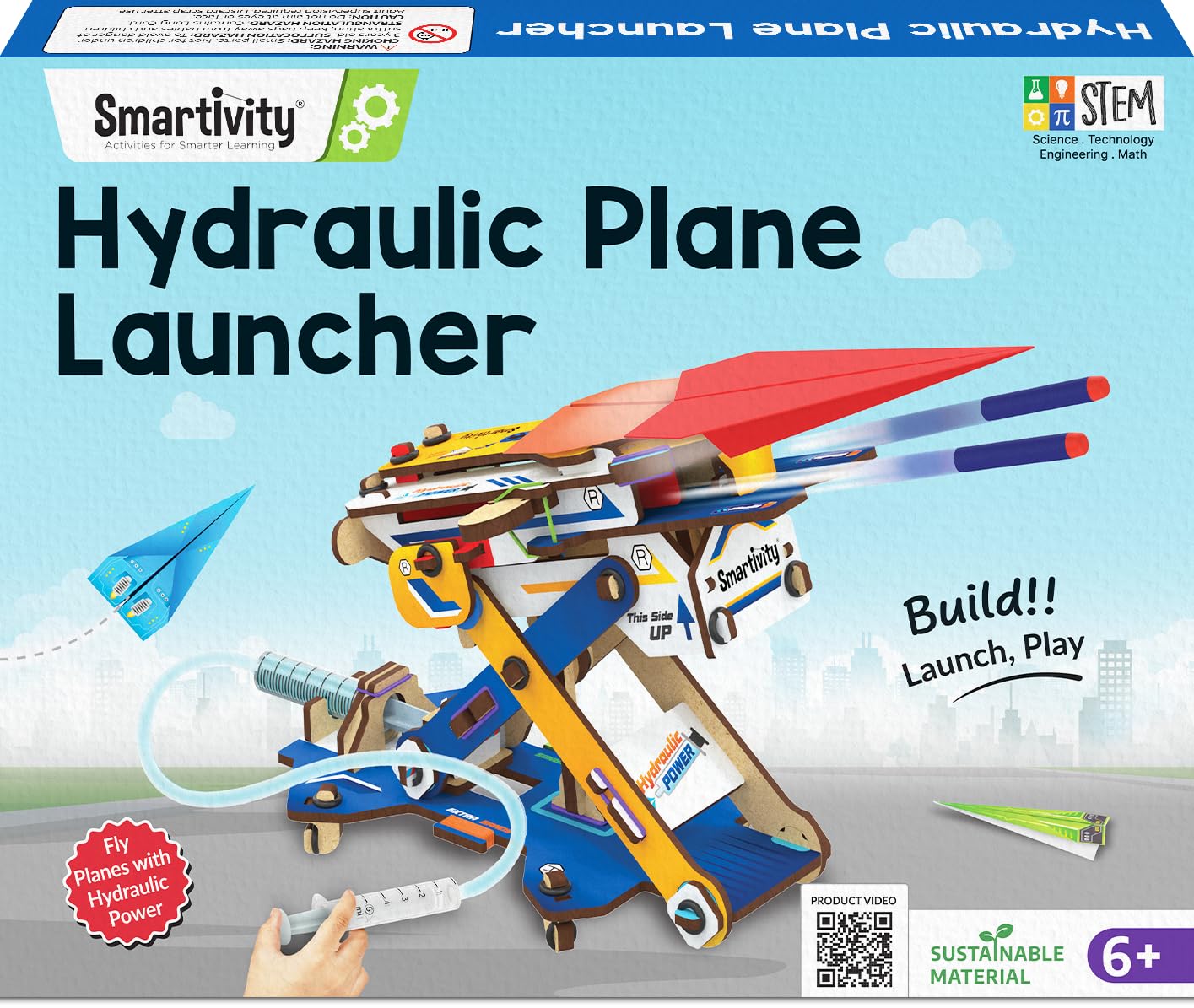
Unlike electronics kits, this wooden DIY project focuses on mechanical engineering: kids build a hydraulic paper airplane launcher from laser-cut MDF pieces. Clear pictorial instructions allow independent assembly for ages 8 and up, and the finished launcher combines construction pride with repeated launching fun. The thin wooden parts require careful handling—best for patient tinkerers rather than younger children prone to forcing pieces. For families seeking a screen-free building activity that culminates in an active physics toy, this kit delivers.
Pros
- Dual-phase play: building the launcher teaches hydraulics, then active launching extends the fun.
- Picture-based instructions let kids assemble independently, boosting confidence.
- Introduces hydraulic principles in a tangible, memorable way through a working pump mechanism.
Cons
- Thin wooden MDF pieces can break if forced during assembly, requiring patience and a light touch.
For kids who enjoy meticulous wooden construction and the payoff of launching paper airplanes, this kit offers a rewarding physics lesson—provided they have the dexterity to keep parts intact.
Best for Budget Experiment Variety
UNGLINGA 70 Lab Kit
Key Features
- Number of Experiments: 70 experiments claimed
- Age Range & Supervision: 8+ (adult guidance)
- Science Discipline: Chemistry, Physics, Geology
- Included vs. Extra Materials: Many require household items
- Durability & Reusability: Plastic labware, one-time chemicals
- Price: Budget
Unlike kits that focus on a single science branch, the UNGLINGA 70 Lab Kit spans chemistry, physics, and geology, with the added bonus of a child-sized lab coat and goggles that turn experiment time into dress-up play. It’s suited to parents who are comfortable stepping in to clarify instructions or fix experiments that don’t work as written, and kids who already enjoy hands-on activities and role-playing. The instruction booklet contains typos and unclear steps, so occasional experiments may not produce the expected result without adult guidance.
Pros
- 70 experiments across chemistry, physics, and geology offer expansive activity variety.
- Included lab coat and goggles spark imaginative role-play that keeps kids engaged.
- Budget price delivers a high number of activities and dress-up accessories.
Cons
- Instruction booklet contains typos and unclear steps that can cause experiments to not work as intended.
- Chemical reactions may not always deliver the promised result, leading to occasional underwhelming outcomes.
This kit gives you a lot of activities and a fun costume for the price, but the instruction gaps mean an adult must actively guide and salvage experiments. Best for parents who treat science time as a collaborative learning project.
Best for Dirt & Treasure Hunt
NG Mega Gemstone Dig Kit
Key Features
- Number of Experiments: 1 dig brick, 15 gems
- Age Range & Supervision: 8+ (adult help digging)
- Science Discipline: Geology, Archaeology
- Included vs. Extra Materials: Plastic tools included
- Durability & Reusability: One-time use, gems keepable
- Price: Mid-Range
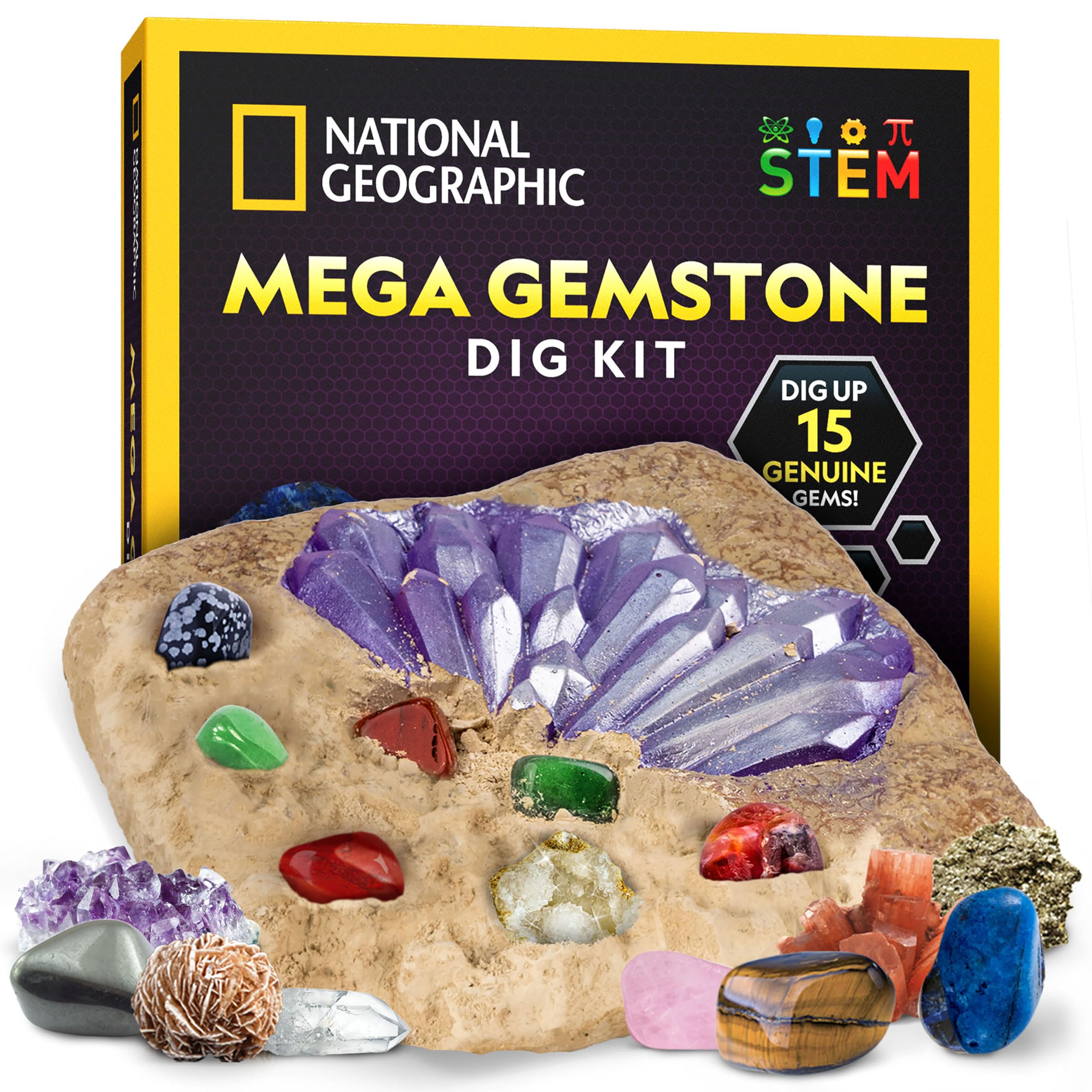
Kids get a genuine excavation feel uncovering real amethyst and pyrite from the clay brick. The included plastic tools underwhelm, and the gemstones are smaller than expected — temper expectations with a small real hammer and the understanding that these are entry-level specimens, not display pieces.
Pros
- Exciting digging experience — kids love uncovering real treasures
- Large, varied selection of gemstones makes the dig feel like a true excavation
Cons
- The plastic chisel and brush can bend under pressure — a small screwdriver and hammer work better.
For a messy, one-day excavation project with a child who loves digging, this kit shines — just have a real hammer on hand and expect beginner-collector gemstones.
How to Choose
The number of experiments listed on the box rarely predicts the quality of the learning experience — many kits inflate their count with simple activities that rely heavily on common household items you may not have on hand.
Number of Experiments: Quality Over Quantity
A kit advertising 100 experiments often includes many variations of the same reaction or activities that require supplies not in the box. Focus instead on kits where each project has a clear educational outcome. A set of 15 well-designed experiments typically teaches more than 50 superficial ones, and means less mid-activity frustration when you’re also caring for a baby.
Age Range & Supervision
Most kits list a broad age range, but children under 8 usually need adult help for measuring chemicals or handling small parts. Picture-based instructions allow older kids to work more independently — a key feature when you’re busy with an infant. Kits that demand constant adult oversight may sit unused.
Science Discipline
Match the kit type to your child’s existing interests. An electronics kit captivates a child curious about how things work, while a biology kit with live caterpillars fits a nature lover. Broad samplers are convenient for exploring, but a focused kit often delivers deeper engagement. Resist the urge to buy a ‘covers everything’ kit if your child already shows a clear passion.
What’s Actually Included
Picture-heavy boxes can imply that display stands or tools are included when they’re not. The most common letdown is discovering you need a hammer, baking soda, or distilled water when the baby is napping and you can’t leave. Before buying, scan the ‘what’s inside’ list carefully. Kits that transparently list required extras save you from scrambling.
Durability & Reusability
Single-use dig bricks or one-time chemical kits offer a memorable afternoon, but reusable kits like Snap Circuits can be passed down to younger siblings and used for years. Consider whether you want a short but intense experience or a durable resource that can span multiple ages. Reusable components often justify a higher upfront cost if the kit can later engage your baby when they’re old enough.
FAQ
Does the Insect Lore butterfly garden kit include live caterpillars?
No, the kit includes a voucher to redeem for five live caterpillars, shipped separately. You’ll pay an $8.95 shipping and handling fee when you redeem. Plan ahead: it can take a couple of weeks for the caterpillars to arrive, so start the project when the weather is warm enough for releasing butterflies outside.
Why didn’t the seeds in the Grow ‘N Glow terrarium sprout?
The kit uses chia and wheatgrass seeds, which sometimes fail due to age or storage conditions. Keep the soil consistently moist but not waterlogged, and place the terrarium in a warm, bright spot. If seeds still don’t sprout after a week, contact the manufacturer; many parents report getting a replacement seed packet.
Are the gemstones in the National Geographic Mega Gemstone Dig Kit real?
Yes, the 15 gemstones are real, including amethyst, quartz, and pyrite. They are tumbled and polished, but most are pea-sized or smaller. The excitement comes primarily from the digging process, so set expectations accordingly if your child envisions large, display-worthy specimens.
Which science kits are safest to use in a home with a baby?
Look for kits with large, non-toxic components that don’t require open flames or messy powders. Snap Circuits Jr. and the Butterfly Garden are good choices because they lack small loose parts after assembly and involve minimal chemical use. Always supervise closely and keep all experiments on a high counter away from curious baby hands.
Do I need to buy extra supplies for these science kits?
Many kits assume you’ll have common household items like baking soda, vinegar, or batteries. The NG Earth Science Kit and UNGLINGA 70 Lab Kit list required extras, while Snap Circuits Jr. only needs 4 AA batteries. Before starting, read the full ‘you’ll need’ list to avoid mid-experiment runs to the store when you’re minding the baby.