This post contains affiliate links. We may earn a small commission when you buy through our links — at no extra cost to you.
Many kids microscopes promise impressive magnifications but deliver blurry images and stiff focus wheels instead. The result? A frustrating experience that turns young explorers away from science. This guide cuts through the marketing claims to highlight microscopes that actually work for real hands-on discovery — whether your child is a curious preschooler or a budding biologist.
Choosing the right microscope comes down to matching the design to the child’s age and patience level. For toddlers, talking toys with pre-loaded slides eliminate the focusing struggle. For older kids, a digital screen-based microscope offers instant gratification without the eyepiece hassle. Traditional compound microscopes under $50 often disappoint, so we’ve focused on models that balance optics, durability, and ease of use. The picks below reflect what thousands of parents have found: a microscope that’s easy to use gets used.

Best for Ages 6-12
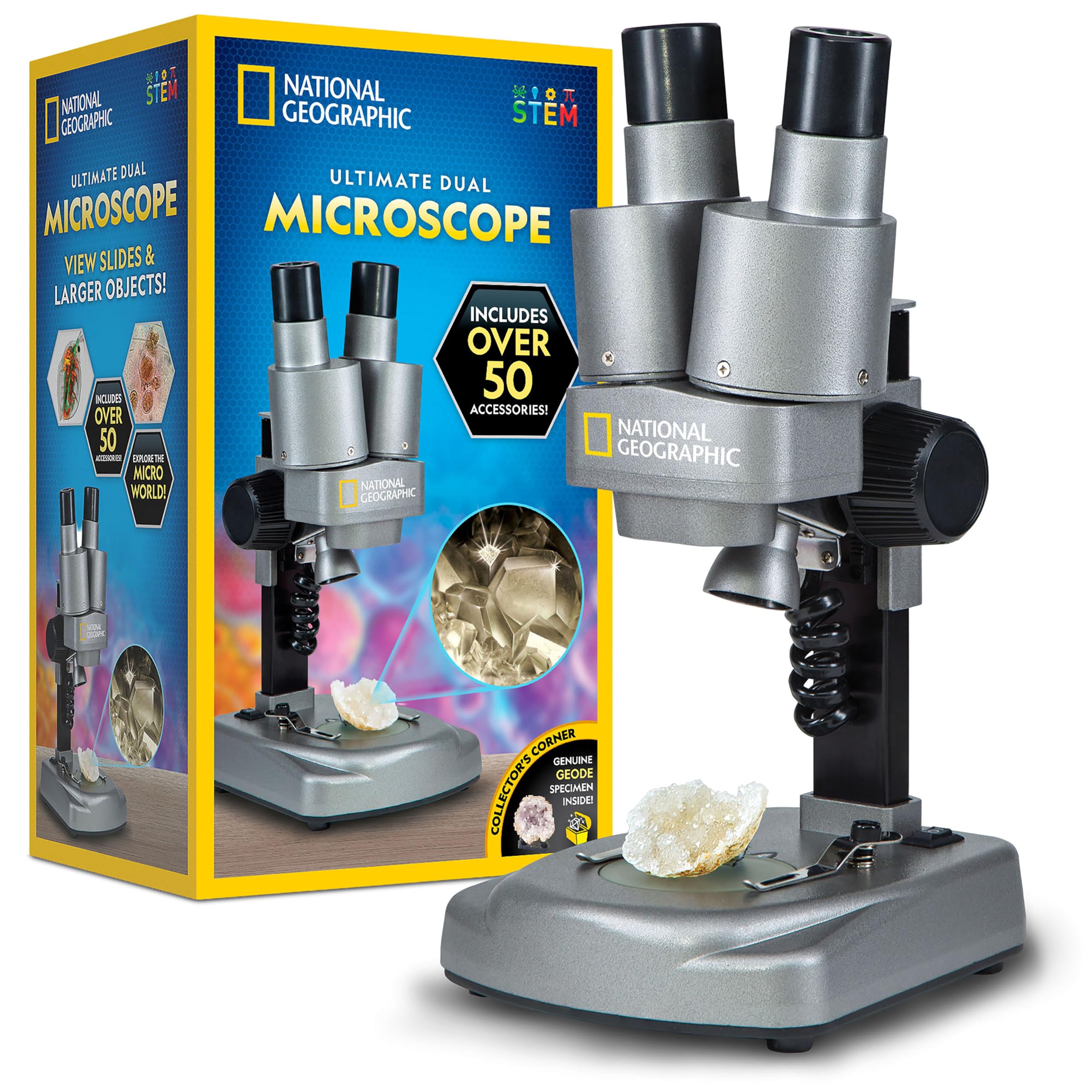
Nat Geo Dual LED Microscope
Key Features
- Magnification: 20x, 50x
- Type: Traditional compound
- Build: Plastic/glass
- Accessories: 50+ pieces, geode
- Price: Premium
The dual LED lighting and two eyepieces (20X and 50X) deliver sharp, bright images of coins, rocks, and larger specimens — not blurry blobs. Owners consistently report their 6–10 year olds can focus independently, and the plastic body survives drops and table bumps that would scatter cheaper kits. The included geode and 20 slides provide immediate hands-on exploration, turning a single purchase into a multi-day science session.
This microscope is for families who want a durable, easy-to-use tool for observing 3D objects and prepared slides at moderate magnification. It is not for buyers expecting to view bacteria or detailed cell structures — the 50X ceiling means slide work shows general shapes, not organelles. A small percentage of units arrive with a cracked light diffuser, so inspect upon arrival. Compared to cheaper kits with jumpy focus wheels, the Nat Geo earns its premium price by offering optics that actually work for the intended age range.
Pros
- Optics stay clear and in focus even after regular kid handling.
- Kids age 6-10 can operate independently without adult help.
- Full kit with geode, slides, and case keeps children engaged out of the box.
Cons
- Maximum 50X magnification limits detail on thin slide specimens.
- Occasional units ship with a broken light diffuser disc.
Buy this if you want a microscope a 7-year-old can actually use on their own without blurry frustration. Skip it if you need 400X+ for cell work or are on a tight budget.
Best for Ages 3-5
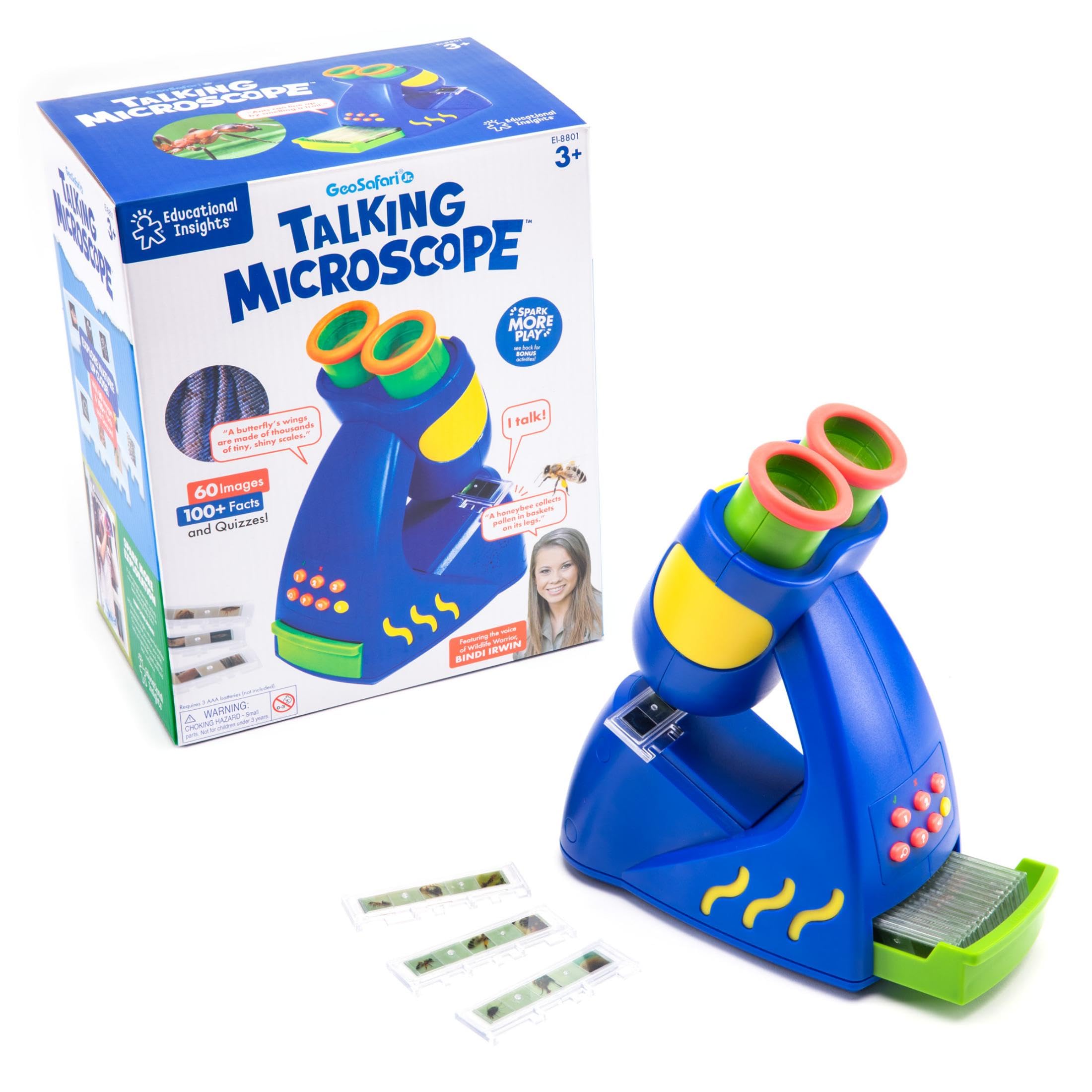
GeoSafari Talking Microscope
Key Features
- Magnification: 5x
- Type: Talking toy
- Build: Plastic
- Accessories: 60 pre-loaded slides
- Price: Budget
This talking microscope skips the focusing struggles common to real microscopes. Pre-loaded slides with Bindi Irwin’s narration keep preschoolers engaged while learning basic science facts. The fixed 5x magnification means no calibration – just insert a slide and press. However, the slide drawer does not stay closed; slides can fall out when moved. Also, the images are pre-printed, not magnified live specimens, so it’s a learning toy, not a real microscope. Ideal for children ages 3-5 who want a gentle introduction to nature without the frustration of focusing or preparing slides.
Pros
- Engaging talking feature with Bindi Irwin holds young children’s attention while teaching.
- Designed for independent use by toddlers and preschoolers – no adult help needed.
- Great gift for curious kids interested in nature and science.
Cons
- Slide drawer may not stay closed; slides can fall out when the microscope is carried.
- Slides and drawer are delicate – rough handling may lead to damage.
Buy this if you want a stress-free interactive microscope for a preschooler who loves learning about animals and nature.
Best for Kids 4-10
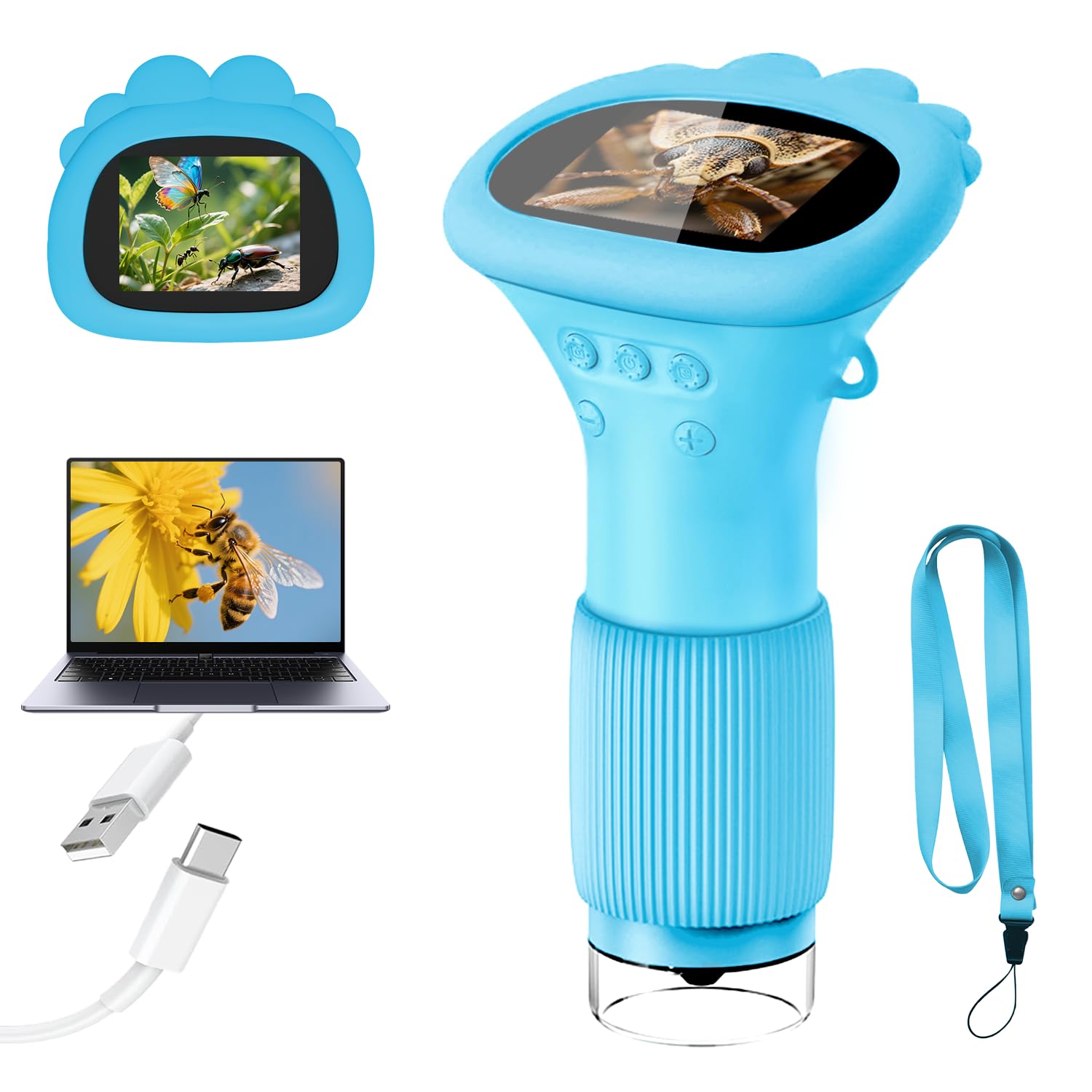
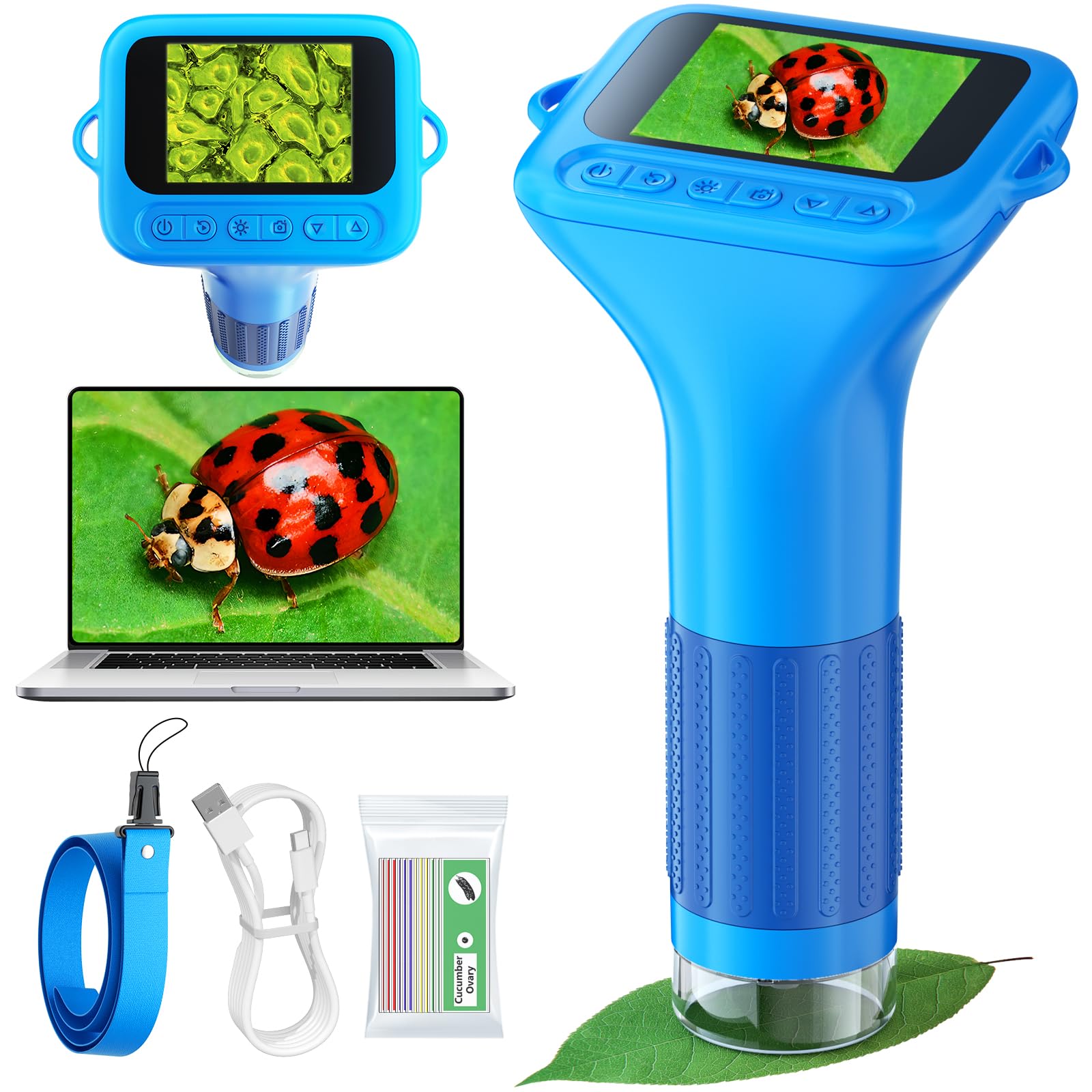
Acoath Digital Miniscope
Key Features
- Magnification: 200-1000x
- Type: Digital handheld
- Build: Plastic
- Accessories: 32GB SD, case
- Price: Budget
The Acoath Miniscope stands out for its sharp 2.0" screen and photo/video capture at a very approachable price — kids can grab it and start inspecting leaves, coins, or fabrics immediately. Image clarity is consistently praised even by adults, making it a shared curiosity tool. The catch: the claimed 1000x zoom is marketing hype; real usable magnification tops out around 200-400x, and the focus wheel takes some trial and error for small hands. Best suited for children ages 4-10 who want portable, screen-based exploration rather than traditional slide work.
Pros
- Sharp, clear screen images that impress both kids and adults.
- Highly engaging – gets kids observing everyday objects for hours.
- Great value with built-in photo storage and adjustable LEDs.
Cons
- Advertised 1000x magnification is unrealistic; effective zoom is 200-400x.
- Focus wheel can be fiddly for younger kids (3-4) to use independently.
Buy this if you want an affordable, screen-based microscope that turns outdoor walks into discovery sessions for kids 4-10. Skip it if realistic magnification specs matter or you prefer a traditional slide microscope.
Best for Teens/adults
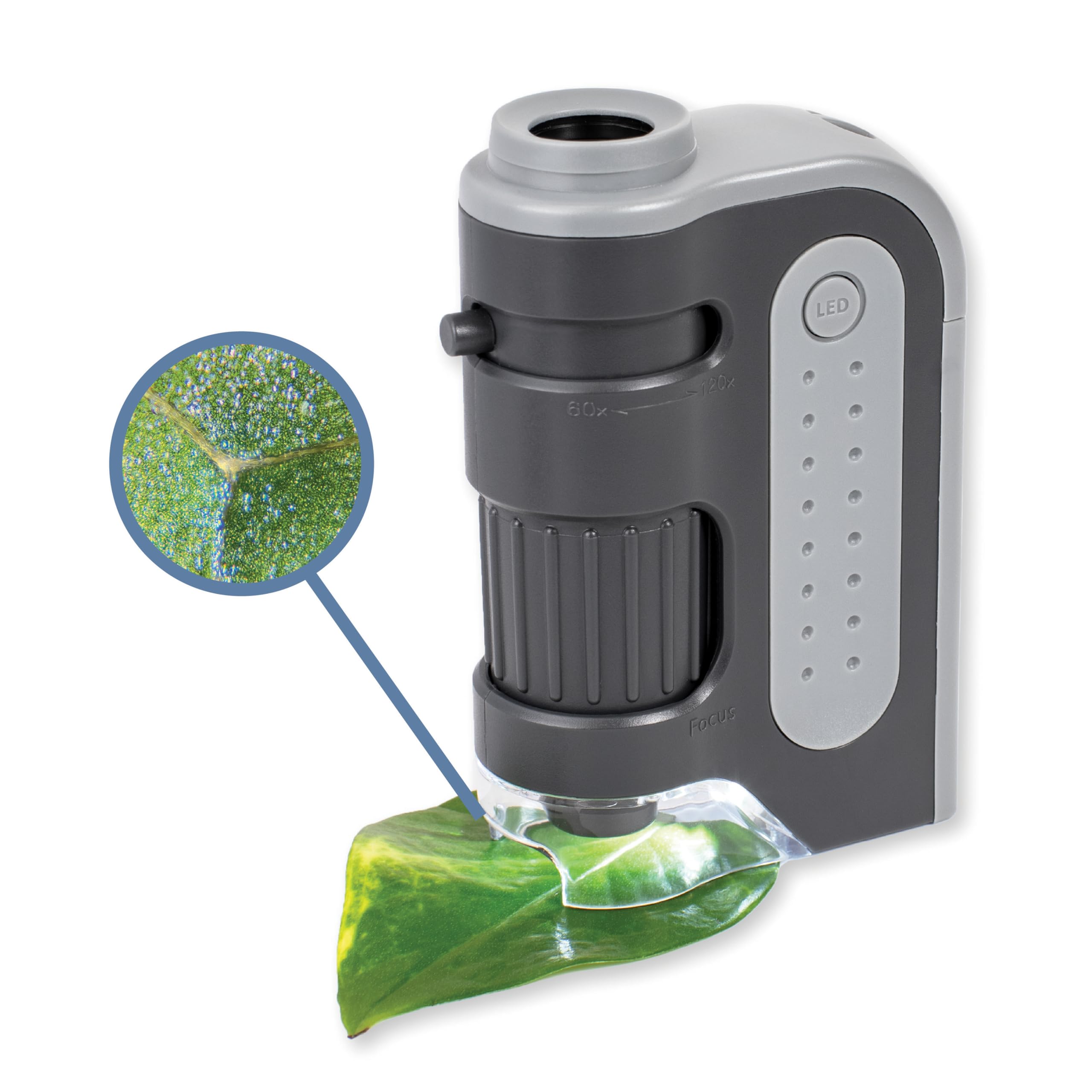
Carson MicroBrite Plus
Key Features
- Magnification: 60x-120x
- Type: Pocket optical
- Build: Plastic
- Price: Budget
This pocket scope delivers higher magnification (120x) than the more usable 60x alternative, letting you inspect coin details, stamp watermarks, or plant pests up close. That optical reach comes at a cost: focusing is finicky, especially at the top end, and the image appears inverted — a confusion point for beginners. Best for older kids or adults who need a portable magnifier for quick checks and are willing to practice the technique. Not for young children or anyone expecting frustration-free operation.
Pros
- High magnification at a budget-friendly price point.
- Compact and portable for on-the-go field use.
Cons
- Difficult to focus and keep steady, especially at higher magnifications.
- Inverted image disorients beginners and young users.
Buy this if you want a genuine 120x pocket scope and are willing to master its focus quirks. Skip it if you need easy, frustration-free viewing or are buying for a young child.
Best for Photo-Loving Kids
WINWEND Pocket Digital
Key Features
- Magnification: 100-1000x
- Type: Digital handheld
- Build: Plastic
- Price: Budget
The WINWEND pocket microscope stores up to 400 photos and videos internally, letting kids capture and review their finds without needing a phone. The eight-LED light ring adjusts to six brightness levels, helping illuminate dark crevices. However, the advertised 1000x magnification is exaggerated – real usable zoom sits around 200-400x. Focusing can be fiddly for younger children, often requiring adult assistance. Compared to the top pick’s traditional approach, this digital model trades optical clarity for the convenience of photo sharing and a built-in screen.
Pros
- Highly fun and engaging for the whole family – keeps kids exploring for hours.
- Clear image quality and impressive zoom for a pocket device.
- Excellent value with photo/video capabilities at a budget price.
Cons
- Advertised 1000x magnification not realistic; usable zoom around 200-400x.
- Focus can be tricky for very young kids, sometimes needing adult help.
Buy this if you want a portable digital microscope that lets kids capture photos and videos on the go without a phone. Skip it if you need true high-power magnification for slide work or a device that young children can operate independently.
Best for Beginners
Odatay Digital Microscope
Key Features
- Magnification: 100-1000x
- Type: Digital handheld
- Build: Plastic
- Accessories: 12 slides
- Price: Budget
The Odatay’s 2-inch 1080p display and 12 included slides let kids start exploring right out of the box, a convenience the top pick’s optical kit can’t match. Image quality is surprisingly clear for the price, and the built-in storage for 500 photos encourages documenting discoveries. However, the claimed 1000x magnification is optimistic — usable zoom hovers around 400x — and the product has only 398 reviews, so long-term durability is less established than more established options. It’s best for parents of children ages 5-10 who want an easy, screen-based microscope for casual home use and outdoor exploration, especially if they value photo-taking over high magnification.
Pros
- 1080p screen produces sharp, vibrant images.
- Includes 12 slides so kids can start right away.
- Simple controls that children 5+ can use without help.
Cons
- Advertised 1000x magnification exceeds actual usable zoom of about 400x.
- Limited customer reviews (398) leave long-term durability unproven.
Buy this if you want a screen-based digital microscope for young kids that’s ready to use out of the box. Skip it if you need proven long-term reliability or genuine high magnification.
Best for Budget Beginners
AmScope M30 Beginner Kit

Key Features
- Magnification: 120x-1200x
- Type: Traditional compound
- Build: Metal
- Accessories: 52 pieces, case
- Price: Mid-Range
The AmScope M30 Beginner Kit packs 52 accessories and a metal body at a low price — good value if you receive a working unit. However, many units arrive with poor optics that can’t be focused, making it a risky buy for impatient kids or parents wanting frustration-free use.
Pros
- Great value kit with many accessories, ideal for beginners.
- Sturdy metal body offers stability and a genuine feel.
Cons
- Many units have poor optical clarity even after focusing.
Worth considering if you’re a budget-conscious parent comfortable troubleshooting and possibly returning a defective unit.
Best for Casual Play
Nat Geo 400x STEM Kit

Key Features
- Magnification: 100x-400x
- Type: Traditional compound
- Build: Plastic
- Accessories: 6 slides, rocks
- Price: Mid-Range
This Nat Geo kit bundles everything a young child needs to start exploring slides and rocks. Setup is simple. But the plastic build feels cheap and focusing is stiff, making clear images frustrating. For casual first-time use it works, but serious hobbyists will outgrow it quickly.
Pros
- Great beginner kit with everything needed to start exploring immediately.
- Easy to set up and use, even for younger children.
Cons
- Focusing mechanism is stiff and jumpy, making it frustrating to get a clear image.
Worth considering if you want a budget-friendly first microscope for casual educational play and are willing to work around stiff focusing and plastic build.
Best for Young Kids 5-8
Nat Geo Junior Microscope

Key Features
- Magnification: 50x-250x
- Type: Traditional w/ detachable
- Build: Plastic
- Accessories: 6 slides
- Price: Mid-Range
The detachable eyepiece is a clever touch for outdoor exploration, and the controls are simple enough for ages 5–8. However, the plastic build and stiff focus mirror the issues of the larger Nat Geo kit, and the 250x magnification may feel limiting as kids progress. A decent starter for young explorers, but build quality and magnification cap limit its long-term appeal.
Pros
- Detachable eyepiece lets kids examine objects outdoors without bringing the whole microscope.
- Simple controls and setup make it accessible for children ages 5 to 8.
Cons
- Stiff focus and plastic construction feel less refined than pricier options.
Worth considering if you want a portable microscope for outdoor use with a young child, but expect limited magnification and a plastic feel.
Best for Crafty Families
Uarzt 58-Piece Microscope

Key Features
- Magnification: 100x-1200x
- Type: Traditional compound
- Build: Metal
- Accessories: 58 pieces, case
- Price: Mid-Range
This 58-piece kit delivers a metal body, hard case, and enough slides and tools to keep curious kids busy for hours. However, the optical clarity falls short – many users find the image impossible to focus at higher magnifications, which limits its educational value. It works best for families willing to supplement with higher-quality slides and treat it as an activity kit rather than a precision microscope.
Pros
- Comprehensive 58-piece kit with metal body and hard case for portability.
- Encourages exploratory play with 13 pre-made slides and 31 blank slides.
Cons
- Optical clarity is poor – blurry at higher magnifications, making focusing difficult.
Worth considering if you prioritize a large accessory set and don’t need sharp magnification above 400x; skip it if clear optics are essential.
Best for Teens/adults
Carson Pocket Micro MM-450

Key Features
- Magnification: 20x-60x
- Type: Pocket optical
- Build: Plastic
- Price: Budget
The Carson Pocket Micro packs genuine 20-60x magnification into a compact, durable body ideal for quick coin, stamp, or plant checks outdoors. The image is inverted and the viewing area small, which can frustrate beginners. It’s a backup option to the MicroBrite Plus, which offers more magnification and better reviews for a slightly higher price.
Pros
- Affordable 60x magnification with decent clarity for casual inspection.
- Compact and durable build slips into a backpack for field use.
Cons
- Reversed image confuses kids and beginners.
Worth considering if you need an ultra-portable scope for quick outdoor inspection and can handle the inverted view.
Best for Tech-Savvy Kids
BEBANG Handheld Digital

Key Features
- Magnification: 200-1000x
- Type: Digital handheld
- Build: Plastic
- Accessories: 32GB SD, case
- Price: Mid-Range
This handheld microscope includes a 32GB SD card and case for portable exploration. Kids like the 2-inch screen and photo capture. But magnification is exaggerated—real max is ~200x, and the focus wheel can be jumpy. Similar options from Acoath and WINWEND cost less for comparable features.
Pros
- Very portable and easy for kids to carry and use independently.
- Clear image quality on screen, allows photo/video capture.
Cons
- Advertised 1000x magnification is overstated; real magnification is closer to 200x.
Worth considering if you want a ready-to-use digital microscope for casual outdoor exploration and don’t need high magnification.
How to Choose
The first step is matching the microscope type to your child’s age and patience level.
Magnification Range
Advertised magnification numbers are often inflated, especially in digital microscopes where claimed 1000x often translates to a usable 200-400x. For young children (3-6), 5x to 50x is sufficient—higher power requires steady hands and good lighting. For older kids, real magnification of 100x to 400x is ideal for viewing cells and insects.
Microscope Type
Talking toy microscopes with pre-loaded slides are perfect for preschoolers because they eliminate focusing and slide preparation. Digital handheld microscopes with screens are gaining popularity for kids 6-12 because they avoid eyepiece struggles and allow photo sharing. Traditional compound microscopes offer the most authentic experience but often have stiff focusing and poor optics under $50.
Build Quality
Metal body microscopes provide stability and a genuine feel, but many budget metal scopes still suffer from poor optics. Plastic models are lighter and often cheaper, but may feel flimsy. For younger children, a sturdy plastic shell with a detachable base is less likely to break during drops.
Included Accessories
A comprehensive kit with prepared slides, blank slides, and tools can get a child started immediately. However, many kits prioritize accessory count over microscope quality. It’s better to spend the budget on a decent scope and supplement with separate slide sets than to buy a 50-piece kit with a poor microscope.
Age Appropriateness
The best microscope for a 4-year-old is a talking toy with large buttons and no focusing. For a 7-year-old, a digital handheld with a screen encourages independent exploration. Traditional microscopes are best for kids 10 and up who have the patience to adjust focus and prepare slides.
FAQ
Why can’t I see anything through my kid’s microscope?
This is often due to being on too high a magnification, improper focus, or insufficient light. Start at the lowest objective lens, use the coarse focus knob, and ensure the LED is on. If the image remains blurry, the microscope may have defective optics—check user reviews for that specific model before purchasing.
Is a digital handheld microscope better for kids than a traditional one?
For most kids under 12, yes. Digital scopes eliminate eyepiece frustrations and let kids view discoveries on a screen, which encourages exploration and sharing. However, they often exaggerate magnification, so look for real usable zoom (200-400x) rather than the claimed 1000x. Traditional scopes are better for older kids who want more control and higher quality slide viewing.
What is the best magnification for a kids microscope?
For toddlers and preschoolers (ages 3-6), 5x to 50x is plenty—high magnification requires patience and steady hands they don’t have. For ages 6-12, real magnification of 100x to 400x is ideal for viewing cells, bugs, and rocks. Anything above 400x is rarely usable without a professional setup and good lighting.
How do you focus a kids microscope properly?
For traditional scopes, place a slide on the stage, select the lowest objective lens, and slowly turn the coarse focus knob until the image sharpens. For digital handhelds, hold the device steady and adjust the focus wheel minutely. If the image is inverted (common in pocket scopes), move the slide in the opposite direction of where you want to see.