This post contains affiliate links. We may earn a small commission when you buy through our links — at no extra cost to you.
Kids’ pianos often arrive with a long list of features — microphones, stools, demo songs — but the real test is whether they survive daily use by a toddler. Too many 37-key keyboards are surprisingly small, with keys that stop responding and microphones that cut out within weeks.
The picks in this guide prioritize what matters: appropriately sized keys for small hands, durable materials that handle drops, and learning features that actually teach — like color-coded keys or light-guided modes. For babies just discovering cause and effect, a three-key touch piano offers engagement without frustration. For older toddlers, a wooden piano with a songbook builds genuine musical interest.



Best for Toddlers 3+
B. toys Mini Maestro
Key Features
- Number of Keys: 25
- Age Range: 3+
- Material: Wood/metal/plastic
- Accessories: Songbook
- Learning Features: Color-coded keys, songbook
- Price: Mid-Range
The Mini Maestro’s solid wood frame and color-coded keys make it a standout first piano for toddlers. The 25 keys are sized for small hands and produce a pleasant tone that avoids the tinny sound common in toy instruments. Included batteries and an illustrated songbook let kids start playing immediately, with color-coded notes that map directly to the keys. The piano withstands drops, banging, and enthusiastic play – hundreds of reviews confirm its durability. Its 3-pound weight makes it portable for moving between rooms, and the design suits children from 3 to 5 years old and beyond.
This piano is best for parents who want a sturdy, educational first instrument that introduces music basics through color-coding and parent-child duets. The songbook encourages shared play, and the wood build ensures it survives years of use. However, a small fraction of units arrive stuck in demo mode, so test the piano immediately and check the return policy. If you need a full-sized keyboard or multiple instrument sounds, this isn’t the right choice.
Pros
- Solid wood frame withstands toddler play and daily use.
- Color-coded keys and songbook teach music basics effectively.
- Appropriate for ages 3 to 5 and beyond, growing with the child.
Cons
- Occasional quality control: some units arrive stuck in demo mode only.
Buy this if you want a durable wooden first piano with color-coded learning aids for your toddler. Skip it if you need a full-sized keyboard or multiple instrument sounds.
Best for Infants 6Mo+
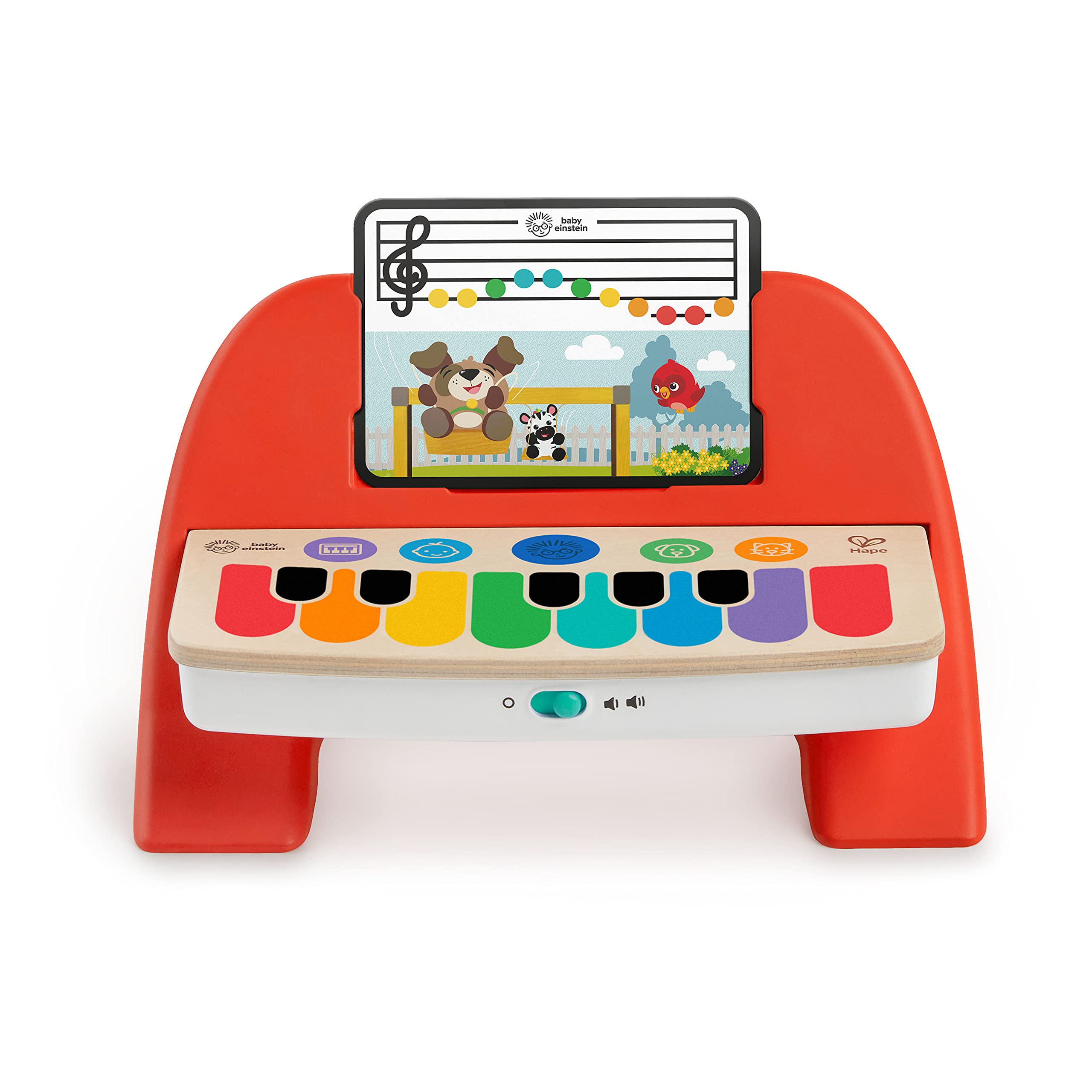
Baby Einstein Magic Touch
Key Features
- Number of Keys: 3
- Age Range: 6mo-3yr
- Material: Wood/plastic
- Accessories: Music cards
- Learning Features: Touch surface, 4 sound modes
- Price: Budget
The Magic Touch surface lets even 6-month-olds produce sound by tapping or patting, eliminating the need for fine motor control. Four sound modes (piano, xylophone, cat, dog) and six preset tunes keep curious babies engaged through the first year. The wood construction holds up to enthusiastic play. However, only three keys are available — enough for early cause-and-effect exploration but too limited for teaching melodies or scales once a child approaches age two. This piano is deliberately designed for the youngest musicians, not as a stepping stone to a real keyboard.
Pros
- Touch-sensitive surface babies activate easily without pressing hard
- Multiple sound modes (piano, xylophone, animal sounds) maintain interest
- Wood construction withstands drops and bangs from mobile infants
Cons
- Only 3 keys – no room for scales or real melodies past 18 months
Buy this if you want a durable first musical toy for a baby 6–18 months who will enjoy tapping, sound surprises, and cause-and-effect play.
Best for Singing Toddlers 3-8
Love&Mini 37-Key Pink
Key Features
- Number of Keys: 37
- Age Range: 3-8
- Material: Plastic
- Accessories: Mic, stool, stand
- Learning Features: 22 demos, 4 rhythms, 4 tones
- Price: Premium
Unlike the top pick’s focus on learning, the Love&Mini is a performance toy: 37 keys, 22 demo songs, and a stool/microphone set encourage singing and play. It’s more of a stage prop than a teaching instrument — unlike the guided-learning black model, this pink set prioritizes role-play. The pink design appeals to young children, and the sound quality is decent for a plastic toy. However, the keyboard is smaller than many parents expect, and the microphone and stand have occasional durability issues — best suited for occasional supervised play rather than daily hard use.
Pros
- Complete stage setup with stool and microphone included.
- Attractive pink design that toddlers love.
- Multiple instrument sounds and demo songs keep kids engaged.
Cons
- Smaller keyboard than expected; may confuse toddlers used to bigger keys.
- Microphone and durability issues reported; best for gentle play.
Buy this if you want a pink performance set for a young child who loves to sing and play pretend, and you’re okay with occasional supervision and replacement after heavy use.
Best for Guided Learners 3+
Love&Mini 31-Key Black
Key Features
- Number of Keys: 31
- Age Range: 3+
- Material: Plastic
- Accessories: Mic, stool
- Learning Features: LED light-guided, 3 teaching modes
- Price: Premium
The Love&Mini Black piano stands apart by using LED lights that highlight which keys to press, letting children learn songs through a step-by-step visual guide. It packs three teaching modes and 22 demo songs into a compact 31-key frame. While the black finish and included stool and microphone add appeal, the build quality mirrors the pink variant: the microphone and keys occasionally show inconsistent durability, and the small size is better suited for toddlers than older children. This is a focused learning tool for structured play, best for parents who value guided instruction over a larger or sturdier keyboard.
Pros
- LED lights guide children to press correct keys, making song learning intuitive.
- Black finish blends well with neutral decor; includes stool and microphone.
- Multiple teaching modes and demo songs keep young learners engaged.
Cons
- Small 31-key layout limits range for children ready for more notes.
- Occasional quality variances in microphone and key responsiveness.
Buy this if you want a structured, light-guided learning keyboard for a young child just starting piano.
Best for Gift for Girls 3-5
Amy&Benton 37-Key Pink

Key Features
- Number of Keys: 37
- Age Range: 3-5
- Material: Plastic
- Accessories: Mic, stool
- Learning Features: 22 demos, 4 rhythms, record
- Price: Premium
This 37-key pink piano set is frequently praised as a charming first birthday gift for young girls. The cute appearance and included stool make it an appealing package, but it’s slightly pricier than similar models and the microphone has mixed reliability. Its small size and delicate build suit occasional play rather than daily hard use.
Pros
- Gift appeal praised by nearly all reviewers for young girls.
- Pink appearance is cute and appealing to toddlers.
Cons
- Microphone has mixed reliability; some units stop working over time.
Worth considering if you need a cute gift for a young toddler that will be used occasionally for short-term play.
How to Choose
The key to a successful kids piano purchase is prioritizing key size and build quality over flashy features like microphones and stools, which often fail quickly.
Number of Keys
For toddlers under 3, a 3-key touch piano is sufficient for cause and effect. For ages 3-5, 25 to 37 keys offer enough range for simple melodies without overwhelming. However, many 37-key keyboards are physically small; check dimensions as a 3-year-old’s hands may be too large for tiny keys.
Age Range
Age recommendations are rough guides — a 3-year-old may outgrow a 3-key piano quickly, while a 5-year-old might find a 25-key wooden piano limiting. Always consider your child’s fine motor skills and attention span. A piano that matches their current stage avoids frustration and encourages practice.
Material
Wooden pianos typically last longer than plastic ones because they have fewer moving electronic parts. Plastic keyboards with integrated microphones and lights are more vulnerable to drops and battery corrosion. If longevity matters, a simple wooden design with acoustic sound is a safer bet.
Accessories
Microphones and stools are popular but often the first components to break. If your child loves to sing, look for a mic that detaches and has positive long-term reviews. Stools are usually too short for most toddlers and often function more as storage than seating.
Learning Features
Color-coded keys and songbooks help kids learn note-letter associations without pressure. LED light-guided keys can be engaging but may distract from ear training. Demo songs and rhythms are fun but rarely teach music theory; focus on tools that encourage active play, not passive listening.
FAQ
How many keys should a kids piano have for a 3 year old?
For a typical 3-year-old, 25 keys is a sweet spot — enough to play simple songs without overwhelming their attention span. 37-key keyboards are often physically smaller than expected, so check the key width. If your child is already showing musical interest, a 31 or 37-key model with learning aids can work well.
Why does my kid’s toy piano microphone stop working?
Microphones in budget toy pianos are usually low-quality and prone to connection failures after repeated bending or drops. To extend life, choose a model with a detachable mic that uses a standard jack, and avoid leaving batteries in the unit when not in use. If karaoke is a priority, consider a separate standalone microphone instead.
Are wooden toy pianos better than plastic ones for toddlers?
Wooden pianos generally last longer because they have fewer electronic parts that can break. They also produce a more pleasant acoustic sound and don’t require batteries. Plastic keyboards offer more features (lights, sounds, microphones) but are less durable. For a first piano that survives years of play, a wooden option is the safer choice.
What age is appropriate for a 37-key piano?
37-key pianos are typically marketed for ages 3-8, but the physical key size matters more than the count. Many 37-key toys have keys that are too small for a 3-year-old’s hands. If your child’s fingers can comfortably press a single key without hitting neighbors, it’s appropriate. Always measure the keyboard dimensions before purchase.