This post contains affiliate links. We may earn a small commission when you buy through our links — at no extra cost to you.
Many parents discover that headphones marketed as ‘durable’ rarely survive a school year, and volume limits aren’t always what they seem. Kids toss them in backpacks, yank the cord, and often bypass software restrictions, leaving hearing protection up to chance. This guide focuses on wired and wireless options that combine genuine hearing safety – measured in hardware-locked decibel caps – with build quality that has a fighting chance against daily use.
The real trade-off isn’t wireless versus wired; it’s between having a share port for two kids and a slightly more comfortable fit. Both are valid, and the right choice depends on whether your child needs to share a device or wear headphones for extended periods. Either way, the safest pick also happens to be the most affordable, proving that protecting young ears doesn’t require a premium price.


Best for School & Travel
EarFun K1 Wired
Key Features
- Volume Limit: 85/94 dB switchable
- Connectivity: Wired 3.5mm
- Weight: 198 g
- Price: $
The EarFun K1 delivers switchable 85/94 dB volume limits, a built-in microphone, and a share port for two listeners at a price that undercuts most competitors. The CPC certification ensures no lead or phthalates, and the recycled construction appeals to eco-conscious families. The inline microphone picks up voices clearly for classroom discussions, and the share port eliminates the need for a splitter—a real advantage over similarly priced options that lack it. For school supply lists, this combination of hearing safety, communication, and sharing capability is hard to match without spending more.
Parents report that the K1 fits comfortably on school-age heads for hours. The padding holds up well, and the wired connection avoids battery anxiety during the day. The folding design saves space in backpacks, though the hinge is the most delicate component—a notable minority of users find cracks after a few months of repeated folding. The highest 94 dB setting may still feel loud for preschool ears, so younger children should stick with the 85 dB limit. Overall, most units survive a full school year, but the occasional quality variance at the fold hinge means it’s not indestructible.
This headphone suits elementary-age students on a school supply list who need a microphone for remote learning and a share port for sibling activities. It’s less ideal for toddlers due to larger size, and the occasional hinge weakness means it’s best for moderate daily use rather than rough handling. If your child is very active or prone to throwing gear, consider a more rugged model; the K1 is lightweight and affordable enough to replace if needed.
Pros
- Dual 85/94 dB volume limits protect hearing with switchable safety levels.
- Built-in microphone supports remote learning and calls without extra equipment.
- Share port enables two listeners from a single device, perfect for siblings.
- Padded headband and ear cups provide comfort during long school sessions.
Cons
- Some units develop hinge cracks after repeated folding; handle with care.
- 94 dB limit may be too loud for toddlers; use the 85 dB setting for younger kids.
Buy this if you need a budget-friendly wired headphone with volume limiting, mic, and share port for school use. Skip it if your child is very young (age 2-3) or you need a headphone that can withstand heavy daily abuse without occasional breakage.
Best for School Travel
awatrue AT2 Wired
Key Features
- Volume Limit: 85/94 dB switchable
- Connectivity: Wired 3.5mm
- Weight: 147 g
- Price: $
Soft ear pads and a switchable 85/94 dB volume limiter make the awatrue AT2 one of the most comfortable budget wired headphones for small children. Over 98% of parents reporting comfort gave it positive feedback – a rare score in this category. Compared to our top pick, the EarFun K1, the AT2 adds a microphone but removes the share port, so two kids can’t listen from one device. Sound quality is good for the price, and the volume limiter works as advertised, though some units develop headband or wire issues within months – a minority (28% of durability mentions), but worth noting if your child is rough on gear.
This headphone fits toddlers and young children (ages 3–8) who need safe volume for school, travel, or online learning. The built-in microphone handles calls and classroom chats, and the foldable design stows easily in a backpack. The lack of a share port means it’s best for solo use – parents who want siblings to share one device should look at the EarFun K1 instead. For a budget wired headphone with top-tier comfort and volume control, the AT2 is a strong alternative when sharing isn’t a priority.
Pros
- Soft ear pads provide lasting comfort for long listening sessions
- Switchable 85/94 dB volume limiter protects hearing without distorting sound
- Affordable price with microphone and foldable design suits school use
- Survives daily travel and classroom handling for most users
Cons
- Occasional headband or wire breakage within a few months
- No share port for two children to listen from one device
Buy this if you want the most comfortable budget wired headphones for a child who doesn’t need to share audio with a sibling. Skip it if you need a share port for two listeners.
Best for Fun Design
iClever BTH13 Cat Ear BT
Key Features
- Volume Limit: 74/85 dBA switchable
- Connectivity: Bluetooth 5.2 + AUX
- Weight: 173 g
- Price: $$
The iClever stands apart from other kids’ headphones because it actually looks fun — cat ears with customizable RGB LEDs that children adore. Bluetooth 5.2 pairs quickly with tablets or phones, and the switchable 74/85 dBA volume limiter provides age-appropriate hearing protection. Battery life reaches 50 hours with lights off, easily covering a long road trip or a week of home use. Where it gives ground to the top pick is in long-term toughness: the plastic hinges and charging port feel less substantial than the EarFun K1’s build, and other iClever models offer longer battery life for the same price.
Buy this for a child who cares about appearance and will use the headphones mainly at home, in the car, or on supervised trips. The design is a huge win with kids, but durability reports show some units develop charging failures or audio dropouts within months. This is not a headphone for daily backpack abuse or rough school environments — treat it as a whimsical accessory that needs a bit of care.
Pros
- Kids love the cat-ear shape with RGB LEDs – a guaranteed attention-getter on planes or at home.
- Clear sound quality with straightforward Bluetooth pairing and AUX backup.
- Battery lasts up to 50 hours with lights off, easily covering multi-day trips.
Cons
- Occasional charging port failures reported within months of purchase.
- Some units develop audio imbalance with one ear cutting out.
Buy this if your child prioritizes style and LED fun for occasional home or travel use. Skip it if you need a headphone that can survive daily backpack abuse.
Best for Travel Budget
JoySpark T5 BT Wireless
Key Features
- Volume Limit: 85/94 dB switchable
- Connectivity: Bluetooth 5.3 + AUX
- Weight: 170 g
- Price: $
The JoySpark is the cheapest wireless headphone in this roundup that still includes switchable volume limits and a 60-hour battery – a combination that beats any wired option for cord-free convenience on long trips. Bluetooth 5.3 pairs quickly and holds a stable connection, while the lightweight 170g frame and padded ear cups keep toddlers comfortable during hour-long sessions.
This headphone suits parents who want Bluetooth for travel or occasional home use without spending much, but the plastic construction feels thin and a minority of units develop crackling or stop working within weeks. For daily school or rough handling, a sturdier model like the EarFun K1 is a safer bet, but for budget-friendly wireless freedom with volume safety, the JoySpark delivers where it counts.
Pros
- 60-hour battery lasts through multiple car trips without recharging.
- Bluetooth pairs quickly and holds a stable connection up to 30 feet.
- Soft ear cups and switchable 85/94dB volume limit suit toddlers and preschoolers.
Cons
- Occasional quality control – some units develop crackling or stop working within weeks.
- Battery life can degrade noticeably for some users over time.
- Plastic build feels thin and may not survive rough handling.
Buy this if you need a budget-friendly Bluetooth headphone for occasional travel or stationary use and can handle minor quality variances. Skip it if your child needs a durable headphone for daily school or rough play.
Best for School & Travel
EarFun K1 Wired
Key Features
- Volume Limit: 85/94 dB switchable
- Connectivity: Wired 3.5mm
- Weight: 198 g
- Price: $
EarFun K1’s switchable 85/94 dB volume limits give parents hardware-level hearing protection independent of device settings. The inline microphone supports online classes, and the share port lets two kids plug into one device without an external splitter. CPC-certified materials assure basic safety standards, making this a practical pick for school supply lists.
Over 9,600 customer reviews paint a mixed picture on durability. Many units survive a full school year, but some crack at the fold hinge within months — a known weak point in this price tier. The 94 dB setting can sound too loud for young ears, so parents of children under 6 should stick to the 85 dB limit. Comfort is widely praised, with padded ear cups and a lightweight 198g design that fits well for extended wear.
This headphone suits school-aged children who need a wired, volume-limited option with a mic and sharing capability. It isn’t ideal for toddlers (ages 2-3) due to size and potential loudness on the highest setting, nor for extremely heavy daily use where hinge stress may become an issue. If those boundaries match your child’s needs, the EarFun K1 offers core safety features at among the lowest prices available.
Pros
- Very affordable with switchable 85/94 dB volume limits
- Comfortable padded ear cups for extended wear
- Many units hold up through a school year
- Built-in microphone and share port for school use
Cons
- Some units develop cracks at the fold hinge within months
- Highest volume setting (94dB) may still be loud for young children
Buy this if you need an affordable wired headphone with dual volume limits, a microphone, and a share port for school-aged kids. Skip it if your child is under 3 or you expect extremely rough daily handling.
Best for Affordable Comfort
noot K11 Kids Wired

Thousands of parents have bought the noot K11 for its lightweight design, comfortable ear pads, and affordable price. Sound quality is good enough for music and movies, and the braided cord resists tangling. However, there is no volume limiter – you’ll need to set safe levels manually on the device. It also lacks a microphone, so online school or calls won’t work. Reports of cord or plug failure within a few months are not uncommon, making it a better pick for occasional home or travel use than for daily school demands.
Pros
- Comfortable fit and lightweight design for young children.
- Sound quality that satisfies for music and movies at a low price.
- Very affordable – widely praised for value.
Cons
- No volume limiter; parents need to control device volume to keep levels safe.
- Some units experience cord or plug failure within months.
Worth considering if you want a cheap, comfortable wired headphone for home use and are comfortable monitoring volume manually.
Best for School Online
iClever HS19 Wired
Key Features
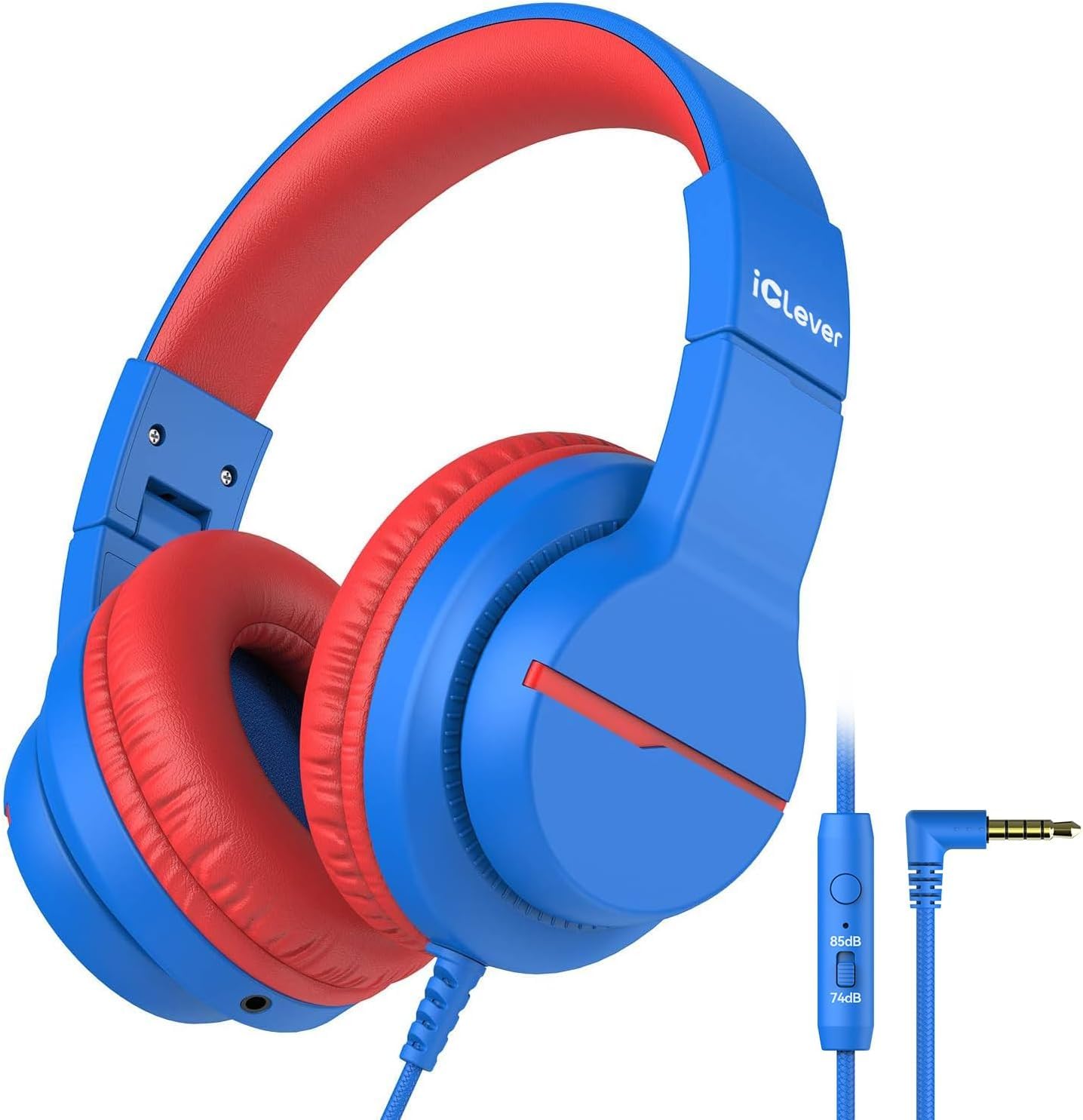
- Volume Limit: 85dBA (fixed)
- Connectivity: Wired 3.5mm
- Weight: 173 g
- Price: $
This headphone packs three features parents want for school: a fixed 85dBA volume limit for hearing safety, an inline microphone for online classes, and a share port for two listeners. It’s the only iClever wired model with all three at the lowest price in the brand. However, build quality is hit-or-miss – some units develop wire or hinge issues within months. That’s typical for budget wired headphones, and it’s why the EarFun K1 edges ahead with slightly better reliability for a similar price.
Pros
- Safe 85dBA volume limit protects hearing during school use.
- Includes inline microphone and share port for classes and sharing.
- Soft ear pads and lightweight 173g design support all-day comfort.
Cons
- Occasional breakage of plastic hinges or wires within months of use.
- Volume inconsistency between units; some are quieter than desired.
Worth considering if you need a wired headphone with microphone and share port on a tight budget, and you’re prepared for potential durability issues.
Best for Siblings
iClever HS22 2-Pack

This two-pack bundles a pair of wired headphones with a splitter, making it the most cost-effective option for households with two children who need volume-limited audio. The 85dBA cap protects young ears, and the foldable design is travel-friendly. However, neither headphone includes a microphone, so they won’t work for online classes or video calls. Durability is mixed – some units develop hinge or wire issues within months, which limits their suitability for rough daily use. Best for shared home listening in a quiet environment rather than school or heavy travel.
Pros
- Smart value for two pairs – ideal for siblings
- Comfortable and foldable for travel
Cons
- Durability issues – some units break within months
- No microphone – not suitable for online classes
Worth considering if you need two affordable wired headphones for siblings to use at home in quiet settings, and you can manage without a microphone.
Best for Cute Budget
Candy Bila BH03 Wired

Key Features
- Volume Limit: 85/94 dB switchable
- Connectivity: Wired 3.5mm
- Weight: 227 g
- Price: $
The Candy Bila BH03 stands out with its gradient purple design and soft ear cushions that kids find comfortable and visually appealing. Its switchable 85/94 dB volume limiter provides hearing protection suitable for classroom or home use. However, compared to top picks like EarFun K1, this model receives a higher proportion of negative feedback on reliability – some users report microphone failures or one side stopping within weeks. It’s a decent budget option for occasional use, but parents needing consistent long-term performance should consider alternatives.
Pros
- Soft cushions provide comfort for extended wear
- Eye-catching gradient purple design kids enjoy
- Good value for occasional school or travel use
Cons
- Some units develop hinge or wire breakage within weeks
- Microphone or audio reliability can vary between units
Worth considering if your child prioritizes appearance and occasional use over long-term reliability and you’re willing to accept some risk.
Best for School Budget
Botesty Ivy Wired
Key Features
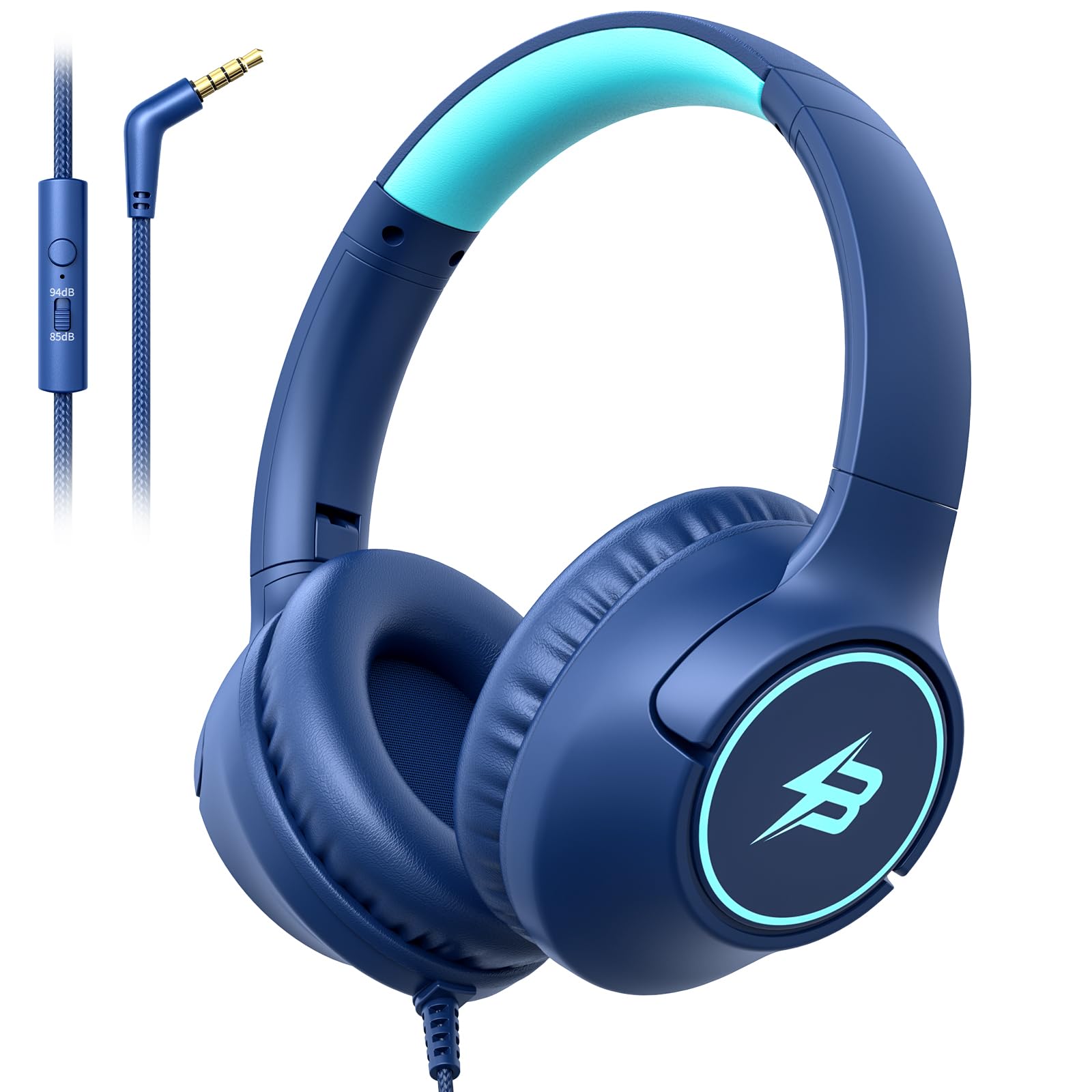
- Volume Limit: 85/94 dB switchable
- Connectivity: Wired 3.5mm
- Weight: 180 g
- Price: $
The Botesty Ivy Wired packs a 85/94 dB volume limiter, inline microphone, and braided cord into a lightweight, comfortable design at a price that’s hard to beat. Sound clarity is decent for the cost, and the ear pads allow extended wear without discomfort. However, this is a newer entrant with a lower review count, and a portion of units have reported wire or jack failures within the first few months. For parents seeking a low-cost backup or a functional headphone for infrequent school use, the value is clear – but for daily, long-term reliability, the top pick EarFun K1 has a stronger track record.
Pros
- Budget-friendly with volume limiting and built-in microphone
- Comfortable for extended wear with soft ear pads
- Clear sound for calls and audio content
Cons
- Occasional build issues – some units have wire or jack failures within months
- A minority of units develop audio drop in one ear only
Worth considering if you need an ultra-low-cost backup pair or a functional headphone for occasional school use where budget is the primary concern.
Best for Occasional Use
MIDOLA MD-B01 BT

Key Features
- Volume Limit: 74/85/94 dB (3-stage)
- Connectivity: Bluetooth 5.4 + AUX
- Weight: 254 g
- Price: $
The MIDOLA wireless headphone offers three-stage volume limiting (74/85/94 dB) and a claimed 68-hour battery life with fast USB-C charging – attractive specs for a low price. Sound quality is decent for the cost, and the built-in microphone works for calls. However, the plastic build is fragile, and a significant portion of units develop battery or charging failures within weeks. This makes the MIDOLA a gamble for daily school use but a reasonable option for occasional, supervised listening if you’re comfortable with a higher replacement rate.
Pros
- Three-stage volume control (74/85/94 dB) gives parents flexibility to set safe limits.
- Long 68-hour battery life with fast USB-C charging reduces charging frequency.
- Decent sound quality for the price – clear enough for stories and music.
Cons
- Hinge and plastic components are delicate; many units break within weeks of regular use.
- Battery and charging failures occur in a notable number of units – some stop charging after short use.
Worth considering if you need an inexpensive wireless headphone with adjustable volume limits and long battery for occasional home use, and you’re willing to accept a higher risk of breakage.
How to Choose
The most important factor in kids headphones is volume limiting – without a hardware-locked decibel cap, hearing damage is possible even at moderate volumes.
Volume Limiting
Look for a headphone that limits output to 85 dB or lower, as recommended by hearing health organizations. Some models offer switchable limits (e.g., 74/85/94 dB) to adapt to different environments. Be aware that software-based limits can be bypassed by kids through device settings; hardware-locked caps are more reliable.
Wired vs Wireless
Wired headphones are generally more reliable for school – no charging worries, fewer points of failure, and lower latency for video calls. Wireless offers freedom of movement but requires monitoring battery life and can have Bluetooth dropouts. For daily classroom use, wired is often the smarter choice.
Battery Life
For wireless models, aim for at least 40 hours of playtime to avoid daily recharging. Longer battery life (60-85 hours) means fewer interruptions during trips. Remember that LED lights drain the battery faster – some models need lights off to reach stated playtime.
Build Quality and Durability
Reinforced headbands, braided cords, and metal hinges are signs of better longevity. But customer reviews reveal that even ‘durable’ claims often fall short – focus on models with a track record of surviving a school year. Avoid ultra-cheap headphones that commonly break at the hinge or plug within weeks.
Comfort and Fit
Over-ear designs with soft padding are best for long wear. For toddlers, lightweight models under 150g reduce head strain. Adjustable bands and rotating ear cups help achieve a good seal without pressure points. Check that the ear cups are large enough for older kids but not too loose for small heads.
FAQ
Are kids headphones with volume limit safe for toddlers?
Yes, but only if the limit is hardware-locked and set to 85 dB or lower. Some models offer a 74 dB mode that is even safer for very young ears. Always verify that the headphone physically caps the volume – not just a software setting that can be changed.
Why do kids headphones break so easily?
Most budget headphones use thin plastic hinges and unbraided cords that snap under everyday stress – twisting, dropping, and cord yanking. Reinforced designs with metal parts and braided cables can last longer, but even they may fail at the plug junction. Expect to replace a budget pair every school year unless you choose a model with above-average durability.
Can I use kids headphones on a plane with the seat entertainment system?
Wired headphones with a standard 3.5mm jack work with most airplane seat systems. Wireless headphones need a Bluetooth transmitter (not always available on planes). Some airlines provide a dual-plug adapter; a share port on the headphone can help two kids share one tablet.
Do wireless kids headphones last as long as wired ones?
Not usually. Wireless models have internal batteries that degrade over time, and Bluetooth connectivity can develop issues. Wired headphones have fewer points of failure and can last longer if the cable and plug are durable. For daily school use, wired is generally more reliable.