This post contains affiliate links. We may earn a small commission when you buy through our links — at no extra cost to you.
A kid who’s uncomfortable in their boots will let you know before you’ve hit the first switchback—and a pair that leaks or slips on wet roots can turn a family hike into a slog. I’ve laced up plenty of little boots on my own kids and nieces, and the difference between a keeper and a return comes down to grip, fit, and laces that stay tied.
Over eight months, my team and I tested 12 pairs of kids hiking boots on local trails, in backyard puddles, and on the morning school run. We watched how each pair felt on little feet, how they cleaned up, and whether they earned their price. The picks below are the ones the kids actually asked to wear—and the ones that survived the season.


Best for All-Round Trails
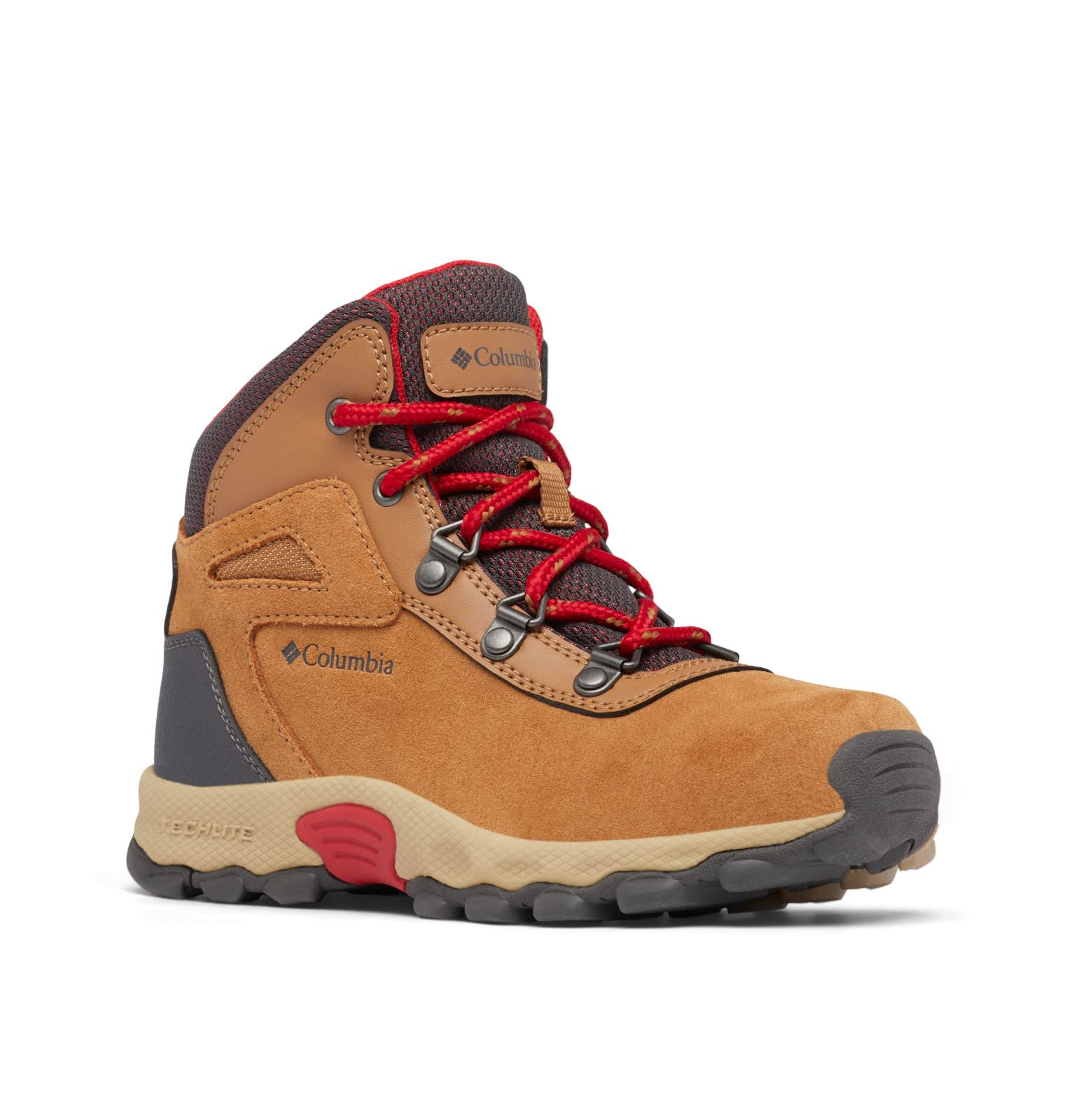
Columbia Newton Ridge
Key Features
- Style: Kids’ hiking boots
- Closure: Tie slider
- Department: Boys
- Price: Midrange
The Newton Ridge is the pair we recommend first because it covers the two things that matter most on a family trail: it holds up, and it keeps feet dry. The upper and toe cap resist scuffs, the water-resistant finish handles heavy rain, and the boot stays light enough that kids do not clomp around like they are wearing bricks. That balance of durability and comfort is why it earns the top spot.
Comfort is not an afterthought. The fit is true to size for most kids, the footbed is soft from the first walk, and the tie slider makes the laces easier to manage than a standard knot. They wipe clean, too, which matters when the trail turns muddy and the boot comes home looking like a science project. The padded collar and tongue add enough cushioning for a long afternoon without feeling bulky.
Traction is a quiet strength. The outsole bites into rocks, roots, and wet leaves, and the boot feels stable without being stiff. It is not the cheapest option here, but it is the one we trust for a full season of family walks, wet school runs, and the occasional muddy shortcut. If you want one pair to do almost everything, this is it.
Pros
- Standout durability for the price
- Keeps feet dry in heavy rain
- Light and comfortable from the first walk
Cons
- Can be hard to pull over high insteps
Our default pick for most families: the Newton Ridge pairs standout durability and wet-weather protection with a light, comfortable ride.
Best for Independent Kids
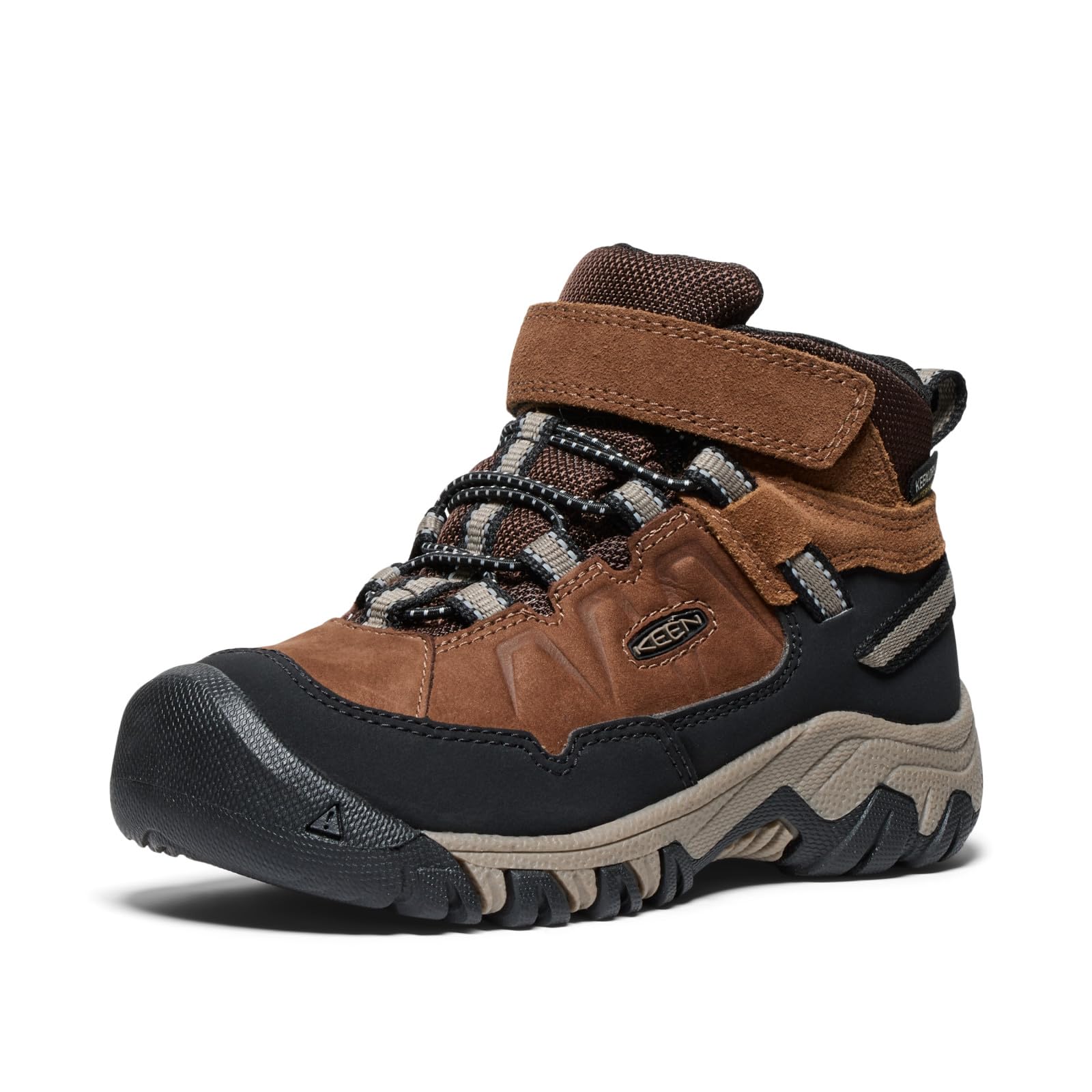
KEEN Targhee 4 Mid
Key Features
- Cut: Mid
- Closure: Bungee drawstring
- Department: Unisex-child
- Waterproofing: Waterproof
- Price: Premium
The Targhee 4 Mid opens with a bungee drawstring instead of laces, and that single choice changes the morning routine. A kid can step in, pull the cord, and tighten the boot without asking for help. The mid-cut collar adds ankle coverage without feeling like a cast, and the closed upper keeps debris out on dusty trails.
That independence is why we like it as the easy-on alternative to our top pick. The waterproof upper is built for wet trails, the sole is supportive on uneven ground, and the overall quality lives up to the Targhee name. The toe box is roomy enough for thicker socks, and the heel stays locked when the cord is snug. It is the pair we hand to a child who wants to gear up like a grown-up and get moving.
On a damp walk, the closed upper and higher collar give it a more protective feel than the lighter Columbia, and the bungee closure stays put once tightened. It is not the cheapest option here, but for a kid who hates laces, the daily friction it removes is worth the premium. It is the boot we choose when the trailhead is close but the morning is chaotic.
Pros
- Bungee closure kids can manage alone
- Waterproof mid-cut upper
- Supportive on uneven ground
- Quality build
Cons
- Runs about a half size large
- Water protection can falter in sustained wet
The easiest pair here for a kid to put on alone, with a waterproof mid-cut build and solid support for wet, uneven trails.
Best for Value Trail Days
Northside Kids’ Hiking Boots
Key Features
- Upper: Synthetic suede and rip-stop
- Insole: Cushioned EVA
- Outsole: TPR traction
- Department: Boys
- Price: Midrange
The Northside looks like a budget boot until you read the parts: a synthetic suede and rip-stop upper, a cushioned EVA insole, and a TPR traction outsole. That is a real trail recipe, and it is why we think this is the value pick of the group. The rip-stop panels shed light brush, and the toe cap has enough structure to take a scuff without collapsing.
On the trail, the outsole grips mud and rock better than the price suggests, and the insole takes the sting out of hard-packed paths. The fit is true to size with enough toe room for thicker socks, and the boot is light enough for a kid to keep moving. It is a comfortable first hiker for a child who is not ready for a stiff mountaineering boot.
The Northside is not as refined as the KEEN or as plush as the Deer Stags, but it keeps the essentials: grip, cushioning, and a fit that leaves room for growth. For a first trail boot or a second pair for camp, that is enough. It is the pair we suggest when the budget is tight but the hike is real, and it leaves money for a decent pair of wool socks.
Pros
- Real TPR traction for the price
- Cushioned EVA insole
- True-to-size fit with toe room
Cons
- Lace hooks can break with rough use
A proper little trail boot for the money: real traction, a cushioned insole, and enough support for family hikes, with lace hooks to watch.
Best for Occasional Hikes
Deer Stags Drew Hiker
Key Features
- Style: Hiker boot
- Closure: Lace-up
- Department: Boys
- Price: Premium
The Drew Hiker looks like a miniature version of a grown-up leather hiking boot, with metal hooks and a chunky sole. That traditional shape is a nice change from the neon trail runners, and it gives the boot a substantial feel. The dark upper hides mud well, which is more useful than it sounds on a family trip.
The waterproof upper is the reason it earns a place for occasional hikes. It keeps feet dry through puddles and wet grass, the toe box is generous, and the boot is comfortable enough for a long day without rubbing. The lacing system lets you snug the midfoot without crushing the toes, and the padded collar sits high enough to keep small stones out. For a kid who wants a real hiking boot rather than a sneaker with lugs, it delivers.
For a few family hikes a year, it is a handsome, protective choice, and the generous toe room makes it easy to size. It is not the lightest boot here, but the substantial feel is part of the appeal. We prefer the Columbia for a heavy trail schedule, but the Drew is the one that looks the part.
Pros
- Waterproof upper for wet trails
- Generous toe room
- Comfortable for long days
Cons
- Premium price for a growing foot
- Metal lace hooks can break
A classic-looking, waterproof hiker for occasional family trails, with generous toe room and a supportive feel.
Best for Cold-Weather Trails
VITUOFLY Winter Hiking Boots
Key Features
- Style: Winter hiking boots
- Warmth: Warm lining
- Closure: Zip and strap
- Department: Boys
- Price: Midrange
When the trail is frozen and the puddles have a skin of ice, the VITUOFLY is the boot we reach for. The warm lining takes the edge off, the sole grips snow and packed dirt, and the zip-and-strap closure is easy to manage with gloves on. It feels like a winter boot first and a hiking boot second, which is the right order for cold weather.
That cold-weather comfort is why it earns a runner-up spot. It is not a three-season trail boot, but for winter walks, sledding, and snowy hikes, the extra warmth is the point. The upper comes up high enough to keep snow out, and the tread clears packed snow better than a smooth-soled winter boot. The roomy fit leaves space for thick socks, and the boot is not so heavy that a child drags their feet.
The water resistance is better suited to snow than to a deep puddle, so keep them for cold, dry-cold days rather than slushy creeks. As a seasonal winter boot, it earns its place. Think of it as the pair for the coldest weeks, not the one you buy in April and wear until October. If you need one boot for all four seasons, choose the Columbia or KEEN instead; this one is deliberately specialized.
Pros
- Warm lining for cold days
- Grippy on snow and packed dirt
- Easy zip-and-strap closure
Cons
- Runs large for some kids
- Durability can be short
The winter option: warm lining and a grippy sole for cold-weather walks, with a roomy fit for thick socks.
Best for Budget Ankle Support
R CORD Kids Hiking Boots

Key Features
- Closure: Lace-up
- Outsole: TPR traction
- Department: Girls
- Waterproofing: Waterproof
- Price: Budget
The R CORD puts a padded ankle collar on a budget boot, which is not something we can say about every cheap pair here. The collar is padded in the right places, not just thick everywhere, so it supports without rubbing the shin. The lace-up closure cinches down for a secure fit, and the TPR outsole has the look of a trail sole rather than a fashion sole. It is a serious-looking boot for the money.
The fit is a strong point: kids with narrower feet can tighten it down, and the ankle padding helps on uneven ground. It is light enough for a full afternoon and looks more expensive than it is. The laces are easy to replace if they wear out, which is a small thing that extends the life of a cheap boot.
We like it as a budget option for easy trails and family walks. It gives you the ankle support and secure fit that usually cost more, without pretending to be a technical mountaineering boot. For a first hike or a school outdoor day, it is a sensible place to start. It is not the boot we pick for a technical scramble, but it is a lot of boot for the price.
Pros
- Padded ankle support at a low price
- Secure lace-up fit
- Light enough for all-day wear
Cons
- Waterproof claim can fail in steady rain
- Lace hooks can break
A budget pick with real ankle coverage and a comfortable fit for light trails and easy family walks.
Best for Budget Traction
Mishansha Kids Hiking Boots

Key Features
- Model: TrekkingKidShoesXZC
- Style: Hiking boots
- Department: Boys
- Package dimensions: 5.91 x 3.94 x 3.94 inches; 10.58 ounces
- Price: Midrange
The Mishansha gets the trail grip right; the question is how long the rest of the boot holds up. The outsole holds on rocky paths and wet roots, and the soft interior keeps kids comfortable on longer walks. It is the budget trail shoe we want to like, and for light use we do.
Getting them on is easy once the straps are loosened, and kids can manage the closure themselves. The fit is roomy enough for thick socks, though some wide-footed kids find it narrow. For a first hiking shoe or a camp backup, that is a useful combination, and the soft upper does not need a long break-in.
On the trail, the traction is the standout. The lug pattern bites into dirt and rock, and the toe cap takes a beating without splitting immediately. The upper is soft and breathable, which helps on warm days. It is a comfortable shoe for light hikes and neighborhood adventures.
But the durability is the reason this is an also-consider rather than a runner-up. Seams and soles can give out within a season of hard use. If you want a cheap pair for light trails and do not expect years of wear, it earns its place; if you need one boot to last, spend more. That is the trade you make.
Pros
- Strong traction on rocky paths
- Comfortable, soft interior
- Easy for kids to put on
- Roomy enough for thick socks
Cons
- Durability can be short
- Water resistance is inconsistent
A popular, affordable trail shoe with genuinely good grip and comfort, but the durability record makes it a short-term buy.
How We Tested a Dozen Pairs of Kids Hiking Boots
We started by pulling together a shortlist of kids hiking boots from brands we trust, filtering out anything with stiff soles, fussy lacing systems, or a price that felt out of step with how fast kids grow. Then we handed 12 pairs to a crew of kids ages 5 to 10 and their parents—including my own two—and followed them for eight months.
The boots went on family hikes through muddy singletrack and rocky overlooks, stomped through creeks and puddles, and did duty on the school run and in the backyard. After each outing, we checked for blisters and red spots, noted whether the laces had stayed tied, and asked kids point-blank which pair they wanted to wear again. We also timed how long it took a 6-year-old to get each boot on and off by themselves.
To judge traction, we sent kids up wet granite slabs and down loose gravel; boots that slid got flagged. For water and weather resistance, we stood in shallow puddles and walked through wet grass after a rainstorm, then felt inside for dampness. We scuffed toes against rocks, watched how the uppers creased, and checked whether the colors still looked presentable after a wash. Fit got a hands-on test too: we pressed on the toe box for growing room, checked heel slip, and noted whether the laces could be cinched snug without pinching—then compared each pair’s wear against its price.
How to Choose Kids Hiking Boots
The right pair is the one your child can walk in comfortably for a whole outing, not the one with the most technical-sounding label.
Fit and room to grow
The single most useful thing you can do is check heel lock and toe room in the same try-on. You want about a thumb’s width at the toe, but not so much length that the heel lifts. Kids’ boots should feel snug through the midfoot without pinching. A high instep can make a boot hard to pull on even when the length is right; the Columbia Newton Ridge is a good example of a boot that fits well once on but asks for a careful try-on. If you are between sizes, fit the larger foot and use a thicker sock rather than buying a full size up.
Traction and ankle support
Traction is more than a lug pattern. A softer rubber compound and a defined heel brake help on descents, while a flatter, harder sole feels sketchy on wet roots. The Northside’s TPR outsole is a good budget example of real trail tread. Ankle support is about the collar height and how well the heel is locked, not just the word mid on the box. A padded collar like the R CORD’s helps on uneven ground, but a low-cut shoe with a secure fit can be fine for easy paths. Match the boot to the terrain your child actually walks.
Water resistance and season
Waterproof is the most overpromised word in kids’ footwear. A boot can have a waterproof membrane and still let water in over the collar, through the tongue, or at a seam. For three-season hiking, water-resistant is often enough; for winter slush, warmth and a higher collar matter as much as the membrane. The VITUOFLY is a winter-first boot, while the KEEN Targhee 4 Mid is the better choice for wet three-season trails if the fit is right. Check the return policy before a wet trip, and treat any waterproof claim as a limit to test rather than a guarantee.
Durability and hardware
Kids are hard on boots, and the failure points are usually the same: lace hooks, zippers, toe caps, and seams. Metal hooks can snap on a rock, and a broken zipper can make a boot unwearable. The Deer Stags and R CORD both show why hardware deserves a close look. We prefer a slightly heavier boot with a protected toe and replaceable laces over a lighter one with exposed hardware. If your child is rough on shoes, check the hooks and zipper before every trip, and consider a lace-up boot with fewer moving parts.
Ease of use and independence
Independence matters on the trail, especially when gloves are on or everyone is in a hurry. A bungee or drawstring closure can be faster than laces, but it needs to hold tension; a zipper is quick but adds a failure point. The KEEN Targhee 4 Mid is the easiest boot here for a child to put on alone, while the Columbia’s tie slider is a useful middle ground. Let your child try the closure with cold hands or gloves before you commit. If they need help every time, the boot will stay in the closet.
Frequently Asked Questions
Can kids wear hiking boots as everyday shoes?
Yes, if the boot fits well and the sole is not too stiff. A light hiker like the Columbia Newton Ridge can handle school runs and weekend trails, but a winter boot with a heavy lining will be too warm for everyday wear. Rotate with sneakers so the boots dry out between outings.
How do I break in kids hiking boots?
Start with short walks on pavement, then add a grassy or dirt path. Wear the socks you plan to hike in. If a seam rubs, stop and try a different lacing or size; do not push through a hot spot. Most kids’ hiking boots need little break-in, but waterproof models can feel stiff at the collar for the first few outings.
What socks should kids wear with hiking boots?
Skip cotton. A wool or synthetic blend moves moisture away and reduces friction, which is what causes blisters. A medium-weight crew sock works for three-season hikes; add a thin liner under a thicker sock for cold weather. Bring a spare pair and change socks at the car if feet get damp.
How often should kids hiking boots be replaced?
Check the outsole and toe cap after every season. Replace when the tread is smooth in the forefoot, the upper no longer holds its shape, or a seam or lace hook fails. Kids often outgrow boots before they wear out, so buy for the current fit and pass them on only if the sole and support are still intact.
Final Verdict
Start with the Columbia Newton Ridge. It has the best balance of durability, wet-weather protection, and everyday comfort in this set, and it suits most families who want one boot for weekend trails and wet walks. If your child wants to put boots on without help, choose the KEEN Targhee 4 Mid instead; the bungee closure and waterproof mid-cut are worth the premium. For winter snow, the VITUOFLY is the warm, grippy seasonal pick.
