This post contains affiliate links. We may earn a small commission when you buy through our links — at no extra cost to you.
Many parents discover that skates marketed as "factory sharpened" still feel dull on the ice, and that adjustable models often trade ankle support for convenience. The result is a frustrating first session or a purchase that gets outgrown before it breaks in. This guide cuts through the split between fixed-size figure skates and grow-with-me recreational models, showing you exactly where each type works best.
For kids taking lessons, a fixed-size skate with proper ankle support is worth the shorter lifespan. For toddlers skating once a month, an adjustable model’s lower cost and expandability make more sense. The key is knowing which sacrifices your child’s skating will actually tolerate — and which ones will stall progress or lead to discomfort.


Best for Beginner Figure Skaters
Jackson Classic 200
The Jackson Classic 200 delivers the stiff ankle support and consistent stability that entry-level figure skaters need for proper technique. The vinyl and Nylex upper fits comfortably without a break-in period, while the Mark I stainless steel blade provides adequate glide for basic edges and two-foot turns. Owners report that the boot holds its shape through weekly lessons and recreational use, with the sole and heel construction lasting multiple seasons for a single skater.
This fixed-size skate is ideal for children and adults enrolled in learn-to-skate programs or recreational skaters who value support over adjustability. It also suits wider feet (C width) better than most recreational models. The trade-off: because it does not extend with growth, younger skaters will outgrow it faster than adjustable alternatives — plan for a new pair at each shoe size increase.
Pros
- Supportive ankle collar helps maintain proper alignment during basic stroking and gliding.
- Comfortable padding and materials require no break-in period.
- Strong value for the price — durable construction for the mid-range market.
Cons
- Occasional reports of blade cracking after light use in some units.
- Fixed-size boot requires new skates as children grow — no length adjustment.
Buy this if you’re a beginner skater committed to lessons and want proper ankle support and comfort in a fixed-size boot. Skip it if you need an adjustable skate for a growing child or prioritize replaceable blades.
Best for Toddlers & Beginners
Lake Placid Summit
Key Features
- Adjustable: 4 sizes
- Ankle Support: Moderate
- Blade Quality: Stainless steel
- Comfort & Insulation: Nylon upper, padded
- Durability: Buckle breakage reported
- Price: $$
Compared to the top pick’s fixed-size support, the Lake Placid Summit prioritizes budget and growth — sliding through four sizes so kids don’t outgrow it every season. The locking buckle and power strap make quick on/off easy, and the nylon upper keeps weight low. The trade-off is noticeable: the adjustable mechanism introduces some wobble, and buckles can loosen or break after a few months of regular use. This is not a skate for lessons or aggressive skating — it’s built for occasional pond outings and first-time wobbles.
Pros
- Expands across four shoe sizes to accommodate growing feet.
- Very low price without sacrificing basic comfort for short sessions.
- Locking buckle and power strap let parents get skates on quickly.
Cons
- Adjustable design compromises stability; buckles may break after months of use.
Buy this if you need an affordable, adjustable skate for a toddler or young beginner who will outgrow it quickly. Skip it if your child is taking lessons or needs strong ankle support.
Best for Boys Beginners
K2 Raider Adjustable
Key Features
- Adjustable: 5 sizes
- Ankle Support: Softboot, limited
- Blade Quality: Stainless steel
- Comfort & Insulation: Thinsulate lining
- Durability: Limited review data
- Price: $$
K2’s Softboot with Thinsulate lining and speed lacing make it a comfortable choice for casual outdoor skating. Growing kids benefit from the 5-size adjustable system, saving parents from frequent replacements. However, unlike the top pick’s fixed design, the Raider trades ankle support and durability data for that flexibility — the limited review pool means long-term behavior is unclear. Best for boys who skate recreationally in cold conditions rather than in structured lessons.
Pros
- Comfortable K2 Softboot with easy speed-lacing system.
- Warm Thinsulate lining keeps feet comfortable in cold outdoor conditions.
Cons
- Limited user feedback makes long-term durability and ankle support uncertain.
Buy this if your boy needs a warm, adjustable skate for casual outdoor skating and you prioritize comfort over proven long-term durability. Skip it if he’s taking lessons or requires high ankle support.
Best for Young Beginners
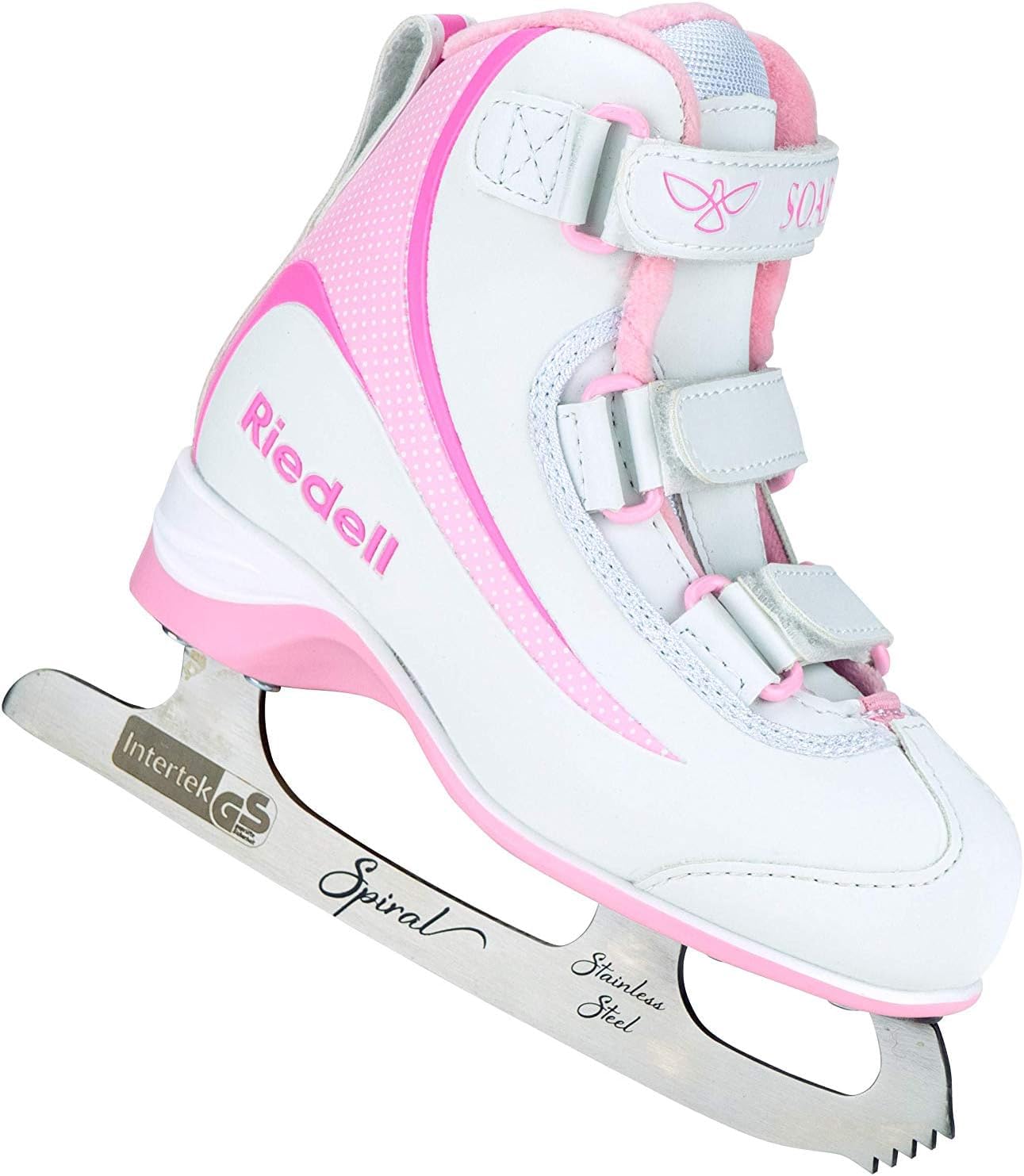
Riedell Soar Junior
Key Features
- Adjustable: No
- Ankle Support: Good
- Blade Quality: Stainless steel
- Comfort & Insulation: Foam-backed, Thinsulate
- Durability: Needs sharpening
- Price: $$$
The Riedell Soar Junior skates replace traditional laces with a Velcro-and-hook closure that even young children can manage independently, saving parents time at the rink. The foam-backed Thinsulate lining provides good warmth and light ankle support for recreational skating. Unlike the top pick, this model skips laces entirely but comes with two trade-offs: it runs small (order a full size up) and the blades arrive dull and require professional sharpening before the first use. Best for kids who struggle with laces or need quick on/off for indoor and outdoor fun, but not for those needing high support for lessons.
Pros
- No laces to tie — hook-and-loop closure for quick on/off
- Comfortable and warm with foam-backed Thinsulate lining
Cons
- Runs small; many buyers had to order one size up
- Blades come dull — needs sharpening before first use
Buy this if your child struggles with laces and you’re okay sizing up and sharpening the blades. Skip it if you need high ankle support for lessons or prefer traditional lacing.
Best for Kids Outdoor Skating
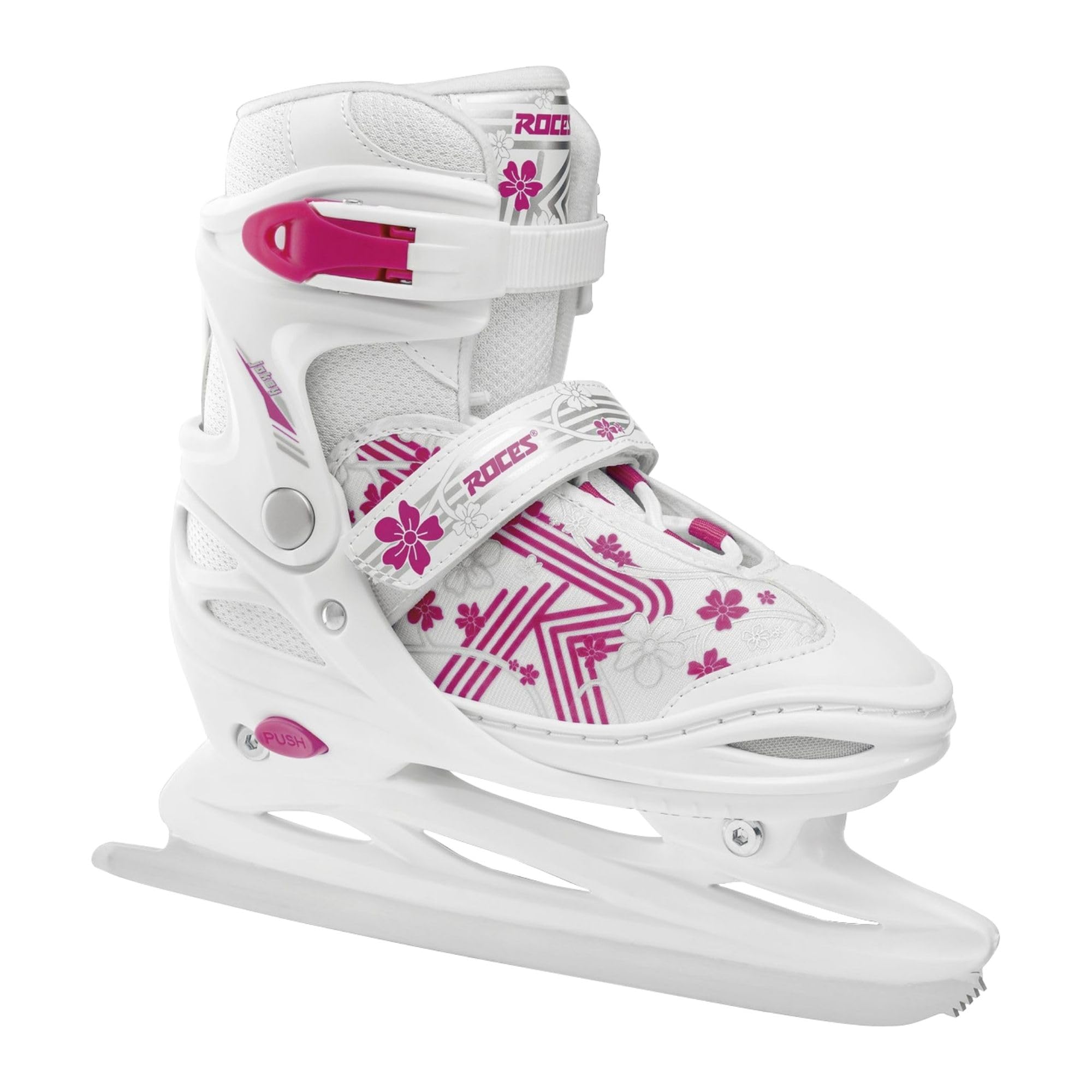
Roces Jokey Ice 3.0
Key Features
- Adjustable: 4 sizes
- Ankle Support: Sturdy for casual
- Blade Quality: Stainless steel
- Comfort & Insulation: Thermal insulation
- Durability: Limited review data
- Price: $$
The Roces Jokey Ice 3.0 adds thermal insulation and a secure 3-point closure (micrometric buckle, velcro strap, laces) to the adjustable skate formula. Early reviews note comfort and sturdiness for beginners, but the limited review data means long-term durability is unconfirmed. Best for parents seeking a warm, expandable skate for casual cold-weather rink trips, not for lessons or structured skating.
Pros
- Comfortable padding and sturdy build for new skaters.
- Four-size adjustable system with secure buckle closure fits growing feet.
Cons
- Limited review data prevents full durability assessment.
Buy this if you need an insulated, size-adjustable skate for casual outdoor skating in cold weather.
Best for Occasional Use
American Athletic Tricot

Key Features
- Adjustable: No
- Ankle Support: Poor
- Blade Quality: Stainless 3.5mm
- Comfort & Insulation: Foam padded tricot
- Durability: Breakage after hours
- Price: $$
These skates work for a single trip to the rink or a birthday party thanks to the low price and decent basic construction. But the minimal ankle support and reports of skates breaking after a few hours limit them strictly to occasional, supervised use — not for any regular lessons or practice.
Pros
- Good value for money and decent quality for the price
- Suitable for absolute beginners under adult supervision
Cons
- Limited ankle support – best for short recreational use only
Worth considering if you need the lowest-cost skate for a one-time ice skating outing or very infrequent casual use.
How to Choose
Plan to sharpen new skates before first use — factory edges are often dull and can ruin the experience.
Adjustability vs Fixed Size
Adjustable skates let you save money by growing with your child, but they trade ankle stability for convenience. Fixed-size skates offer better lateral support critical for proper stride development. Choose adjustable for occasional recreational skating; choose fixed for lessons or frequent use.
Ankle Support
Look for a boot that reaches above the ankle and has firm padding. Soft, low-cut boots allow the foot to roll inward, making balance harder and potentially encouraging bad habits. A stiffer cuff is worth the extra cost for any child learning turns or stops.
Blade Quality and Sharpness
Stainless steel blades are standard and fine for beginners. The real issue is sharpness: most factory edges are insufficient. Budget for a professional sharpening ($10–$15) immediately after purchase. Dull blades cause slipping that can scare a young skater.
Comfort and Insulation
Padded liners and insulated materials like Thinsulate keep feet warm during outdoor sessions. For indoor rinks, breathability matters more — vinyl or nylon shells with foam lining work well. Avoid boots that feel roomy in the heel, as rubbing leads to blisters.
Durability of Boot and Hardware
Buckles, hooks, and lacing systems are the first to fail on budget models. Inspect the closure mechanism before buying; metal hooks and reinforced straps hold up longer than plastic clips. For frequent use, a fixed skate with stitched construction outlasts glued seams.
FAQ
Are Jackson Classic skates good for beginners?
Yes. The Jackson Classic 200 is a top choice for beginners because of its reliable ankle support, comfortable fit, and durable Mark I stainless steel blade. It suits children taking lessons or skating recreationally, though it is not adjustable so you’ll need to size carefully.
Do adjustable ice skates provide enough ankle support?
Generally less than fixed-size figure skates. Adjustable models prioritize easy sizing and cost, but their softer boots and simpler closures offer less lateral stability. They work well for toddlers and casual skating, but for regular lessons a fixed-size skate with a stiffer cuff is recommended.
Why do ice skate blades break after a few uses?
Blade breakage is rare on reputable brands but can occur when screws loosen or the blade attachment point is weak. More common is dullness perceived as a defect. Most blade durability complaints come from budget models with lower-grade steel or poor assembly. Stick to established makers like Jackson, Riedell, or Lake Placid for better reliability.
Should I sharpen new ice skates before first use?
Yes. Even skates marked as factory sharpened often arrive with a shallow, inconsistent edge. A professional sharpening ensures even contact and proper glide. Plan to spend $10–$15 at a local pro shop before your child’s first session — it makes a noticeable difference in balance and control.