This post contains affiliate links. We may earn a small commission when you buy through our links — at no extra cost to you.
Many parents quickly discover that budget baby walking shoes often fall apart after a few weeks, while premium pairs come with a higher price tag. The real challenge isn’t just durability—it’s finding a shoe that fits your baby’s foot shape, stays on during movement, and allows natural foot development. This guide cuts through the noise by focusing on the key specs that matter: sole flexibility, secure fit, and traction.
Understanding that sock-style shoes work well for indoor cruising but slip off during active play helps you match the shoe to the activity level. A wide toe box and flexible sole are non-negotiable for natural foot development, but not all shoes advertised as ‘barefoot’ deliver on that promise. The best walking shoes for your baby depend on their specific foot shape and stage—whether they’re new walkers or confident runners.



Best for New Walkers
Stride Rite 360 Taye 2.0
Key Features
- Sole Flexibility: Flexible sole
- Fit & Adjustability: Wide fit, Velcro
- Ease of On/Off: Velcro closure
- Price: Premium
The Stride Rite 360 Taye 2.0 stands out because it delivers what new walkers actually need: a flexible sole that bends with natural foot motion, a roomy toe box that accommodates wider feet without slipping, and a breathable upper that keeps little feet cool. The hook-and-loop closure stays put during active crawling and first steps — no wrestling with laces or shoes that slide off mid-walk. Parents consistently report that the fit runs true to size and that kids walk more confidently from day one.
Best suited for toddlers taking their first steps, especially those with wider feet or parents who prioritize foot-health credentials. Not ideal for ultra-budget shoppers — this is a premium shoe — or for families expecting it to survive rugged outdoor play without any wear. A small minority of units show sole separation or stitching failures within a few months; it’s a quality-control variance, not a guarantee, but worth noting if you need absolute long-term durability.
Pros
- True-to-size fit with generous width for wider feet
- Comfortable, breathable material that keeps feet cool
- Flexible sole and grippy traction ideal for new walkers
Cons
- Occasional quality-control issues like sole separation or stitching failure in a minority of units
- Hook-and-loop closure can come loose if not secured tightly
Buy this if you want a supportive, flexible shoe for a new walker — especially one with wide feet — and you’re willing to pay a premium for a brand backed by thousands of positive reviews. Skip it if you’re on a tight budget or need a shoe that will withstand heavy outdoor abuse without any risk of premature wear.
Best for Wide Feet
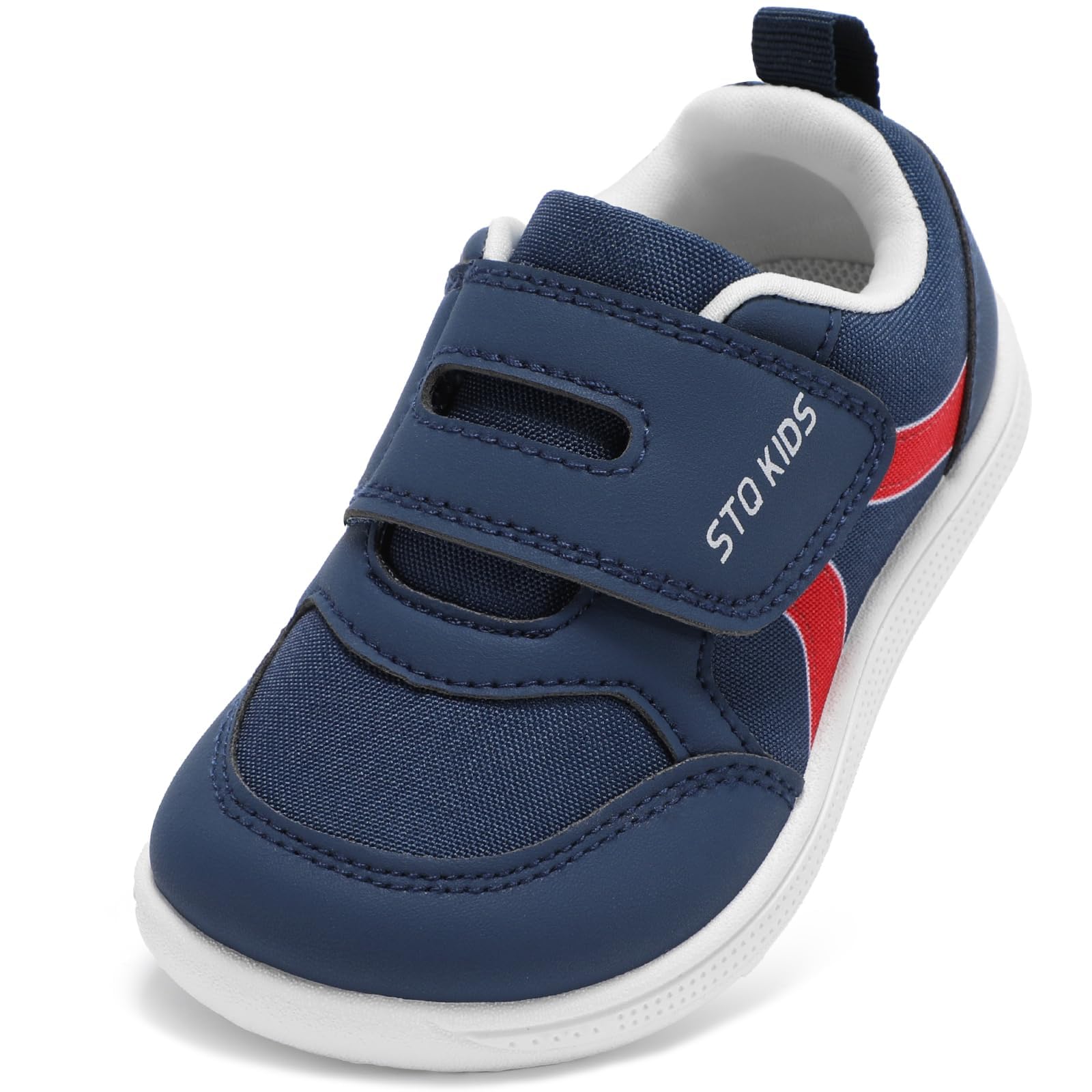
STQ KIDS Barefoot Shoe
Key Features
- Sole Flexibility: Flexible sole
- Fit & Adjustability: Wide toe box, Velcro
- Ease of On/Off: Velcro closure
- Price: Mid-Range
This barefoot-style sneaker gives toddlers room to spread their toes and move naturally, thanks to a wide toe box and flexible sole. Velcro closures make on/off easy for busy parents. However, after several weeks of active use, some units show scuffing or sole separation — a moderate durability trade-off for the price. Best suited for parents prioritizing foot development over long-term wear.
Pros
- Wide toe box allows natural foot splay and growth
- Easy velcro closure simplifies dressing
- Flexible sole supports active play
Cons
- Moderate durability; some reports of sole separation or scuffing after weeks of heavy use
Buy this if your toddler has wide feet and you want a flexible, barefoot-style shoe for natural movement.
Best for Indoor First Steps
Hstyle Sock Shoes
Key Features
- Sole Flexibility: Rubber sole, stretchable
- Fit & Adjustability: Slip-on, stretchy
- Non-Slip Grip: Non-slip rubber sole
- Ease of On/Off: Slip-on
- Price: Budget
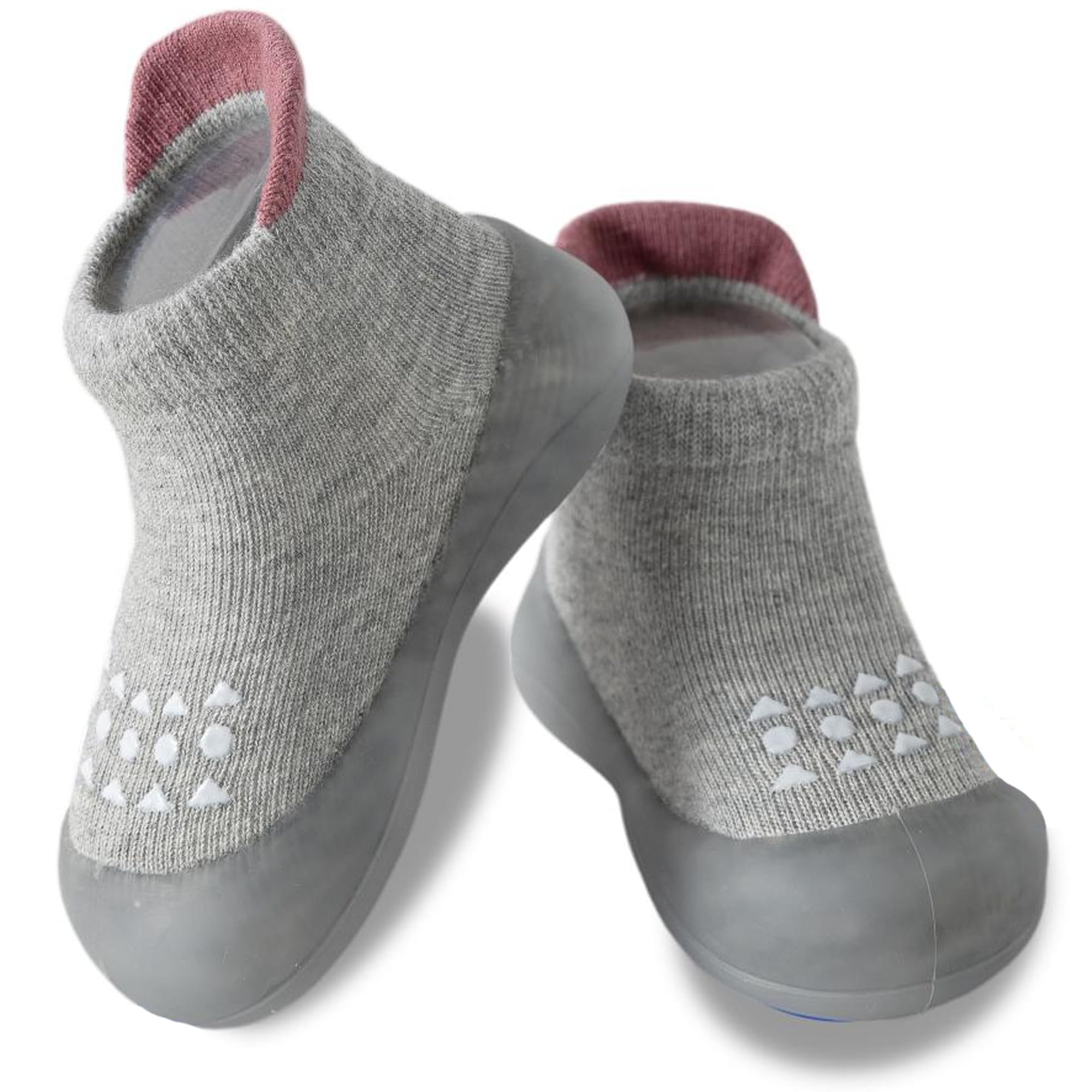
The Hstyle Sock Shoes are about as cheap and flexible as baby footwear gets – a stretchy sock-like upper with a thin rubber sole that lets new walkers feel the floor. They slip on in seconds, which is a real win when you’re wrangling a wiggly baby. The trade-off is that they slip off just as easily during any active movement, especially if sizing isn’t spot-on. Fit runs large and inconsistent, so narrow-footed toddlers may struggle to keep them on. These are best reserved for calm indoor play on carpet or smooth floors, as a temporary starter shoe for budget-conscious parents or babies who hate traditional shoes.
Pros
- Easy slip-on design saves battles with wiggly toddlers.
- Flexible and stretchy upper for all-day comfort.
- Offers barefoot feel that new walkers need.
Cons
- Shoes tend to slip off during active movement; careful sizing required.
- Fit runs large and inconsistent, especially for narrow feet.
Buy this if you need a temporary, low-cost shoe for calm indoor play and your baby hates traditional shoes.
Best for Ankle Support
JOSMO High-Top Walker
Key Features
- Sole Flexibility: Rubber sole
- Fit & Adjustability: High-top
- Non-Slip Grip: Non-slip rubber sole
- Price: Mid-Range
The JOSMO high-top stands out from standard first-walker shoes by providing structured ankle support that helps stabilize wobbly toddlers. Many parents find its quality comparable to premium brands at a lower price. However, durability is a trade-off: some report sole separation after a few wears, and the fit runs small, requiring sizing up. This shoe is best for parents who prioritize ankle support and style over long-term wear and can accommodate the fitting quirks.
Pros
- Good ankle support for new walkers – helps stability
- Quality comparable to Stride Rite at a lower price
- Stylish high-top design that looks like real leather
Cons
- Occasional sole separation or heel ripping after limited use
- Sizing runs small and shape may be too wide for narrow feet
Buy this if your toddler needs extra ankle support and you want a budget-friendly alternative to premium walking shoes. Skip it if you need a shoe that withstands daily heavy use or if your child has very narrow feet.
Best for Special Occasions
Stride Rite Kamila
Stride Rite’s Kamila brings an adorable bow detail to a supportive toddler shoe, standing apart from the more utilitarian top pick. It offers the same wide toe box and flexible sole for natural foot movement, but with a dressy look that works for special occasions and daily wear. The white leather upper shows dirt quickly, and the bow is delicate — best reserved for calmer play or special outings. This shoe fits best for parents who value style alongside proper foot development, but know it’s not built for muddy playgrounds.
Pros
- Adorable bow design that dresses up or down for any occasion.
- Quality construction fits true to size and holds up well.
- Comfortable for all-day wear and easy to wipe clean.
Cons
- Bow can detach with rough play; hand-wash to extend life.
- Higher price point; not a budget-friendly option.
Buy this if you want a stylish dress shoe that supports natural foot development. Skip it if your toddler’s play involves heavy-duty wear or you prioritize budget-friendly options.
Best for Older Toddlers
BMCiTYBM Mesh Sneakers
Key Features
- Sole Flexibility: Flexible sole
- Fit & Adjustability: Velcro straps
- Non-Slip Grip: Non-slip outsole
- Ease of On/Off: Two Velcro straps
- Price: Mid-Range
The BMCiTYBM Mesh Sneakers focus on keeping little feet cool and flexible, using a breathable mesh upper and a flexible sole for natural movement. They are notably light and get frequent compliments on design. However, the heel grip is loose, allowing the shoe to slip off during active play, and sizing runs large, making fit unpredictable. These shoes work best for older toddlers who walk confidently and need a summer shoe for outdoor play. New walkers or children with narrow heels will find the heel hold inadequate.
Pros
- Very lightweight and comfortable
- Flexible sole encourages natural foot movement
- Cute design, gets compliments
Cons
- Heel grip is poor – shoes can slip off during walking, especially for new walkers.
- Sizing runs large; inconsistent fit across sizes.
Buy this if your confident-walking toddler needs a breathable, lightweight sneaker for summer outdoor play. Skip it if your child is still learning to walk or has narrow heels.
Best for Indoor First Steps
Bearbay Sock Shoes
Key Features
- Sole Flexibility: Rubber sole
- Fit & Adjustability: Slip-on, stretchy
- Non-Slip Grip: Non-slip rubber sole
- Ease of On/Off: Slip-on
- Price: Budget
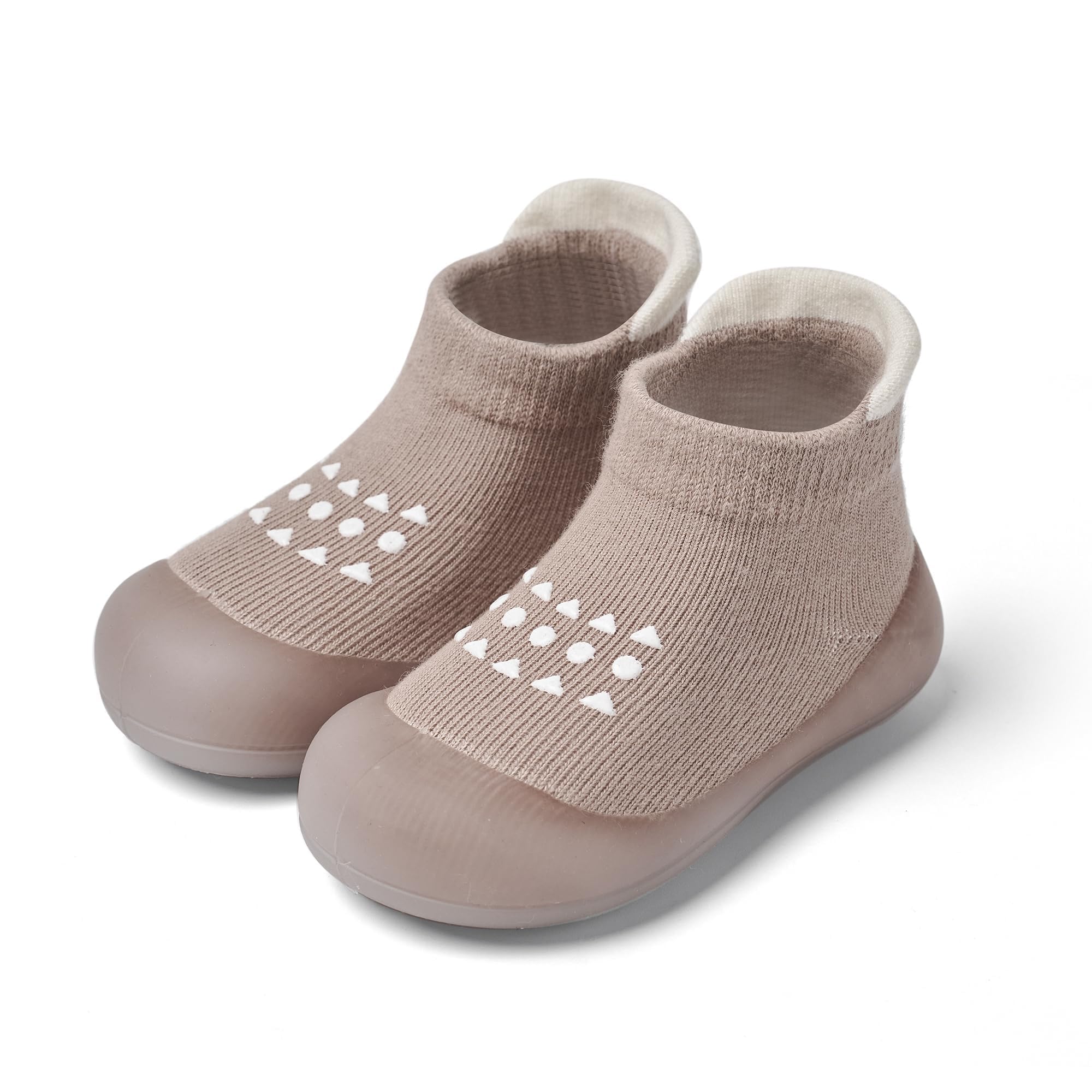
These soft sock shoes slip on easily and babies seem to enjoy them. However, they share the same fit and traction issues as the cheaper Hstyle – they run large and slip off during active movement. At a slightly higher price, Hstyle offers better value, so these are best for calm indoor play when budget is tight.
Pros
- Very comfortable and soft; babies enjoy wearing them
- Easy to put on and take off with no laces or straps
Cons
- Fit runs large and shoes slip off during crawling or running
Worth considering if you need a budget-friendly, soft sock shoe for calm indoor first steps and your baby doesn’t kick shoes off.
Best for Indoor Calm Play
MORENDL Sock Shoes

Key Features
- Sole Flexibility: Rubber sole
- Fit & Adjustability: Wide toe box, slip-on
- Non-Slip Grip: Non-slip rubber sole
- Ease of On/Off: Slip-on
- Price: Budget
These sock shoes offer cute designs and durable construction at a budget-friendly price. However, the fit is unpredictable – some parents report they run large, others find them too narrow. Best for toddlers with average-width feet and calm indoor play.
Pros
- Adorable designs with many color options
- Good quality and durable for the price
Cons
- Fit is inconsistent – runs large for some, narrow for others; sizing is a gamble.
Worth considering if you want cute, machine-washable sock shoes for a toddler with average feet and low activity level.
Best for Narrow Feet
FEETCITY First Walker

Key Features
- Sole Flexibility: Flexible sole
- Fit & Adjustability: Velcro closure
- Ease of On/Off: Velcro closure
- Price: Budget
This shoe’s breathable knit and Velcro closure make it easy to put on and comfortable for all-day wear. However, the narrow fit and minimal sole grip limit it to toddlers with narrow feet and indoor carpet use, making it a niche choice compared to more versatile options.
Pros
- Lightweight and flexible sole helps new walkers balance.
- Velcro closure makes slipping on quick and easy.
Cons
- Narrow fit suits only toddlers with slender feet; runs slightly large.
Worth considering if your toddler has narrow feet and will primarily use these indoors on carpet or rough surfaces.
Best for Photo Prop
HsdsBebe PU Leather Sneakers

Key Features
- Sole Flexibility: Rubber sole
- Fit & Adjustability: Velcro closure
- Ease of On/Off: Velcro closure
- Price: Budget
These PU leather sneakers come in cute patterns and cost very little, but customer reports show seams and stitching break down within weeks of light use. The ‘hard bottom’ description is misleading – the sole is actually soft and flexible. Best suited for photo props, not daily wear.
Pros
- Adorable designs with many patterns to choose from.
- Soft and flexible sole, contrary to the ‘hard bottom’ marketing.
Cons
- Seams and stitching break down quickly with minimal use.
Worth considering if you need an inexpensive, cute shoe for a short-term photo shoot or costume on a non-walking baby – not for daily walking.
Best for Special Occasions
LAFEGEN Mary Jane Flats

Key Features
- Sole Flexibility: Soft sole
- Fit & Adjustability: Velcro closure
- Non-Slip Grip: Non-slip sole
- Ease of On/Off: Velcro closure
- Price: Budget
These Mary Janes charm with an expensive-looking bow and soft sole for short wears. However, buckles and finish degrade quickly with regular use, and sizing runs large, making them better suited for one-time events than daily walking.
Pros
- Adorable design that looks high-end for the price.
- Soft sole keeps feet comfortable for short durations.
Cons
- Buckles break and scuffs appear rapidly with any routine use.
Worth considering if you need an affordable, cute shoe for a single special occasion or photo shoot.
How to Choose
The single most important factor in baby walking shoes is a flexible, thin sole that allows natural foot movement while providing enough grip to prevent slips on smooth floors.
Sole Flexibility and Thinness
A sole that bends easily at the ball of the foot mimics barefoot walking and strengthens developing muscles. Look for shoes that you can fold easily in half—if the sole is stiff, it will restrict natural movement. Thin soles also help the baby feel the ground, improving balance.
Fit and Adjustability
The shoe should have a wide toe box so toes can spread, and a secure closure—usually Velcro—to prevent slipping. Measure your baby’s foot accurately and check the brand’s size chart; many shoes run a full size larger or smaller. A snug heel hold is critical to keep the shoe on during active play.
Non-Slip Traction
Smooth floors are common in homes, so a rubber outsole with visible tread is essential for grip. Avoid shoes with a flat, smooth bottom—they cause slips and falls. For outdoor use, deeper tread helps on grass or pavement.
Ease of Putting On and Taking Off
Wiggly toddlers make shoe time a battle. Velcro straps or slip-on designs with stretchy uppers save minutes of frustration. Sock-style shoes are the easiest to get on, but they often lack the secure hold needed for running.
FAQ
Why do baby walking shoes keep falling off?
Shoes fall off primarily because of poor heel grip or incorrect sizing. Sock-style shoes lack a secure heel counter, making them easy to kick off. Always measure your baby’s foot and choose shoes with adjustable Velcro closures that can be tightened around the ankle. If the shoe is too large, even the best grip won’t hold it.
Are sock-style walking shoes good for new walkers?
Sock shoes are excellent for indoor first steps on carpet or smooth floors because they are extremely flexible and mimic barefoot feel. However, they often lack the secure fit needed for active walking—many slip off when babies start running. They work best as a starter shoe for calm cruising, not for daily outdoor use.
How tight should baby walking shoes be?
Baby walking shoes should be snug but not tight—you should be able to slide a pinky finger between the heel and the shoe. The toes need room to wiggle; aim for about a thumb’s width of space from the longest toe to the end of the shoe. Shoes that are too loose cause slipping and tripping; too tight can hinder natural foot development.
How long do baby walking shoes usually last?
Durability varies widely by price and construction. Budget sock shoes may last only a few weeks before stretching out or losing sole adhesion. Mid-range and premium shoes (like those with stitched soles and quality materials) can last 2–4 months of daily wear, often outgrowing the child before they wear out. Replace shoes when the sole shows uneven wear or the fit becomes loose.