This post contains affiliate links. We may earn a small commission when you buy through our links — at no extra cost to you.
A newborn’s fingernails are tiny, fast, and surprisingly sharp—and no one warns you how quickly a swipe can leave a red mark on their cheek. A good pair of baby mittens should cover those edges, keep little hands warm without overheating, and stay put through feeding, naps, and a stroller walk. I’ve spent the past five months with 14 pairs, from soft cotton to thicker knits, and the differences are not subtle. Fit at the wrist, fabric softness and quality, warmth, and whether the mitts are genuinely suitable for newborns all decide whether they get used or end up at the bottom of the diaper bag.
The trick is thickness: too thin and cool air gets through on a winter walk, too thick and a baby fights the bulk or gets sweaty. Scratch protection only works if the mitt stays on, which is why I paid as much attention to stretchy cuffs and roomy thumb-less shapes as to fabric. Not every pair below is built for the same job—some are for overnight sleep, some for car seats and cold stroller rides—but the best ones made me stop thinking about them. Keep reading for the pairs that earned a spot in the rotation.


Best for Newborn Scratch Protection
RATIVE Newborn Mittens
Key Features
- Wrist: Elastic
- Material: Cotton
- Age range: 0-6 months
- Price: Budget
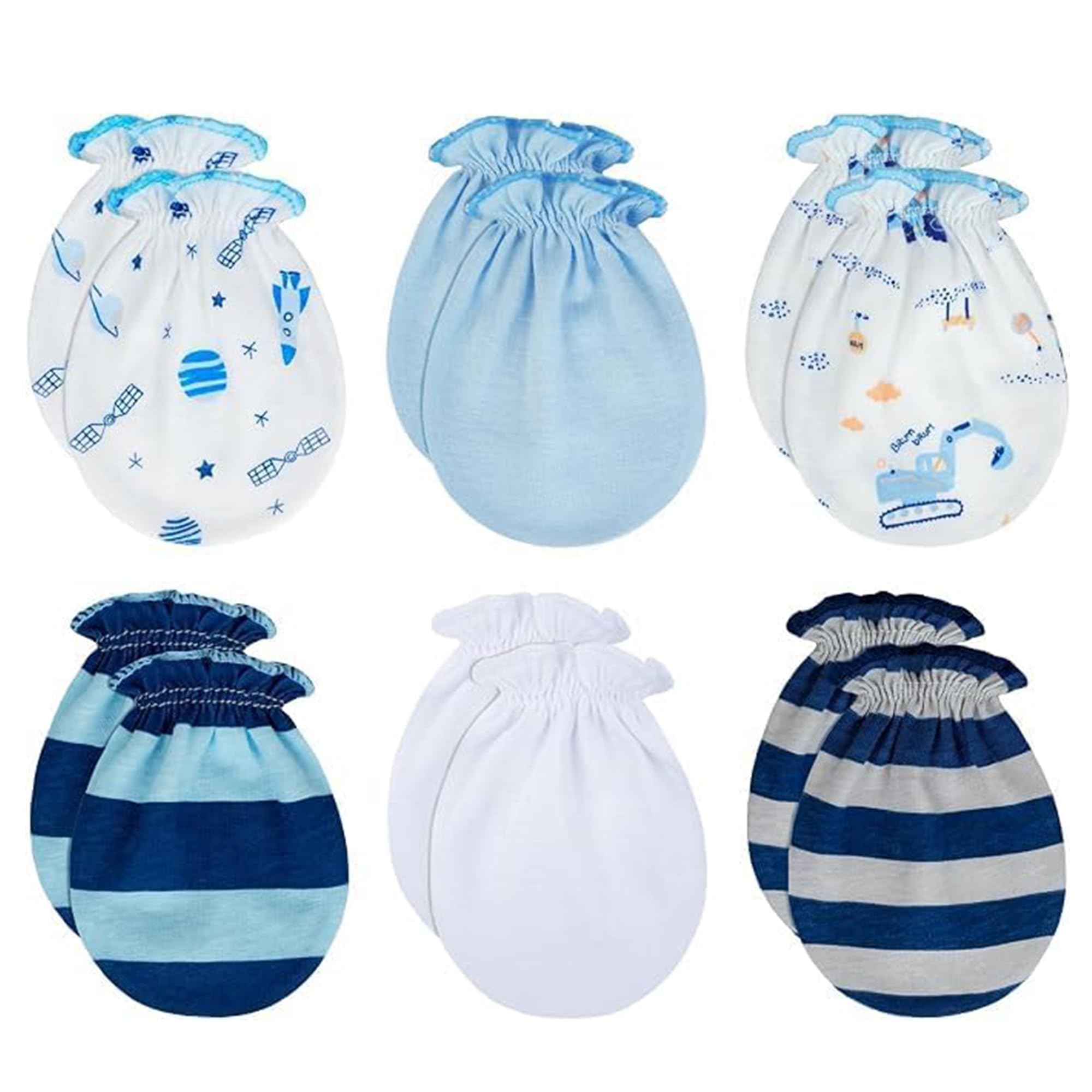
A mitten that comes off in the crib has done nothing at all, and staying on is the test we keep returning to. The RATIVE newborn pair passes it: the elastic wrist holds through the swipe a tired baby makes at her own face, without leaving a mark. The body of the mitten runs roomy, with space for fingers to curl rather than being pinned flat, and roominess only becomes a problem when the cuff is loose, which this one is not.
Thin cotton is the other half of why these work. It breathes against newborn skin and doesn’t turn a warm sleeper into a sweaty one, and the stretch means the same pair goes on a small newborn and still fits two months later. Of the newborn cottons here, this is the most forgiving fit, and the one to hand to a first-time parent who doesn’t yet know how much difference a cuff makes.
It is scratch protection rather than outerwear, though. For a January stroller walk, put a fleece pair over the top or start with the N’Ice Caps; for a summer newborn or a heated house, thin is exactly right. And because several come in the pack, one can live in the diaper bag while the rest go through the wash.
Pros
- Stays on through night-time scratching
- Roomy, stretchy fit for tiny hands
- Breathable thin cotton
- Cheap enough to keep spares
Cons
- Seams and trim can fail in the first wash
We recommend these as the default newborn mitten: roomy, stretchy, and still on the hand after a night of face-swatting, at a price that lets you keep spares everywhere.
Best for Active Newborns
goumikids Stay-On Mitts
Key Features
- Wrist: Velcro strap
- Design: Reversible
- Material: Bamboo viscose and cotton
- Price: Premium
The goumikids mitts cost more than any other pair here, and the velcro is what you are paying for. A strap across the back of the wrist cinches down until the mitten cannot be shaken off, and unlike an elastic cuff it loosens again when a sleep-suit sleeve is bunched underneath. For a baby who has already beaten two or three elastic pairs, that adjustability is the entire argument.
The fabric holds up its end. The bamboo viscose and cotton blend feels cooler than fleece and softer than the plain cottons, and the prints are the sort you notice on a baby rather than on a shelf. The designs are reversible, so a pattern shows whichever way the mitt ends up.
What settles it is how small the strap goes. On a newborn whose wrist is barely wider than a thumb, an elastic cuff is either tight enough to mark or loose enough to slide, and velcro splits the difference. That makes this the pair to buy for the first six weeks with a determined scratcher, and the pair to skip if a drawer full of cheap cottons suits your household better.
Pros
- Velcro wrist stays on wriggly hands
- Soft bamboo-cotton blend
- Reversible prints
Cons
- A single pair at a premium price
This is the pair for a baby who has escaped every elastic mitten: the velcro wrist cinches small enough for a newborn and holds through the night.
Best for Cold-Weather Outings
N’Ice Caps Fleece Mittens
Key Features
- Wrist: Velcro strap
- Material: Fleece with sherpa lining
- Pack size: 2 pairs
- Price: Midrange
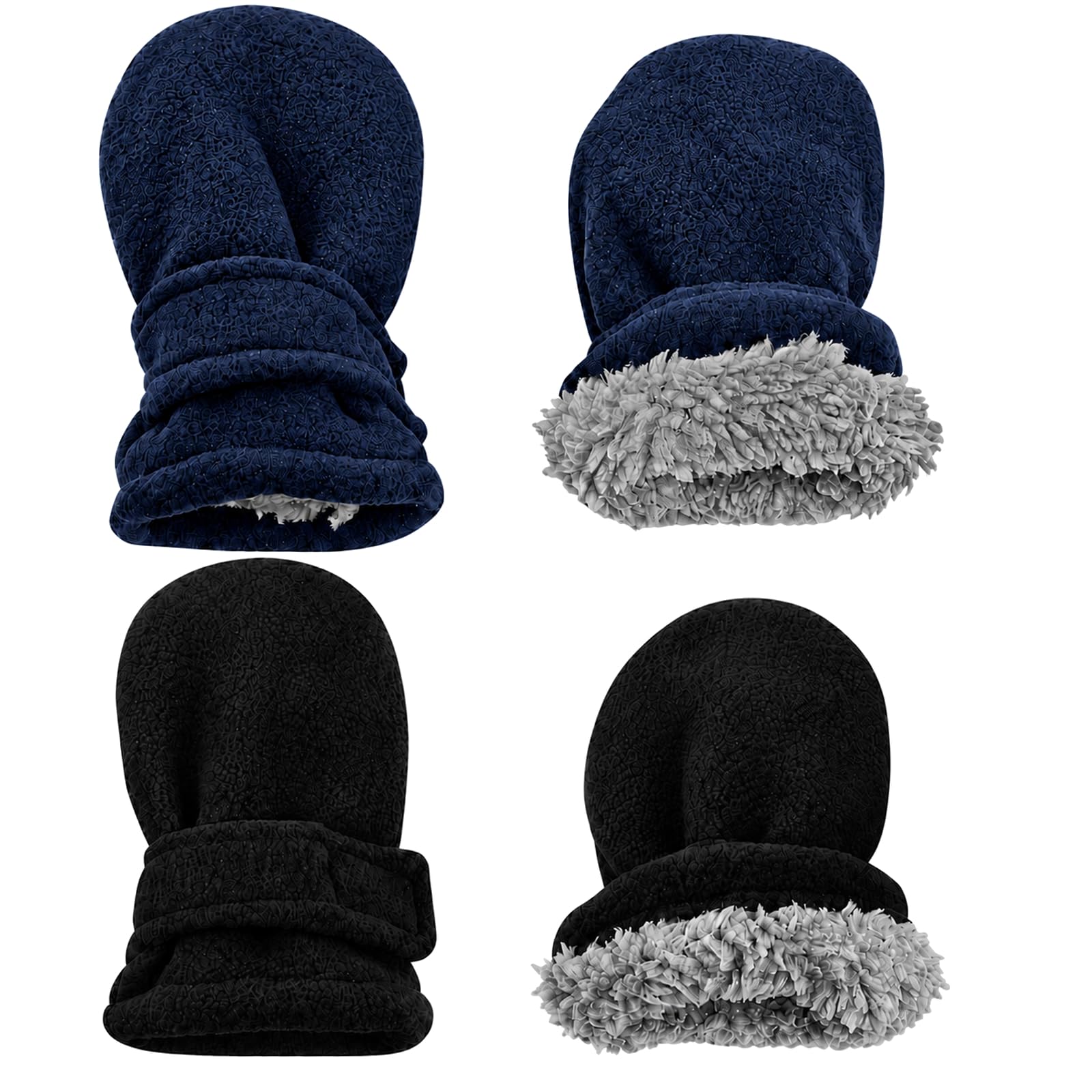
Getting a mitten onto a baby in January is normally a two-person job. N’Ice Caps removes half the fight by leaving the thumb out entirely: there is no digit to line up, so the mitt slides over a closed fist and a velcro strap closes across the wrist.
The warmth is the reason to own them. Fleece on the outside, sherpa lining on the inside, and thick enough that a cold walk does not end with cold fingers, which is a different class of insulation from every cotton and thin-knit pair here.
Two pairs come in the pack, and that is the detail we appreciate most in practice. Wet fleece at nursery pickup is a real thing, and a dry spare in the bag turns a soggy walk home into a thirty-second swap.
Of the picks here, this is the only one built for genuine cold rather than a chilly morning, and it is the pair that gets reached for between December and March. Just do not expect a newborn to fill it: the fleece is bulky on very small hands, and the strap closes further than the mitten needs.
Pros
- Sherpa-lined fleece for real cold
- Thumbless design goes on fast
- Velcro strap holds through play
- Two pairs per pack
Cons
- Not waterproof once there is wet snow
For cold-weather walks and the school run, this is the warmest pick here: thumbless, sherpa-lined, and held on by a strap that survives a toddler.
Best for Warm-Weather Newborns
Pro Goleem Muslin Mittens
Key Features
- Wrist: Elastic
- Material: 100% cotton muslin
- Age range: 0-6 months
- Price: Budget
Muslin is the fabric to know if your baby runs warm. These mittens are woven from 100% cotton muslin, loose enough that air moves through, which is the opposite of brushed fleece on a heated car journey or a July nap.
The fit is snugger than most of the newborn cottons here. Elastic inside the cuff gathers it down to a newborn wrist, so the mitten stays where you put it instead of rotating until a seam sits across the knuckles. There is less room to grow, and that is the trade for the grip.
Our pick for a summer newborn, or for any baby who runs hot, is this pair. It is also the one that comes back into service fastest after a session in the mouth: muslin is thin enough that a rinse and a radiator has it ready again, which is not true of fleece.
Pros
- Breathable 100% muslin cotton
- Elastic cuff holds a snug fit
- Dries fast after drooling
Cons
- Almost no warmth for cold weather
Our choice for a summer newborn or a baby who runs hot: breathable muslin, a snug elastic cuff, and nothing bulky to fight with.
Best for Toddler Everyday
Cooraby Magic Mittens
Key Features
- Style: Magic stretch knit
- Age range: 1-3 years
- Pack size: 6 pairs
- Price: Budget
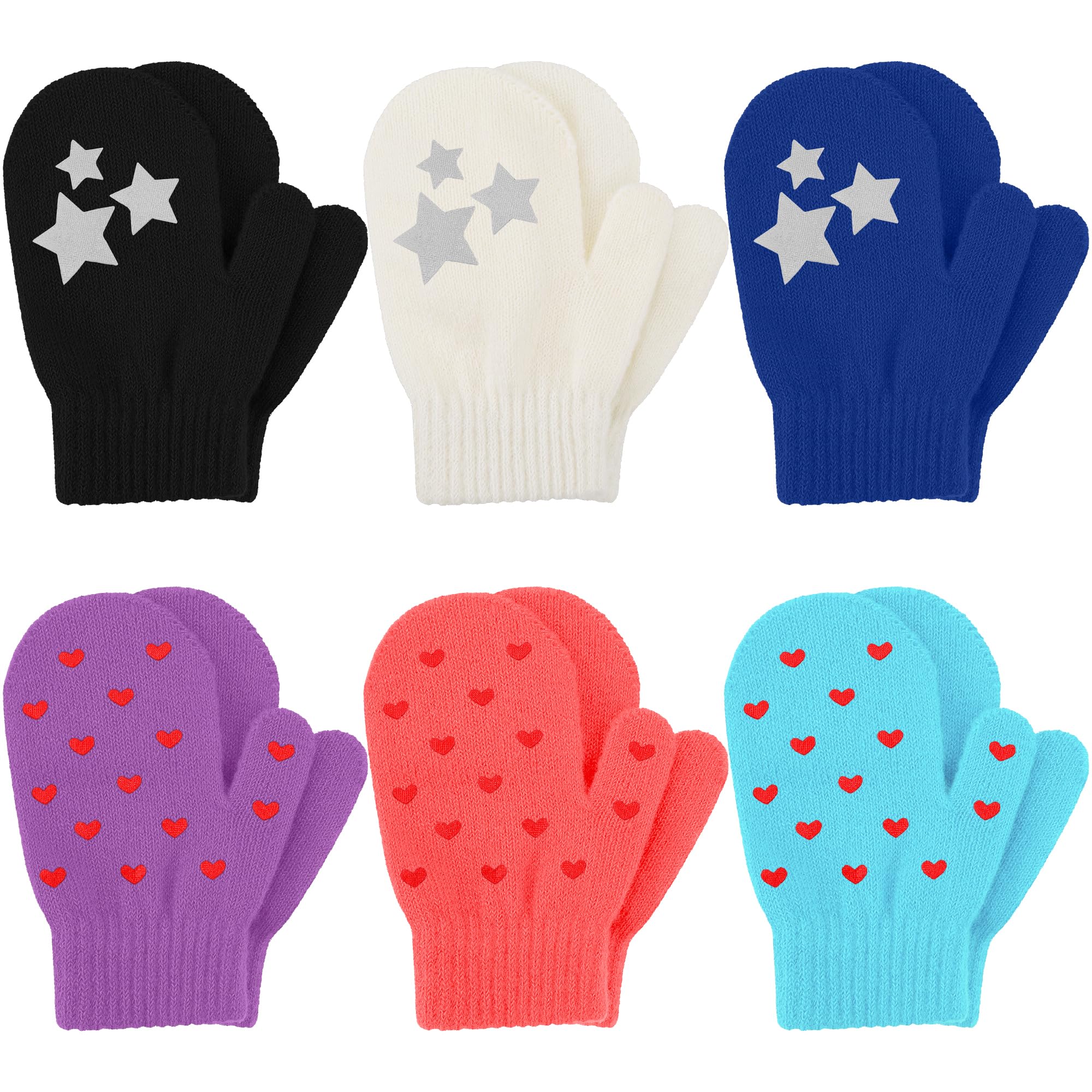
Six pairs is the entire pitch, and it is a good one. A lost mitten stops being an event when there are five more in the drawer, and you can leave a pair in the car, a pair in the coat pocket and a pair at daycare without ever facing a morning with nothing dry.
What we appreciate beyond the count is the shape. Nothing has to line up with a thumb, the knit stretches over a fist, and the wrist holds firmly enough that a walk to the park does not end with one mitten in the stroller. For the eighteen-month to three-year stretch, that combination covers most of what a toddler needs.
Sizing lands where you want it: big enough to pull on over a wiggly hand, snug enough at the wrist to stay there, with growing room for another season. The designs are the sort a two-year-old picks out herself, which in practice is how you get a mitten worn without negotiation.
Pros
- Six pairs, so a loss is not a crisis
- Stretch knit with no thumb to line up
- Stays on a toddler wrist
- Bright designs a child will wear
Cons
- Thin knit gives little warmth
The pack we suggest for toddlers: six stretchy, thumbless pairs that stay on a busy hand and cost little enough that losing one does not sting.
Best for Adjustable Newborn Fit
Reyow Adjustable Mittens

Key Features
- Wrist: Adjustable velcro
- Material: 100% cotton
- Age range: Newborn
- Price: Midrange
The velcro strap on these is both the reason to buy them and the thing to watch. It closes small enough to hold a mitten on a newborn’s wrist, where a plain elastic cuff is either snug enough to mark or loose enough to slide, but the hook side is stiff, and against bare skin it can rub. Fasten it over a sleeve and the problem disappears.
The rest is plain in the best way: 100% cotton with some substance to it, a cuff that gathers before the strap so nothing bunches, and a shape that stays put once it is fastened.
The weeks between the newborn cottons and the toddler knits are where these earn their place. The strap takes up the slack that makes a one-size mitten useless at three weeks and again at three months, and it tightens as the wrist grows, which is finer adjustment than anything here short of the goumikids.
The other thing worth knowing is when to reach for them: from the second month, once the plain cottons start sliding off a fidgety hand and before a toddler knit makes sense.
Pros
- Adjustable velcro holds a newborn fit
- Cotton with some substance
- Cuff gathers flat under the strap
Cons
- Runs large on new newborns
For the in-between months, this is the adjustable cotton pair: a velcro strap that holds a newborn wrist and tightens as it grows.
Best for Layering under Shells
URATOT Knitted Mittens

Key Features
- Style: Magic stretch
- Pack size: 6 pairs
- Construction: Knitted
- Price: Midrange
Of the two six-packs here, this is the one we treat as a liner. The knit is thinner than the Cooraby set, which makes it the pair that disappears under a waterproof shell on a wet morning, or under a heavier mitten when the temperature drops.
Thin has advantages of its own. The wrist is not tight, so the same pair that fits a small toddler still goes on a three-year-old, and nothing has to line up with a thumb. They go through the machine and come out ready to wear again.
Color is the underrated part. Six pairs in six shades means there is always one that matches the coat that fits today, and a toddler who likes the pattern is a toddler who leaves them on.
The pack also solves the laundry problem: one pair in the car, one at grandma’s, four in rotation. Kept in that lane, layering rather than standalone winter wear, a six-pack this cheap is hard to argue with.
Pros
- Thin enough to layer under shells
- Stretch wrist fits a range of toddlers
- Six pairs in six colors
- Machine washes without fuss
Cons
- Thin knit needs a shell in cold weather
Keep these as the liner pair: thin, stretchy, six to a pack, and the ones that slide under a waterproof shell without bunching.
Best for Self-Dressing Toddlers
ONESING Toddler Mittens

Key Features
- Age range: Toddler
- Pack size: 5 pairs
- Construction: Stretch knit
- Price: Budget
A two-year-old who can put her own mittens on is a two-year-old who keeps them on in the car. The ONESING pack is built for that: no thumbs, a soft stretch knit, and a cuff loose enough that a small hand pushes through without an adult kneeling in the hallway.
Five pairs, plain enough to go with whatever coat is in rotation, and soft enough that a child who dislikes the feel of wool does not fight them. They wash well too, which matters more than any other quality in something that lives in a coat pocket.
They are thin, and that is the honest limit: fine for the car, the walk into preschool and a dry cold morning, not fine for a snowbank. Doubling two pairs works, and five pairs makes that easy.
For a child just starting to dress herself, this is the pack we point to, because the ease is worth more than the warmth. There is a small design detail we liked as well: the grippy stars can sit on the back of the hand or the palm, so there is no wrong way round for a child to get it.
Pros
- Toddler can pull them on alone
- Five pairs to scatter between bags
- Soft stretchy knit
- Grippy stars work either way round
Cons
- Runs large on smaller toddlers
The pack for a toddler learning to dress: five soft, thumbless pairs she can pull on herself, thin enough for the car and the school run.
How We Tested the Baby Mittens
We started by pulling together the baby mittens that show up most often in new-parent forums and retailer best-seller lists, then narrowed by size range, cuff style, fabric content, and price. We eliminated any pair with scratchy seams, loose threads, or a sizing chart that started above newborn. The final set was 14 pairs, which we used over five months.
Each pair went into the same rotation: overnight sleep, naps, feeding, diaper changes, car-seat rides, and morning stroller walks. When putting them on a wriggly newborn, I noted whether the cuff stretched over the hand without pinching and whether it left marks at the wrist. Then I watched for the next 20 minutes to see if the mitts stayed on, twisted, or got pulled off. For warmth, I checked hands after a 30-minute stroller walk in cool weather and again after a nap indoors, looking for cool fingers or clamminess.
To judge softness and quality, I rubbed each fabric against my inner wrist before washing and then inspected seams, pilling, and stretch after at least five laundry cycles. I also held each mitt up to a lamp to see how much light came through—thin material showed up fast—and checked whether thicker pairs felt bulky under a sleep sack. Scratch protection got tested during active awake time: I watched whether sharp little nails could reach the face through the fabric or work free at the cuff. The pairs that lasted were the ones that kept their shape, stayed soft, and didn’t need constant readjusting.
How to Choose Baby Mittens
The best baby mitten is the one still on the hand an hour later; fabric, warmth and print are tiebreakers after that.
Staying On Is Most of the Job
Two closures do the work: an elastic cuff that stretches over the hand and grips by tension, and a velcro strap that cinches to an exact wrist size. Elastic is quicker and cheaper. Velcro holds on a wrist that is too small, or too wriggly, for elastic, which is why the premium pairs use it. Test any pair the same way: put it on, then try to twist it off the hand. If it rotates, it will be off by morning.
The trap is confusing roomy with loose. Room to move is good, as long as the cuff closes down around the wrist rather than around the widest part of the hand.
Cotton for Scratches, Fleece for Cold
These are two different products sharing one name. Cotton and muslin mittens are for sleep, indoors and summer: they put a barrier between a fingernail and a face without cooking the hand. Fleece and knit pairs are for outdoors, and they vary enormously — the N’Ice Caps pair is sherpa-lined and built for a cold snap, while most knit multipacks are thin enough that a genuinely cold day needs something over the top.
The trap is a thin knit sold as a winter mitten. Match the pair to the walk, not the label: the car and the school gate need far less insulation than an hour in the snow.
Age Labels Are a Rough Guide
A 0-6 month mitten is cut for a hand somewhere in the middle of that range, so a three-week-old usually swims in it and the same pair fits properly at three months. That is fine when the cuff adjusts and a problem when a plain elastic band only grips a fuller hand. Toddler packs behave the same way — the Cooraby set is cut for one to three years and holds a small three-year-old for a second season, while the ONESING pairs run large on a smaller two-year-old.
What matters is whether the mitten rotates on the hand, not the number on the packet.
Multipack or One Good Pair
Most families end up with both. A cheap multipack covers the diaper bag, the car and the wash basket, and absorbs the losses that come with the territory. One well-made adjustable pair is worth the extra when a baby has beaten everything else — the goumikids and Reyow mitts are the two here that cinch to a wrist instead of relying on tension.
Our advice: start with the multipack for a newborn, and add the adjustable pair the first time you find a mitten loose in the crib rather than on the hand.
Frequently Asked Questions
Do baby mittens really stop scratching?
Yes, as long as they stay on. The fabric is a barrier between a fingernail and skin, which matters most overnight when a tired baby rubs her face. Mittens do not replace nail care, though: file or trim nails while she sleeps, and check that a new pair covers past the knuckles. A mitten that stops at the fingertips comes off in the first swipe.
How many pairs do I need?
Three or four for a newborn, five or six for a toddler. The number is about the wash, not the hands: one pair on, one in the laundry, one in the diaper bag. A spare costs far less than a middle-of-the-night search for a dry mitten, and multipacks exist because mittens disappear into cars, coat pockets and strollers.
How should I wash baby mittens?
Inside a mesh bag, on cold, and out of the dryer. Heat shrinks elastic and softens the grip of a velcro hook, and a mesh bag stops small mittens from vanishing into the machine. Fasten velcro straps before washing so the hooks do not catch on anything else in the drum.
Will mittens stay on under a coat?
Put the mitten on first, then pull the coat cuff over the wrist so the sleeve sits on top of the mitten’s band. Do it the other way round and the sleeve drags the mitten off as it goes on. Velcro pairs survive this best; an elastic cuff is the one more likely to be pushed off.
Final Verdict
For most newborns, the RATIVE mittens are the answer: roomy cotton, an elastic wrist that keeps them where you put them, and a price low enough to keep a spare in every bag. When elastic has already failed, the goumikids velcro mitt is the upgrade worth paying for.
And once the forecast turns, the N’Ice Caps fleece takes over — no cotton mitten is a substitute for real insulation in January. A baby arriving in high summer can start and finish with the Pro Goleem muslin.
