This post contains affiliate links. We may earn a small commission when you buy through our links — at no extra cost to you.
Most earbuds labeled for kids are simply adult models with smaller marketing. Parents quickly discover that standard small ear tips are still too large for children under 8, and volume limiting often makes audio too quiet in noisy settings like cars or planes. This guide focuses on earbuds that solve both real-world problems: fit and safe listening.
The core trade-off is between sealed in-ear buds with a factory-set 85dB cap and open-ear clip-on designs that let kids hear their surroundings naturally. Open-ear models eliminate fit issues and make volume control less critical, but they leak sound and don’t block noise. The picks below match each approach to the right use case so you don’t end up with earbuds your child won’t wear or can’t hear.
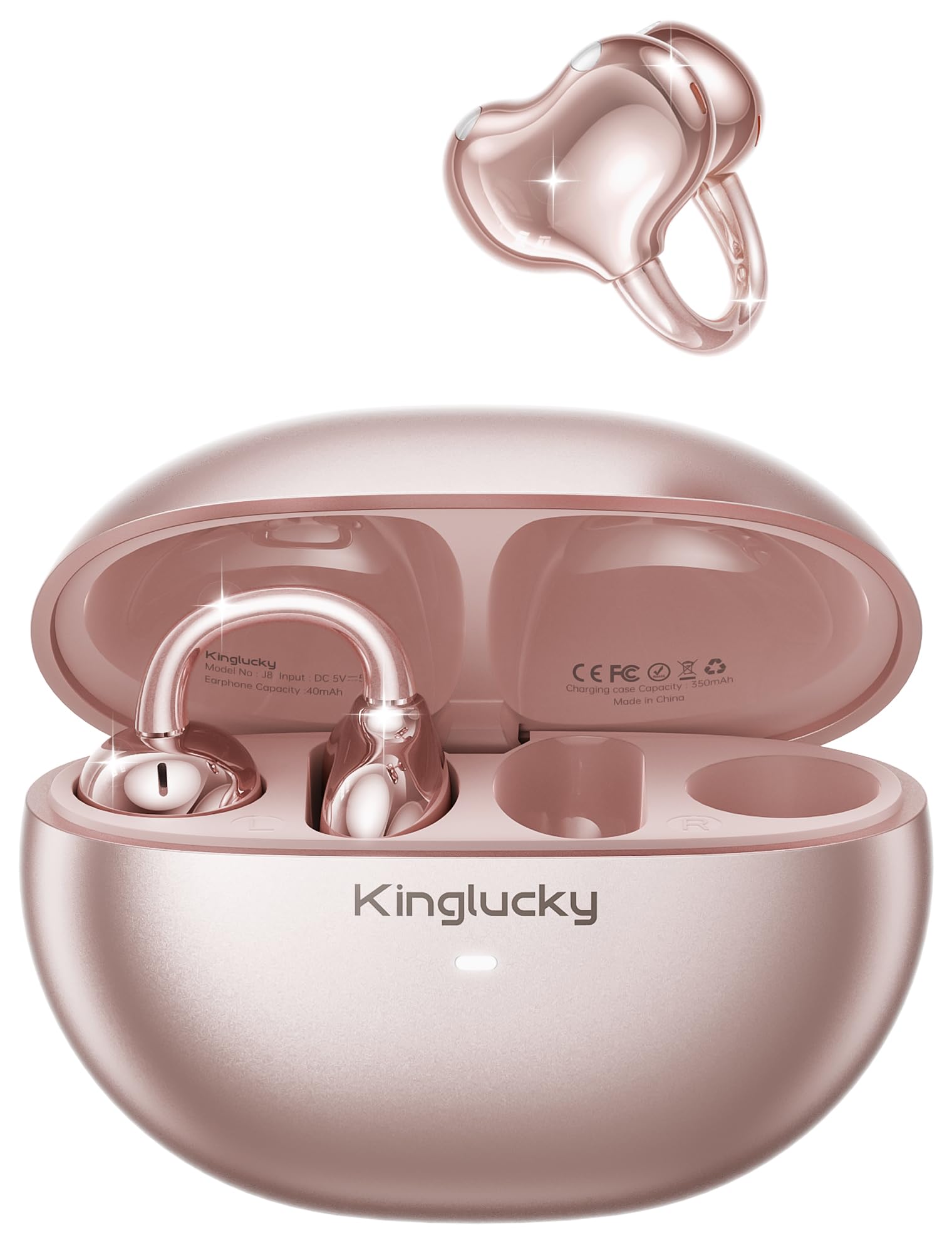
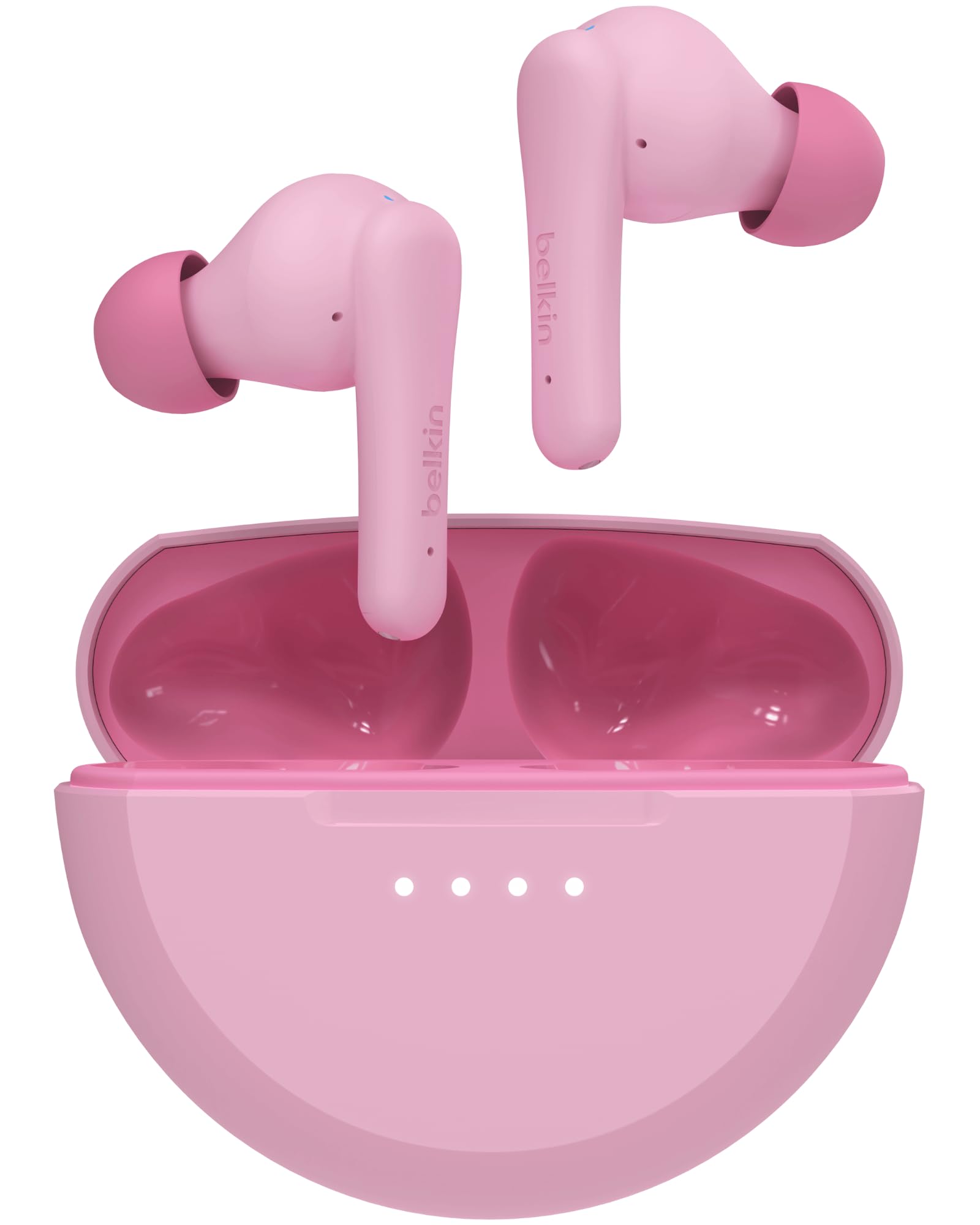

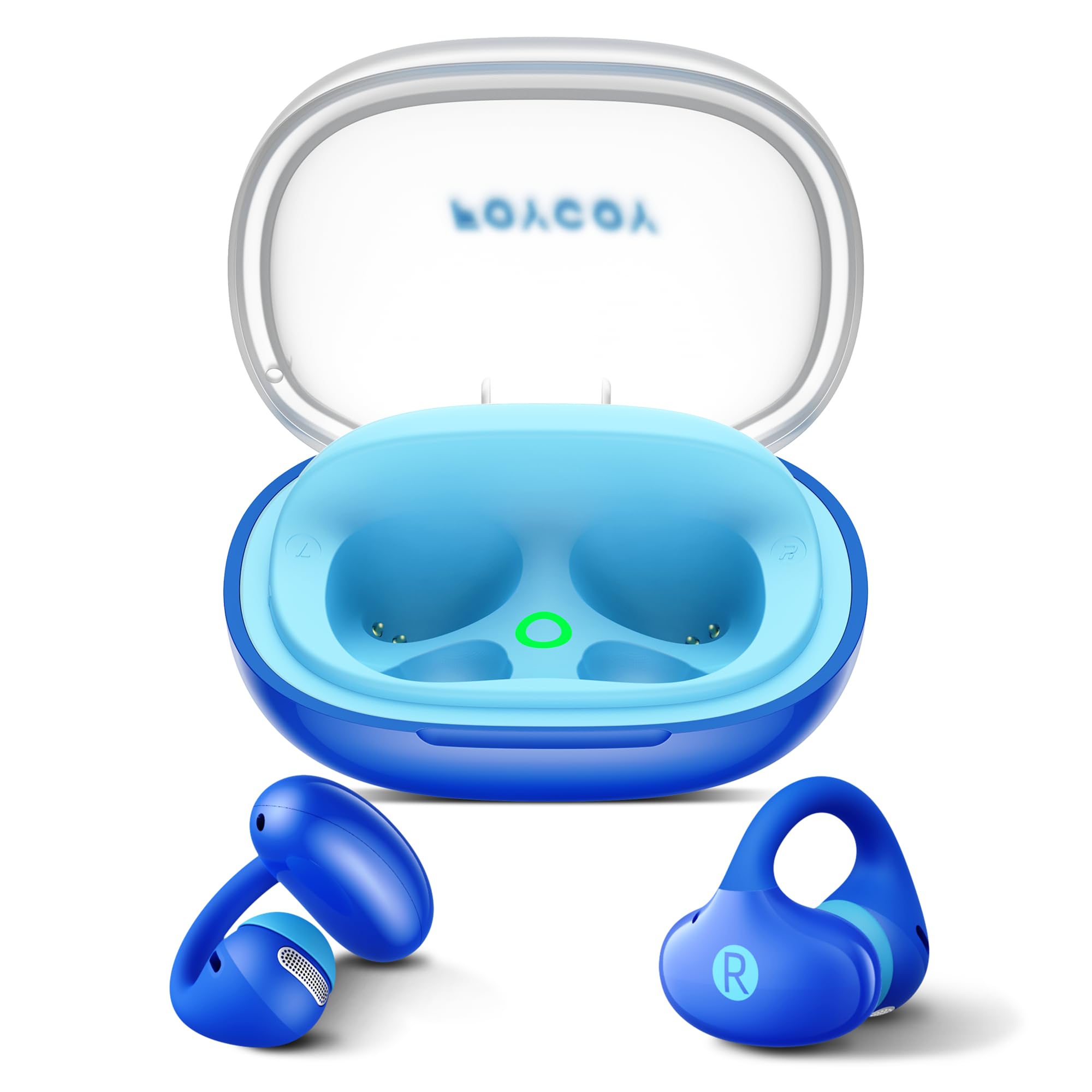

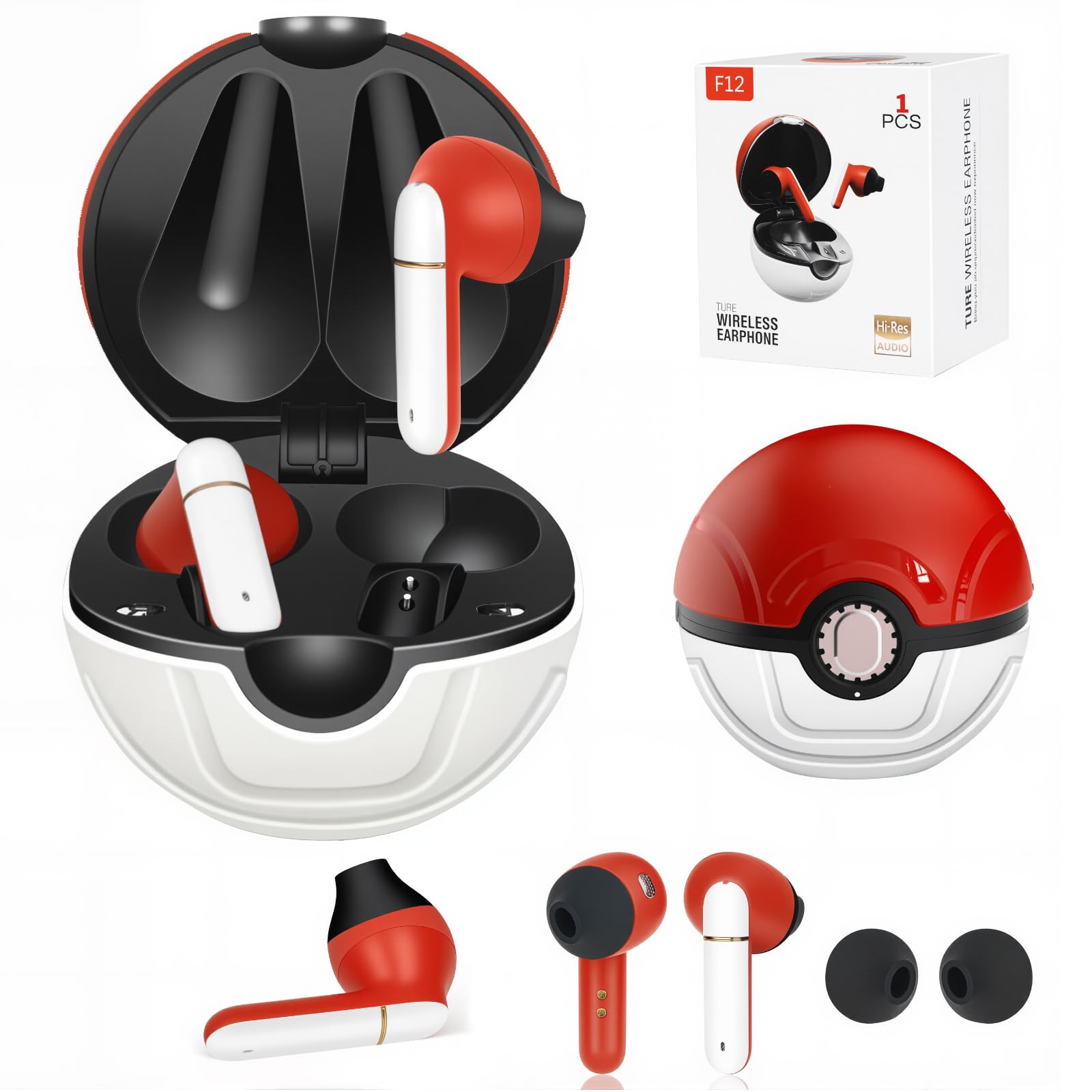
Kinglucky Upgraded Clip-On Earbuds
Kinglucky A8 Clip-On
Key Features
- Fit Type: Open-ear clip-on
- Safety: Open-ear (no limit)
- Battery: 50h total (6h/c)
- Price: Mid-Range
The Kinglucky A8 Clip-On’s 4-gram earbuds attach behind the ear without pressure, making them nearly unnoticeable during running or jumping. The open-ear design keeps ear canals free, so kids maintain situational awareness — a clear advantage over sealed in-ear models. The 50-hour battery life (with case) means fewer charging worries, and the IP56 rating handles sweat and light rain. For children who wear glasses, the clip-on mechanism avoids the conflict that traditional over-ear or in-ear buds often create.
Parents report the sound is clear and balanced for music, podcasts, and calls, with a wide enough soundstage for content consumption. The earbuds stay put during most activities, though some users mention occasional connectivity dropouts — typically when the source device is in a pocket or across the room. The lack of noise isolation is by design; ambient sounds like traffic or a parent’s call remain audible, which suits outdoor use but may frustrate kids trying to focus in noisy classrooms. A minority of units have had reliability issues within the first month, so a backup pair may be prudent for heavy use.
These are best for active children who need to hear their surroundings — cyclists, runners, or those who play in shared spaces. The glasses-friendly clip and jewelry-like design appeal to style-conscious kids and parents alike. However, there is no hard volume limit; while the open-ear design reduces hearing damage risk compared to sealed buds, it is not a certified safety feature. Parents seeking guaranteed 85dB limits should consider in-ear alternatives like the Belkin SoundForm. Also, if durability is the top priority — especially against drops or heavy handling — the lightweight plastic build may not survive as long as sturdier options. For the majority of active, fashion-aware families, though, the trade-offs are well worth the comfort and battery life.
Pros
- Superb comfort – lightweight and barely noticeable, great for glasses
- Clear, balanced sound with good clarity for music and calls
- Stylish design that looks like jewelry
- Excellent value for the feature set
Cons
- Connectivity can drop out occasionally
- Some units lose function after a month (reliability variance)
- Not for those needing noise isolation – open design lets in all ambient sound
Buy this if your child needs comfortable, awareness-friendly earbuds for active use, especially with glasses. Skip it if you require certified volume limiting or noise isolation for concentration.
Belkin Soundform Nano 2
Belkin SoundForm Nano 2
Key Features
- Fit Type: In-ear (true wireless)
- Safety: 85dB limit
- Battery: 28h total (8h/c)
- Price: Mid-Range
Compared to the top pick’s open-ear design, the Belkin SoundForm Nano 2 uses sealed in-ear tips to deliver a hard 85dB volume limit — no accidental overrides. This makes it a safer choice for hearing protection, but the trade-off is lower volume output in noisy places and build quality that feels average for the price. Parents who want wireless freedom with a guaranteed safe listening level get that here, though they lose the comfort and ambient awareness of clip-on styles.
Ideal for children ages 3–8 who will use earbuds mainly at home, school, or in quiet settings. The 28-hour total battery and 10-minute quick charge keep daily use convenient. The volume cap gives peace of mind, but the output may be too quiet for airplanes or busy streets, and the build quality is average — occasional units have reported early failures. Skip it if your child needs louder audio or you need a more rugged pair for active play.
Pros
- Factory-set 85dB volume limit protects young ears during audio play.
- All-day battery with fast charging — 10 minutes gives 90 minutes of use.
- Multiple tip sizes included for a comfortable fit in many kids’ ears.
Cons
- Volume may be too low for noisy environments like airplanes.
- Build quality has occasional reliability concerns.
- No active noise cancellation lets ambient noise leak in.
Buy this if you want a wireless in-ear pair with a hard volume limit for quiet home or school listening. Skip it if your child uses earbuds in noisy environments or you need a rugged build.
Ludos Clamor Wired
LUDOS Clamor Wired
Memory foam ear tips and a 5-year warranty are rare at this price point. Unlike the cheapest wired option, the Clamor includes a metal carrying case and three additional silicone tip pairs. Customer reports indicate some units stop working after a few months, so this is better as a backup than a primary pair. The memory foam tip provides a good seal for average-sized ears, but those with very small ears may find the fit loose.
This is for parents who want a wired earbud with a comfortable fit and decent sound for kids who don’t need wireless convenience. The 5-year warranty adds peace of mind for a budget purchase. However, if your child has exceptionally small ears, or you need consistent durability for heavy daily use, consider an open-ear design or a model with smaller tips.
Pros
- Solid build quality for the price.
- Exceptional value with features uncommon at budget pricing.
- 5-year warranty covers defects over time.
- Metal carrying case adds protection and portability.
Cons
- Long-term reliability is inconsistent; some units stop working after months.
- Durability varies; some customers report breakage within weeks.
- Fit may be loose for small ears despite multiple tip options.
Buy this if you want a wired earbud with memory foam, a long warranty, and a metal case for kids with average-sized ears on a budget.
Foycoy Openplay One Air
FOYCOY OpenPlay ONE Air
Key Features
- Fit Type: Open-ear clip-on
- Safety: 85dB limit
- Battery: 40h total (10h/c)
- Price: Premium
Unlike the top pick, the FOYCOY includes a hard 85dB volume cap for parents who want certified hearing safety over manual volume control. The 40-hour total battery life (10 hours per charge) and IPX5 sweat resistance keep it running through school days and outdoor play. The clip-on form fits comfortably with glasses, and the open-ear design lets kids hear traffic and classroom instructions — a deliberate trade-off against sound isolation.
This is the right choice for safety-conscious parents who want an open-ear wireless option with a guaranteed volume limit. The higher price reflects the added safety engineering and longer battery, but a few users report ear pain after extended wear — worth checking the clip fit before committing. The open design also means audio quality is thin; this is a tool for awareness and protection, not music immersion.
Pros
- All-day comfort that works with glasses
- 85dB volume limit protects hearing
- 40-hour battery life with quick USB-C charging
Cons
- Priced higher than most competing kids earbuds
- Occasional reports of ear pain after extended wear
- Open-ear design limits sound quality and noise isolation
Buy this if you need open-ear awareness with a certified volume limit for your child. Skip it if you want deeper sound or a lower price.
Joysico Ys1 Over-Ear
Joysico YS1 Over-Ear
The Joysico YS1 focuses on earhook stability over audio fidelity and longevity. Unlike the most popular wired kids earbuds that rely on memory foam tips and a longer warranty, this model uses over-ear hooks to anchor the buds during running, jumping, and other high-movement activities. The trade-off: sound is noticeably thin with weak bass, and the hooks can feel uncomfortable after an hour or two. Durability reports are split — some pairs hold up well, others fail within weeks. It’s a purpose-built tool for active play rather than a daily driver for general listening.
Best for parents who need a cheap, secure-fit earbud for kids who are rough on gear during gym class or sports practice. Expect to replace them sooner than pricier alternatives, and don’t count on rich audio for music or movies. The soft memory foam tips help with smaller ears, but the hooks themselves may still irritate after extended wear. If your child mainly listens to audiobooks or podcasts and prioritizes staying active, this is a reasonable value. For better sound and durability, the top wired pick is a more reliable long-term investment.
Pros
- Earhooks keep earbuds secure during running, jumping, and sports.
- Budget-friendly with useful features like memory foam ear tips.
- Includes six pairs of silicone tips for a better fit.
Cons
- Sound quality is mediocre with weak bass and limited clarity.
- Durability is inconsistent; some units break within weeks of use.
- Earhooks can become uncomfortable during extended wear.
Buy this if your child needs earbuds that stay put during sports and you’re on a tight budget. Skip it if sound quality or long-term durability matter.
Fefurs F12 2-Pack
FEFURS F12 2-Pack
Key Features
- Fit Type: In-ear (true wireless)
- Battery: 36h total (6h/c)
- Price: Budget
The FEFURS 2-pack skips the single-bud approach and gives two full pairs for roughly the cost of one competitor’s set. Bluetooth 5.4 brings solid connection stability for school use, and the 36-hour total battery (6 hours per charge) covers a week of classroom or car-ride listening. The trade-off is clear: sound quality is tuned for speech rather than music — podcasts, audiobooks, and videos come through clearly, but bass and detail fall short for anything more demanding.
This is a practical buy for families with two kids roughly ages 5–10 who each need their own earbuds for screens or road trips, and who aren’t picky about music fidelity. Expect the buds to feel slightly large for some 6-year-olds, and they lack any water resistance — no sweaty play or rain exposure. If your child’s primary use is music with real depth or active outdoor play, look at the Kinglucky A8 open-ear clip-on instead.
Pros
- Two complete pairs for one low price — perfect for siblings or sharing.
- Comfortable fit for many ear sizes, including children ages 5–10.
- Bluetooth 5.4 provides stable wireless connection at a budget-friendly cost.
- 36-hour total battery covers several days of typical use.
Cons
- Sound quality is acceptable for speech but lacks clarity and depth for music.
- Earbuds may feel too large for some 6-year-old ears.
- No water resistance; not suitable for sweaty activities or light rain.
Buy this if you need two decent wireless earbuds for siblings on a tight budget and music fidelity isn’t a priority.
Ludos Zenith Wired Earbuds, 3.5Mm, with Mic – Pink
LUDOS Zenith Wired
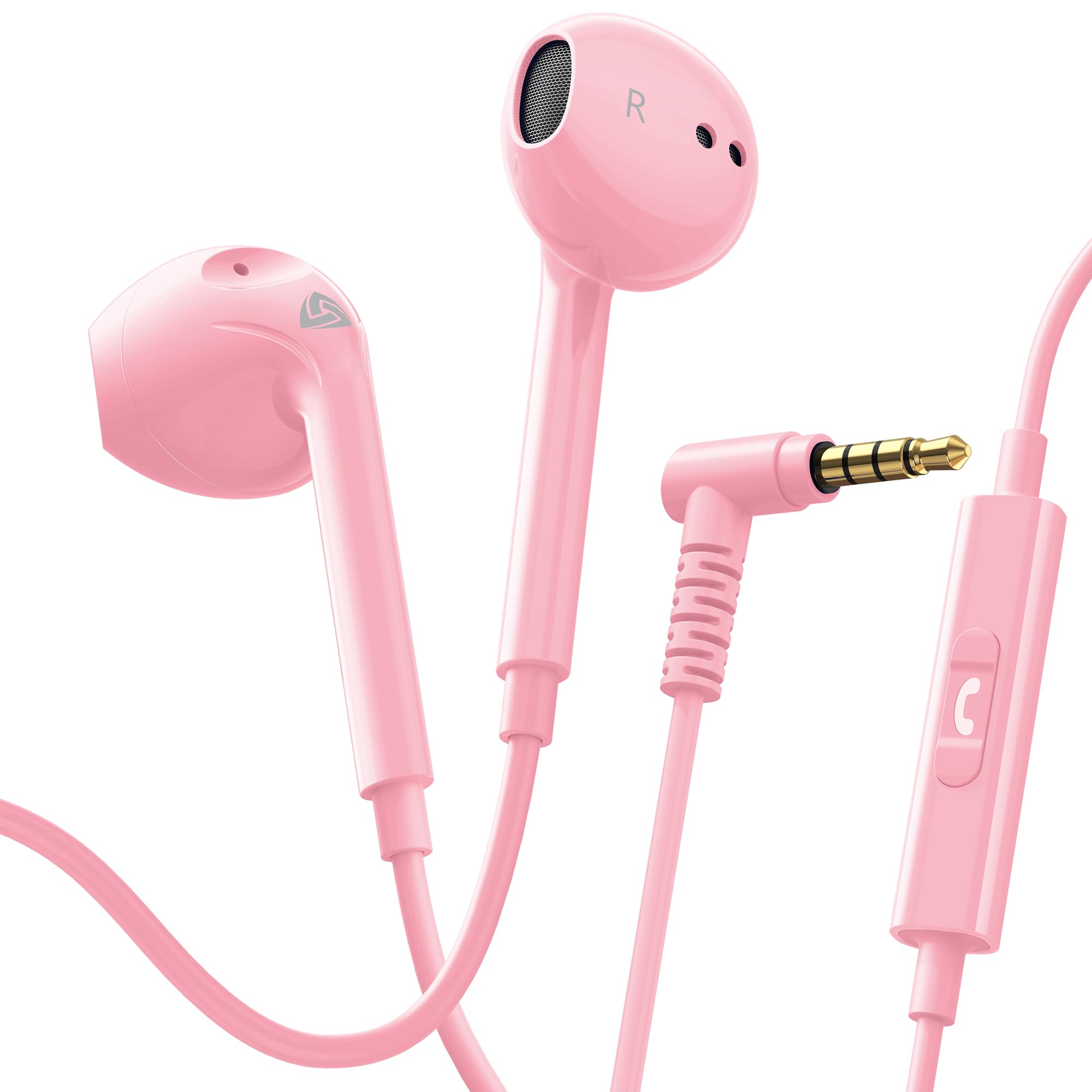
At a budget-friendly price and backed by a 5-year warranty, these earbuds deliver basic plug-and-play audio for occasional use. They work instantly with phones, tablets, and laptops — no setup needed. But they lack the memory foam tips and carrying case found on the more premium option in this set (the Clamor), and comfort and fit are a coin flip: some find them uncomfortable or too large. Durability is also a gamble — a minority report breakage after a few months. If you need a spare pair to keep in a backpack for emergencies, the value is hard to beat. For daily listening or small ears, look elsewhere.
Pros
- Seamless plug-and-play with nearly any 3.5mm device
- Exceptional value at an entry-level price
- 5-year warranty offers peace of mind for a backup pair
Cons
- Fit is hit-or-miss; some find them uncomfortable or too large
- Durability is inconsistent — occasional breakage after a few months
Worth considering if you need an ultra-cheap backup pair for occasional use and don’t mind potential fit or longevity compromises.
Cootimock Cat Wireless Earbuds
COOTIMOCK Cat Earbuds

Key Features
- Fit Type: In-ear (true wireless)
- Safety: 85dB limit
- Battery: 30h total (5h/c)
- Price: Budget
The COOTIMOCK Cat Wireless Earbuds win on charm with a cat-shaped case and an 85dB volume cap that helps protect hearing. Sound quality is decent for children’s content. However, the earbud housings are too large for many young kids—even with the smallest tips—leading to poor fit and discomfort. Battery life runs shorter than advertised for some units, and build quality feels average. This pair suits older children (8+) who want a playful design for occasional home use, not for very small ears or daily heavy use.
Pros
- Cat-shaped case and earbuds kids find adorable.
- Factory-set 85dB volume limit for hearing safety.
- Decent sound quality for audiobooks and cartoons.
Cons
- Earbuds too large for many young kids, even with smallest tips.
- Battery life may fall short of advertised 5 hours per charge.
Worth considering if you have an older child (8+) who loves cat themes and will use them for light listening at home.
Awaiymi F2 Earbuds
Awaiymi F2 Earbuds

Key Features
- Fit Type: In-ear (true wireless)
- Battery: 36h total (6h/c)
- Price: Budget
The Awaiymi F2 earbuds deliver on the promise of an inexpensive wireless option with a playful, console-inspired look and straightforward pairing. Touch controls add convenience for basic playback. However, the fit is inconsistent—some users report the buds loosen during movement—and the sound quality doesn’t satisfy for music listening. Durability has come up as a concern after a few months. These limitations make them better suited as a backup or for quiet home use rather than a daily driver for active kids. For more consistent reliability, Kinglucky’s open-ear clip or Belkin’s volume-limited in-ear options are stronger picks.
Pros
- Affordable option for casual, occasional use.
- Gamer-style design that appeals to kids.
- Pairs easily with most Bluetooth devices.
Cons
- Fit can be inconsistent; earbuds may loosen during activity.
- Sound quality is mediocre for music listening.
Worth considering if you need a very low-cost wireless earbud for light home use and your child enjoys the gaming aesthetic.
Joymiso Yi1 Wired
Joymiso YI1 Wired

This wired earbud set includes six tip sizes, including ultra-small options that fit children with exceptionally narrow ear canals — a rare specification. However, build quality is inconsistent; some units lose audio in one earbud within weeks, and comfort declines after ten minutes of wear. Sound quality is average at best. These factors make it a last-resort option for very light, occasional use when no other earbud fits. For daily school or active use, the failure rate is too high to recommend.
Pros
- Six tip sizes from ultra-small to larger accommodate very narrow ear canals.
- Budget-friendly price with included hard carrying case and tangle-free cable.
Cons
- Some units develop audio dropouts in one earbud within weeks of use.
- Comfort fades after about ten minutes of continuous wear for some users.
Worth considering if your child has extremely narrow ear canals that no other earbud fits and you only need them for very light, occasional use.
How to Choose
The biggest mistake is assuming ‘kids’ earbuds automatically fit small ears — always check tip sizes and consider open-ear designs for younger children.
Sound Quality & Clarity
Children’s earbuds rarely deliver audiophile sound, but clarity matters for speech in audiobooks and videos. Look for buds with at least a 13mm driver for decent bass and treble, and avoid models with reported hissing or thin audio from negative user feedback.
Comfort & Secure Fit
Fit is the top reason kids reject earbuds. Choose models that offer multiple silicone tip sizes (including extra-small) or use memory foam that molds to the ear. Open-ear clip-ons bypass fit issues entirely by resting outside the ear canal, making them ideal for children with very small ears.
Safety Features
A factory-set 85dB volume limit is the gold standard for hearing protection, but it may be too quiet in noisy spaces. Open-ear designs naturally reduce sound pressure without a hard cap, providing a safer alternative for kids who need situational awareness.
Battery Life & Charging
Wireless earbuds should last at least 5–6 hours per charge to cover a school day. Total battery with the case should exceed 20 hours. Wired earbuds never need charging — a practical advantage for forgetful kids and parents.
Durability & Warranty
Kids are rough on gear. Look for wired models with replaceable cables or a warranty of at least one year. Water resistance (IPX4 or higher) protects against sweat and light rain. Avoid models with frequent reports of one-sided failure within weeks.
FAQ
Are wireless earbuds safe for kids?
Yes, when used responsibly. Wireless earbuds emit low-level RF radiation, but the exposure is far below safety limits. The bigger concern is volume: choose models with a factory-set 85dB limit or use open-ear designs that prevent excessive sound pressure. Monitor usage time and take breaks every hour.
What is a safe volume level for kids earbuds?
The WHO recommends a maximum of 85 decibels for children, and many earbuds now include a factory-set 85dB cap. However, this limit can make audio too quiet in noisy environments. For younger kids, the 85dB limit is ideal; for older kids who listen in quiet rooms, it’s still the safest choice.
Do open-ear earbuds work well for children?
Open-ear clip-ons are excellent for kids who need to hear their surroundings — crossing streets, in the classroom, or during sports. They avoid the fit problems of in-ear buds and naturally reduce volume because sound isn’t sealed in. The trade-off is that music and calls won’t sound as immersive, and background noise leaks in. Best for parents who prioritize safety over audio quality.
How to choose earbuds that fit small ears properly?
Start by checking the smallest ear tip size included — many ‘kids’ earbuds only come with sizes that fit ages 8 and up. Look for models that offer extra-small tips (sizes like XXS or 6mm diameter) or memory foam tips that compress to fit. Open-ear clip-on designs bypass ear canal size entirely and work for most children from age 4 upward.