This post contains affiliate links. We may earn a small commission when you buy through our links — at no extra cost to you.
The trouble with toddler life jackets isn’t finding one — it’s finding one that stays put. A jacket that rides up around a kid’s ears isn’t just uncomfortable, it’s a jacket that isn’t doing its job, and no amount of pool-noodle enthusiasm will make a toddler forget about a stiff collar digging into their chin. The right one floats a small body face-up, sits snug without pinching, and buckles on fast enough that you’re not wrestling a slippery kid on a dock.
Size by weight, not age — that’s the first thing to know, since a sturdy 2-year-old and a slight 4-year-old often land in the same jacket. Over the past eight months I’ve had 12 toddler life jackets through pool afternoons, lake weekends, and more dock-side tantrums than I’d like to admit, and the gap between a jacket that works and one that fights you shows up within minutes. The picks below are the ones that passed.



Best for Boats and Open Water
Stearns Heads-Up Type II
Key Features
- Closure: Zipper and buckle
- PFD type: USCG Type II
- Flotation: Heads-up neck collar
- Weight range: 30-50 lbs
- Price: Midrange
The best thing we can say about this vest is that it does the one job a toddler PFD is actually for: it floats a child face-up. The Stearns is built around a horseshoe of foam that sits behind the neck and tips a small child onto their back, so their mouth and nose stay clear while the rest of the vest holds them at the surface. For a two- or three-year-old who cannot lift their own chin on command, that is not a small detail. It is the entire purchase.
We noticed the difference the moment a child stops paddling. A flat, closed-cell vest lets them go vertical and start bobbing; this one keeps them tipped back. Of everything we compared, it is the design we trust most with a non-swimmer, and the fit holds across the whole 30-50 lb label in a way several of the others here do not.
The rest is sensible boat gear. Thirty to fifty pounds covers roughly two to four years, a zipper and buckle close it up, and a lined leg strap stops the vest creeping north once a child is in the water. The grab handle at the collar is what we appreciate most after the flotation: it gives you a firm place to take hold of a soaked, wriggling child at the dock or over the side of a boat.
Bulk is the price of that collar. Type II foam is the chunkiest thing in this roundup, and a child who wants to spend the afternoon doing laps of the shallow end will feel it. If that is your summer, the Body Glove is the easier vest to live with. But on a boat or a lake, where the whole point is keeping a non-swimmer face-up, the extra foam earns its place.
Pros
- Tips a non-swimmer face-up
- Fit holds across 30-50 lbs
- Collar grab handle for lifting
- Bright green is easy to spot
Cons
- Bulkiest vest in this roundup
We recommend the Stearns Heads-Up for any toddler around open water: the Type II collar keeps a non-swimmer face-up, and the 30-50 lb fit is the most dependable in this group.
Best for Pool Days
Body Glove Paddle Pals
Key Features
- Harness: Patented over-shoulder
- Age range: 2-6 years
- Weight range: 33-55 lbs
- USCG approval: Level 70 (Type V/III)
- Price: Midrange
The over-the-shoulder harness is the reason this vest stays where you put it. Instead of a tube of foam that floats up around the ears the moment a toddler goes vertical, the Paddle Pals sits on the shoulders like a small backpack and buckles across the back. We think it is the best pool-day vest here, and the one most toddlers will simply leave on.
That back buckle is deliberately out of reach, so a child who decides mid-swim that they have had enough cannot peel the vest off without you. The rest is comfortable rather than technical: soft multi-panel foam, a polyester shell, and prints that do a lot of the persuading. It is Coast Guard approved for 33 to 55 lbs and ages two to six, a wider spread than most of the picks here.
What it is not is a collar vest. There is no foam behind the head to tip a child back, so the Paddle Pals suits a toddler who is happy in the water and wants to paddle, not one who goes rigid the moment their feet leave the bottom. The top of the weight range is also optimistic: a broad, solid five-year-old will be at the last inch of strap, so weigh before you buy.
Pros
- Shoulder harness resists ride-up
- Back buckle stays out of reach
- Soft panels, comfortable for long sessions
- Wide 33-55 lb, 2-6 year fit
Cons
- No flotation collar behind the head
For pool days and a toddler who wants to paddle, this is the vest we hand over first: the shoulder harness keeps it in place and the back buckle keeps it on.
Best for All-Day Wear
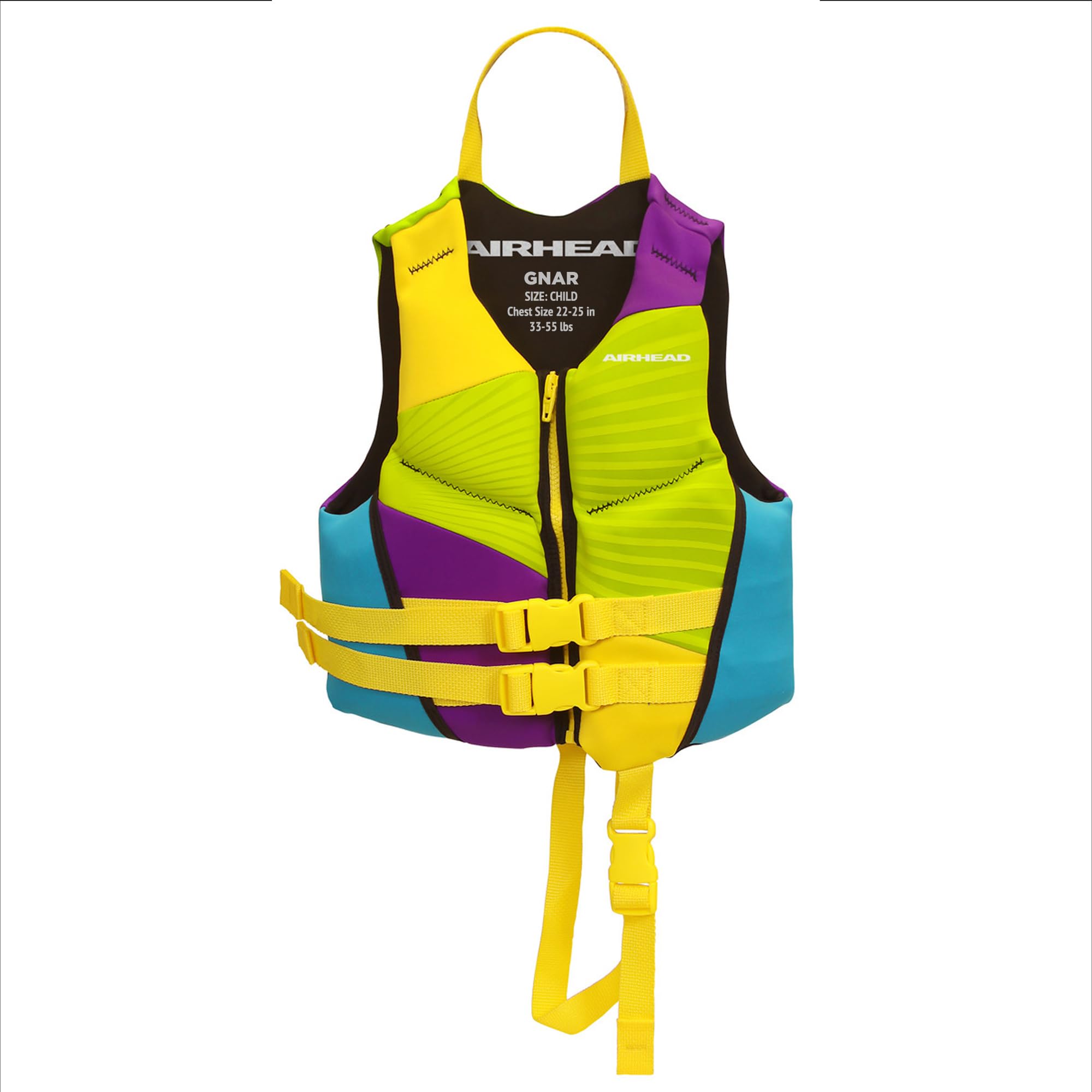
Airhead Gnar Neolite
Key Features
- Shell: Quick-dry Neolite
- Closure: Zipper and buckle
- Chest size: 22-25 in
- Weight range: 30-50 lbs
- Price: Midrange
Neoprene changes the experience. Where most of the vests here are foam with a plain nylon shell, the Gnar wraps its flotation in a soft, quick-drying Neolite skin that feels closer to a wetsuit than to safety equipment. It is the one that draws the least complaint from kids who have already decided they hate life jackets.
The fit is genuinely adjustable, with closed sides, a zipper, a buckle and a crotch strap, and the child size is cut for a 22 to 25 inch chest, so the tape measure matters as much as the bathroom scale. Broad toddlers push the top of that range. If yours is solid through the ribcage, size up rather than squeezing into the label.
Where it wins for us is a long day: soft edges, no chafe at the neck, and a shell that is not clammy when a child climbs out and back in ten times. What you give up is the collar. This is a flat Type III-style vest, so it holds a confident paddler at the surface without tipping them onto their back. For a toddler who is not there yet, the Stearns is the safer shape.
Pros
- Quick-dry neoprene against the skin
- Crotch strap holds it down
- Comfortable enough for all-day wear
- Bright colors that are easy to spot
Cons
- No face-up collar
- Chest measurement decides fit
For a toddler who is comfortable in the water and wears a vest for hours, the Gnar is our pick: soft quick-dry neoprene, a crotch strap, and none of the neck chafe.
Best for 20-30 Lb Toddlers
Stohlquist Infant Type II
Key Features
- Buoyancy: 7.6 lb
- PFD type: USCG Type II
- Grab handle: Reinforced rear handle
- Weight range: 20-30 lbs
- Price: Premium
Twenty to thirty pounds is a narrow window, and this vest is built for exactly that stage. It is a certified Type II infant PFD with a sculpted foam collar that cradles the head, 7.6 lbs of buoyancy and a 200-denier nylon shell over PVC-free foam. If you have a one-year-old who is already 30 lbs, this one is behind you; look at the 30-50 lb group instead.
For the smaller toddler it is aimed at, it is the most supportive vest here. The collar does what a collar should, the crotch straps keep it seated, and the reinforced handle at the back is a real piece of gear rather than a loop of webbing. We like it for stepping off a dock and for lifting a child back into a boat without hauling them by the arm.
The one thing worth testing before a trip: the headrest is sculpted, and on a very small baby it can roll them forward rather than settling them back, so try it in shallow water and watch which way your child floats. It is also the priciest vest in this guide, which buys the softest foam and the most careful finish of the group.
Pros
- Type II collar cradles the head
- Reinforced grab handle
- Soft PVC-free foam, durable shell
- Crotch straps keep it seated
Cons
- The priciest pick in this guide
For a toddler in the 20-30 lb window, the Stohlquist is the most supportive vest here, with a Type II collar and a handle built for lifting. Test the flotation in shallow water first.
Best for Budget Buyers
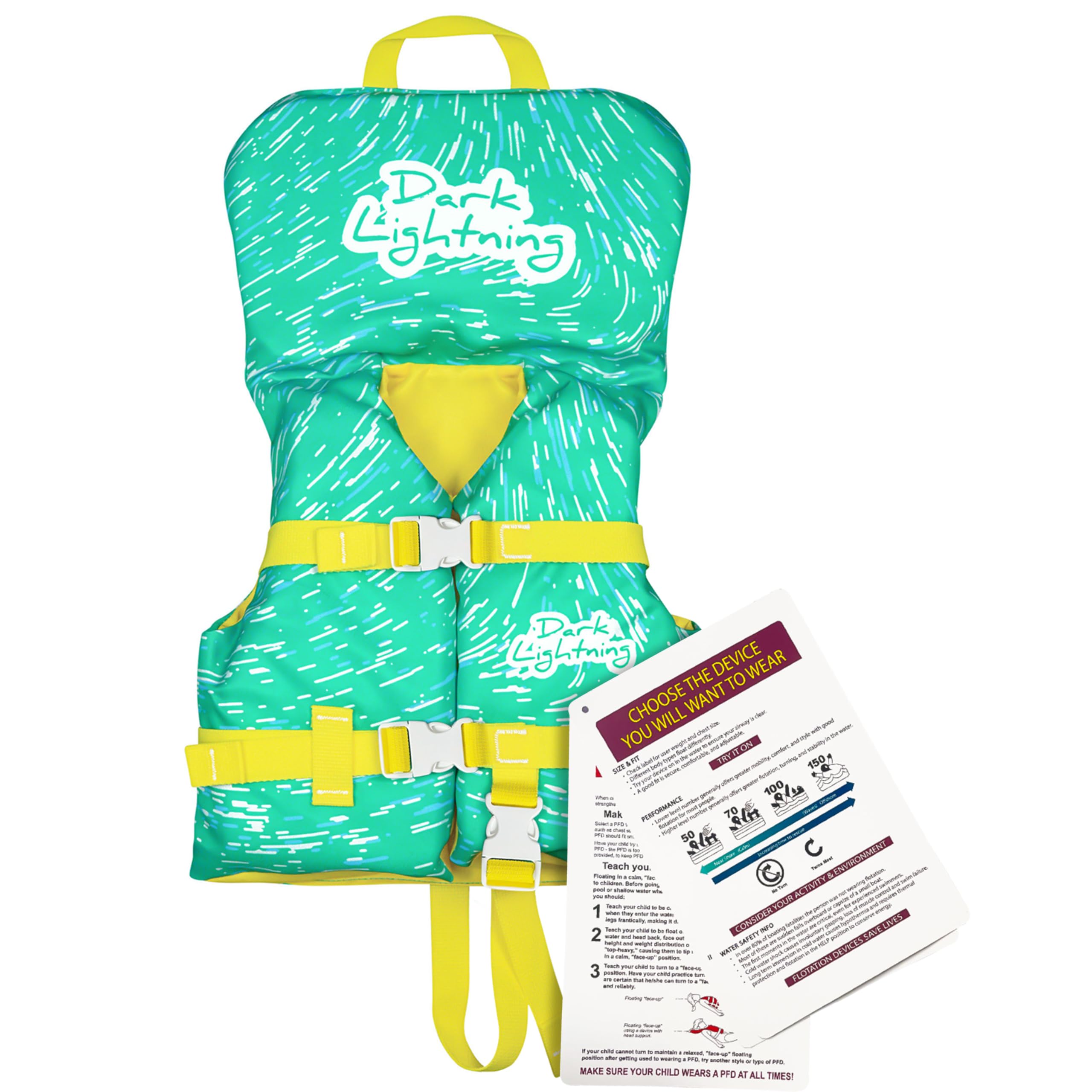
Dark Lightning Infant 0-30
Key Features
- Support: Headrest, leg strap, grab handle
- Age range: 1-3 years
- Weight range: 0-30 lbs
- USCG approval: USCG approved
- Price: Budget
Budget does not have to mean bare. This one is Coast Guard approved for children up to 30 lbs and still includes the three features we look for first: a foam headrest, an adjustable leg strap and a grab handle at the top. We think it is the value pick of the group, and the vest we point to when someone needs a safe option for a first summer and does not want to spend much.
The sizing runs generous. It is labelled for infants and toddlers up to 30 lbs, but the smallest babies swim in it, since the shell is bulky on a four-month-old, while a toddler closer to 25 lbs sits about right. Treat 30 lbs as a hard ceiling: once your child is over it, move to a 30-50 lb vest rather than tugging this one snug.
What you do not get is the finish of the premium vests. The foam is firmer, the shell is simpler, and the collar does not cradle a head the way the Stohlquist does. For supervised pool time, a beach week or a first boat ride, none of that has got in our way. The vest does its job and the child wears it without a fight.
Pros
- Headrest, leg strap and handle included
- USCG approved at a budget price
- Kids wear it without complaint
Cons
- Only covers children under 30 lbs
If your toddler is still under 30 lbs and you want an approved vest without spending much, this is the one we point to: headrest, leg strap and handle included.
Best for Reluctant Swimmers
SwimWays Bluey Swim Vest

Key Features
- Design: Vest with attached arm wings
- Closure: Adjustable back buckle
- Weight range: 33-55 lbs
- USCG approval: USCG approved
- Price: Budget
This is a hybrid, and it is worth being clear about what that means: a soft fabric vest with a pair of foam arm wings attached, Coast Guard approved for 33 to 55 lbs, closed with one adjustable buckle across the back that sits out of a child’s reach. It is not a collar vest, and it will not roll a non-swimmer onto their back.
What the arm wings buy is confidence. The buoyancy sits right where a toddler paddles, so a child learning to move in the water gets a little lift with each stroke, and the fabric cover is soft enough that the print is not the only reason they put it on. The fit runs roomy, with plenty of strap left for a growing four- or five-year-old.
Where it earns its place in this guide is the toddler who fights a stiff vest. If yours has refused every rigid foam jacket you have brought home, the softer shape and the character print are a genuine advantage, and it is still an approved PFD rather than a pool toy. Our reservation is the closure: one back buckle and no front zip means the fit is only as snug as that single strap, and we wish a zipper were doing some of the work.
Pros
- Soft fabric cover, no chafe
- Arm wings add lift where kids paddle
- Back buckle stays out of reach
- Roomy fit with growing space
Cons
- Buckle only, no front zipper
- No collar for face-up flotation
For a pool-focused toddler who fights a stiff vest, the Bluey is the soft, approved compromise we reach for, as long as you accept the single back buckle.
How We Chose and Tested Toddler Life Jackets
We built the shortlist starting where every parent should: the Coast Guard approval label and the weight range printed on the inside of the back panel. From there we filtered for jackets sold in the infant-to-toddler bands, cut anything missing a chest strap or a between-the-legs strap on the smallest sizes, and kept a spread of closure types — zipper-and-snap, side-release buckles, and two-piece vest styles. Twelve made the cut, and we spent eight months with them.
Most of that time happened at a neighborhood pool, with lake weekends mixed in: docks, a pontoon boat, shallow water, deep water, and endless jumping in and climbing out. Fit got checked the blunt way — we lifted each child by the shoulders of the jacket to see how far it rode up, then tightened the chest strap and tried again. We also timed getting a wet, wriggling toddler in and out with one adult and wet hands, noting whether zippers snagged or a buckle needed two hands to close.
In the water we watched what the jacket actually did: whether a kid floated face-up or tipped forward, how quickly they recovered after a jump, and whether the collar kept a small head clear of the surface. Safety came down to details like a grab handle we could genuinely reach, straps that stayed tight, and foam that didn’t fold in half. Value was a season-long question, since toddlers outgrow jackets faster than they wear them out, and we kept a separate eye on the infant sizes, where head support and a strap between the legs matter more than anything else.
How to Choose a Toddler Life Jacket
Fit comes down to two things: a vest that matches your child’s weight and a shape that keeps their head clear once they stop paddling.
Weight first, then the chest and neck
Every vest here is sized by weight, and every label is approximate. A 30-50 lb vest on a broad 48-pounder is a different proposition from the same vest on a slim one, so ignore age and go by the scale, then check the chest.
The fit test we use is simple: put the vest on, tighten everything, and try to pull the shoulders up toward the ears. If they reach the ears, it is too loose, and a loose vest is the one that rides up in the water. Adjust every strap on the dock, not after the first swim.
Collar or flat vest
The biggest design decision is whether there is foam behind the head. A Type II collar rolls a child onto their back when they stop kicking, which is exactly what you want for a non-swimmer on a boat, a dock or a lake. A flat Type III vest or a hybrid swim vest leaves them vertical, which is fine for a confident paddler in a supervised pool.
The trap is buying the flatter, more comfortable-looking vest for a child who cannot swim yet. Collar vests are bulkier and kids notice, but the bulk is doing the work. Our rule: collar until they can tread water and steer themselves, flat once they can.
Straps, crotch straps and closures
A crotch strap is the difference between a vest that stays down and one that climbs to the ears. It is the first thing we check on a toddler size, and worth confirming on arrival, because some listings show the strap in the photo and ship without it.
Rear buckles and back zips matter too. A child cannot undo what they cannot reach, which is a bigger deal at three than at seven. Two closures are better than one, because the second one keeps the vest snug even if the first works loose.
Comfort is a safety feature
The best vest in this guide is useless if your toddler screams until you take it off. Soft shells, neoprene panels and rounded arm openings matter more than they sound, and so does wearing the vest over a swim shirt to cut chafing at the neck and under the arms.
Buy before the trip rather than on the way to the boat, and let your child wear it around the house for a few minutes at a time. A vest that is already familiar is one they stop arguing about.
Frequently Asked Questions
Do toddler life jackets expire?
Foam vests do not carry a hard expiry date, but the foam and webbing age. Check yours each spring: squeeze the foam for soft or compressed spots, look for cracks in the shell, and pull every strap and buckle.
If the label is unreadable or the foam has gone flat, replace it. The label is what makes the vest approved, and a sun-baked vest stops floating the way it should.
Is a puddle jumper or a pair of arm floaties okay on a boat?
No. Puddle jumpers, arm bands and pool noodles are pool toys, not flotation devices, and they can slip off or leave a child face-down. On a boat or in open water you need a Coast Guard approved vest sized to your child’s weight.
If you want one piece of gear for both pool and boat, choose an approved hybrid vest rather than a training aid.
Can a toddler wear a life jacket all day?
For a day on the water, yes, that is what they are built for. Watch for rubbing at the neck and under the arms, and take the vest off during long breaks on land so the skin can dry.
Re-check the straps after your child has been in and out of the water a few times. Wet webbing loosens, and a vest that was snug on the dock can be riding up by afternoon.
How do I clean a life jacket?
Rinse it in fresh water after salt water or a lake, wipe the shell with mild soap, and let it air-dry flat and out of direct sun. Skip the washing machine and the dryer, since heat and tumbling are hard on foam.
Store it loosely rather than crushed under other gear, so the flotation does not take a set.
Final Verdict
For most families the Stearns Heads-Up Type II is the toddler life jacket to buy. The collar is the one feature here that actively turns a non-swimmer face-up, and its fit across the 30-50 lb band holds up better than anything else in this group. If your summers involve a boat, a dock or a lake, that is worth paying more for.
If the water in your life is a supervised pool and your toddler already paddles happily, the Body Glove Paddle Pals is the friendlier and less expensive vest. And for a child still in the 20-30 lb window, the Stohlquist’s head support and grab handle justify the premium.
