This post contains affiliate links. We may earn a small commission when you buy through our links — at no extra cost to you.
Many cheap kids guitars arrive with loose tuning pegs and sharp frets, forcing parents to constantly retune. That frustration quickly turns a child’s excitement into disinterest. The real problem is that most budget kits prioritize colorful finishes and extra accessories over basic playability.
A usable first guitar balances three things: correct scale length for the child’s age, smooth frets, and tuning components that actually hold pitch. Nylon strings reduce finger pain, and a solid wood body gives better resonance than the cheapest laminates. Even a $40 guitar can be a great starting point if the design is sound. The key is knowing which specs matter and which are just marketing. This guide focuses on the models that get these fundamentals right—guitars that stay in tune long enough for a practice session and sound decent enough to keep a young learner interested.
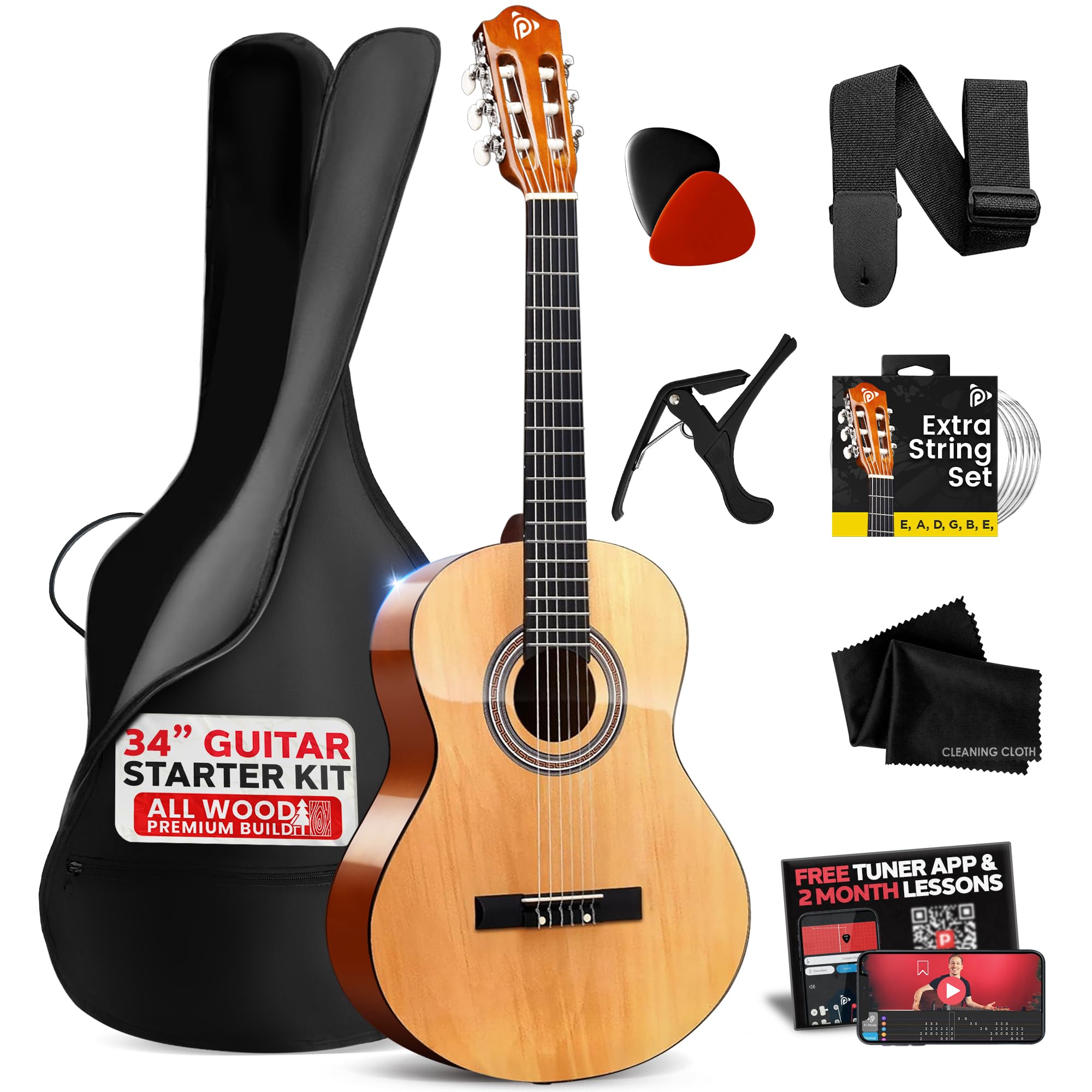


Best for Ages 8-12
Pyle 34in Acoustic Kit
Key Features
- Size: 34 inch
- Strings: 6
- String Material: Nylon
- Type: Acoustic
- Accessories: Gig bag, tuner, strap, picks
- Price: Budget
The Pyle’s all-wood body delivers a warmth and resonance that cheap laminate kits lack, while the nylon strings are gentle on fingers for new players. Tuning stability is a common pain point in this price bracket, but this model holds pitch more consistently than most—though a small percentage of units may need extra retuning during the first few sessions as strings stretch.
This kit is built for children around 8–12 who have outgrown smaller 30-inch guitars. The 34-inch scale fits that age range well, but it’s too large for kids under 6. The included gig bag, strap, tuner, and extra strings mean families can start playing without hunting for accessories—just be aware that the tuning pegs can feel tight for small hands.
Pros
- Great for beginners—nylon strings and manageable size reduce frustration
- Solid build for the price with all-wood construction
- Complete kit includes gig bag, tuner, strap, and extra strings
Cons
- Occasional need for frequent retuning after initial setup
- Tuning pegs can be stiff for younger children to turn
Buy this if you want a dependable starter acoustic for a child 8–12 that won’t frustrate them with constant tuning issues. Skip it if the player is under 6 or you prefer steel strings.
Best for Budget Starter
Best Choice 30in Acoustic Kit
Key Features
- Size: 30 inch
- Strings: 6
- String Material: Stainless Steel
- Type: Acoustic
- Accessories: Case, strap, tuner, picks
- Price: Budget
The Best Choice Products 30in Acoustic Kit is the most affordable full starter set, packing a case, strap, tuner, and extra strings alongside an eye-catching blueburst finish. With over 38,000 reviews, it’s the go-to for parents on a tight budget. The catch: tuning instability is common—the guitar often drifts after a few strums—and durability varies, with some strings breaking or neck defects reported. This kit suits kids ages 8–12 experimenting with music, but it’s not a dependable instrument for daily practice; treat it as a trial introduction rather than a long-term tool.
Pros
- Complete beginner kit with case, tuner, and extra strings included.
- Attractive blueburst finish that appeals to kids.
- Budget-friendly price for a full-size starter set.
Cons
- Tuning instability requires frequent retuning—a trade-off for the low cost.
- Occasional durability issues like broken strings or neck defects.
Buy this if you want a low-cost starter kit with lots of accessories for a child to try out guitar. Skip it if you need a reliably playable instrument for consistent practice.
Best for Ages 3-5
Loog Mini 3-String Guitar
Key Features
- Size: 22.2 inch
- Strings: 3
- String Material: Nylon
- Type: Acoustic
- Accessories: App, flashcards
- Price: Mid-Range
The Loog Mini is a real acoustic guitar scaled down for tiny hands — three nylon strings, a basswood body, and an educational app replace the cheap plastic toys that dominate this aisle. It fits children ages 3–5 who are too small for full-size instruments, and the included app walks them through basic chords and songs. That utility comes at a premium: this simplified design costs over twice as much as many toy guitars, and a portion of units arrive with sharp fret edges that need smoothing. The tuning pegs can also be finicky, requiring frequent adjustments during early play. This is a dedicated learning tool for parents who want a gentle, real-instrument introduction for their toddler, not a budget-friendly option for casual play or older children.
Pros
- High build quality with real wood construction
- Perfect size and 3-string design for toddlers (ages 3-5)
- Good sound quality for its small size
Cons
- Premium pricing for a simplified instrument
- Occasional sharp fret ends require smoothing for comfort
Buy this if you have a toddler who is too small for a full-size guitar and you want a gentle, educational introduction. Skip it if your child is over 6 or you’re on a tight budget.
Best for Electric Learners
Donner Mini Electric Kit
Key Features
- Size: 30 inch
- Strings: 6
- String Material: Steel
- Type: Electric
- Accessories: Amp, bag, tuner, strap
- Price: Mid-Range
The Donner DSJ-100 is a full electric guitar kit built for kids aged 8 to 12 who want to learn on a real instrument. It includes a 30-inch ST-style guitar, amplifier, bag, tuner, picks, cable, strap, and extra strings — everything needed to start playing immediately. The guitar itself is well-constructed for its price point and delivers decent sound once properly tuned and set up. However, the included amplifier is the weakest link: many users report it ceasing to work after a few uses, and tuning stability can be inconsistent across units. This kit is best for families who plan to eventually upgrade the amp and are comfortable with basic guitar maintenance.
Pros
- Right size for children aged 8 to 12
- Solid build quality for a kids’ electric guitar
- Decent sound quality after proper setup
Cons
- Included amp has limited longevity; may stop working after limited use
- Tuning stability is inconsistent across units; may require frequent adjustment
Buy this if your 8-12 year old is committed to learning electric guitar and you want a complete starter kit. Skip it if you need a durable amplifier or expect professional-grade gear.
Best for Ages 4-7
Master Play 30in Pink Guitar

Key Features
- Size: 30 inch
- Strings: 6
- String Material: Steel
- Type: Acoustic
- Accessories: Case, tuner, strap
- Price: Budget
The Master Play 30-inch pink guitar wins over young kids with its bright color and full accessory kit. It works as a low-commitment first instrument for ages 4-7. However, tuning pegs slip and durability varies, so it’s not a long-term practice tool.
Pros
- Bright pink finish that kids love
- Complete starter kit with case, tuner, picks, and strap
Cons
- Tuning pegs require frequent adjustments to stay in tune
Worth considering if you want an inexpensive, colorful starter for a young child who values appearance over playability.
Best for Ages 2-4
Hape 26in Wooden Guitar Toy

Key Features
- Size: 26 inch
- Strings: 4
- String Material: Nylon
- Type: Acoustic
- Price: Budget
This 26-inch wood guitar looks and feels like the real thing, with a solid build and pleasant toy-grade sound. But it cannot hold tune and only has four strings, so it’s strictly a decorative pretend-play item for toddlers — not a tool for learning actual guitar.
Pros
- Solid wood construction for a toy
- Cute appearance with decent sound for a toy
Cons
- Tuning pegs cannot maintain pitch, limiting use to pretend play
Worth considering if you want an affordable wooden guitar toy for toddler mimicry and decoration, not for actual music lessons.
How to Choose
The most critical factor in a kids’ guitar is whether it stays in tune – a guitar that won’t hold pitch will kill any beginner’s enthusiasm.
Guitar Size
Guitar size is measured in inches and should match the child’s age. A 30-inch guitar fits ages 4-8, while a 34-inch suits 8-12 year olds. Instruments under 26 inches are generally toys, not learning tools.
Number of Strings
Most kids’ guitars come with 6 strings, but 3-string models like the Loog simplify chord making for very young hands. Fewer strings mean easier fretting but limit playable songs later. For age 5+, a 6-string is better for progression.
String Material
Nylon strings are softer on fingertips and less likely to break, ideal for beginners. Steel strings produce brighter sound but require stronger finger pressure and can be painful for young children.
Acoustic vs Electric
Acoustic guitars are the standard starting point because they need no extra equipment. Electric guitars require an amplifier and cables, adding cost and complexity, but may appeal to older kids wanting rock sounds.
Included Accessories
A good starter kit includes a gig bag for protection, a tuner for easy tuning, and a strap for comfortable playing. Extra strings are a bonus given they break often. Avoid kits that skimp on the tuner – you’ll need it daily.
FAQ
Why won’t my kids guitar stay in tune?
Most cheap kids’ guitars have low-quality tuning pegs that slip, causing the strings to go out of tune after a few strums. The strings themselves may also stretch initially. Try tightening the screws on the tuning pegs with a small screwdriver, or replace the strings with higher-quality ones. If the pegs still slip, the guitar may need a professional setup or replacement.
What size guitar should I get for a 6-year-old?
For a 6-year-old, a 30-inch guitar is the standard size. Measure from the child’s chin to their palm – the guitar body should rest comfortably against their body with the neck reaching their hand without stretching. If the child is small for their age, a 1/2 size (30-inch) is fine; if larger, a 34-inch may work.
Is a 3-string guitar good for learning?
A 3-string guitar (like the Loog) is an excellent tool for preschoolers aged 3-5 who have tiny hands. It simplifies chord shapes and builds confidence. However, after age 6, most children should switch to 6-string to play standard songs and develop proper technique.
How to fix a guitar that won’t tune?
First, check the tuning pegs – tighten the small screws on each peg with a screwdriver. If the strings are old or cheap, replace them. For guitars with nylon strings, they take longer to stretch and settle; tune them repeatedly over a few days. If the problem persists, the nut or bridge may need adjustment – a local guitar shop can help.