This post contains affiliate links. We may earn a small commission when you buy through our links — at no extra cost to you.
Most hoverboard listings make bold claims about range and terrain capability, but real owners often report ride times closer to 30 minutes and trouble on anything rougher than pavement. A constant beeping from the board or a finicky calibration process adds to the frustration. The hidden trade-off is between larger wheels that handle grass and gravel versus lighter, more portable boards that are easier for young children to carry.
We built this guide around the features that actually separate a good first hoverboard from a disappointing one: realistic battery expectations, UL2272 safety certification, and a self-balancing system that works reliably out of the box. Whether your child is a cautious beginner or ready to explore the backyard, the best choice depends on matching wheel size to intended surface and accepting that no hoverboard delivers the advertised range in real-world use.


Best for First Hoverboard
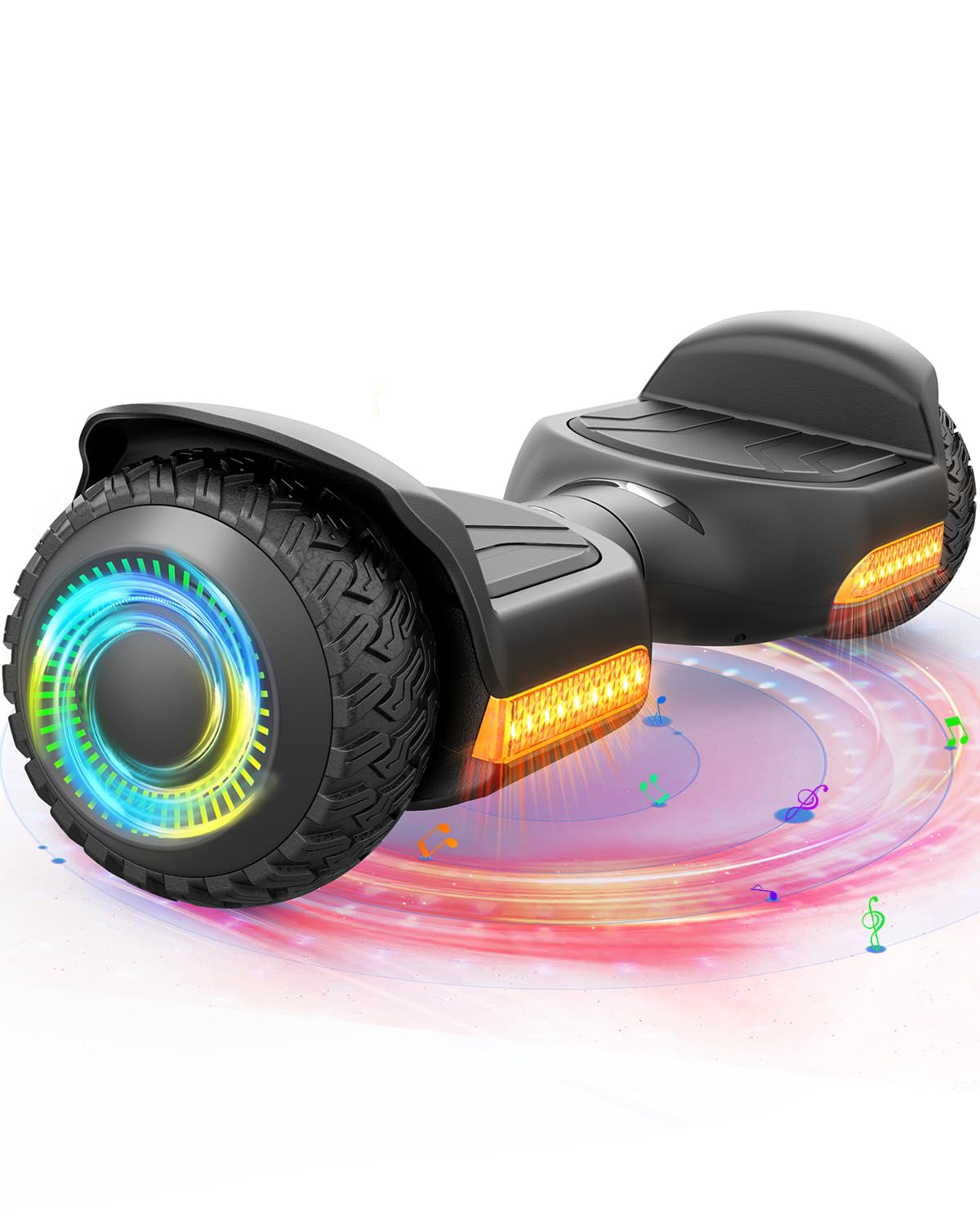
Gyroor G13 All Terrain
Key Features
- Wheel Size: 6.5 inches
- Max Range: 8 miles
- Weight Limit: 176 lbs
- Safety Cert: UL2272 Certified
- Price: Mid-range
The Gyroor G13 stands out for its durable construction and remarkable ease of learning – most young riders pick it up within minutes. The bright LED lights and built-in Bluetooth speaker add a layer of fun that kids enjoy during indoor or outdoor rides. However, a minority of units stop working after a few months, and battery life can degrade over time, so longevity isn’t guaranteed for every buyer.
This hoverboard is best suited for families wanting a versatile board that works on grass, pavement, and gentle slopes. It’s particularly good for first-time riders aged 6–12 who are under 175 lbs. Note that some owners report battery or reliability issues after several months of use, so choosing a model with a good warranty is wise.
Pros
- Solid build quality with durable construction that holds up to kid use.
- Very easy to learn, even for young children just starting out.
- Fun LED lights and Bluetooth speaker add to the riding experience.
Cons
- Occasional reliability variance: some units stop working after a few months.
- Battery life can degrade over time for some users, reducing ride range.
Buy this if you want an easy-to-learn, durable hoverboard for a child aged 6–12. Skip it if you need guaranteed long-term reliability or the rider exceeds 175 lbs.
Best for Off-Road Riding
Gyroor Warrior 8.5″
Key Features
- Wheel Size: 8.5 inches
- Max Range: 12 miles
- Weight Limit: 220 lbs
- Safety Cert: UL approved
- Price: Premium
The Gyroor Warrior 8.5″ stands apart from the top pick with larger 8.5-inch tires and a rugged chassis designed for off-road terrain—grass, gravel, and bumps are handled with stability. Build quality is solid, and battery life supports longer rides. However, it requires a mandatory app for basic operation, which some find buggy, and its heavier frame and premium price make it less suited for casual indoor use or younger riders. This board is best for teens and adults who regularly ride on rough surfaces and want a durable machine that can take a beating.
Pros
- 8.5-inch all-terrain tires provide stable handling on grass, gravel, and bumps.
- Solid frame and components hold up to frequent off-road riding and impacts.
- Battery supports longer rides, with many users reporting full-day outings.
Cons
- Mandatory app required for basic operation; connection issues are a common complaint.
- Heavier and more expensive than standard 6.5-inch models (about 13 lbs).
Buy this if you need a rugged off-road hoverboard for teens and adults and can accept mandatory app usage. Skip it if you prefer a lighter, app-free board for casual indoor riding.
Best for Budget-Conscious Families
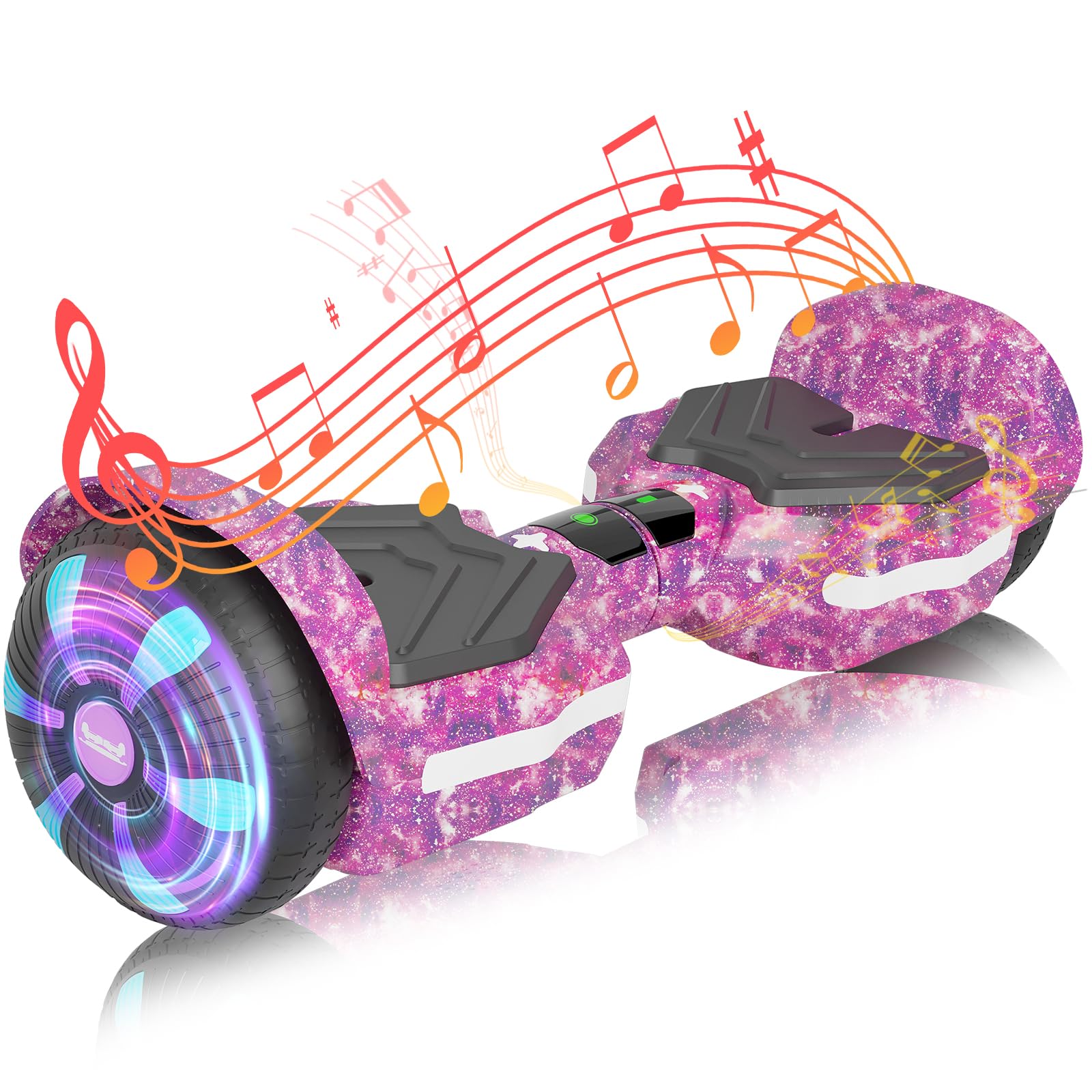
SIMATE Hoverboard
Key Features
- Wheel Size: 6.5 inches
- Max Range: 7.5 miles
- Weight Limit: 220 lbs
- Safety Cert: UL2272 implied
- Price: Budget
The SIMATE Hoverboard’s low price and massive review count (over 3,000) confirm its broad appeal as a budget-friendly entry point. Compared to the newer, more safety-focused alternative, it sacrifices extended battery life and consistent reliability for a lower upfront cost and instant fun with Bluetooth music and flashy lights. The self-balancing feature helps kids pick it up quickly, but many users report the battery dying sooner than expected and occasional wheel malfunctions. This board is best for families who want an occasional indoor toy rather than a daily rider.
Pros
- Fun for kids with Bluetooth music and LED lights
- Self-balancing helps beginners learn quickly
- Good quality for the budget price point
Cons
- Battery life disappoints – many users say it dies quickly or stops holding charge
- Reliability inconsistent – some units stop working or have wheel issues
Buy this if you want an inexpensive hoverboard for kids to enjoy indoors occasionally with Bluetooth music.
Best for Light Daily Use
SIMATE K1 Hoverboard
Key Features
- Wheel Size: 6.5 inches
- Max Range: 8 miles
- Weight Limit: 220 lbs
- Safety Cert: UL2272 Certified
- Price: Mid-range
The SIMATE K1 enters with UL2272 certification and dual 300W motors — a combo that makes it one of the safer, more beginner-friendly options for light daily use. Build quality feels sturdy, and most riders find calibration straightforward. However, because the product has only 528 reviews (far fewer than the more established budget alternative), reliability data is still thin. Some owners have reported pedal or motor failure within weeks, and battery life can be inconsistent, so this board suits casual indoor or paved use rather than rough terrain or long commutes.
Pros
- Sturdy build quality eases confidence for beginners
- Easy self-balancing calibration reduces frustration
Cons
- Occasional pedal or motor failure in early ownership
- Battery range can fall short of advertised
Buy this if you want UL certification and a sturdy-feeling board for occasional use. Skip it if you prefer a model with thousands of reviews confirming long-term dependability.
Best for Light Occasional Use
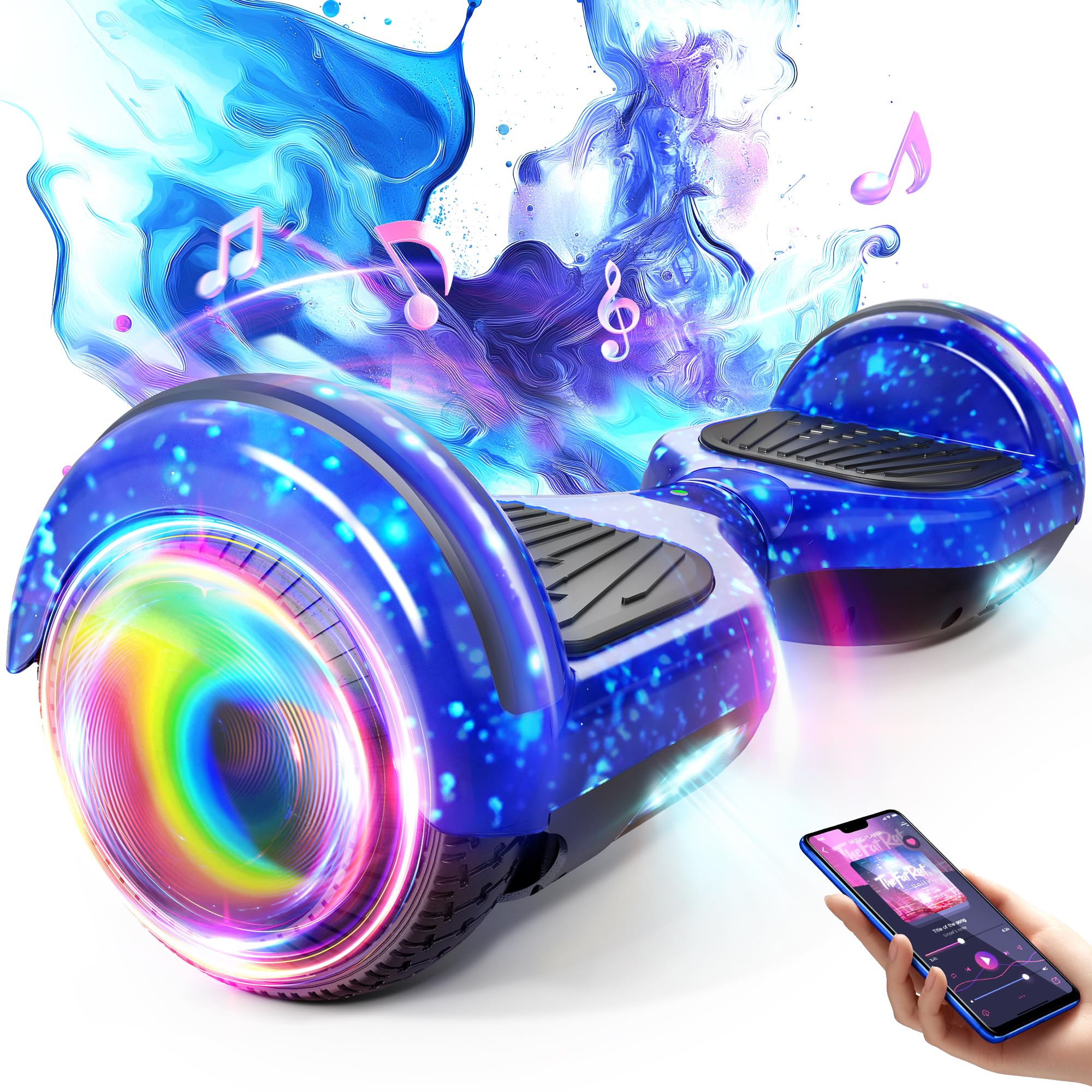
SISIGAD Star Blue
Key Features
- Wheel Size: 6.5 inches
- Max Range: 8.5 miles
- Weight Limit: 165 lbs
- Safety Cert: Safety certified
- Price: Budget
For families on a tight budget, this is the cheapest fully functional hoverboard with built-in Bluetooth and flash wheels. However, balance calibration can be finicky — some riders find it hard to stay stable — and battery life draws mixed feedback, with charger port issues reported. Best suited for light, occasional indoor use where the cost savings outweigh these quirks.
Pros
- Good quality build that kids enjoy using
- Smooth controls and easy to ride
Cons
- Balance calibration inconsistent; some units feel unstable
- Battery life and charger port reliability are below average
Buy this if you’re on a tight budget and need a basic hoverboard for light, occasional use, but be prepared for potential balance and battery quirks.
How to Choose
A hoverboard’s advertised range is almost always significantly longer than the real-world ride time, so focus on battery life expectations rather than marketing numbers.
Wheel Size Matters
Wheel size is the single most important spec for terrain. 6.5-inch wheels are fine for smooth pavement and indoor use, while 8.5-inch wheels handle grass, gravel, and uneven paths without bogging down. Larger wheels also provide a more stable ride for heavier or older riders.
Realistic Battery Life
Most hoverboards advertise ranges of 7–12 miles, but real-world ride time for kids is typically 30–60 minutes depending on weight, speed, and terrain. Heavier riders or hilly routes will drain the battery faster. Look for models with at least a 2Ah battery for reasonable session length.
Weight Limit and Rider Size
The weight limit determines both safety and performance. A board rated for 220 lbs can handle a growing child and occasional adult use, while a 165 lb limit is fine for kids under 12. Exceeding the limit reduces speed, range, and may cause the board to tilt unexpectedly.
Safety Certification
UL2272 certification means the hoverboard’s battery and electrical system passed fire-safety testing. This is the most trusted safety standard in the US. Models without explicit UL listing may still be certified internally, but UL2272 provides peace of mind.
Bluetooth Speakers and Beeping
Bluetooth speakers add fun but also introduce a common annoyance: persistent beeping that signals low battery, calibration issues, or tilt sensor activation. Some boards allow you to mute or lower the beep volume; checking user reviews for ‘beeping’ complaints can save frustration.
FAQ
Why does my hoverboard keep beeping?
Beeping usually indicates low battery, the board needs recalibration, or a tilt sensor is activated. Place the hoverboard on a level surface, turn it off, hold the power button until it beeps and flashes, then release. If the beeping persists after calibration and a full charge, the board may have a defective sensor or battery.
How long does a hoverboard battery last?
Manufacturer claims of 7–12 miles are typically optimistic. Real-world ride time for kids is 30–60 minutes per charge, impacted by rider weight, speed, and surface. Heavier or faster riding reduces it further. Expect to charge fully (3–6 hours) between each session.
Can hoverboards go on grass?
Only hoverboards with 8.5-inch wheels handle grass reliably. 6.5-inch models will bog down on thick grass, lose speed, and may trigger the tilt sensor to stop the board. For occasional grass use, larger wheels are a must.
What is UL2272 certification and why does it matter?
UL2272 is a safety standard that tests the hoverboard’s battery, charger, and electrical system for fire and shock hazards. Boards without this certification have a higher risk of battery failure or fire. When buying for a child, UL2272 certification is the safest choice.