This post contains affiliate links. We may earn a small commission when you buy through our links — at no extra cost to you.
A travel system is two purchases that have agreed to cooperate: a stroller and an infant car seat that locks into it, so a sleeping baby can go from the back seat to the sidewalk without being unbuckled. That handoff is the whole point, and it’s where cheaper systems give themselves away — a stiff release, a wobble you feel on every curb, a fold that demands both hands and a free foot, a frame that’s a fight to hoist into the trunk. What you’re really shopping for is a stroller you’ll push for two years and a car seat you’ll install and reinstall far more often than you’d like.
We’ve spent the past nine months living with 12 of these systems, and the differences showed up within the first week of errands. Here’s the piece first-time buyers tend to miss: the car seat is the part that gets outgrown first and expires on a stamped date, so the stroller deserves more of your budget than the seat does. The picks below are the ones that got the click, the fold, and the ride right.




Best for Daily Car Swaps
Chicco Bravo 3-in-1
Key Features
- Fold: One-hand, self-standing
- Car seat: KeyFit 30, 4–30 lb
- Folded size: 15 x 22.8 x 29 in
- Stroller weight: 24.9 lb
- Price: Midrange
The child tray is the receiver. That single decision is why the Bravo is our default: the KeyFit 30 drops onto the tray and locks, with no adapter to dig out of a diaper bag, and you can do it with one hand while the other arm holds the baby. Chicco’s SuperCinch tightener does the same favor in the car, pulling the base snug with one steady pull instead of a knuckle-busting fight with a belt.
Folding is the other half of the daily routine, and this one does it with one hand and then stands up on its own with the push bar off the floor. That detail earns its keep in a garage or a hallway where floor space has already disappeared. Four-wheel suspension and 10.3-inch rear tires make it one of the smoother pushes in this group over cracked pavement and packed gravel.
What it does not do is lie flat. A newborn rides in the car seat or a reclined toddler seat, which is fine for errands and less so for an hour in the park; the Graco Modes Nest and the Joie Ginger both give you a pramette. Everything else is built for the long haul: the toddler seat carries to 50 pounds, the canopy stretches well down a toddler’s legs, and there are two cup holders plus a snack tray.
Pros
- Car seat clicks into the tray with no adapter
- One-hand fold that stands up unaided
- Smooth ride on 10.3-inch rear tires
- Toddler seat carries to 50 lb
Cons
- 24.9 lb to lift into a trunk
Our default pick for most families: no adapter to lose, a fold that stands up by itself, and a car seat we are happy to put a newborn in.
Best for Air Travel
Graco Gomax
Key Features
- Folded size: 20.5 x 17.3 x 7.1 in
- Car seat range: 4–30 lb, up to 32 in
- Stroller weight: 9 lb
- Car seat install: Base-free rigid LATCH
- Price: Premium
Folded, the Gomax measures about 20 by 17 by 7 inches and weighs 9 pounds, which is closer to a packed diaper bag than to a stroller. It collapses one-handed and stands on its own afterward. Graco calls it overhead-bin friendly, and while that will depend on your airline, it is the only system here that plausibly belongs in a cabin.
The part that matters more than the fold is the rigid LATCH built into the car seat. There is no base to install and no base to forget, so a rental car, a grandparent’s driveway and a taxi all get the same quick, secure install. Graco also certifies the seat for aircraft use without the base, which means it can ride in a plane seat and then snap onto the frame at the other end.
The trade-off is lifespan. Graco rates the setup to 30 pounds and 32 inches, which is the car seat’s ceiling rather than a toddler seat’s, so this covers the infant year and you will be shopping again afterward. You are also paying premium money for the fold, the LATCH and the low weight rather than for features. For a family that travels, we think that is the right trade.
Pros
- Folds to 20.5 by 17.3 by 7.1 inches
- Car seat installs with no base
- Seat certified for aircraft use
Cons
- Rated only to 30 lb, with no toddler seat
- Premium price for a frame stroller
The one we hand to anyone who flies or swaps cars often: it folds smaller than a packed diaper bag, and the car seat needs no base at all.
Best for Tall Parents
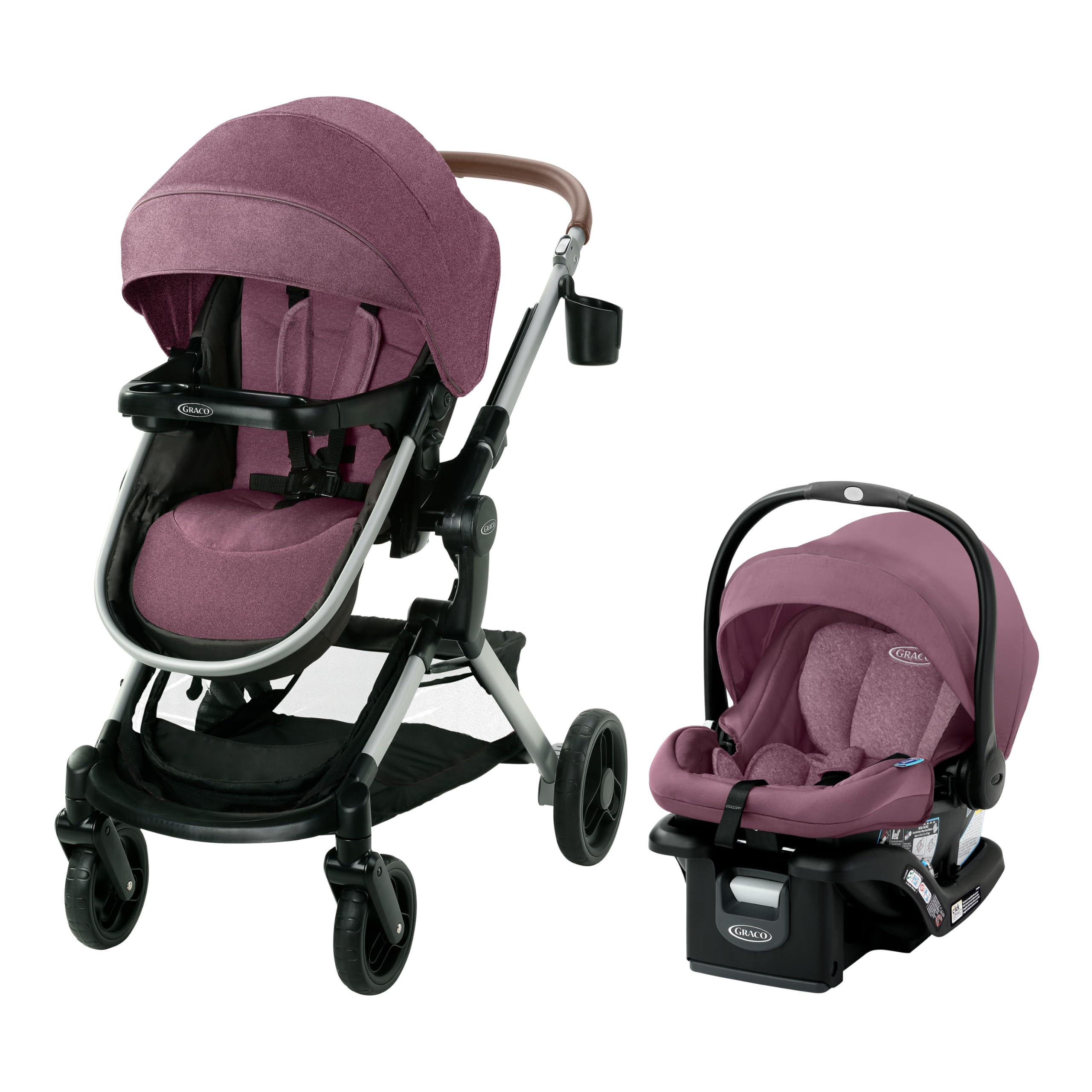
Graco Modes Nest
Key Features
- Newborn mode: Pramette, reversible seat
- Seat heights: Three positions
- Car seat range: 4–35 lb, up to 32 in
- Stroller weight: 34.6 lb
- Price: Premium
Three height positions, for the seat or the car seat. The Slide2Me column raises a newborn from bassinet height to chest height, so you are lifting rather than stooping, and a parent-facing baby ends up close enough to talk to. Of everything on this page, that is the feature we think changes the most about the first six months of daily use.
The seat also reverses and converts to a pramette, so a newborn can lie flat and face you while a toddler sits upright and looks ahead. Ride quality is where it quietly gets ahead of the cheaper systems: it rolls smoothly across pavement, grass and the lip of a curb, and the storage underneath swallows a diaper bag plus groceries.
The car seat connection is the thing to test before you commit. It can take a firm push before the latch catches, so click it in, rock it with your hand, and confirm it is solid before you drive anywhere. When it seats properly this is a lot of stroller for the money; when it does not, exchange it rather than living with a seat that shifts.
Pros
- Seat and car seat raise to three heights
- Reversible seat with a lie-flat pramette
- Smooth over varied surfaces
Cons
- 34.6 lb, the heaviest stroller here
We recommend it to taller parents and anyone whose back is still recovering: three seat heights put a newborn at chest level instead of by your knees.
Best for Tight Budgets
Baby Trend Passport Switch
Key Features
- Modes: 6 configurations
- Car seat: EZ-Lift 35 PLUS
- Stroller weight: 21.3 lb
- Toddler weight limit: 50 lb
- Price: Budget
Six configurations for the least money here, and the one that earns its place is the carriage mode: the seat back drops and the baby lies facing you rather than being parked in the car seat for every walk. Budget systems usually skip that step. This one does not, and it also takes the infant seat parent-facing or forward.
At 21.3 pounds it is light enough to swing into a trunk without thinking, and the parent handle carries a phone holder and a flex-grip cup holder that will grip a big water bottle. Assembly is straightforward, the canopy is generous, and the whole thing wipes down easily after a snack disaster.
Where it gives ground is fit and finish. The carriage and seat are cut small, so a long baby will outgrow the lay-back mode early, and getting the infant seat onto the frame takes a knack — practice it once in your living room rather than in a parking lot with a crying baby. The plastics feel like the money you did not spend. It still does the same job as systems that cost far more, with less polish and a shorter runway.
Pros
- Six modes at the lowest price here
- Parent-facing carriage for a newborn
- 21.3 lb and easy to fold
Cons
- Carriage and seat run small for bigger babies
The budget answer that still gives a newborn a parent-facing lie-back seat, as long as your baby is not on the long side.
Best for Cars without Bases
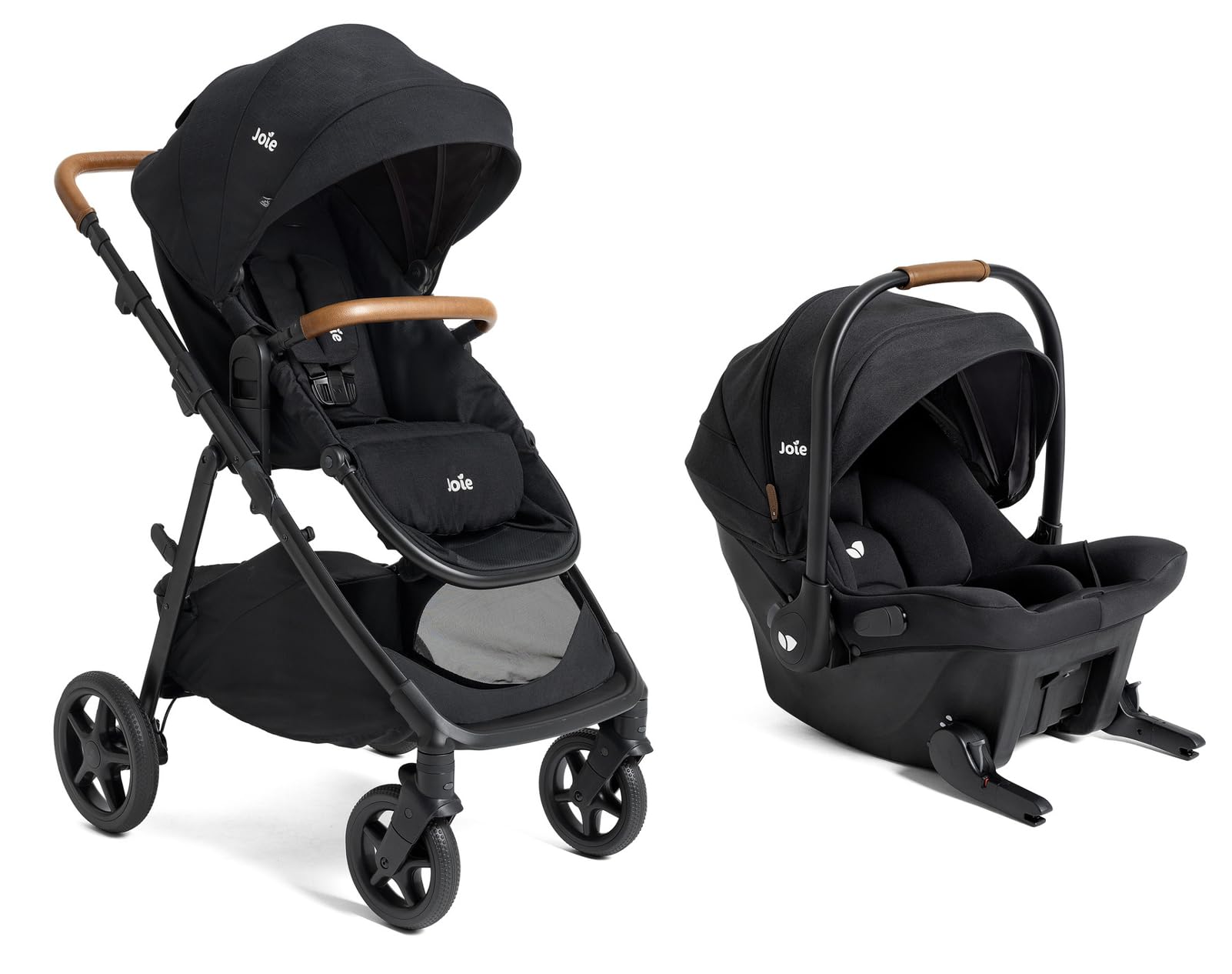
Joie Ginger with Mint Latch
Key Features
- Folded size: 19 x 24.5 x 31 in
- Basket capacity: 10 lb
- Stroller weight: 22.8 lb
- Car seat install: Base-free rigid LATCH
- Price: Premium
No base. The Mint Latch seat carries its own rigid LATCH connectors, so it goes into whatever car is in front of you — a caregiver’s sedan, a rental, a taxi — and that same seat then clicks onto the stroller. If two people share drop-off duty, or a grandparent does pickup twice a week, one design decision here removes the worst chore of the infant year.
The stroller half is what surprised us. The seat adjusts for height as well as reclining flat into a pramette, so a newborn lies down and you can raise them to a level that suits your own height. The 8-inch front and 10-inch rear wheels with puncture-proof tires roll like something considerably larger, and switching between the pramette and the car seat takes one hand.
The compromises are small and specific: the basket is rated to 10 pounds, which is one diaper bag and not much else, and there is a single cup holder. You are also paying at the top of this group, and the money goes into the seat and the frame rather than the trim. If a base sitting permanently in your garage is no inconvenience, the Chicco Bravo makes the same daily transfer for far less.
Pros
- Car seat installs without a base
- Height-adjustable, flat-reclining pramette
- Large puncture-proof wheels
Cons
- 10 lb basket barely holds a diaper bag
- One cup holder, no parent tray
The pick for families whose car seat moves between cars: rigid LATCH means no base, and the pramette reclines flat for a newborn.
Best for Extended Rear-Facing
Chicco Corso LE
Key Features
- Fold: One-hand, free-standing
- Car seat: KeyFit Max ClearTex, 4–30 lb
- Folded size: 31.5 x 13.8 x 7.9 in
- Stroller weight: 24.8 lb
- Price: Premium
Rear-facing for longer is the reason to look here. The KeyFit Max ClearTex adds an Easy-Extend headrest and a no-rethread harness, which buys headroom and legroom in the position a baby should stay in until the seat’s limits run out. Bubble level indicators and a European belt path make the install easier to get right the first time in an unfamiliar car.
The stroller arrives assembled, which sounds trivial until you have spent an evening with an Allen key and a diagram. Leatherette on the seat and handle, a zip-out canopy extension, an extra-large basket and a one-hand fold that stands up by itself round out a package that feels a step above the rest of this group.
Our honest comparison is with the Bravo, which is also a Chicco and also clicks its seat in without an adapter. The extra money here buys the seat’s growth range, the fabrics, the tires and the fold, not an easier daily transfer. If the car-to-stroller click is the part you care about most, keep the difference and buy the Bravo.
What stays with us is how quiet it is over broken pavement — the suspension and foam-filled tires soak up a brick sidewalk in a way the cheaper systems here do not — and how far the canopy pulls forward against a low winter sun.
Pros
- Extending headrest for longer rear-facing
- Arrives pre-assembled
- Quiet, damped ride
Cons
- 24.8 lb plus a heavy car seat
Choose it for the seat that stays rear-facing longer and a plusher ride; the daily car-to-stroller click is no easier than the Bravo’s.
Best for Errands and Storage
Safety 1st Grow and Go Flex

Key Features
- Modes: 8 configurations
- Car seat range: 4–30 lb
- Basket capacity: 50 lb
- Price: Midrange
Eight configurations is the headline, and the detail we keep bringing up is smaller than that: the child tray’s cup holder is shaped to take a two-handled sippy cup. It is the sort of thing that only occurs to you around month eight, and it suggests someone at Safety 1st actually used the stroller with a toddler in it.
The basket is genuinely enormous, and the parent tray holds two cups, which between them cover a grocery run and a drink for each hand. The stroller folds one-handed, the seat reclines for a napping toddler, and the OnBoard FLX car seat comes with knit cushioning and a five-point harness for the ride home from the hospital.
Setup is easy in the way that matters at 6 a.m.: the parts click together without tools, the fold is a one-hand motion, and switching between the car seat and the toddler seat does not require a second read of the manual. For a family with one stroller and one car, that simplicity covers a lot of ground.
But the car seat’s latch is where we slow down. Locking it into its base, and onto the stroller, can take more of a shove than it should, so test both clicks and give the seat a firm tug before you trust it with a baby. If your budget lands here, this is a great deal of system for the money — just verify the seat before you depend on it.
Pros
- Eight configurations from one system
- Very large basket and parent tray
- One-handed fold and tool-free assembly
Cons
- Car seat can be stubborn to latch
- Thin padding in the car seat for newborns
A lot of system for the money, and we like it best for errands and tight parking — as long as you test the car seat’s latch before you rely on it.
How We Tested These Travel Systems
We started with roughly 30 systems and cut the list on specs before anyone pushed one: the car seat’s weight limit, the folded footprint, whether the seat clicks into the stroller on its own or needs an adapter, and what actually comes in the box. That last one matters more than shoppers expect, since a second base for another car can cost enough to erase a lower sticker price. Twelve systems made the cut, and we’ve used them for nine months.
Each one went through the same ordinary week: the daycare parking lot at 5 p.m., cracked sidewalk and curb cuts on the walk home, a gravel path, and the trunk of a sedan. We clicked the car seat in and out one-handed with a grocery bag in the other arm, timed the fold and lifted the folded frame into the trunk, weighed every stroller on a luggage scale, and pushed each with a loaded diaper bag in the basket to see how it tracked one-handed. We also changed recline and handle height with a baby in one arm, because that’s how it happens.
For the car seats, we installed every base twice — once with LATCH, once with the seat belt — and checked for movement at the belt path. We ran the harness adjusters one-handed, watched how the recline indicator read on a sloped driveway, and noted how much of the canopy actually shaded a sleeping baby. Nine months in, we went back and looked for the things that only show up late: wheel wobble, frayed stitching at the fold joint, brakes that had gone soft.
How to Choose a Stroller Travel System
Buy the car seat first and the stroller second, because the seat is what you will carry, install and outgrow.
Start with the seat, not the stroller
The seat is the safety device and the thing you handle forty times a week, so its rear-facing limits come first. The systems here top out between 30 and 35 pounds, with height limits of 29.5 to 32 inches, and height tends to run out before weight does.
Then look at how the seat installs and how it meets the stroller. A base that lives in one car suits one car; a seat with rigid LATCH built in, like the Joie Mint Latch or the Graco Gomax seat, moves between vehicles without one. And an adapter-free tray click is the difference between a two-second transfer and a search through the diaper bag.
Weigh the lift, not the spec sheet
Stroller weight matters at two moments: lifting it into the trunk and pushing it up a slope. This group runs from a 9-pound frame to a 34.6-pound full-size, and the heavy ones buy suspension, a bigger basket and a seat a toddler can sprawl in.
Think about your worst realistic day, then pick the heaviest stroller you can still lift one-handed with a baby on your other arm. If that ceiling is around 20 pounds, the Baby Trend Passport Switch fits and the Graco Modes Nest does not.
What compact actually means
Folded size is where listings get creative. A system that folds to roughly 20 by 17 by 7 inches, like the Graco Gomax, is the only one here that plausibly fits an overhead bin; a 39-inch fold fits a trunk and nothing smaller.
Measure the narrowest opening of your trunk rather than its floor, and pay attention to the fold itself. A one-handed fold that stands up on its own is worth more day to day than an inch of collapsed length, because you will be doing it with one arm occupied.
Newborn mode and the storage you will use
For long walks in the first three months, a lie-flat pramette or carriage mode lets a newborn ride flat and facing you; the Modes Nest, the Joie Ginger and the Passport Switch all offer one. Systems without that, like the Bravo and the Corso LE, carry a newborn in the car seat, which suits errands but not an hour in the park.
Storage decides more days than any other feature. Baskets here range from a 10-pound pouch to a 50-pound well, and a child tray shaped to take a two-handled sippy cup earns its place around month eight.
Frequently Asked Questions
How do I know the car seat is locked onto the stroller?
Lift the seat by its handle an inch and let it drop back. If it separates, rocks or rattles, it is not seated, so pull it off and click it in again rather than walking away with it.
Run the same check in the vehicle base. Every system here uses a mechanical latch, so the confirmation is a click you can hear plus a seat that stays put when you tug it.
Will my existing car seat fit one of these strollers?
Only if it is the matching seat. Each system is built around one model, such as the Bravo’s KeyFit 30 or the Passport Switch’s EZ-Lift, and the click is model-specific rather than brand-wide.
Find the stroller’s compatible-seat list before you buy, and treat a universal adapter as a last resort rather than a plan.
How long will a travel system actually last?
The car seat sets the expiry date. The seats here are rated to 30 or 35 pounds with height limits between 29.5 and 32 inches, and height usually runs out first.
The strollers themselves carry a toddler to 50 pounds, so the frame keeps working after the seat retires. Budget for a convertible car seat once your baby nears the height limit; the stroller does not need replacing.
Final Verdict
Our recommendation for most families is the Chicco Bravo. The KeyFit 30 clicks onto the child tray with no adapter, the fold stands up on its own, and nothing else here makes the daily car-to-stroller move easier.
If you fly, the Graco Gomax folds to cabin size and its seat installs without a base. If the car seat has to move between cars, the Joie Ginger’s rigid LATCH justifies the step up in price.
