This post contains affiliate links. We may earn a small commission when you buy through our links — at no extra cost to you.
A dresser looks harmless until your toddler grabs the bottom drawer and tries to climb it — then a 40-pound piece of furniture with a 25-pound kid hanging off the front becomes a physics problem you don’t want to test. Furniture anchors are the cheap, unglamorous fix: a strap, bracket, or pad that ties a dresser, bookcase, or TV stand to the wall so it can’t tip. What separates a kit that holds from one that ends up in a junk drawer is the hardware in the box and whether you can actually get it installed before naptime ends.
Over four months, my team and I installed 15 anchor kits on dressers, bookcases, a TV stand, and a cube organizer — some into studs, some into bare drywall, a few peel-and-stick pads onto painted laminate. The pattern was consistent: the kits that held tightest came with metal hardware, a clear template for screw placement, and enough adjustability to re-tighten after months of tugging. An anchor is only as strong as what’s behind the drywall, which is why the picks below cover both stud and no-stud mounting.



Best for Whole-Home Baby Proofing
Ougourim Furniture Anchors 10-Pack
Key Features
- Pack size: 10 anchors
- Tether material: Stainless steel cable
- Hardware included: Screws and expansion anchors
- Product dimensions: 1.65 x 0.51 x 0.59 inches
- Price: Budget
Ten anchors in one box is the reason we start most parents here. A dresser takes two, a bookcase two, the television stand one or two, and the low chest in the hallway one — so a single pack covers the pieces a crawling baby actually reaches, in more than one room, without a second order halfway through the job.
The hardware is modest, and that suits the job: two small stainless brackets per anchor, joined by a steel cable, with screws and expansion anchors for the wall. The plates are small enough to sit behind a dresser that stands close to the baseboard, and the cable leaves enough slack to get a hand and a screwdriver into the gap. That slack is the difference between a job you finish and one you abandon.
Installation is where the cheap kits here separate, and this is the one that separates upward. The brackets are small, the screws go where you aim them, and you can fix the wall side first and the furniture side after, which is the order that keeps a wobbly bookcase from fighting you the whole way. Of the multi-packs in this guide, it’s the one we hand to someone who has never drilled into a wall.
The one job we hand elsewhere is a genuinely heavy piece — a wall unit stacked with books, a china cabinet — where the Hangman’s rated cable is the better bet. Otherwise, mark your studs first, fit two anchors to anything tall, and this box handles the rest of the house.
Pros
- Ten anchors cover a whole house
- Small brackets hide behind low furniture
- Most consistent install in this set
- Stainless cable, screws and plugs included
Cons
- No published load rating for heavy pieces
If you’re securing several pieces at once, this is the box we hand over: ten anchors, small brackets that hide, and the least fussy install of the multi-packs here.
Best for Heavy Bookcases
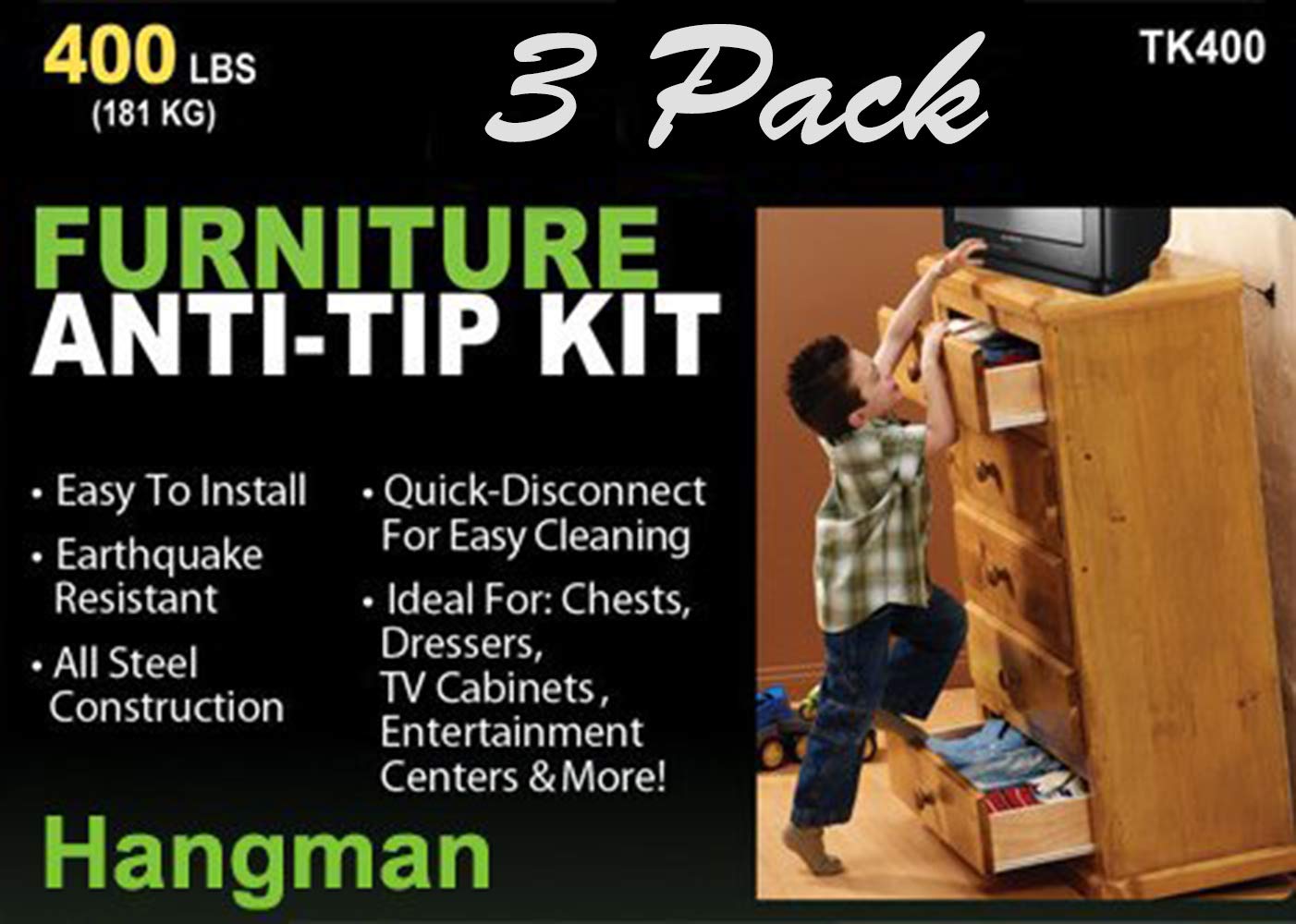
Hangman Anti-Tip Kit TK-400-3
Key Features
- Cable: Galvanized aircraft steel
- Release: Quick-release pin
- Kit count: 3 anti-tip kits
- Rated hold: Up to 400 lb
- Price: Premium
Four hundred pounds is the number on the box, and it’s why this is the kit we name when the furniture is genuinely heavy: a bookcase full of hardbacks, a china cabinet, one of those tall wall units that arrives in three boxes. The cable is galvanized aircraft steel, the brackets are steel, and there is nothing plastic anywhere in the load path.
Two details make it pleasant to live with rather than merely strong. A quick-release pin lets you unhook the piece and pull it out to vacuum, then click it back without hunting for a screwdriver, and it isn’t going to come loose because a child pulled on it. And because the tether is a cable rather than a fixed bracket, furniture can stand a few inches off the wall — exactly what you need when a chair rail or a deep baseboard stops everything sitting flush.
What that costs is the highest price in this guide, for three kits in a box. Across a whole houseful of furniture the arithmetic gets ugly, and the plates are bulky enough to notice if the side of the bookcase is on show. For one heavy piece you want to stop thinking about, neither matters much — and the pin means you’ll actually move the thing to clean behind it, which is more than most screwed-on straps manage.
Pros
- Rated to hold up to 400 pounds
- Galvanized aircraft-steel cable and steel parts
- Quick-release pin for cleaning and moving
- Cable lets furniture stand off the wall
Cons
- Priciest kit here, and only three to a box
- Bulkier plates show on open-sided shelves
Worth the premium for one heavy bookcase or dresser: a rated 400-pound aircraft-cable kit with a release pin, in a box of three.
Best for Tvs on Stands
BOOTWO Metal Anti-Tip Straps 2-Pack
Key Features
- Materials: Metal and nylon
- Pack size: 2 straps
- Mounting options: 4 configurations
- Price: Budget
There’s no plastic anywhere in the load path: both end plates and the cam buckle are metal, and the strap between them is nylon webbing. That’s the whole pitch, and it’s a good one, because the four configurations cover nearly everything — set to wall, set to the stand, set and stand to the wall, or furniture to the wall.
The setup we like best is a television on a stand. One plate goes on the back of the set, the strap runs down to the stand, and you cinch it by hand with the cam buckle. No tools once the plates are screwed on, and no hole drilled through the middle of a TV cabinet to make the whole thing work.
Two things to plan around. There’s no quick release, so freeing the strap means slackening the buckle and re-tensioning it later — a small annoyance on cleaning day. And the included screws run short for sets with deeply recessed mounting holes, so have a few longer M6 and M8 bolts on hand. Use both straps, one from each side; a single one holds the set back but still lets it pivot.
Pros
- All-metal plates and cam buckle
- Four mounting configurations
- Cinches by hand, no tools
- Two straps hold a set from both sides
Cons
- No quick release — slacken the buckle
- Included screws run short for recessed holes
For a TV on a stand or a piece you want cinched tight, this all-metal pair is the most solid-feeling strap kit here.
Best for Rentals and Tvs
IMtKotW TV Safety Strap
Key Features
- Pack size: 1 strap
- Clamp fits: Stands up to 1.77 inches
- Screen range: 20 to 80 inches
- Included screws: Six VESA sizes, two each
- Price: Midrange
The C-clamp is the reason to look at this one. It grips the edge of a TV stand or desk up to 1.77 inches thick, so you can tie a television down without a single hole in the furniture or a pad stuck to the set. There’s a wall-anchor mount in the box too, for running the same strap from the TV to the wall instead.
The screw kit is unusually complete: six VESA sizes, two of each, from M4×12 up to M8×30, and the strap is listed for sets from 20 to 80 inches. That matters, because the bolt is where television straps usually come up short — a set with recessed mounting holes and no matching screw is a strap you can’t fit.
One strap per pack is the catch. A large set on a wide stand wants two, so order two and accept the cost. Tensioning is fiddly as well; the buckle wants a firm pull while someone holds the TV straight, and that’s the part of the install we found ourselves redoing. What we liked most is how reversible it is: loosen, unhook, and there’s nothing to patch.
Pros
- C-clamp grips a stand without drilling
- Six VESA screw sizes included
- Wall-anchor mount as an alternative
- Comes off without patching
Cons
- One strap per pack
- Buckle is fiddly to tension
If the television is the worry and you rent, this clamp-on strap secures it without a hole in the wall or the cabinet.
Best for One Dresser
OKETHERMO Furniture Anchors 2 Sets
Key Features
- Pack size: 2 anchors
- Construction: Metal base, nylon strap
- Stated capacity: 500 lb
- Price: Midrange
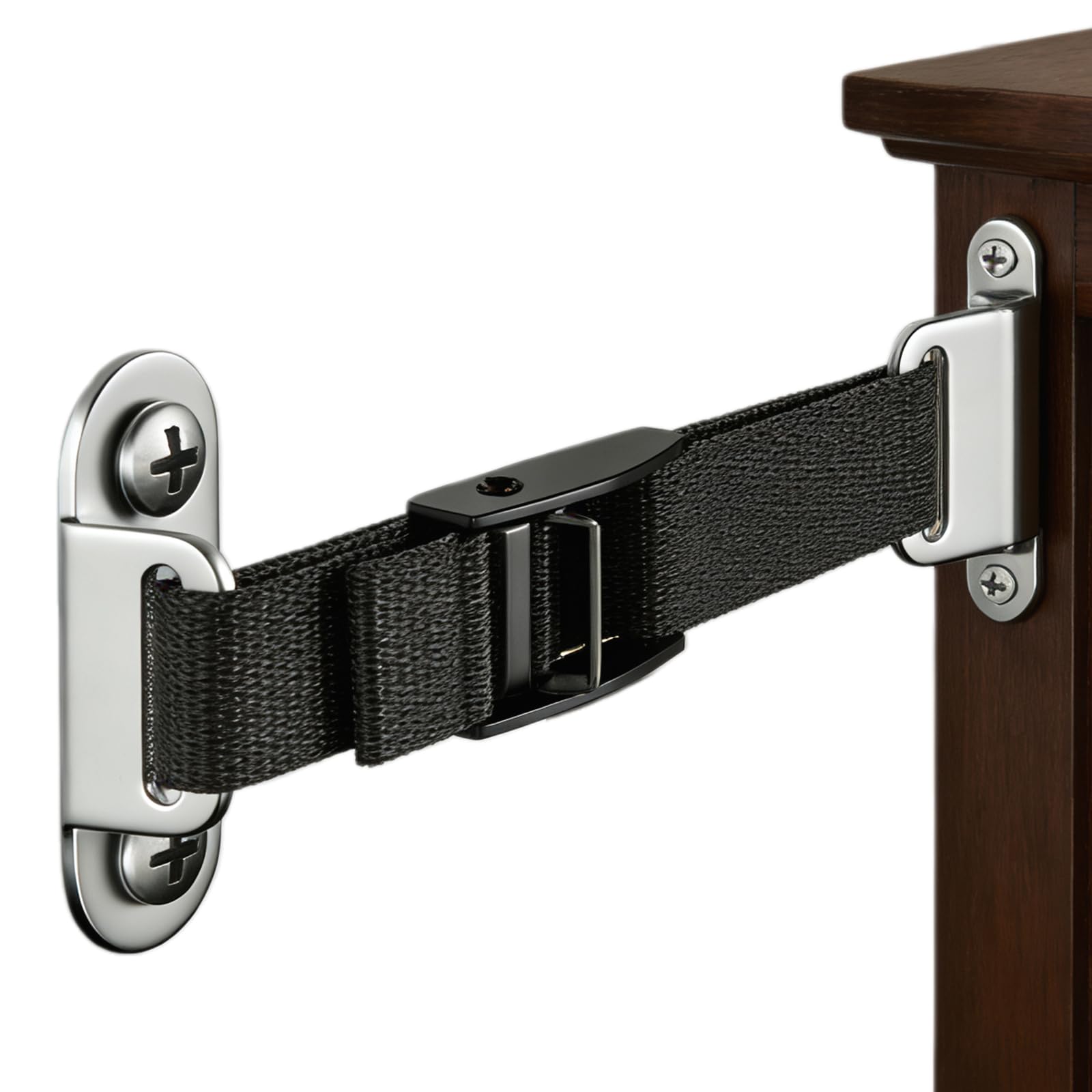
Two anchors in a box makes this a one-piece-of-furniture kit, and if that piece is the dresser in your child’s room, that’s the whole job done. You get a thickened metal plate for the furniture side, a nylon strap and a locking buckle, and a claimed 500-pound capacity that is far beyond anything a domestic dresser will ask of it.
Adjustment is the good part. You set the buckle and the strap takes up the slack, so the furniture can sit where it actually sits rather than exactly flush, and the whole thing unhooks when the room needs rearranging. One person can fit one without help. The plastic wall plug is the piece we replace — a proper toggle anchor or a screw into a stud turns this into a kit as solid as anything here.
Pros
- Thickened metal base and locking buckle
- Adjustable strap takes up slack
- Unhooks for moving and cleaning
Cons
- Only two anchors per pack
A two-anchor kit for one dresser or bookcase, with an adjustable buckle that forgives a wall that isn’t straight.
Best for Bulk Anchoring
4our Kiddies Furniture Anchors 10-Pack

Key Features
- Material: Stainless steel
- Pack size: 10 anchors
- Stated max weight: 400 lb
- Product dimensions: 10.63 x 4.33 x 0.45 inches
- Price: Budget
This is the same recipe as our top pick — ten stainless brackets and cables, with screws and plugs in the box — and it covers an apartment just as well. If the Ougourim is out of stock, nothing here leaves you short on coverage.
Where it gives ground is the furniture end of the install. Threading the cable through the bracket is the step that decides whether the job takes one attempt or four, and it goes fine with two people and a steady ladder and badly on your own. That’s the whole reason we rank it second; the anchors themselves hold a dresser as well as anything at this price.
The stated maximum is 181.44 kg for the kit, which tells you the maker is thinking about bookcases rather than picture frames, and the brackets are small enough to hide behind low furniture. Fit two per tall piece, put them into studs where the wall allows, and keep the spares for the shelf you forgot about.
Pros
- Ten anchors in one box
- Stainless steel cable and brackets
- Stated 181.44 kg maximum
Cons
- Cable ends are fiddly to thread
A ten-pack that does the same job as our top pick for similar money, provided you have a second pair of hands for the cable ends.
Best for Light Tvs, Rentals
OeckuXIY No-Drill TV Straps 2-Pack

Key Features
- Mounting: Adhesive pads or screws
- Pack size: 2 straps
- Strap length: Adjustable for large screens
- Price: Budget
Clean the spot, peel the pad, press it down, and the strap is on — no drill, no screws, no holes in the wall or the furniture. For a renter with a flat screen on a low stand, that’s the entire appeal in one sentence.
The adhesive is also where the story turns. On smooth, clean, well-painted wall it holds hard, sometimes for good; one side of the pad isn’t coming off again without a fight. On bare wood, textured paint or a dusty surface it can let go, and a pad that releases tends to take the paint with it. That’s the trade for skipping the drill.
The straps are generous: length adjusts to fit everything from a small set to a very large one, and there are screws in the box if you change your mind and want a proper fixing. Two straps per pack, which is right — one for each side.
Our call is that this is a supplement rather than a primary anchor. Use it for a light set on a low stand, or for a mirror that can’t take a screw, and back it with a fixing into a stud wherever the stakes are higher. For a dresser, or a big set on a tall stand, skip it — that’s a job for cable and studs.
Pros
- No drilling — pads or screws
- Adjustable to fit large screens
- Two straps per pack
Cons
- Adhesive can lift and peel paint
- Not a structural fixing for heavy furniture
For a renter’s light TV on a low stand, this no-drill pair is a sensible stopgap — not a substitute for a screwed anchor.
Best for Awkward Gaps
HMOKGRT Cut-to-Length Safety Straps
Key Features
- Roll width: 1 in
- Roll length: 16 ft
- Straps per roll: 4
- Adhesive patches: 8
- Price: Budget
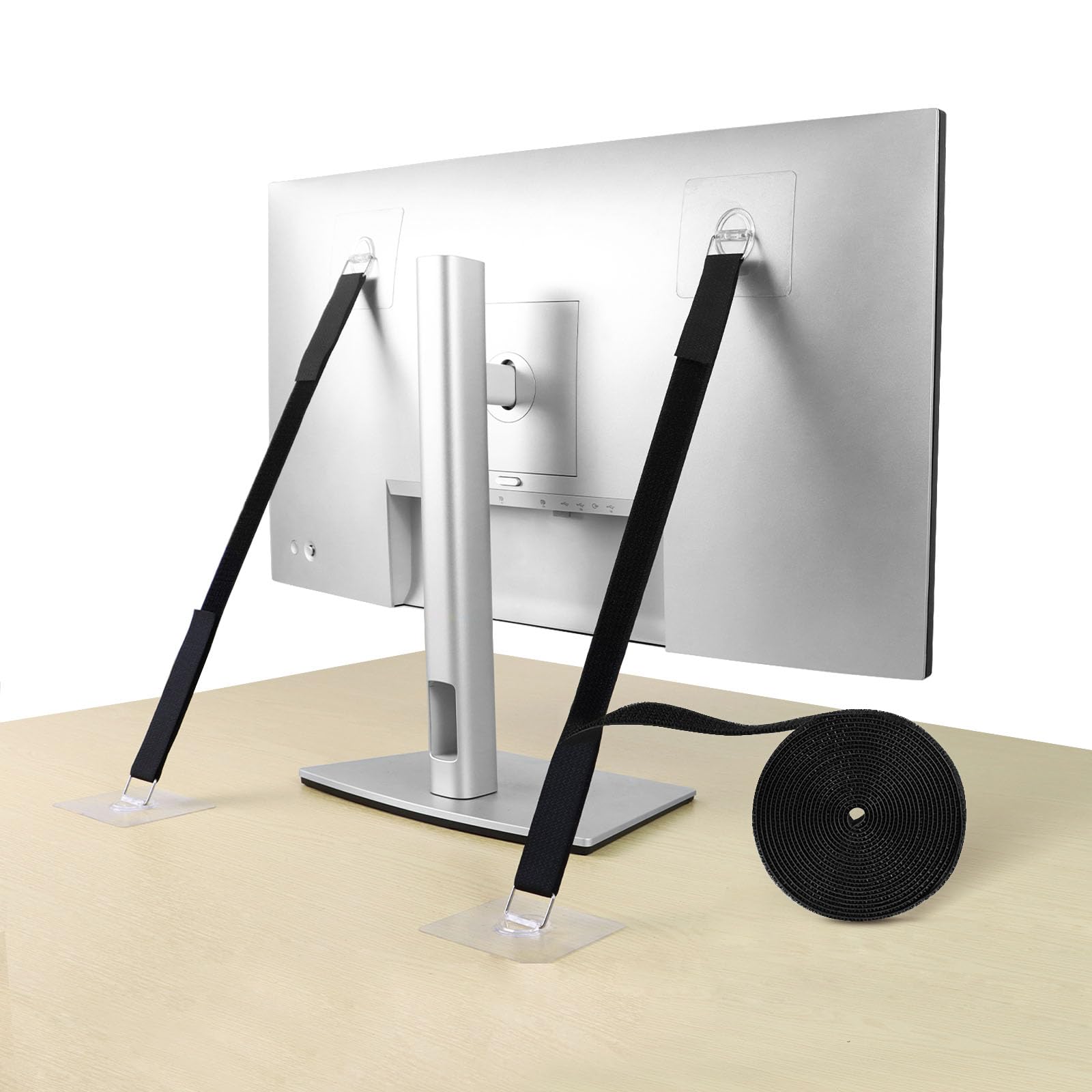
Sixteen feet of hook-and-loop you cut with scissors is the odd one out here, and it solves the problem the fixed-length kits can’t: the gap. A bookcase standing on a chair rail, a set pushed out by a deep baseboard, a mirror that never sits flush — you cut the length that actually reaches and put a pad on each end.
The roll is an inch wide and comes with eight three-inch adhesive patches, which makes four straps; the hook and loop sit on the same face, so each strap is one piece instead of two. Nothing in the box needs a tool.
Where it earns its place is the awkward stuff — a heavy television on a long bureau, a shelf in a corner, a piece of furniture you can’t reach behind — and on walls where a hole means a conversation with a landlord. Doubling a length over gives you a wider hold on something that matters more than a picture frame.
Our judgement is that this is the roll to keep in the closet for the piece you didn’t plan for, not the anchor you trust with the dresser. Adhesive pads are the only fixing here, so the surface does the work: smooth and clean holds, textured and dusty doesn’t. Where you can put a screw into a stud, keep doing that.
Pros
- 16 ft roll cut to any length
- Eight pads make four straps
- Reaches where fixed straps won’t
- No tools required
Cons
- Adhesive pads are the only fixing
A cut-to-length roll for the awkward gaps and the pieces nobody planned for; keep the dresser on cable anchors.
How We Tested the Best Furniture Anchors
We started by gathering every anchor kit we could find that was actually rated for furniture rather than picture frames, then narrowed to 15 based on what came in the box: lag bolts versus plastic sleeves, steel brackets versus nylon strapping, and whether the package included fasteners for both the furniture side and the wall side. Kits that sent you to the hardware store for basic screws got set aside early.
Each kit went onto real furniture in our own homes over four months — a nursery dresser, a tall hallway bookcase, a TV stand, and a low cube organizer. I installed every one solo with a drill and a screwdriver and timed it, because a 20-minute job and a 90-minute job are very different propositions with a baby asleep in the next room. Along the way I noted whether the instructions matched the hardware in the box, whether the anchor needed a stud or worked in plain drywall, and whether the strap or bracket could be snugged down after the furniture was already against the wall.
Then we pulled, hard. We loaded the bottom drawers with weight, yanked them open the way a determined toddler does, and hung a 50-pound sandbag off the front edge of each anchored piece to see what shifted. A month later we went back and checked the hardware: screws that had backed out, straps that had stretched or gone slack, adhesive pads that had begun lifting off painted and laminate surfaces. Durability showed up in the small things — washers that stayed put, brackets that didn’t bend, straps that could be re-tensioned without tearing.
How to Choose Furniture Anchors for Baby Proofing
The strap is the easy part; what decides whether a dresser stays upright is what you fasten it to, so choose the wall fixing first and the anchor second.
Start With the Wall
Any strap here is stronger than the wall it is screwed to, so the fixing decides the outcome. Find the studs behind the piece before you order, and buy for the wall you actually have: a stud for anything heavy, masonry plugs for brick or block, and a proper toggle anchor for drywall-only walls, where the load spreads across a plate behind the plasterboard. The plastic plugs that come in the box are the part we replace first; a better fixing at the hardware store is worth the trip.
Match the Anchor to the Load
A dresser or bookcase wants a bracket-and-cable kit: one plate on the furniture’s back rail, one on the wall, joined by a tether with a little slack. A television on a stand is a different problem — it needs holding back from tipping forward without a bolt through the cabinet, which is the job of the cam-buckle straps and clamp kits here. Where a maker publishes a rating, that is the figure worth comparing; where nobody does, treat the anchor as ordinary domestic furniture hardware rather than something for a wall unit you can’t lift.
Count Anchors, Not Packs
Two anchors per tall piece is the working rule, one at each top corner, with a third for anything wider than a standard dresser. That makes a ten-pack the sensible unit for a first pass around an apartment: a dresser, a bookcase, the TV stand and the chest in the hallway. A two-anchor kit is one piece of furniture, which is worth knowing before you order three of them and find you have covered one room. Check the box contents as well — brackets, screws, plugs and cable should all be there.
Clearance and Everyday Release
Deep baseboards and chair rails stop furniture sitting flush, so tether length matters more than it looks: a longer cable lets a bookcase stand a few inches off the wall and still be held. Think about the day you vacuum behind it, too. A quick-release pin means you unhook the piece and put it back without tools, while a cam buckle or a screw-eye means slackening and re-tensioning — exactly the friction that keeps people from cleaning behind a dresser at all.
Where Adhesive Fits
Peel-and-stick straps have a place: a light set on a low stand, a mirror, a shelf in a rental. They are a second line of defence, not the anchor for anything a child can climb, and the surface decides whether they work — smooth, clean, well-painted wall holds, bare wood and textured paint don’t, and a pad that lets go takes the paint with it. If you can put four screws into a stud, do that and patch the holes when you leave.
Frequently Asked Questions
What part of the furniture does an anchor attach to?
A solid back rail, the top frame, or a side panel — somewhere with enough thickness to hold a screw. Thin hardboard backing will pull out under load, so if that is all the bookcase has, run the bracket over the top rail or into the frame instead. Press on the panel before you drill: if it flexes, keep looking for a solid member.
My dresser came with a tip-restraint kit. Is that enough?
Usually yes. Many dressers ship with a strap or bracket and the maker’s own instructions, and that hardware is designed for the piece, so fit it rather than buying a second kit. If the parts went missing in a move, any cable anchor here does the same job; you still want two fixing points, ideally both into a stud.
Will an anchor keep a dresser upright if my toddler climbs it?
It keeps the dresser from going over, which is what the strap is for, but it does not make climbing safe. An open drawer shifts weight forward and gives a foot a step, so keep drawers closed and nothing tempting on top. Treat the anchor as the last line of defence, not permission to leave a climbable dresser in a bedroom.
How do I check an anchor is still doing its job?
Grip the top of the piece and pull it toward you firmly — a sound anchor stops it almost immediately and feels solid. Then look at the wall plate: screws work loose over time, and a plate that has started to wallow in drywall needs a stud or a toggle anchor rather than another tighten. Re-tighten anything with slack and replace a cable that has frayed.
Final Verdict
If you want the dressers, the bookcase and the TV stand handled in one order, the Ougourim ten-pack is where to start: small brackets that hide, a stainless cable, and an install that doesn’t turn into an argument. Move up to the Hangman when the piece is heavy or when you’ll want to pull it out to vacuum — the 400-pound rating and the release pin earn the premium.
And if the worry is a television rather than a dresser, the BOOTWO pair or the IMtKotW clamp solves that problem better than either, because a set on a stand needs holding back rather than tying down.
