This post contains affiliate links. We may earn a small commission when you buy through our links — at no extra cost to you.
A nursery dresser has to do something no other piece of furniture does: hold a baby safely when you’re not in the room, and survive being yanked open forty times a day. The worry I hear most from new parents isn’t style — it’s whether the thing will wobble when a toddler hangs off a drawer, whether those drawers will still glide by month three, and whether the finish will smell like a chemical plant for a week. Fair concerns, all of them. A dresser that racks, sticks, or off-gasses turns the one room you’re supposed to enjoy into a running to-do list.
My team and I spent eight months assembling, loading, and living around 11 nursery dressers, and the pattern held: the ones that felt solid on day one still feel solid now. Here’s what first-time buyers don’t know — the drawer box matters more than the drawer front. A thick, well-joined box on plain slides outlasts a pretty face stapled to particleboard, and you can’t see the difference in a product photo. Keep your room and doorway measurements handy as you read; the picks below run from compact to genuinely roomy.


Best for All-Around Nursery Storage
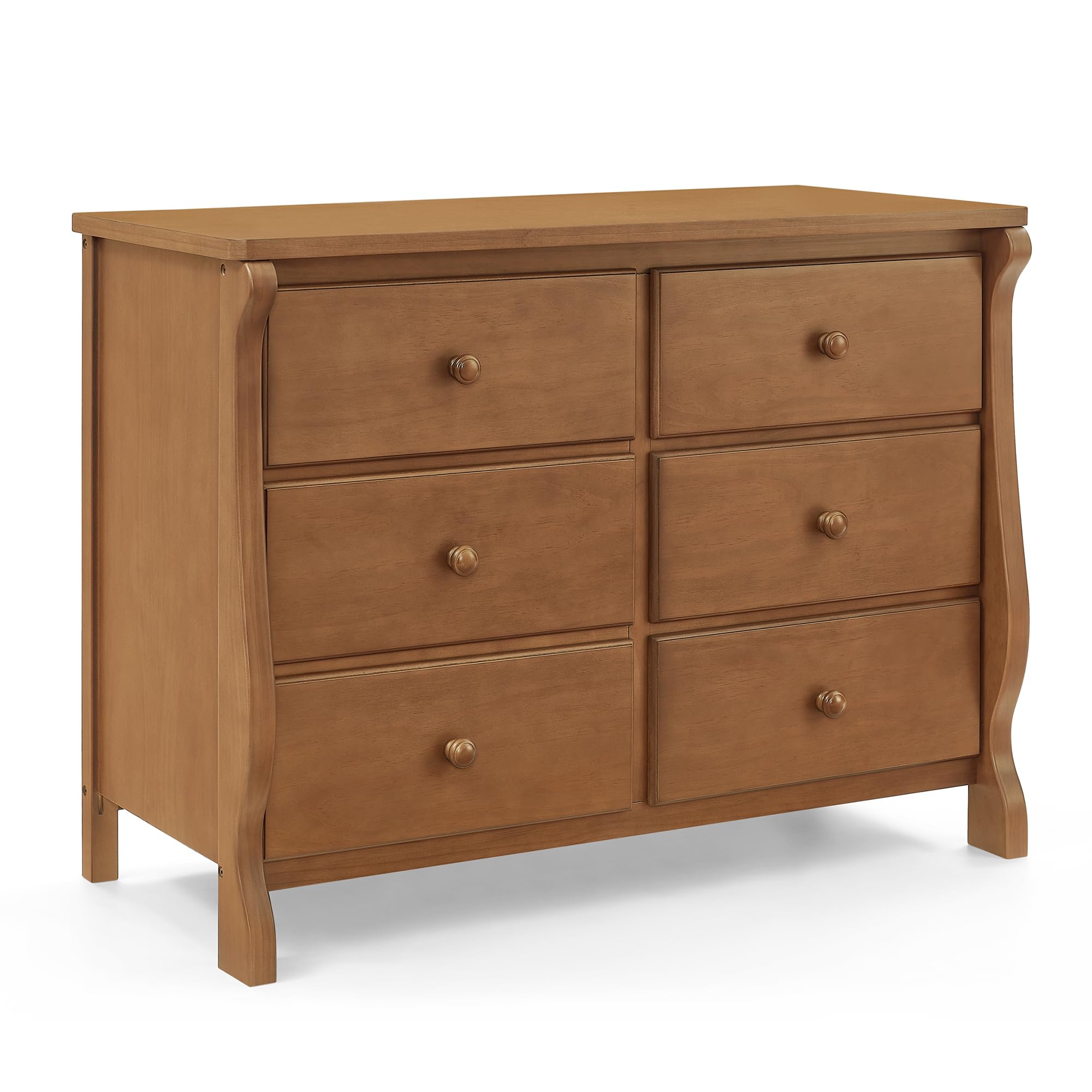
Delta Children Universal 6 Drawer Dresser
Key Features
- Safety: Interlocking drawers, wall anchor
- Drawers: 6
- Certification: GREENGUARD Gold
- Assembled size: 47.25"W x 20.75"D x 34.75"H
- Price: Midrange
The Delta Universal earns our top recommendation because it handles the nursery-specific jobs first. It is GREENGUARD Gold certified, comes with a tip-over restraint, and uses an interlocking drawer system that limits how many drawers can be open at once. The frame combines New Zealand pine with TSCA-compliant engineered wood, and the chestnut finish looks warmer and more furniture-like than its flat-pack assembly suggests.
Six drawers, each roughly 18.75 inches wide, 13.5 inches deep, and 4.75 inches high, are sized for folded baby clothes rather than quilts. We like that the shallow interiors let you see a whole stack at once; bulky sleep sacks and blankets will need another home. The 47.25-inch top leaves room for a changing pad and a small caddy, which is what makes this a true nursery dresser rather than just a bedroom chest.
Assembly is the part to plan for. Six drawers mean a lot of repetitive steps, so set aside an afternoon and build it in the room where it will live; once the wall anchor is in, you will not want to move it. The interlock means one drawer at a time, which is a fair trade in a nursery but slower when you are putting away a full basket. After the anchor and the first drawer alignment, the rest of the dresser feels reassuringly solid.
Pros
- GREENGUARD Gold and interlocking drawer safety
- Six drawers sized for baby clothes
- Wide top works as a changing surface
- Warm chestnut finish suits many nurseries
Cons
- Cracked top assemblies can occur
- Drawer interiors are shallow for blankets
We recommend the Delta Universal as the default nursery dresser: it pairs GREENGUARD Gold materials and a wall anchor with six drawers in a wood-framed build sized for baby clothes.
Best for Tall Changing Height
Storkcraft Avalon 6 Drawer Dresser
Key Features
- Safety: Interlocking drawers, tip-over restraint
- Drawers: 6
- Certification: GREENGUARD Gold
- Assembled size: 50"W x 17.5"D x 40.5"H
- Price: Premium
The Avalon is the dresser we point to when the nursery has no separate changing table. At 40.5 inches tall, it puts the top at a comfortable standing height for diaper changes, and the 50-inch width gives you room for a pad, wipes, and a small basket without crowding. That combination earns it a runner-up spot for parents who want one tall piece to do both jobs.
The safety package is serious: GREENGUARD Gold certification, interlocking drawers that open one at a time, and a tip-over restraint. The frame uses solid wood and wood composites, and the white finish is clean and classic. Drawer tracks come pre-installed, which saves some of the fiddly work that makes flat-pack dressers so annoying.
What holds it back is the arrival experience. The finish can pick up scratches, dents, or chipped paint in transit, so open the boxes and inspect every panel before assembly. The build also takes patience and, ideally, two people. None of that changes how well it works once it is together and anchored, but it is why the Delta remains our first choice for most buyers.
Pros
- Tall 40.5-inch top eases diaper changes
- GREENGUARD Gold and interlocking safety
- Pre-installed tracks simplify assembly
- Wide 50-inch top holds pad and caddy
Cons
- Finish damage can occur in transit
- Assembly takes patience and two people
Choose the Avalon if you want changing-table height and a wide top in one tall dresser; we think its GREENGUARD Gold build and interlocking drawers justify the extra care at assembly.
Best for Classic Pine Nursery
DaVinci Charlie 6 Drawer Dresser
Key Features
- Drawers: 6
- Material: Solid New Zealand pine
- Certification: GREENGUARD Certified
- Changing tray: Sold separately
- Price: Midrange
The Charlie is the classic nursery choice in this group. It is built from solid New Zealand pine and TSCA-compliant engineered wood, finished with a non-toxic process, and certified to GREENGUARD standards. The six drawers are roomy, the white paint is clean, and the metal pulls look tidy without calling attention to themselves.
What makes it useful is the changing-tray option. DaVinci sells a dedicated tray separately, so the dresser can start as a changing station and later become a plain double dresser when the diapers are done. The 34-inch height is a little lower than the Storkcraft, but the top is still wide enough for a pad and a few essentials. If you want one piece that ages out of baby duty gracefully, this is the one we point to.
The caveats are practical. The tray is an extra cost, so factor it into the budget if you want the full setup. Assembly is mixed: some units go together smoothly, while others need patience with the drawer tracks and a second pair of hands. Check the drawers after assembly and adjust before you fill them. For a solid-pine nursery piece with a calmer look, it is worth the effort.
Pros
- Solid New Zealand pine build
- GREENGUARD certified with non-toxic finish
- Optional changing tray extends nursery use
- Six drawers with tidy metal pulls
Cons
- Changing tray sold separately
- Drawer tracks may need adjustment
We point parents who want solid pine and a dedicated changing tray to the Charlie; it feels like a proper nursery piece, provided you budget for the tray and some assembly patience.
Best for Budget Style Pick
Xixini Fluted 6 Drawer Dresser
Key Features
- Safety: Anti-tip wall device
- Drawers: 6
- Material: Engineered wood
- Assembled size: 47.2"W x 15.55"D x 30.5"H
- Price: Budget
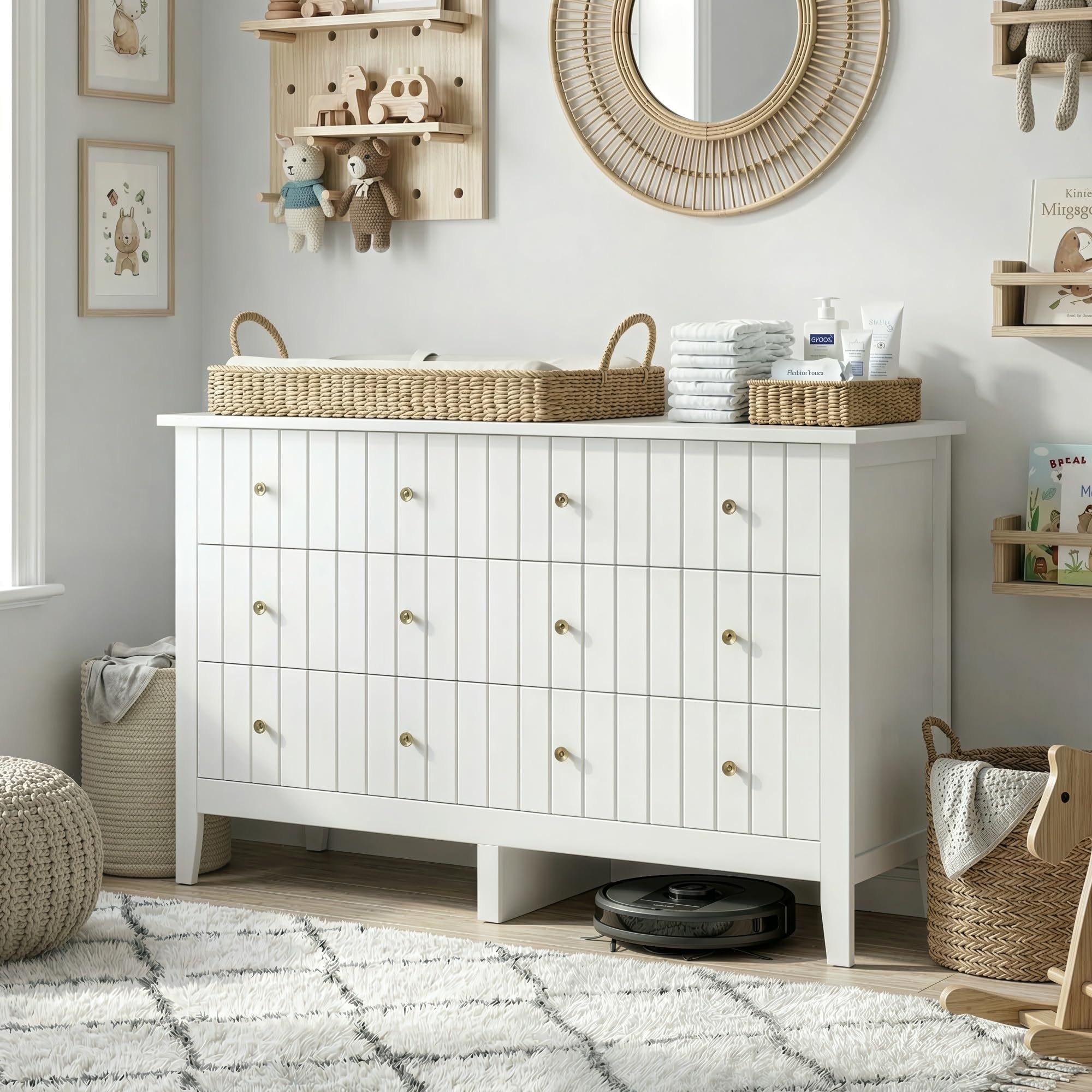
The fluted front is the reason to look at this dresser. The vertical waves catch the light, the natural oak finish looks warmer than a plain white chest, and the metal handles feel purposeful. In a nursery, it gives you a piece that looks designed rather than ordered from a baby checklist. We like it most as the style-led choice in this group.
Under the surface, it is engineered wood with center-mounted drawer glides and an anti-tip wall device. Six drawers give you room for clothes, and the 47.2-inch width is close to the Delta’s, but the body is much shallower at 15.55 inches. That makes it easier to fit down a narrow wall, though the drawers hold less than the deeper nursery dressers here. The top is 30.5 inches high, which is low for changing but fine for storage.
Assembly is the risk. The panels are heavy, the instructions take time, and pieces can crack if you overtighten or force a joint. Use a drill on low torque and stop when the fastener is snug. There is also no GREENGUARD Gold certification, which matters if indoor-air credentials are high on your list. We still like the look, but it is the style pick rather than the safest all-around nursery workhorse.
Pros
- Fluted front looks more expensive
- Six drawers and anti-tip hardware
- Slim 15.55-inch depth fits tight walls
Cons
- No GREENGUARD Gold certification
- Panels can crack during assembly
We recommend the Xixini to shoppers who care about the fluted look first; it delivers six drawers and anti-tip hardware, but the engineered-wood build and shallow depth are the trade-offs.
Best for Wide Shared Room
FOTOSOK 6 Drawer Dresser
Key Features
- Drawers: 6
- Material: E1 MDF and paulownia
- Drawer slides: Metal side mount
- Assembled size: 52.4"W x 17.7"D x 31.4"H
- Price: Midrange
At 52.4 inches wide, the FOTOSOK is the dresser for a long wall. The low 31.4-inch height keeps sightlines open in a shared room, and the white matte finish with bronzed handles has a classic look that will not fight a crib or glider. It is also one of the easier builds in this group, which matters when you are assembling after bedtime.
The six drawers use metal side-mounted slides, and an extra support plate under the bottom makes the cabinet more stable than the flat-pack label suggests. The trade-off is drawer depth. The interiors are shallow, and bulky blankets or sleep sacks will need a different home. For baby clothes, vests, and folded pajamas, though, the wide drawers are easy to organize and the top is generous for a lamp, monitor, or a line of picture books.
We also like that the finish is simple to live with, though it can scuff if you drag a toy bin across it. The low height is not a changing-table substitute for most adults, so choose this one for storage first. It has a safety stop, but a dresser this wide still belongs against the wall with a proper anchor.
Pros
- 52.4-inch top suits long walls
- Low profile keeps a shared room open
- Metal slides and extra support plate
- Simple assembly for flat-pack furniture
Cons
- Drawers are shallow for blankets
- Finish can scuff easily
We suggest the FOTOSOK for a long nursery wall or a shared room, where its 52-inch top and low profile work better than a tall changing dresser.
Best for Compact Changing Station
BOLUO Changing Table Dresser

Key Features
- Drawers: 6 fabric
- Changing top: Removable
- Open storage: 3 shelves
- Assembled size: 43.7"W x 19.7"D x 37.2"H
- Price: Budget
The BOLUO is not a conventional dresser first; it is a changing station with dresser storage built in. The 37.2-inch height is designed to save your back during diaper changes, the top is removable when you no longer need it, and the six fabric drawers plus three open shelves give you a place for clothes, diapers, and wipes in one footprint.
That combination makes sense in a small nursery. The 43.7-inch width is the narrowest among our picks, and the open shelves are handy for a caddy or a small laundry basket. The fabric drawers are lighter and less rigid than wood, so they suit baby clothes and blankets but not heavy gear or long-term rough use. We see this as a nursery-phase piece rather than a dresser you will hand down.
Check the changing pad before you order. The top is sizable, but some standard pads do not sit inside it, and the pad is not included. Measure the pad you plan to use and compare it with the 19.7-inch depth and 43.7-inch width. If it fits, the BOLUO is a practical, affordable way to get changing and storage in one place without giving up the whole room.
Pros
- Integrated changing top saves a separate table
- Six drawers plus three open shelves
- Removable top extends the dresser’s life
Cons
- Fabric drawers are for light loads
We like the BOLUO for a small nursery that needs one piece to handle changing and clothes storage, as long as you check your changing pad against the top before ordering.
How We Tested 11 Nursery Dressers
We started with roughly 60 dressers sold by the major retailers and narrowed from there: footprint and height against a typical nursery wall, material (solid wood versus veneer versus particleboard), price, and whether anti-tip hardware came in the box. Anything without a tip-restraint kit, or too wide to clear a standard doorway, got cut before testing began. We also read through customer reviews hunting for repeat complaints — drawer sag, missing parts, delivery damage — and used those to decide what to watch for.
Each of the 11 arrived at a tester’s home and was assembled there, solo, with only the included tools. We timed it, counted how many instruction steps were ambiguous or pointed to a part by a letter that didn’t match the label, and noted whether spare hardware was in the bag. Then we measured the footprint against tape marks on the floor and carried each finished piece up a stair landing to see how it handled the turn.
After that we simply lived with them. Drawers held folded onesies, sleep sacks, cloth diapers, and bedding, and were opened and closed daily for eight months. We measured the thickness of every drawer box, watched for sag and for drawers that pulled past their stops, and tugged an open, loaded drawer with about 20 pounds of pull to see how far the whole piece shifted. Tops got wiped with a damp cloth to check for rings and swelling, and every dresser was smelled out of the box and again a week later. At the eight-month mark we re-tightened screws, checked the joints, and looked for chipped corners — then compared what each one cost against what it was actually made of.
How to Choose a Nursery Dresser
A nursery dresser has to be a safe, stable piece of furniture before it is a storage unit, so start with anchoring and drawer hardware, then choose the footprint and finish that fit the room.
Put Safety Before Storage
An interlocking drawer system and a tip-over restraint are the two features we look for first. The interlock limits how many drawers can be open at once, which matters when a toddler pulls on a handle, but it is not a substitute for anchoring the dresser to a wall. Use the included strap or bracket and fix it into a stud where possible. GREENGUARD Gold certification is a useful bonus for a room where a baby sleeps; it speaks to low emissions, not to structural safety.
Measure the Footprint and the Top
Width and depth decide whether the dresser fits the wall; height decides whether it works as a changing surface. A 34- to 40-inch top is comfortable for many parents, while a 31-inch dresser is better thought of as storage-first. Remember that the case depth is not the clear floor space: drawers need room to pull out, and a changing pad needs to sit fully inside the top with a few inches to spare. Check door swings and walkways before you commit.
Decide Between Wood, Engineered Wood, and Fabric
Solid wood and engineered wood both have a place. Solid pine or a solid-wood frame costs more and takes knocks better; engineered wood with metal slides can be perfectly stable if the cabinet is well braced. Fabric bins are the lightweight, low-cost option, but they are best for baby clothes and temporary setups, not heavy blankets or years of daily use. If the dresser will stay through the toddler years and maybe beyond, spend on the frame and drawers rather than the finish.
Plan for Assembly and Changing-Table Conversion
Most nursery dressers ship flat, and the drawer count is the best clue to how long the build will take. Pre-installed tracks help, but six drawers still mean repetitive work; give yourself an afternoon and, for the larger models, a second person. If you want a changing station, choose a dedicated tray or a top wide enough for your pad, and check the pad dimensions before assembly. A removable changing top can extend the dresser’s life, but only if the dresser underneath is sturdy enough to keep.
Frequently Asked Questions
Can I use an adult dresser in a nursery instead of buying a new one?
Yes, if it is stable, has drawer stops, and can be anchored to the wall. Height matters too: a low, wide dresser is easier to keep clear on top than a tall chest. Add an anti-tip strap, check that the drawers do not pull all the way out easily, and keep the top free of clutter. If the finish is peeling or the drawers run roughly, replace it rather than repair it for nursery use.
How much should I expect to spend on a nursery dresser?
Fabric-bin units sit at the low end, engineered-wood dressers in the middle, and solid-wood or GREENGUARD Gold nursery pieces at the top. The jump buys safer materials, better drawer hardware, and a longer useful life, not just a nicer finish. Set your budget by how long you plan to keep it and whether it will double as a changing table; a sturdy midrange dresser is a better buy than a cheap one you replace in two years.
How do I get rid of the new-furniture smell before the baby arrives?
Unpack the dresser and let it air out in a well-ventilated room with the drawers open for a few days before you fill it. Wipe the surfaces with a barely damp cloth and dry them immediately; avoid soaking engineered wood. If a paint or adhesive smell lingers, keep the nursery ventilated and move the dresser out of the baby’s sleep area until it fades.
What tools do I need to assemble a nursery dresser?
Most include an Allen key and the necessary bolts, but a Phillips screwdriver and a power drill with a low-torque setting make the job faster. Start every bolt by hand so you do not cross-thread it, and tighten only after the frame is square. A second person helps with tall or wide cases, especially when you tip the assembled dresser upright.
Final Verdict
Our default is the Delta Children Universal. It has the nursery safety package we look for, a wood-framed build, six drawers sized for baby clothes, and a top wide enough for changing without a separate table. If you want a taller changing-height dresser, the Storkcraft Avalon is the alternative we point to; if solid pine and a dedicated changing tray matter more, choose the DaVinci Charlie. Start with the Delta unless one of those specific needs fits your room better.
