This post contains affiliate links. We may earn a small commission when you buy through our links — at no extra cost to you.
Many toddler toothbrushes claim to cover a wide age range, but in practice the bristle firmness, head size, and grip design that work for a 9-month-old are different from what a 2-year-old needs. The term ‘extra soft’ isn’t regulated, so one brand’s gentle bristles can feel rough on a baby’s gums. The real challenge isn’t finding a toothbrush that says ‘1–3 years’ on the box—it’s finding one that actually fits your child’s current oral care stage without misleading your expectations. This guide focuses on matching the brush to your toddler’s age and tolerance, whether they need a silicone teether that doubles as a first brush or a fun character-driven manual that encourages independent brushing. You’ll find options that clean effectively without causing discomfort, and you’ll learn what to look for so you don’t end up with a brush that’s too stiff, too large, or only suited for older kids.


Best for 0-3 Years All
Dr. Brown’s Giraffe Brush
Key Features
- Age Range: 0–3 years
- Bristle Material: Nylon extra soft
- Power Type: Manual
- Design Theme: Giraffe
- Handle Grip: Comfort grip
- Price: Budget
The giraffe-shaped handle stands upright on its legs, keeping bristles clean and dry while making brushing feel like playtime. A comfort-grip handle sized for small hands makes it easy for toddlers to hold independently, and the soft nylon bristles clean effectively without excessive pressure. Parents report consistent quality across months of daily use, with the brush surviving drops and chewing better than many alternatives.
Designed for children 0–3 years, this toothbrush suits most babies from the first tooth emergence through toddlerhood. However, about 15% of users find the bristles not soft enough for extremely sensitive gums — a silicone teether brush may be a better starting point for those cases. For the majority of families, it delivers a straightforward, engaging brushing experience without the complexity or cost of electric options.
Pros
- Stand-up giraffe design keeps brush upright and motivates toddlers
- Comfort-grip handle sized for small hands
- Durable construction holds up through daily use
Cons
- Bristles may feel too firm for extremely sensitive gums
Buy this if you want a fun, budget-friendly manual toothbrush that grows with your child from infancy to age 3. Skip it if your toddler has extremely sensitive gums that require ultra-soft bristles or a silicone teether brush.
Best for Teether First Brush
Baby Banana Brush
Key Features
- Age Range: 3–18 months
- Bristle Material: Silicone
- Power Type: Manual
- Design Theme: Banana
- Handle Grip: Peel handles
- Price: Budget
Unlike the top pick’s nylon bristles, the Baby Banana Brush uses 100% food-grade silicone that soothes teething gums while gently massaging emerging teeth. It works best for babies 3–18 months who are starting oral care and need a safe, non-toxic teether. The silicone surface is prone to attracting lint and hair when dropped, so frequent rinsing is needed.
Pros
- Soothes teething gums and massages emerging teeth.
- Easy for babies to grip and hold.
- Soft and gentle on sensitive gums.
Cons
- Silicone surface attracts lint, hair, and dust when dropped.
Buy this if you want a safe silicone teether that doubles as a first toothbrush for young babies. Skip it if your toddler is over 18 months and needs a proper cleaning brush with bristles.
Best for Frozen Fans 3+
Oral-B Frozen Electric
Key Features
- Age Range: 3+ years
- Bristle Material: Extra soft nylon
- Power Type: Battery rotating
- Design Theme: Frozen
- Handle Grip: Ergonomic
- Price: Budget
The rotating head delivers genuine cleaning power, with the vast majority of reviewers reporting effective plaque removal — a step up from manual brushes for reluctant brushers. Kids respond overwhelmingly to the Frozen theme, making brushing a sought-after activity. However, the brush head is non-replaceable and battery life disappoints many users, so this is best as a short-term motivator for children 3+ who need a fun entry into electric brushing. Parents of sensitive toddlers should note that the vibration can be too intense for some gums.
Pros
- Rotating head provides effective cleaning power.
- Frozen theme motivates children to brush eagerly.
- Budget-friendly price for an electric toothbrush.
Cons
- Battery life is inconsistent and disappoints many users.
- Brush head cannot be replaced; entire unit is disposable.
Buy this if you want a low-cost electric toothbrush that uses Frozen characters to get your 3+ child excited about brushing. Skip it if you prefer a brush with replaceable heads or consistent long-term battery performance.
Best for App-Based Motivation
Philips Sonicare Kids
Key Features
- Age Range: 3+ years
- Bristle Material: Soft replaceable
- Power Type: Rechargeable sonic
- Design Theme: Turquoise
- Handle Grip: Ergonomic
- Price: Premium
This Sonicare delivers 75% more plaque removal than manual brushing, backed by a free app that uses Sparkly rewards and a KidTimer to keep kids actually wanting to brush. Compared to simpler character brushes, the interactive engagement is unmatched — hundreds of parents report their child asks to brush. The trade-off is a motor that shows reliability issues after 12–18 months for a notable minority, and the app initially only supported iOS. Best for families who prioritize cleaning power and app-based motivation over long-term durability, and can accept a premium-priced brush that may need replacement sooner than expected.
Pros
- Clinically proven to remove 75% more plaque than manual brushing
- Interactive app with rewards and timers makes brushing genuinely fun for kids
- Children often request to brush voluntarily, reducing parent resistance battles
Cons
- Motor failure reported after 12–18 months of regular use for a significant number of units
- App initially limited to iOS; Android support added later but may lack some features
Buy this if your child resists brushing and you’re willing to invest in an app-driven routine that delivers proven cleaning power — and can accept that the brush may need replacement within 18 months. Skip it if you need a toothbrush that lasts multiple years or prefer a simpler, lower-cost option.
Best for Fast Efficient Brush
Frida Baby Toothhugger
Key Features
- Age Range: 2+ years
- Bristle Material: Rounded nylon
- Power Type: Manual
- Design Theme: Triple-angle
- Handle Grip: Non-slip grip
- Price: Mid-Range
The Frida Baby Toothhugger uses a triple-angle head to clean front, back, and top surfaces in one pass, making brushing faster for wiggly toddlers. This design reduces brushing time significantly compared to traditional manual brushes, and the color-fading bristles indicate when to replace the brush. However, the bristles are firmer than most ‘soft’ options—many reviewers reported pain or bleeding. This brush suits toddlers 2+ with no gum sensitivity who need efficient cleaning, but it’s not ideal for those with delicate gums.
Pros
- Cleans all tooth surfaces simultaneously, cutting brushing time.
- Reduces brushing time, ideal for impatient toddlers.
- Easy for small hands to grip and maneuver.
Cons
- Bristles are too firm for many toddlers with sensitive gums.
Buy this if your toddler is 2+ with no gum sensitivity and you want to speed up brushing. Skip it if your child has sensitive gums or resists firm bristles.
Best for Bluey Fans 2+
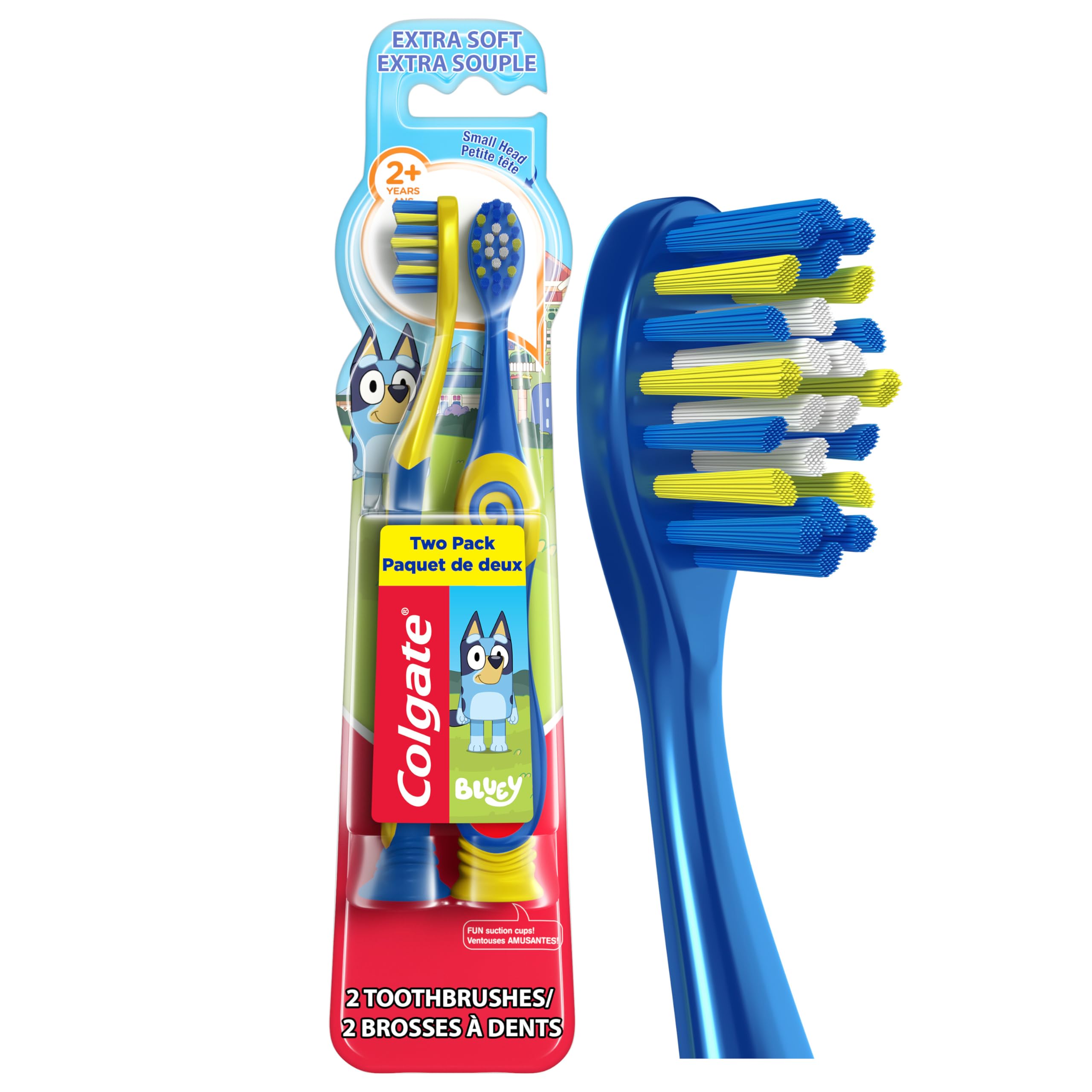
Colgate Bluey Manual 2-Pack
Key Features
- Age Range: 2+ years
- Bristle Material: Extra soft nylon
- Power Type: Manual
- Design Theme: Bluey
- Handle Grip: Suction cup base
- Price: Budget
The Colgate Bluey 2-pack swaps the universal 0–3 versatility of the top pick for a character-driven design that actually gets reluctant brushers excited. Extra soft bristles are gentle on gums, and the suction cup base keeps the brush upright and off countertops—a small but real convenience. The trade-off is durability: bristles soften noticeably within a few weeks, and the suction cup’s grip fades with frequent repositioning. Best suited for Bluey fans age 2+ who need an engaging daily brush, not a long-term investment.
Pros
- Bluey design that kids ask for by name
- Extra soft bristles gentle for toddler gums
- Suction cup stand keeps brush clean and upright
Cons
- Bristles wear out faster than pricier manual brushes
- Suction cup may lose grip over time with frequent use
Buy this if your toddler is Bluey-obsessed and you want a cheap, fun daily brush. Skip it if you need a brush that lasts more than a few months without bristle softening.
Best for Multi-Pack Training
EASICUTI 3-Sided 4-Pack

Key Features
- Age Range: 12m–12yrs
- Bristle Material: Ultra-soft nylon
- Power Type: Manual
- Design Theme: Color pack
- Handle Grip: Silicone non-slip
- Price: Budget
The EASICUTI 4-pack uses a triple-angle head to clean front, back, and top teeth in one motion, with ultra-soft bristles and a non-slip silicone handle toddlers can grip easily. However, bristles may shed after several weeks, the head is large for mouths under 12 months, and the pink handle may not appeal to all kids. It’s a good value for older toddlers who need efficient brushing, but not a universal fit.
Pros
- Triple-angle head cleans all tooth surfaces in one motion.
- Non-slip silicone handle is easy for small hands to hold.
Cons
- Bristles can shed over time, requiring early replacement.
Worth considering if you want a budget multi-pack with a unique three-sided design for efficient cleaning, but verify that the head size and color options suit your child.
Best for Unicorn Vibrating Budget
Colgate Unicorn Electric

Key Features
- Age Range: 3+ years
- Bristle Material: Extra soft
- Power Type: Battery vibrating
- Design Theme: Unicorn
- Handle Grip: Flat-laying handle
- Price: Budget
The Colgate Unicorn Electric offers a fun character design and extra-soft bristles that make brushing more appealing for toddlers. It vibrates rather than rotates, which some parents find less effective at removing plaque compared to rotating brushes. The flat-laying handle prevents rolling, and the included battery keeps costs low, though battery life can be inconsistent.
Pros
- Unicorn design kids love
- Budget-friendly price for a powered brush
Cons
- Only vibrates – less cleaning power than rotating brushes
Worth considering if your toddler is motivated by character designs and you want a simple, low-cost powered brush, but be aware the vibration-only action may not clean as thoroughly as rotating options.
Best for Light Timer Electric
Papablic BabyHandy

Key Features
- Age Range: 0–3 years
- Bristle Material: Silicone tips
- Power Type: Battery sonic
- Design Theme: LED light
- Handle Grip: Ergonomic
- Price: Mid-Range
The Papablic BabyHandy uses an LED light and two-minute timer to keep babies engaged during brushing, with two-stage heads sized for 0–3 years. However, the brush head attachment is delicate — it can snap off after a few uses — and the mild vibration may not provide enough cleaning power for older toddlers needing a more thorough clean.
Pros
- LED light captivates babies during brushing
- Two-minute timer with 30-second pulses builds good habits
Cons
- Brush head attachment is delicate; may snap off after limited use
Worth considering if your baby is motivated by lights and you’re prepared to replace the toothbrush frequently.
How to Choose
The most important factor in choosing a toddler toothbrush is matching the bristle softness and head size to your child’s current age and gum sensitivity, not the age range printed on the package.
Age Range Suitability
Toothbrushes labeled for broad age spans (0–3 years) often work best at the earlier or later end, not both. For babies under 18 months, silicone or extremely soft nylon bristles and a small head are essential. For toddlers 2 and up, slightly larger heads and firmer nylon bristles can clean more effectively without causing discomfort. Always check the lower end of the recommended age—if it starts at 3+, it will likely be too big for a 1-year-old.
Bristle Material and Softness
Silicone bristles are gentler on gums and safe for chewing, making them ideal for teething babies and first brushes. However, silicone attracts lint and requires thorough rinsing. Nylon bristles, even ‘extra soft’, vary widely between brands—some can feel scratchy. Look for brushes with rounded nylon tips or those specifically labeled for sensitive gums. Avoid any brush where bristles shed or detach easily.
Power Type
Not all electric toddler toothbrushes oscillate; many only vibrate, which provides minimal cleaning advantage over manual brushing. If you want true mechanical cleaning, choose a model with a rotating head (like Oral-B) or sonic technology (like Philips Sonicare). For children under 3, manual brushes are often sufficient and less likely to cause vibration discomfort. Battery life and head replacement cost also matter—some ‘disposable’ electric brushes cannot be reused after the battery dies.
Design Appeal
Character-themed brushes (Bluey, Frozen, Unicorn) can significantly increase a toddler’s willingness to brush. The novelty often wears off after a few months, so a design that appeals to your child’s current obsession is more important than long-term aesthetics. Multi-packs with color options let you rotate designs if your child rejects one. Avoid brushes with small decorative parts that could become choking hazards.
Handle Ergonomics and Grip
Toddlers need a handle that is chunky enough to grasp but not too wide. Silicone non-slip grips help little hands maintain control. Stand-up designs (like the Dr. Brown’s giraffe) encourage hygiene by keeping bristles off the counter. Suction cup bases are convenient but lose stickiness over time. A handle that is too long or thin can cause frustration during self-brushing attempts.
FAQ
At what age should a toddler start using an electric toothbrush?
Most dentists recommend waiting until at least age 3 before introducing an electric toothbrush, but many toddlers can handle a gentle vibrating brush as early as 2 if they tolerate it. The key is supervision and ensuring the brush head fits comfortably. For children under 3, a manual brush with soft bristles is usually sufficient and less overwhelming.
How often should you replace a toddler toothbrush?
Replace a toddler toothbrush every 2–3 months, or sooner if bristles become frayed or splayed. Silicone brushes should be replaced when the nubs show wear or the material starts to degrade. Some brushes (like Frida Baby’s Toothhugger) have color indicators that fade when it’s time to toss. For safety, never use a brush with loose bristles or rubber parts.
Do 3-sided toothbrushes actually clean better than regular ones?
3-sided brushes can clean all tooth surfaces in a single pass, making them more efficient for wiggly toddlers who resist brushing. However, effectiveness depends on bristle firmness and head size—some models are too large for small mouths or have bristles that feel too harsh. They are a good option for quick brushing but not necessarily better than a careful manual brushing with a regular brush.
Can a toddler use a silicone toothbrush as a teether safely?
Yes, silicone toothbrushes like the Baby Banana are designed for both gum massage and light chewing, and are generally safe as teethers as long as the silicone remains intact. Check regularly for bites or tears that could create small choking hazards. Avoid silicone brushes with removable parts or those that attract excessive lint, which can be ingested.