This post contains affiliate links. We may earn a small commission when you buy through our links — at no extra cost to you.
Online photos make stacking cups and rings look much larger than they arrive. Many parents open the box to find toys that feel more suited for a dollhouse than a baby’s grasp. That mismatch between expectation and reality is the most common frustration in this category. This guide focuses on sets that deliver on size claims while offering genuine play value across stacking, nesting, bath time, and teething.
The real choice comes down to a simple trade-off: do you want a versatile cup set that works in and out of the bath, or a sensory ring stacker designed to soothe gums and build fine motor skills? Each path serves a different age and play style. Knowing which features actually matter – material safety, number of pieces, and real-world dimensions – turns a gamble into a confident purchase.


Best for Bath Play
The First Years Stacking Cups
Key Features
- Material: Plastic
- Pieces: 8
- Age Range: 6-24m
- Stacking Type: Cups
- Price: Budget
The 92,000-plus reviews and near-perfect rating reflect a simple truth: these cups survive daily use and keep babies entertained for months. They hold up to bathwater, chewing, and tossing, and the numbered cups teach colors and stacking skills without any gimmicks. At a budget-friendly price, the value is hard to beat — especially compared to the Sassy ring stacker, which costs more and doesn’t work in water.
Best for babies 9 months and up, especially if you want a versatile set that works in the bath and on the floor. The cups are smaller than many expect, so measure if you need larger pieces for older toddlers. For parents focused on simplicity, durability, and a low price, this is the obvious choice.
Pros
- Withstands daily play and bath use for 9+ months
- Engages babies with stacking, counting, and water play
- Exceptional value for a set of 8 cups under $8
Cons
- Smaller than many parents expect for older toddlers
Buy this if you want a cheap, durable cup set that works in and out of the bath for babies 9 months and up. Skip it if you need large cups for older toddlers or prefer a ring-stacking design.
Best for Sensory Play
Sassy Stacks of Circles
Key Features
- Material: Plastic
- Pieces: 9
- Age Range: 6-24m
- Stacking Type: Rings
- Price: Budget
Compared to the budget-friendly stacking cups that offer more play modes, the Sassy ring stacker wins on sensory engagement. Babies explore distinct textures (97% positive feedback) and fixate on the beads inside the clear ring. It doubles as a teether, with multiple surfaces for sore gums — 99% of reviewers confirm age-appropriateness. Trade-offs: the rings are compact (44% of mentions note smaller-than-expected size), and the base can trap water if submerged, so keep it out of the bath. Best for parents who prioritize oral-motor and tactile stimulation over stacking versatility.
Pros
- Varied textures and a clear rattle ring engage sensory exploration.
- Teething-friendly surfaces with multiple textures for sore gums.
- Sturdy plastic build and highly engaging play (99% positive playability).
Cons
- Rings are compact — smaller than many expect.
- Base can trap water and develop mold if submerged; not a bath toy.
Buy this if your baby chews everything and you want a sensory-rich stacker with teething value. Skip it if you need a larger ring set or a toy safe for bath time.
Best for Starter Set
Fisher-Price Blocks & Stack Set
Key Features
- Material: Plastic
- Pieces: 15
- Age Range: 6m+
- Stacking Type: Rings + blocks
- Price: Mid-Range
This set combines the Rock-a-Stack ring stacker and Baby’s First Blocks shape sorter in one box, saving you from buying each separately. The 15 pieces offer two distinct play modes: stacking rings and sorting shapes, each supporting fine motor development and problem-solving. Parent reports highlight the bundle’s value as a ready-made gift for babies 6–18 months. The ring stacker’s lightweight base can tip when a baby pushes down on it, so keep play on a stable surface. The shape-sorting bucket has no such issue. While not a single low-cost purchase, the combination justifies the price for those who want a complete starter set.
Pros
- Bundling two classic toys saves money over buying separately
- A tried-and-true gift set that parents and babies enjoy
- Builds fine motor skills and early problem-solving through stacking and sorting
Cons
- Ring stacker base is lightweight and tips easily when baby presses down
Buy this if you want a ready-to-gift set of two classic developmental toys for a baby 6–18 months. Skip it if you already own either toy or prefer a single purchase to minimize cost.
Best for Nursery Decor
Mushie Stacking Cups
Key Features
- Material: Plastic
- Pieces: 8
- Age Range: 0-4y
- Stacking Type: Cups
- Price: Mid-Range
Mushie’s Stacking Cups earn their 4.9-star average by nailing one thing: appearance. Their muted Danish-inspired colors blend into modern nurseries in a way most plastic toys don’t. The trade-off is size – these are noticeably smaller than the top-rated First Years cups, so measure if you expect larger pieces for toddlers beyond 18 months. That compactness makes them ideal for young babies learning to grasp, and the high-quality plastic holds up to chewing and drops. Style-conscious parents and gift-givers will appreciate the premium look, but if cup size matters, look elsewhere.
Pros
- Beautiful muted colors that match modern nursery decor
- High-quality construction that withstands daily play
- Premium gift appeal with a polished unboxing experience
Cons
- Compact size may disappoint those expecting standard stacking cups
Buy this if you value nursery aesthetics and want a cohesive decor piece for a young baby’s first stacking toy. Skip it if you need larger cups for older toddlers or prioritize maximum play value over design.
Best for Soft Blocks
B. Toys One Two Squeeze
Key Features
- Material: Plastic/Fabric
- Pieces: 10
- Age Range: 6m+
- Stacking Type: Blocks
- Price: Mid-Range
The fabric construction and built-in squeaker distinguish these blocks from silicone alternatives. Babies explore texture and sound while learning to grasp and stack. The 10-piece set includes a washable storage bag. However, the fabric material shows wear more quickly than silicone when subjected to heavy chewing. Best suited for babies 6–12 months who mouth gently, or as a soft introduction to stacking. Parents who prefer non-plastic toys will appreciate the soft, safe material. Color variations are occasionally reported but do not affect function.
Pros
- Soft fabric is gentle on babies and safe when thrown
- Squeaky sound holds attention during play
- Durable construction withstands regular use
Cons
- Color may not match product images exactly
- Fabric can show wear from aggressive chewing
Buy this if you want a soft, sensory-first stacking toy for a young baby who mouths toys gently. Skip it if your baby chews aggressively and you prefer a more durable silicone option.
Best for Spinning Toy
JUXUE Spinning Stacker
Key Features
- Material: ABS Plastic
- Age Range: 12m+
- Stacking Type: Spinning
- Price: Mid-Range
The spinning action of the JUXUE Stacker holds a toddler’s attention longer than a standard ring stacker – each disc wobbles and twirls as it slides down, turning stacking into a cause-and-effect experiment. Unlike the sensory-focused Sassy stacker in this roundup, this one relies on motion rather than textures or teething surfaces. The trade-off: the base pops off easily, and discs can scatter across the floor. It’s best for toddlers who have outgrown simple stacking and need a new challenge, but less suitable if you want a sturdy, no-fuss toy. Also note that small parts make it unsafe for babies under 12 months.
Pros
- Spinning discs mesmerize toddlers and extend playtime.
- Teaches cause-and-effect and improves fine motor control.
- Solid ABS plastic feels durable enough for daily play.
Cons
- Base detaches too easily, sending discs flying across the floor.
- Some owners find the plastic feels cheap for the price point.
Buy this if your toddler needs new challenges and enjoys cause-and-effect toys. Skip it if you prefer a durable, traditional stacking toy without loose parts.
Best for Shape Sorting
Fisher-Price First Blocks

Key Features
- Material: Plastic
- Pieces: 10
- Age Range: 6m+
- Stacking Type: Blocks
- Price: Budget
The Fisher-Price Baby’s First Blocks offers a simple shape-sorting experience with a handy carry handle. Its lid doesn’t stay on securely, so blocks can spill during transport or storage. Best for babies 6–12 months learning to grasp and for travel play where the lid issue is manageable.
Pros
- Take-along handle makes it easy to bring shapes to the car or waiting rooms.
- Bright blocks and simple sorting slots teach colors and shapes effectively.
Cons
- Lid tends to pop off during play, causing blocks to scatter.
Worth considering if you want a budget-friendly shape sorter for on-the-go play and can accept the lid’s tendency to pop off.
Best for Silicone Teether
Moonkie Silicone Cups

Key Features
- Material: Food-grade silicone
- Pieces: 7
- Age Range: 6m+
- Stacking Type: Cups
- Price: Mid-Range
These silicone cups are soft on gums and double as teethers, but durability varies across units. The perforated design works well for water play, and the modern colors fit curated nurseries. However, some cups develop splits after moderate use, so check them regularly if you plan heavy daily use.
Pros
- Soft, non-toxic silicone soothes teething gums.
- Modern design and muted colors fit style-conscious parents.
Cons
- Some units develop splits after short use — occasional quality control variance.
Worth considering if you want a non-toxic stacking cup that doubles as a teether for travel. Skip it if you need a durable set for heavy daily use.
Best for Teether Rings
Moonkie Silicone Rings

Key Features
- Material: Food-grade silicone
- Pieces: 7
- Age Range: 6m+
- Stacking Type: Rings
- Price: Mid-Range
The Moonkie stacking rings use soft silicone in muted boho tones, making them a favorite for style-conscious parents. The varied textures provide teething relief and encourage grasping. However, the rings are noticeably smaller than typical stackers, so this set works better as a teether than a primary stacking toy.
Pros
- Boho design with soft colors appeals to style-conscious parents.
- Varied silicone textures soothe sore gums and support motor skill development.
Cons
- Rings are compact; may disappoint those expecting a traditional stacker size.
Worth considering if you want a stylish teether that doubles as a stacking toy, but skip it if you need full-sized rings for older toddlers.
Best for Tall Tower
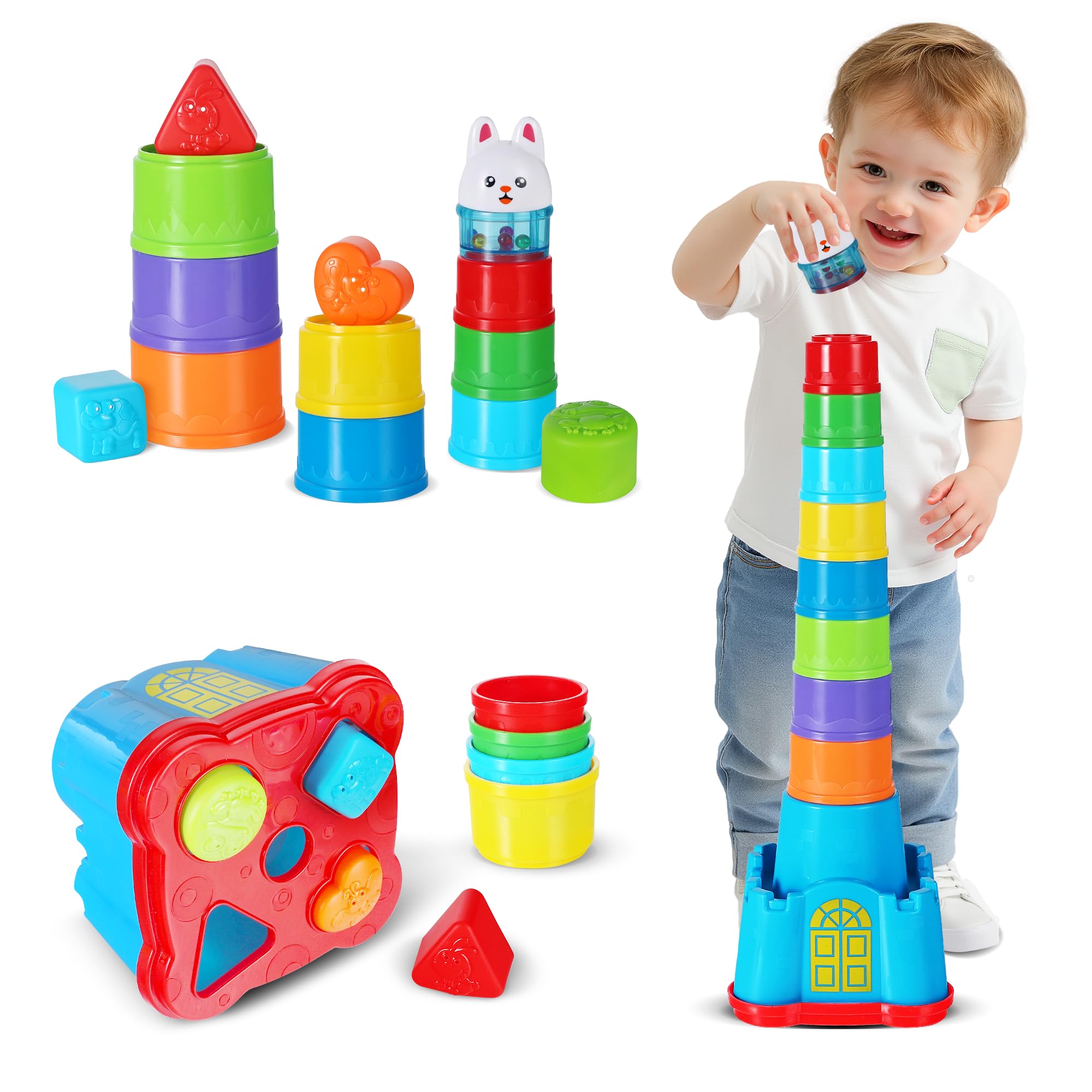
iPlay iLearn Castle Cups
Key Features
- Material: ABS Plastic
- Pieces: 18
- Age Range: 12m-6y
- Stacking Type: Cups
- Price: Mid-Range
This 18-piece set builds towers up to 23 inches and doubles as a shape sorter, giving older toddlers more challenge than basic cups. However, aligning pieces for high stacks can be tricky, and the shape sorter base is finicky to use. Best suited for kids who outgrow simple stacking and want extra play modes.
Pros
- Builds towers up to 23 inches tall, taller than most stacking cups.
- Combines stacking, nesting, and shape sorting in one set.
Cons
- Some pieces require careful alignment for stable high towers.
Worth considering if your toddler enjoys tall towers and wants a shape sorter built in, despite occasional finicky stacking.
Best for Wooden Classic
M&D Rainbow Stacker

Key Features
- Material: Wood
- Pieces: 8
- Age Range: 18m-3y
- Stacking Type: Rings
- Price: Budget
The rocking base and bright color rings encourage size ordering for toddlers 18 months and up. However, the stacker is noticeably smaller than standard ring toys, and paint tends to chip with regular use — making it a better fit for children who no longer mouth toys.
Pros
- Classic wooden design loved for generations.
- Bright colors aid color recognition.
Cons
- Paint chips over time and rings are smaller than expected.
Worth considering if you want a budget-friendly, classic wooden stacker for older toddlers who don’t mouth toys.
How to Choose
The biggest surprise for most buyers is that stacking toys often look much larger in product photos than they actually are – always check the dimensions before buying.
Material
Plastic is the safest and most durable choice for most babies, especially those who mouth toys. Silicone adds teething relief but often comes in smaller sizes. Wood offers a classic feel but risks paint chipping and splinters if the child chews on it.
Number of Pieces
More pieces allow complex stacking and sorting but also create more clutter. For babies under 12 months, 7–10 pieces are enough. Toddlers enjoy larger sets like 18-piece towers for height challenges.
Stacking Mechanism
Cups are the most versatile – they work for nesting, bath play, and building towers. Rings teach ordering by size but offer less open-ended play. Blocks focus on grip and shape recognition. Spinning toys add cause-and-effect but are best for older toddlers.
Safety
Avoid toys with glued-on pegs or rods – they frequently detach and become choking hazards. Look for BPA-free plastic or food-grade silicone. Painted wood toys should be reserved for children who no longer put things in their mouths.
FAQ
Why do stacking cups have holes in the bottom?
The holes allow water to drain during bath play, making the cups great for pouring and scooping. They also help air escape when nesting cups together, preventing suction that would make them hard to separate. This design is intentional and adds to the toy’s versatility.
Are wooden stacking toys safe for teething babies?
Not ideal. Many wooden toys have painted surfaces that can chip and be ingested. Even high-quality wood can splinter when chewed. Stick to BPA-free plastic or food-grade silicone for babies who mouth toys – wood is better reserved for toddlers 18 months and up.
What age should a baby start stacking rings?
Most babies show interest around 6 months, but true stacking – placing rings on the peg in order – usually happens closer to 12 months. Before that, they enjoy gripping, shaking, and chewing the rings. A ring stacker with textured, teething-friendly rings works well from 6 months onward.
How do you clean stacking toys to stop mold from growing?
For plastic or silicone toys, wash with warm soapy water and let them air dry completely – especially important for ring stackers with a hollow base that can trap water. Submerging toys with sealed bases can lead to hidden mold. If you see discoloration inside the base, discard the toy.