This post contains affiliate links. We may earn a small commission when you buy through our links — at no extra cost to you.
Many shape sorters advertised for babies as young as 6 months come with pieces that would slide right through a toilet paper tube — the universal choking-risk test. Parents also encounter lids that pop off with one push, pegs that snap out of stacking boards, and paint that flakes. These frustrations aren’t random; they’re baked into designs that prioritize cuteness over actual baby behavior.
That’s why our picks emphasize large, graspable blocks, secure closures, and materials that stand up to chewing and dropping. You’ll see a clear split between quiet, classic sorters that let babies take charge and electronic toys that use lights and songs to teach—but need more supervision. We highlight the best of each style so the toy you choose actually fits your child’s attention span and your tolerance for noise and cleanup.



Best for Simple First Sorter
Baby’s First Blocks
Key Features
- Piece Safety & Size: Large plastic blocks
- Closure Security: Loose lift-off lid
- Rec. Min. Age: 6+ months
- Shape Variety: 10 shapes
- Portability: Carry handle
- Price: Budget
The 10 chunky blocks are sized for small hands to grasp and drop through the bucket’s shape-sorting lid, helping babies practice shape and color matching from the earliest sitting stage. In everyday use, parents find that the straightforward, no-battery design holds attention across many play sessions, and the thick plastic construction withstands chewing and hard drops. The bucket’s carry handle makes it simple to tote along, so it works for travel or moving between rooms.
This sorter is ideal for parents who value quiet, screen-free play and don’t mind a lid that pops off when tipped—expect to gather blocks a few times. Compared to musical shape sorters like the talking picnic basket in this guide, it sacrifices voices and songs for uncluttered shape manipulation and a smaller price tag. If your baby gets frustrated by scattered pieces, the lid’s lack of a lock may be a daily annoyance.
Pros
- Large, graspable blocks help babies practice shape and color matching from 6 months.
- Durable plastic construction survives drops and chewing without cracking.
- Simple design keeps babies engaged session after session, with no batteries required.
Cons
- Lid lacks a locking mechanism, so blocks scatter when the bucket is overturned.
Buy this if you want a no-fuss first shape sorter that builds early motor skills without screens or music, and don’t mind resetting blocks after a spill. Skip it if a locking lid is non-negotiable.
Best for Interactive Learning
LeapFrog Picnic Basket
Key Features
- Piece Safety & Size: Plastic pieces, some small
- Closure Security: Flip lid with handle
- Rec. Min. Age: 6+ months
- Shape Variety: 15 pieces, varied
- Portability: Basket with handle
- Price: Mid-Range
Unlike the top pick’s bare-bones bucket sorting, this picnic basket folds shape matching into a pretend-play ritual with songs and polite phrases. The 15 food pieces and interactive voice teach colors, shapes, and please/thank-you while keeping toddlers engaged longer. The top lid pops open, but the handle is short, making independent access tricky for small hands; it also needs 3 AA batteries, so it’s never a silent toy. For parents who value interactive learning and a theme that sparks imaginary picnics, the trade-off is worthwhile. This is a gift-ready standout for first birthdays, especially when a simple shape sorter feels too quiet.
Pros
- Pretend picnic theme keeps toddlers sorting through interactive songs and voices
- Teaches shapes, colors, and manners alongside fine-motor practice
- A standout gift for first birthdays with strong play longevity
Cons
- Short handle makes it hard for toddlers to open the basket independently
- Battery-powered (3 AA), adding ongoing cost and noise for quiet-play households
Buy this if you want an interactive electronic toy that teaches shapes, colors, and social skills through imaginative play. Skip it if you need a quiet, battery-free shape sorter or if independent basket access is a priority.
Best for Travel
Take-Along Shape Sorter
Key Features
- Piece Safety & Size: Soft textile, large blocks
- Closure Security: Zippered case
- Rec. Min. Age: 9+ months
- Shape Variety: 9 textured shapes
- Portability: Padded case, handle
- Price: Mid-Range
The laminated fabric case and plush, squeezable blocks make this the clear travel alternative to hard-plastic bucket sorters. The dual-sided design pairs crinkly peek-a-boo flaps with a zipper opening, keeping babies engaged well beyond the shape-sorting task. Textured, lightweight blocks are safe for mouthing and easy to grasp, and the carrying handle invites independent toting. The trade-off: the soft case lacks a locking lid, so shapes can tumble out through the holes when the case is inverted. This is a usability boundary, not a flaw — expect occasional spills during car rides, and consider a rigid sorter if you need blocks fully contained.
Pros
- Ultra-portable soft case with carry handle; ideal for travel and diaper bags.
- Dual-sided design with crinkly flaps and zipper adds sensory discovery.
- Textured, soft blocks are safe for mouthing and easy for little hands to hold.
Cons
- Shapes may slip out through holes when case is upside down.
- Zipper can be stiff initially; occasional quality variances reported.
Buy this if you need a soft, injury-proof shape sorter that packs flat for travel and keeps babies engaged with sensory details. Skip it if you require a rigid container that locks blocks in place or are shopping at the lowest budget end.
Best for Truck Lovers
Dump Truck Shape Sorter
Key Features
- Piece Safety & Size: Wooden blocks, large
- Closure Security: Tip-open back door
- Rec. Min. Age: 24+ months
- Shape Variety: 9 shapes
- Portability: Push-along truck
- Price: Mid-Range
What separates this wooden dump truck from a standard shape sorter is its rolling chassis, two peg figures, and a tilting bed that dumps blocks with a tug of the string. Toddlers treat it as a truck first, sorting shapes naturally as they push and haul. The same pull-string mechanism that makes it so engaging is a vulnerability: 34 negative durability reports note strings snapping under hard yanking and the back door popping open occasionally. Some blocks can wedge in cutouts. Families needing a portable, quiet shape sorter for the diaper bag should look to the soft travel case in this set; the truck is heavy, noisy, and demands floor space. For vehicle-obsessed toddlers who would ignore a static puzzle, that trade-off is the appeal.
Pros
- Sturdy wooden construction that stands up to years of enthusiastic pushing, dropping, and dumping.
- High engagement: toddlers treat it as a truck first, sorting shapes naturally while they push, fill, and dump.
- A go-to gift for vehicle-obsessed toddlers—more engaging than a static shape puzzle and includes figures for pretend play.
Cons
- The pull-string can snap under hard yanking, and some blocks may occasionally lodge in their cutouts.
Buy this if your toddler is obsessed with trucks and you want a sturdy wooden sorter that doubles as a push-and-dump playset. Skip it if you need a portable sorter for travel or a quiet, calm Montessori puzzle.
Best for Montessori Play
Montessori Shape Sorter
Key Features
- Piece Safety & Size: Wooden pieces, peg-based
- Closure Security: None (peg puzzle)
- Rec. Min. Age: 18+ months
- Shape Variety: 20 pieces, multiple shapes
- Portability: Board, no handle
- Price: Budget
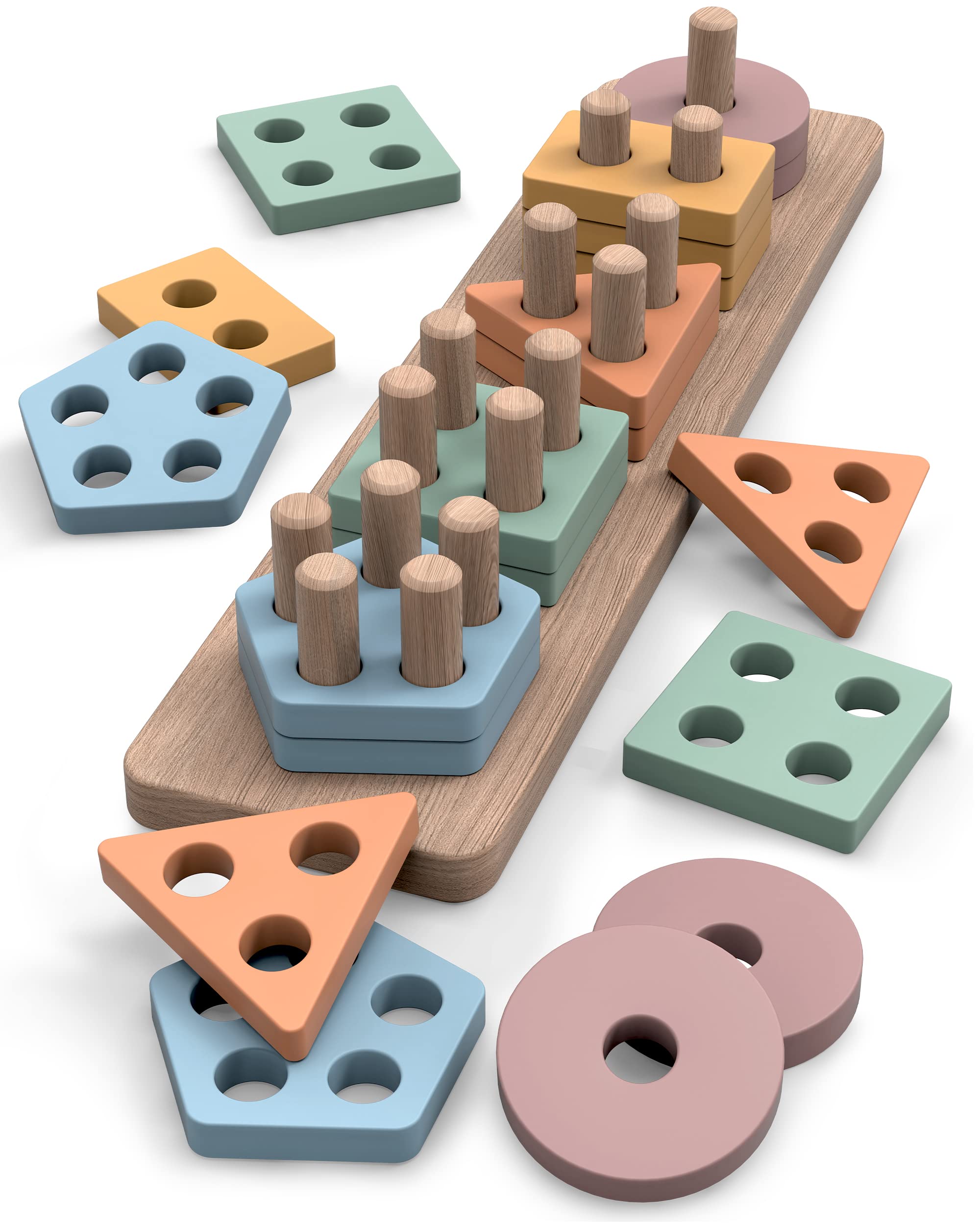
This stacking board offers a quieter, more focused alternative to the classic bucket shape sorter, replacing dumping and lid-removal with a calm, peg-based stacking challenge. The 20-piece set emphasizes shape and color recognition and early math concepts through hands-on stacking, but skips the container-sorting aspect found in bucket toys. It suits children ready for an advanced fine-motor task, and fits Montessori households that prefer natural materials and muted aesthetics. The wooden pegs can loosen over time and may need occasional re-gluing, so this isn’t ideal for toddlers still mouthing objects.
Pros
- Beautiful muted colors and high-quality wooden construction
- Excellent for teaching shapes, colors, and early math through stacking
Cons
- Pegs may loosen over time; occasional re-gluing needed to prevent detachment
Buy this if you want a visually calming, non-plastic stacking toy for a toddler past the mouthing stage. Skip it if you need a fully self-contained shape sorter with a lid or if your child still chews on small parts.
Best for Musical Sorting
Sort & Discover Drum
Key Features
- Piece Safety & Size: Plastic shapes, large
- Closure Security: Removable drum top
- Rec. Min. Age: 6+ months
- Shape Variety: 5 shapes
- Portability: Drum, no handle
- Price: Mid-Range
The VTech Sort and Discover Drum brings lights, music, and animal sounds to shape sorting, offering a level of sensory feedback that the classic silent bucket sorters don’t. Each of the five shapes triggers a tune and a voice prompt naming the shape or color, which keeps cause-and-effect play lively. The trade-off is that the drum’s lid is stiff and requires an adult to remove it for block retrieval; most toddlers cannot open it alone, so independent play is cut short. The onboard sounds, while engaging, may be too loud for quiet households, and the clattering noise of pieces dropping inside can startle sensitive ears.
Pros
- Lights, music, and animal sounds make shape sorting a lively, interactive experience.
- Teaches shapes, colors, and numbers through playful voice prompts and songs.
Cons
- Top is difficult for babies to open; adult help required to retrieve blocks.
- Drum sounds can be loud, and block-falling noise may startle some toddlers.
Buy this if you want a musical shape sorter that rewards sorting with lights and sounds, and don’t mind helping open the lid. Skip it if you need a completely independent-play toy or prefer quiet, no-battery play.
Best for Fine Motor Challenge
Coogam Matching Eggs

Key Features
- Piece Safety & Size: Plastic eggs, small parts
- Closure Security: Snap-shut eggs
- Rec. Min. Age: 36+ months
- Shape Variety: 12 egg shapes
- Portability: Egg carton
- Price: Mid-Range
The eggs are an engaging way for older toddlers to practice shape and color matching while building hand strength to snap them together. The carton keeps pieces tidy. The marketing points to 1-year-old use, but the manufacturer’s minimum age is 36 months due to small parts; parents with younger mouthing children should treat this as a supervised activity for ages 3 and up.
Pros
- Snap-shut eggs offer a fun fine motor challenge that keeps toddlers engaged.
- Teaches shape and color matching effectively through hands-on sorting.
Cons
- Age labeling is confusing: packaging suggests 1+ while manufacturer states 36 months+ due to small parts.
Worth considering if you want a portable fine-motor egg matching set for an older toddler who no longer mouth objects, but verify age guidance first.
Best for Budget Puzzle
Wooden Shape Puzzle

Key Features
- Piece Safety & Size: Wooden pieces, flat
- Closure Security: None (flat board)
- Rec. Min. Age: 18+ months
- Shape Variety: 9 simple shapes
- Portability: Flat board
- Price: Budget
A flat wooden puzzle with nine lift-out pieces—no bucket, no electronics, no moving parts. Toddlers work on pincer grasp and color matching, and the board withstands daily drops. But many parents find the 7.8-inch footprint misleading, and the flat pieces are thinner than chunky blocks in a classic sorter. It’s a supplemental tool, not a primary shape toy.
Pros
- Sturdy wooden board that withstands drops and daily use while teaching shapes and colors.
- Just-right size for small fingers, promoting pincer grasp and hand-eye coordination.
Cons
- Smaller footprint and thinner pieces than many expect; check dimensions before buying.
Worth considering if you need a compact, quiet shape puzzle for a grandparent’s house or daycare where budget and simplicity matter more than 3D sorting variety.
Best for Sensory Play
InnyBin Shape Toy

Key Features
- Piece Safety & Size: Chunky plastic blocks
- Closure Security: Elastic bands, no lid
- Rec. Min. Age: 10+ months
- Shape Variety: 6 textured blocks
- Portability: Cube, no handle
- Price: Mid-Range
The InnyBin challenges babies to push textured blocks past elastic bands, making it a standout fine-motor activity. Hard plastic blocks aren’t ideal for teething gums, and it costs more than simpler bucket sorters.
Pros
- Encourages fine motor skills and curiosity through push-through-the-band play.
- Holds baby’s attention for surprisingly long stretches with simple, repetitive action.
Cons
- Hard plastic blocks don’t double as teethers, disappointing parents who expect softer material.
Worth considering if you seek a screen-free fine-motor toy that breaks away from bucket sorters and teething isn’t a priority.
Best for Classic Puzzle
Shapes Chunky Puzzle

Key Features
- Piece Safety & Size: Chunky wooden pieces
- Closure Security: None (flat board)
- Rec. Min. Age: 24+ months
- Shape Variety: 8 chunky shapes
- Portability: Flat board
- Price: Mid-Range
The Melissa & Doug Shapes Chunky Puzzle gives toddlers a simple, wooden introduction to circles, squares, and triangles. Thick pieces are easy for little hands to pick up and place, and children often learn shape names within a few play sessions. It’s a flat puzzle, not a contained shape sorter, and paint may fade with frequent sanitizing wipes—making it best for quiet, low-mess play spaces.
Pros
- Chunky pieces are easy for small hands to grasp and place, building fine motor skills.
- Toddlers pick up shape names and colors surprisingly fast, often within a few play sessions.
Cons
- Paint may fade or peel with frequent sanitizing wipes; gentle cleaning extends its life.
Worth considering if you want a simple wooden puzzle for a calm play space and can avoid frequent liquid sanitizing.
How to Choose
The most important factor isn’t the number of shapes — it’s whether every piece is large enough to clear a toilet paper tube and the container stays shut during play.
Piece Safety & Size
Check that the smallest block won’t pass through a cardboard toilet paper tube; if it does, it’s a choking hazard for children under 3. Large, chunky shapes are easier for babies to grasp and virtually eliminate the risk of a swallowed piece. Soft textile or BPA-free plastic avoids splinters and makes teething less of a concern.
Closure Security
A lid that pops off at the first tip can turn learning into a cleanup marathon. Look for zippered cases, tight-fitting lift-off tops, or designs where the opening mechanism requires a deliberate adult-style motion. Understand that some babies actually enjoy dumping more than sorting, so a loose lid isn’t always a dealbreaker if you’re nearby.
Rec. Min. Age
Don’t rely solely on the box’s age suggestion; many toys labeled “6+ months” include parts that are too small for a mouthing baby. Cross-check the actual dimensional warning and manufacturer’s fine-print minimum age, which may be 18 or 24 months. For first sorters, stick to toys that are explicitly tested for six-month-olds with large pieces.
Shape Variety
A handful of basic shapes—circle, square, triangle—offers a manageable challenge for a baby’s first sorter. Too many complex pieces can overwhelm and frustrate, causing the toy to be ignored. As toddlers grow, a sorter with 9–12 varied forms provides more long-term engagement.
Portability
A built-in handle, soft case, or compact footprint makes it simple to bring the sorter on car rides and stroller walks. Travel-friendly designs often double as storage, reducing lost pieces. If you’ll use the toy mostly at home, a stationary bucket or truck may be just as practical.
FAQ
At what age can babies start using a shape sorter?
Most traditional shape sorters suggest 6 months, but the real determinant is piece size. If every block is too large to pass through a toilet paper tube, it’s safe for an infant who can sit and grasp. Many so-called 6-month sorters actually include small parts and are really better suited for 18+ months.
Why does my baby’s shape sorter lid keep falling off?
Many bucket and cube sorters use a simple lift-off lid that isn’t secured with a latch. This design favors easy access but can’t withstand a curious baby’s tipping. If containment matters, prioritize zippered cases or lock-down lids, or accept that dumping is part of the play.
Are wooden shape sorters safer than plastic ones for teething babies?
Not necessarily. Wood can splinter and paint may peel or chip, introducing a hazard for a teething mouth. Soft textile sorters with plastic blocks or BPA-free plastic buckets are easier to clean and won’t splinter, making them a safer choice for heavy chewers.
How many shapes should a first shape sorter have?
Start with 3 to 5 fundamental shapes like circle, square, and triangle. A limited set allows a baby to experience success quickly and builds confidence. Adding more complex shapes later keeps the toy interesting as fine motor skills improve.