This post contains affiliate links. We may earn a small commission when you buy through our links — at no extra cost to you.
Many foam block sets advertised as “jumbo” or “giant” arrive with pieces barely larger than a child’s hand. The disconnect between product photos and actual dimensions is the most common frustration for parents shopping this category. A 30-piece set might sound generous, but if each cube is under 3 inches, towers stay short and little hands have little to grasp.
The solution isn’t to avoid foam blocks — it’s to pick sets where the listed dimensions match the play experience you expect. This guide focuses on blocks that are genuinely large enough for stacking and knocking down, while flagging the material and safety details that matter for toddlers who still explore with their mouths. The right set balances visible size, piece count, and certified materials so you don’t discover the limit after you’ve opened the box.

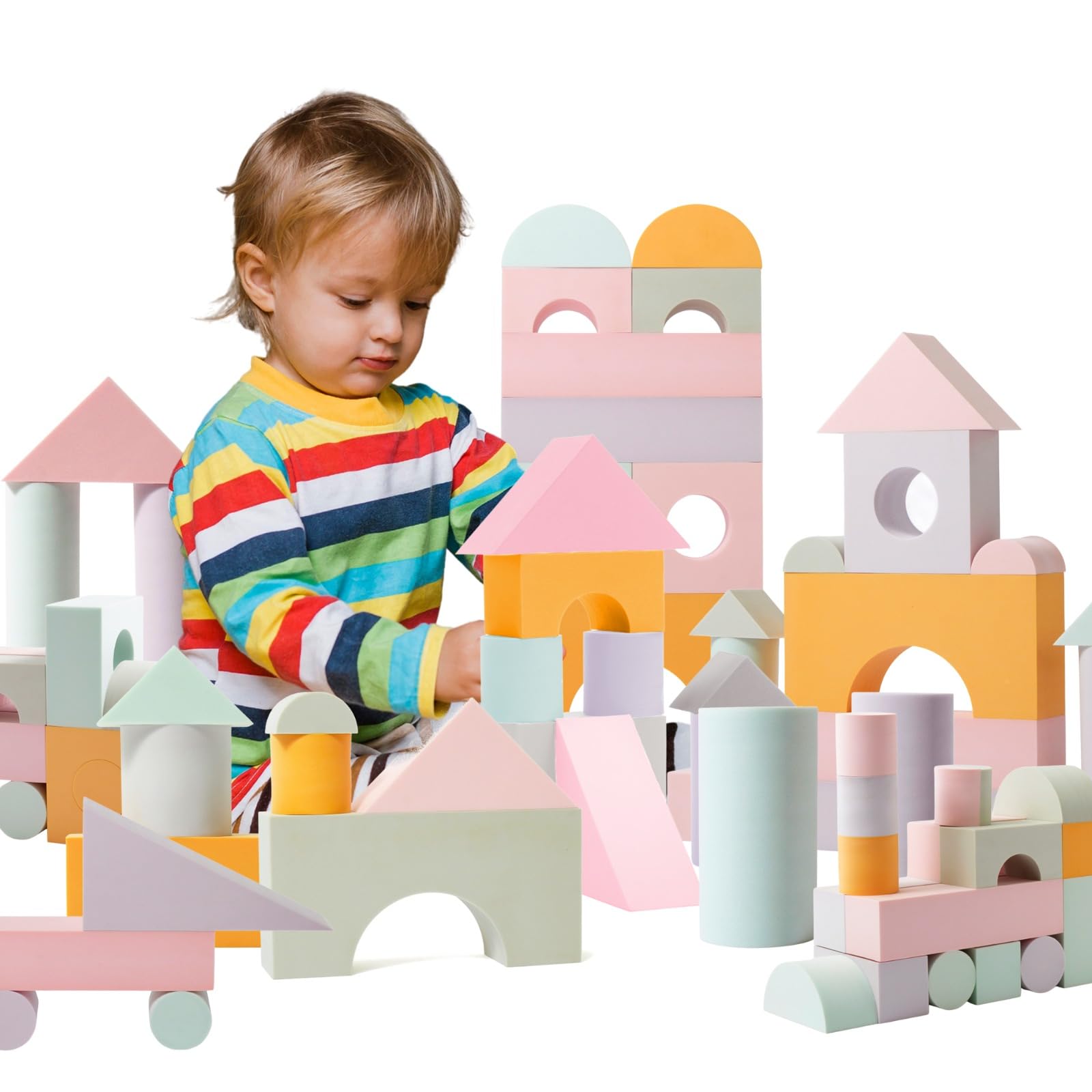


Best for Toddlers 2–4
LOLO TOYS Large Foam Blocks
Key Features
- Piece Count & Block Size: 30, jumbo
- Cleaning: Washable, floatable
- Age Recommendation: 3–11 years
- Storage: Storage bag included
- Price: $$
These 30 jumbo foam blocks hold up to aggressive stacking and knocking down, with 97% of reviewers confirming durability. The generous size fits small hands comfortably, and toddlers stay engaged for long building sessions. Some users note the blocks appear slightly smaller than product images suggest, but they remain generous for little hands.
Best for toddlers aged 3–5 who love building and knocking down, and for parents seeking a safe, quiet alternative to wood blocks. Avoid if your child is under 18 months and mouths toys aggressively, or if you expect blocks larger than 10 inches. This set is designed for stacking play, not for climbing or teething.
Pros
- Exceptional build quality withstands rough toddler play
- High play value keeps toddlers engaged for long sessions
- Generous block size is easy for small hands to grip and stack
Cons
- Blocks appear slightly smaller in person than product photos suggest; check listed dimensions
- Occasional quality variances in cut precision; some edges not perfectly straight
Buy this if you want a durable, generously-sized set of foam blocks for building and knocking down with your toddler. Skip it if your child is under 18 months and mouths toys aggressively, or if you need blocks larger than 10 inches.
Best for Ages 3+
Crafty Happitoys Jumbo 34pc
Key Features
- Piece Count & Block Size: 34, large/jumbo
- Cleaning: Floatable, storage bag
- Age Recommendation: 3+
- Storage: Storage bag included
- Price: $$
These blocks are genuinely bigger than the top pick’s, giving toddlers a satisfyingly solid building experience with stable stacking and easy gripping. The foam is soft and well-made, but it dents if chewed — so this set works best for children past the mouthing stage. The 34-piece count and included storage bag add convenience, though the colors lean muted rather than vivid. For families who prioritize maximum block size and quantity over certifications or chew-resistance, this is a strong alternative.
Pros
- Jumbo size supports big, stable towers that don’t tip easily.
- Durable foam holds up to regular stacking and throwing.
- Perfectly sized for small hands to grasp and carry.
Cons
- Foam can dent if chewed by aggressive teethers.
Buy this if you want the largest available foam blocks and a high piece count for 3+ builders. Skip it if your child still mouths toys and needs a chew-resistant material.
Best for Preschoolers 3–5
N1 Gadgets Giant 50pc
Key Features
- Piece Count & Block Size: 50, medium
- Cleaning: Waterproof
- Age Recommendation: 2+
- Price: $$
The main draw here is quantity over size — 50 pieces in multiple shapes and bright colors at a mid-range price, backed by strong durability reviews. However, the blocks are not as giant as advertised; many are medium to small, which may disappoint those expecting jumbo dimensions. This set suits toddlers 2–4 who enjoy many shape options, group play, or classroom settings on a budget, but not for building large towers or if you need truly oversized blocks.
Pros
- 50-piece set offers great variety and value for group play.
- Highly engaging for toddlers; playability feedback is consistently positive.
- Durable enough to withstand rough play; most durability feedback is favorable.
Cons
- Blocks are much smaller than the ‘giant’ marketing suggests; many are medium to small.
- Occasional quality control issues with air pocket holes in some blocks.
Buy this if you want a large quantity of foam blocks in varied shapes for budget-friendly group play. Skip it if you need genuinely jumbo blocks for big towers.
Best for Infants 6–18Mo
ECR4Kids SoftZone 12pc
Key Features
- Piece Count & Block Size: 12, 5.5 inch cubes
- Safety Certifications: GREENGUARD Gold, CertiPUR-US
- Cleaning: Wipe-clean PU leather
- Age Recommendation: 6 months+
- Price: $$$
Unlike the top pick’s balance of size and value, the ECR4Kids set prioritizes safety above all else: certified non-toxic materials and a smooth, wipeable surface make these blocks ideal for babies who still explore with their mouths. The 12 cubes are soft yet firm enough for stacking, but at 5.5 inches each they’re smaller than many expect, and the per-block cost is high—best suited for infants 6–18 months rather than toddlers needing larger structures.
Pros
- Certified non-toxic materials for mouthing infants
- Durable construction that holds shape over time
- Easy to clean with a damp cloth
Cons
- Cubes measure 5.5 inches, smaller than many expect for the price
- Premium pricing per block compared to other foam sets
Buy this if you need certified-safe blocks for a baby who mouths everything. Skip it if you want a large number of blocks for older toddlers building towers.
Best for Older Toddlers 2.5+
Pairez Foam 138pc
Key Features
- Piece Count & Block Size: 138, approx 1.5–2 inch
- Cleaning: Bath-safe
- Age Recommendation: 18 months+
- Price: $$
With 138 pieces in various shapes and colors, this set supports elaborate construction projects that keep preschoolers engaged for longer stretches. The soft EVA foam is gentle on floors and fingers, and the price delivers strong value per block. However, each block measures roughly 1.5–2 inches — noticeably smaller than jumbo sets — so towers top out low and the pieces attract dust and pet hair quickly. This set suits kids 2–4 who enjoy fine-motor building and group play, but it’s not for families expecting chunky blocks or children still mouthing toys.
Pros
- 138 pieces enable creative, varied constructions
- Soft EVA foam safe for indoor play
- Good value given the piece count
Cons
- Blocks smaller than typical foam sets — limits tower height
- Attracts dust and pet hair easily
Buy this if you want many small blocks for detailed building with older toddlers. Skip it if you need large blocks for tall towers or have children who still mouth toys.
Best for Crawling Babies 9–18Mo
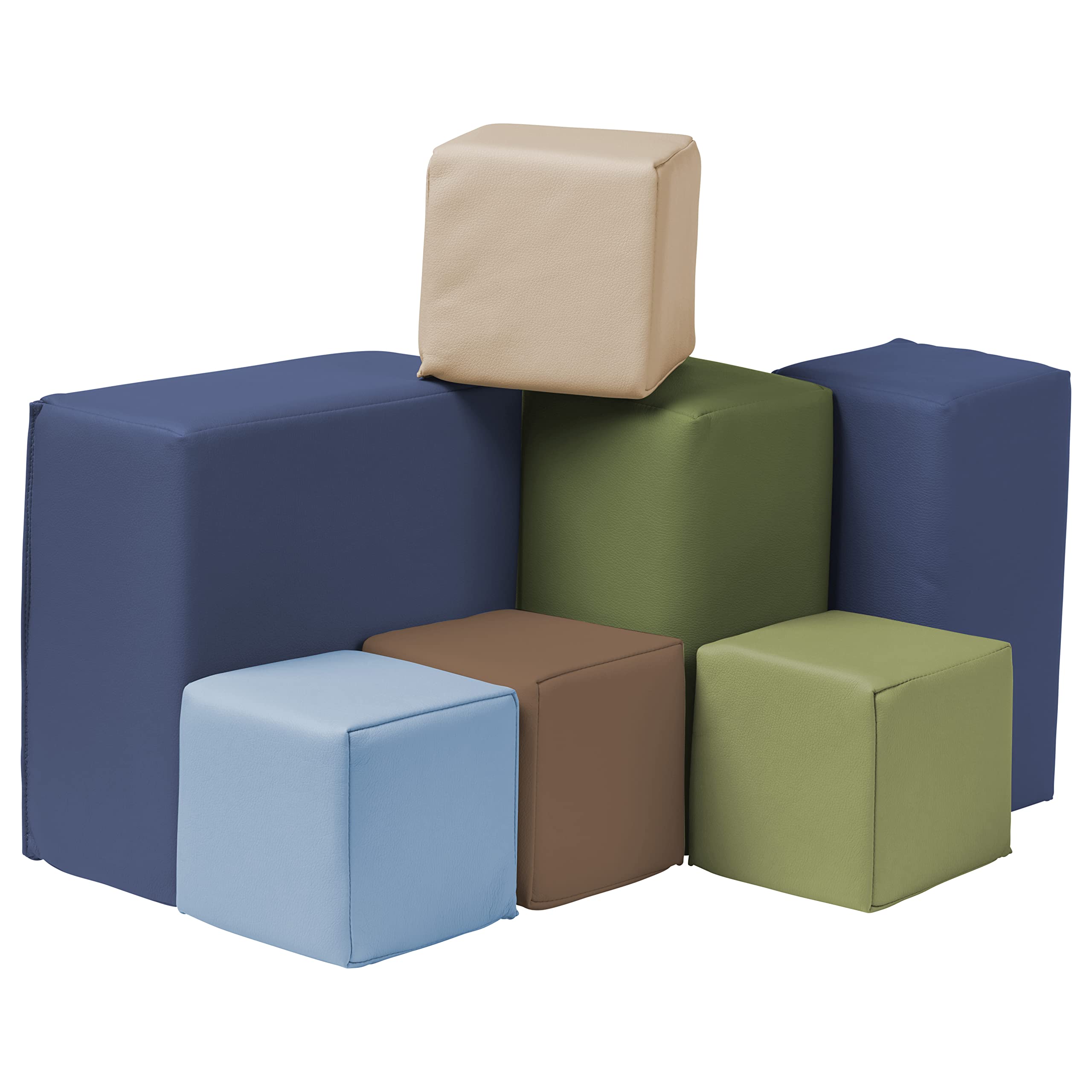
ECR4Kids SoftZone 7pc
Key Features
- Piece Count & Block Size: 7, 12x12x6 to 6x6x6
- Safety Certifications: GREENGUARD Gold
- Cleaning: Wipe-clean PU leather
- Age Recommendation: 9 months+
- Price: $$$
These oversized foam blocks provide a safe, certified surface for infants 9–18 months learning to crawl and climb. The durable construction and easy-clean cover hold up well in active play. However, only 7 pieces at a premium price and narrow age range limit long-term value compared to larger, more affordable sets.
Pros
- Durable foam holds shape well through repeated climbing and stacking.
- Soft, safe PU leather cover wipes clean easily, ideal for infant play.
Cons
- Blocks are smaller than expected for the premium price.
Worth considering if you have an infant 9–18 months learning to crawl and climb and value certified safety over piece count.
How to Choose
The most important rule when shopping foam blocks: ignore the word ‘jumbo’ and look at the actual dimensions in inches — a 5.5-inch cube is very different from a 10-inch block.
Piece Count & Block Size
More pieces isn’t always better. A 138-piece set with 1.5-inch blocks limits tower height and grip, while a 30-piece set with 4-inch cubes encourages larger builds. Check product listings for exact cube dimensions; if they aren’t listed, assume the blocks are small.
Safety Certifications
For babies under 18 months who mouth objects, look for GREENGUARD Gold or CertiPUR-US certified foam. These labels indicate no harmful volatile organic compounds (VOCs). Uncertified EVA foam can be safe for older toddlers who no longer chew, but avoid sets with loose foam fragments.
Ease of Cleaning
Foam blocks attract dust, pet hair, and lint. Sets with a wipe-clean PU leather cover (like some ECR4Kids) are easiest to maintain. Standard EVA foam can be rinsed with mild soap and water, but air-dry fully to prevent mold. Floating blocks are convenient for bath play.
Age Recommendation & Mouthing Stage
Manufacturer age labels (e.g., 18+ months) are often based on choking hazard regulations. If your child still puts toys in their mouth, choose dense, one-piece foam blocks with no detachable parts. Soft, open-cell foam can break off under aggressive teething and should be avoided for children under 3.
Storage & Portability
A included storage bag or mesh sack keeps blocks contained and makes cleanup easy. Without it, foam blocks can become a tripping hazard. For classrooms or travel, consider sets that pack flat or come with a dedicated carrying case.
FAQ
Are foam building blocks safe for teething babies?
Not all foam blocks are safe for teething. Dense EVA foam or PU leather-covered blocks (like those with GREENGUARD certification) resist biting. Avoid blocks with open-cell foam that can break into small pieces, which pose a choking hazard. For babies under 18 months, choose certified non-toxic sets and supervise closely.
What size foam blocks are best for a 2-year-old?
For a 2-year-old, blocks that are at least 4 inches across — ideally 5–6 inches — allow easy gripping and stable stacking. Very small blocks (under 2 inches) frustrate toddlers and limit creative building. Check the product’s listed dimensions; ‘jumbo’ is not a reliable indicator.
How do you clean foam play blocks?
Most foam blocks can be wiped with a damp cloth and mild soap, then air-dried. For sets with a leather-like cover (e.g., ECR4Kids), simply wipe down. EVA foam blocks can be rinsed in the bathtub, but avoid submerging them for long periods. Always dry completely to prevent mildew.
Do foam blocks attract dust and pet hair?
Yes, static charge causes foam blocks to attract dust, lint, and pet hair. This is especially true for open-cell foam. Wipe-clean PU leather covers minimize this issue. If dust is a concern, choose smooth-surfaced blocks and store them in a closed bag or container.
How can I tell if foam blocks are truly giant before buying?
Ignore product titles that say ‘giant’ or ‘jumbo’. Instead, look for the exact block dimensions in inches listed in the product description or images. Compare those to a common reference like a standard brick (approx 9 inches). The LOLO TOYS set, for example, states its block sizes clearly.