This post contains affiliate links. We may earn a small commission when you buy through our links — at no extra cost to you.
Many STEM toys promise hands-on learning but end up with parents deciphering unclear instructions or fixing broken pieces. The real challenge isn’t finding a toy labeled ‘STEM’ — it’s finding one that works for your child’s age, attention span, and skill level without requiring constant adult intervention. The gap between marketing and lived experience is especially wide for excavation kits that need a hammer and magnetic sets that don’t stay together.
This guide focuses on toys that deliver on their core promise: clear instructions, durable parts, and a difficulty curve that matches the age range on the box. The right STEM toy makes a child want to figure it out themselves — not hand it off to an adult after five minutes of frustration.





Best for Electronics Learning
Snap Circuits SC-300
Key Features
- Age Range: 8+
- Projects / Pieces: 300+ projects
- Durability: High quality
- Instructions: Clear manual
- Play Type: Guided
- Price: Mid-Range
Over 300 projects teach real circuitry from simple switches to AM radios, using color-coded pieces that snap together without tools. The parts withstand repeated assembly and disassembly, which matters given the volume of builds. Children can independently construct circuits after a few guided attempts, though younger kids (ages 8–9) occasionally need adult help deciphering the manual’s diagrams for more complex steps.
Best for ages 8+ who want to understand how electronics actually work, and for homeschoolers building a structured science unit. Not a one-and-done plaything — each project takes 10–30 minutes and builds on previous knowledge. Expect to supervise the first handful of projects with an 8-year-old; after that, most can follow the manual solo. The 60+ parts and 300 projects provide a year or more of educational replay.
Pros
- Teaches real electronics through 300+ progressively challenging projects
- Parts snap together securely and survive repeated use without breaking
- Cost per project is low given the depth and replay value
Cons
- Manual steps occasionally unclear for 8–9 year olds, requiring adult help
- Not suited for quick one-off builds — each project assumes prior steps
Buy this if you want a structured, long-lasting electronics curriculum that lets kids build real circuits and understand how they work. Skip it if your child prefers open-ended building or you need a toy they can use completely independently from the start.
Best for Preschoolers Creative
Brain Flakes 500-pc Set
Key Features
- Age Range: 3+
- Projects / Pieces: 500+ pieces
- Durability: Durable plastic
- Instructions: None needed
- Play Type: Open-ended
- Price: Budget
Unlike guided project sets or magnetic tiles, Brain Flakes 500 discs encourage freeform creativity without step-by-step instructions — ideal for group play and classroom makerspaces. The pieces are durable and colorful, but younger children (3–4) often need adult help to snap them together, so plan for that initial guidance.
Pros
- Unlimited building possibilities with simple interlocking discs.
- Excellent for collaborative play in classrooms or playdates.
Cons
- Younger children (3–4) may struggle to snap pieces together without adult assistance.
Buy this if you want a screen-free, open-ended building toy that thrives in group settings and sparks creativity without instructions.
Best for Ages 8+ Logic
ThinkFun Gravity Maze
Key Features
- Age Range: 8+
- Projects / Pieces: 60 challenges
- Durability: Sturdy
- Instructions: Clear cards
- Play Type: Guided
- Price: Budget
Unlike the electronics-focused top pick, Gravity Maze swaps soldering for marbles and gravity. Each of the 60 puzzles requires arranging towers so a marble reaches the target – a pure logic exercise that sharpens spatial reasoning without screens. The build quality holds up to repeated plays, and the challenge curve means early levels hook beginners while later ones demand genuine planning. But the top-end puzzles can push the patience of an 8-year-old; the 8–12 age range is optimistic at the upper limit. Best for kids who enjoy methodical problem-solving rather than free-form construction.
Pros
- 60 puzzles from beginner to expert grow with the child’s skill.
- Builds critical thinking and spatial reasoning through hands-on play.
- Sturdy towers and marbles withstand repeated use.
Cons
- Upper-level puzzles can frustrate younger children within the target age range.
Buy this for kids 8+ who enjoy puzzle challenges and want screen-free solo or collaborative play. Skip it if your child gets easily frustrated or prefers open-ended building.
Best for Science Variety
Nat Geo Earth Science Kit
Key Features
- Age Range: 8+
- Projects / Pieces: 100+ activities
- Durability: Plastic components
- Instructions: Vague
- Play Type: Guided
- Price: Mid-Range
This kit packs over 100 activities — crystal growing, volcano, gemstone dig, tornado tubes — offering more variety than any single-focus STEM toy. The breadth is unmatched, but the trade-off is clarity: instructions often skip steps, and some experiments require household items not included (like vinegar or baking soda). Best suited for kids 8+ who love trying different science projects with a parent or older sibling guiding the process. It works well as a homeschool supplement or a rainy-day family activity, provided you’re prepared to improvise when the guide leaves gaps.
Pros
- Massive variety of 100+ earth science experiments keeps kids engaged across multiple topics.
- Age-appropriate activities spark curiosity and encourage repeated exploration.
Cons
- Instructions are often vague and missing steps, requiring adult interpretation.
- Some experiments require additional household items not included in the kit.
Buy this if you want a wide selection of earth science experiments and are comfortable adding a few household supplies and adult guidance. Skip it if you need fully self-contained, clear instructions for independent play.
Best for Dinosaur Digging
Dan&Darci Dino Egg Kit
Key Features
- Age Range: 3–12
- Projects / Pieces: 12 eggs
- Durability: Plastic tools
- Instructions: Included
- Play Type: Guided
- Price: Budget
Unlike the structured electronics of the top pick, this kit gives kids a chance to excavate 12 dinosaur eggs using chisels and brushes. Each egg reveals a unique dinosaur figure with a fact card, blending play with learning. The activity holds attention for hours and works well for parties or Easter baskets. However, the digging creates substantial dust and debris; most families find it easiest to set up outside. The eggs can be stubborn, often requiring adult help to crack open fully.
Pros
- Keeps kids entertained for extended periods during excavation.
- Includes educational dinosaur facts and collectible cards.
- High quantity of eggs and tools at a budget-friendly price.
Cons
- Very messy — creates dust and debris that requires cleanup.
Buy this if your child is dinosaur-obsessed and you’re prepared for a messy but rewarding hands-on activity.
Best for Fidget Puzzle Lovers
Shashibo Shape Shifting Cube
Key Features
- Age Range: 6+
- Projects / Pieces: 100+ shapes
- Durability: Moderate
- Instructions: None needed
- Play Type: Open-ended
- Price: Budget
The Shashibo Shape Shifting Cube focuses on tactile engagement rather than textbook learning, offering over 100 transformations from a single magnetic cube. Unlike the structured electronics projects of the top pick, this is a silent, screen-free fidget that fits in a pocket — ideal for road trips, waiting rooms, or focus breaks. Best suited for fidgeters and puzzle enthusiasts age 6 and up who enjoy exploring geometric configurations. However, the stickers and seams are not built for rough handling; with regular use, they tend to peel, so treat it as a novelty fidget rather than a long-term display piece.
Pros
- Engages fidgeters and puzzle lovers of all ages with magnetic shape-shifting.
- Compact and quiet — perfect for travel, waiting rooms, or stress relief.
- Makes a budget-friendly gift or stocking stuffer that appeals to a wide age range.
Cons
- Stickers and seams peel with regular use; not built for rough play.
Buy this if you want a quiet, portable fidget toy for stress relief or travel. Skip it if the toy will be handled roughly or needs to hold up as a long-term display piece.
Best for Toddler Creative Building
Coodoo 60pc Magnetic Tiles
Key Features
- Age Range: 3+
- Projects / Pieces: 60 tiles
- Durability: Strong magnets
- Instructions: Included
- Play Type: Open-ended
- Price: Budget
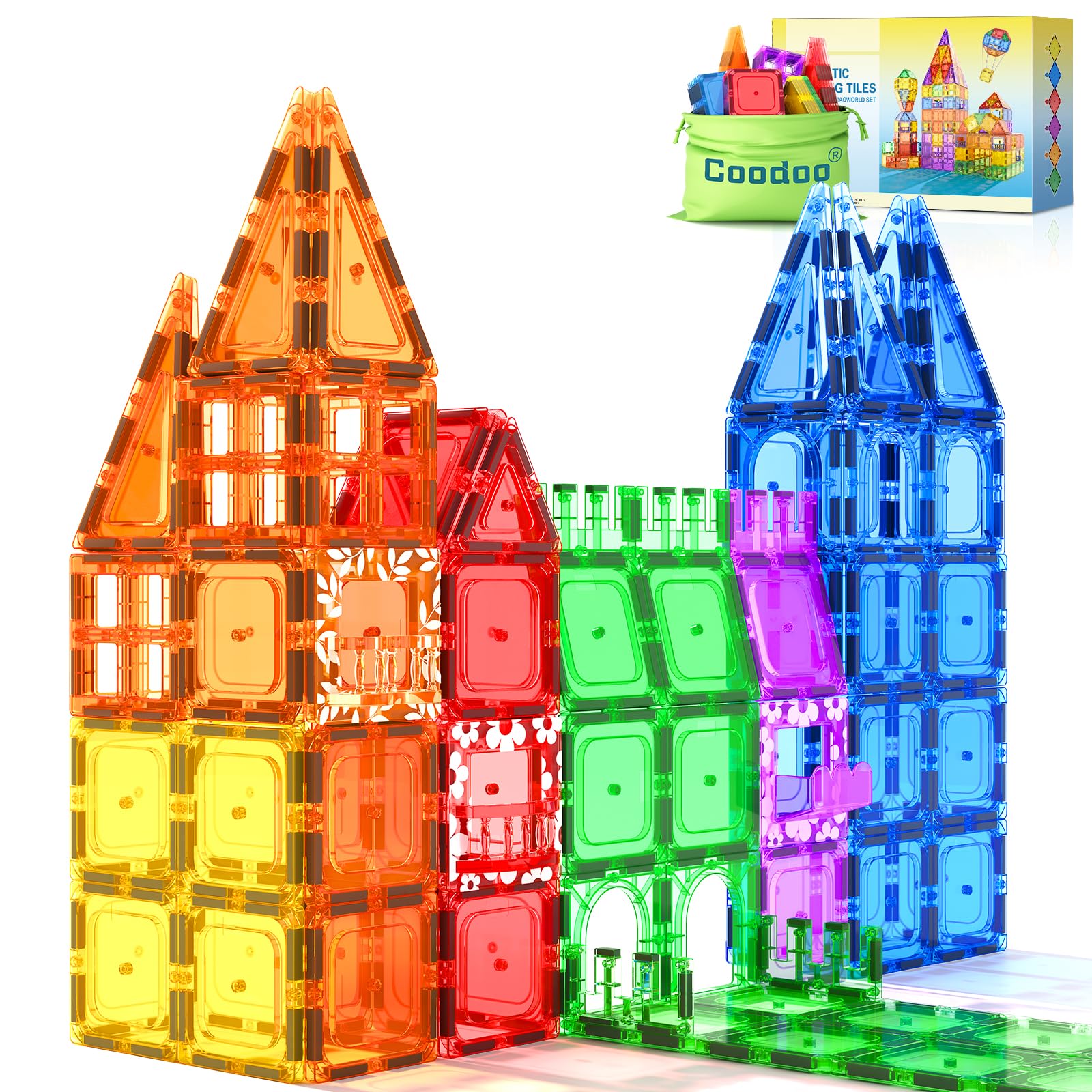
Unlike smaller or weaker budget sets, the Coodoo 60pc includes unique balcony and awning pieces that expand creative possibilities, while the strong ABS magnets hold up well during tower building. A storage bag adds convenience for cleanup. A small number of buyers report magnets separating from the plastic; this is a quality-control variance rather than a widespread issue. That tradeoff aside, this set is well-suited for toddlers and preschoolers exploring open-ended building, sensory play, or classroom centers, where the piece count and shape variety encourage extended engagement without needing adult guidance.
Pros
- Strong magnets hold structures firmly; durable ABS plastic withstands drops.
- Unique shapes like balconies inspire imaginative play beyond basic squares.
- 60 pieces at a budget price, including uncommon shapes and a storage bag.
Cons
- Occasional magnet separation reported; inspect tiles regularly.
Buy this if you want a strong-value magnetic tile set for toddlers or classroom use, with enough pieces for collaborative building. Skip it if you require perfect quality consistency and might be frustrated by occasional loose magnets.
Best for Toddler Sensory Building
Soyee Magnetic Tiles 32pc

Key Features
- Age Range: 3+
- Projects / Pieces: 32 pieces
- Durability: Strong magnets
- Instructions: Included
- Play Type: Open-ended
- Price: Budget
This 32-piece set combines strong magnets and durable ABS plastic for sensory play and color recognition, developing creativity and fine motor skills. The limited piece count restricts larger builds, so expect to supplement with extra sets.
Pros
- Strong magnets and durable construction
- Develops creativity and fine motor skills
Cons
- Small set size limits larger builds
Worth considering if you need a budget-friendly starter set for toddlers exploring magnetism, colors, and basic building.
National Geographic Science Magic Kit
NATIONAL GEOGRAPHIC Science Magic Kit

This kit pairs science education with magic showmanship, offering 20 included tricks and over 85 bonus experiments using common household supplies. Materials are single-use, and adult help is needed for some activities. Pricier than similar sets, with supplies that deplete quickly, it suits occasional use better than ongoing science play.
Pros
- Hours of entertainment with a variety of magic experiments
- Educational value teaching science concepts
Cons
- Some experiments require adult supervision and additional supplies
Worth considering if you want a magic-themed science kit for a short-term activity or gift, and you’re prepared to source extra household items.
Best for Lego Engineering Bots
Klutz LEGO Gear Bots
Key Features
- Age Range: 8+
- Projects / Pieces: 8 builds
- Durability: LEGO bricks
- Instructions: Step-by-step
- Play Type: Guided
- Price: Budget
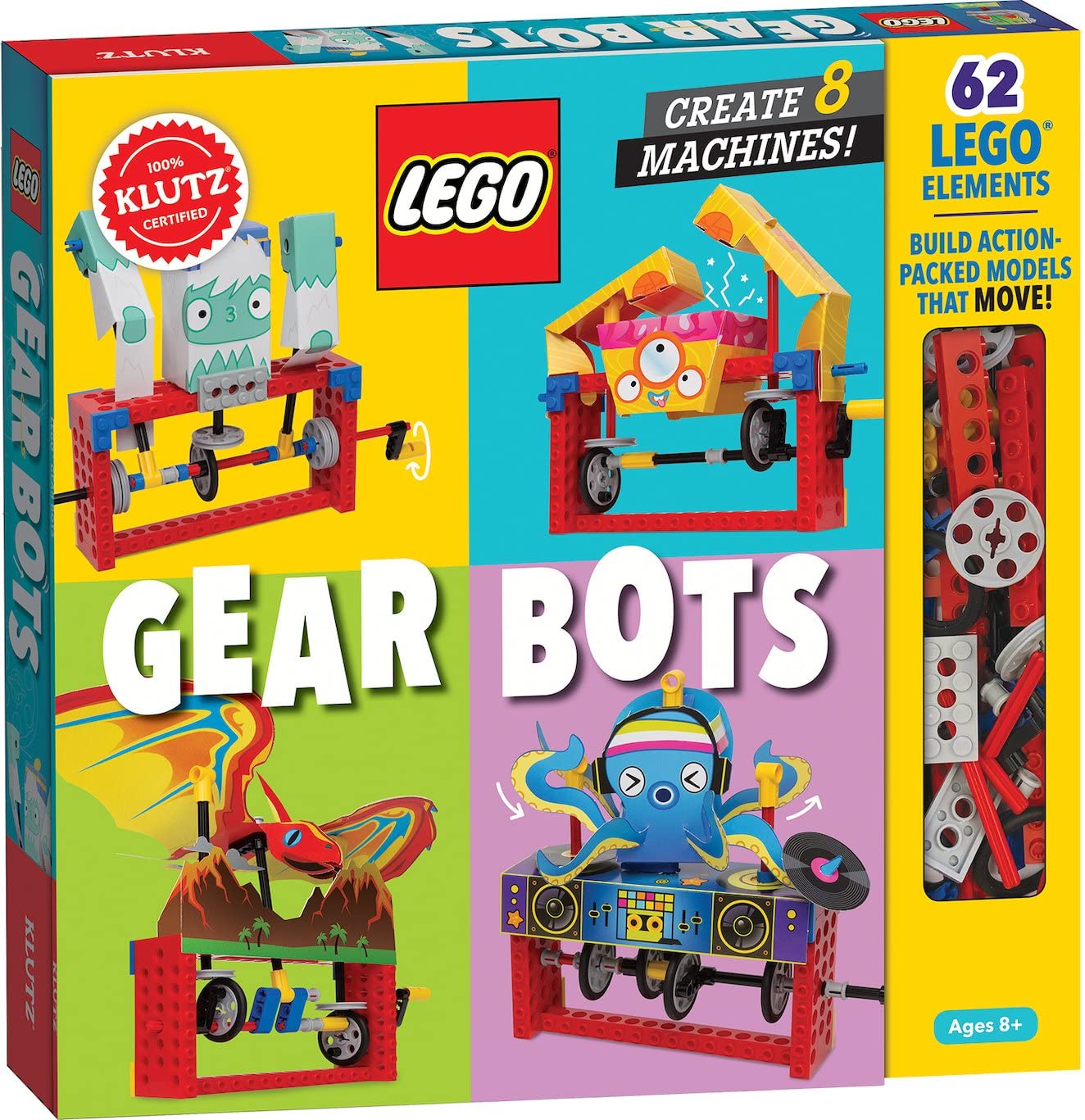
Teaches mechanical engineering concepts using LEGO Technic bricks to build 8 moving creatures. However, only one bot can be built at a time (disassembly required), and instructions can be unclear. Best for kids who enjoy the process of rebuilding and learning gears, rather than keeping permanent models.
Pros
- Teaches gears, axles, and cams through LEGO Technic builds.
- Engaging for LEGO-loving kids who enjoy building.
Cons
- Instructions can be confusing and some pieces fit poorly.
Worth considering if your child enjoys rebuilding and learning mechanical concepts, rather than keeping permanent models.
Best for Dinosaur Building
Laradola Take Apart Dinos

Key Features
- Age Range: 3–8
- Projects / Pieces: 3 dinos
- Durability: Low
- Instructions: Included
- Play Type: Guided
- Price: Budget
Kids 5–7 enjoy assembling three dinosaurs with the electric drill and hand screwdrivers, building fine motor skills and problem-solving. The designs are cute and non-scary. However, the drill and screws are delicate — stripping or snapping is a common complaint — and the 3–4 age range overstates what younger children can handle.
Pros
- Real screwdrivers and drill make assembly exciting for young builders.
- Builds hand-eye coordination and problem-solving through construction.
Cons
- Drill and screws are prone to stripping or snapping with repeated use.
Worth considering if your 5–7 year old loves dinosaurs and wants to learn using tools, but expect the drill to need careful handling.
Best for Budget Starter Set
Coodoo 30pc Starter Set

Key Features
- Age Range: 3+
- Projects / Pieces: 30 pieces
- Durability: Weaker magnets
- Instructions: Included
- Play Type: Open-ended
- Price: Budget
This 30-tile set is the lowest-cost way to try magnetic building. Tiles are safe, compatible with other brands, and popular with toddlers. But magnets are weaker than pricier brands, which limits tall or complex structures — best for simple first builds.
Pros
- Good starter set at a very low price
- Safe and secure magnets
Cons
- Magnets weaker than higher-end brands
Worth considering if you want the lowest possible entry cost for magnetic tiles and are okay with simple, low-height builds.
How to Choose
The best STEM toy for your child depends on matching the right type of play — guided versus open-ended — to their age, patience, and interest in following instructions.
Age Range and Skill Level
Manufacturer age labels are a starting point, but real usability often lags. Many kits rated 3+ require adult help to snap pieces or follow steps, making them better suited for 5+ in practice. For excavation and geode kits, factor in an adult’s time and tools — age 8+ means a parent with a hammer.
Number of Projects or Pieces
More pieces or projects doesn’t always mean more value. A 500-piece open-ended set encourages creativity but can overwhelm a child who prefers a clear goal. Guided sets with 60 challenges offer structured progression, while 12-egg kits are single-use. Decide first whether your child thrives on repeatability or novelty.
Durability and Build Quality
Magnetic tile sets vary significantly in magnet strength — cheap sets may not support tall structures, and some plastic hinges or bristles break after a few uses. Look for sets that mention ‘strong magnets’ or ‘ABS plastic’ and avoid products with frequent reports of peeling stickers or cracking parts. For battery-powered kits, check that the drill or motor is robust enough for repeated assembly.
Clarity of Instructions
Unclear instructions are the #1 cause of frustration in STEM kits. Some products rely on trial and error (open-ended), which works for some kids but baffles others. For guided kits, seek out those with step-by-step visuals, numbered steps, or online video support. If a kit requires additional household items, note that upfront to avoid mid-activity surprises.
Open-Ended vs. Guided Play
Open-ended toys like building blocks or fidget cubes let kids explore without a fixed outcome — ideal for creative thinking and focus. Guided kits like circuit sets or marble mazes teach specific skills through structured challenges. Both have a place, but buying a guided kit for a child who prefers free play (or vice versa) leads to disinterest. Match the play style to your child’s natural tendency.
FAQ
What STEM toys are best for a 4-year-old?
For a 4-year-old, look for open-ended building sets that don’t require fine motor precision or reading skills. The Brain Flakes 500-piece set is a strong option because the large discs are easy to connect with a bit of practice, and there’s no right or wrong way to build. Magnetic tiles from brands like Coodoo or Soyee also work well, provided the set is large enough (at least 30 pieces) to allow creative structures. Avoid kits with small parts or complex instructions at this age.
Are magnetic tiles compatible with Magna-Tiles?
Most budget-friendly magnetic tile sets, including Coodoo, Soyee, and PicassoTiles, explicitly state compatibility with Magna-Tiles and other major brands. The magnets and connector shapes are standardized, so pieces from different sets will stick together. However, magnet strength varies — cheaper tiles may have weaker magnets, so tall structures built with mixed sets may wobble. For consistent play, buying from the same brand is safer, but mixing is generally fine for floor-level building.
How do you break open geodes without a hammer?
The National Geographic Geode Kit recommends using a hammer, but many parents find that placing the geode inside a sock or thick cloth and striking it with a heavy wrench or rock works better. Avoid using a hammer directly on a hard surface — place the geode on soft ground or a folded towel to reduce shattering. Even with the right technique, expect some geodes to be too hard to break open without significant adult force; this is a known limitation of the kit.
Do Snap Circuits require batteries?
Yes, the Snap Circuits SC-300 requires 2 AA batteries, which are not included. The kit does not have a battery compartment — you snap the battery holder onto the base grid and connect wires. Batteries typically last through dozens of projects, but it’s a good idea to keep spares on hand. The instruction manual lists the battery requirement on the first page, so it’s easy to miss if you don’t read it.