This post contains affiliate links. We may earn a small commission when you buy through our links — at no extra cost to you.
Most potty training step stools are too short for standard toilets and sinks, leaving toddlers stretching or struggling to maintain balance. The market is filled with options under 6 inches that look fine in photos but fail in daily use, while folding stools promise convenient storage but often introduce instability that can lead to falls. This guide cuts through the confusion by focusing on the specs that actually matter: height, non-slip grip, and stability. The real choice isn’t between brands but between getting enough lift for your child and ensuring a solid platform that won’t shift. Pick the right height first, and everything else—weight capacity, material, portability—falls into place.



Best for Extra Height Needed
COOSEYA 2-Step Stool
Key Features
- Height: 9.25 inches
- Non-Slip Base: Rubber base and surface
- Weight Capacity: 110 lbs
- Durability: Sturdy build
- Number of Steps: Two-step
- Price: Premium
At 9.25 inches, the COOSEYA is the tallest option in this comparison — enough height for most standard toilets and sinks. The included faucet extenders make handwashing easier for little arms. Parents report the stool stays stable during use, and its lightweight build makes it simple to move between bathroom and kitchen.
This stool suits families whose toddlers need a stable boost to reach the sink and toilet independently. The trade-off is its larger footprint and premium price: it may feel bulky in cramped bathrooms, and budget-focused shoppers will find cheaper alternatives. Best for parents prioritizing height and included accessories over minimal footprint.
Pros
- Tall two-step design lets toddlers reach standard-height toilets and sinks
- Sturdy build withstands active toddler use without wobbling
- Light enough to move between rooms for bathroom and kitchen use
Cons
- Premium price compared to single-step alternatives
- Large footprint may not fit well in very small bathrooms
Buy this if your child needs extra height and independence at the toilet and sink. Skip it if bathroom space is tight or you’re on a tight budget.
Best for Safety-Focused Families
OXO Tot Step Stool
Key Features
- Height: 7 inches
- Non-Slip Base: Textured surface and non-slip base
- Weight Capacity: 200 lbs
- Durability: Outstanding quality
- Number of Steps: Single step
- Price: Mid-Range
Unlike the top pick’s extra height, the OXO Tot focuses on rugged stability and safety — earning a near-flawless rating from over three thousand reviews with zero negative safety reports. Its textured non-slip platform and sturdy base keep toddlers steady, and the lightweight frame with carry handles is easy to relocate. Best for safety-conscious parents of toddlers up to age five, this stool handles daily use without wobbling. The trade-off: at 7 inches tall, it may be too low for taller toilets or older toddlers who need more clearance.
Pros
- Top-tier build quality with consistently positive feedback across hundreds of reviews.
- Sturdy and stable, supporting up to 200 pounds without wobble.
- Textured non-slip surface prevents slips even on damp bathroom floors.
Cons
- 7-inch height may not clear taller toilets or suit older toddlers needing more reach.
Buy this if you prioritize safety and durability above all else for your toddler’s daily step stool.
Best for Small Toddlers
Dreambaby Step Stool
Key Features
- Height: 5.6 inches
- Non-Slip Base: Rubber dots top and bottom
- Weight Capacity: 175 lbs
- Durability: Sturdy and stable
- Number of Steps: Single step
- Price: Budget
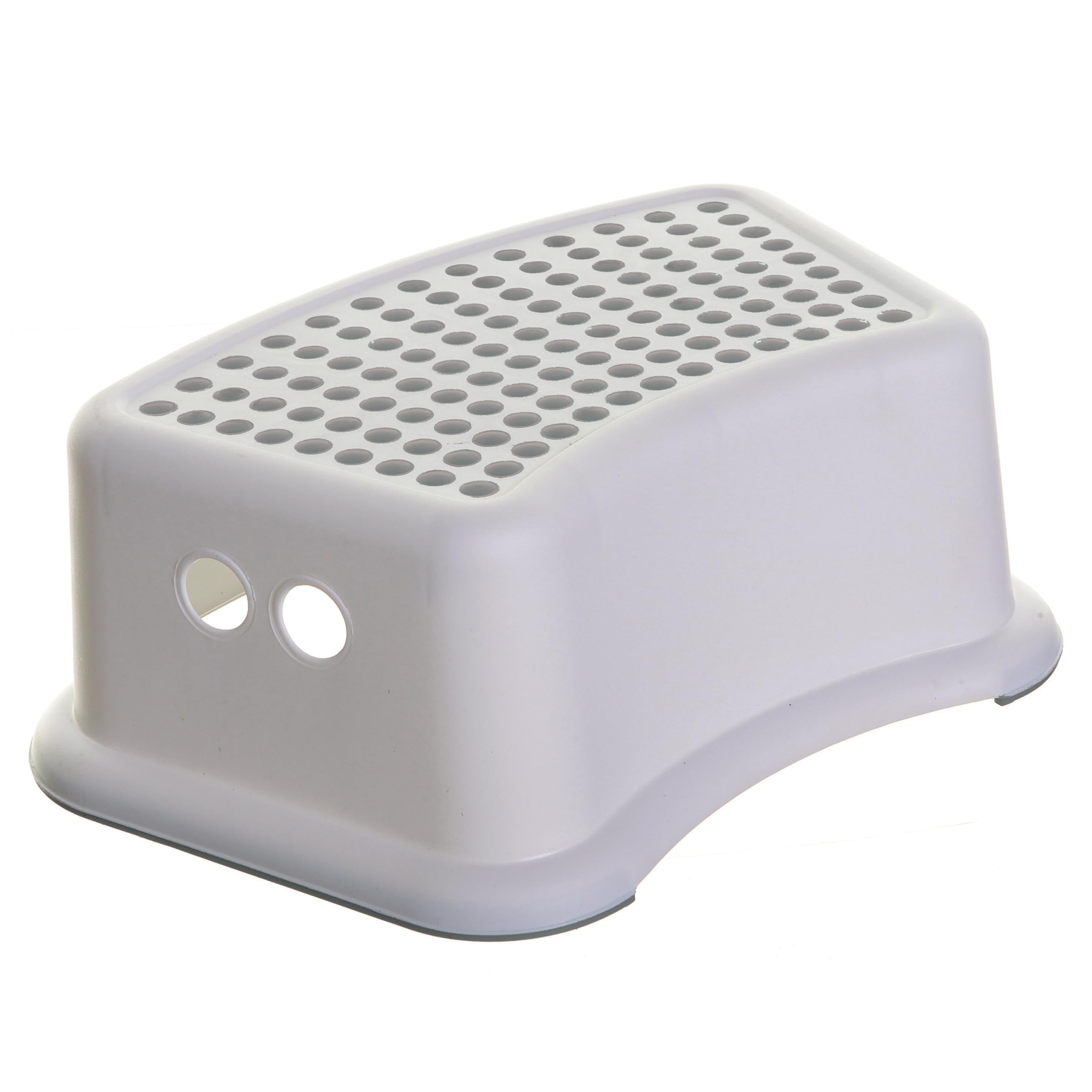
The Dreambaby Step Stool trades extra height for a contoured base that wraps around standard toilets and a lightweight plastic build toddlers can easily carry. The 5.6-inch height works well for small toddlers but falls short for taller children or standard sinks, making it a size-specific tool rather than a long-term solution. Its non-slip rubber dots on both the base and top keep it stable on tile or hardwood, and the low price point makes it an entry-level buy for potty training.
Pros
- Sturdy and stable on hard floors
- Non-slip rubber dots provide secure footing
- Lightweight enough for toddlers to move and position
Cons
- Too short for many standard toilets and taller toddlers
- Smaller footprint than expected for some users
Buy this if you have a small toddler and need an affordable, stable step stool for potty training near the toilet. Skip it if your child needs more height to reach a standard sink or toilet.
Best for Multiple Children
Tiawudi 2-Pack Stool
Key Features
- Height: 5.3 inches
- Non-Slip Base: Rubber strips bottom and surface
- Weight Capacity: 170 lbs
- Durability: Sturdy for small children
- Number of Steps: Single step
- Price: Mid-Range
The Tiawudi 2-pack delivers strong value for households with multiple small children, giving you one stool for the toilet and another for the sink. Each is sturdy and lightweight, with rubber non-slip strips that keep it planted. The catch: at 5.3 inches, it’s the shortest stool in this lineup, so many toddlers will need extra height to reach standard toilets and sinks, especially compared to taller options like the COOSEYA 2-step stool. Best for very short toddlers or as a general step-up for sinks and play areas.
Pros
- Excellent value – two stools for the price of one.
- Sturdy and stable for small children.
- Lightweight and easy to move between rooms.
Cons
- Height too short for standard toilets and sinks; best suited for very short toddlers.
Buy this if you need a second stool for different rooms and your toddler is on the shorter side. Skip it if your child needs more height to reach the toilet or sink independently.
How to Choose
The most critical factor in a potty training step stool is its height – too short and your child can’t reach the toilet or sink comfortably, which defeats the purpose.
Height
Measure your toilet and sink height before buying. A 5-6 inch stool often leaves toddlers stretching, while 7-9 inches gives a comfortable boost. Standard toilets typically need at least 7 inches of lift for a child to stand securely and reach the seat.
Non-Slip Base
Look for rubber grips or textured dots on both the base and the standing surface. A stool that slides on tile or hardwood creates a fall risk. Non-slip strips on the top keep little feet from slipping when wet.
Weight Capacity
Check the weight limit – it should support both your child and any extra force from climbing. Higher limits (175 lbs and above) indicate stronger construction and longer usability as your child grows.
Durability and Stability
A stool should feel solid underfoot without wobbling. Avoid folding mechanisms for toddlers – numerous reports show hinges can break or collapse during use. A rigid, one-piece design is safer for daily, repeated use.
Number of Steps
Single-step stools work for most low-height needs, but a two-step design offers extra reach for taller toilets or older toddlers. Two-step models also encourage independence by letting children climb to the sink more easily.
FAQ
How tall should a potty training step stool be?
At least 7 inches for most standard toilets, but measure from floor to seat. A stool that puts your child’s feet flat and knees at a 90-degree angle works best. For older toddlers or taller toilets, a 9-inch two-step stool may be needed.
Are folding step stools safe for toddlers?
No – folding stools have a track record of hinge failures and sudden collapses. Even models with high weight ratings can buckle when a child shifts weight. Choose a rigid, non-folding design for regular potty training use.
What is the best step stool for a 2-year-old?
A 2-year-old typically needs a step stool around 5 to 7 inches tall, with a non-slip surface and stable base. If your child can already reach the toilet with a 5-inch stool, the Dreambaby works. If they need extra height, a 7-inch OXO Tot or a two-step COOSEYA is better.
Do I need a 2-step stool for potty training?
Only if a single-step stool under 7 inches doesn’t let your child reach the toilet or sink comfortably. A 2-step stool like the COOSEYA (9.25 inches) solves height issues and also gives a second step for handwashing, but it is bulkier and more expensive.