This post contains affiliate links. We may earn a small commission when you buy through our links — at no extra cost to you.
Most kids Bluetooth headphones look great on paper: 50-hour battery, fun LEDs, safe volume limits. But after a few months, the headband snaps, the battery stops charging, or the lights drain power faster than expected. Parents end up replacing a pair every school semester.
This guide cuts through the marketing to find headphones that balance real-world battery life, safe volume controls, and build quality that lasts longer than a single season. Whether you need a lightweight pair for a toddler or a rugged set for daily school use, the picks here match the right features to the right use case — without overpromising what they can deliver.


Best for All-Around Use
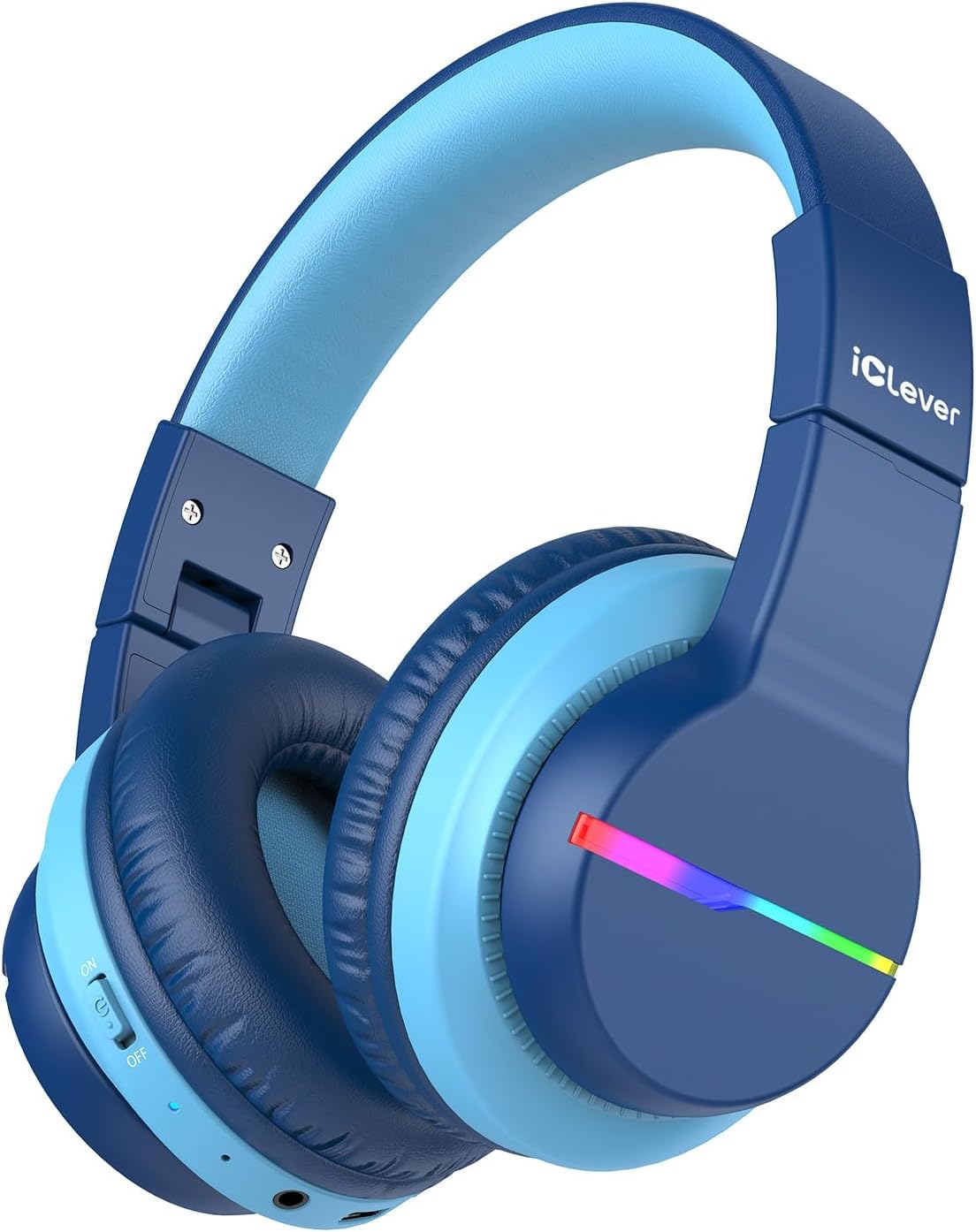
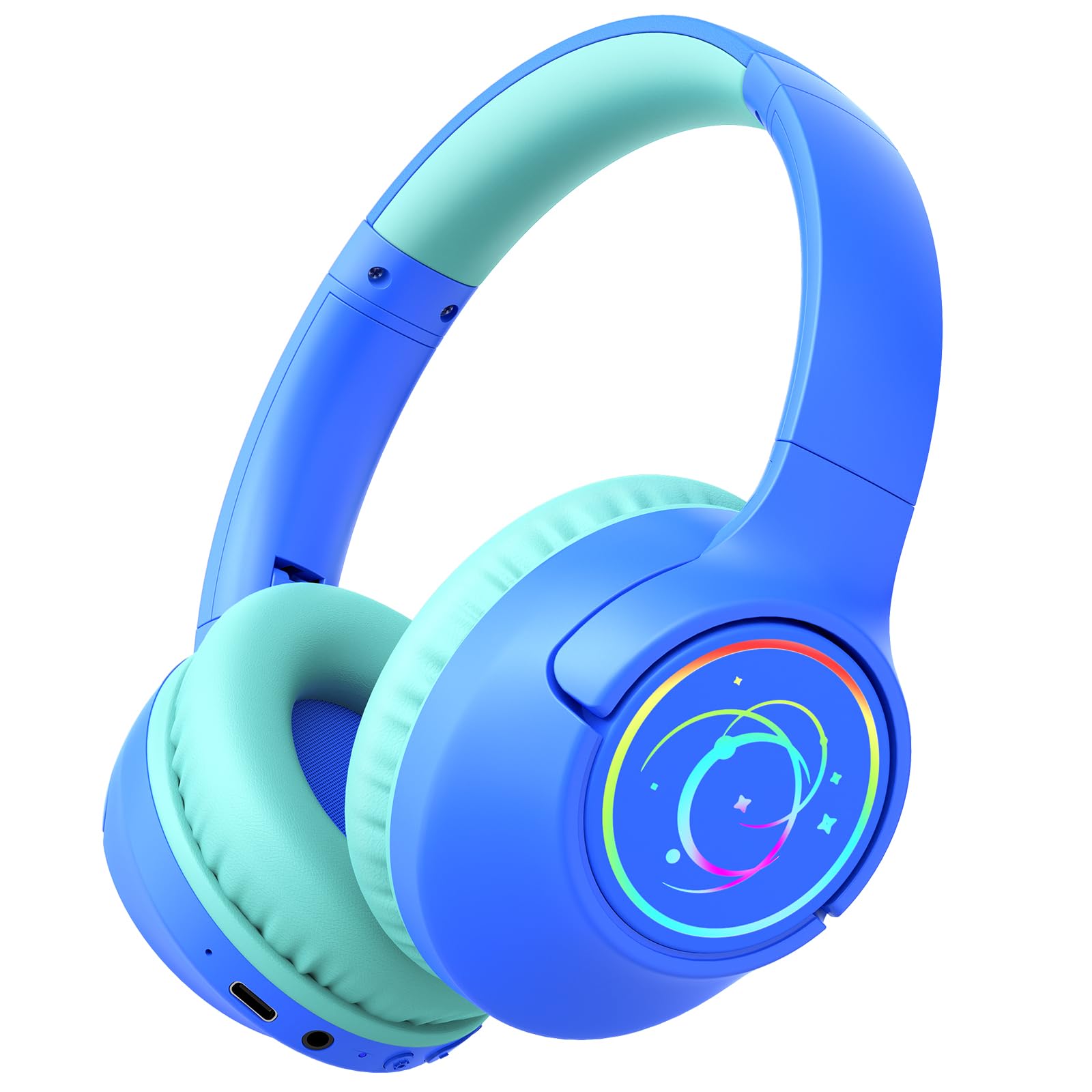
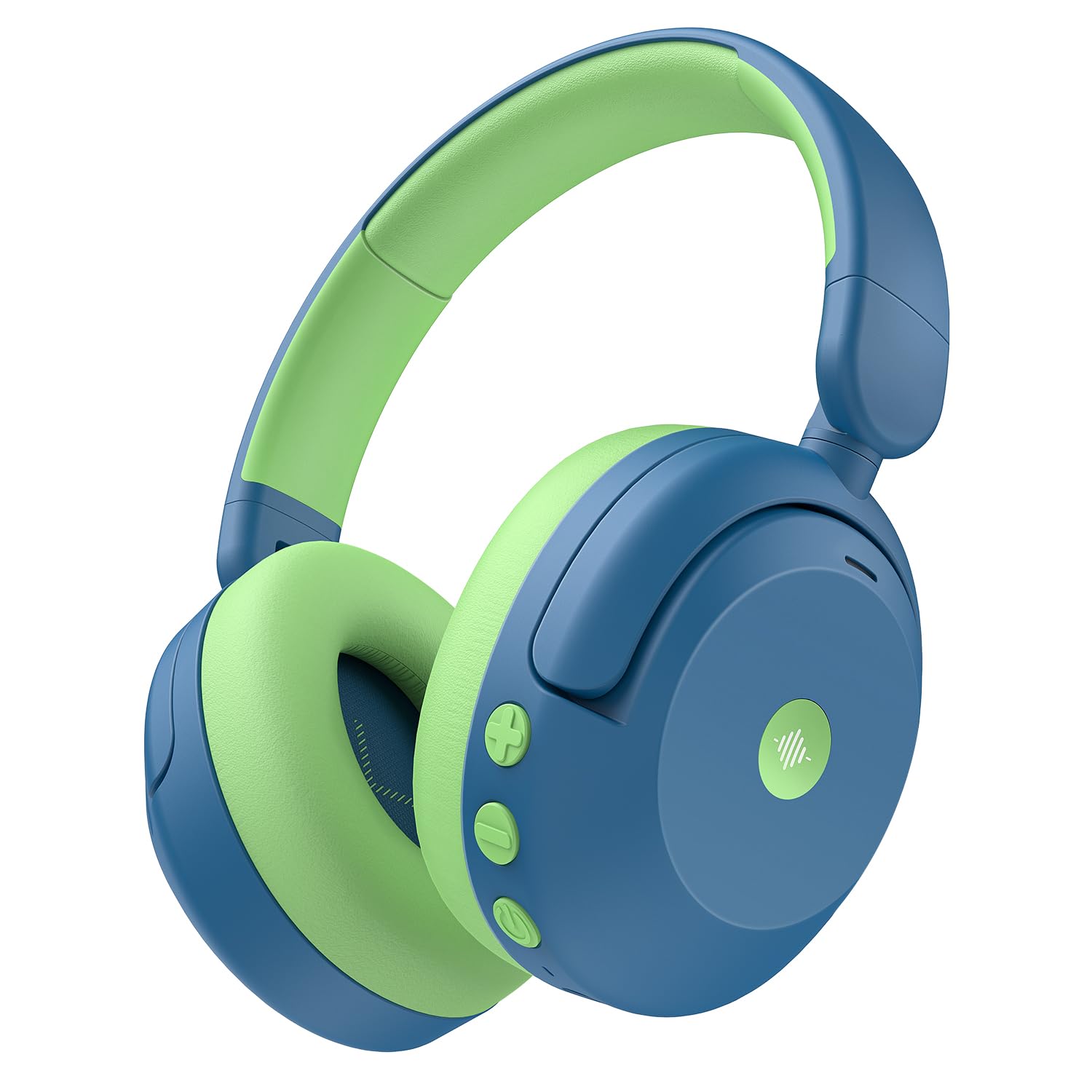
iClever BTH12 Kids BT
Key Features
- Volume Limiter: 74/85 dBA
- Battery Life: 85 hours
- Bluetooth: 5.2
- Comfort & Fit: 200g, padded
- Price: Mid-Range
The iClever BTH12 delivers 85 hours of playback with lights off – enough for weeks of daily use without recharging. A 10-minute USB-C charge adds 7 hours, so last-minute top-ups are practical. The 40mm drivers produce clear sound, and the switchable 74/85 dBA volume limiter gives parents control over safe listening levels.
Bluetooth 5.2 pairs quickly with tablets and phones, and the connection stays stable across rooms. The colorful LED lights are a hit with kids, though they drain battery faster – expect around 30 hours with lights on. The built-in mic works well for calls, but the headband has been reported to snap under rough handling, especially at the ear cup joints, so gentle care is advised.
This is best for families where kids use headphones moderately – on car trips, for homework, or downtime – and who can treat them with care. The durability trade-off means it’s not ideal for toddlers who toss gear or for heavy daily use. Over 12,500 reviews confirm the battery life holds up and sound is consistently good, but the headband is a known weak point to work around.
Pros
- 85-hour battery life with fast USB-C charging
- Clear sound and comfortable fit for kids
- Easy Bluetooth pairing and stable connection
- Great value with fun LED lights at a competitive price
Cons
- Headband and ear cup joints can break with rough handling
- Some units stop charging or pairing after a few months
Buy this if you want a budget-friendly headphone with exceptional battery life and fun lights for a child who handles gear carefully. Skip it if your child is rough on electronics or you need a rugged, indestructible build.
Best for Budget School Use
EarFun K2 Kids BT
Key Features
- Volume Limiter: 85/94 dB
- Battery Life: 40 hours
- Bluetooth: 5.4
- Comfort & Fit: 175g, foldable
- Price: Budget
The EarFun K2 stands apart from pricier options like the iClever BTH12 by prioritizing safety certification and a lower entry price. The CPC-certified materials give parents peace of mind, while the foldable build and 40-hour battery handle school commutes and weekend trips without recharging. Sound is clear enough for stories and music, and Bluetooth 5.4 pairs reliably with tablets and phones. You give up the BTH12’s class-leading 85-hour battery, but for typical daily use the K2 still covers a full week between charges.
This is a strong fit for budget-conscious families who need multiple pairs for different kids or want a dedicated school headphone that won’t break the bank. The volume limiter (85/94 dB) keeps listening safe, and the 175g weight feels light on young heads. Battery life at 40 hours is shorter than many competitors, and the headband has shown occasional issues with rough handling — treat it gently and it should hold up fine for normal use.
Pros
- CPC-certified materials add safety assurance for parents.
- Foldable design packs easily into backpacks for school use.
- Clear stereo sound with built-in volume limiter protects young ears.
- Bluetooth 5.4 pairs quickly and stays connected up to 30 feet.
Cons
- Battery life (40h) is less than many rival kids headphones.
- Headband is delicate under rough handling; treat with care.
Buy this if you need a budget-friendly, safety-certified kids headphone for school or travel and don’t require marathon battery life.
Best for Toddler Safe
iClever BTH22 Kids BT
Key Features
- Volume Limiter: 74/85 dBA
- Battery Life: 60 hours
- Bluetooth: 5.4
- Comfort & Fit: 149g, rotating cups
- Price: Budget
At just 149g, the BTH22 is noticeably lighter than the top pick in this roundup, making it the best choice for toddlers who find heavier headphones uncomfortable. The switchable 74dBA volume limiter gives parents added control over hearing safety. However, that ultra-light construction comes with a clear trade-off: durability reports are mixed, with many users noting headband failures within weeks to months.
This headphone fits families who need an occasional-use, ultra-light option for toddlers at home or in the car, and who accept a shorter lifespan. If your child requires a headphone for daily school use or tends to handle gear roughly, the more robust build of the top pick is a safer investment.
Pros
- Ultra-lightweight at 149g, comfortable for toddlers.
- Long 60-hour battery life with quick USB-C charging.
- Good sound clarity and easy Bluetooth pairing.
- Budget-friendly price for a name-brand toddler headphone.
Cons
- Headband durability is a concern; many units break within months.
Buy this if you need the lightest possible toddler headphone for occasional home or travel use. Skip it if your child requires a durable headphone for daily wear or rough handling.
Best for Budget Value
Botesty Sound Kids BT
Key Features
- Volume Limiter: 85/94 dB
- Battery Life: 85 hours
- Bluetooth: 5.4
- Comfort & Fit: 180g, foldable
- Price: Budget
The Botesty Sound matches the top pick’s 85-hour battery life while delivering noticeably clearer audio with more bass presence. Its 40mm drivers and Bluetooth 5.4 support stable connections, and the built-in mic works well for calls. The trade-off is a limited review count of 645, compared to the thousands behind the iClever BTH12, meaning long-term durability is less documented.
This headset is best for parents on a tight budget who prioritize sound quality and battery life over the reassurance of a massive review sample. It fits kids who are gentle on gear, as the plastic build survives drops but may not withstand heavy abuse. The volume limiter (85/94 dB) adds safety, and the colorful LED lights are a fun bonus. The limited review count means you’re taking a small chance on long-term robustness, but early signals are strong.
Pros
- Clear audio with surprising bass presence for budget kids headphones.
- Long battery life (85 hours with lights off) reduces frequent charging.
- Durable plastic build withstands drops better than expected at this price.
- Simple Bluetooth pairing and stable connection with minimal dropouts.
Cons
- Limited review base (645) leaves long-term durability less documented.
Buy this if you want maximum battery and sound quality for the lowest possible price and are okay with a newer brand. Skip it if you need the confidence of thousands of user reports and a longer warranty history.
Best for Travel Anc
iClever BTH20 ANC
Key Features
- Volume Limiter: 80 dBA fixed
- Battery Life: 60/35 hours
- Bluetooth: 5.4
- Comfort & Fit: 218g, adjustable
- Price: Premium
Unlike the top pick, the iClever BTH20 brings active noise cancellation to a children’s headphone, reducing engine hum and classroom chatter effectively for young listeners. The trade-off is battery life: 60 hours drops to 35 with ANC on, and the cancellation isn’t as aggressive as adult models. For families who need quiet hours on planes or for sensory-sensitive kids, the ANC here works well enough without overwhelming a child’s ears.
Best suited for families who fly frequently or have kids easily overwhelmed by background noise. The fixed 80dBA volume limiter, plush ear pads, and foldable design with travel case make it a deliberate travel companion. Just note the ANC drains the battery significantly — plan to charge after a long flight — and the noise cancellation won’t match high-end adult sets. Occasional feedback notes it may not be strong enough for very loud environments like construction zones.
Pros
- Reduces engine drone and background chatter without isolating kids too much.
- Sturdy hinges and reinforced headband hold up to travel and kid handling.
- Soft ear pads and lightweight 218g design comfortable for long wear.
- Comes with a travel case and USB-C fast charging for quick top-ups.
Cons
- Battery life drops to 35 hours when using active noise cancellation.
- ANC is weaker than adult noise-cancelling headphones for loud environments.
Buy this if your child needs noise cancellation for flights or sensory sensitivity, and you’re comfortable charging more often. Skip it if you mainly use headphones at home with no background noise problems, or want the longest battery life possible.
Best for Fun Design
iClever Cat Ear Kids BT

Key Features
- Volume Limiter: 74/85 dBA
- Battery Life: 50 hours
- Bluetooth: 5.2
- Comfort & Fit: 173g, padded
- Price: Premium
These headphones win on charm: the cat ears and LED lights make them an immediate hit with children, and the 40mm drivers produce clear sound that handles music and shows well for the price. Battery life reaches 50 hours with lights off, and USB-C charging is a convenience many kids’ headphones lack. However, the premium price and reports of reliability issues — some units stop working or develop problems at the folding hinge within months — mean these are best reserved as a visually exciting gift for a child who handles their gear gently rather than as a daily workhorse.
Pros
- Adorable cat ear design with LED lights that captivate children.
- Good sound quality for the price — clear audio for music and shows.
- Long battery life (50 hours with lights off) with fast USB-C charging.
Cons
- Occasional reliability issues; some units may stop working or lose one ear within months.
- Folding hinge is delicate; normal use can lead to breakage over time.
Worth considering if you want a visually exciting gift for a child who treats gear gently and can overlook durability concerns.
Best for Comfort Focus
JoySpark Kids BT

Key Features
- Volume Limiter: 85/94 dB
- Battery Life: 60 hours
- Bluetooth: 5.3
- Comfort & Fit: 170g, memory foam
- Price: Budget
The JoySpark headphones prioritize comfort with memory foam ear cushions and a lightweight 170g frame, making them agreeable for toddlers and young children during extended use. Bluetooth 5.3 pairs easily and the 85/94dB volume limiter provides peace of mind for parents. Sound quality is adequate for kids’ content. However, the plastic build and occasional units losing sound after a few months mean durability lags behind top picks. Combined with a 60-hour battery that, while solid, isn’t class-leading, these are a solid budget choice but not the final word in reliability.
Pros
- Memory foam ear pads keep kids comfortable during long listening sessions.
- Simple pairing and stable Bluetooth 5.3 connection.
- Safe volume limiting and clear audio for children.
Cons
- Some units lose sound or stop working within a few months.
- Plastic hinge and headband may crack with rough handling.
Worth considering if you need an affordable, comfortable pair for young children and can accept occasional reliability issues.
Best for Ultra-Budget
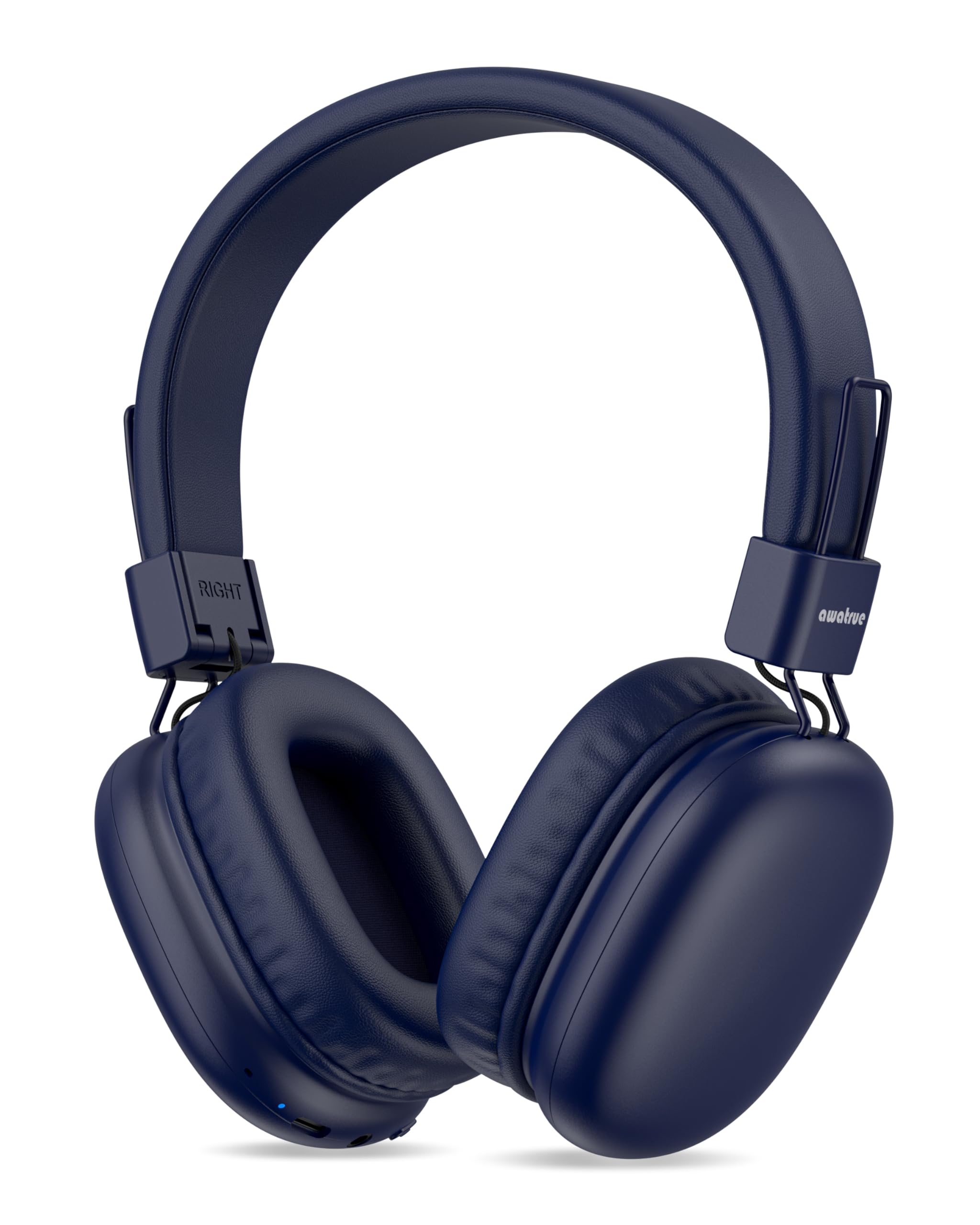
awatrue Kids BT AT8
Key Features
- Volume Limiter: 85 dBA fixed
- Battery Life: 50 hours
- Bluetooth: 5.4
- Price: Budget
The awatrue AT8 delivers functional wireless audio at a price that’s hard to beat. Sound quality and comfort are acceptable for short listening sessions, and Bluetooth 5.4 pairs easily. The 50-hour battery and USB-C charging add value. However, the build is basic: ear pads may detach and some units break within a week. This makes it a candidate for occasional use or as a backup pair, not for daily rough handling by active kids.
Pros
- Extremely affordable with decent sound and build for the price.
- Lightweight and comfortable fit for kids and even adults.
- Simple Bluetooth pairing with stable connection.
Cons
- Ear pads can detach and some units fail within a week; build is delicate.
Worth considering if you need a functional spare pair for occasional use or are buying multiple for an extremely tight budget.
Best for Premium Build
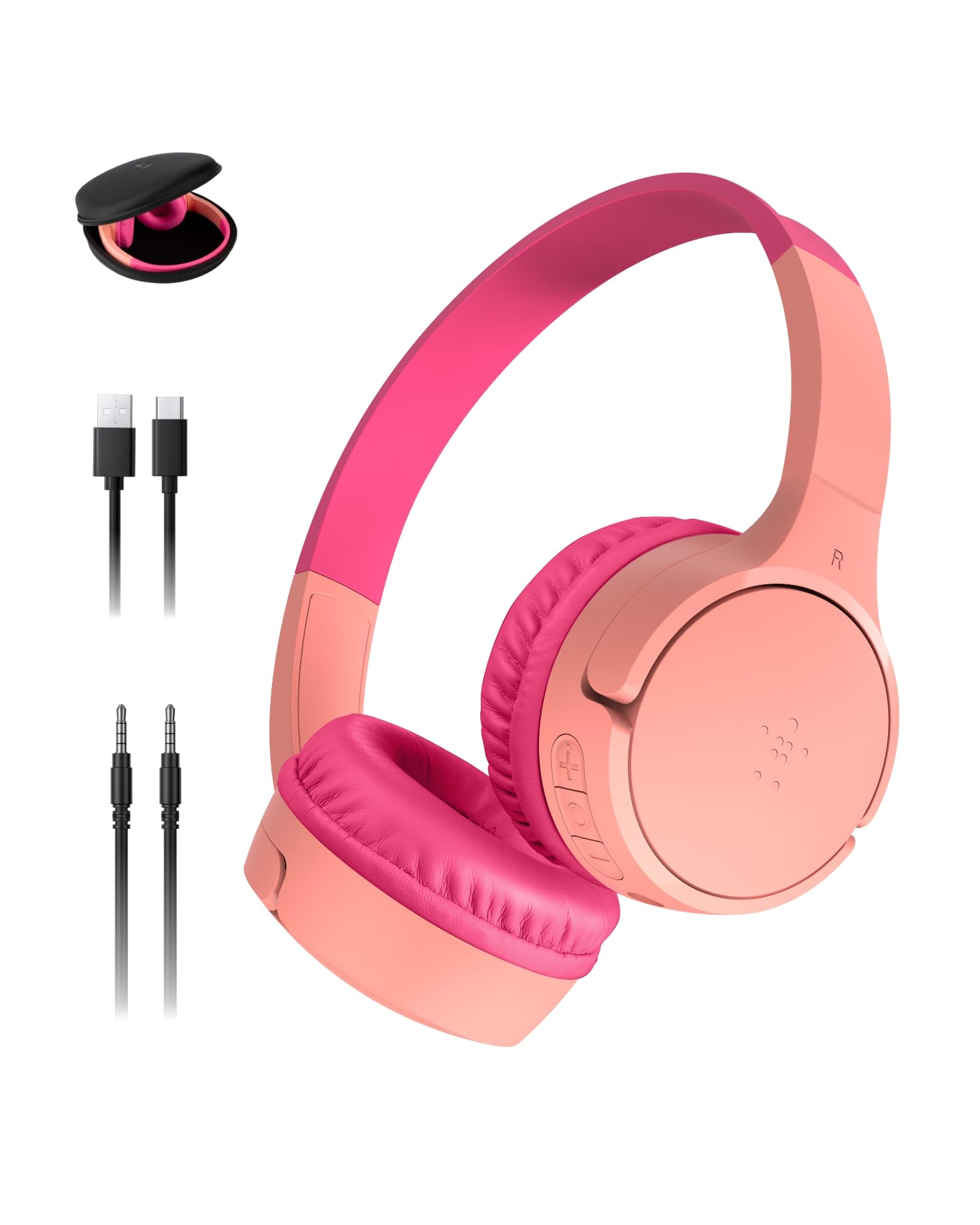
Belkin SoundForm Mini
Key Features
- Volume Limiter: 85 dB fixed
- Battery Life: 30 hours
- Bluetooth: 5.0
- Price: Premium
The Belkin SoundForm Mini delivers on build quality with a hard protective case and a two-year warranty that cover defects — a rare combination at this price point. Sound is clear and the on-ear fit works well for most children. However, the trade-off for that robust construction is a shorter 30-hour battery life compared to many 50-85 hour alternatives, and some users report Bluetooth pairing problems with devices like Kindle. This headphone suits families who prioritize a durable, travel-ready design over battery endurance or universal device compatibility.
Pros
- Hard carrying case protects headphones during travel and storage.
- Comfortable on-ear fit with clear sound for children.
Cons
- Bluetooth pairing can be inconsistent with some devices like Kindle.
- 30-hour battery life is shorter than many competitors’ 50-85 hours.
Worth considering if you prioritize a premium carrying case and build quality over longer battery life and seamless Bluetooth with all devices.
Best for Comfort Lights
seenda JCH-01 Kids BT

Key Features
- Volume Limiter: 85/94 dB
- Battery Life: 45 hours
- Bluetooth: 5.3
- Comfort & Fit: 200g, memory foam
- Price: Mid-Range
The seenda JCH-01 stands out for its well-padded memory foam ear cushions that kids find comfortable for extended use, and the three lighting modes add a playful element. Sound quality and 45-hour battery life are solid for the price. However, durability and consistent performance are weaker points. Some units develop charging or pairing issues after a few months, and the headband can break with rough handling. These issues are not widespread, but they occur more often than on the top picks, making this a better fit for gentle use rather than daily rough-and-tumble.
Pros
- Memory foam ear pads provide lasting comfort for kids during school or travel.
- Three adjustable lighting modes and 45-hour battery offer good value for the price.
Cons
- Some units stop charging or pairing after a few months of use.
- Headband may break under heavy use; best for kids who treat gear gently.
Worth considering if your child uses headphones gently at home or school and you prioritize comfort and lights over maximum durability.
How to Choose
The battery life number on the box rarely includes LED usage, so a 50-hour headphone may deliver only 15 hours with lights on.
Volume Limiter
Most kids headphones offer switchable limits at 74, 85, or 94 dBA. The 74 dBA setting is safest for toddlers, while 85 dBA is the standard for school-age children. Look for a physical switch or a combination button press that kids can’t easily bypass.
Battery Life
Ignore the big number on the package. Calculate real runtime by subtracting about 60% if the headphones have LED lights and you plan to use them. For multi-day trips, prioritize models with at least 40 hours of real-world battery and USB-C fast charging.
Bluetooth Version
Bluetooth 5.0 or higher ensures stable pairing and low power consumption. Version 5.2 and above offer better range and connection reliability, which matters when the tablet is across the room. Avoid older versions (4.x) that drop signal frequently.
Comfort and Fit
Weight is critical for young kids – under 200g is ideal. Look for adjustable headbands and padded ear cups. Memory foam cushions improve long-term comfort, but rotating ear cups help the headphones lie flat when stored.
Durability
The headband hinge is the first to break on most budget models. Metal sliders or reinforced plastic at the joint add months of life. A foldable design with a carrying case protects the headphones during travel and backpack storage.
FAQ
Do kids Bluetooth headphones have volume limits?
Yes, most kids headphones include a volume limiter, typically switchable between 74, 85, or 94 dBA. 85 dBA is the standard safe level for children. Models with physical switches are harder for kids to override than those hidden in touch controls.
What is a safe decibel level for kids headphones?
The World Health Organization recommends keeping children’s audio exposure below 85 dBA. For toddlers, 74 dBA is even safer. Look for headphones with a fixed or switchable limiter at 74 or 85 dBA – avoid models that only offer 94 dBA.
Why do my kids wireless headphones stop working after a few months?
The most common failure points are the headband hinge snapping, the charging port breaking, or the battery losing capacity. These issues are especially frequent in budget models with plastic builds. To extend life, store headphones in a case and avoid letting kids pull them off by one ear cup.
Can kids headphones be used wired when the battery dies?
Many kids Bluetooth headphones include a 3.5mm AUX port for wired backup. This is a useful feature for long trips or when you forget to charge. Check that the AUX cable is included and that the headphones still play audio when the battery is completely drained.